Casablanca Layover Near Casa-Oasis Station
Part of the full Casablanca Layover: Hassan II Mosque, CMN
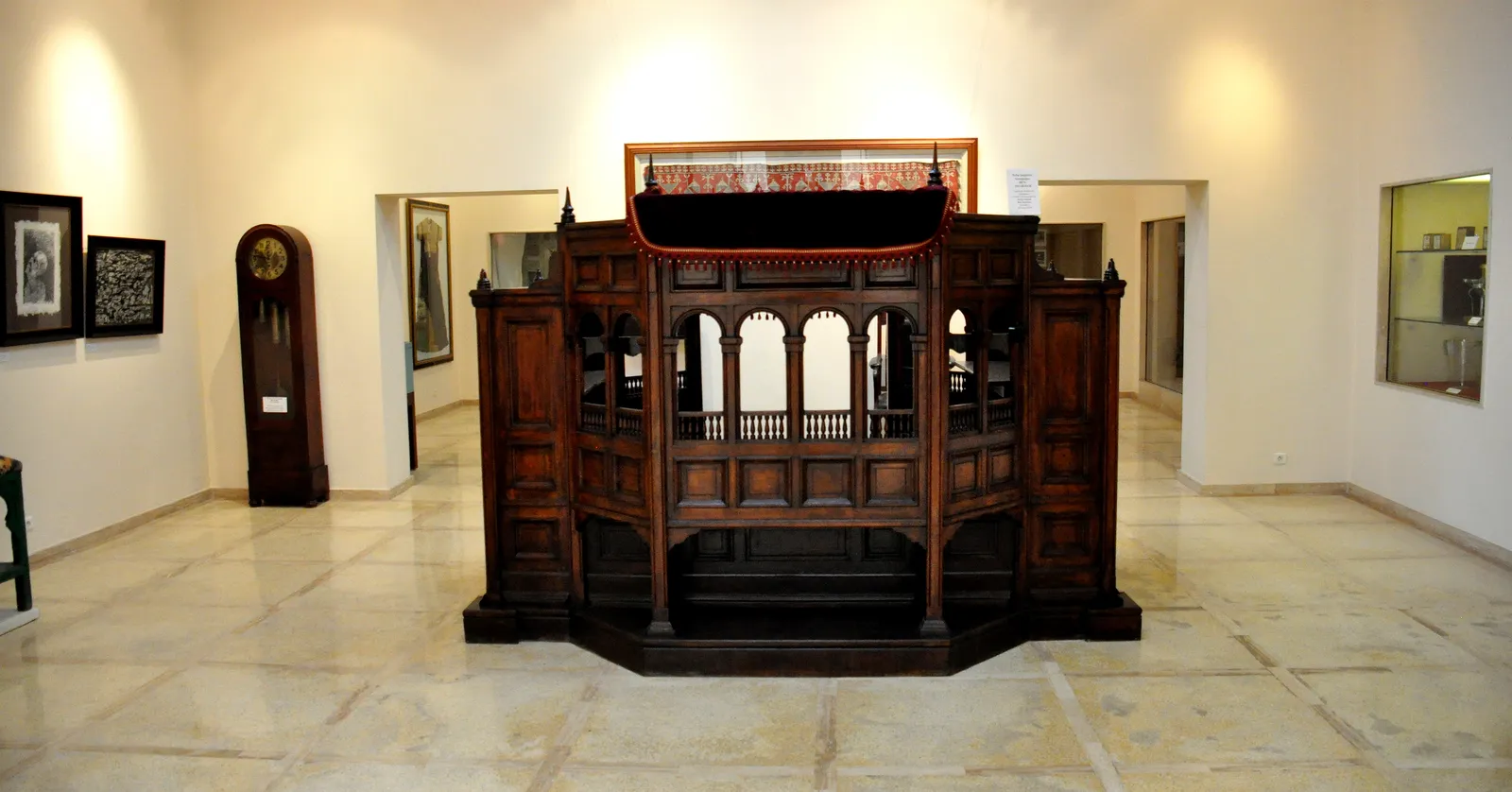
Casa-Oasis, a station in the quiet villa quarter south of central Casablanca, sits a kilometre from the Museum of Moroccan Judaism, and Notre-Dame de Lourdes, a 1954 concrete church glazed with 800 square metres of stained glass, stands three and a half kilometres north at Place de l’Europe.
The Museum of Moroccan Judaism occupies a 1948 orphanage
Number 81 Rue Chasseur Jules Gros, about a kilometre west of the station along flat residential streets, is the only museum anywhere in the Arab world devoted to Jewish life. The building came first: Célia Bengio founded the Murdock Bengio children’s home here in 1948 in her husband’s memory, and it took in as many as 160 Jewish children before serving as a yeshiva and community centre through the late 1970s. Simon Levy, a professor at the University of Rabat, and three others turned it into a museum in 1997, and King Mohammed VI reopened it after a renovation on 20 December 2016.
Inside are three exhibition rooms and a hall across roughly 700 square metres: ritual silver, Torah scrolls, mezuzahs, costume and Berber jewellery, a reconstructed silversmith’s workshop, and whole synagogue interiors rebuilt room by room. Among them is the Megilat Hitler, a scroll written in 1944 in the form of the Book of Esther, recording the persecution of North African Jews under Vichy rule. Admission is 50 dirhams, the doors are open 10 to 5 on weekdays and 11 to 3 on Sundays, and the museum shuts on Saturdays for Shabbat and on Jewish holidays.
Gabriel Loire’s stained glass fills Notre-Dame de Lourdes
Place de l’Europe, three and a half kilometres north of the Oasis quarter, holds a Catholic church from 1954 that looks nothing like one from the outside: a tapering slab of pale concrete by Achille Dangleterre, with the engineer Gaston Zimmer, more sculpture than building. Inside, more than 800 square metres of stained glass by Gabriel Loire, a glassmaker from Chartres, runs floor to ceiling between the concrete ribs, and the light it throws on a bright afternoon does the whole work of the interior. Entry is free.
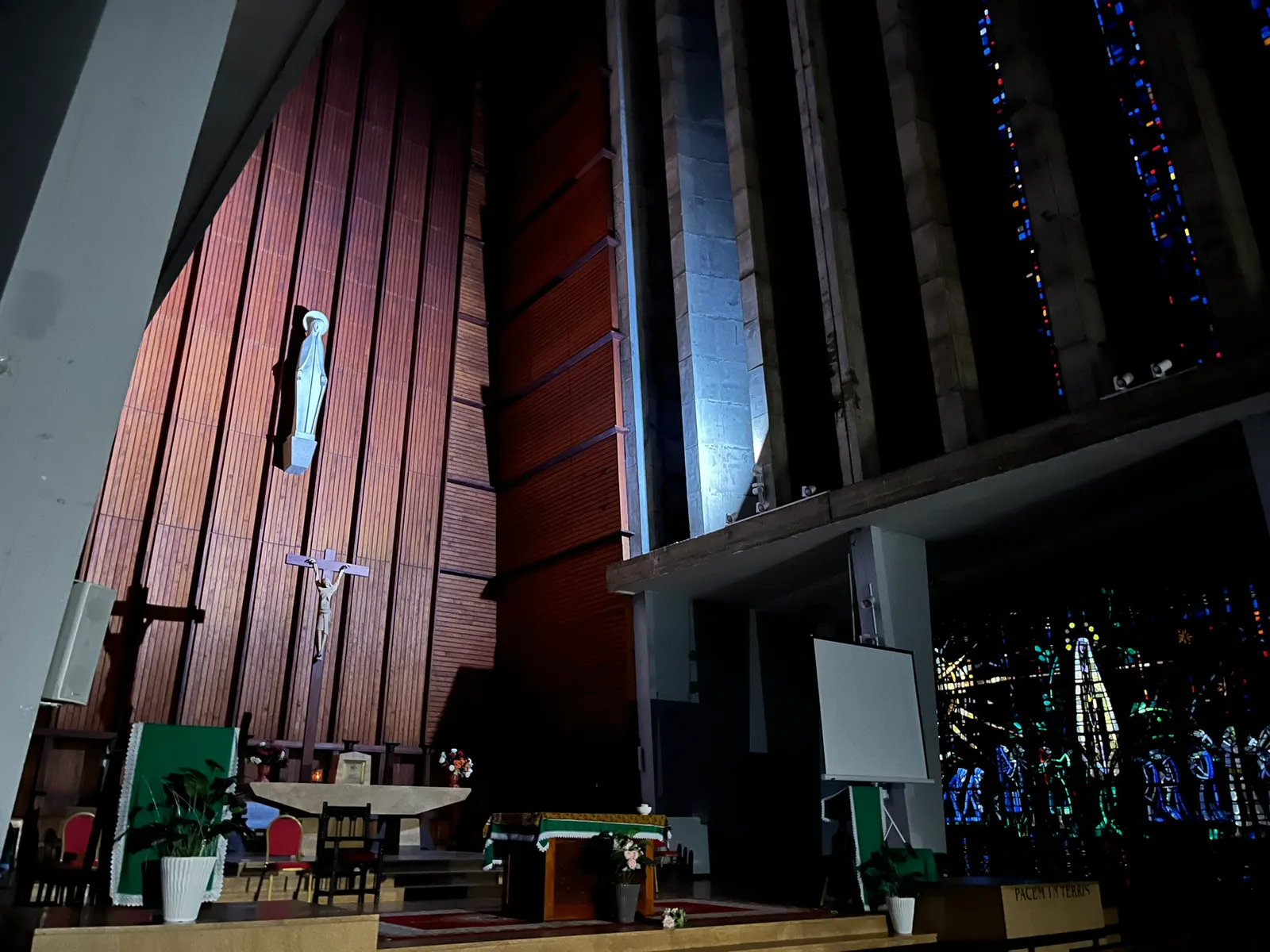
In the yard outside is a replica of the grotto at Lourdes, scaled down, with an altar, banks of votive candles and fresh flowers. The tram running past the station door goes this way, ten minutes’ walk from the stop at the hospitals, and the same tram carries on into the middle of town in about twenty minutes, which is what opens up the rest of the city if you have five hours rather than three: the walled medina, the civic square and the market halls are all in the city-centre guide to Casablanca instead.
Casa-Oasis has two platforms and a tram stop outside
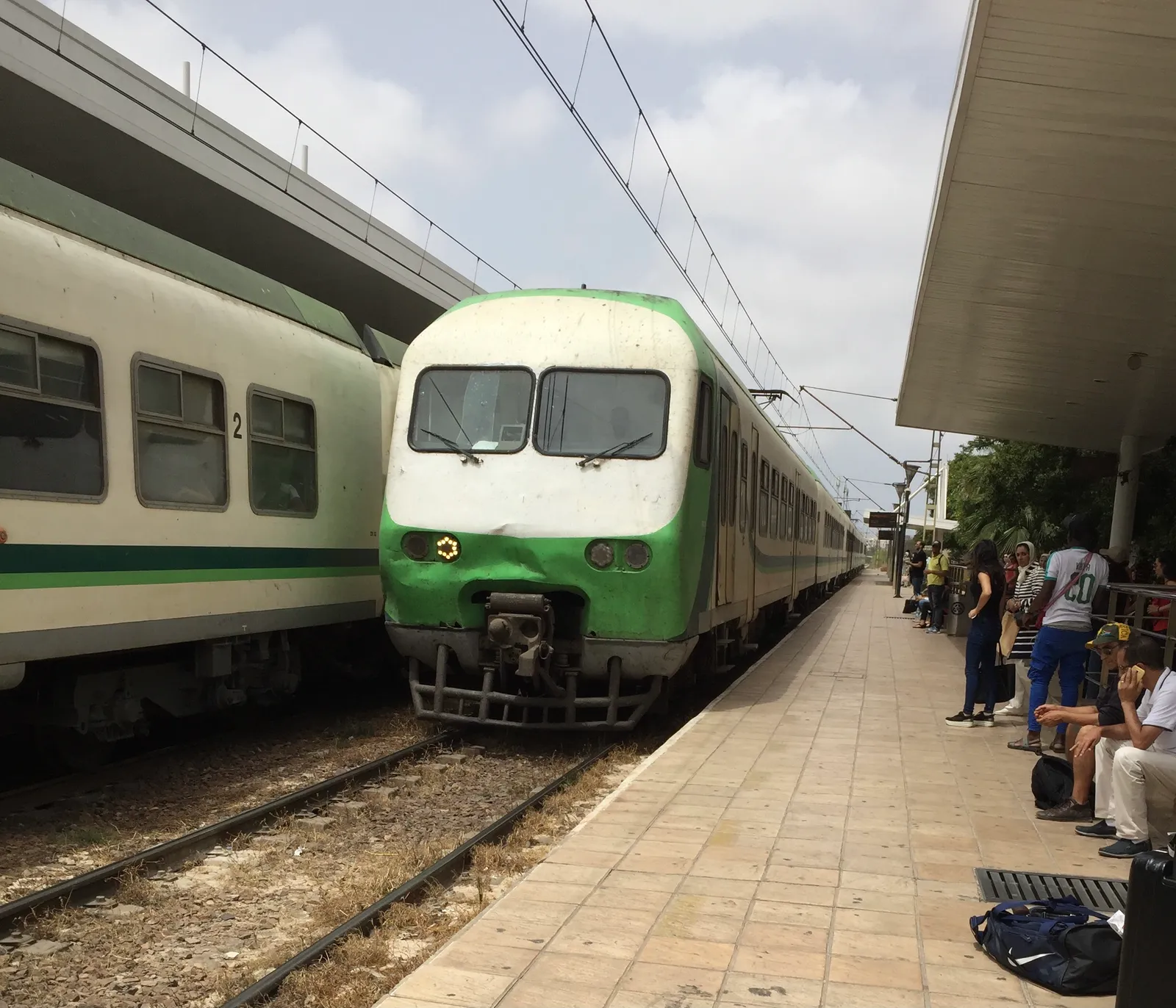
Route de l’Oasis got its station in 1912, and what stands there now dates from a 13-million-dirham rebuild finished on 4 January 2005, done expressly to spread the load away from the two crowded terminals in the centre. It worked: every southern intercity service to and from Casa-Voyageurs now calls here, along with the suburban trains toward Settat and El Jadida, on two platforms and nothing more. The tram stop outside puts the whole network within a flat 8-dirham fare.
Both indoor stops on this route are small buildings rather than big ones: 700 square metres of converted house at the museum, one open room of a church at the other end, neither with much floor to spare for a suitcase parked beside you.
The airport train passes through Casa-Oasis on its way south
Oasis is the last city stop on the ONCF run out to Mohammed V International Airport (CMN), which starts at Casa-Port, calls at Casa-Voyageurs and then here before the terminal, so boarding at Oasis saves the first two legs of the trip. Departures come about once an hour, second class costs around 50 dirhams, and the last one in each direction runs late in the evening. The hourly interval is the number to plan against: leave for the platform an hour earlier than the ride time alone suggests, or take a petit taxi, which runs on no timetable and costs several times as much.
That hourly gap is the only awkward thing about a stop here. The walking is a kilometre of flat pavement each way, the museum is one room after another of small objects behind glass, and both are easier at the end of a long connection with nothing in your hands.
Frequently asked questions
What should I do during a layover near Casa-Oasis Station in Casablanca?
Walk the kilometre west to the Museum of Moroccan Judaism at 81 Rue Chasseur Jules Gros, the only museum devoted to Jewish life anywhere in the Arab world, in a building that went up in 1948 as an orphanage: three exhibition rooms of ritual silver, costume, Berber jewellery and reconstructed synagogue interiors for 50 dirhams. Three to four hours covers that and the walk both ways with room to spare. With five, the tram from the door runs north to Place de l'Europe, where Notre-Dame de Lourdes has 800 square metres of Gabriel Loire's stained glass and costs nothing to walk into. Check the day first: the museum closes on Saturdays.
Is the Museum of Moroccan Judaism open at the weekend?
On Sunday, yes; on Saturday, no. It keeps 10 to 5 Monday to Friday and 11 to 3 on Sunday, and it shuts for Shabbat on Saturdays, which catches out anyone who lands on a Friday night and plans a Saturday morning around it. Admission is 50 dirhams. It also closes on Jewish holidays, so a date worth checking against the calendar rather than assuming.
Which trains actually stop at Casa-Oasis?
More than the two platforms suggest. Every southern intercity service running to and from Casa-Voyageurs calls here, along with the suburban trains toward Settat and El Jadida and the airport service, which is the point of the 2005 rebuild: the station was modernised specifically to take pressure off the two big terminals in the centre. There is also a tram stop at the door, on a flat 8-dirham fare to anywhere on the network.
What is there near Casa-Oasis that costs nothing?
The church at Place de l'Europe, which is the better of the two buildings on this route for anyone counting dirhams: Notre-Dame de Lourdes is free to enter, donations aside, and the stained glass is the reason to be there. The grotto in the yard outside, a scaled replica of the one at Lourdes with its own altar and candles, costs nothing either. The museum is the one stop on this route with a ticket price, and 50 dirhams is what it costs.