Bali Layover: Uluwatu Temple From DPS
A clifftop temple, a 121-metre statue of Vishnu and two beaches known for their sunsets sit within an hour’s drive of each other on Bali’s southern tip.
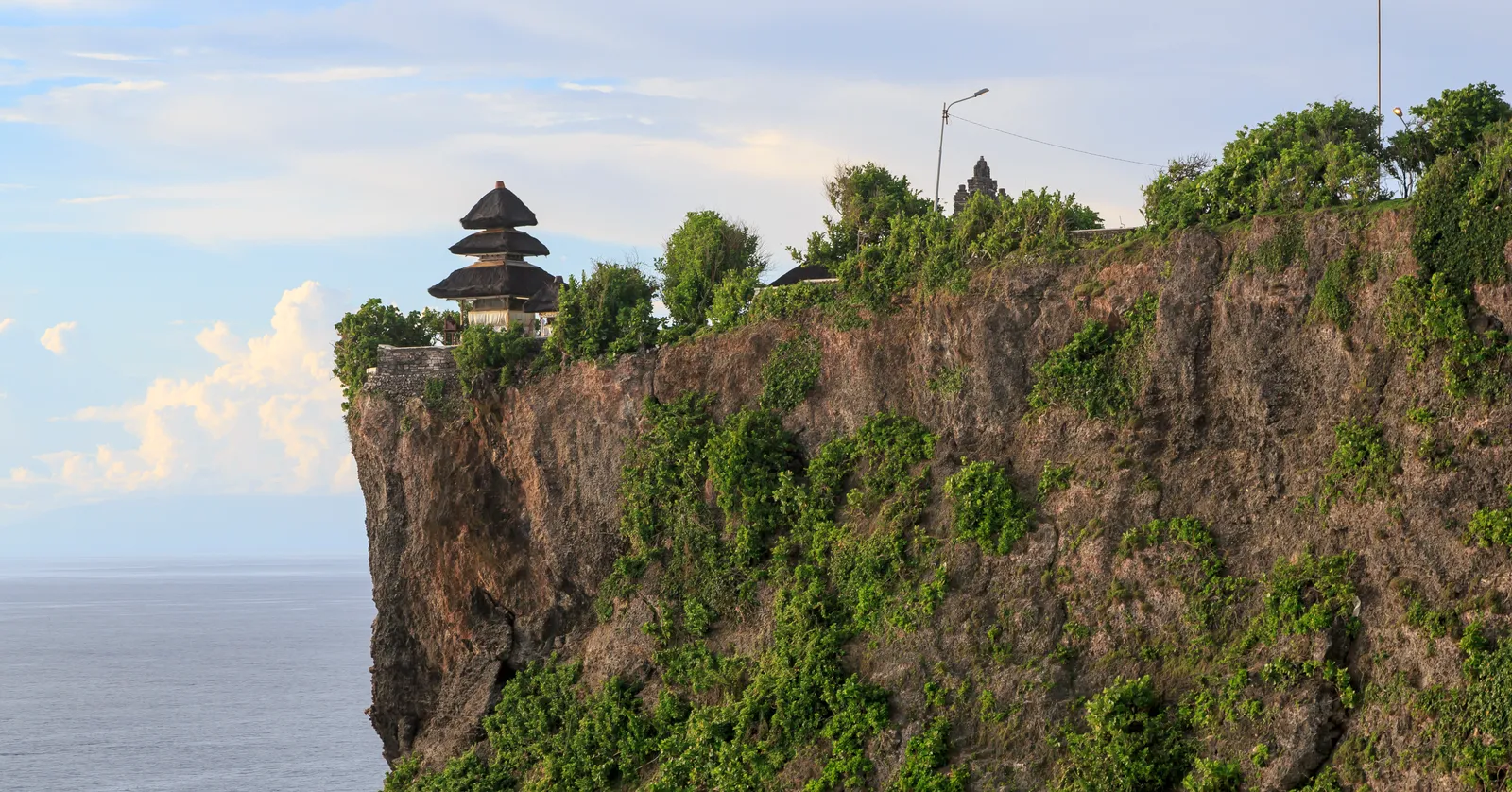
Uluwatu Temple sits on a 70-metre sea cliff
Pura Luhur Uluwatu is the Balinese name for the temple, and it is literal about the site: ulu is the edge, watu is the rock. The headland is the southwestern point of the Bukit, the raised limestone peninsula hanging off the bottom of Bali, with open Indian Ocean below it. The Javanese sage Empu Kuturan expanded the temple here in the 11th century, and Dang Hyang Nirartha added its lotus-throne shrines around 1500. Of Bali’s nine directional temples, the ring of sanctuaries that hold the island’s spiritual bearings, this is the one that stands on the sea. Entry is 60,000 rupiah for foreign adults and 40,000 for children, the gates open from seven in the morning until seven at night, and staff hand out sarongs and sashes free at the entrance, so meeting the dress code costs nothing.
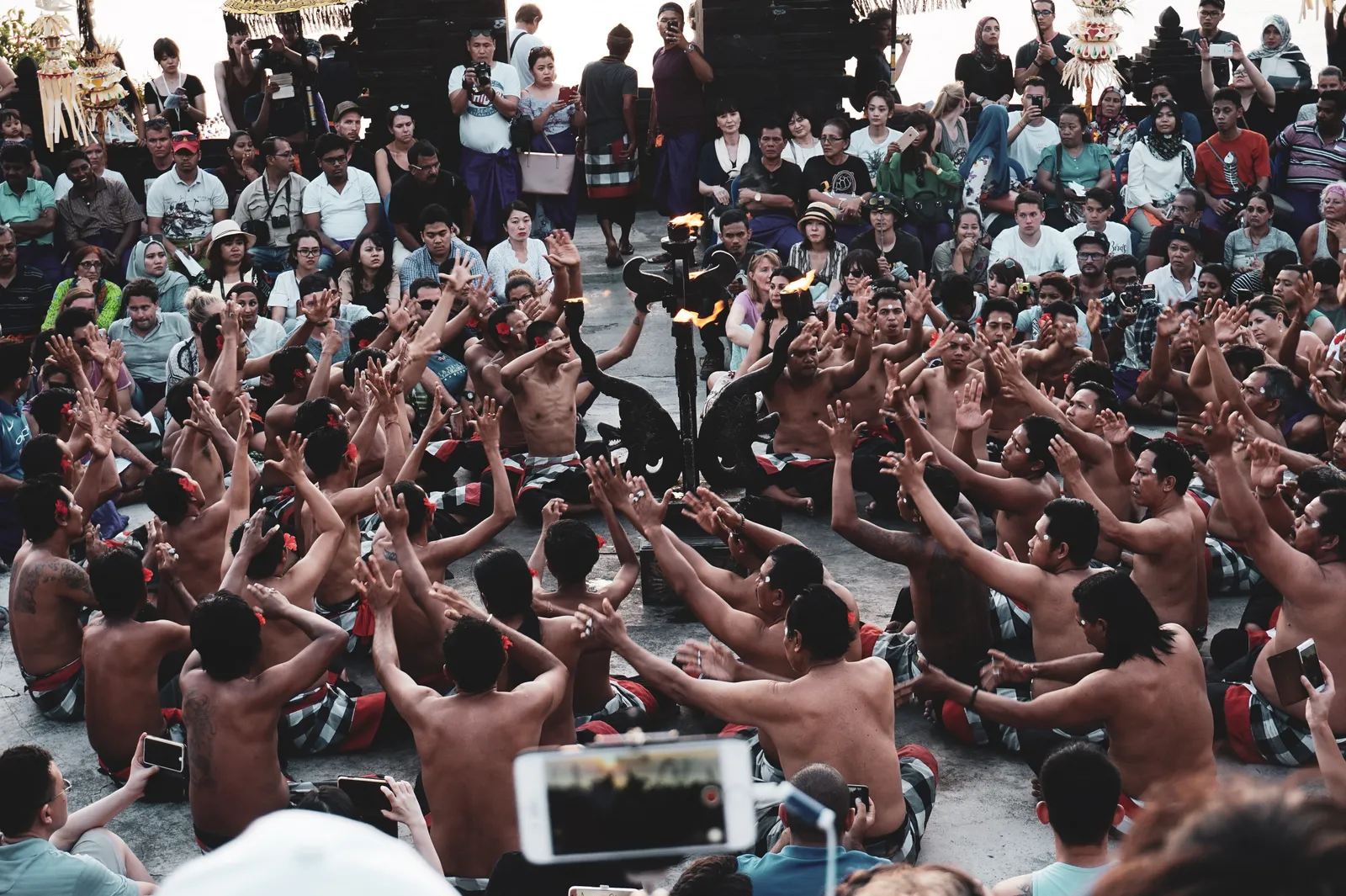
At six each evening a Kecak performance runs for about an hour in a stone amphitheatre cut into the cliff below the temple. There is no gamelan in it at all: the whole score is around a hundred men sitting in concentric rings chanting chak against each other in interlocking rhythm, while the Ramayana is acted out in the middle and the sun goes down behind it. The seating is unreserved stone tiers, 1,200 of them, and they routinely fill before five in the afternoon, so it is worth holding a ticket for the dance rather than turning up for one. It is sold separately from temple entry, at 150,000 rupiah.
The long-tailed macaques along the clifftop path are thieves rather than fighters. They go for phones, sunglasses, hats and flip-flops, and they have learned to hold an item until someone trades for it, so the temple keeps handlers on the path with fruit to do the trading. Getting between any two places on this southern tip means another car, and a suitcase goes in and out of a boot four or five times across an afternoon.
The Garuda Wisnu Kencana statue in a cut limestone quarry
Nyoman Nuarta drew Vishnu riding Garuda in 1990, broke ground in 1997, lost the project to the Asian financial crisis, restarted in 2013 and finished it on 31 July 2018: twenty-eight years from drawing to crown. The result stands on the Ungasan plateau in the south of the Bukit, 75 metres of copper and brass over a steel frame on a 46-metre pedestal, 121 metres and 4,000 tonnes in total. The myth behind it is a bargain: Garuda agreed to carry Vishnu in return for the elixir that would free his enslaved mother.
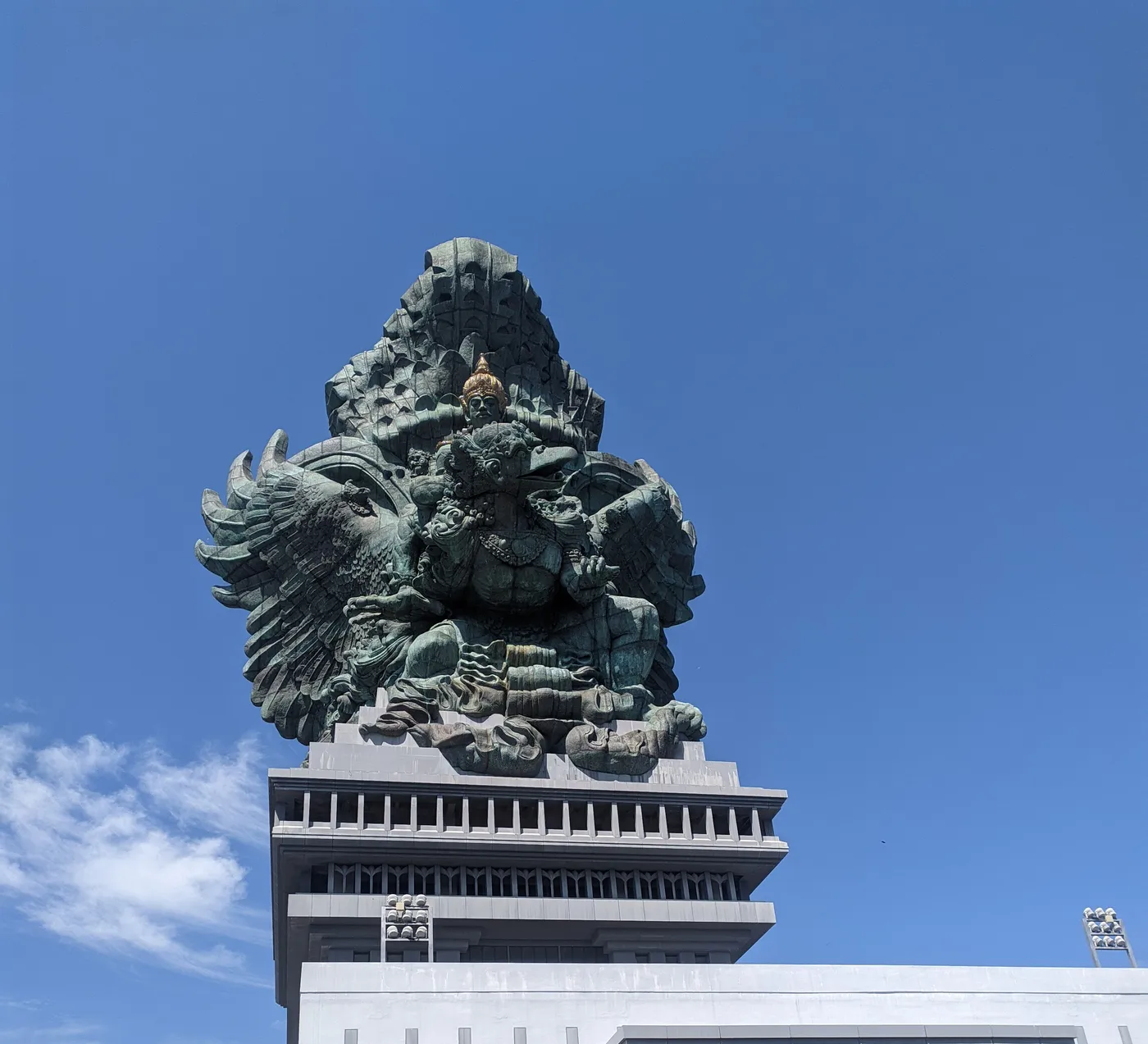
The park it stands in was quarried out of the limestone before it was landscaped, and the approach runs between the sheer cut walls that were left behind, which is a stranger and better piece of ground than the statue by itself would be. Balinese dance and gamelan run in the plazas below through the middle of the day, roughly eleven until six. Entry is 150,000 rupiah, and children under a metre tall go in free.
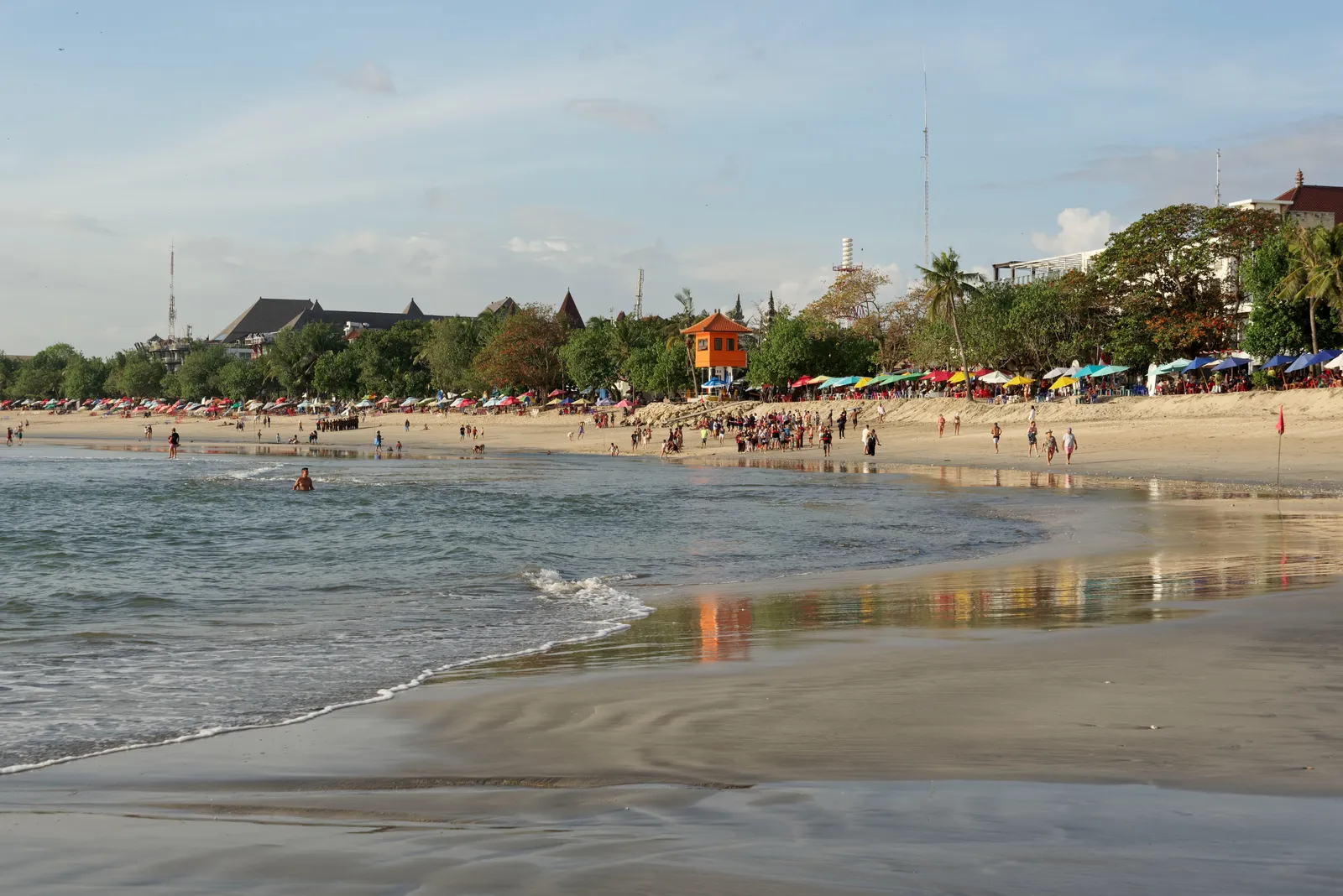
Kuta Beach breaks in long, shallow rollers
Two and a half kilometres of sand run from Tuban at the southern end of Kuta up to Legian at the northern one, over a sandy bottom rather than reef, which is what the surf schools lined up along it are teaching on. It is free to walk onto at any hour. Late afternoon is when it fills, and the crowd on the sand at sunset is most of the reason people come.
Two streets inland, on Jalan Legian, the Bali Bombing Memorial stands on the ground where Paddy’s Pub was. Carved stone, a marble plaque carrying the name and nationality of every one of the 202 people killed on 12 October 2002, and the flags of the countries they came from; 21 nationalities are on it. It was dedicated on the second anniversary, in 2004, and people still leave flowers at it.
A couple of blocks further in, on Jalan Kartika Plaza, Waterbom Bali opens daily from nine in the morning until six in the evening. It is the one stop in Kuta with lockers and hot showers built into it, which is worth something when the next thing you do is sit on a plane for eight hours, and day tickets are sold ahead.
Jimbaran Bay puts its seafood tables on the sand
Jimbaran Bay is the long west-facing curve on the neck of the Bukit, and its northern half is Kedonganan, where the fish market sits behind the beach and the boats land into it. Late in the afternoon the warungs along the shore carry tables and plastic chairs out of their kitchens and down onto the sand, set candles on them and grill whatever came in that day over coconut husks. You pick the fish by weight before it is cooked.
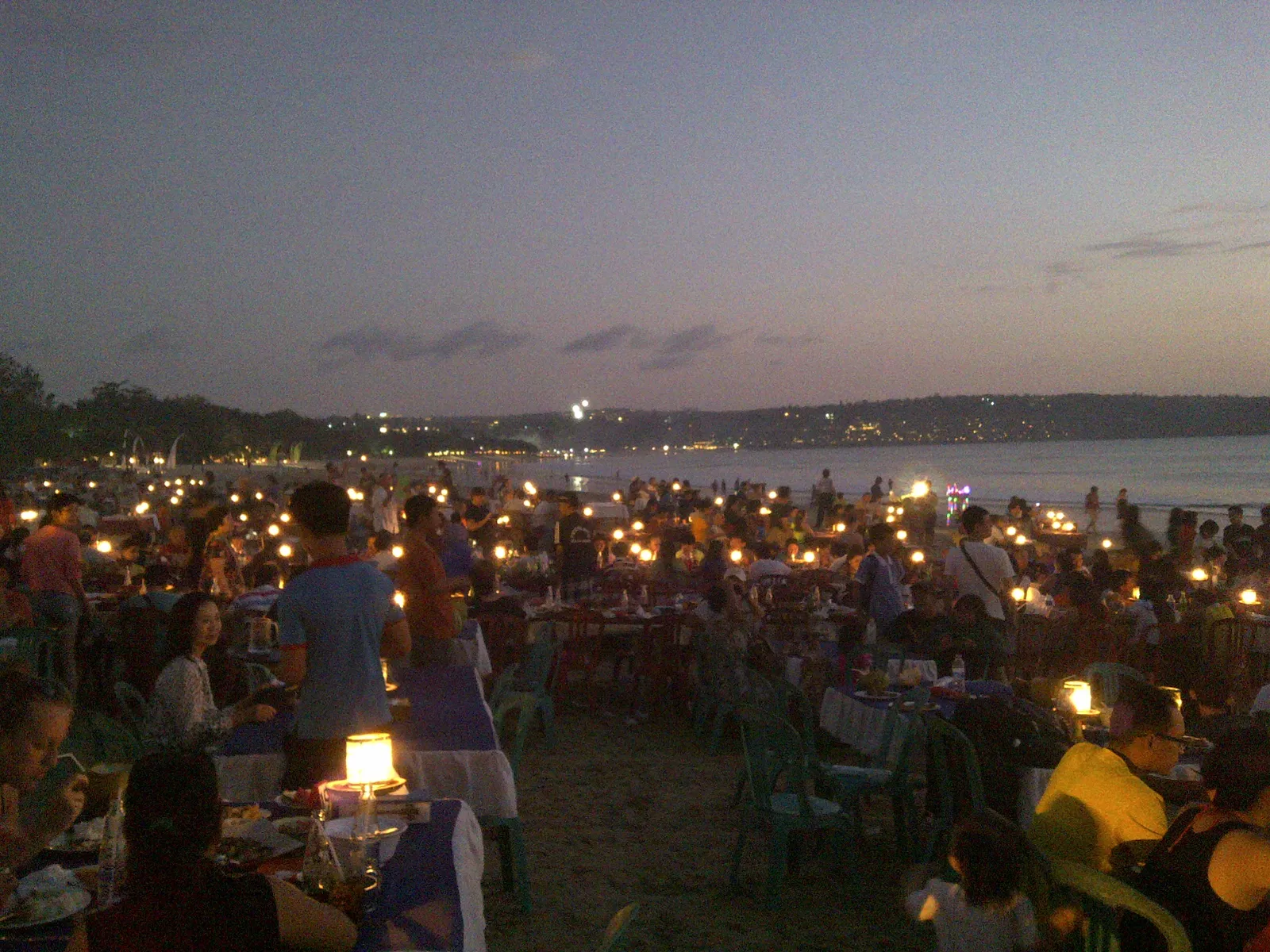
The bay faces west, so the sunset arrives over the water while the tables are being laid, and the whole curve lights up at once when the candles go on. Sitting down to eat is not compulsory: the sand is public and the walk along it is free.
Sanur’s seafront path runs five kilometres with no traffic on it
Sanur is on the east coast, facing across the strait toward Nusa Penida, which makes it the sunrise side of the island rather than the sunset one. A paved path about five kilometres long runs the length of its beach, flat, shaded in long stretches and closed to cars, so it is the one place in southern Bali where you can walk for an hour without negotiating a scooter. A reef sits a few hundred metres offshore and takes the swell out of the water inside it, which is why the beach here is lined with fishing outriggers and paddleboards instead of surf schools.
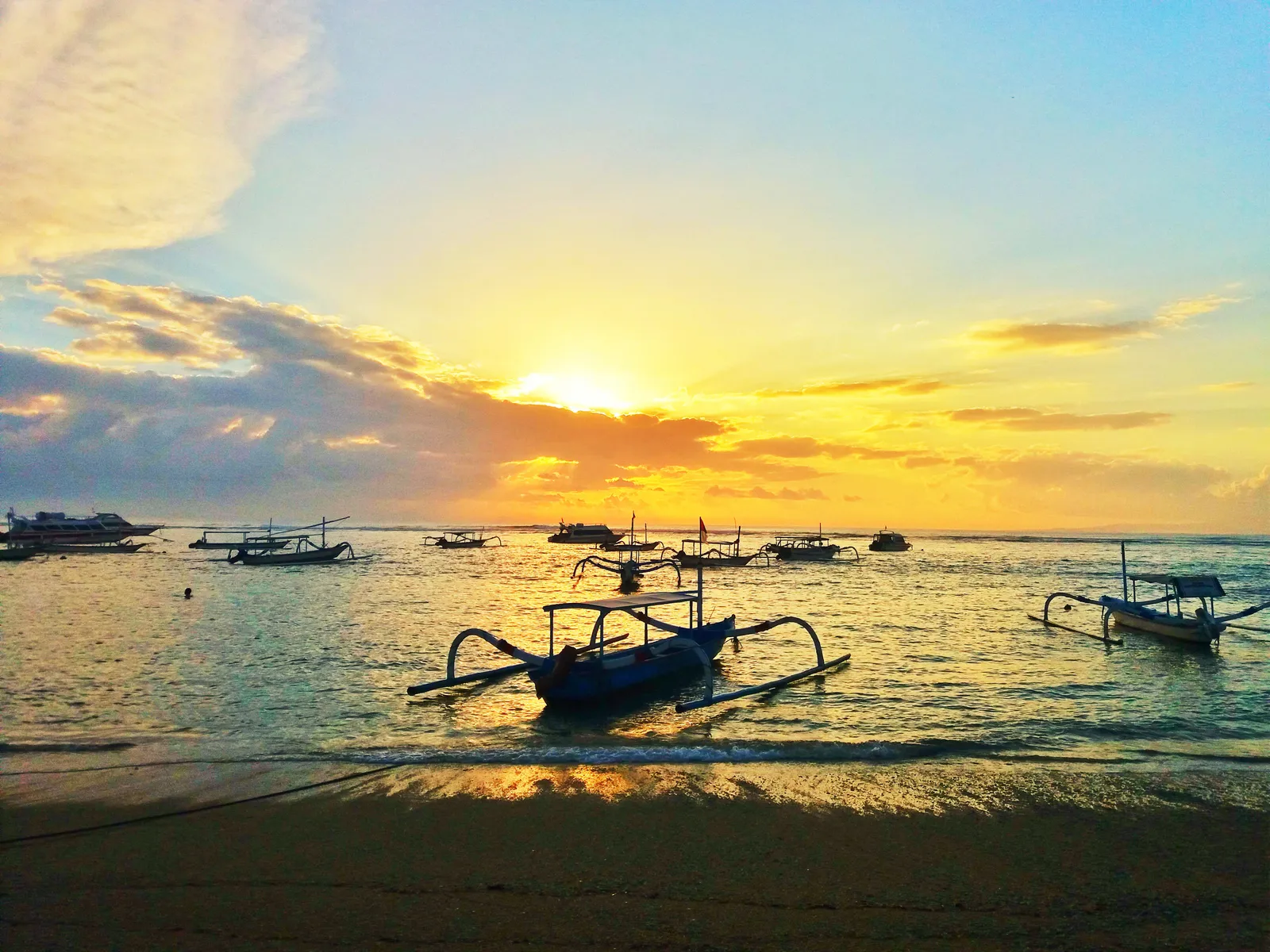
For an early flight rather than a late one this is the better half of the island: the sun comes up out of the sea in front of the path at around six, the boats are being pushed out at the same time, and none of it needs a ticket.
The Bajra Sandhi Monument holds 33 dioramas of Bali’s history
In Renon, the government quarter on the eastern side of Denpasar, a dark stone tower stands in the middle of an open field called Puputan Renon. It is 45 metres tall, the number picked for 1945 and Indonesian independence, and it is shaped like a bajra, the bronze bell a Balinese priest rings through a ceremony. Inside, 33 dioramas run around the first floor, working from prehistory through the Majapahit period to the puputan, the fight-to-the-death charges the Badung and Klungkung courts made against Dutch rifles in 1906 and 1908, which is where the field outside gets its name.
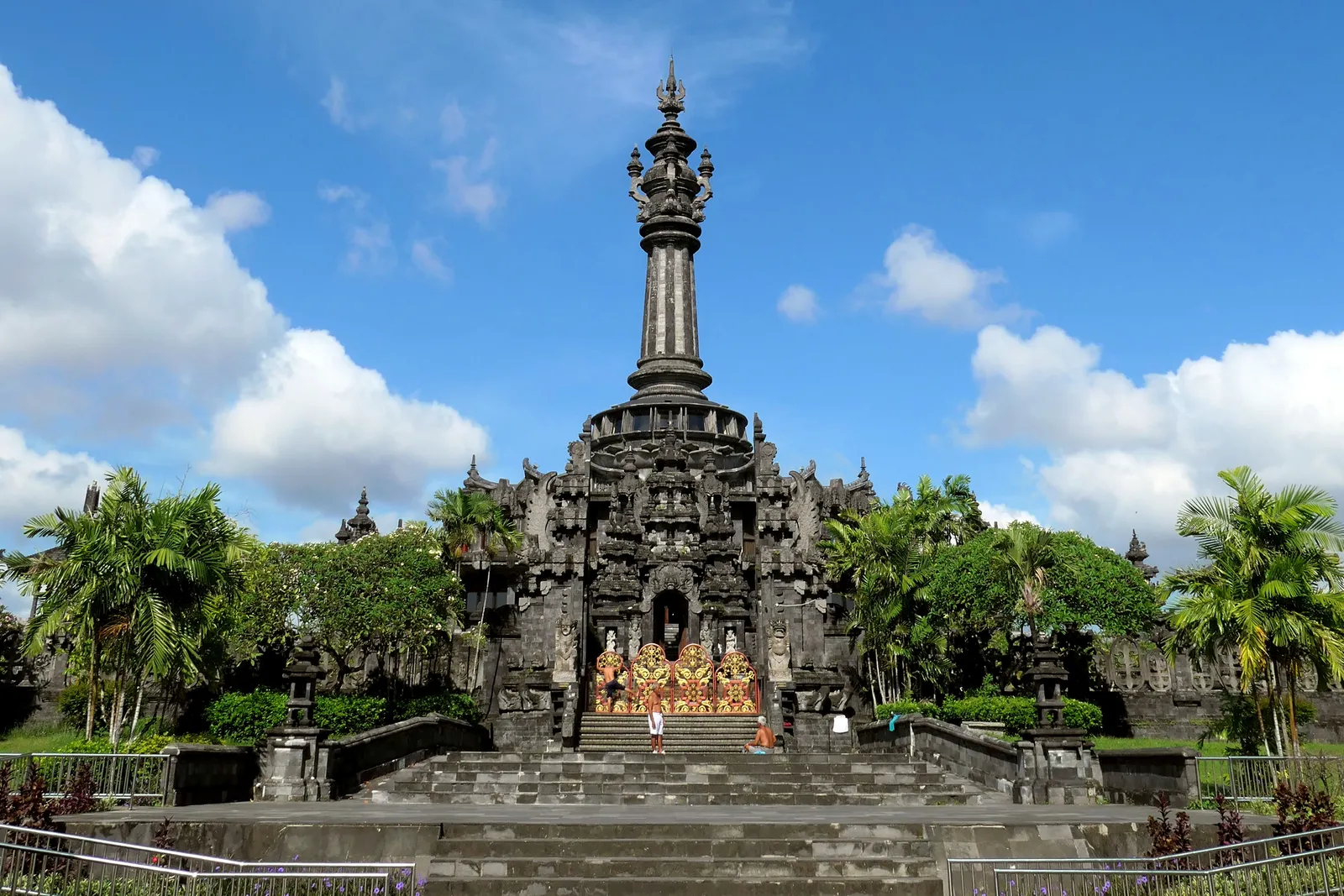
A spiral staircase climbs the inside of the tower to a lookout under the bell, which is the only high vantage point in the middle of Denpasar that anyone can buy their way into. Adults pay 50,000 rupiah and under-18s 25,000. The field around it is a running track in the early morning and a kite ground in the afternoon, and costs nothing.
Bali has no railway at all, so the way back is a car
The options out to I Gusti Ngurah Rai International Airport are the official taxi counter, a metered Blue Bird, or Grab and Gojek through their apps, all three of which keep their own lounges at the terminal. Drop-offs at departures are unrestricted, which is worth knowing because pickups are not: in parts of the island local transport cooperatives stop app drivers from collecting passengers at all.
One public bus corridor does reach the airport. Trans Metro Dewata’s corridor 2 runs 32.9 kilometres between GOR Ngurah Rai in Denpasar and the domestic car park at the terminal, calling at 38 stops including Sentral Parkir Kuta, for 4,400 rupiah. Payment is cashless only, through Indonesian bank cards or the QRIS code, which rules it out for most people arriving with foreign cards. The first bus leaves the airport at 05:45 and the last at 20:35, so it is no use at all for a genuinely late departure.
Whatever you take, the constraint is traffic rather than distance. The Ngurah Rai bypass and the Dewa Ruci junction at Simpang Siur carry better than 20,000 vehicles a day between them, and an underpass now takes airport traffic beneath the junction rather than through it. From the Nusa Dua side, the Bali Mandara toll road avoids the whole thing by crossing the Gulf of Benoa on 8.3 kilometres of bridge built out over the water, because the land route past the runway could not be widened. Three hours at the terminal for an international departure, plus an hour’s drive, plus the evening peak if you are moving between five and seven, is the arithmetic that actually decides when to leave.
If the gap is short enough that leaving Tuban makes no sense, Pantai Jerman, German Beach, sits at the northern end of the runway, free and open at any hour, and is where people go to fish and watch aircraft come in low over the water. If the long wait on this route is at the other end of it rather than this one, a Singapore layover covers the connection most Bali itineraries put on the far side.
All of which is the argument for turning up to any of it without a bag. The temple path, the stone tiers of the amphitheatre, the sand at Jimbaran and the boot of the fourth car of the day are all easier in exactly the same way, which is by not having the suitcase in them.
Frequently asked questions
What should I do during a layover in Bali?
The southern tip of the island holds four things worth the drive: Uluwatu Temple on its sea cliff, with a Kecak performance in the amphitheatre below it at six every evening; the Garuda Wisnu Kencana statue on the Ungasan plateau; Kuta Beach and the 2002 bombing memorial two streets behind it; and the seafood tables that go out on the sand at Jimbaran in the late afternoon. Six to eight hours covers the Uluwatu run and the dance with time to spare; three or four is enough for Jimbaran and Kuta, which are the closest of the four. The dance is the one thing to hold a ticket for, since the amphitheatre fills before five. Skipping it costs you an evening but not the shape of the day, because both beaches are free to walk onto and the sunset is the same one.
Do I need a visa to leave the airport in Bali?
To clear immigration you need an entry permit, and for most visitors that means a visa on arrival costing 500,000 rupiah for a 30-day stay. Citizens of Brunei, Cambodia, Laos, Malaysia, Myanmar, the Philippines, Singapore, Thailand, Vietnam and Timor-Leste enter visa-free for 30 days instead. Applying for the electronic version ahead of time, through the immigration department's own site, lets you use the automated gates rather than queue at the visa counter, and it wants about three working days. Separately, foreign visitors coming into Bali pay a one-off tourist levy of 150,000 rupiah, cashless only, either online in advance through the provincial Love Bali portal or at a counter on arrival.
What happens on Bali during Nyepi?
Nyepi is the Balinese Hindu new year and the island stops completely for it: 24 hours from six in the morning to six the next morning with no fire, no work, no entertainment and nobody out on the street. The island's only airport shuts for the whole of it, handling nothing but medical evacuations and emergencies, which makes it the one date in the year when a connection through Bali cannot happen at all. The date moves with the Balinese Saka calendar and usually falls in March, and the night before it is the opposite of silent: villages parade giant papier-mâché ogoh-ogoh demons through the streets and then burn them.
Does a Bali layover still work in the rainy season?
Bali's wet months run November to March, and the usual shape of a day in them is a clear or cloudy morning followed by a heavy downpour in the afternoon or evening that is often over inside the hour. January and February are the exception, with stretches where the rain settles in for days. Two things on this list are open to the sky: the amphitheatre at Uluwatu, which runs its performance under the weather rather than around it, and the beach tables at Jimbaran, which the warungs pull back under cover when it comes down. The dioramas inside the Bajra Sandhi Monument in Denpasar are the reliable indoor stop, and the drive between any two places is under a roof anyway.
How long should I allow to get back to I Gusti Ngurah Rai airport from Uluwatu?
Budget an hour for the drive and treat that as the good case. The Bukit road funnels into the Ngurah Rai bypass and then into the Dewa Ruci junction at Simpang Siur, which better than 20,000 vehicles a day pass through, and the evening peak can add most of another hour on top. With three hours wanted at the terminal for an international departure, leaving Uluwatu four hours before the flight is the honest figure, and closer to four and a half if you are moving between five and seven in the evening. The public bus is no help here: Trans Metro Dewata's corridor 2 reaches the airport but not the Bukit, and its last departure is in the evening.