Nusa Dua Layover, Bali: Pacific Art and Spray
Part of the full Bali Layover: Uluwatu Temple From DPS
Nusa Dua in Bali holds a museum of more than 600 Asia-Pacific works, a beach flat enough inside its reef to swim properly in, and a gap in the limestone headland that the swell fires spray out of.
Museum Pasifika fills eleven rooms with Asia-Pacific art
The collection runs wider than the name suggests: Indonesian painters, the European artists who settled in Bali between the wars, and work from across the Pacific rim, more than 600 pieces in all, hung across eleven rooms in a quiet block in the middle of the estate. Foreign visitors pay 100,000 rupiah and domestic visitors 70,000, and entry can be held in advance.
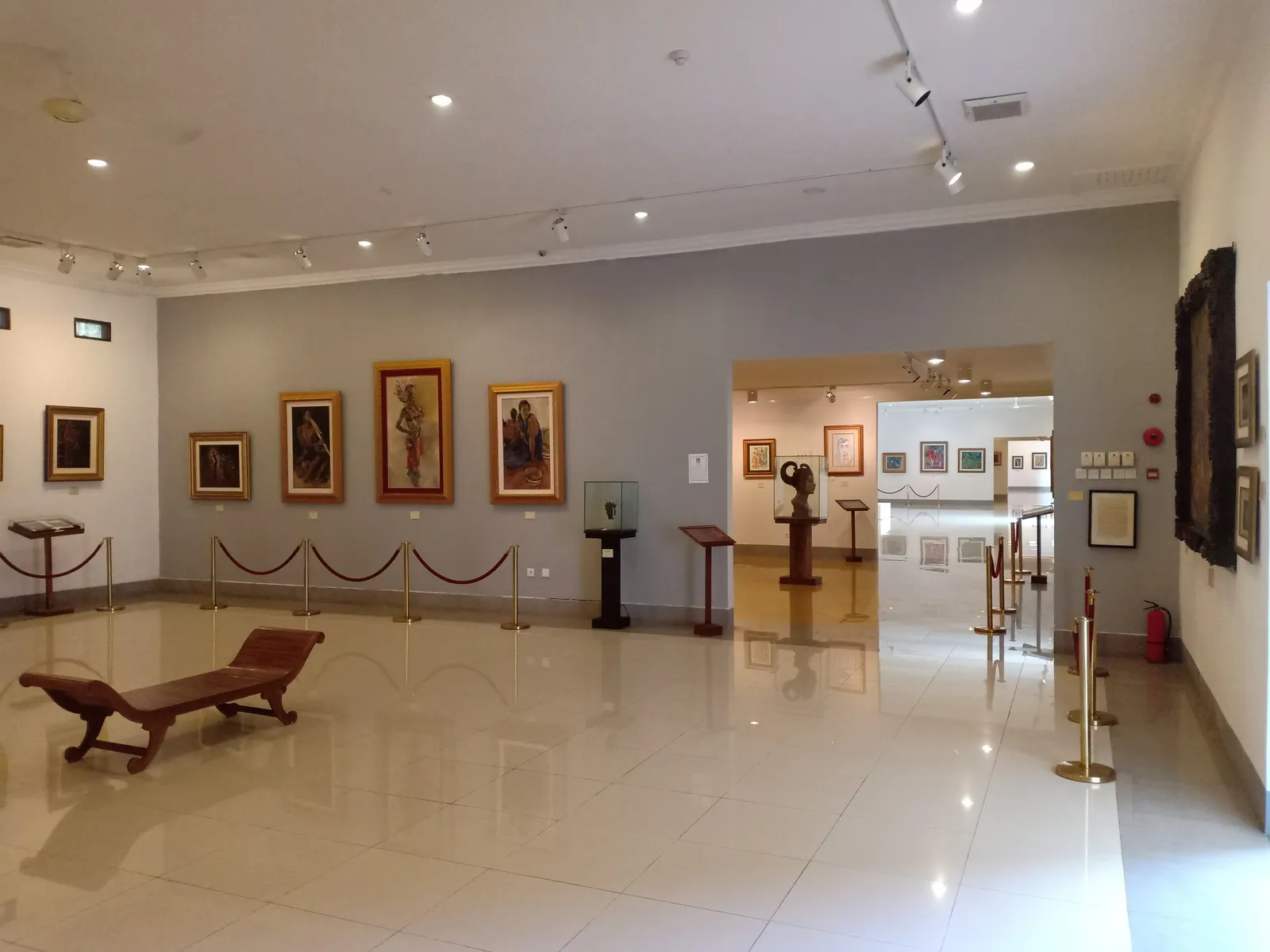
It is air-conditioned, almost empty on a weekday, and roughly two hours’ worth of rooms if you read the labels, which makes it the reliable option when the middle of the day is too hot to be outside in.
The reef off Nusa Dua keeps the water inside it flat
Swimming is the point here in a way it is not on the west coast: a reef a few hundred metres offshore takes the swell out before it reaches the sand, so the water inside is clear and calm rather than surf. A paved path runs the length of the beach behind the hotels, the sand is public along all of it, and thatched bales sit out on the low stone jetties for people fishing. Parasailing and jet ski slots run off the same beach, mostly in the morning when the water is stillest.
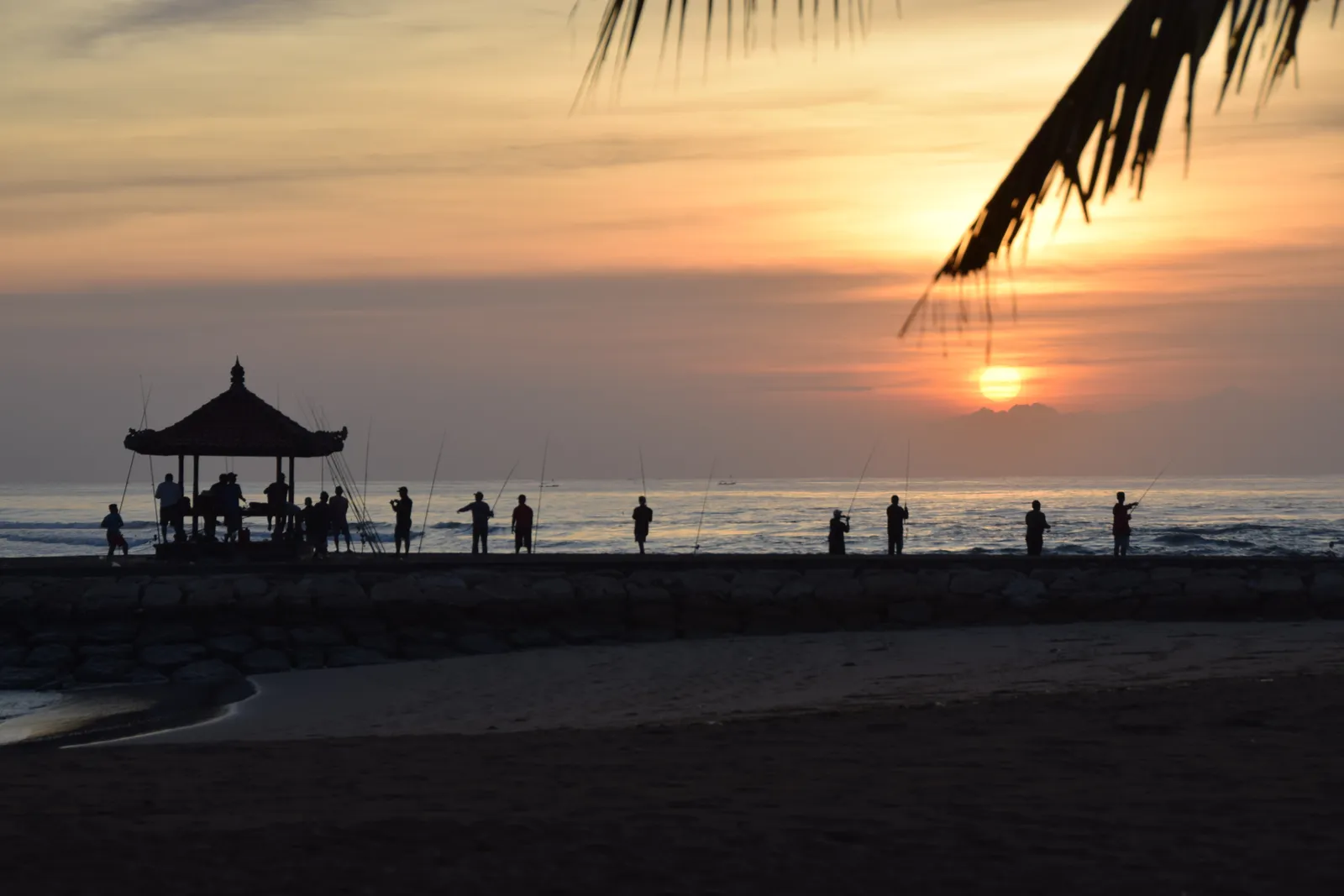
The beach faces east, so the sun comes up over the water here and the middle of the afternoon is the hot, glaring part of the day rather than the golden one.
Water Blow throws spray out of a split in the limestone
The headland at the eastern end of the estate is eroded limestone, and the sea has worked a narrow channel into it. When a swell runs, the water is funnelled up that channel and thrown straight upward out of the rock, sometimes over the railings and the people standing at them. A boardwalk crosses the headland to the viewing platforms, and there is a small charge at the entrance.
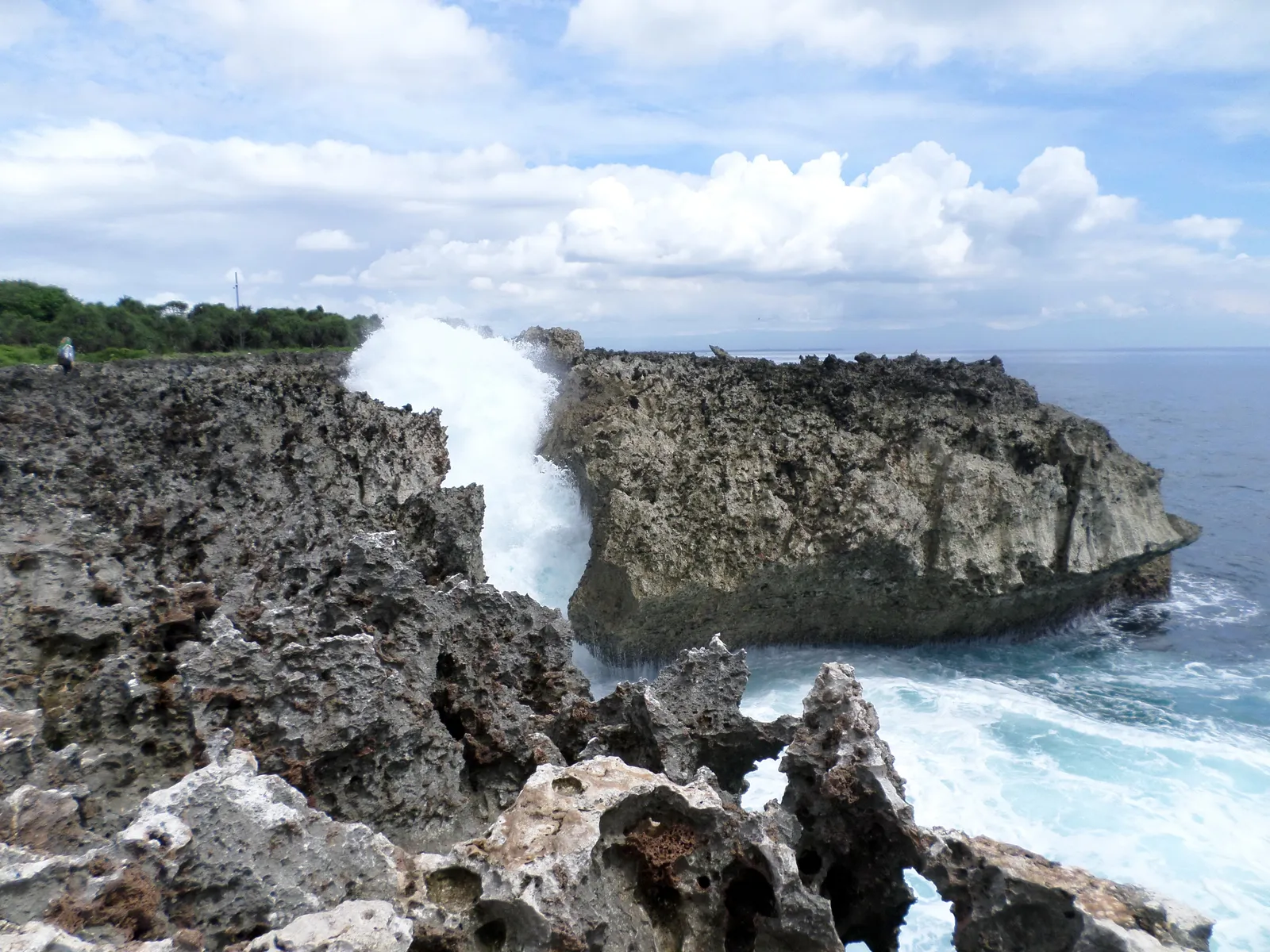
It depends entirely on the sea, so on a flat calm day it does almost nothing and on a high tide with swell it is loud and soaking. Either way the headland itself looks back across both bays, and the gardens laid out around it are the quietest ground in the estate.
If the enclave feels too managed for a spare afternoon, the main Bali guide covers the temple and statue on the Bukit on the other side of the peninsula, and Jimbaran Bay is where the same drive ends up if the plan is dinner rather than sightseeing.
The gates into the estate are carved stone with barriers under them
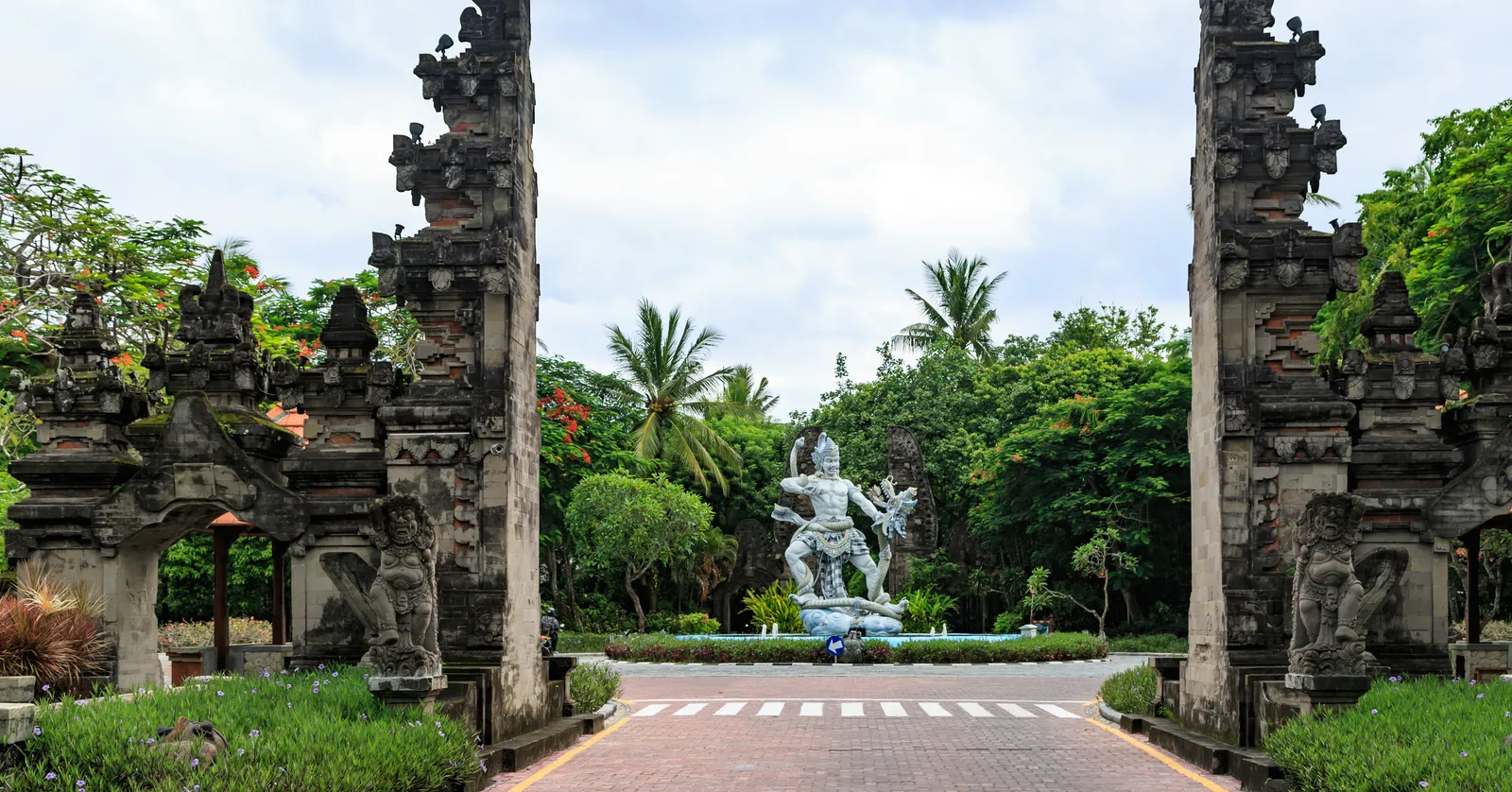
Nusa Dua is a managed tourism estate rather than a private one, and its entrances are split candi bentar gateways in carved stone with a guard post and a barrier set into the road beneath them. Anyone can come in: cars stop for a vehicle check, the internal roads and the beach are public, and the museum and the shopping complex sell to walk-ins. A stone fountain statue stands on the roundabout immediately inside the southern gate, which is the first thing most arrivals see of the place.
What the gates change is the rhythm rather than the access. Screening happens again at the doors of the shopping complex and most of the hotels, so anything you are carrying gets opened and looked at several times over an afternoon.
The toll bridge out of Nusa Dua crosses open water
The Bali Mandara toll road runs 8.3 kilometres from the northern edge of the estate to the airport approach, carried on a bridge over the Gulf of Benoa rather than around it, and it was built out over the water because the land route past the runway could not be widened. Twenty to thirty minutes to I Gusti Ngurah Rai International Airport is the result, on a road that carries none of the Kuta traffic the land route would have run through.
Trans Metro Dewata runs a corridor down to Nusa Dua but not through to the airport, so the ride out is a car, and drop-offs at departures are unrestricted for taxis and app drivers alike. Three hours at the terminal on top of the drive is the arithmetic for an international departure.
Frequently asked questions
What should I do during a layover near Nusa Dua in Bali?
Three things sit within a kilometre of each other inside the enclave. Museum Pasifika holds more than 600 works across eleven rooms and charges 100,000 rupiah for foreign visitors, the beach in front of the hotels is reef-protected and flat enough to swim in properly, and Water Blow, on the headland at the far end, is a split in the limestone that the swell fires a column of spray out of. Four to five hours covers all three at a walk. The museum is the only one with a ticket worth buying ahead, and skipping it still leaves the headland and the water.
Can you get into Nusa Dua if you are not staying at a hotel there?
Yes. It is a managed tourism estate rather than a private one, and the gates are open to anyone: cars go through a barrier and a vehicle check on the way in, the beach and the internal roads are public, and the museum and shopping complex sell to walk-ins. What the gates do change is the rhythm of a visit. Security posts sit at the estate entrances and again at the doors of the shopping complex and most hotels, so anything you are carrying gets looked at more than once in an afternoon.
What actually happens at Water Blow, and is it always worth going?
The headland at the eastern end of the estate is eroded limestone, and the sea has cut a narrow channel into it. When a swell runs in, the water is funnelled up the channel and thrown vertically out of the gap, sometimes over the viewing platforms. That means it depends entirely on the sea: on a flat day it does very little. High tide with a swell running is when it works, and the walk out along the boardwalk is worth doing regardless, because the headland looks back over both bays.