Jimbaran Bay Layover, Bali: Seafood on Sand
Part of the full Bali Layover: Uluwatu Temple From DPS
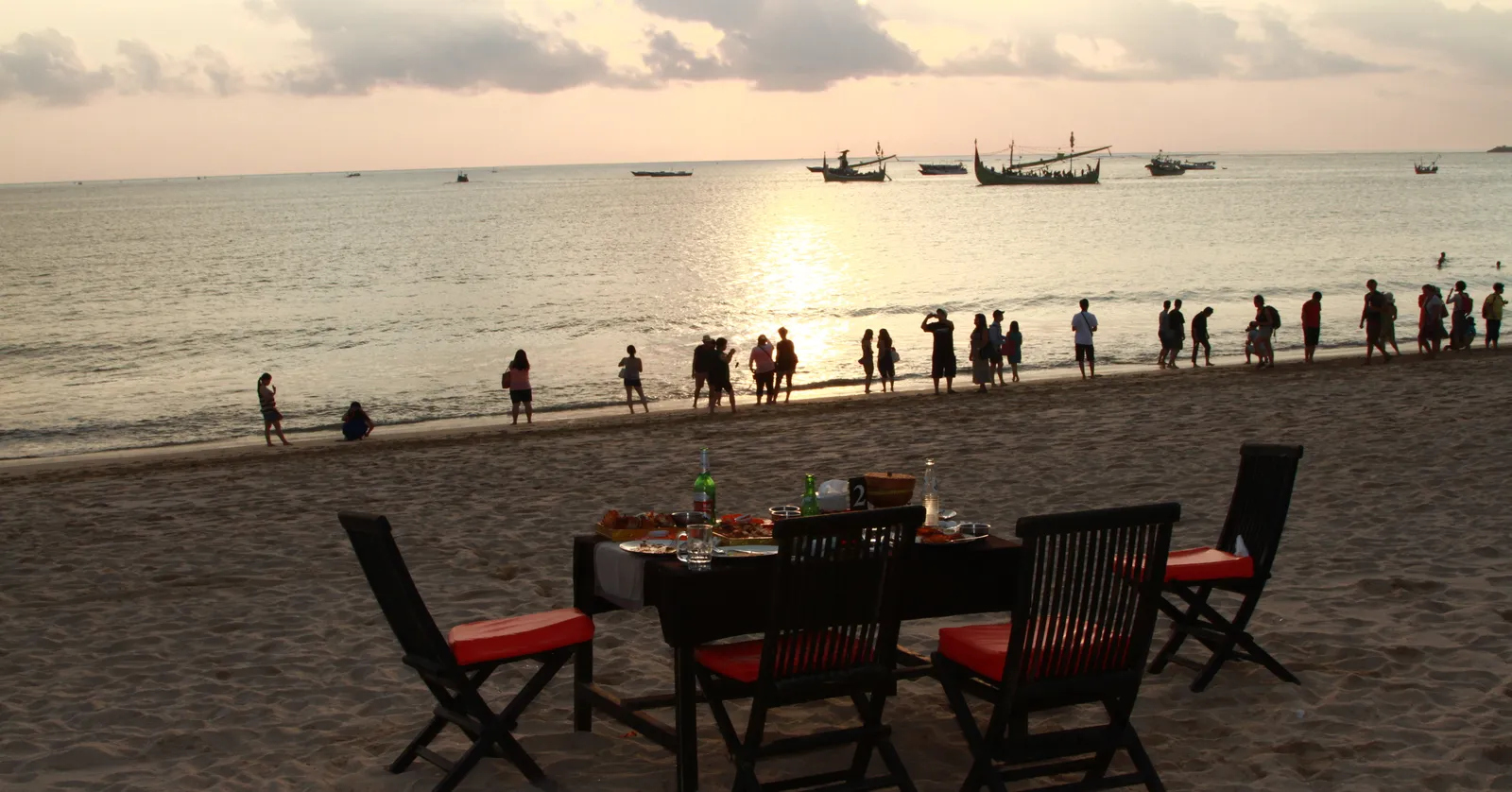
Jimbaran Bay in Bali sets its seafood tables directly on the sand, and the fish market at Kedonganan at the north end of the same bay will grill whatever you buy there for a small charge per kilo.
The warungs on Muaya Beach carry their tables onto the sand
Nothing about this is a permanent set-up. In the late afternoon the kitchens along the bay bring tables and plastic chairs out through their own back doors and down onto the beach, line them up facing the water, and put a candle or a hurricane lamp on each one. The cooking happens behind, over coconut husks, and the fish comes off the grill with sambal matah and a plate of rice. A set seafood dinner is worth holding on a weekend, when the front row of tables goes early.
Kedonganan’s fish market sells by the kilo and grills it next door
Fish, prawns, squid, clams and lobster come off the boats and onto concrete slabs under umbrellas, and you buy by weight from whoever has what you want. The stalls behind the market will then cook it for roughly 15,000 to 30,000 rupiah a kilo, steamed rice and vegetables usually included, and you eat it on a bench looking at the same water the fish came out of.
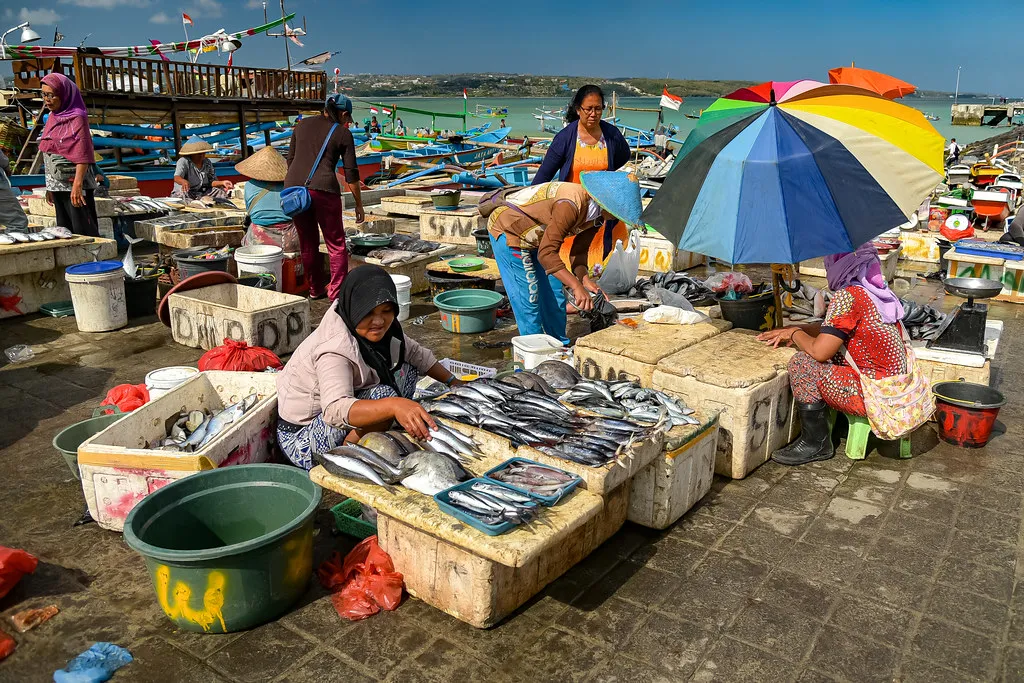
It opens at seven in the morning and runs until seven at night from Monday to Friday, an extra two hours at the weekend. Early morning is when the boats land and the market is at its loudest; late afternoon is when it is set up for dinner. Either way it is a working market with no concessions to visitors, which is most of its appeal.
The floor is hosed down through the day and stays wet under the slabs, and the grill stalls behind it seat you on plain benches with nothing underneath them to set anything on.
Jimbaran Bay faces west, so the sun goes down over the water
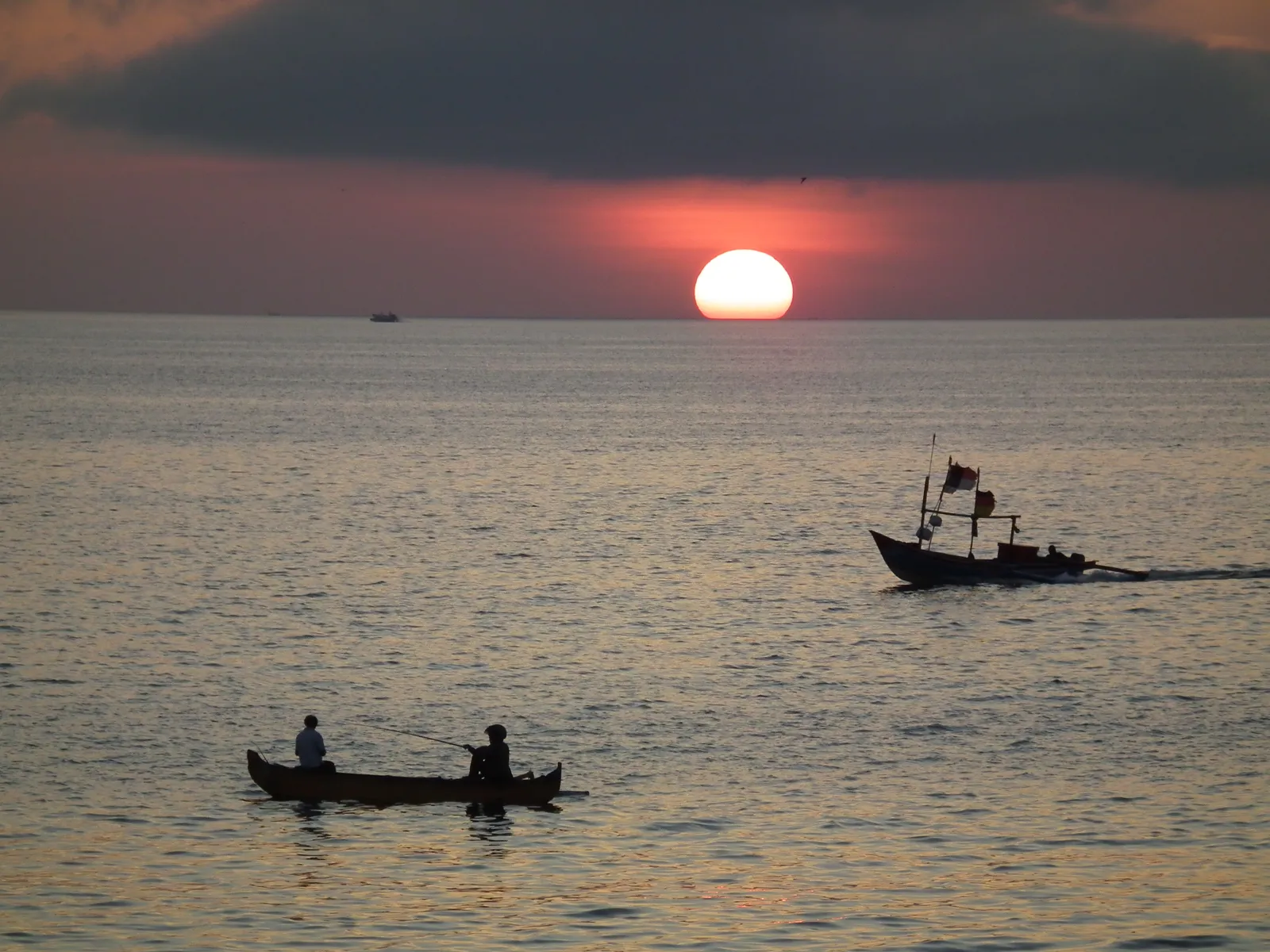
The bay is a long shallow curve on the neck of the Bukit peninsula, and because it opens west, the sunset arrives over open water rather than behind a headland. Outriggers sit moored a little way out and are still being rowed in while the light goes, which is the picture most people leave with. The sand is public along the whole bay, so the walk between Kedonganan and Muaya, about half an hour, costs nothing whether or not you sit down to eat.
If there is more time than one meal needs, the main Bali guide covers the statue and the clifftop temple further south on the same peninsula, both within half an hour of here, and Kuta’s beach is a similar drive north if the light has already gone.
Eight kilometres north to the airport, and the runway is most of it
The drive to I Gusti Ngurah Rai International Airport runs fifteen to twenty-five minutes up the Ngurah Rai bypass, which is short enough that Jimbaran is the last stop on this coast you can still leave late from. The pinch point is the Dewa Ruci junction at Simpang Siur rather than anything on the bay itself, and it is worse between five and seven, exactly when people are driving down here for dinner rather than away from it.
Trans Metro Dewata’s corridors do not come to this bay, so a car is the only way back, and the kitchens will call one while you are paying. Allow three hours at the terminal for an international departure on top of the drive, which for a seven o’clock sunset means a flight after eleven rather than one at nine.
Frequently asked questions
What should I do during a layover near Jimbaran Bay in Bali?
This is an evening stop rather than an afternoon one. The warungs along Muaya Beach carry their tables and chairs down onto the sand in the late afternoon, light candles on them and grill the day's catch over coconut husks, with the sunset arriving over the water while the tables are being laid. The fish market at Kedonganan, at the northern end of the same bay, is the cheaper way to do the same thing: buy by the kilo and carry it to a stall to be cooked. Four to five hours built around sunset covers either comfortably. Nothing here needs booking, though a table at the busier restaurants on a weekend is worth reserving.
How much does it cost to eat at Jimbaran on a budget?
The market route is the cheap one. At the Kedonganan fish market you pick what you want off the slab and pay by weight, then carry it to one of the stalls behind the market, which will grill it for roughly 15,000 to 30,000 rupiah a kilo and usually throw in steamed rice and vegetables. That is a fraction of what the same fish costs at a table on the sand a few hundred metres south, and you eat it on a wooden bench looking at the same bay. The market runs from seven in the morning to seven at night on weekdays and stays open until nine at the weekend.
Is the beach at Jimbaran free to walk on without eating?
Yes. The sand is public the whole way along the bay, and nobody stops you walking the length of it whether or not you sit down. The restaurants own the tables and the lighting, not the beach, so the sunset costs nothing and the walk between Muaya and Kedonganan is about half an hour on flat sand. Swimming is straightforward here too, because the bay faces west into calmer water than the surf beaches on the other side of the peninsula.
What time does the sun actually set at Jimbaran?
Between about 6.07pm and 6.48pm, whatever the month. Bali sits roughly 8.6 degrees south of the equator, so the gap between its longest and shortest day is around an hour across the whole year and sunset barely moves: the earliest falls in late May, the latest in late January. That makes this the easiest evening in Bali to plan, because the timing is the same in July as it is in December. Be at a table by five and the rest of the tables will still be going out around you when the light goes.