Bali Airport Layover: The Beach by the Runway
Part of the full Bali Layover: Uluwatu Temple From DPS
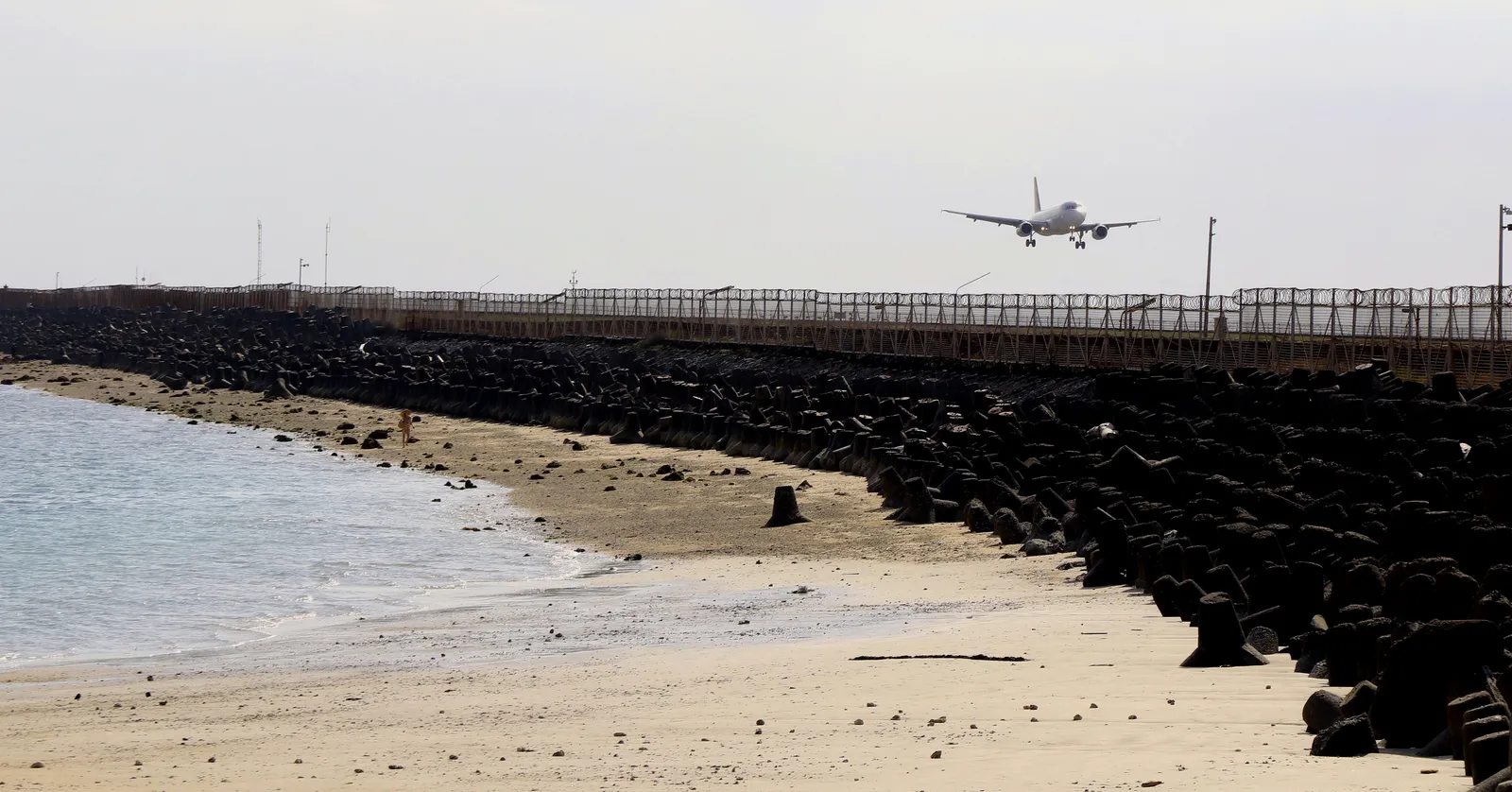
Two free beaches sit at either end of the runway at Bali’s I Gusti Ngurah Rai International Airport, Pantai Jerman on the north side and Pantai Kelan on the south, and Kuta’s own sand begins about fifteen minutes north of the terminal in Tuban.
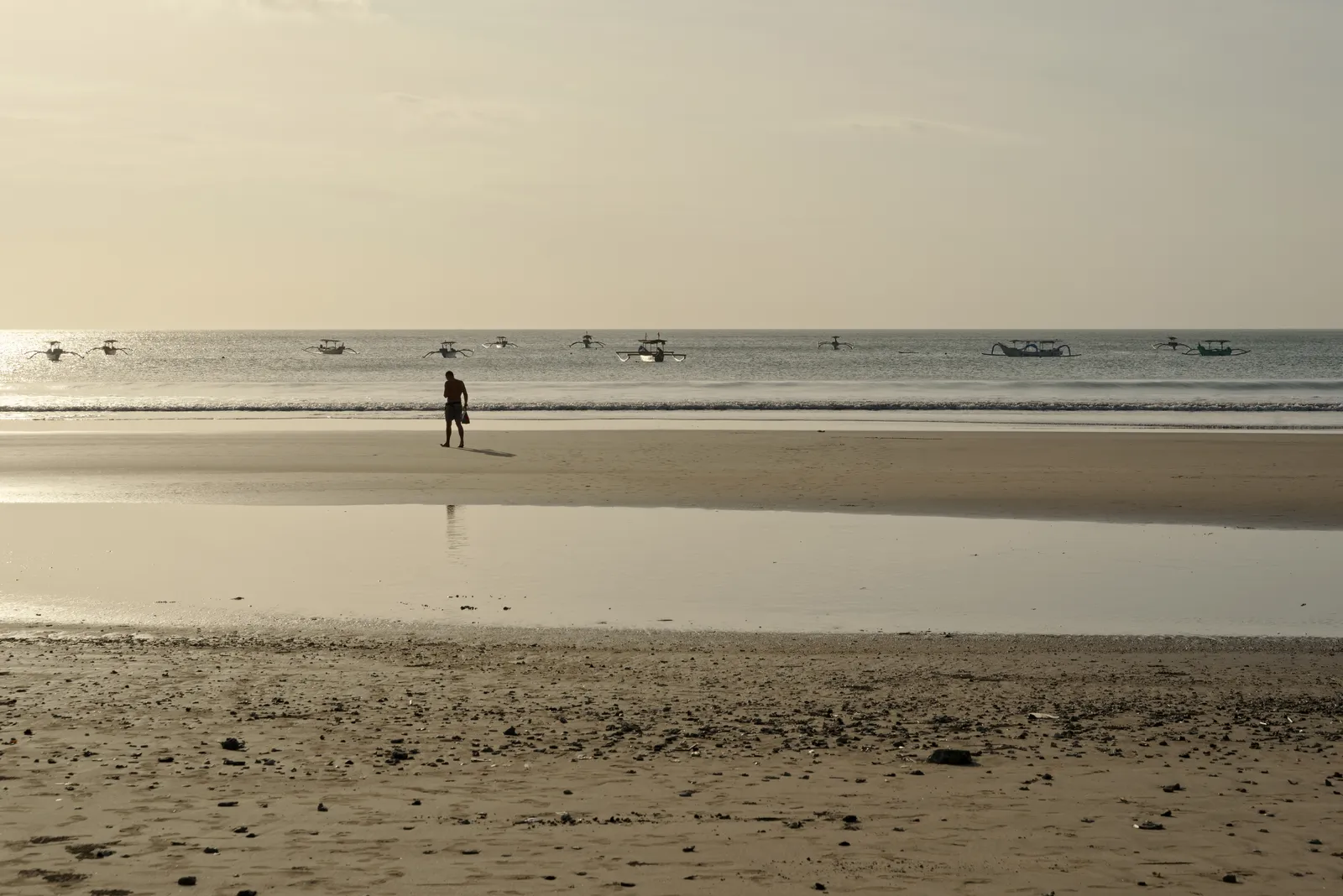
Outrigger boats and beginner surf on Kuta’s Tuban end
Tuban is the district the runway sits in, a strip of hotels and shopfronts between the airport fence and Kuta proper, and the sand at its northern edge is where Kuta Beach starts. The break here is shallow and sandy-bottomed, boards are rented from stands on the beach, and a beginner lesson runs a couple of hours with a board and an instructor included, which fits a long connection more comfortably than it sounds.
Getting out of the terminal at all means clearing immigration first. A visa on arrival is 500,000 rupiah for most nationalities, Bali’s own tourist levy is another 150,000 on top, and both are paid once, so a two-hour gap rarely justifies either. From four hours up the arithmetic changes completely.
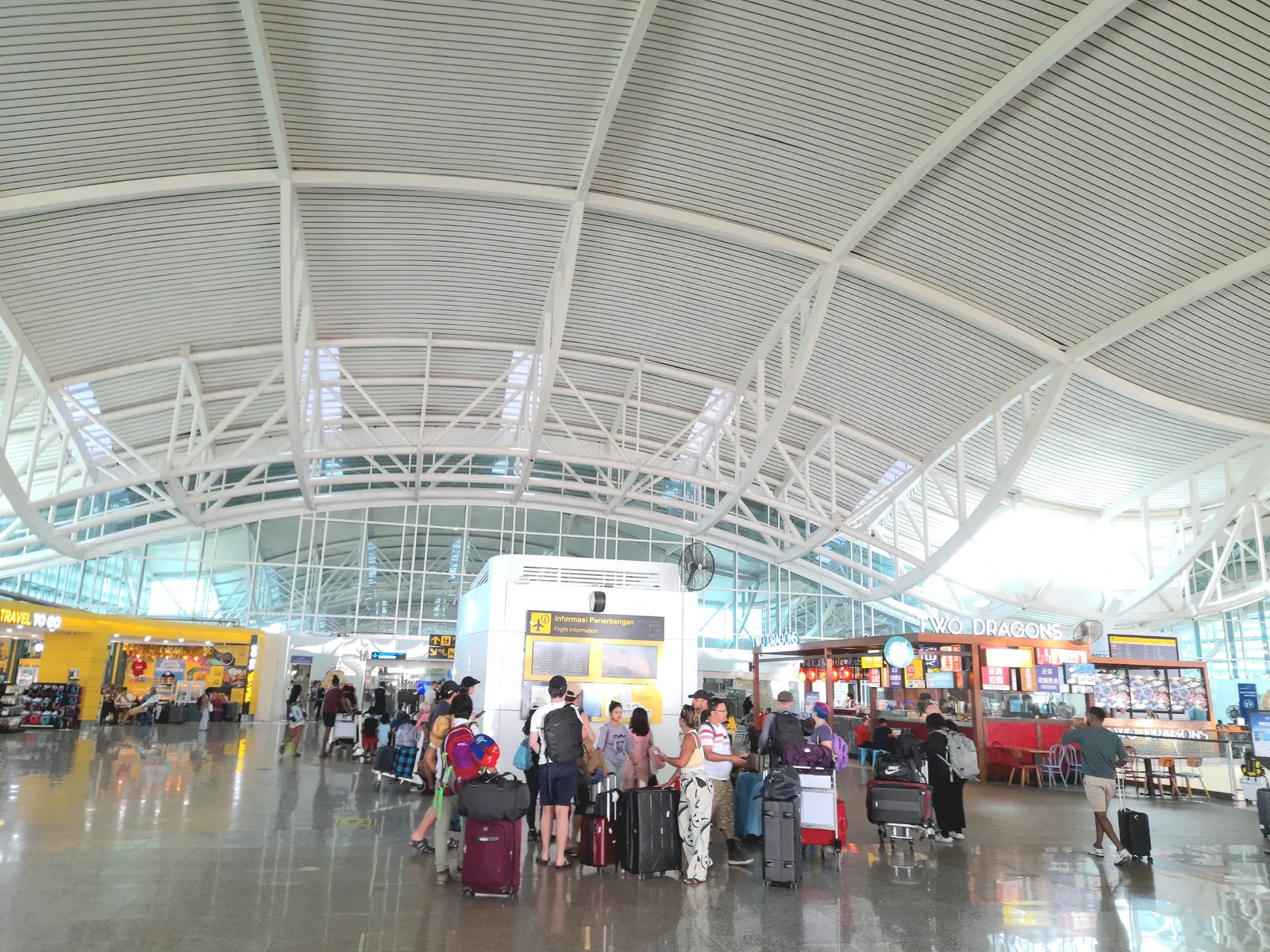
The ribbed roof over the international departure hall
Bali rebuilt this terminal for the APEC summit in 2013, and the departure hall it left behind is a single curved span of white ribs on branching steel columns, with 62 check-in counters under it and seats for more than 3,000 people. The columns carry Balinese detailing borrowed from the kul-kul towers that stand in temple courtyards, which is more than most airports attempt.
Several paid lounges work the international side, and a departure lounge pass is the sensible fallback when the gap is short enough that leaving makes no sense. The left-luggage desks are the other thing worth knowing about: they are staffed counters rather than lockers, they bill by the calendar day rather than the hour from around 70,000 rupiah, and every bag goes through a scanner before they will take it.
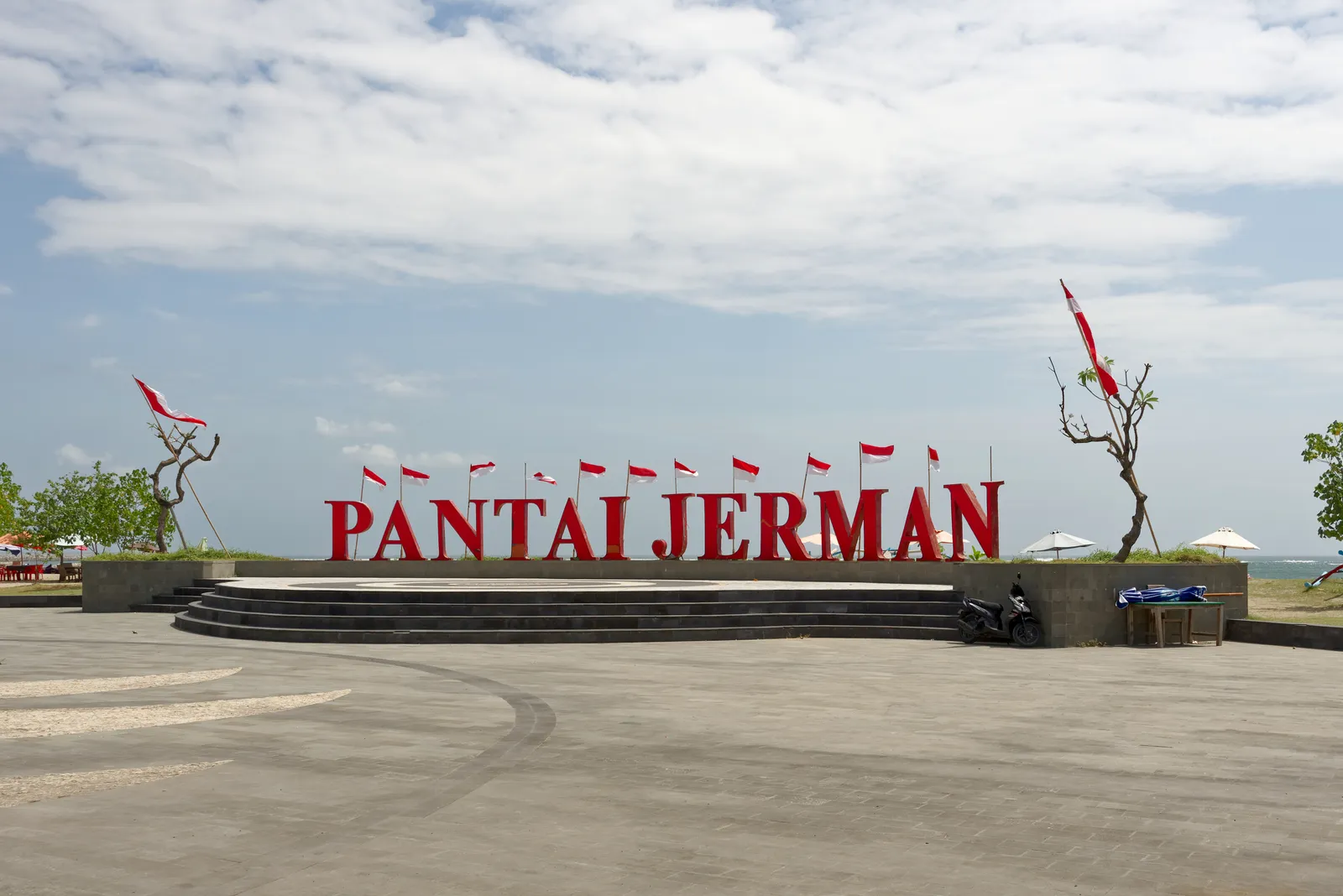
German Beach and Kelan Beach sit either side of the runway
Pantai Jerman takes its name from the German expatriates who settled this part of Tuban, and its forecourt now carries the words in red letters two metres high with a line of Indonesian flags behind them. It is free, open at any hour, and the parking costs a few thousand rupiah. What people come for is the northern side of the runway: aircraft cross the water low enough that the undercarriage is the loudest thing on the beach.
Pantai Kelan does the same job from the southern side, toward Kedonganan, and the approach passes directly over it. The runway is built out onto reclaimed ground because the land behind it could not be widened, so both beaches end in the same line of black interlocking blocks rather than in dunes, and local fishermen work the water right up against them. Sunset lands over the sea from either one.
Anything past a five-hour gap is worth spending somewhere other than Tuban. The Bukit cliffs start about forty minutes south, and the main Bali guide covers the temple, the statue and the beaches out that way, all of which need the drive back building into the plan.
Whichever version of the day you take, the left-luggage desk is the thing to settle first, because its clock runs on calendar days and not on how long you are actually gone.
Frequently asked questions
What should I do during a layover near I Gusti Ngurah Rai International Airport in Bali?
Everything worth doing on a short connection here is in Tuban, the strip the runway runs through. Kuta's sand begins about fifteen minutes north of the terminal and is the one stop with surf schools, cold drinks and somewhere to sit. German Beach is five minutes away on the runway's northern side and costs nothing, and Kelan Beach does the same job from the southern side, directly under the landing path. Three to five hours covers any of them comfortably; under three and the immigration queue and the fares eat most of it, so the departure lounge is the honest answer instead.
Is there luggage storage at Bali's airport, and what does it cost?
There are staffed left-luggage desks rather than self-service lockers, and you will find them outside the international departures entrance, on the upper level of the international terminal, and in the domestic arrivals hall near baggage claim. They bill by the calendar day rather than by the hour, starting around 70,000 rupiah for a bag up to ten kilos, with more for larger, heavier or electronic items, so a six-hour stop and an overnight cost the same. Every bag goes through a scanner before the desk will accept it, which is worth budgeting a few minutes for at a busy hour.
Can you watch planes land from the beaches next to the runway?
Yes, and that is most of the reason locals go to either of them. German Beach sits along the northern side of the runway and Kelan Beach along the southern, so between them they cover both ends of the approach, and the aircraft come in low over the seawall rather than over buildings. Both are free, open at any hour, and cost only a small parking fee. The runway is built out onto reclaimed ground with a rock breakwater along it, which is why the sand at both stops ends in a line of black boulders rather than dunes.
What is there to do at the airport itself if the gap is too short to leave?
The international departure hall seats over 3,000 people under a curved ribbed roof that was rebuilt for the 2013 APEC summit, with 62 check-in counters under it, and there is enough retail and food on the upper level to fill an hour without paying for a seat. Past that, the paid lounges are the useful option: several operate on the international side with day passes sold at the door or online in advance.