Denpasar Layover, Bali: Puputan Badung Square
Part of the full Bali Layover: Uluwatu Temple From DPS
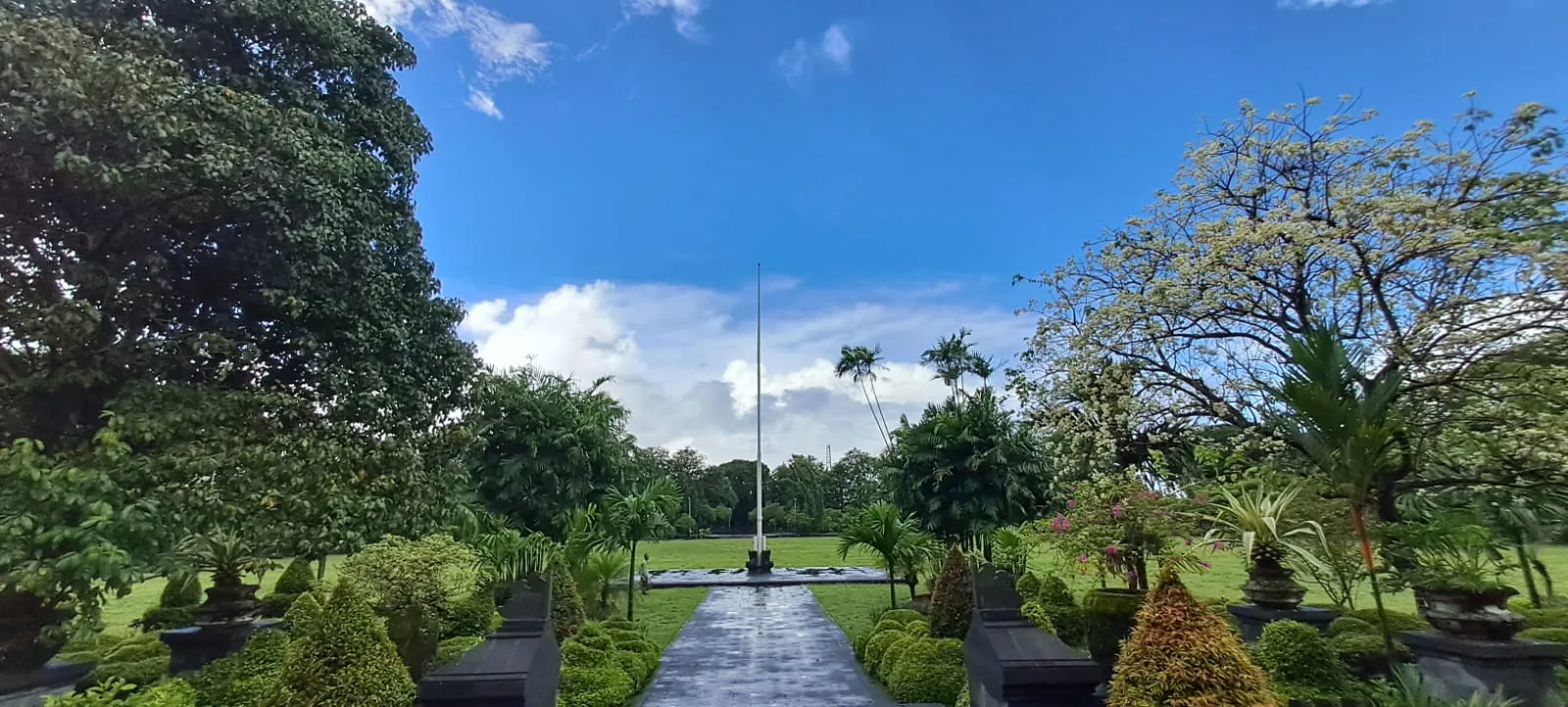
Puputan Badung Square in central Denpasar has a museum laid out like a royal palace on one side of it, a 1953 state temple next to that, and Bali’s largest traditional market a few minutes west.
The Bali Museum was built on the ground of the palace that burned
P.J. Moojen designed it in 1931, on the site of the Denpasar royal palace the Dutch destroyed in 1906, and used what had stood there as the model: the outer walls and the sequence of courtyards follow palace layout rather than museum layout, so you move through gateways and gardens between buildings instead of along corridors. Four pavilions carry the collections and are named for Balinese regions. Tabanan holds theatrical masks and gamelan instruments, Karangasem sculpture and painting, Buleleng textiles, and Timur the archaeology, including Bronze Age drums and spears.
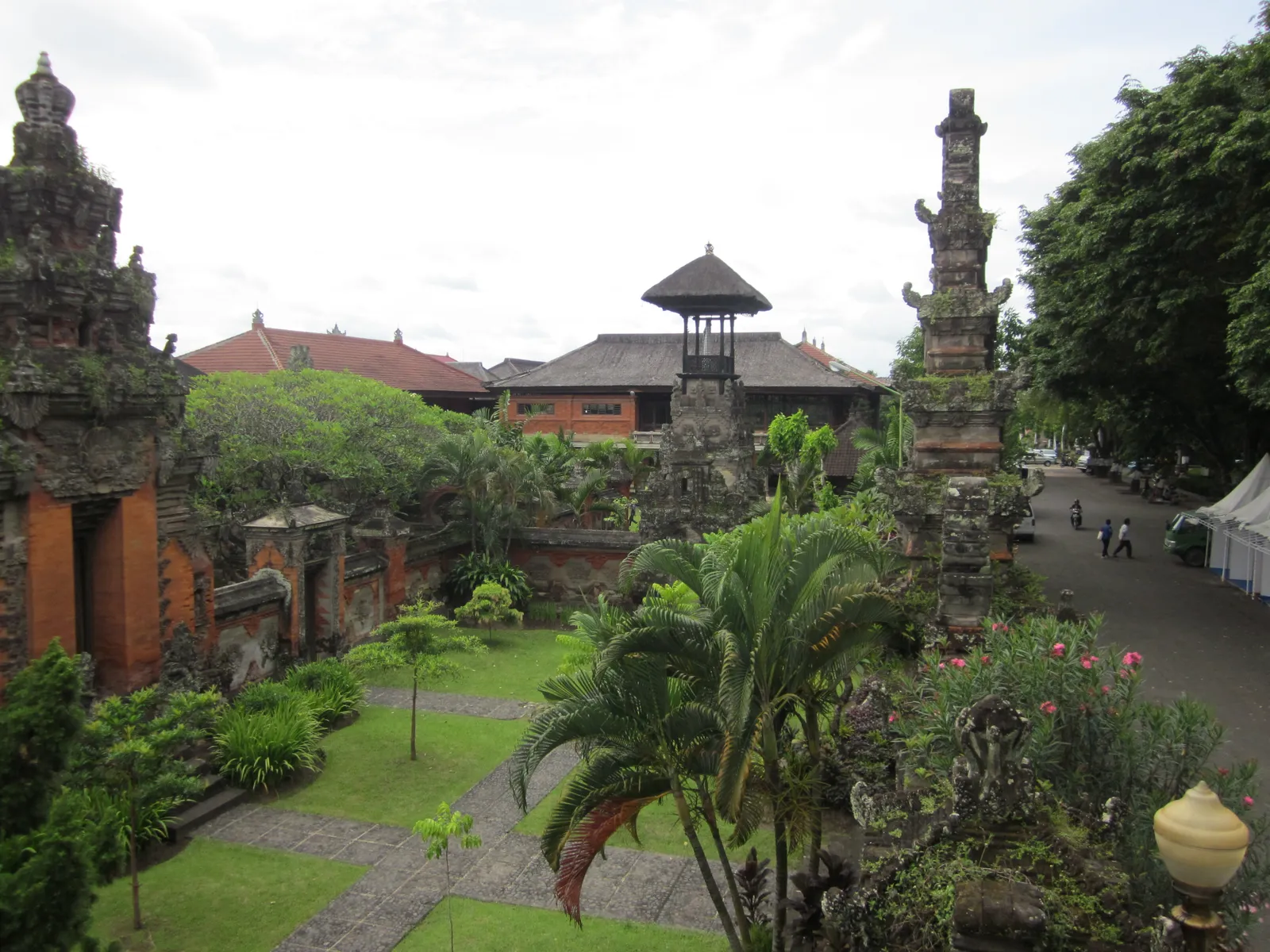
It is a provincial museum with handwritten labels in places and it has not been rebuilt for a modern visitor, which is part of why the building reads more clearly as architecture than most museums do.
Pura Jagatnatha’s shrine is cut from white coral
The temple went up in 1953, a few years after independence, and the point of it was access: a state temple for Sanghyang Widhi that any Balinese Hindu could use, regardless of caste or home village, rather than one tied to a particular family or banjar. Inside, the padmasana is an empty throne standing on the back of a cosmic turtle with two nagas coiled around it, the turtle and the serpents standing for the foundation of the world. The whole shrine is worked in white coral, which is what makes it read pale against everything around it.
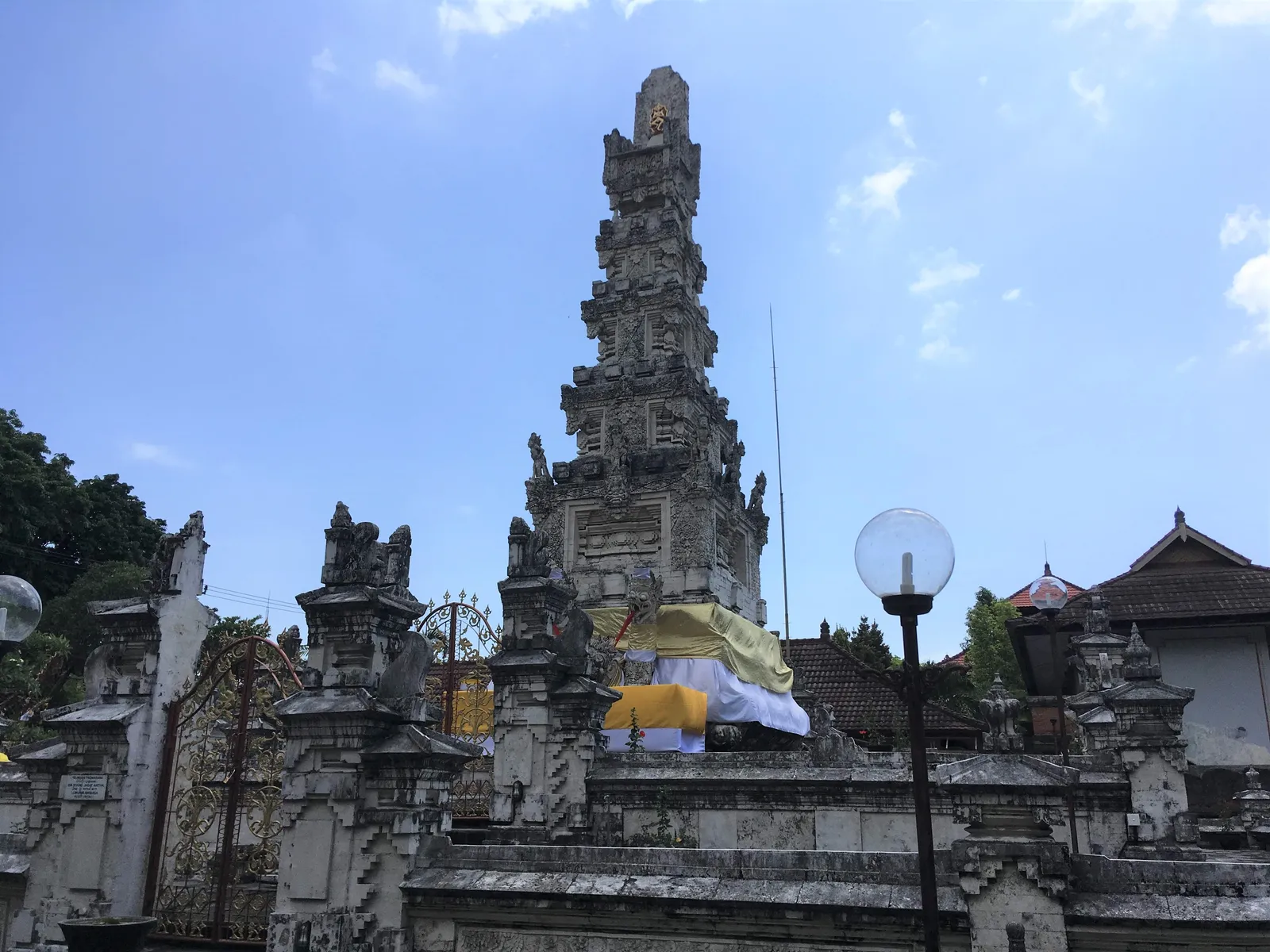
It stands on Jalan Mayor Wisnu immediately beside the museum, so the two are one stop rather than two. It is busiest at full and new moon, and a sarong is expected in the inner courtyard.
Pasar Badung trades over four floors
Fire destroyed the old market in 2016 and what replaced it in early 2019 is four storeys with two basement levels of parking, escalators and lifts, and the same trade sorted vertically: produce at the bottom, then dry goods, spices and the flowers and palm-leaf pieces used in daily offerings, then fabric and clothing near the top. Prices are negotiated. It has been trading on this spot since 1906, in the aftermath of the events the square is named for.
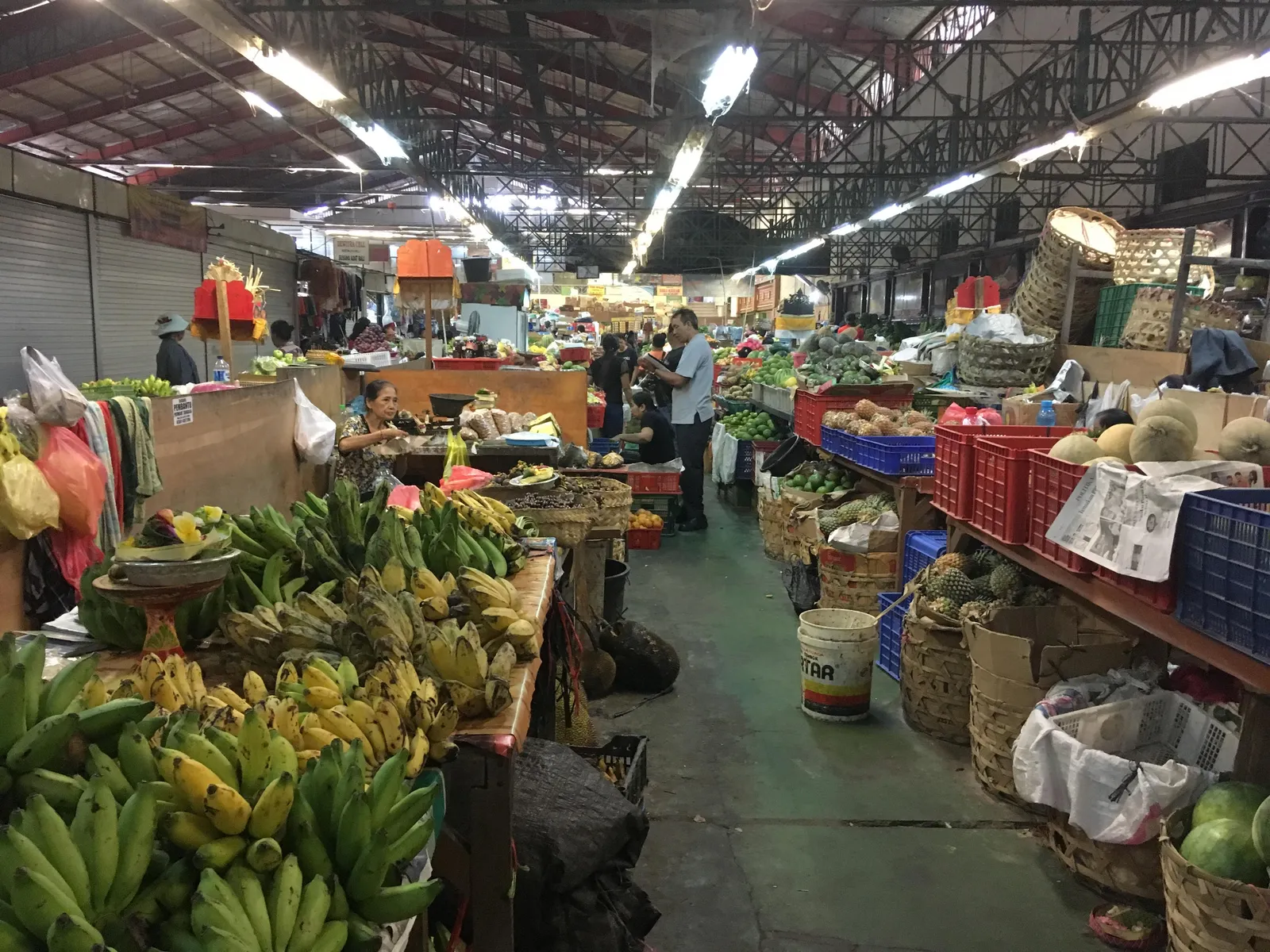
The aisles between the tables are sized for a shopping basket and a scooter helmet, and the connections between some sections are stairs rather than escalators, so it is a poor building to be in with anything wheeled.
The memorial on Puputan Badung Square marks 20 September 1906
On that morning the raja of Badung came out of his palace at the head of a procession, his family, priests, guards and retainers behind him, all of them in white cremation clothes, wearing their jewellery and carrying kris that had been blessed for the purpose. They stopped about a hundred paces from the Dutch line. At the raja’s signal a priest stabbed him, the procession began killing themselves and one another, and the Dutch opened fire with rifles and artillery. At least a thousand people died across Badung that day.
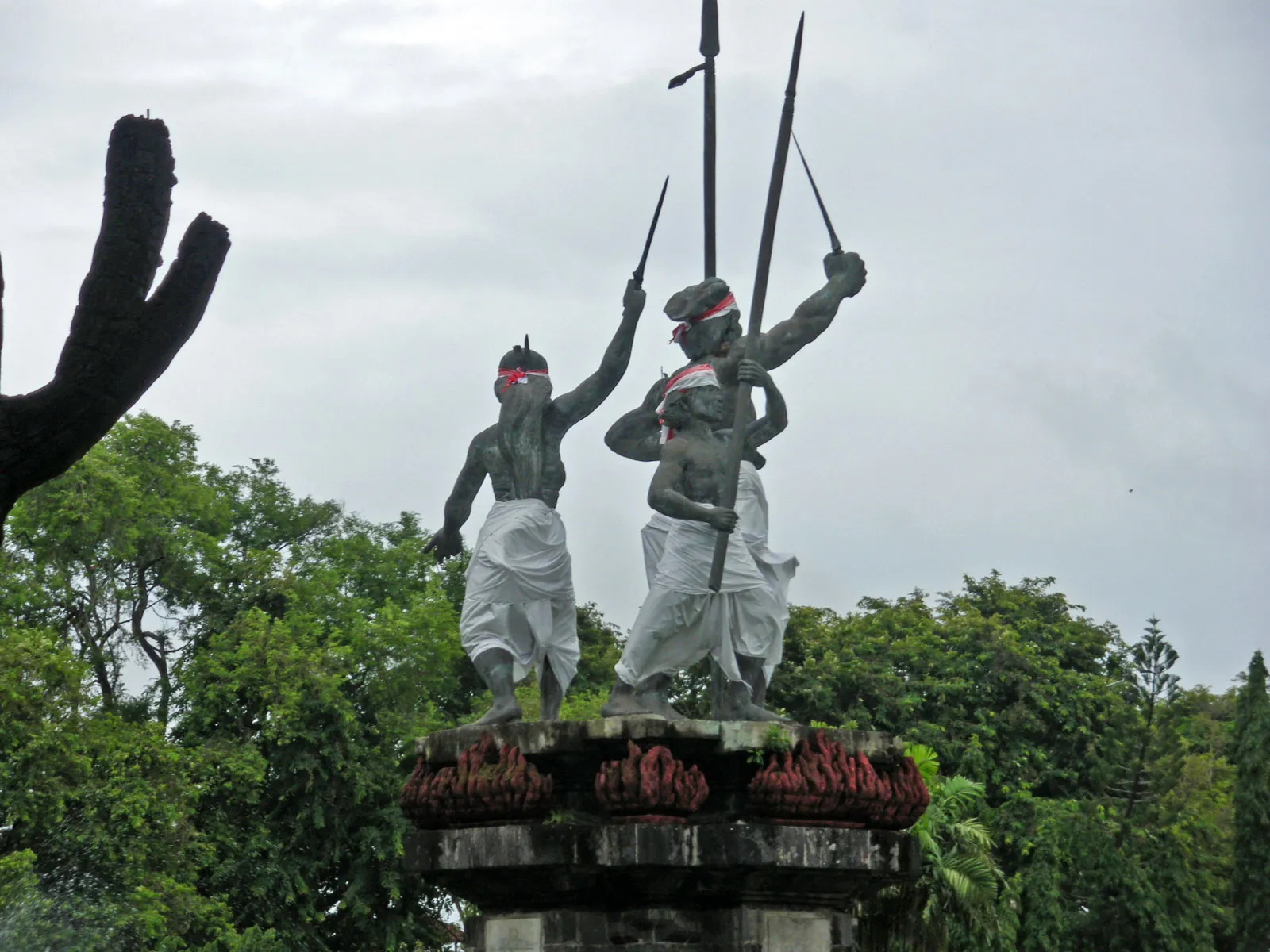
The field is a city park the rest of the time, with lawns, clipped shrubs, a flagpole in the middle and government offices around the edges, and people come to it in the early morning to run and in the evening to sit. The memorial group stands on one side of it and the museum on another, which is about as compressed as Balinese history gets.
Denpasar’s traffic decides the drive, not the distance
Central Denpasar is inland and about thirteen kilometres from I Gusti Ngurah Rai International Airport, with city traffic rather than a coast road for most of it, so thirty to forty-five minutes is realistic and the evening peak can stretch it further. The Bali Mandara toll road helps from the eastern side of the city but not from the square itself, which is on the wrong side of the centre for it.
Trans Metro Dewata’s corridor 2 runs from GOR Ngurah Rai in Denpasar through to the airport for 4,400 rupiah, cashless, but it takes 38 stops to get there and the last departure from the airport end is at 20:35. For a flight, a car is the answer. If the drive sounds like more than the day is worth, the main Bali guide covers the coast stops that are closer to the terminal, and Sanur is the nearest of them to this side of the city.
Frequently asked questions
What should I do during a layover near Puputan Badung Square in Denpasar, Bali?
Everything here is within a few minutes of the square itself. The Bali Museum on its eastern side was built in 1931 on the ground of the royal palace the Dutch destroyed, and its four pavilions are named for Balinese regions and split by subject. Pura Jagatnatha next door went up in 1953 as a temple any Balinese Hindu could use regardless of caste, and its white coral shrine sits on a carved turtle and two serpents. Pasar Badung, a few minutes west across the river road, is the island's largest traditional market, rebuilt over four floors after a 2016 fire. Four to five hours is plenty for all of it, and the square and the market cost nothing.
What happened at Puputan Badung, and is there anything to see?
On 20 September 1906 the raja of Badung, his family, priests, guards and retainers walked out of the palace toward advancing Dutch troops, dressed in white cremation clothes and carrying blessed ceremonial kris. When the procession came within about a hundred paces the raja was stabbed at his own signal, the rest began killing themselves and each other, and the Dutch opened fire with rifles and artillery. At least a thousand people died across Badung that day. A stone memorial group stands on the square now, figures in Balinese dress with a spear and a kris raised, and the square itself is an ordinary city park the rest of the time.
How does Pasar Badung work if you have never been to a market like it?
It is a working wholesale and retail market, not a tourist one. Four floors of it, with two basement levels of parking underneath, rebuilt and reopened in early 2019 after fire destroyed the old building in 2016, with escalators and lifts between levels. The layout runs by trade: fruit and vegetables low down, dry goods, spices and ceremonial offerings higher up, and clothing and fabric near the top. Prices are negotiated rather than marked. Mornings are when it is busiest and freshest, and by the middle of the afternoon a good part of it is packing up.
Is central Denpasar a sensible layover stop rather than a beach?
It is if you want the island's history rather than its coastline, and the compactness helps: the museum, the temple, the square and the market all sit within a few minutes on foot, which is not how the rest of the south is arranged. The trade-off is the drive, because Denpasar is inland and the traffic through the middle of it is heavy at most hours, so budget more for the trip back than the distance suggests. Nothing here is built for visitors, which is the appeal and also means shorter and less predictable opening hours than a resort attraction.