Sanur Beach Layover, Bali: Car-Free Seafront
Part of the full Bali Layover: Uluwatu Temple From DPS
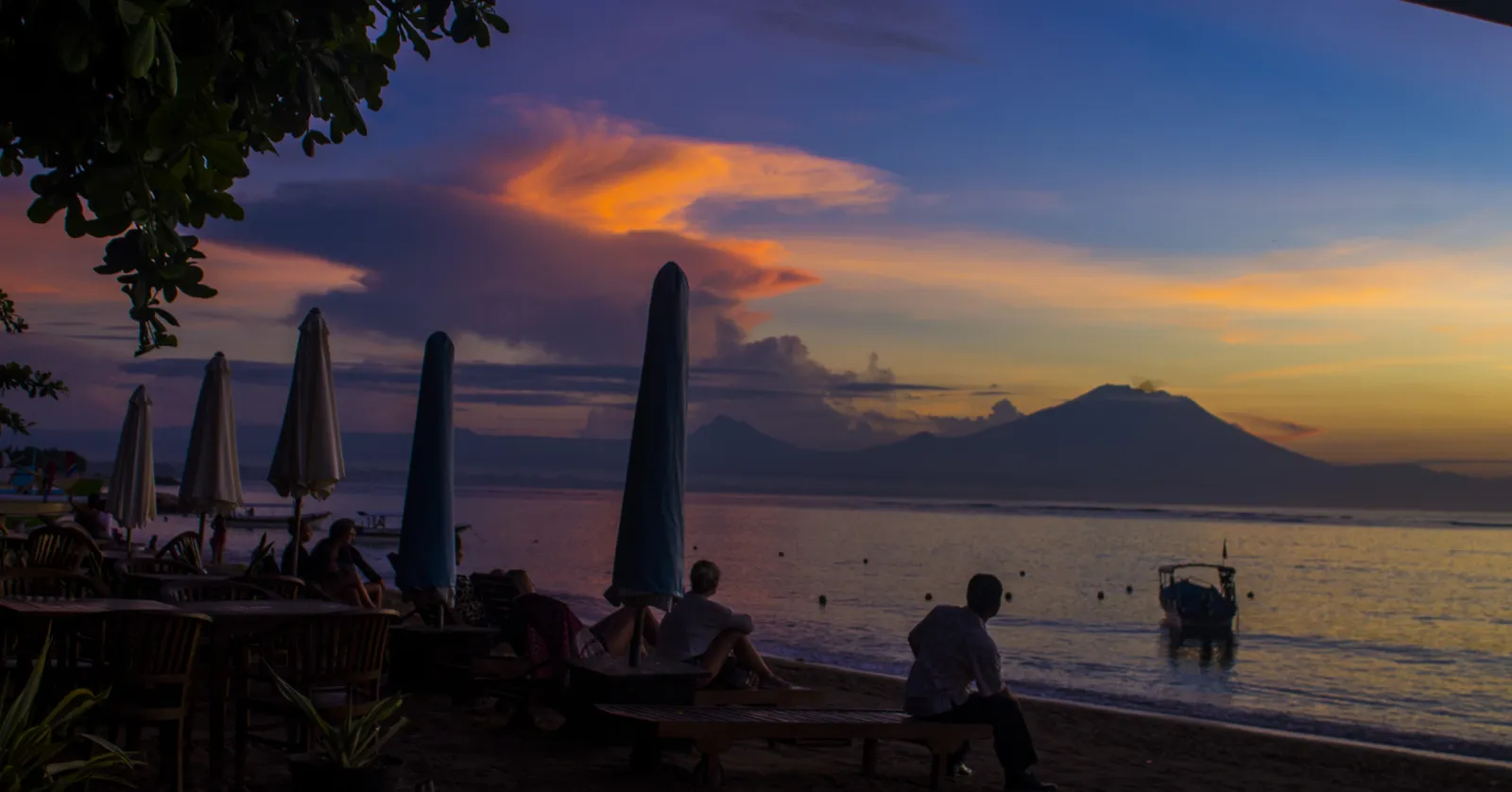
Sanur in Bali has about five kilometres of paved seafront closed to cars, a Belgian painter’s house at one end holding 88 of his canvases, and a stone pillar at the other that was raised in the year 914.
Sanur’s harbour sends fast boats out to Nusa Penida
The pier at the northern end of the beach is a recent piece of infrastructure and it changed how this coast works: instead of wading out to a boat off the sand, passengers walk a concrete causeway to floating pontoons and step aboard dry. Nusa Penida is about half an hour away on the quicker services, Nusa Lembongan a similar crossing, and the Gili islands considerably further, and the crossing to Penida runs through the day.
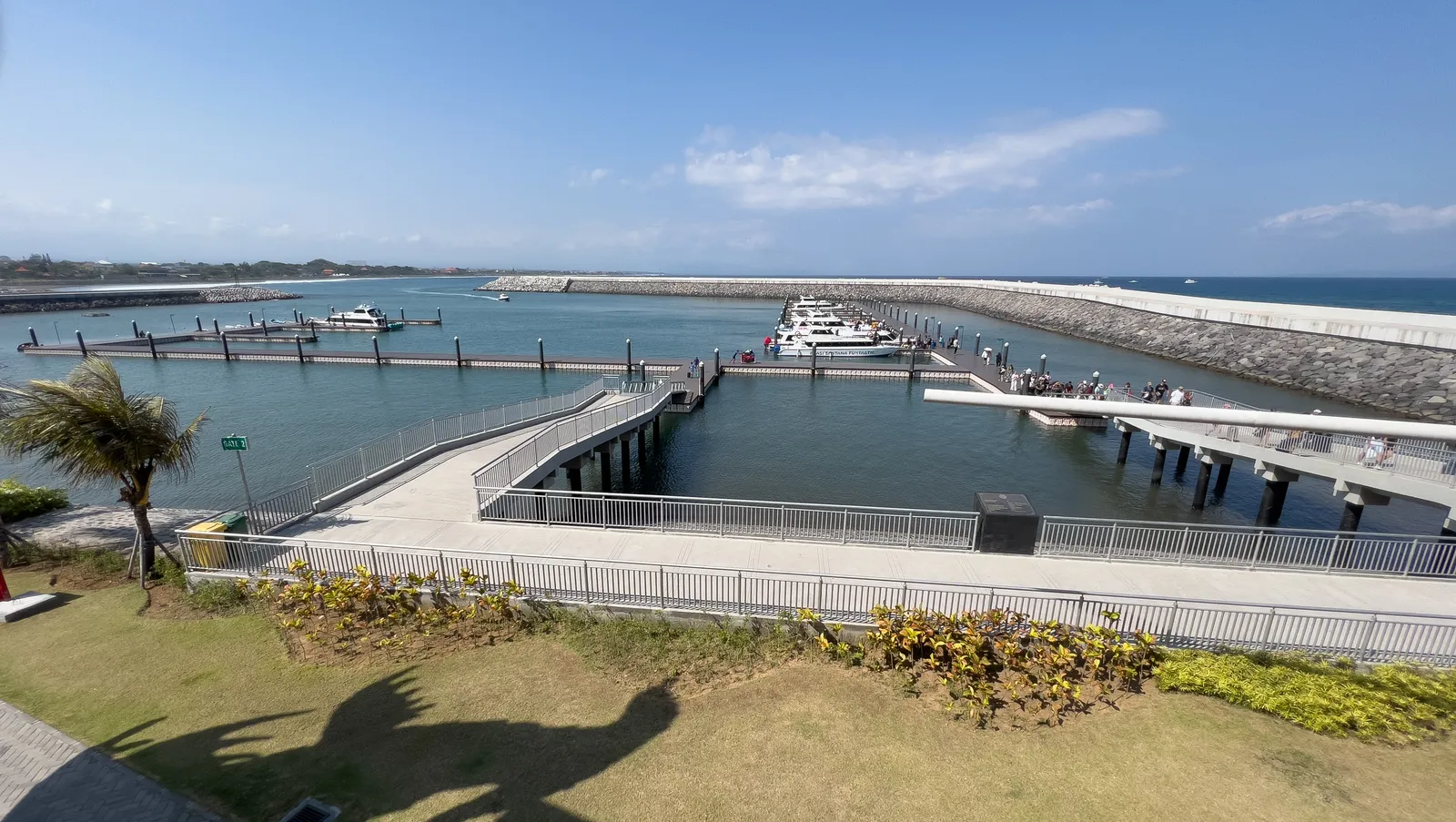
Which is why the people you pass on the path here are carrying everything they own: this is where the islands empty back onto Bali in the afternoon, and a fair share of those arrivals have a flight the same night and nowhere to put a rucksack in between.
Five kilometres of paved seafront with nothing driving on it
The path runs the whole length of the beach, flat, shaded under trees for long stretches, and closed to motor traffic from end to end, so an afternoon here does not have to be negotiated one taxi fare at a time. Runners and cyclists are on it from before six. A reef a few hundred metres out takes the swell, so the water inside it is flat and the beach is lined with moored outriggers instead of surf schools, and the coast faces east across the strait toward Nusa Penida, which puts the good light at the beginning of the day rather than the end. Spas open straight onto the path along the way, and a booked treatment is an easy way to fill the hour when the sun is at its worst.
The road back to the airport crosses the Gulf of Benoa
Sanur is on the wrong side of Denpasar from I Gusti Ngurah Rai International Airport, so the sensible route out avoids the city entirely: the Bali Mandara toll road runs 8.3 kilometres on a bridge across the Gulf of Benoa, built out over water because the land route past the runway could not be widened, and drops onto the airport approach at the far end. Thirty to forty minutes is realistic, more in the evening peak.
Trans Metro Dewata serves Sanur but not on the corridor that reaches the airport, so the bus route means a change and is not worth it against a flight. For a shorter gap than this one needs, the main Bali guide covers the stops on the western side, and Kuta’s beach is the closer of them.
Le Mayeur’s house at the north end holds 88 of his paintings
Adrien-Jean Le Mayeur de Merprès arrived in Bali in 1932, married the Legong dancer Ni Pollok, and painted her and this beach for the rest of his life. The house he built for them sits directly on the sand behind a wall, seven small buildings around a planted courtyard, the carving on them done by Balinese craftsmen rather than imported, and it became a museum after his death. Eighty-eight of his canvases are still in it, most of them of Ni Pollok, of the garden, and of women under these same trees.
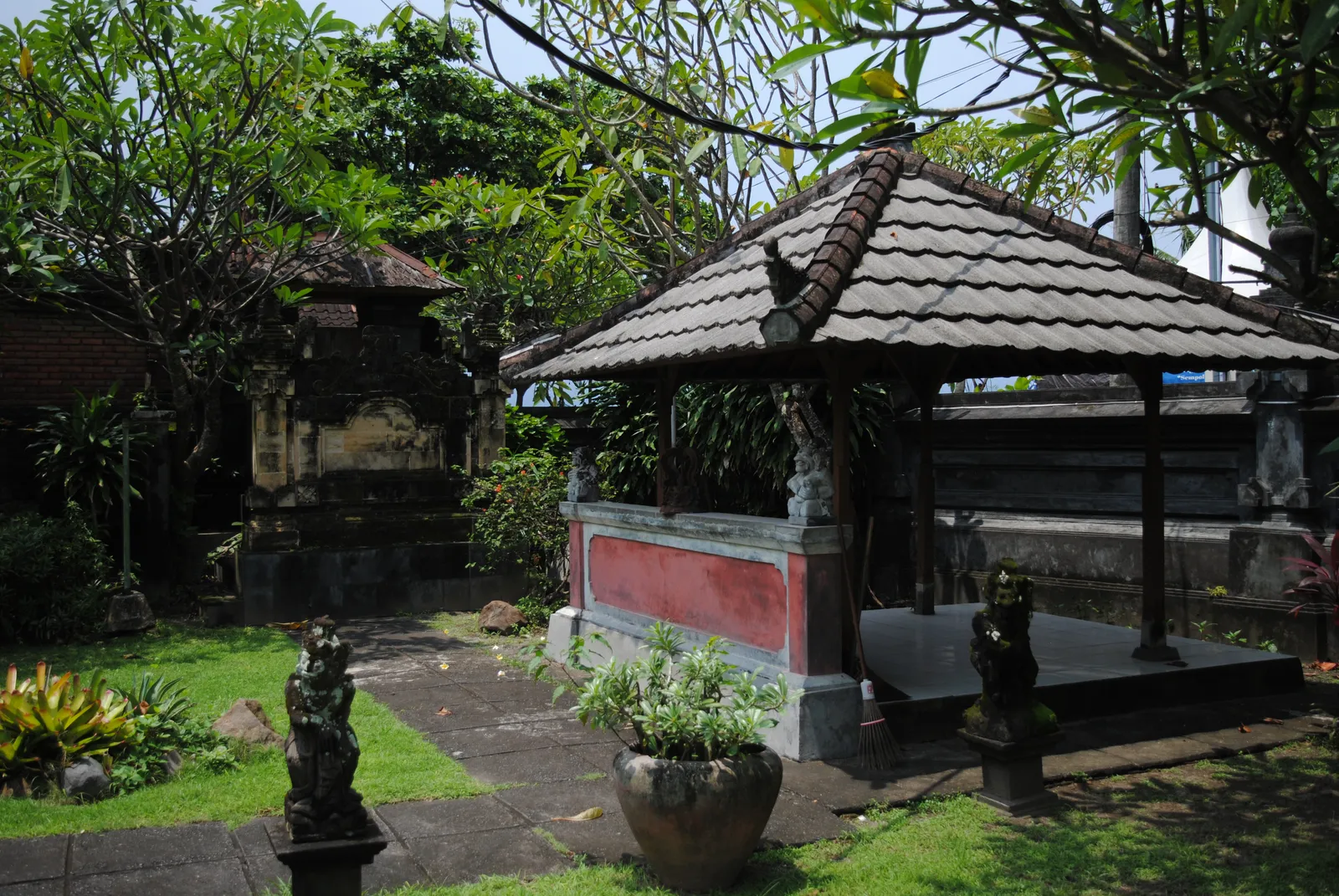
It is a small museum and keeps short and changeable hours, so it is worth checking on the day rather than building an afternoon around it. The paintings have not aged evenly in the sea air, which is its own kind of record of where they were made.
The Blanjong pillar was raised in 914
At the southern end of Sanur, in the courtyard of Pura Blanjong, a cylindrical stone 177 centimetres tall and 62 across carries the oldest dated inscription on Bali. Sri Kesari Warmadewa put it up in the Saka year 835, which is 914, and used it to record a military campaign, writing the text in two scripts and two languages, Sanskrit in Nagari characters and Old Balinese in Kawi. He is the first Balinese king whose name survives in writing at all.
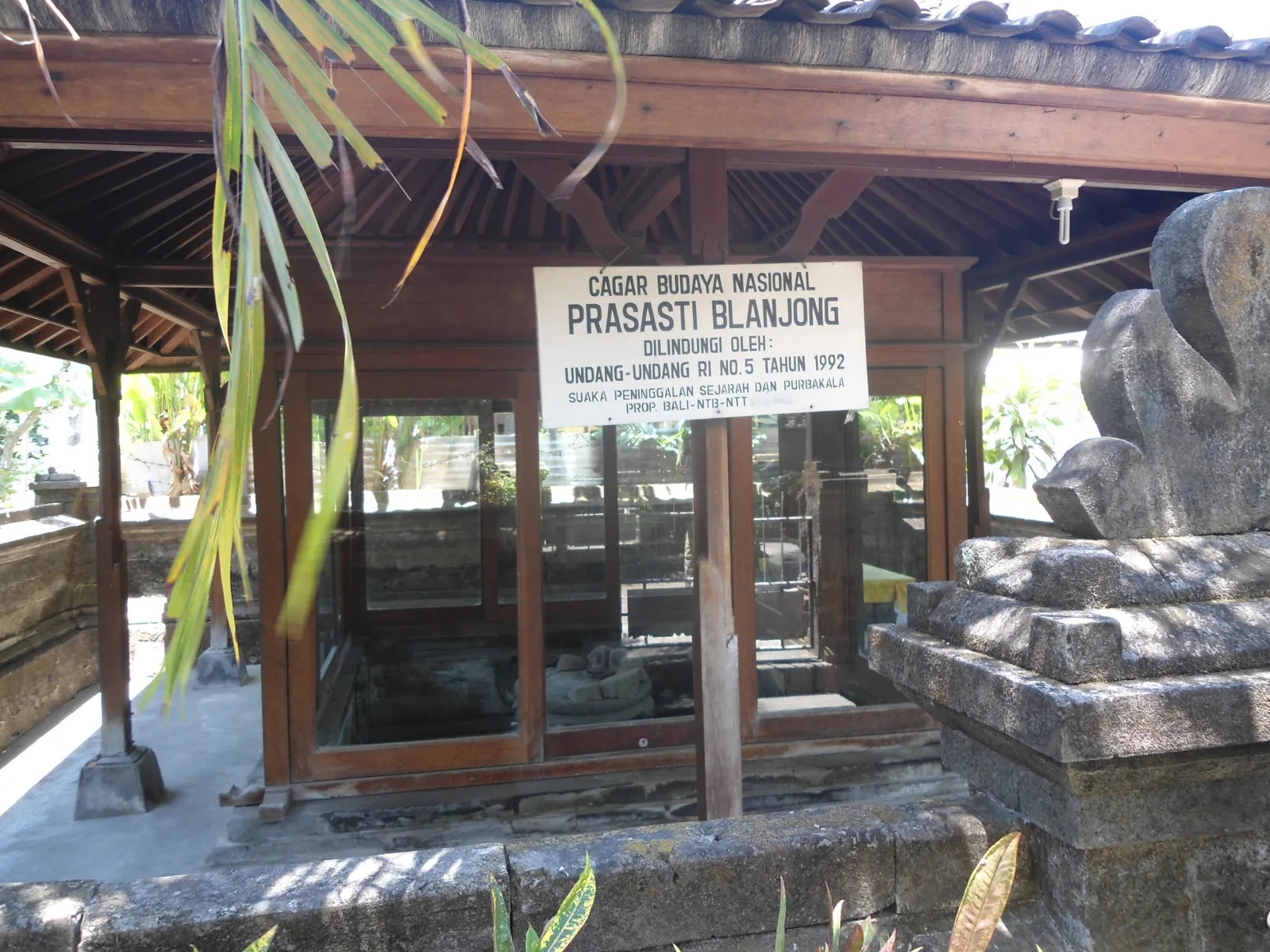
It was found in 1932 and left exactly where it was, which by now is below the level of the ground around it, so it stands in a glassed pit under an open timber roof and you look down into it. The surface is badly worn and reading anything off it is hopeless without the transcription, but standing over a thousand-year-old object in a working village temple, for nothing, is not a common thing to be able to do on a spare afternoon.
Frequently asked questions
What should I do during a layover near Sanur Beach in Bali?
Walk, mostly. A paved path about five kilometres long runs the length of the beach with no cars on it, and it passes the two things worth stopping for: the Le Mayeur house museum at the northern end, where a Belgian painter lived from 1932 and left 88 canvases, and, at the far southern end, the Blanjong pillar, a stone raised in 914 that is the oldest dated object on the island. Four to six hours covers the walk and both stops. Sanur faces east, so the light is best at the start of the day rather than the end, and none of the walking costs anything.
Does Sanur work for a solo traveller without hiring a driver?
It works, and for one structural reason: the seafront path removes the car. Five kilometres of flat paved promenade connect the harbour, the hotels, the warungs and both museums, so a whole itinerary here is walkable in a way that Uluwatu or Jimbaran simply are not, and there is no negotiating a fare between stops. The path is busy with runners and cyclists from before six in the morning, which is also when it is coolest.
What is the Blanjong pillar and can you actually see it?
It is a cylindrical stone 177 centimetres tall and 62 across, raised in 914 by Sri Kesari Warmadewa, the first Balinese king whose name survives in writing, and it carries an account of his military campaign in two scripts and two languages, Sanskrit and Old Balinese. That makes it the oldest dated artefact on Bali. It was found in 1932 and left where it stood, which is now below modern ground level, so it sits in a glassed pit under a timber roof in the courtyard of Pura Blanjong at the southern end of Sanur. You can walk right around the enclosure, though the inscription itself is worn and hard to read.
How do the fast boats from Sanur harbour work?
Sanur is the departure point for Nusa Penida, Nusa Lembongan and the Gili islands, and the crossing to Penida takes about half an hour on the faster services. The harbour is a purpose-built pier rather than a beach launch, with a walkway out to floating pontoons, so boarding is dry and luggage goes on a trolley. Sailings run through the day and the last return of the afternoon is the one that matters if a flight is waiting, since a missed boat has no road alternative.