Giza and Downtown Cairo on a CAI Layover
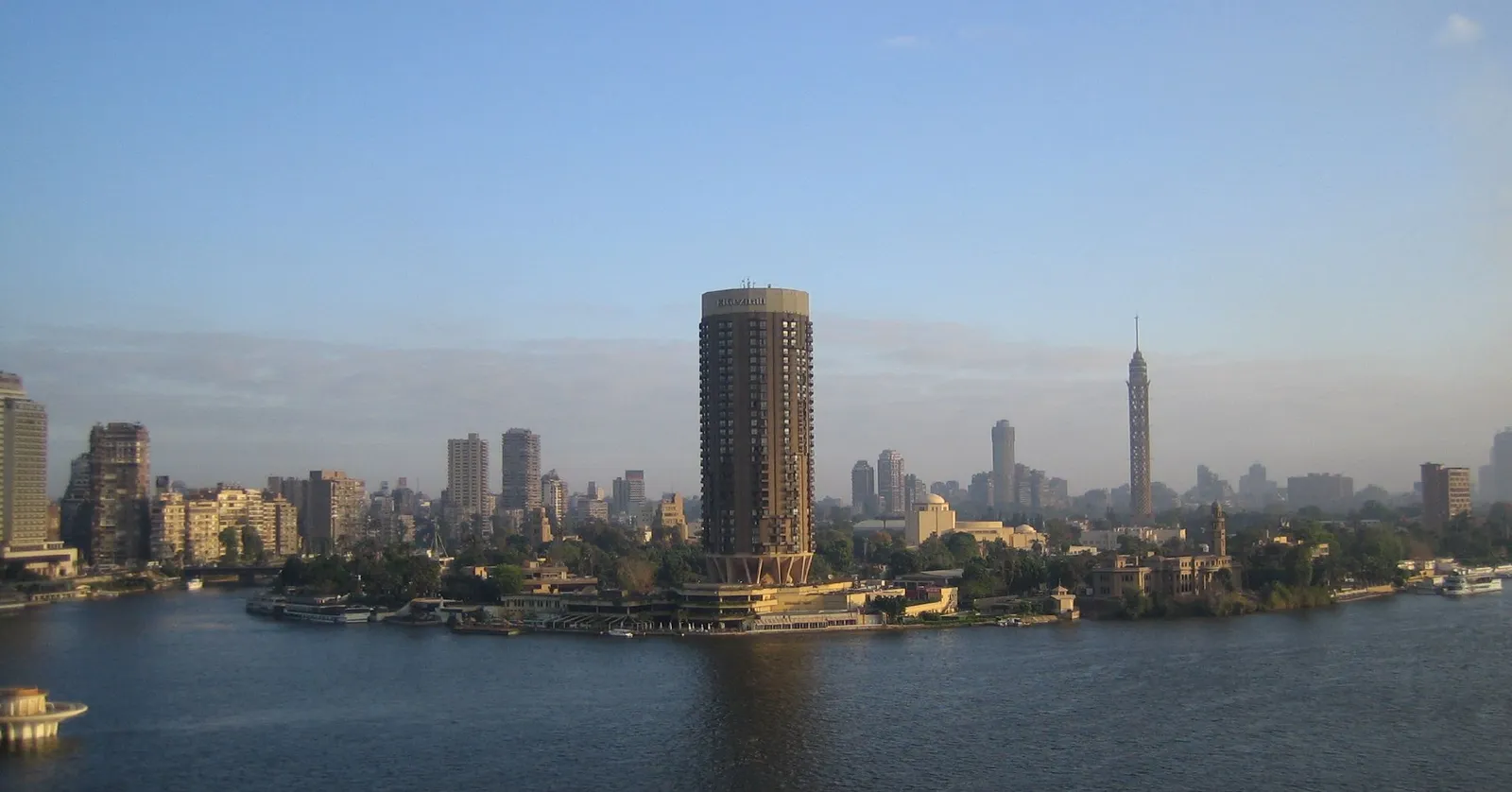
Giza’s three pyramids and the Grand Egyptian Museum sit two kilometres apart on the western edge of Cairo with a walkway between them, and the 1902 Egyptian Museum, the bazaar streets of the medieval quarter and the churches of Old Cairo fill the rest of a day in the centre.
The Great Pyramid held the world height record for 3,800 years
The Giza plateau is a shelf of desert on the western edge of Cairo, about fifteen kilometres from Tahrir Square, and the three pyramids standing on it were built for Khufu, Khafre and Menkaure between roughly 2550 and 2490 BC. Khufu’s is the big one: 146.6 metres when it was finished, a few metres shorter now that the smooth casing stones have gone, and nothing anywhere was built taller until the spire went up on Lincoln Cathedral in 1311. The Sphinx sits below and slightly east of it, carved from a single outcrop of the same limestone the blocks were quarried from.
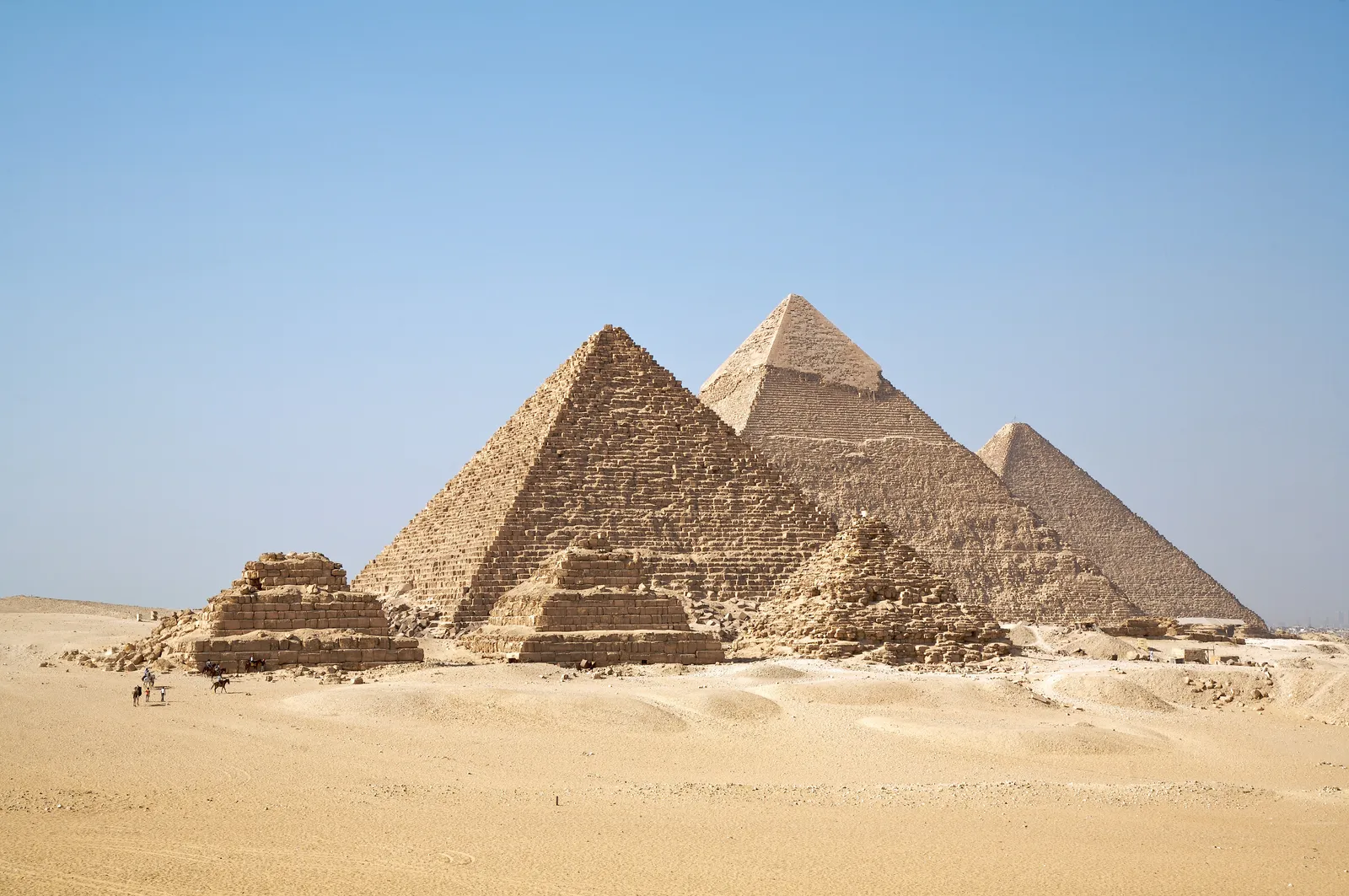
The plateau ticket is 700 EGP and covers the outside of all three pyramids and the Sphinx. Bring a card, because the gate no longer takes cash: Egypt has moved almost all of its antiquities sites onto card payment, and Visa and Mastercard are what work here. Going inside the Great Pyramid is a separate ticket again, currently 1,500 EGP, and the number sold each day is limited. Skip-the-line plateau tickets are worth having in hand before you arrive on a day with a flight at the end of it.
The gate opens at 7am and last entry is 4pm. Between June and September that opening time is the whole argument for an early start: Cairo runs to daytime highs around 36°C in July and August, heat waves push it past 40°C, and there is almost no shade anywhere on the plateau.
The Grand Egyptian Museum shows all 5,398 Tutankhamun finds
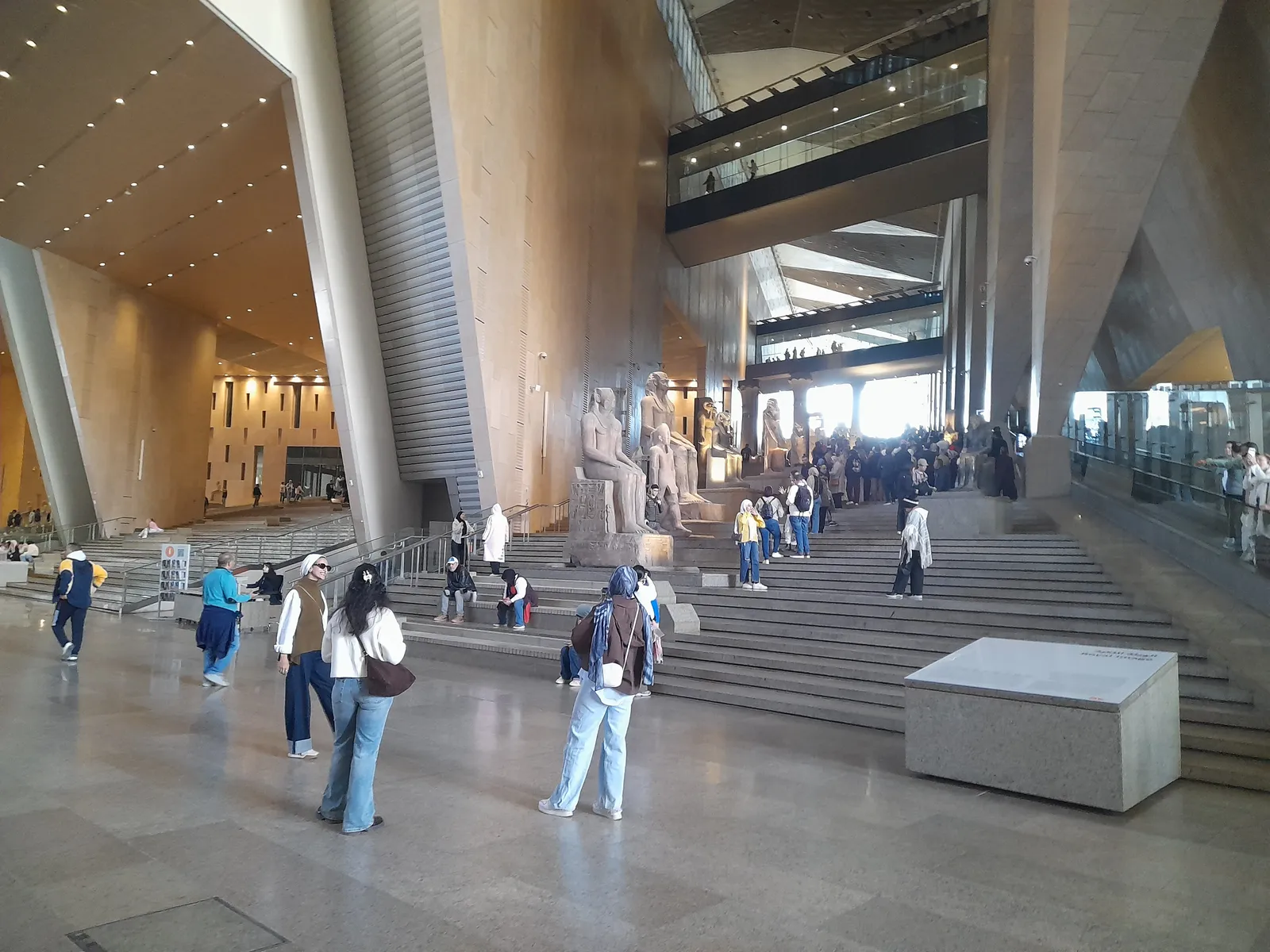
About two kilometres east of the pyramids, on the Fayoum road, the Grand Egyptian Museum opened to the public on 1 November 2025 after two decades of construction and $1.2 billion of spending. The Tutankhamun galleries are the reason to come: 5,398 objects from the tomb, across 7,500 square metres, together in one place for the first time since Howard Carter began clearing it in 1922. The rest of the building is on the same scale, 81,000 square metres of floor with a stone staircase climbing past colossal statues toward a window that frames the pyramids at the top.
A 1.27 km walkway now runs from the museum’s forecourt to the edge of the plateau, laid at ground level below the ridge so the view of the pyramids stays open the whole way. Walking it takes 20 to 25 minutes, an electric shuttle covers the same route, and either is included in the price of a museum or plateau ticket. That link is what makes both stops one trip rather than two: museum tickets carry a timed entry slot, so it is worth deciding which end of the walkway you start at before you book one.
The 1902 museum on Tahrir Square still holds the Narmer Palette
A salmon-pink neoclassical block with an arched doorway and a garden of sarcophagi in front of it takes up the north side of Tahrir Square, and the museum that opened inside it in 1902 has lost both of its headline draws within five years: the 22 royal mummies went to the National Museum of Egyptian Civilisation at Fustat in 2021, and the Tutankhamun collection went out to Giza in 2025. Around 170,000 objects stayed, among them the Narmer Palette, a carved slate slab from about 3100 BC showing the earliest known image of a king of a unified Egypt, and the gold from the royal tombs at Tanis.
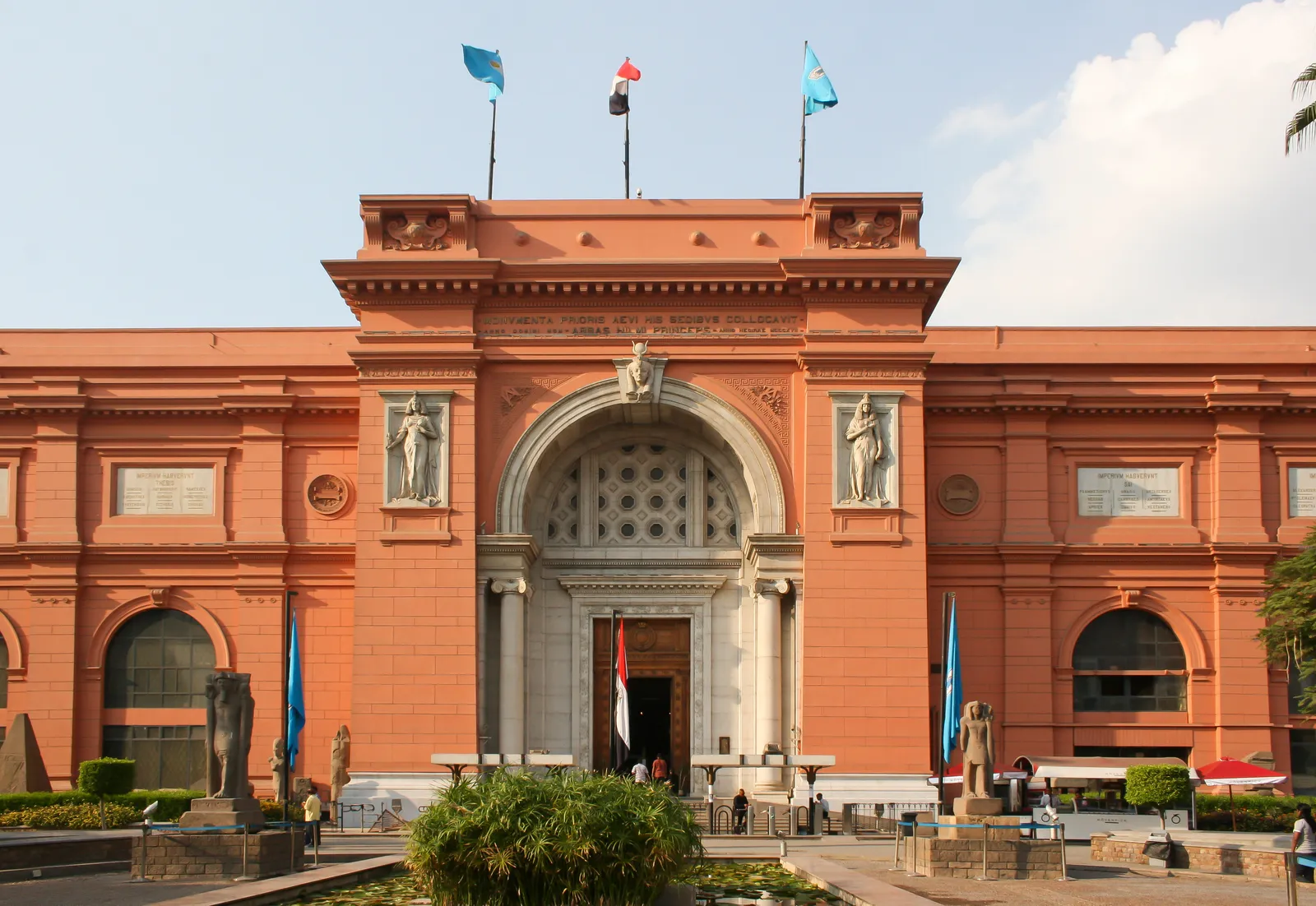
Entry is about 550 EGP for foreign visitors, and skip-the-line tickets save the queue at the gate, which forms early. The building itself is part of the appeal now that the crowd-pullers have moved: wooden display cases, handwritten labels, objects stacked three deep in galleries laid out a century ago. Cairo’s sights are spread far enough apart that each one is a separate taxi or metro ride from the centre, and a suitcase gets loaded and unloaded four or five times over a day out.
Al-Muizz Street closes to traffic from 8am to 11pm
Al-Muizz Street runs about a kilometre through the heart of medieval Cairo, from the Bab al-Futuh gate at the northern end to Bab Zuweila at the southern one, and twenty-nine standing monuments line it: mosques, mausoleums, a Mamluk hospital, sabils where drinking water was given out. The whole length has been closed to cars since 2008 between 8am and 11pm, which is unusual enough in this city to be the main reason it works as a walk. Khan el-Khalili opens off its middle, a bazaar quarter trading here since the fourteenth century, with coppersmiths and glass workshops still at work in the lanes behind the souvenir frontage.
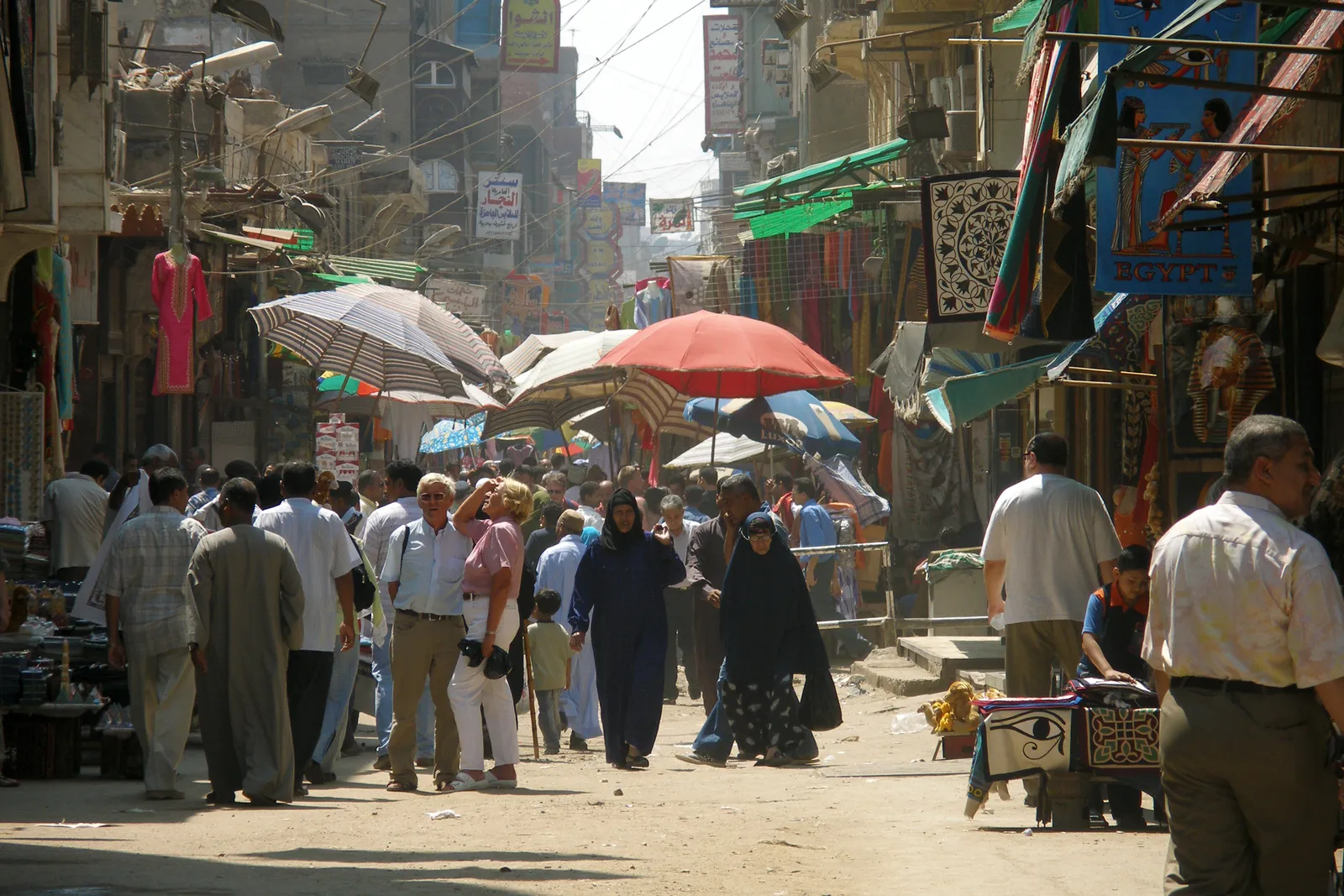
Bab Zuweila closes the street at the southern end, one of the surviving Fatimid city gates, and the small ticket for it buys more than the gate itself. The two minarets standing on top belong to the mosque of Al-Mu’ayyad next door, and that mosque is where you go in to climb them: a tight, dark spiral of stairs, and a rooftop view at the top across the medieval quarter to the Citadel. Entry is under 50 EGP and the gate keeps 9am to 5pm.
The Hanging Church is built on top of a Roman gatehouse
Coptic Cairo sits about four stops south of Tahrir Square on the metro, inside the walls of Babylon, the Roman fortress built here in the first century AD. The church’s nave crosses the fortress’s southern gate towers, which is where the name comes from: the floor you stand on is the roof of a gatehouse. Two white bell towers rise over a carved stone facade at the top of a flight of steps, and inside there is a marble pulpit carried on thirteen slender columns.
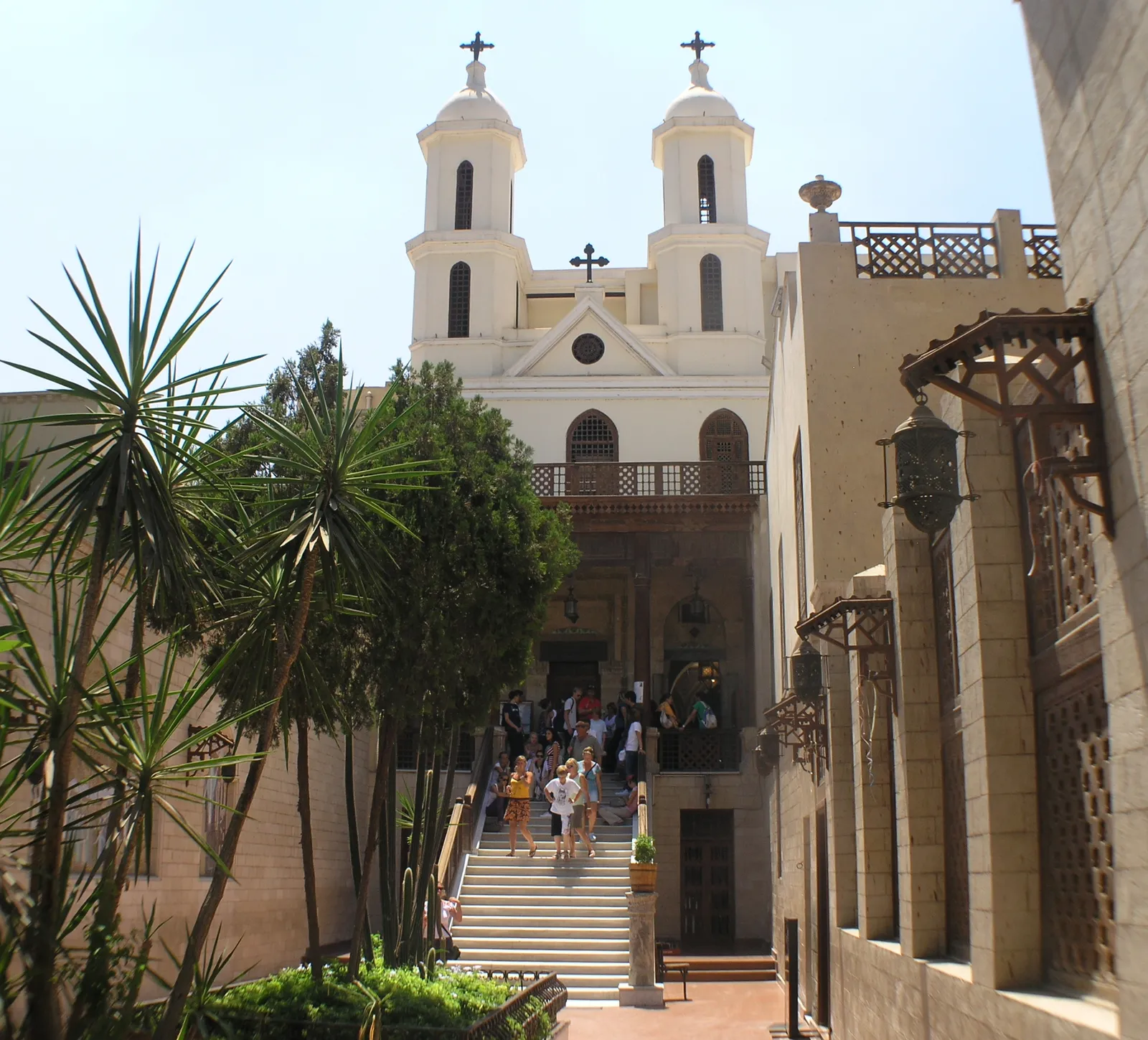
The rest of the compound is a few minutes’ walk within the fortress walls and costs nothing either. The Ben Ezra Synagogue is the one to make time for: a storeroom in its roof held roughly 400,000 pages of discarded manuscript, accumulated over some 850 years and now known as the Cairo Geniza, which is the single richest surviving record of medieval Mediterranean daily life. The churches and the synagogue keep 9am to 5pm and the metro fare down is 10 EGP.
Al-Azhar Park was Cairo’s rubbish tip for 500 years
Al-Azhar Park covers thirty hectares of terraced hillside on the eastern edge of the old city, across the road from the medieval walls. Clearing the site took 1.5 million cubic metres of rubble and soil off it, around 80,000 truckloads, and a buried stretch of the twelfth-century Ayyubid city wall built under Saladin turned up underneath. The Aga Khan Trust for Culture began the work in the 1990s and the park opened in 2005.
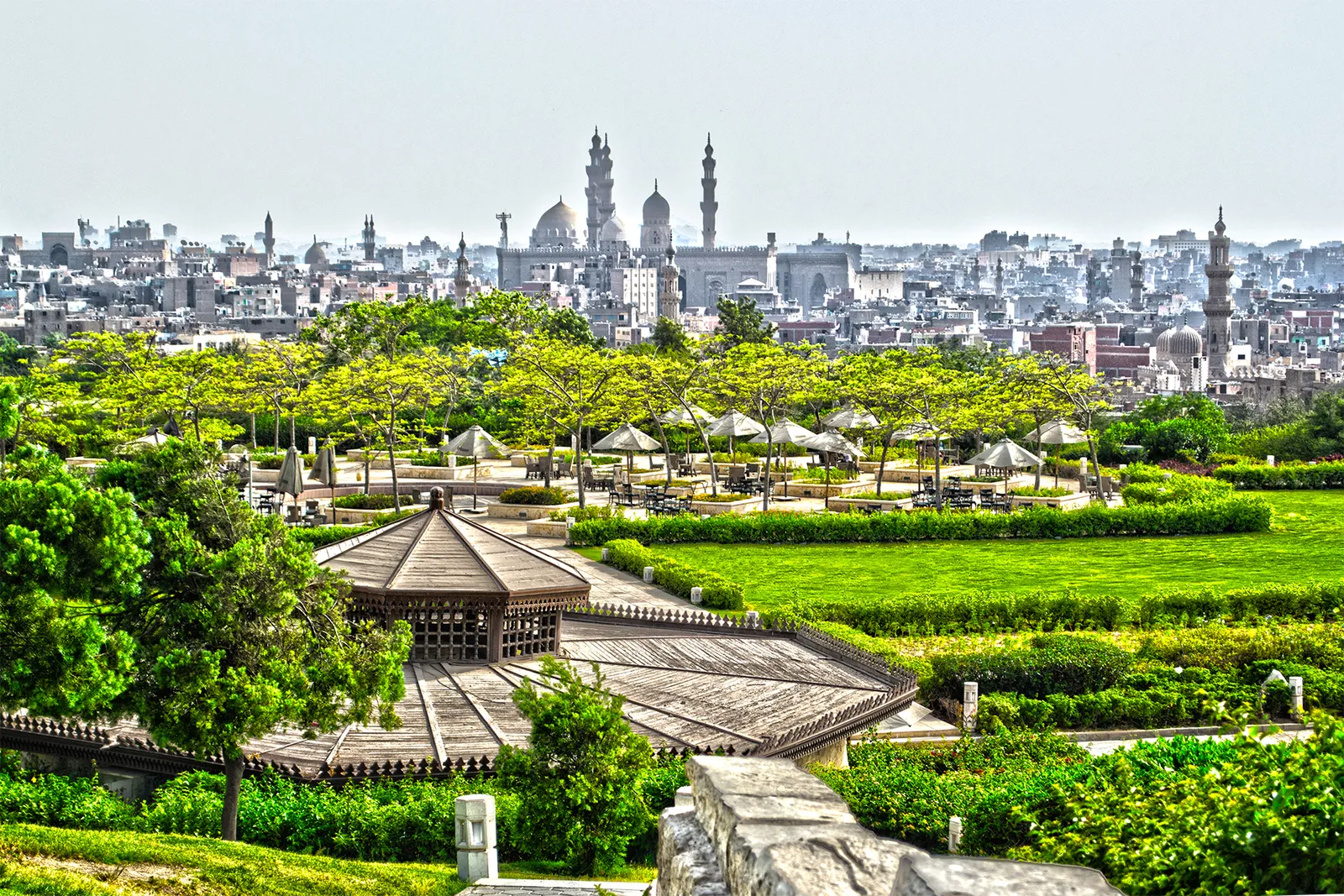
Entry costs 40 to 50 EGP depending on the day, and what it buys is the view. From the upper terraces the whole medieval skyline lines up: Sultan Hassan’s mosque, the minarets of Darb al-Ahmar below the wall, and the Citadel on the ridge beyond with the twin minarets of Muhammad Ali’s mosque above it, a building whose architect came from Istanbul and worked from the model of the imperial mosques there. Gates stay open until 11pm with last entry at 10pm, which is why this still works long after the museums and the plateau have shut for the day.
No train reaches Cairo International Airport, only a bus or a car
Metro Line 3 stops well short of the terminals, at Adly Mansour in the north-east, and the extension out to them has no completion date attached to it. A free shuttle runs between the terminals and the airport bus station every 15 to 30 minutes, 24 hours a day; from there the 356 service runs into Midan Tahrir and Ramses roughly every half hour, taking 60 to 120 minutes depending on traffic, and the 111 heads the same way via Ramses towards Shubra. Bus fares are a few pounds, paid in cash.
Most people take a taxi or a ride-hailing car instead, which is 30 to 60 minutes from downtown on clear roads and well over an hour when the roads are not clear. Traffic here is the variable that decides everything else, which is why the standing advice is to leave two hours for the airport run from the centre and three from Giza. That is also the number that sets the shape of the day: eight hours between flights makes Giza realistic, five or six keeps you downtown. Either way the suitcase stays behind and the last car ride is the only one you make with a deadline attached to it.
Frequently asked questions
What should I do during a layover in Cairo?
Giza first if the hours allow it. The three pyramids and the Sphinx stand on one plateau on the western edge of the city, the Grand Egyptian Museum sits at the foot of it with the whole Tutankhamun collection inside, and a 1.27 km walkway links the two so a single trip covers both. Back in the centre, the 1902 Egyptian Museum on Tahrir Square, the pedestrianised length of Al-Muizz Street through the medieval quarter and the free churches of Coptic Cairo are each an hour or so on their own. Giza is the piece to drop if the clock is tight: it is the furthest out and the one where traffic can double the journey without warning.
Is the Egyptian Museum on Tahrir Square still worth it now Tutankhamun has moved?
Yes, though it is a different museum than it was. The Tutankhamun collection went to the Grand Egyptian Museum at Giza when that opened in November 2025, and the 22 royal mummies left in 2021 for the National Museum of Egyptian Civilisation at Fustat. What stays on Tahrir Square is still around 170,000 objects, including the Narmer Palette and the gold from the royal tombs at Tanis, in the purpose-built 1902 galleries they have been shown in for over a century. Entry is about 550 EGP for foreign visitors. The Ministry of Tourism and Antiquities has said the building stays open to the public at least until 2030, with a phased renovation planned from 2027 rather than a full closure.
Do I need cash for the pyramids and the museums in Cairo?
Not at the ticket windows, and in several places cash will not work at all. Egypt has moved almost all of its major antiquities sites onto card payment, and the Giza plateau is one of them: Visa and Mastercard are taken at the gate and cash is not. The same applies at the Grand Egyptian Museum, where the ticket carries a timed entry slot booked online beforehand. Carry Egyptian pounds anyway for the things the card readers do not cover, which is most of the rest of a day out: taxis, the metro, tips, water, and anything bought in the bazaar.
How far ahead should I book the Grand Egyptian Museum?
Before you land, if the day is already planned around it. Entry runs on timed slots, eight of them across the day, and the slot is fixed to the ticket rather than to the hour you turn up, so a full one is a real risk on a flight day with no slack in it. The museum opens at 9am and closes at 6pm with last entry at 5pm, running late until 9pm on Wednesdays and Saturdays. Timed-entry tickets are sold through the usual booking platforms as well as the museum's own site.
Does the Cairo Metro reach Cairo International Airport?
No. Line 3 ends at Adly Mansour in the north-east of the city and the extension out to the terminals has no completion date, so there is no rail link at all. What runs instead is a free shuttle bus between the terminals and the airport bus station, every 15 to 30 minutes around the clock, and from that bus station the 356 service into Midan Tahrir and Ramses roughly every half hour, 60 to 120 minutes depending on traffic. A taxi or a ride-hailing car is the faster option and the one most people take: 30 to 60 minutes from downtown when the roads are clear, considerably longer when they are not.