Khan el-Khalili Layover: Islamic Cairo
Part of the full Giza and Downtown Cairo on a CAI Layover
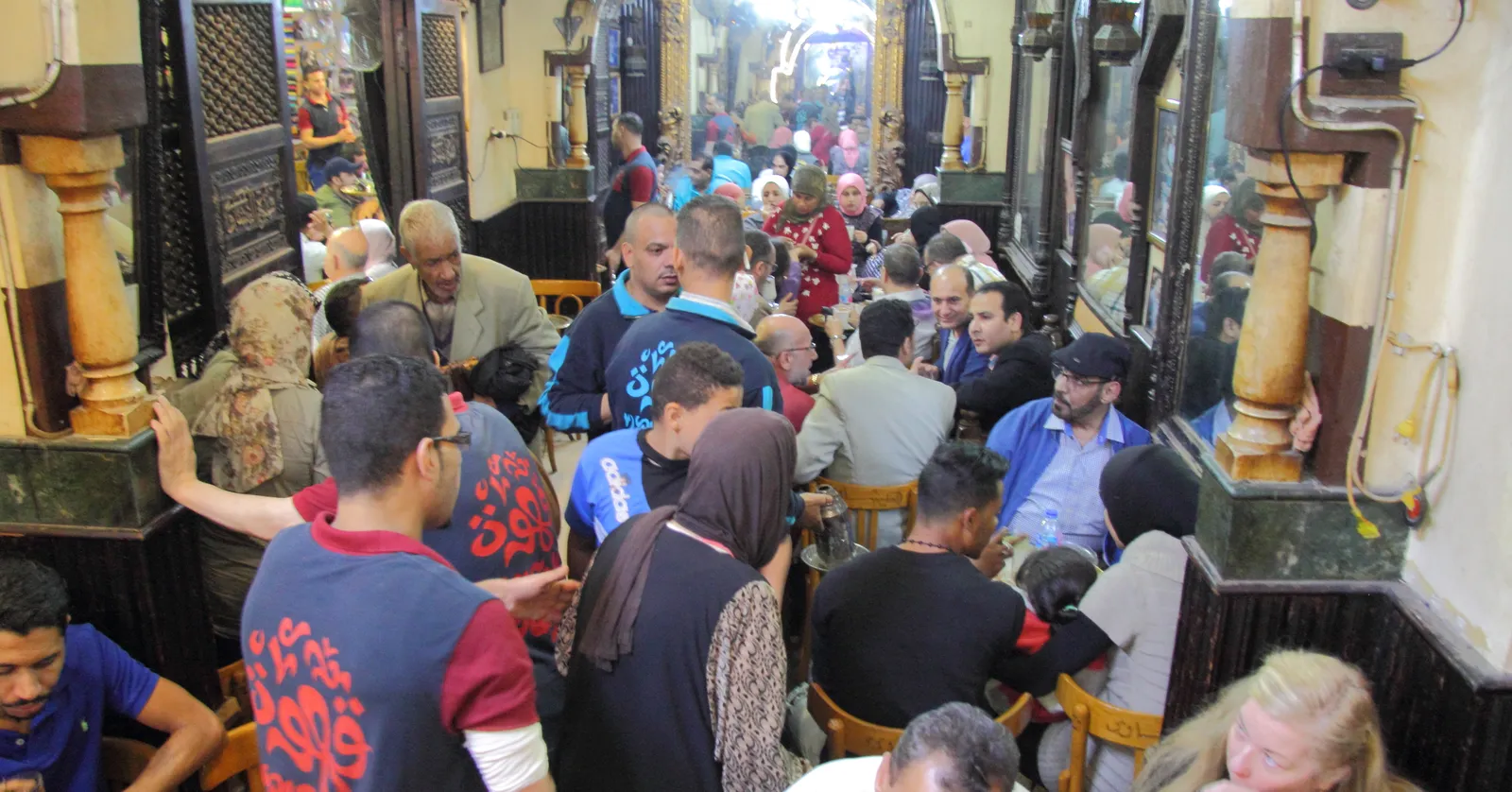
Khan el-Khalili in Cairo has traded on the same lanes since the fourteenth century, with El Fishawi’s mirrored alley at the middle of it, the courtyard house of Bayt al-Suhaymi ten minutes north on Darb al-Asfar, and Al-Azhar Mosque’s marble courtyard across the road to the south.
El Fishawi has poured tea in the same alley since the 1790s
El Fishawi does not occupy a room so much as a lane: a narrow passage off the bazaar’s main run, walls on both sides hung with tall gilt-framed mirrors and carved wooden screens, with small brass-topped tables filling the space between them and no real distinction between the cafe and the street. By the family’s own reckoning it opened in 1797, and it is still run by the Fishawis, now seven generations in. Naguib Mahfouz sat here habitually and drew on the quarter for the Cairo Trilogy, which is why half the people at the tables are reading rather than shopping.
Tea, coffee and shisha are what it sells, prices are tourist prices by Cairo standards and still low by anyone else’s, and it does not close early. An evening that strings the bazaar together with a felucca and dinner is the version of this with the logistics handled, which matters more than usual when the day ends at a departure gate.
Bayt al-Suhaymi’s courtyard sits behind a blank wall on Darb al-Asfar
Darb al-Asfar is a side lane off Al-Muizz Street in the Gamaliyya quarter, ten minutes north of the bazaar, and the house halfway down it gives away almost nothing from the outside. Inside is a courtyard with a date palm in it, and every upper floor projecting over it behind dark latticed mashrabiya screens, which let the women of the household watch what happened below without being seen from it. Sheikh Abd al-Wahhab al-Tablawi built the first half in 1648; Haji Ismail Chelebi added the second in 1796 and joined the two.
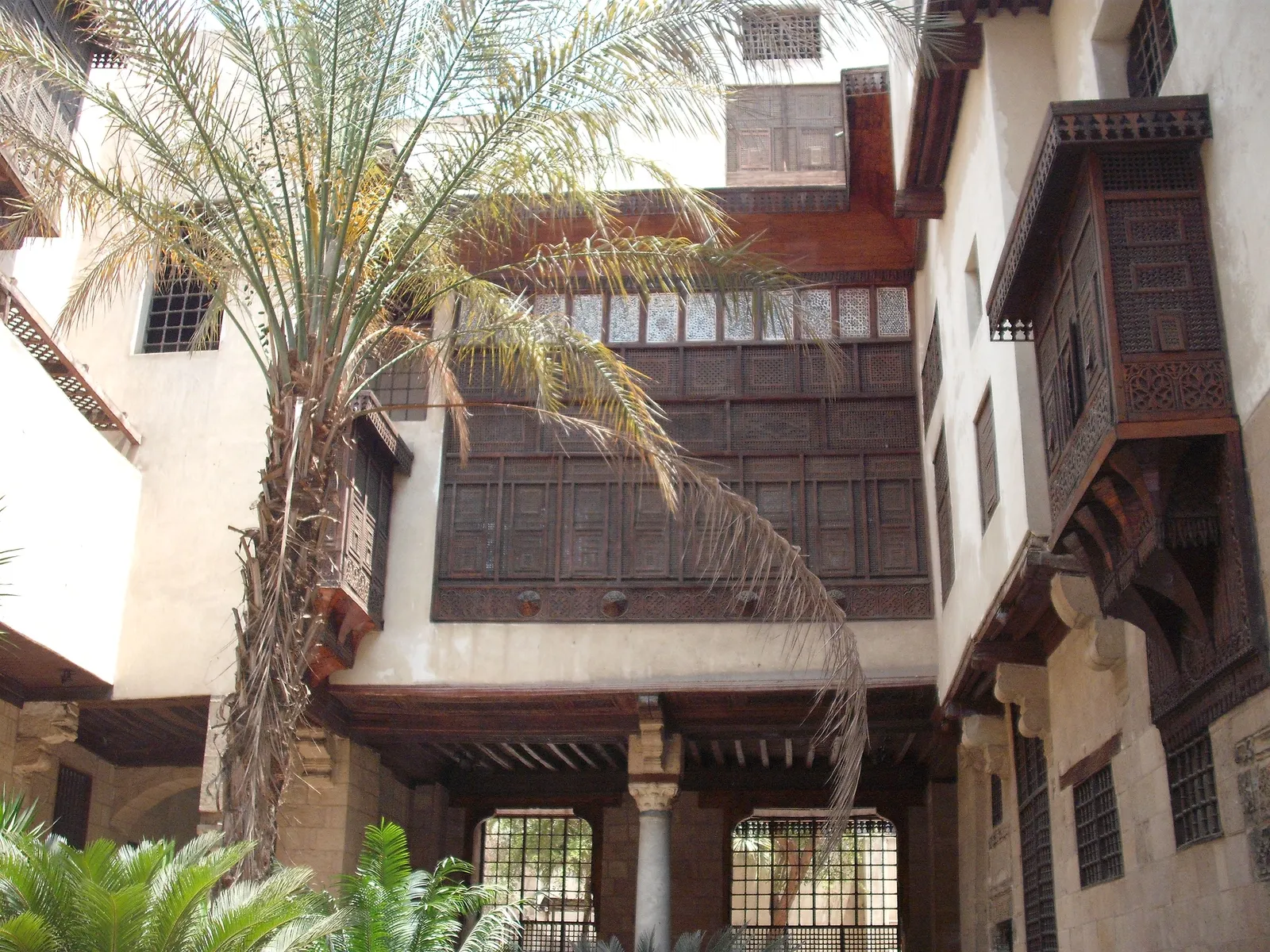
Half an hour covers it properly. The lanes to get there are old stone, uneven, and narrow enough in stretches that people pass single file between the stalls, with steps in and out of the older covered passages, so a suitcase is the wrong thing to be pulling through them.
Al-Azhar Mosque has been teaching since 970
The Fatimids finished the mosque in 972, started teaching in it within a few years, and it has carried on as a university more or less without a break ever since, so the marble courtyard at the centre of it has been in use as a classroom for more than a thousand years. Students still sit against the columns of the arcades with books.
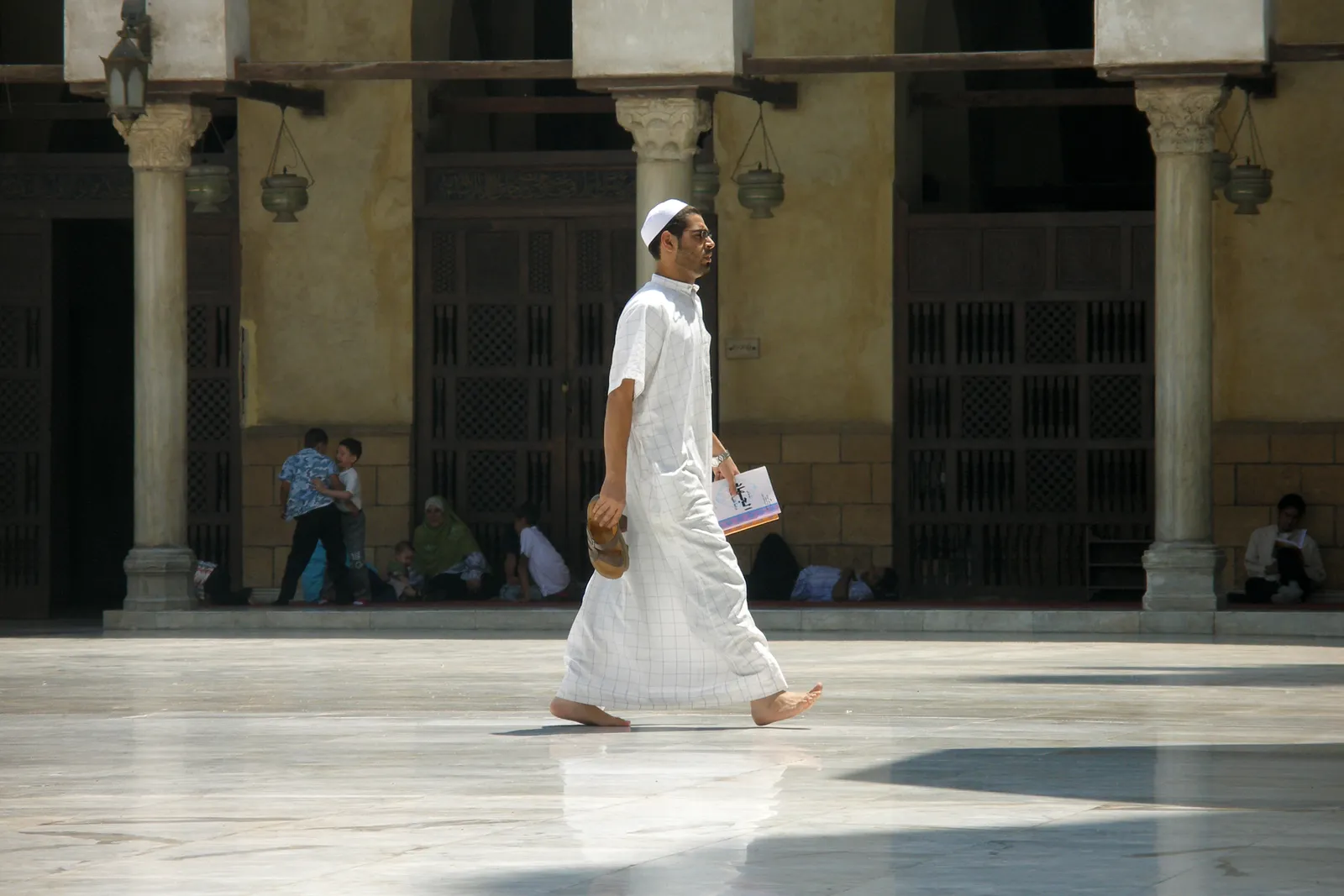
Visitors are admitted outside the five daily prayers, with a longer closure around Friday midday, and modest dress is the condition: covered hair, arms and legs for women, no shorts or sleeveless tops for men, with scarves usually lent at the door. Shoes come off before the prayer hall. There may be a small charge at the entrance for non-worshippers, though plenty of visitors report walking straight in.
The bazaar has no metro station and no road running through it
Nothing motorised gets into the middle of Khan el-Khalili, and the nearest metro is a walk away rather than at the edge, so every arrival and departure here is on foot for the last stretch. Taxis and ride-hailing cars drop at Al-Azhar Street or at Al-Hussein Square and you walk in from there.
Getting back to Cairo International Airport means a car or the 356 bus from Midan Tahrir, which is itself a twenty-minute ride west of here, and no rail line covers any part of that trip. Allow two hours from this side of town. For a longer stop, where this quarter sits in relation to Giza and the downtown museums is the shape of the full Cairo itinerary.
Frequently asked questions
What should I do during a layover near Khan el-Khalili in Cairo?
Sit down in the middle of it first. El Fishawi runs the length of a narrow alley off the bazaar's main lane, lined with gilt mirrors and carved screens, and it has been serving tea on the same spot since the late 1700s. Bayt al-Suhaymi, ten minutes north on Darb al-Asfar, is a seventeenth-century merchant's house built around a courtyard, and Al-Azhar Mosque's marble courtyard is across Al-Azhar Street to the south, open to visitors outside prayer times. Only the house charges an entry fee, so this is a cheap few hours if the shopping stays under control.
Can non-Muslims go into Al-Azhar Mosque?
Yes, outside prayer times and dressed for it. The mosque takes visitors through most of the day and closes to them for each of the five daily prayers, twenty to forty minutes at a time, with a longer closure around midday on Friday. Women need hair, arms and legs covered and men should avoid shorts and sleeveless tops; scarves are usually available at the entrance for anyone who turns up without one. Shoes come off at the door of the prayer hall, though the courtyard itself can be walked in bare feet or carried shoes.
What is actually made in Khan el-Khalili?
Copper, glass and gold, mostly in the back lanes rather than on the main run. The frontage along the busiest alleys is largely souvenirs brought in from elsewhere, but one street back there are still coppersmiths hammering trays and lamps, glassblowers working recycled glass into the blue and green pieces sold all over the quarter, and a goldsmiths' row that has been the trade's centre in Cairo for centuries. The workshops are open to the street, so you can watch without buying.
Is the bazaar better in the afternoon or the evening?
Late afternoon into the evening, on both counts. The lanes are covered or shaded for much of their length but the open stretches are hard work in the middle of a Cairo day, and the quarter genuinely fills up after dark, when the cafes around Al-Hussein spread tables across the square and the workshops behind the souvenir frontage are still going. The trade-off is that Bayt al-Suhaymi shuts in the late afternoon, so it has to come first.