Tahrir Square Layover: Downtown Cairo
Part of the full Giza and Downtown Cairo on a CAI Layover
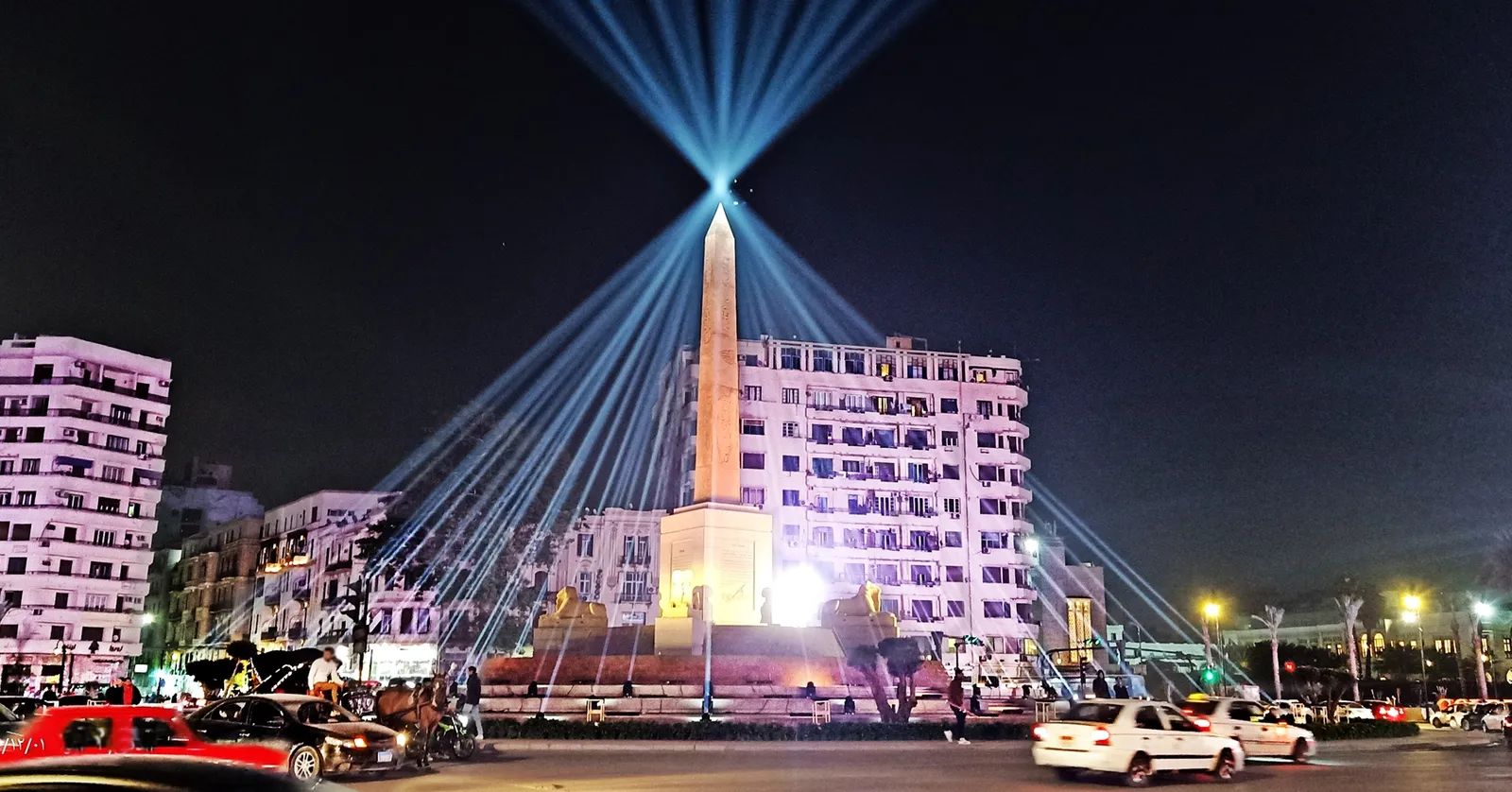
Tahrir Square in Cairo has a 19-metre obelisk of Ramses II standing in the middle of it, the emptied Mogamma along its southern side, and the bronze lions of Qasr El Nil Bridge and Groppi’s mosaic doorway both about five minutes’ walk off it.
A 19-metre obelisk of Ramses II was raised in Tahrir Square in 2020
The obelisk in the middle of the traffic island came out of the ground at San al-Hagar in the Delta, about 112 kilometres north-east of the city, and the last section of it was set in place in February 2020. It stands 19 metres on its base and weighs somewhere near 90 tonnes, and four ram-headed sphinxes were brought up from the temple precinct at Karnak in Luxor to sit around it, a decision Egyptian archaeologists argued about publicly at the time and have not stopped arguing about since. The Egyptian Museum occupies the whole north side of the square behind it, and skip-the-line entry is the one thing here worth sorting out before the day starts; what is inside it belongs to the wider Cairo itinerary rather than this walk.
The southern side is held down by the Mogamma, a fourteen-storey slab finished in 1951 with 1,350 rooms in it, which for seventy years was where Egyptians came to get any document stamped. Around 30,000 staff worked in it at its peak.
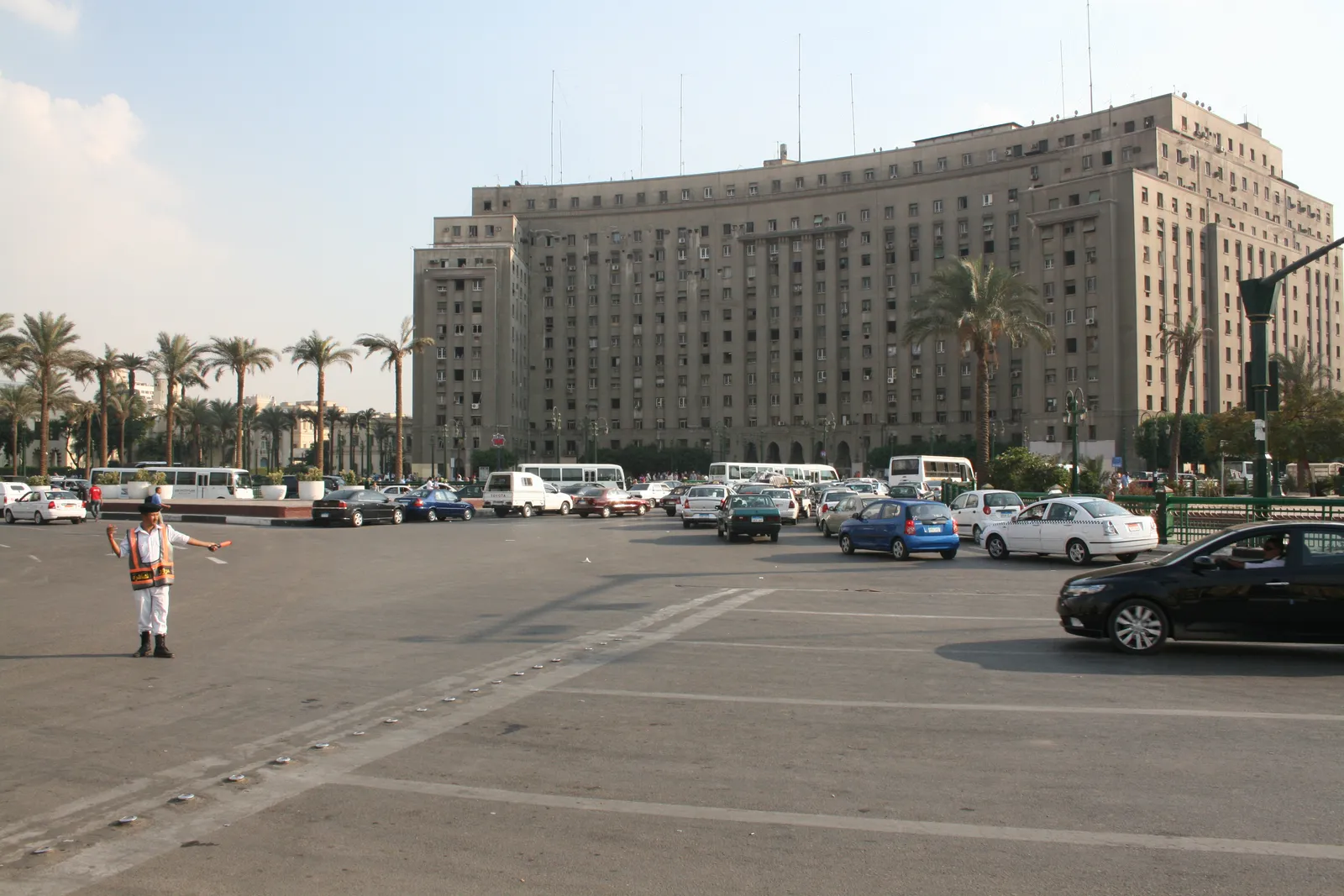
It was emptied in 2021 when the departments moved east to the New Administrative Capital, and a consortium has since taken it on to convert the interior into a hotel and mixed-use complex behind the kept facade, so for now it is something to look at rather than enter. Underneath the square, Sadat is where the network’s two busiest metro lines cross, and its underpasses take most of the square’s foot traffic, which is not a set of stairs to be dragging a suitcase through.
The airport buses terminate on this square and no train does
Cairo International Airport has no rail connection of any kind, and Tahrir is one of only two places the airport buses actually stop, which is the practical argument for starting a layover here rather than anywhere else in the centre. The 356 runs between the airport bus station and Midan Tahrir roughly every half hour for a few pounds in cash, taking 60 to 120 minutes depending on traffic. A taxi or a ride-hailing car covers the same ground in 30 to 60 minutes when the roads are clear and considerably longer when they are not, so two hours is the allowance to work with.
Four bronze lions have sat at the ends of Qasr El Nil Bridge since 1872
Khedive Ismail commissioned the French sculptor Henri Alfred Jacquemart to cast four bronze lions, each around two tonnes, for a monument to Muhammad Ali in Alexandria. The monument did not happen, and when the first bridge across to Gezira opened in 1872 the lions were put at its two ends instead, two on each bank. The bridge under them was replaced entirely in the early 1930s and reopened in 1933, then renamed Qasr El Nil after 1952, and through all of it the lions stayed where they were put.
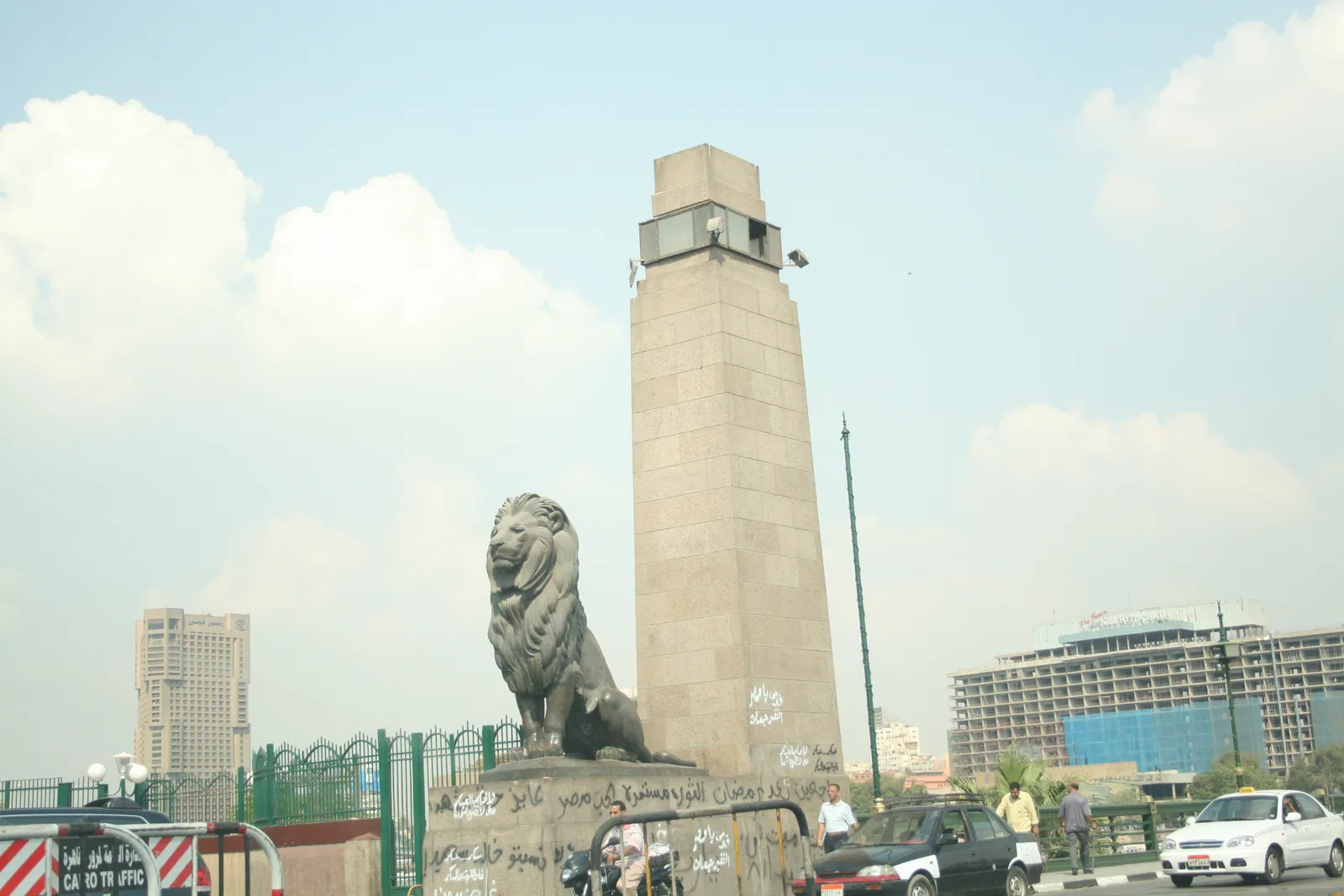
The walkway across is wide, raised above the traffic and open at both edges, so it costs nothing and puts the river on both sides of you for the length of the crossing. From the corniche below, an hour out on a felucca is the cheapest way to be on the water rather than over it, and the lateen-rigged boats work the same stretch between the bridges all afternoon.
Groppi’s Venetian mosaics frame a doorway on Talaat Harb Square
Five minutes north-east of the square, Talaat Harb is a circus of Belle Époque apartment blocks with balconies stacked five storeys up, and the corner that people stop at is Groppi. The tearoom opened in 1924 and its entrance is set in panels of multicoloured mosaic laid by the Venetian craftsman Antonio Castaman, still there under a neon sign in two alphabets.
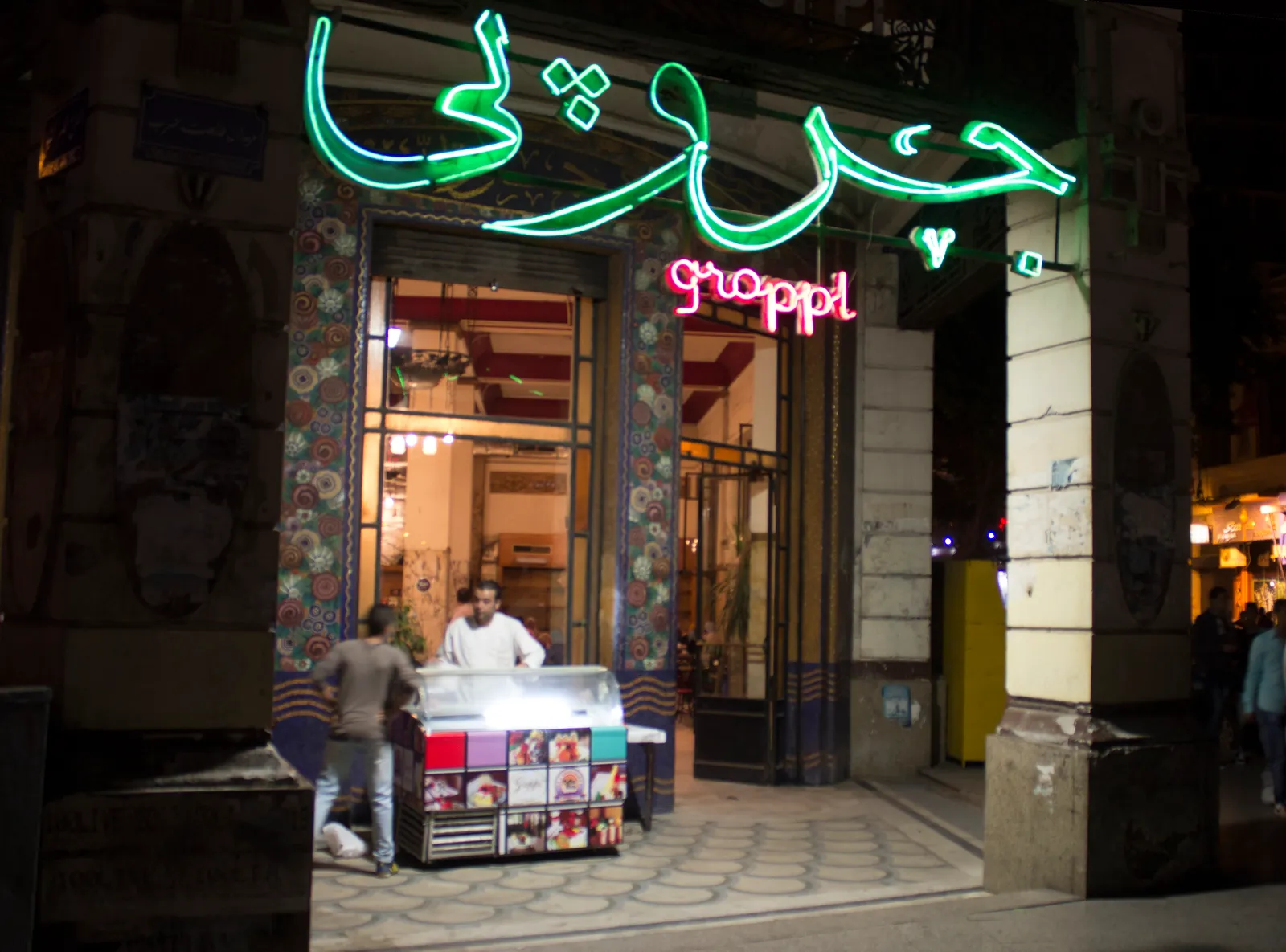
It used to be much more than a counter: a glass-roofed restaurant called the Rotunda, and a garden behind it that held the first open-air cinema in Cairo. Both burned in 1952 and neither was rebuilt, so what is left is the pastry shop and the tearoom, running at a fraction of the old operation but behind the original front.
Nothing between the square, the bridge and Talaat Harb needs a car, which is unusual in this city, and it is the whole reason Tahrir works as a base for a few hours rather than a whole day.
Frequently asked questions
What should I do during a layover near Tahrir Square in Cairo?
Walk it, because everything worth seeing here is inside a fifteen-minute radius and no car ride is needed at any point. The obelisk of Ramses II in the middle of the square went up in 2020 with four ram-headed sphinxes brought from Karnak around its base, the Egyptian Museum takes the north side, and the bronze lions at the end of Qasr El Nil Bridge are five minutes west with the Nile behind them. Talaat Harb Square and Groppi's mosaic doorway are the same distance in the other direction. The museum is the only stop that charges, so it is also the only one worth booking before you land.
Can I go inside the Mogamma?
No. The building was emptied of government departments in 2021 when the ministries moved to the New Administrative Capital east of the city, and it has been under a redevelopment contract since, with a hotel and mixed-use complex planned behind the preserved exterior. Until that finishes, the Mogamma is a facade to look at from the square rather than a place to go into, which is a reversal for a building that processed the paperwork of tens of thousands of people a day for seventy years.
Is Groppi still open on Talaat Harb Square?
Yes, though it is a smaller thing than it was. The Talaat Harb branch opened in 1924 and originally ran to a pastry shop, a tearoom, a glass-roofed restaurant and a garden that held the first open-air cinema in the city; the restaurant and garden burned in 1952 and were never rebuilt. What survives is the pastry counter and tearoom behind the Venetian mosaics that Antonio Castaman set around the entrance, faded but unmistakably original.
Is the walk from Tahrir Square to the Nile step-free?
The riverside half is, the crossings are the problem. The pavement from the square west to the corniche and out along Qasr El Nil Bridge is flat and continuous, and the bridge itself has a wide raised walkway on both sides. Getting off the square on foot is the awkward part: several of the approaches funnel pedestrians into the underpasses beneath it, which are stairs, so the surface crossings on the western side are the ones to aim for on wheels.