Mar Girgis Station Layover: Coptic Cairo
Part of the full Giza and Downtown Cairo on a CAI Layover
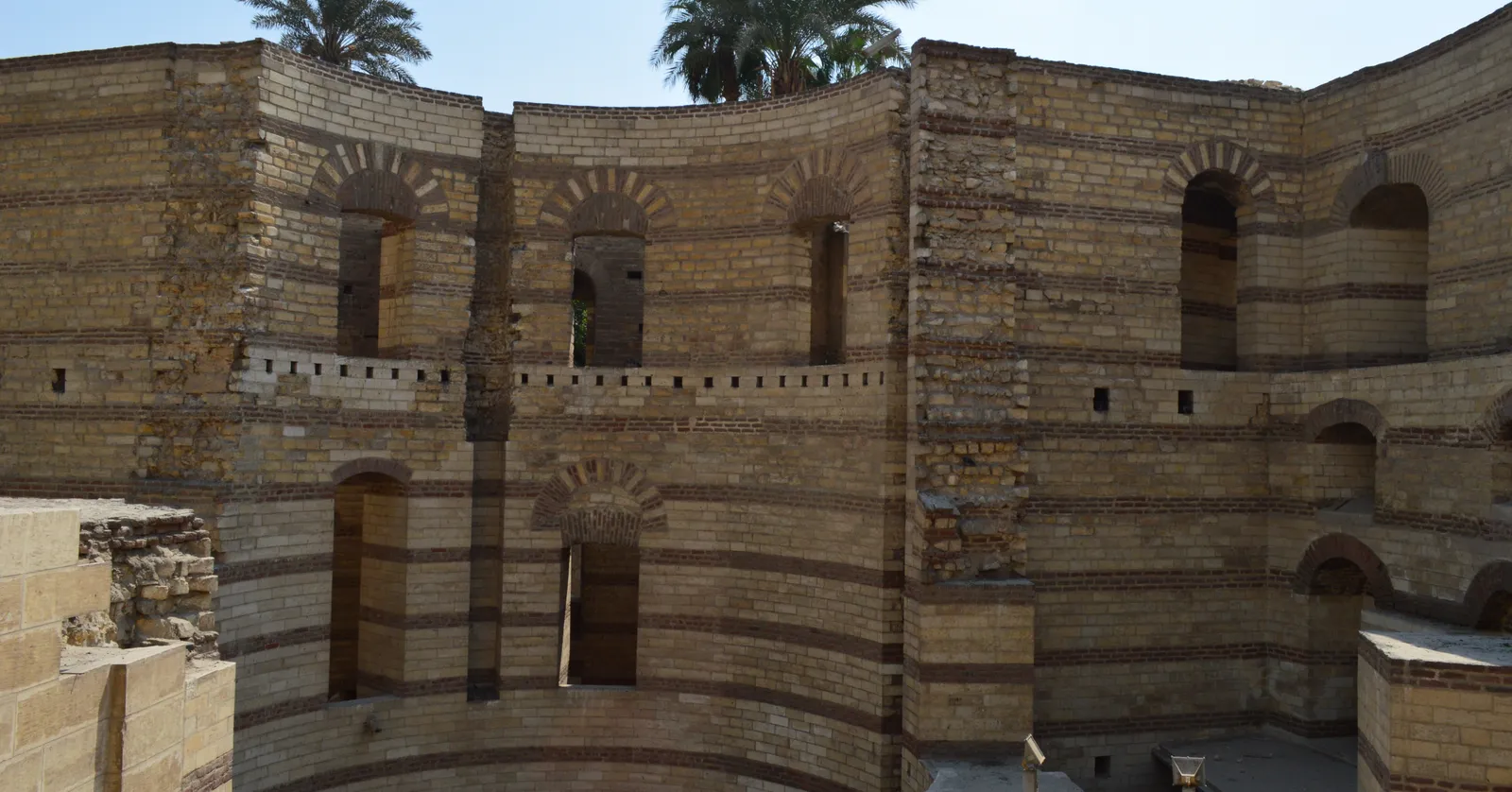
Mar Girgis station in Cairo lets out opposite the walls of Babylon, the Roman fortress that Old Cairo was built inside, with the Coptic Museum, the round church of St George and Abu Serga’s crypt all within the enclosure and Egypt’s oldest mosque a few hundred metres north.
The Coptic Museum opened in 1908 inside the fortress walls
Marcus Simaika spent years buying up Coptic antiquities and architectural fragments from churches being renovated, and in 1908 he founded a museum inside the Babylon enclosure to hold them; it opened to the public in 1910. What is there now runs past 16,000 objects across 25 halls, third century to nineteenth: textiles, icons, illuminated manuscripts, carved woodwork, stonework and stained glass, a good deal of it pulled out of buildings standing a few metres away.
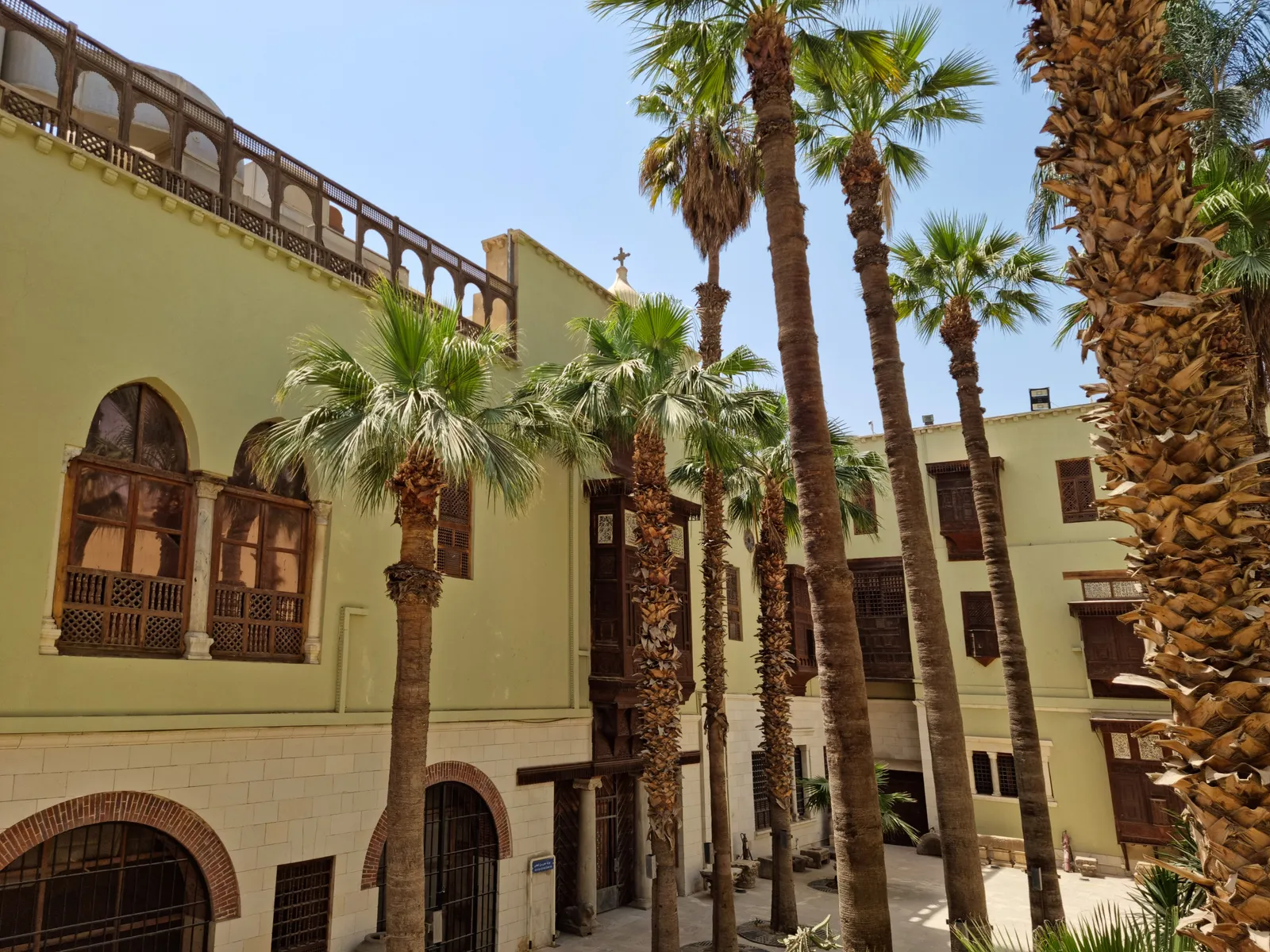
Entry is 280 EGP for foreign adults, half that for students, and it is the only thing in the compound with a real ticket price. A half-day guided visit that pairs this quarter with the Citadel is the way to fit both sides of old Cairo into one afternoon, if a guide is what you want.
St George is round because it stands on a Roman tower
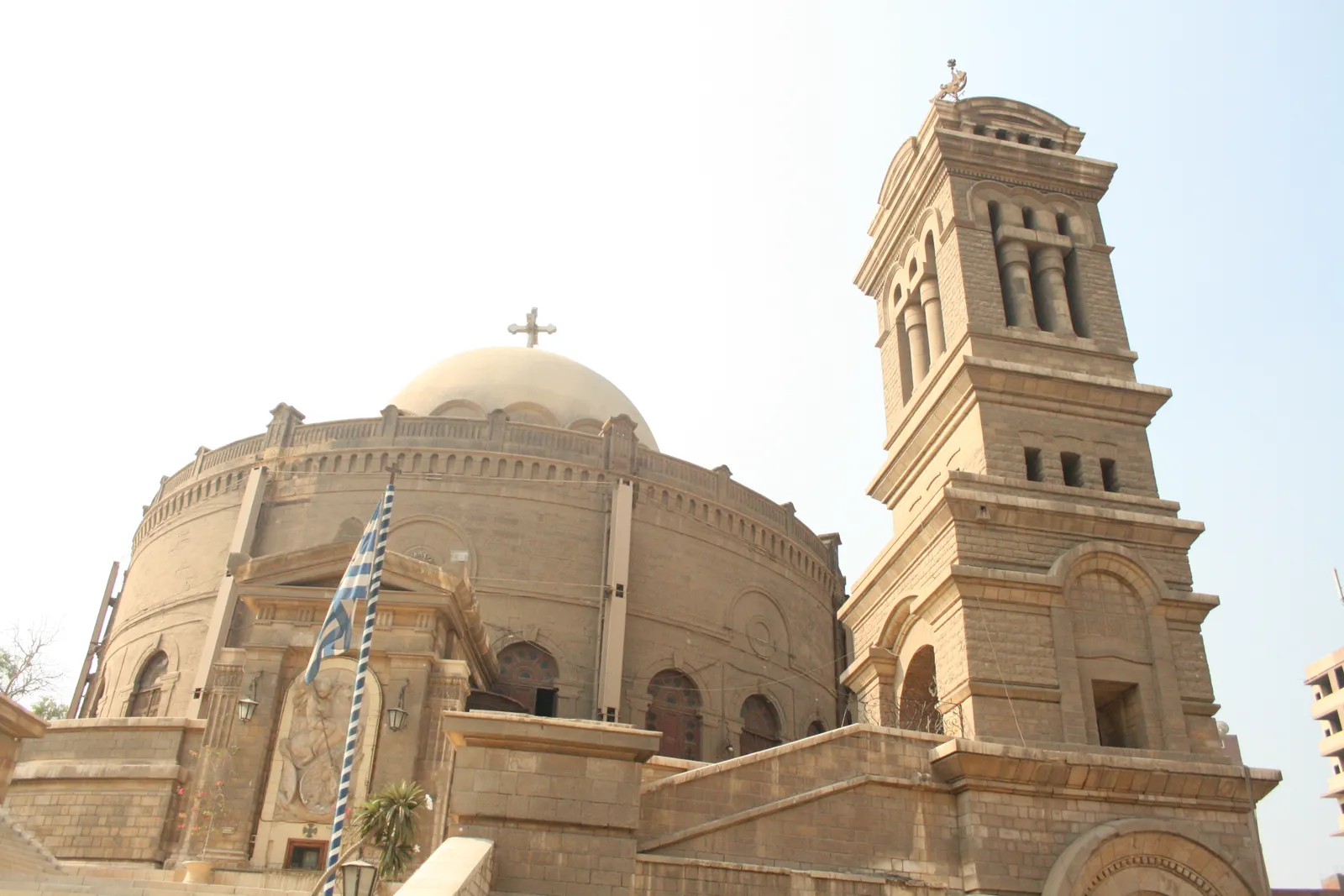
The Greek Orthodox church at the north end of the compound has a circular nave, which is not a Coptic or Greek habit at all; it has that shape because it was built on the top of one of the fortress’s round towers and simply took the footprint underneath it. The present building went up after a fire early last century, on the same drum.
The Hanging Church does the same trick along the southern gate, which is how the quarter works generally: Roman military engineering underneath, churches on top of it, and a modern street level well above both. That last part is what makes this awkward on wheels, since the eastern lanes sit sunken between the old walls and are reached down steps.
Abu Serga’s crypt is where the Holy Family is said to have sheltered
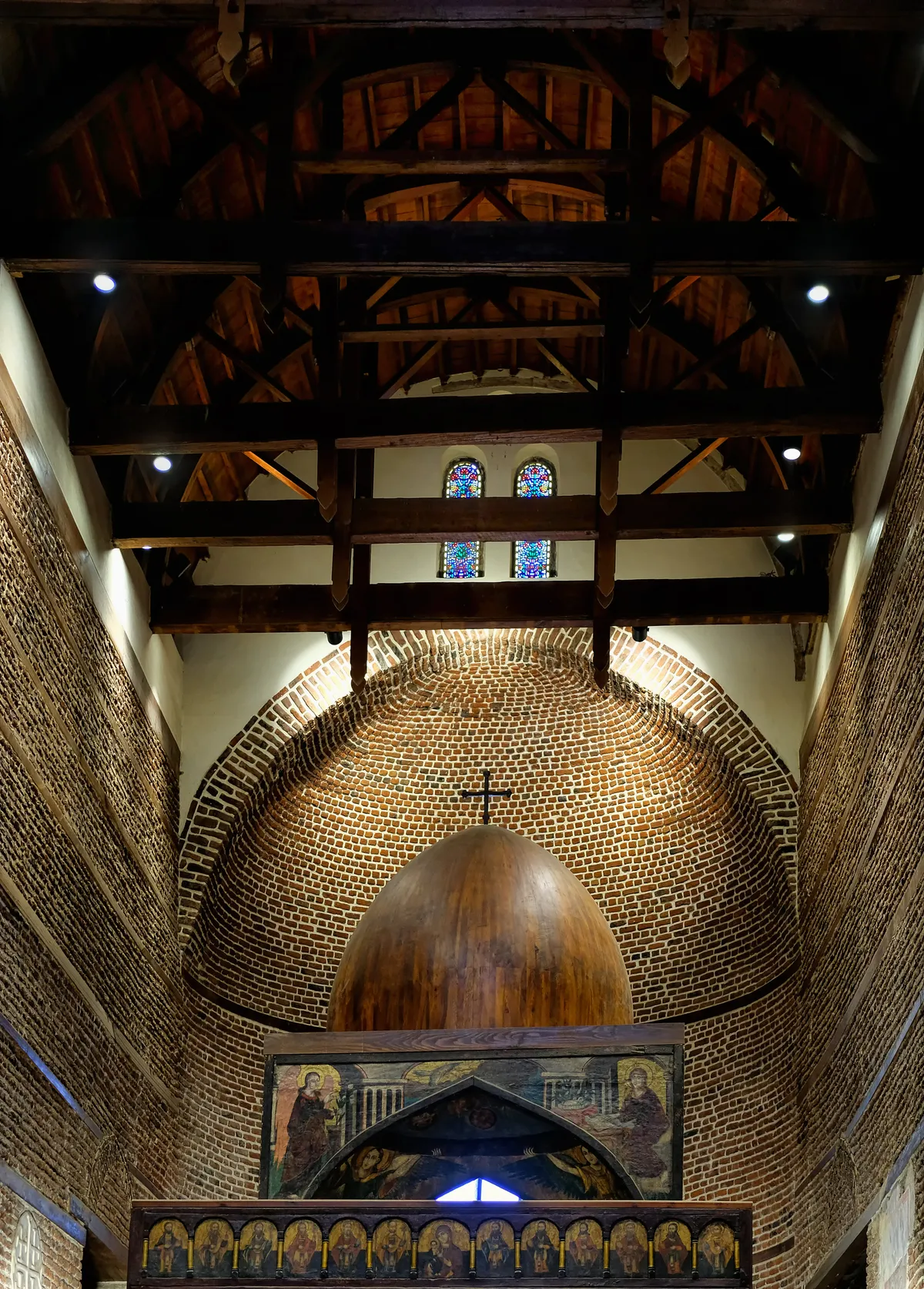
Saints Sergius and Bacchus, known here as Abu Serga, is a basilica with a timber roof and a brick half-dome over the altar, and the reason people queue for it is underneath: a crypt below the sanctuary that tradition holds was the refuge of the Holy Family during the flight into Egypt. It floods when the water table rises, which has kept it shut for stretches over the years.
Nothing in this compound except the museum charges anything, and the churches keep roughly 9am to 5pm, closing to visitors for services.
Amr ibn al-As is the oldest mosque in Egypt
Amr ibn al-As took Egypt in 640 and founded Fustat as its first Islamic capital just north of the fortress; on the order of the caliph Umar, the mosque named after him went up a year later as the settlement’s first building. Nothing of the original survives above ground, since it has been rebuilt and enlarged repeatedly over thirteen centuries, but the site has been in continuous use the whole time.
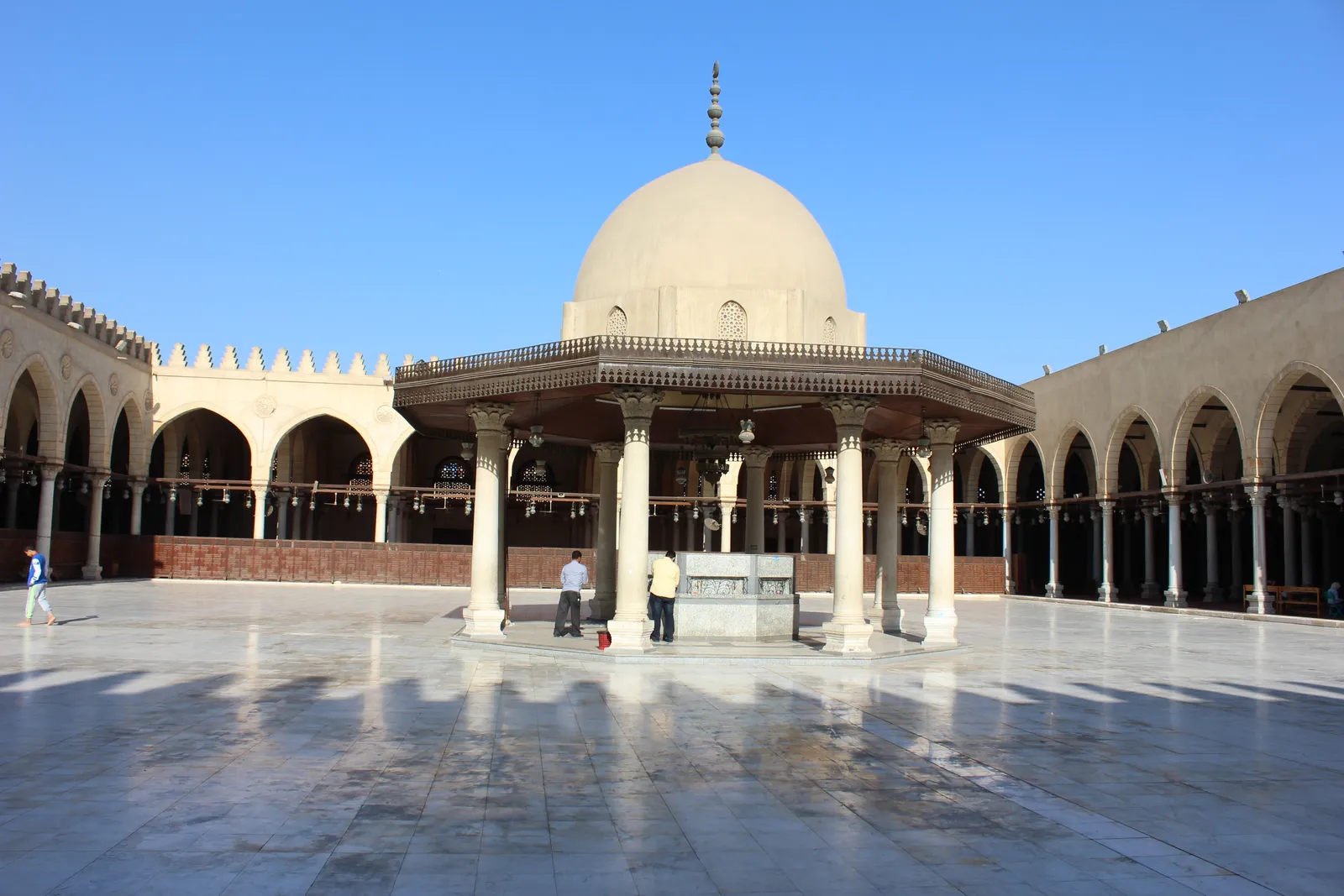
What stands now is a very wide open courtyard with arcades of columns on every side and a domed ablution pavilion in the middle, and it is a genuinely quiet place in the middle of a loud district. It is free, and modest dress and shoes off apply as anywhere else.
The Nilometer on Rhoda Island has measured the flood since 861
Across the water on the southern tip of Rhoda Island, a stone shaft cut down to the level of the river holds a graduated marble column that was used to read the height of the annual flood, which set the year’s taxes. The Abbasid caliph al-Mutawakkil ordered it built in 861 and the astronomer known in Europe as Alfraganus designed it, which makes it one of the oldest Islamic structures standing anywhere in Egypt.
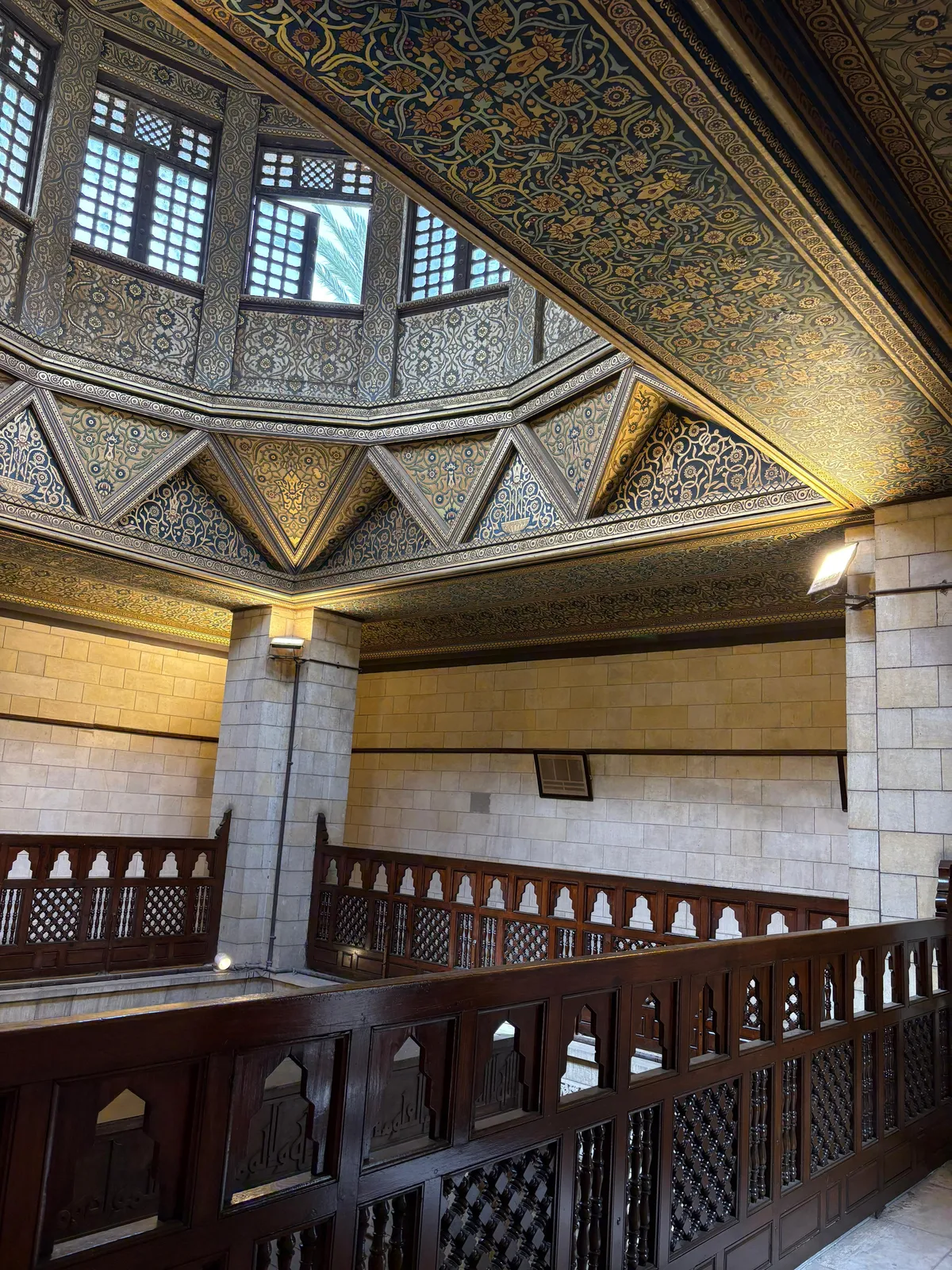
A later pavilion with a painted and gilded wooden ceiling covers the shaft now, and a railed gallery runs round it so you can look straight down. The dam at Aswan ended the flood it was built to read, which is the point of visiting: it is a working instrument for a river that no longer behaves the way it did.
Mar Girgis is four stops south of Tahrir on one line
Trains run down from Sadat, under Tahrir Square, through three intermediate stations to Mar Girgis, every few minutes for most of the day, and a ticket for up to nine stations is 10 EGP. The exit puts you across the road from the fortress gate, which is rare enough in this city to be the deciding factor in coming here rather than anywhere else on a tight schedule.
Cairo International Airport has no rail link, so the return leg is a car or the 356 bus from Midan Tahrir, and two hours is the allowance from the middle of town. Working out how this quarter fits against Giza and the downtown museums is what the full Cairo itinerary is for.
Frequently asked questions
What should I do during a layover near Mar Girgis Station in Cairo?
Everything worth seeing is inside one walled compound that starts at the station exit. The Coptic Museum holds more than 16,000 objects and is the one stop with a real ticket price; the round church of St George, built on top of a Roman tower, and Abu Serga with its crypt are both free, as are the other churches and the synagogue in the same enclosure. The mosque of Amr ibn al-As, the oldest in Egypt, is a few hundred metres north across the road. Two to three hours covers all of it comfortably, and the Nilometer on Rhoda Island is the addition if there is more.
How many stops is Mar Girgis from central Cairo?
Four, on one line, with no changes. Trains run from Sadat under Tahrir Square south through Saad Zaghloul, Al-Sayeda Zeinab and El-Malek El-Saleh to Mar Girgis, and services come every few minutes for most of the day. A single ticket covering up to nine stations costs 10 EGP, bought at the window or tapped through with a stored-value card. The station exit puts you directly opposite the fortress gate, which is unusual for Cairo and the main reason this works as a short trip.
Do the churches in Coptic Cairo charge admission?
No. The Hanging Church, St George, Abu Serga and the Ben Ezra Synagogue are all free to enter, with donation boxes rather than ticket desks, and they keep roughly 9am to 5pm daily outside liturgical services. The Coptic Museum in the same compound is the exception at 280 EGP for foreign adults. Modest dress is expected throughout, and photography rules vary building by building, so it is worth asking rather than assuming.
Is Coptic Cairo step-free?
Only partly. The compound is small and mostly flat, but the Hanging Church is reached up a long flight of stone steps with no alternative, and the lanes on the eastern side of the enclosure run sunken below the modern street between the old fortress walls, reached by more steps down. St George, the Coptic Museum and the mosque of Amr ibn al-As are the parts that can be done on the level.