Diocletian's Palace on a Split Layover (SPU)
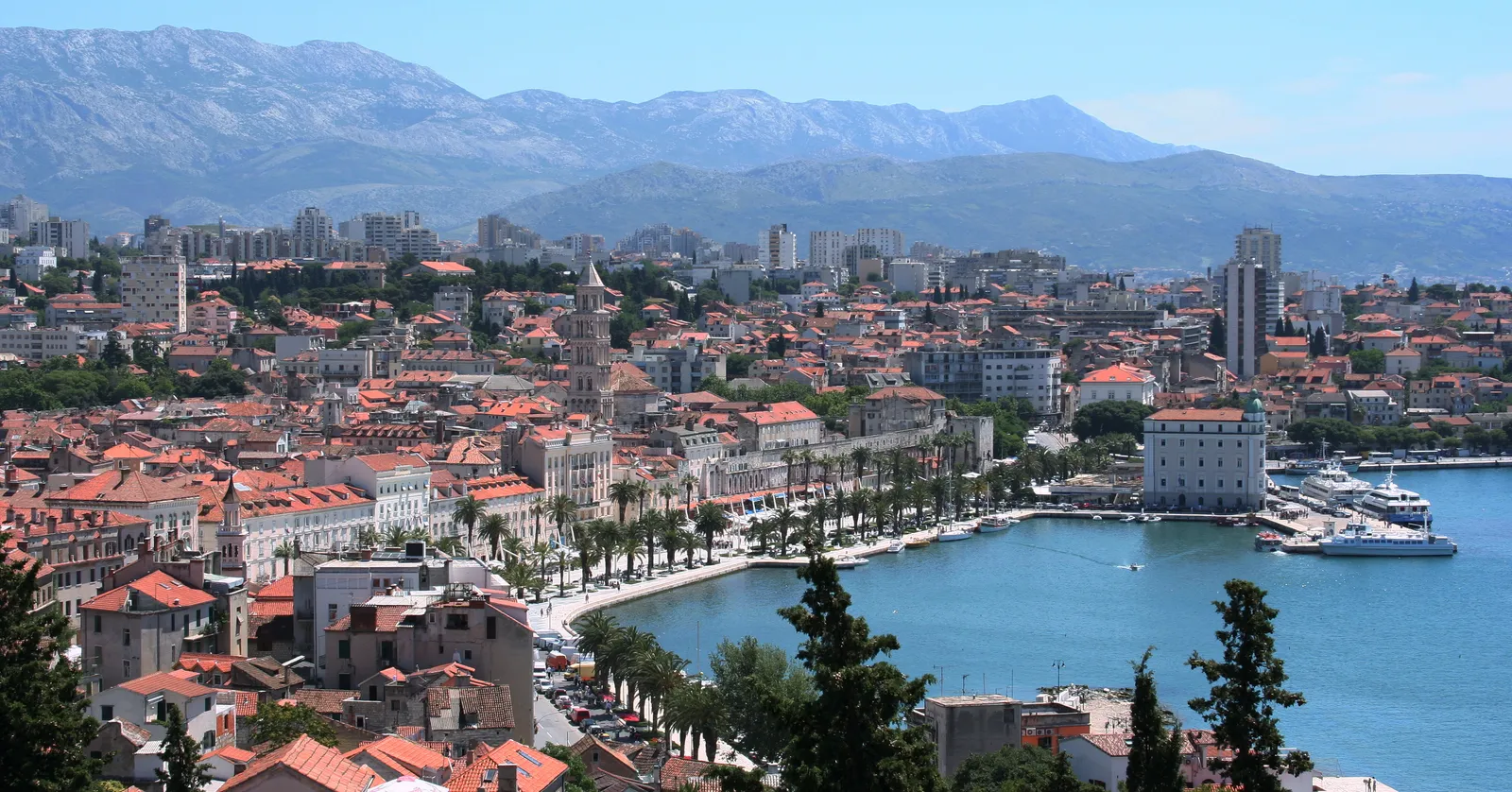
Split’s old town sits inside the walls of Diocletian’s palace, free to walk into at any hour, with the cathedral, the cellars beneath it and the markets outside the gates all a few minutes apart.
The Peristyle, the courtyard at the centre of Diocletian’s Palace
The Peristyle is the colonnaded courtyard at the middle of Diocletian’s Palace, and the palace is not a monument you buy your way into: it is the old town. Diocletian had it built between about 295 and 305 as the place he would retire to, an irregular rectangle roughly 215 metres down its longest wall, with sixteen towers facing inland. Around 3,000 people live inside those walls now, above shops and bars and apartments wedged into Roman masonry, which is what makes it different from Dubrovnik’s old town, where the walls themselves are the ticketed attraction.
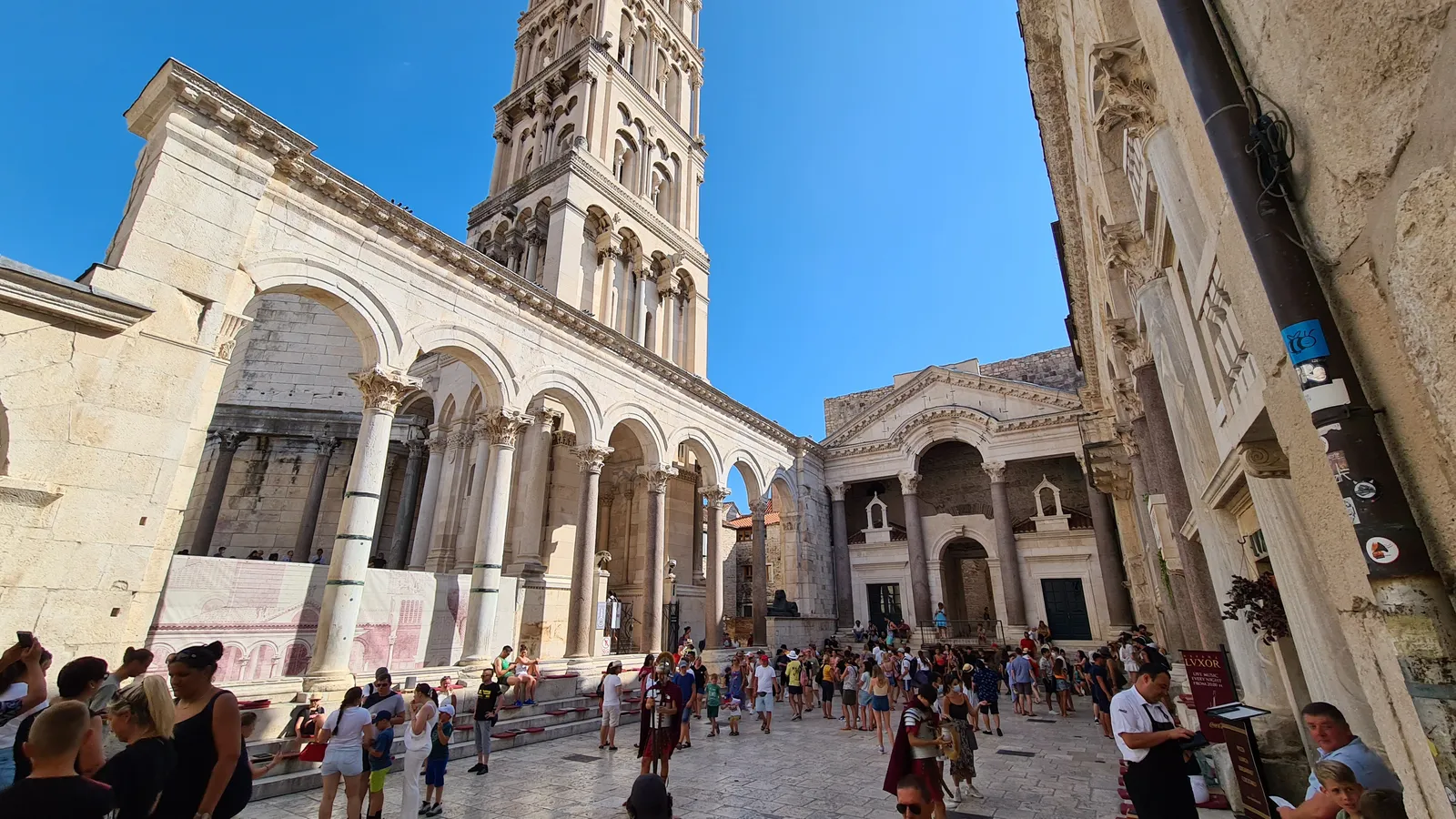
The courtyard is sunk a few steps below the surrounding lanes, with granite columns and arches down both sides, and it was where the emperor showed himself to whoever was waiting. At one end sits a black granite sphinx, carved in Egypt in the 15th century BC under Thutmose III, which makes it around 1,500 years older than the building it now decorates. Diocletian shipped twelve of them back from Egypt. Three survive: this one, a headless one by the Temple of Jupiter a minute away, and a third in the city’s archaeological museum. Nothing here is ticketed, so the courtyard works at 7am and at midnight as well as in the middle of the day, and if you want the masonry explained rather than guessed at, a guided walk through the palace and the cellars covers the ground in about ninety minutes.
The cathedral that started as Diocletian’s mausoleum
The octagonal building on the east side of the Peristyle went up in AD 305 as the emperor’s tomb. In the 7th century, refugees from the sacked Roman city of Salona moved into the palace and turned it into their cathedral, and they dedicated it to Domnius, the bishop of Salona whose execution Diocletian’s own persecution had ordered. By the usual reckoning that makes it the oldest Catholic cathedral still in use in the structure it started as, and the emperor’s sarcophagus is long gone from it.
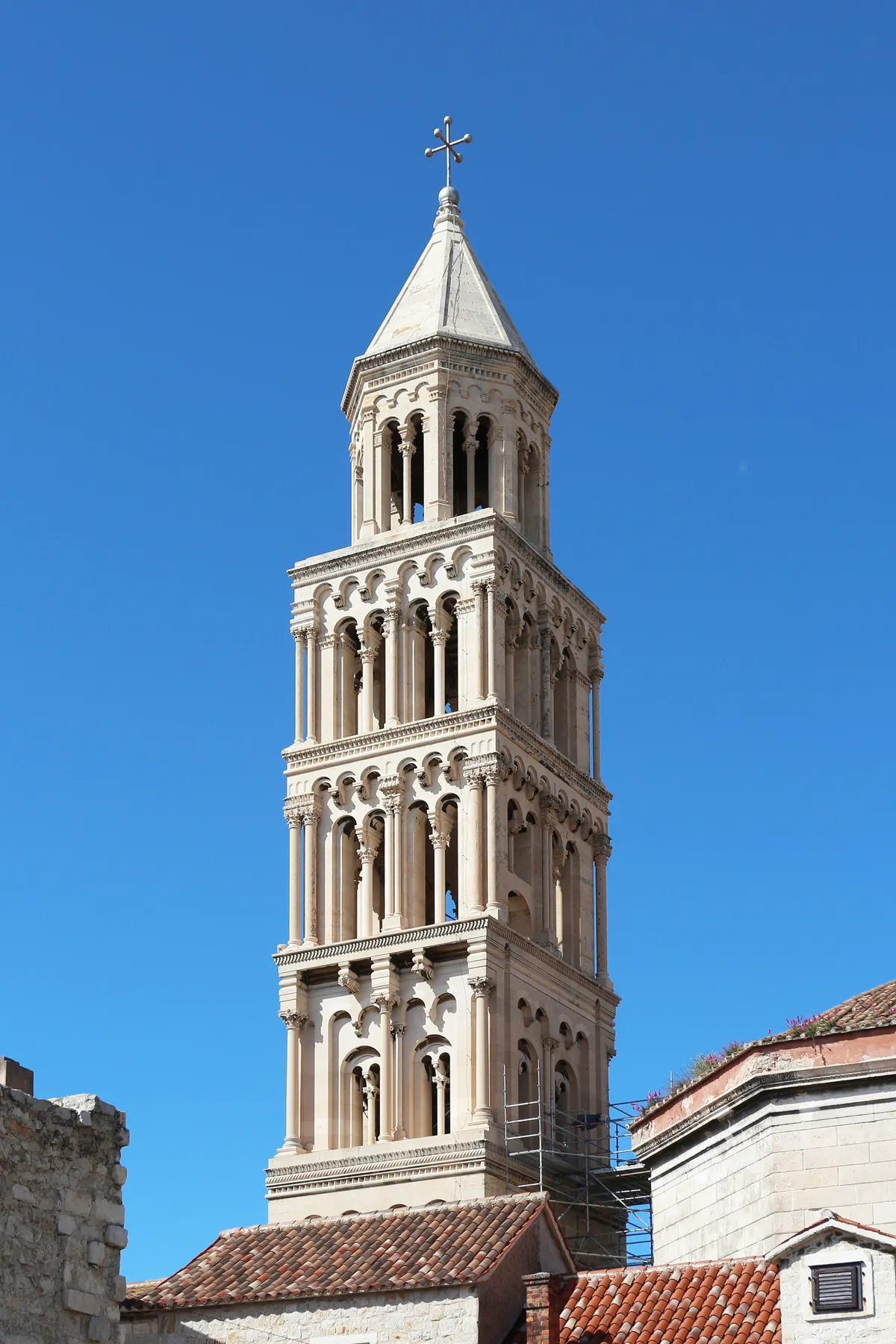
The bell tower beside it is medieval rather than Roman, begun in the 13th century and not finished until the 16th, 57 metres of stacked arcades that get thinner and lighter as they go up. Entry to the cathedral is 5 euros and the tower is 7 on its own; combination tickets that add the crypt, the baptistery and the treasury run from 9 to 15 euros depending on how many of the five you want. Hours are long in summer and noticeably shorter from November onwards, and the tower closes with the rest of it. A guided half-day round of the palace takes in the Peristyle, the cathedral and the tower together if you would rather not queue for each separately.
The cellars beneath Diocletian’s Palace
Diocletian’s apartments occupied the seaward half of the palace, and because the ground there fell away towards the water, the whole floor had to be carried on a substructure. Those vaulted halls are still down there, and they reproduce the plan of the rooms that stood above them almost exactly, which is how the imperial apartments are known at all: the apartments themselves were built over and lost centuries ago, and the cellars are the surviving copy.
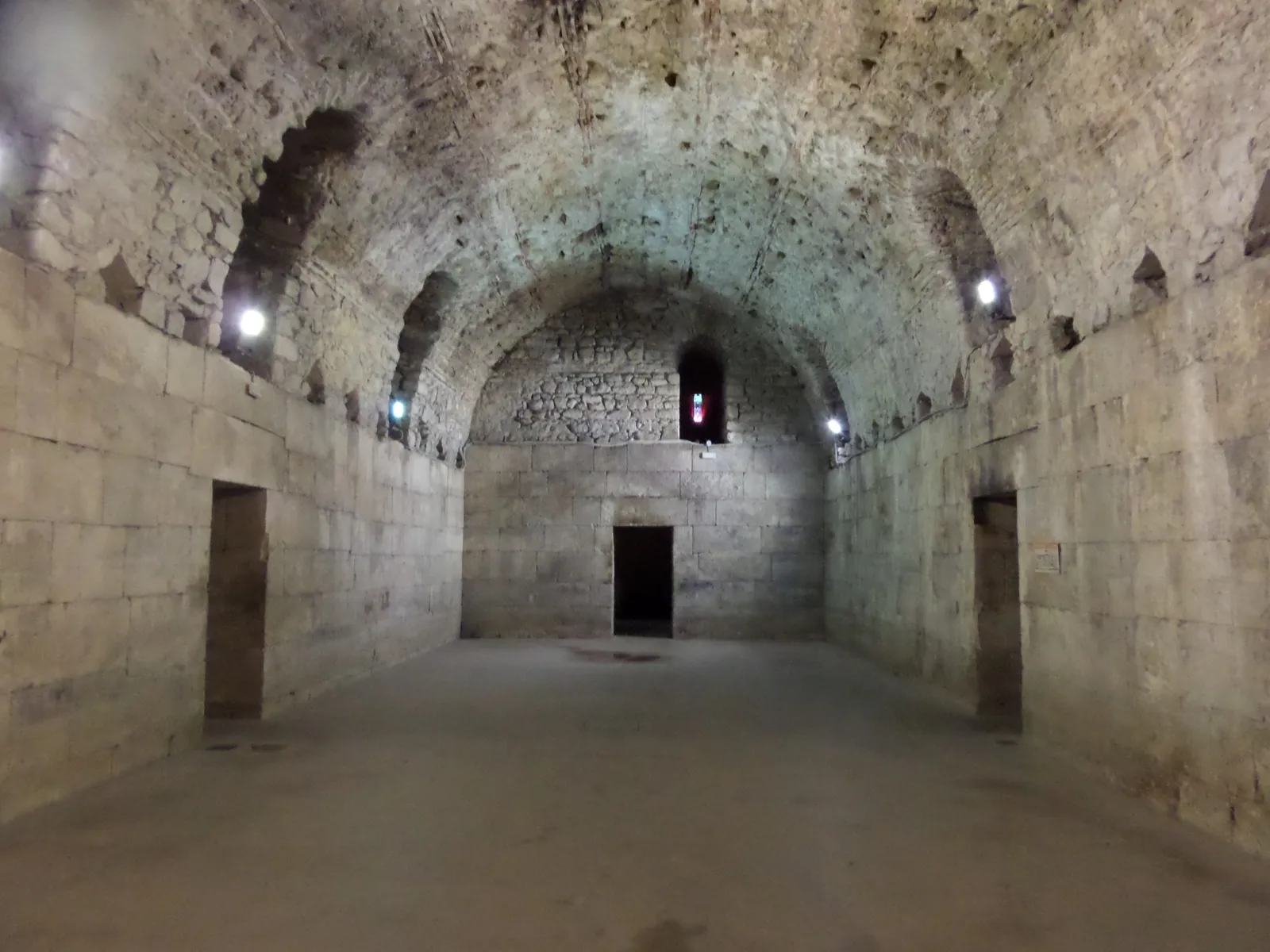
The central corridor costs nothing. Come in from the waterfront through the Bronze Gate, the palace’s old sea entrance, and the passage runs straight through the vaults and up into the Peristyle, souvenir stalls down both sides of it. The two ticketed wings open off that corridor, about 6 euros, roughly 9am to 8pm in summer and closing nearer 4pm in winter, and they are the part worth the money: bare stone, no stalls, and the best-preserved complex of its kind anywhere. The terminals all sit together at the eastern end of the waterfront, seven minutes’ walk away, and everything on this page is west of them, so a suitcase brought into the old town has to be carried back out along the same stretch.
Peškarija, a fish market with no flies
The fish market stands on Obrov street, beside Marmontova, just outside the western wall of the palace and about five minutes from the Peristyle. It is a Secession-era hall more than a century old, iron columns and a high open roof over long marble counters, and it runs from 6am until around 1pm, with the serious buying done before nine.
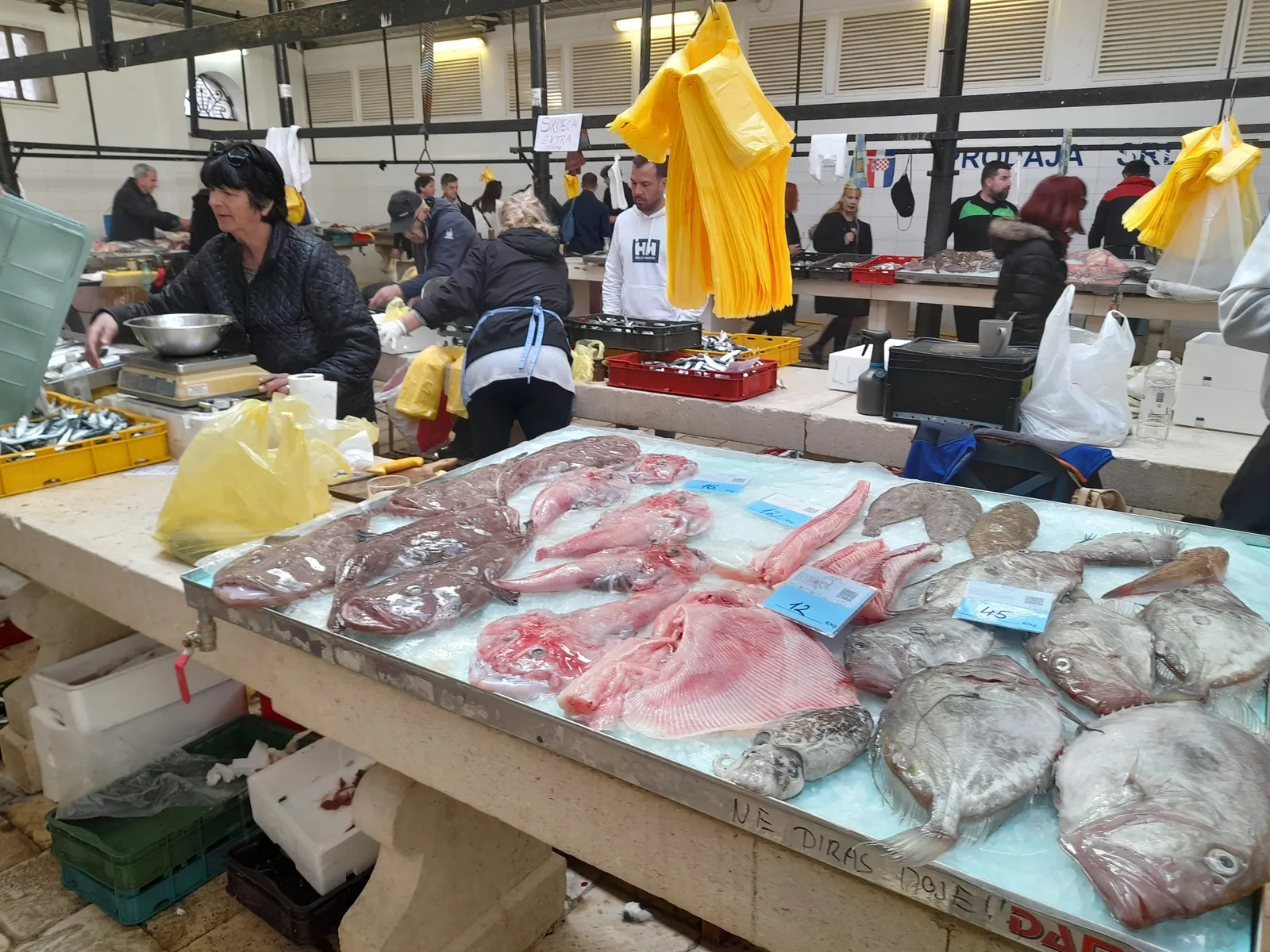
The thing people notice, once it is pointed out, is that there are no flies in it. The local explanation, which the city’s own tourist board repeats, is the sulphur spring next door: the market was built alongside the old spa, and the smell keeps them off. The same springs are supposed to be part of why Diocletian, who had rheumatism, chose this bay in the first place. Nobody is selling tickets to any of that, and it takes ten minutes.
The green market sits on the opposite side of the palace, a line of stalls running along Hrvojeva from the eastern wall down to the Silver Gate, fruit and vegetables and cheese and cured meat from the farms behind the city, open daily from about 6am to 2pm.
Marjan, the forest hill above the old town
Marjan is the wooded hill that closes off the western end of the Split peninsula, 178 metres at its highest point, and it has been protected ground since 1964. A forest census in 1970 counted more than 115,000 trees on it, most of them Aleppo pine planted from the 1850s onwards, which is why a hill in the middle of a Mediterranean city is dark green rather than bare limestone.
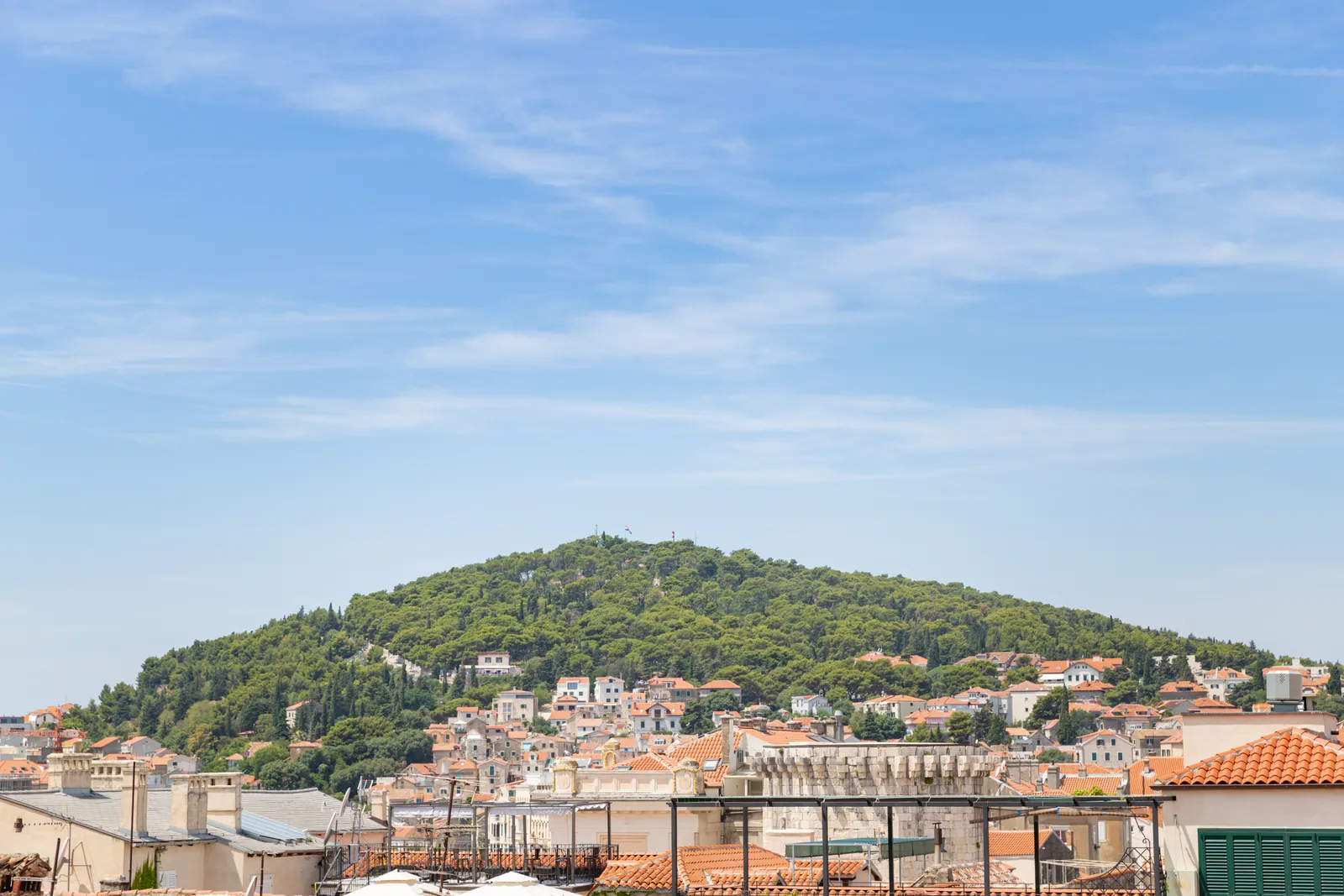
The way up starts in Veli Varoš, the old fishermen’s quarter of low stone houses west of the palace, and it is a stone staircase most of the way to the first lookout terrace, about ten to fifteen minutes of climbing. From the Riva to the summit at Telegrin is more like 45 minutes to an hour at a walking pace. Two small churches are cut into the rock along the way, St Nicholas from the 13th century and St Jerome from the 15th, the latter with hermits’ caves in the cliff behind it. There is no gate and no fee anywhere on the hill, but the full climb and the walk back down is the better part of two hours, so it belongs to a long free afternoon rather than a short one.
The shallow-water ball game invented at Bačvice in 1908
Bačvice is the sandy bay immediately east of the ferry berths, ten minutes’ walk from the terminals, and the water stays shin-deep a long way out. That shallowness is the whole reason the beach has a game named after it. In 1908 a group of Split students home from university in Prague tried to play water polo there, found the water far too shallow for it, and improvised something else: keep a small ball off the surface with hands and feet, no teams, no score, nobody allowed to let it drop.
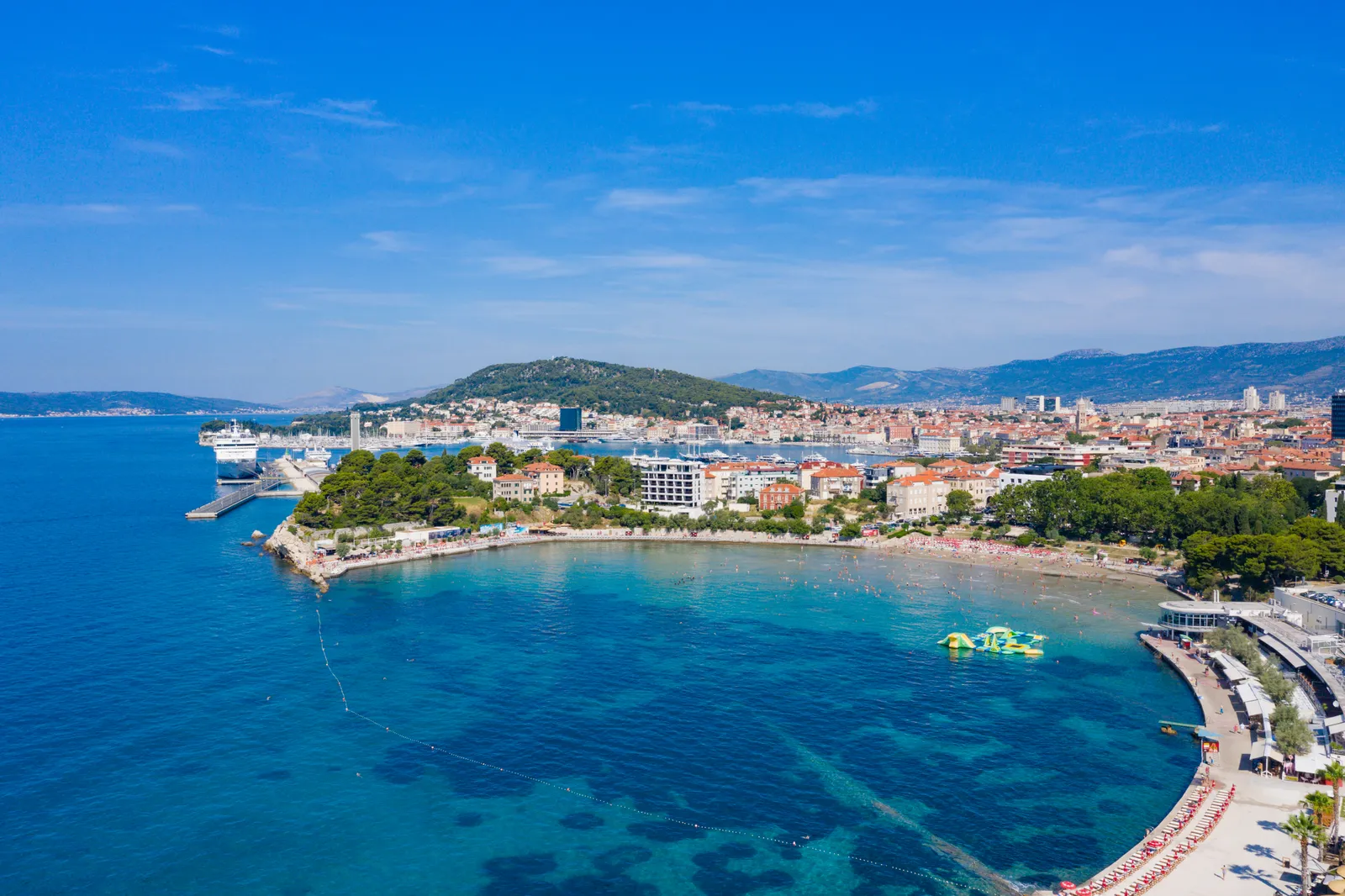
Picigin is still played there every day of the year, and it has been listed as a protected Croatian cultural good since 2008, confirmed again in 2013. A world championship is held on this beach each summer, and there is a tournament on New Year’s Day for anyone willing to get into the Adriatic in January. Watching costs nothing and the players are mostly locals in their fifties and sixties, which tells you how long the habit sticks.
The airport bus leaves from the bus station, not the old town
Split Airport is at Kaštela, about 19 kilometres west along the coast, and nothing runs to it from the middle of the old town. The direct shuttle goes from platform 1 at the main bus station, beside the ferry berths at the eastern end of the waterfront, takes about 30 minutes with no stops in between, and costs 10 euros one way or 15 for an open return; departures are timed against the flight schedule rather than a fixed clock. Promet’s line 37, the local service between Split and Trogir, is the cheaper option at around 3 euros paid to the driver, but it stops all the way along the Kaštela coast, takes an hour or more, and leaves you at a stop on the main road rather than at the terminal door.
Allow about 90 minutes from picking your bag back up to standing in the check-in hall, and more in July and August, when the coast road west of the city queues. Whichever bus you take, collect your luggage before you head east along the Riva rather than doubling back for it: the storage points cluster around the old town and the port, not out along the airport road.
Frequently asked questions
What should I do during a layover in Split?
Walk into Diocletian's Palace, which is not a museum but the old town itself: the Peristyle, the colonnaded courtyard at its centre, costs nothing to stand in, and a 3,500-year-old Egyptian sphinx still sits at one end of it. The cathedral on the same square began as the emperor's mausoleum and is the one stop here worth paying for, 5 euros in, 7 for the bell tower. Five minutes west, the covered fish market runs from 6am to about 1pm and is free to wander. With four hours or more, the wooded hill of Marjan behind the old town and the sandy bay at Bačvice are both free and both open at any hour. The cathedral and the ticketed cellars keep shorter hours in winter, so an evening flight in January leaves you with the streets and the hill rather than the interiors.
Is Diocletian's Palace free to walk into?
Yes. About 3,000 people live inside the walls, and the four Roman gates are open streets rather than entrances, so the Peristyle, the Vestibule and the lanes between them have no ticket and no closing time. The central corridor of the cellars is free too: walk in from the waterfront through the Bronze Gate and the vaulted passage runs straight up to the Peristyle, lined with souvenir stalls. Only three things inside the walls are ticketed: the cathedral and its bell tower, the treasury and baptistery, and the two ticketed wings of the cellars either side of that free corridor.
Is the old town in Split step-free?
Mostly, and then abruptly not. The palace sits at sea level, the lanes are flat polished limestone, and the free cellar corridor from the waterfront up to the Peristyle is level apart from a short ramped rise. The bell tower is where that stops: the climb is on narrow open metal stairs with people coming down them while you go up, and there is no lift. Marjan is a staircase for its first stretch out of the Veli Varoš quarter, though the road that loops round the hill is a gentler way up for anyone on wheels.
Is Split worth stopping in during winter?
The outdoor half of the city is unchanged: the palace lanes, the Riva, the markets and Marjan are all free and open in February exactly as in August. What shrinks is the ticketed half. The cellars close around 4pm in winter against about 8pm in summer, and the cathedral's hours come in as well, so the interiors want an early afternoon rather than an evening. Bačvice keeps going year-round, including a picigin tournament played in the shallows on New Year's Day.
Which bus goes back to Split Airport?
Two, and they leave from different places. The airport shuttle runs from platform 1 at Split's main bus station, next to the ferry berths, direct with no stops in between, about 30 minutes, 10 euros one way and 15 for an open return. Promet's line 37, the local Split to Trogir service, is around 3 euros from the driver but takes an hour or more and picks up from a stop out on the main road rather than at the terminal door. Line 37 also thins out considerably on Sundays and public holidays, which is when the shuttle is worth the difference.