Split's Marjan Hill: Meštrović and Kašjuni
Part of the full Diocletian's Palace on a Split Layover (SPU)
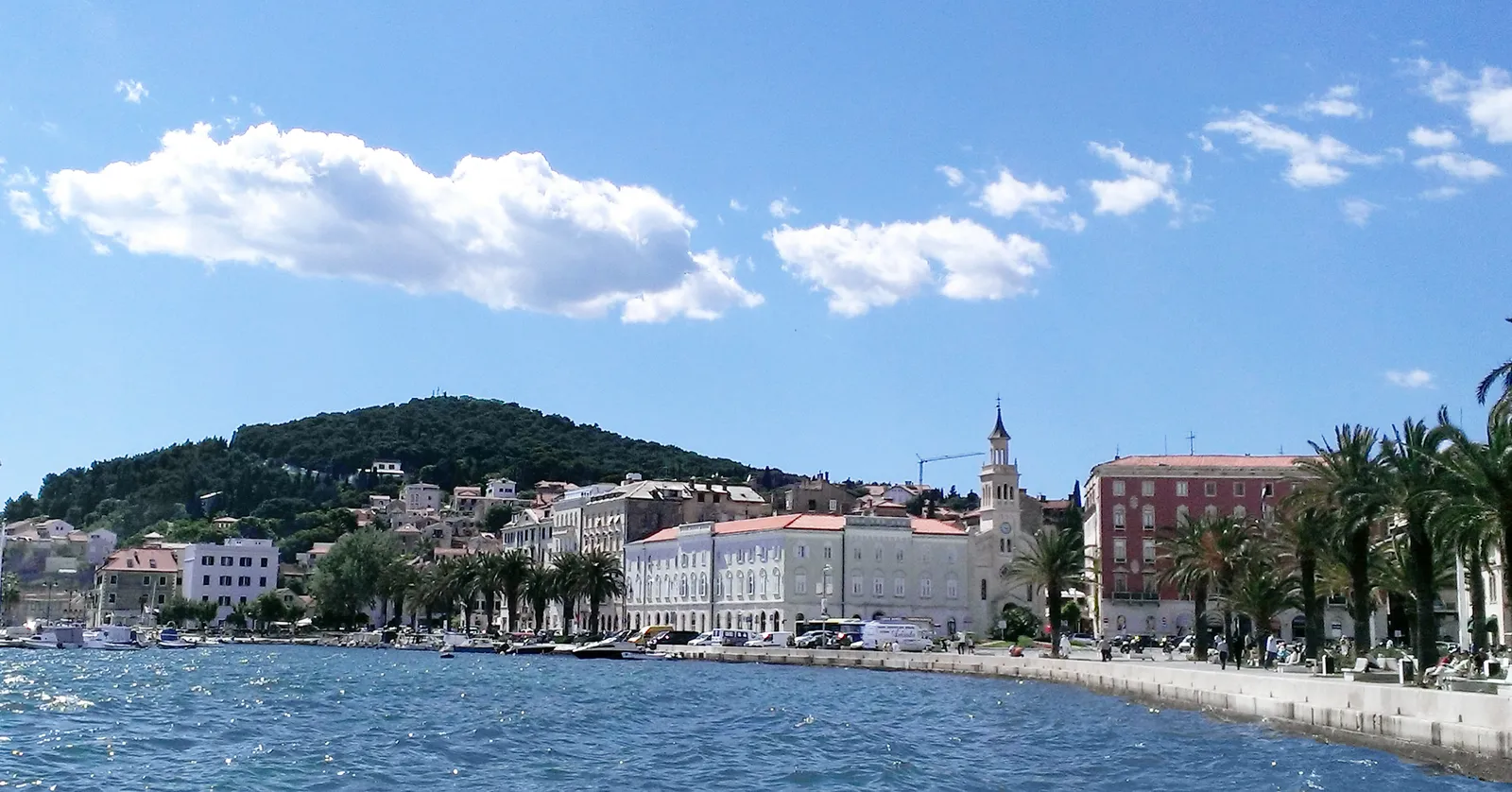
Marjan is the pine-covered hill closing off the western end of the Split peninsula, and Ivan Meštrović’s gallery sits on its southern slope, the 1573 Jewish cemetery on its eastern one, and the pebble cove at Kašjuni below the trees on the sea side.
The Meštrović Gallery, the sculptor’s own house
Ivan Meštrović built the long pale villa on Marjan’s southern slope in the 1930s as somewhere to live and work, and designed it himself: a colonnaded centre block between two wings, set above terraced steps and a garden running down towards the sea. He left Croatia in 1942 and never lived in it again. It became a gallery of his own work: a house built by the artist, now displaying what he made in it.
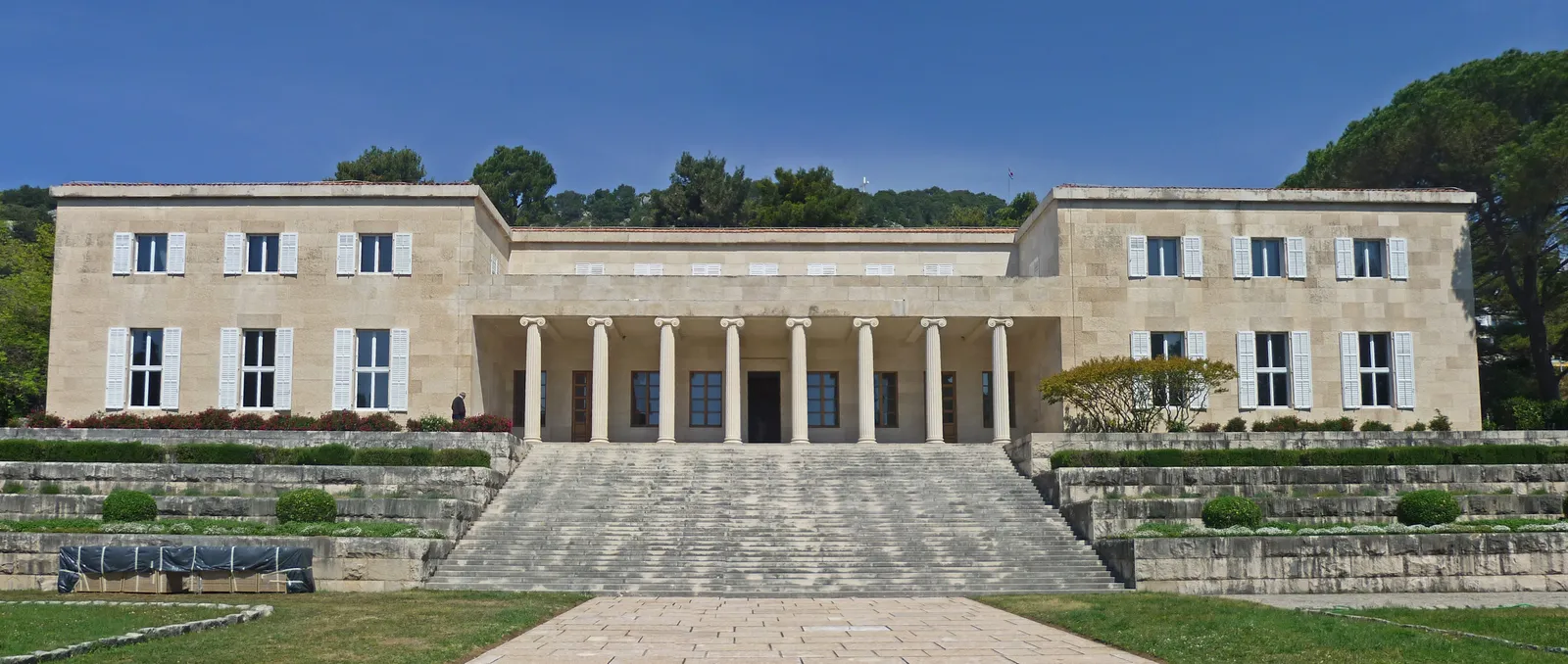
Adult entry is 12 euros and it covers a second building a few hundred metres further along the shore road. Crikvine-Kaštilac is a 16th-century summer house that Meštrović bought in 1939 and rebuilt as a chapel, and the walls inside carry a cycle of twenty-eight wooden reliefs on the life of Christ, carved over decades. That is the part people tend to be unprepared for. The gallery keeps long hours from May to September and short ones through the winter, and closes on Mondays and public holidays either way. A bus runs along the shore road from the centre, or it is a flat half hour on foot.
The Jewish cemetery of 1573 on Marjan’s eastern slope
The eastern slope of the hill, above the Veli Varoš quarter, holds the oldest Jewish cemetery in Croatia. The ground was granted in 1573, to families who had reached Split from Spain and Portugal after the expulsions, and burials continued until the Second World War. Around 700 stones survive.
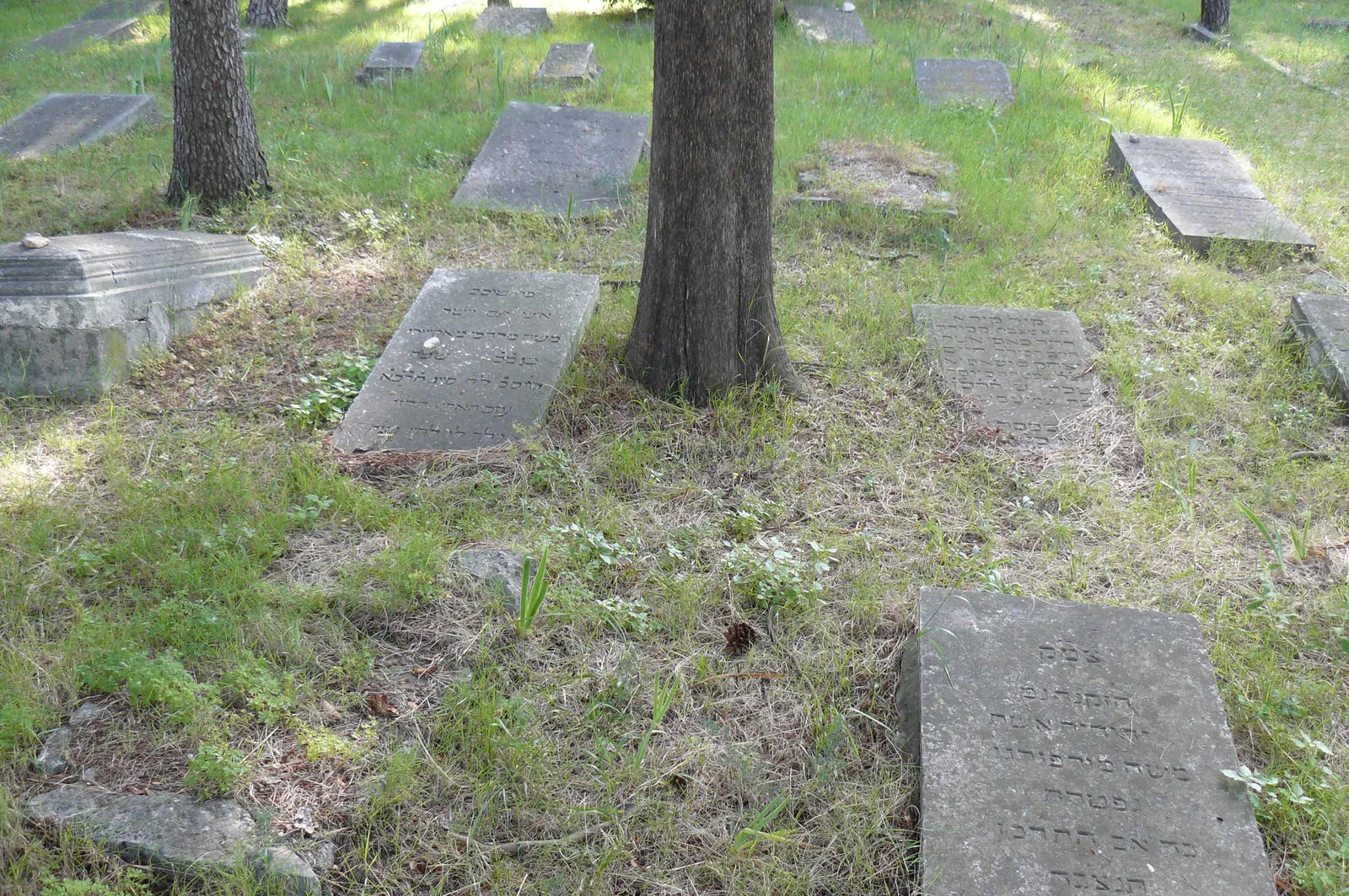
They lie flat rather than standing, in the Sephardic manner, some cut as low sarcophagus roofs and some as plain slabs, with Hebrew lettering worn shallow by four centuries of weather. The oldest one still legible is from 1717. The site is walled, gated and listed as a cultural monument, on a slope of grass and pines with the city below it, and the approach is the stair climb out of Veli Varoš, which is bare stone steps rather than a path and the steepest thing on this page.
Kašjuni, a pebble cove under the pines
Kašjuni lies on the south shore of Marjan, roughly half an hour on foot west from the edge of the old town along the coast road, or a short bus ride. It is white pebble rather than sand, the forest comes right down to the waterline, and the seabed drops away quickly enough that this is swimming rather than wading.
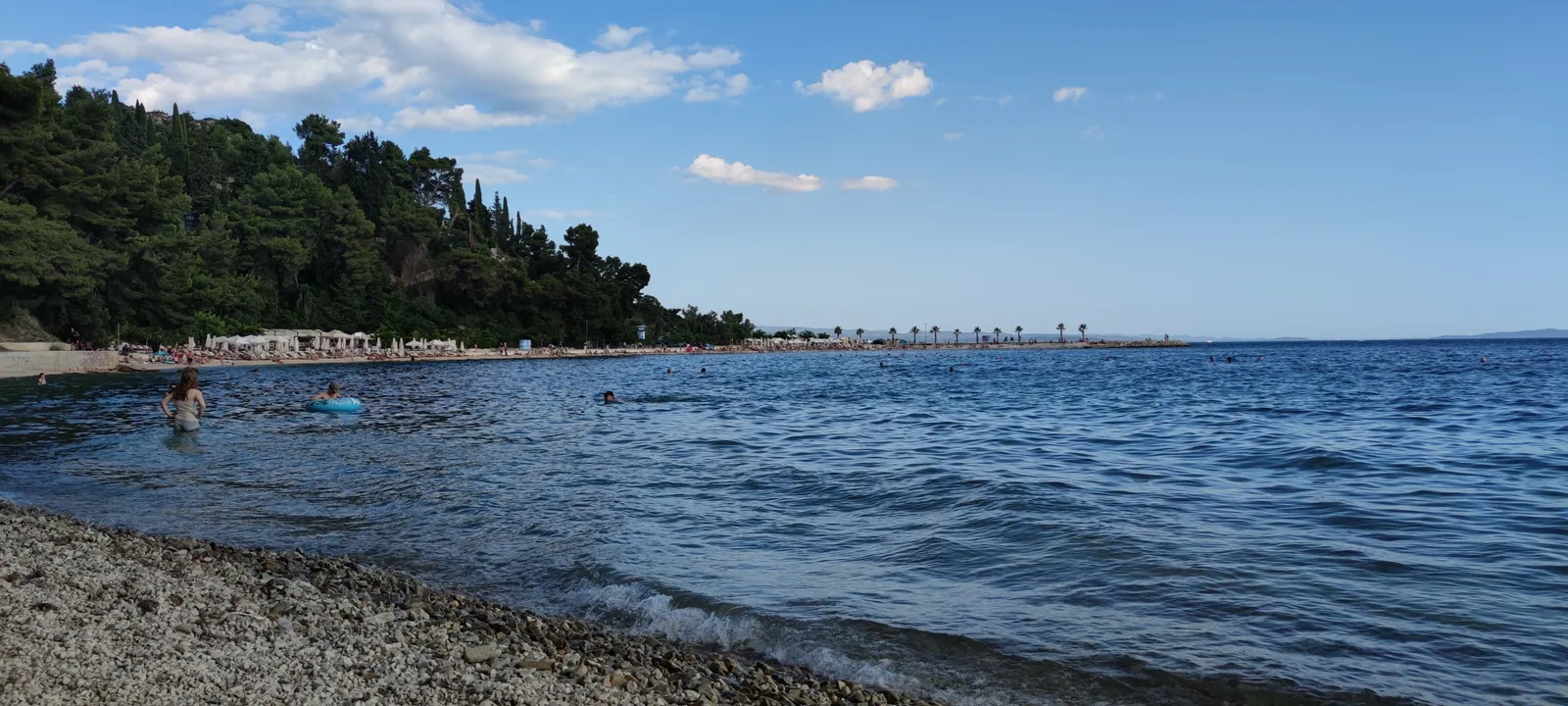
One end has a bar with loungers; the rest is open shore that nobody charges for. Two smaller coves, Ježinac to the east and Bene round on the north-west tip, do the same thing with fewer people. All of this is a different proposition from the shallow city beaches on the other side of town, and from the Roman palace itinerary in the centre, which spends its time indoors and under stone.
Sustipan, the headland park at the hill’s eastern foot
Sustipan is the low promontory where Marjan’s slope runs out into the sea at the western edge of the city harbour, and it has been three different things in a thousand years. A Benedictine monastery dedicated to St Stephen stood here from 1068, under the pines the place is still named for. In the 1830s the ground became Split’s first municipal cemetery, and a well-regarded one; after the Second World War the burials were moved out to Lovrinac and the cemetery was cleared.
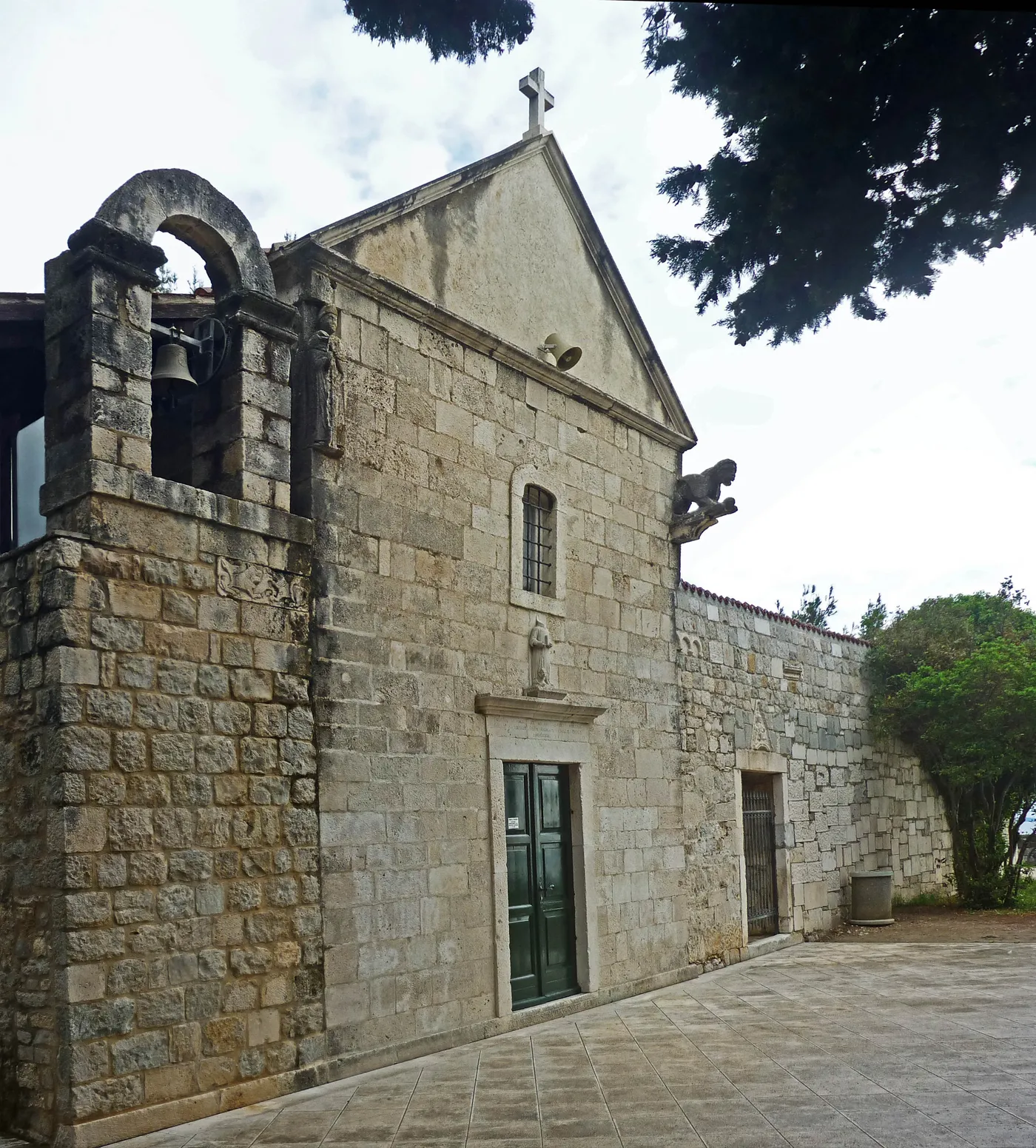
What survives is a small church, a neoclassical gloriette left standing when the rest went, and a flat park of gravel paths under pines with the sea on three sides. It is five minutes from the foot of the gallery road and about fifteen from the old town, it has no gate, and it is reliably the emptiest open space within walking distance of the centre.
The airport shuttle starts on the far side of the city
Nothing runs from Marjan westwards along the coast, so the way out starts by coming back down into the city. The airport shuttle leaves from platform 1 at Split’s main bus station, beside the ferry berths at the eastern end of the waterfront, and takes about 30 minutes direct for 10 euros one way or 15 for an open return. Promet’s line 37 to Trogir is the cheaper option at around 3 euros to the driver, an hour or more, from a stop on the main road rather than the terminal door.
Budget the descent as well as the ride: from the far end of the hill it is a good forty minutes back to the terminals on foot, and 90 minutes at the airport on top of that. Anything you carried up the steps is carried back down them, which is the argument for leaving it near the station rather than taking it round the hill.
Frequently asked questions
What should I do during a layover near Marjan Forest Park in Split?
Three things sit on the same hill and almost nobody does all of them. Ivan Meštrović's own house on the south slope is now a gallery, 12 euros including the 16th-century chapel he bought and filled with 28 carved wooden panels. On the eastern side, the Jewish cemetery laid out in 1573 is the oldest in Croatia, about 700 flat Sephardic slabs on a wooded slope. Below the gallery, Kašjuni is a pebble cove with pines coming down to the water and nothing to pay. Three to five hours covers the lot at a walking pace; the gallery is the one that needs checking first, because it is shut on Mondays.
Is Marjan shaded enough to walk in summer heat?
Once you are up, yes. Over 115,000 trees were counted on the hill in a 1970 census, most of them Aleppo pine, and the paths along the ridge and the north side run under them almost continuously. The part that is not shaded is the way up: the stone staircase out of the Veli Varoš quarter climbs bare and south-facing, which is why locals do it early or late rather than at two in the afternoon. The shore road round the south side is the flatter alternative and has trees over about half of it.
Can you swim below Marjan?
The whole southern shore of the hill is swimmable, and it is pebble rather than sand. Kašjuni is the biggest of the coves and the one with a bar and loungers at one end; Ježinac and Bene are smaller and quieter. The water shelves quickly, so this is proper swimming rather than the shin-deep paddling on the city's eastern beaches. Everything there is public: nobody charges for the shore itself.
Is the Meštrović Gallery open on Mondays?
No, Mondays and public holidays are closed. Otherwise it runs Tuesday to Saturday 9am to 7pm and Sunday 10am to 7pm from May to September, dropping to 9am to 4pm and 10am to 3pm from October through April. The 12-euro adult ticket also covers Crikvine-Kaštilac a few hundred metres along the road, and the gallery has been running a partial closure for energy works, with the interior rooms shut and the garden and the chapel open at a reduced price, so it is worth checking the current state before planning an afternoon around the interiors.