Split Airport Layover: Resnik and Kaštela
Part of the full Diocletian's Palace on a Split Layover (SPU)
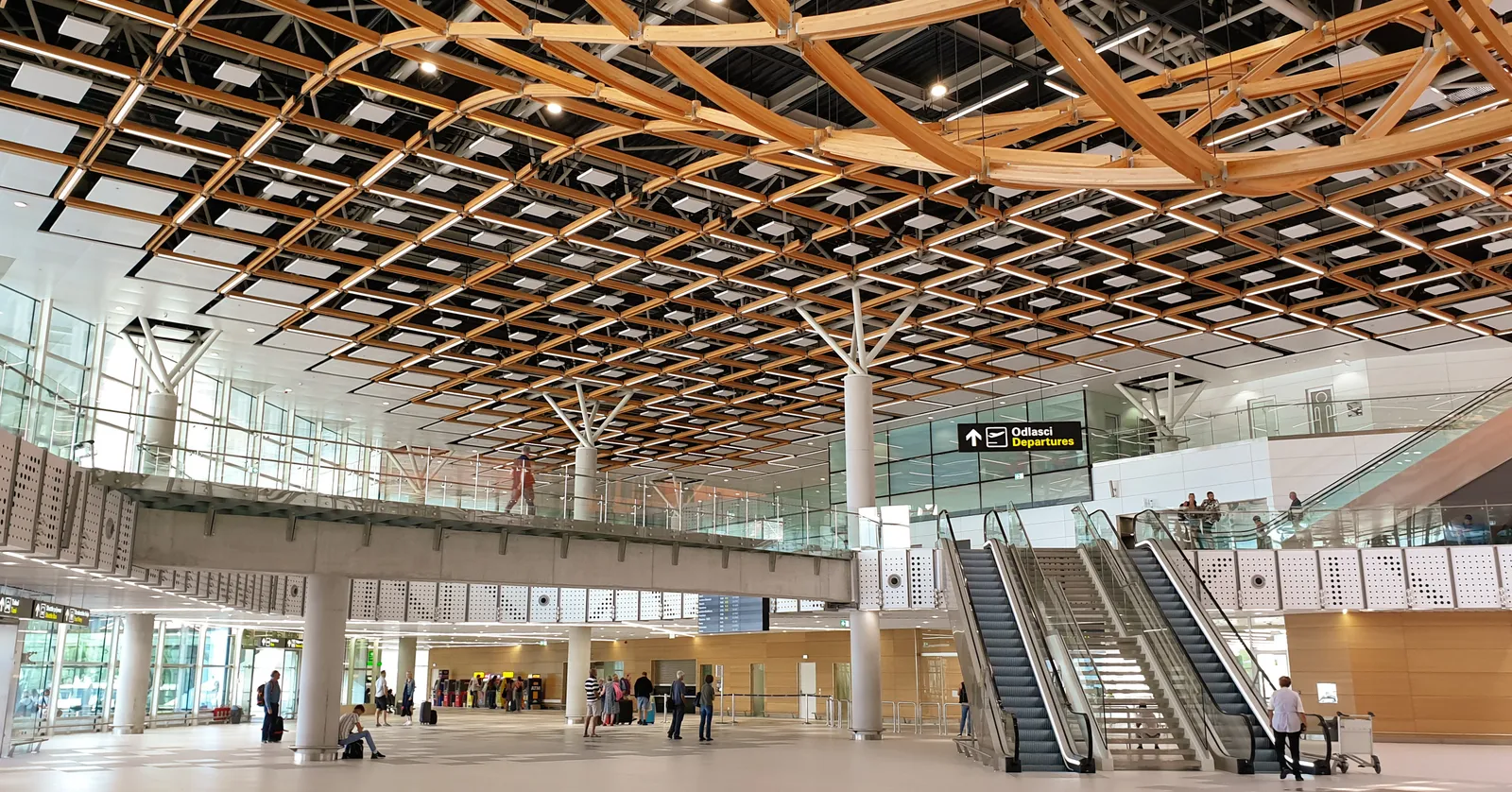
Split Airport sits on the Kaštela shoreline 19 kilometres west of Split, and the Roman town of Siculi at Resnik is about ten minutes’ walk from the terminal, with the fortified harbour villa at Kaštel Stari a short bus ride east along the same bay.
The Roman town of Siculi, half of it underwater at Resnik
Siculi was founded by the shore at Resnik in the 2nd century BC, and in the first half of the 1st century AD the emperor Claudius settled veterans of the Eleventh Legion here. It covered around 36,000 square metres. What survives above water is a grid of low limestone foundations, walls, house plots and street lines, set in open ground among pines with nothing charging to see it.
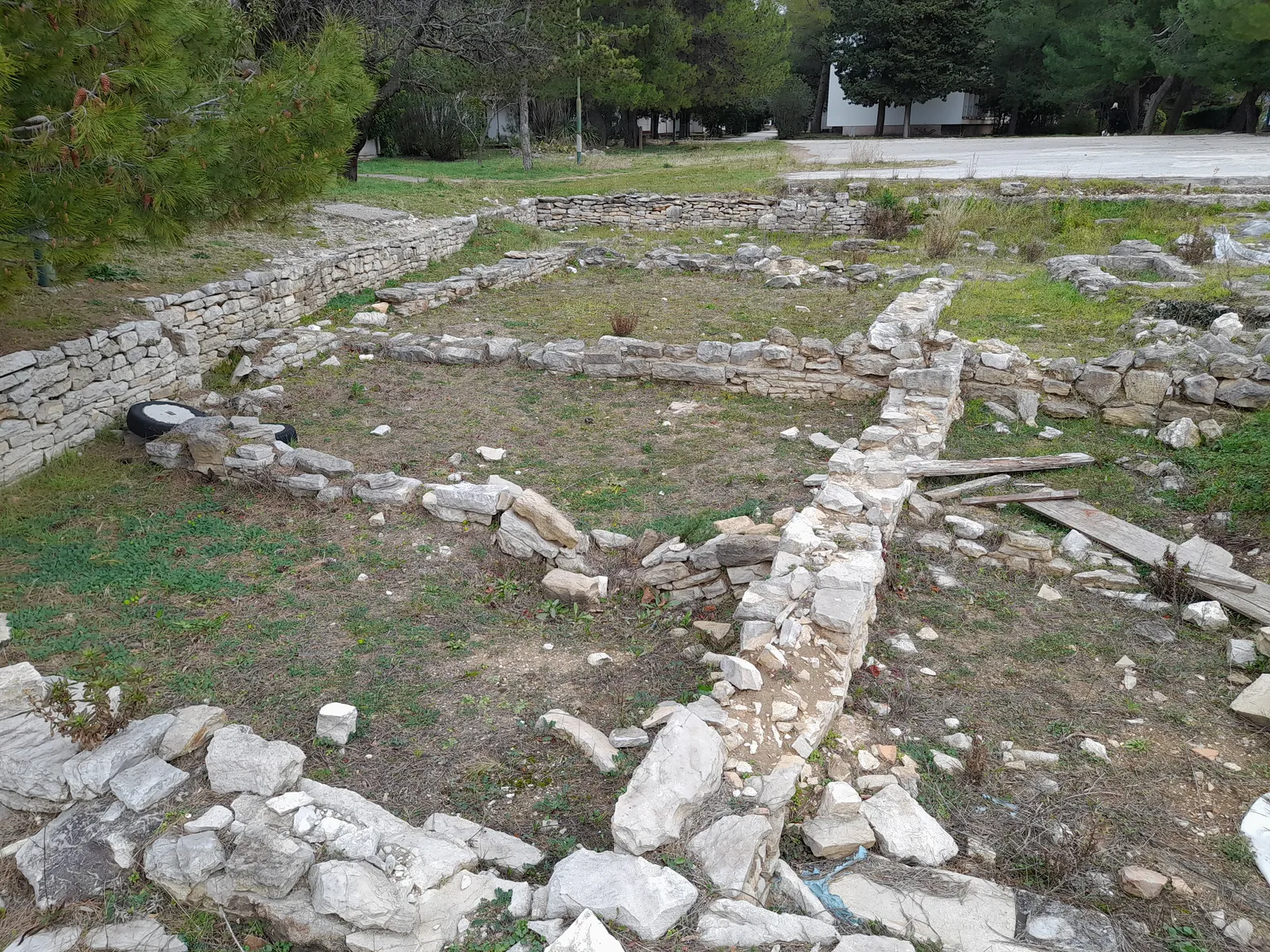
The better half is the part you cannot walk on. The harbour works from the 2nd and 1st centuries BC are still down there off the beach, along with a Neolithic settlement and material from the Middle Palaeolithic, which makes this one patch of seabed several different sites stacked on top of each other. Divers work it; swimmers just swim over it. The beach itself is shingle and sand and shallow, and the aircraft on approach pass close enough overhead to identify by tail.
One other thing stands in Kaštel Štafilić, the village Resnik belongs to: an olive tree reckoned at about 1,500 years old, declared a natural monument in 1990 and still bearing fruit. It has no proper root but a root system spread across roughly a hundred metres, and it grows in the courtyard of the village kindergarten, so it is something to look at over a wall rather than a place to visit.
Kaštel Stari’s castle, built on a reef in 1476
Kaštel Stari is one of seven villages strung along this bay, each of them grown up around a fortified house. Nobles from Trogir and Split put up sixteen of these from the end of the 14th century onwards, as shelter for the peasants working the fields when Ottoman raiding parties came down off the hills. Koriolan Cipiko built his in 1476 on a rock offshore, reached by a drawbridge, which is why the village that formed behind it is called the old one.
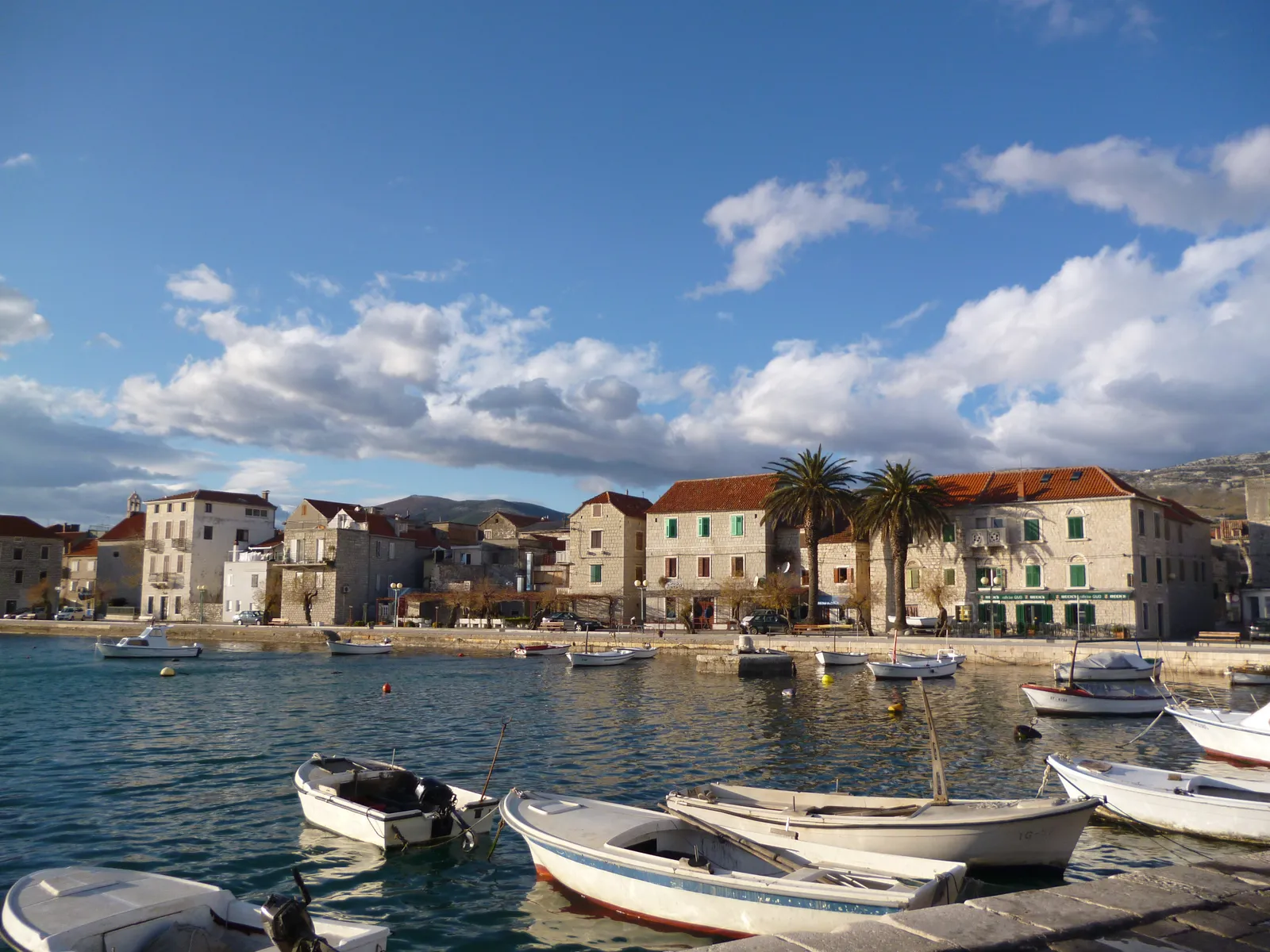
It burned in 1493 and came back in Renaissance dress, with an arcaded courtyard and a south-facing balcony carrying the family arms. The waterfront in front of it is a working one: open boats pulled up on the shallows, stone houses with their doors onto the promenade, and enough cafés to sit out an hour. The village also has a railway station, which is the other way back into the city if the bus timetable is against you. The full Split itinerary starts from the opposite end of that train line, inside the Roman palace, and is a different day entirely from this one.
Split Airport has no left-luggage counter
The terminal that opened in 2019 replaced a building of about 14,000 square metres with one of roughly 50,000, with 30 check-in desks and five baggage belts, which is why the summer queues that used to spill outside now mostly stay indoors. What it does not have, anywhere in it, is a place to leave a bag: no counter, no lockers, so anything you carry out the door comes with you to the beach and back.
Getting out is a bus rather than a train. Promet’s line 37 between Split and Trogir stops on the main road outside the airport grounds, costs around 3 euros paid to the driver, and runs east through the Kaštela villages or west into Trogir in about ten minutes. Allow 90 minutes back at the terminal before a flight, and treat the last useful line 37 departure, not the walk itself, as the thing that decides how far along the bay is sensible.
Frequently asked questions
What should I do during a layover near Split Airport (SPU) in Split?
Walk out to the shore. Resnik is about ten minutes from the terminal, and the Roman town of Siculi sits on the same ground: foundations of streets and houses above the waterline, and 2nd-century BC docks below it. Along the bay at Kaštel Stari, a fortified villa built on a reef in 1476 still stands over the harbour, with a row of stone houses and moored boats in front of it. Two to three hours covers both comfortably on the local bus, and none of it is ticketed. A shorter gap than that is better spent in the terminal than on the road.
Can I leave a bag at Split Airport?
Not inside the terminal. Split Airport runs no left-luggage counter and no lockers, so a bag either goes with you or goes to one of the independent storage points in Kaštel Štafilić and along the coast road. That matters more here than at most airports, because everything worth walking to is outside the building and the shoreline path has nowhere to set anything down.
How do I get from Split Airport to Kaštela and Trogir?
Promet's line 37, the local Split to Trogir service, picks up from a stop out on the main road rather than at the terminal door and runs in both directions: east through the Kaštela villages, west to Trogir in about ten minutes. It costs roughly 3 euros paid to the driver and thins out on Sundays and public holidays. Kaštel Stari also has a railway station with direct trains into Split, under 5 euros and about 20 to 30 minutes depending on the service.
Is the Roman site at Resnik fenced off?
No. The foundations above the waterline sit in open ground among the pines with no gate, no ticket and nobody at a desk, which is why they are easy to walk straight past without realising what the stones are. There are information boards but no building. The part that is genuinely off limits is the half underwater: the ancient harbour works and the prehistoric layers below them are a protected archaeological zone worked by licensed divers, so swimming over them is fine and touching anything is not.