Bačvice Beach in Split: Sand and Picigin
Part of the full Diocletian's Palace on a Split Layover (SPU)
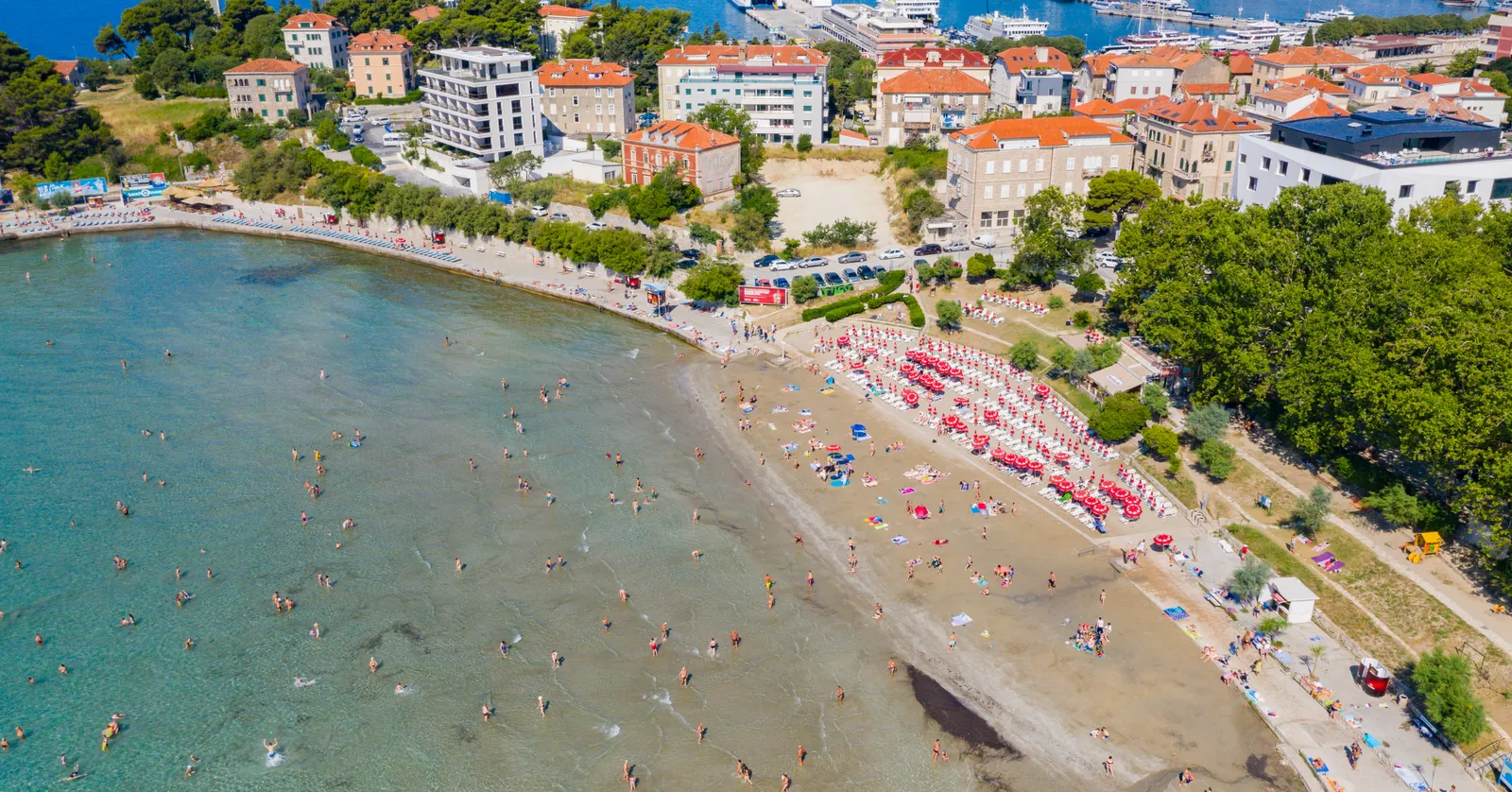
Bačvice is the sandy bay on Split’s eastern shore, ten minutes’ walk from the city’s terminals, and the water there is shallow enough that a ball game invented in it in 1908 is still played every day of the year.
Sand and shin-deep water at Bačvice
Almost every beach in Dalmatia is pebble or bare rock. Bačvice is sand, in the middle of a city built entirely out of limestone, and the bottom shelves so gently that people are still standing waist-deep a long way out. Split made it the municipal beach in 1919 and it has been the city’s social ground ever since; on an August afternoon the bay holds something over ten thousand people, which the city says with more pride than apology.
The shallowness is why the game exists. In 1908 a group of students back from Prague found the water useless for water polo and made up something that suited it instead. Five players stand in a loose ring, the ball is a tennis ball with the felt peeled off, and the only rule is that it must not land. There is no scoring. Picigin has been on Croatia’s register of protected cultural goods since 2008, the world championship has been held here every summer since 2005, and since 2008 it has been judged on the look of the dives rather than anything countable. A separate tournament goes ahead on New Year’s Day, in the Adriatic, in January.
Firule, the cove behind Split’s tennis courts
Firule is the next bay east around the headland from Bačvice, smaller, still partly sand, and noticeably emptier. The clay courts above it belong to the city tennis club, and the list of players who came off them is out of all proportion to the size of the place: Goran Ivanišević, Nikola Pilić, Željko Franulović, Mario Ančić and Jelena Kostanić all learned here.
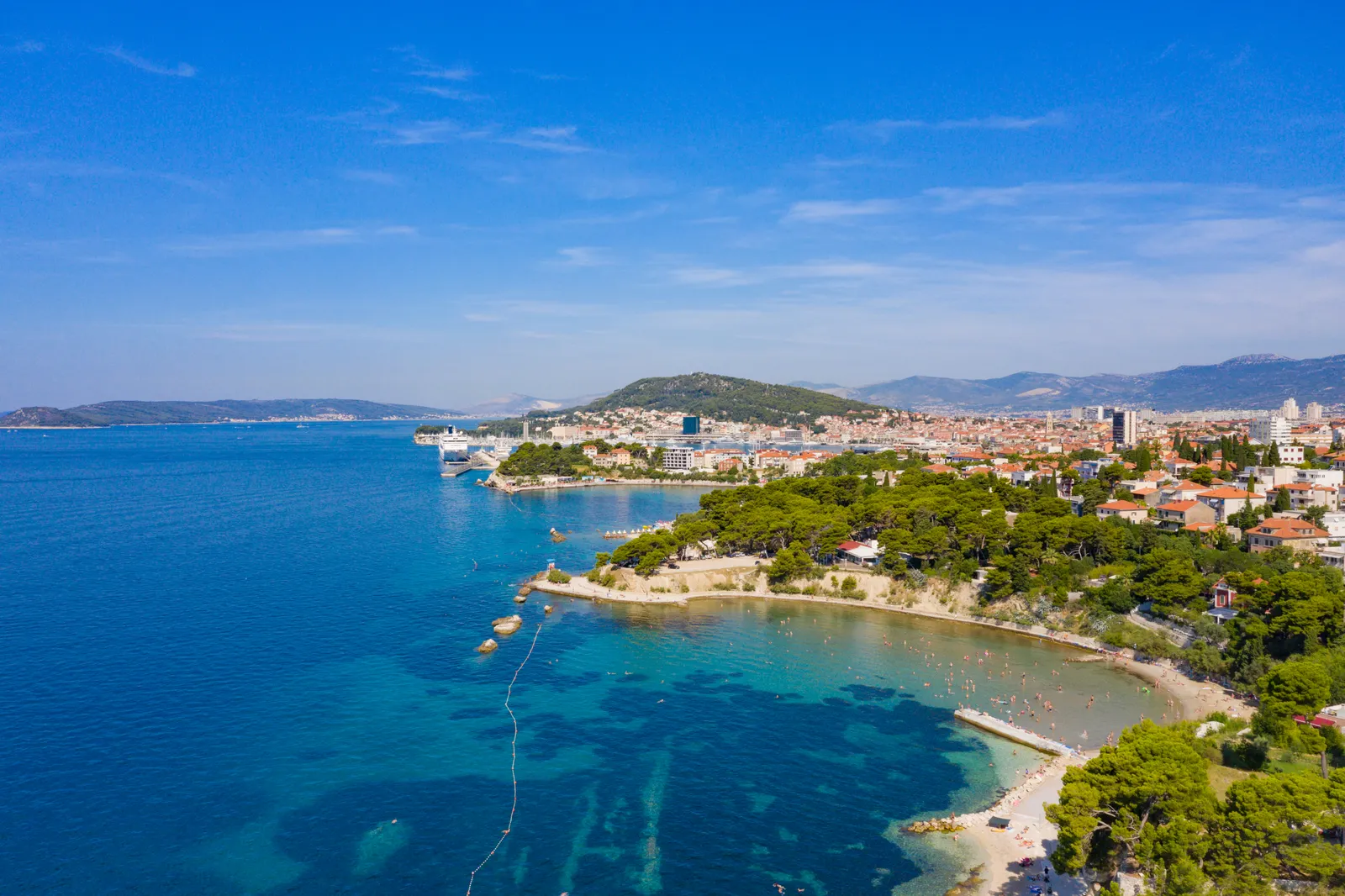
Past Firule the shore keeps going east through Ovčice and Trstenik along a paved promenade, each cove a little quieter than the last. The whole eastern shore is a different proposition from the itinerary through the Roman palace in the centre, which is stone, shade and admission desks; this side is open water and nobody selling anything but coffee. It is also the one stretch of Split with no obvious place to put a bag down: open sand, no lockers, and a game played barefoot twenty metres out in the water.
The maritime museum inside the Gripe fortress
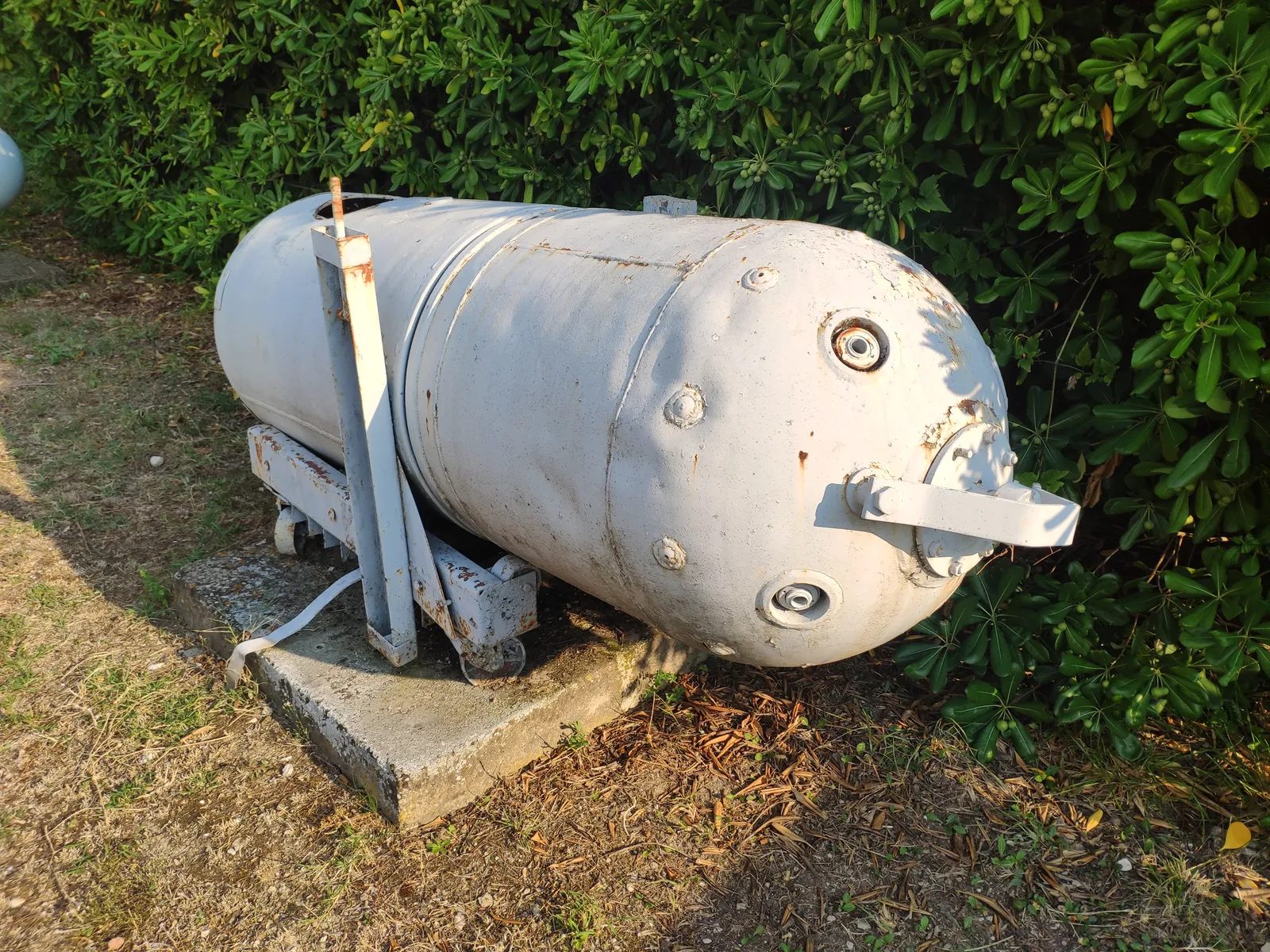
Gripe is the Venetian fortress on the rise behind the eastern beaches, thrown up in the 1650s when the Ottoman front reached the hills above Split, and it now holds the Croatian Maritime Museum. Anchors dragged off ancient wrecks, ship models running from galleys to modern liners, and a collection of very early torpedoes, which belong here because the self-propelled torpedo was invented up the coast at Rijeka in the 1860s.
It opens Monday to Saturday, later in summer than in winter, and Sundays and public holidays are reserved group visits only, which catches people out. The walk up from the beach takes about ten minutes and gains enough height to see back down over the bay.
The airport bus does not come out as far as the beach
Nothing runs to the airport from this side of the city. The shuttle goes from platform 1 at the main bus station, next to the ferry berths at the eastern end of the waterfront and about ten minutes’ walk back west from Bačvice, direct in roughly 30 minutes for 10 euros one way or 15 for an open return. Promet’s line 37 to Trogir is around 3 euros to the driver, takes an hour or more, and picks up out on the main road.
Add the walk to the 90 minutes you want at the terminal, and remember that swimming eats the buffer in a way sightseeing does not: getting dry, rinsed and dressed is a good twenty minutes nobody plans for.
Frequently asked questions
What should I do during a layover near Bačvice in Split?
Swim, and watch the game. Bačvice is sand rather than pebble and the water stays shin-deep a long way out, which is why picigin has been played in it since 1908 and why the beach has been the city's official bathing spot since 1919. Firule, the next cove east, is the quieter version with the tennis courts behind it that produced most of Croatia's Wimbledon-level players. Uphill from both, the maritime museum inside the Gripe fortress is the indoor option if the weather turns. Two to four hours takes in the beach and one of the other two; the museum is the only one that keeps hours worth checking, since Sundays are group bookings only.
Is Bačvice actually sandy?
Yes, which makes it unusual on this coast: almost every other beach around Split is pebble or slabs of rock. The sand runs out into the bay rather than dropping away, so the water stays shallow a long way out and warms up fast. The bay holds a very large crowd in August, over ten thousand people by the city's own reckoning, and it is the one beach in Split where you will see small children wading rather than being carried over stones.
What is picigin and can you join in?
Five players stand in a rough circle in the shallows and keep a small ball from touching the water, with no teams, no score and no way to win. The ball is a tennis ball with the felt peeled off, called a balun. Nobody will stop you joining a circle, though the regulars are better at it than they look: the world championship has been held on this beach every summer since 2005 and has been judged on the style of the dives since 2008. There is a tournament on New Year's Day too, played by people who then get out of the Adriatic in January.
Which beach near Bačvice is quietest?
Firule, five minutes further east around the headland, and Ovčice past it. Both are smaller, both keep some sand, and both empty out considerably compared to the main bay. Firule sits under the clay courts of the city tennis club, so the background noise there is a ball being hit rather than a beach bar.