Dubrovnik Layover: Inside the Walls From DBV
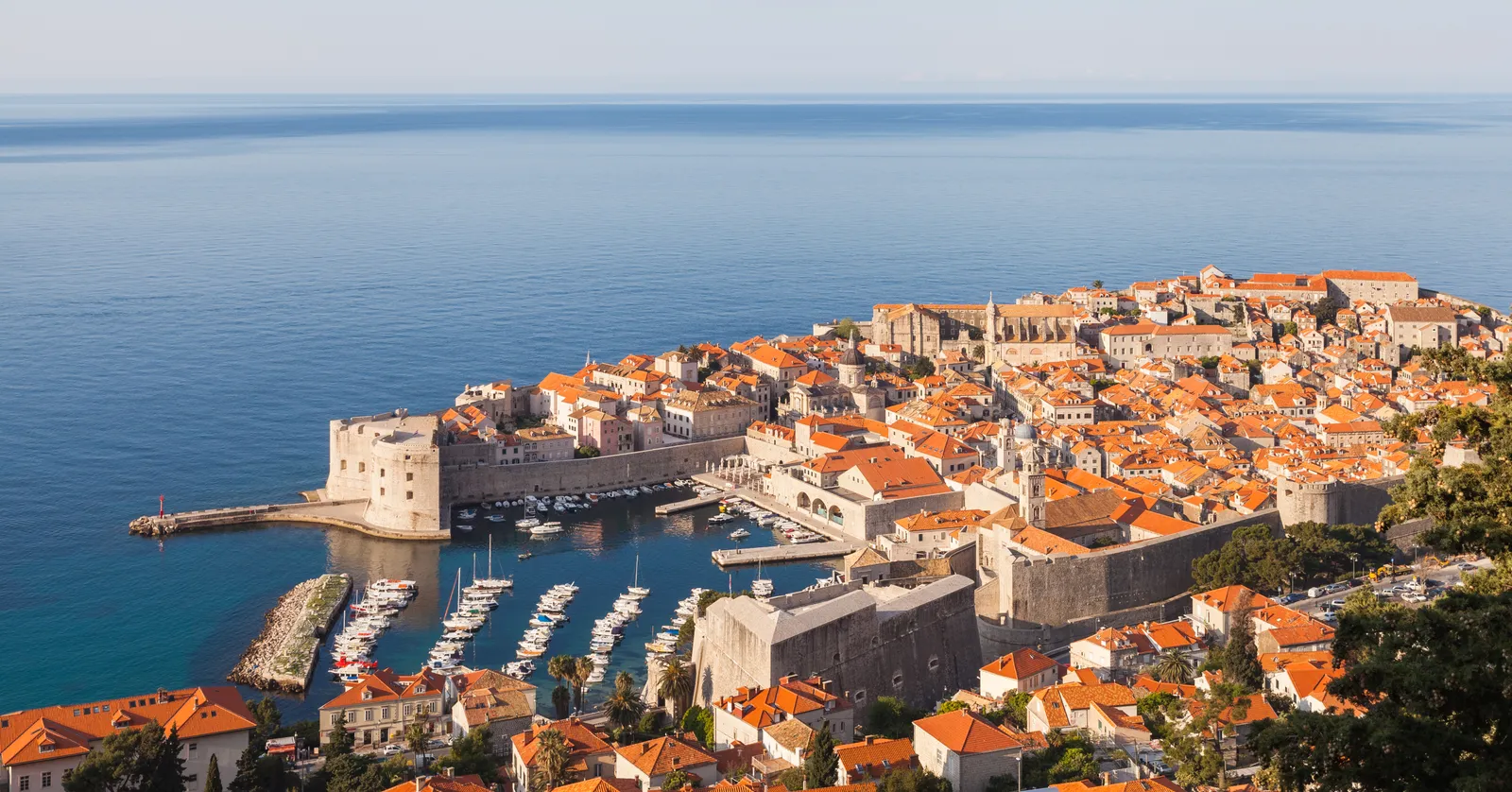
Dubrovnik’s Old Town is a walled quarter you can cross on foot in ten minutes, with one straight limestone street through the middle of it, a 1,940-metre rampart circuit running around the top, and a cable car up the ridge behind it.
Stradun, the Old Town’s one straight street
An earthquake levelled most of Dubrovnik on 6 April 1667, and the law passed afterwards required the houses rebuilt along the main street to follow a single design: matching doorways, matching window spacing, matching height. That is why Stradun, the 300-metre limestone street between the Pile gate at the western end and the Ploče gate at the eastern one, reads as one continuous building split down the middle rather than a row of separate ones.
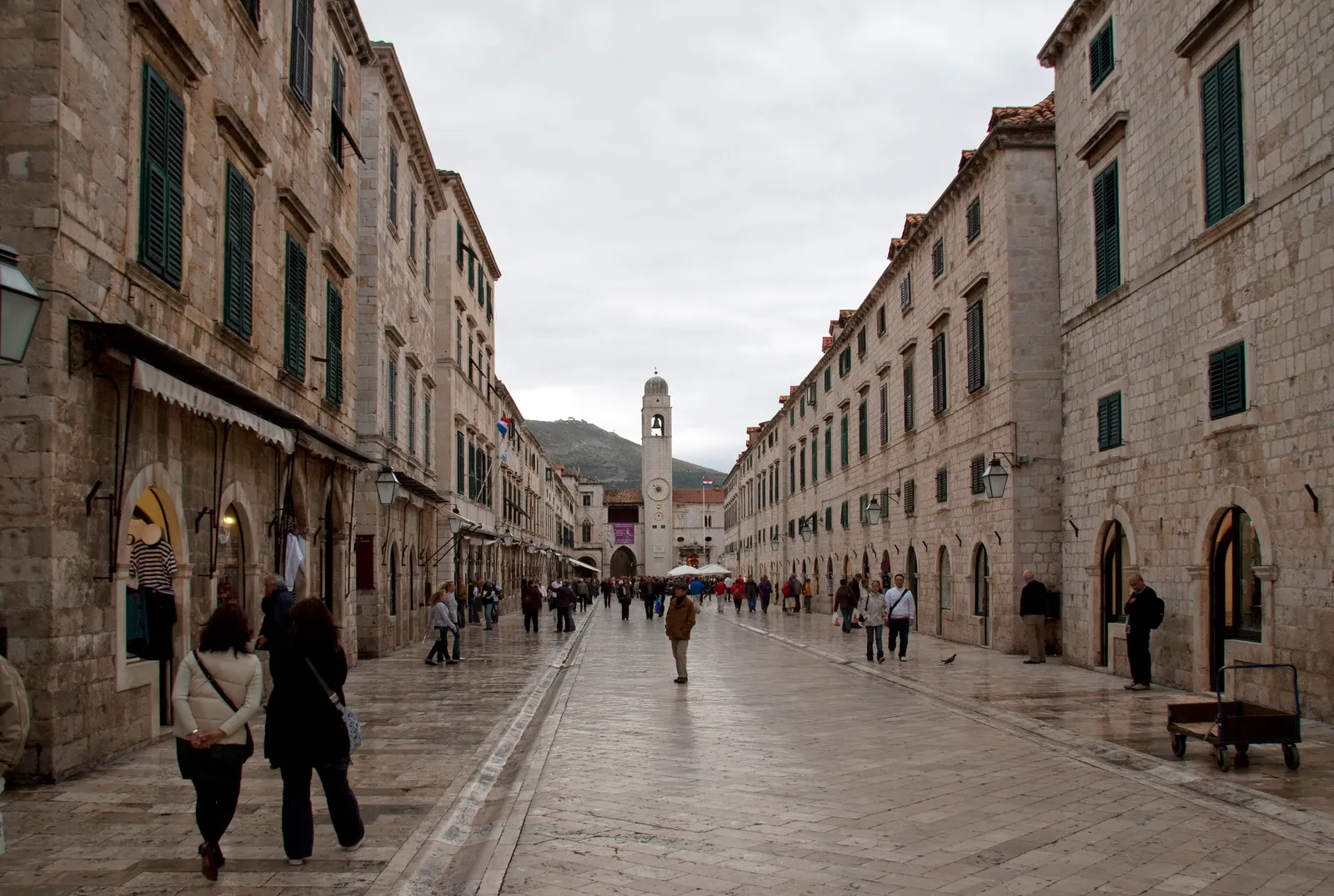
The paving is older than the houses. It went down in 1468 in a fish-rib pattern and five and a half centuries of feet have buffed it to something close to a mirror, which is worth knowing when it rains, because the shine turns into a skating rink. At the Pile end stands the sixteen-sided Onofrio’s Fountain, built by the Neapolitan engineer Onofrio della Cava as the outlet of an aqueduct that carried water about eleven kilometres from a spring at Rijeka Dubrovačka; its dome came off in the same 1667 earthquake and was never replaced.
None of this was Croatian for most of its history. The city ran itself as the Republic of Ragusa, a maritime state with its own fleet and consulates, and it spent about 150 years as a tributary of Venice before the Treaty of Zadar prised Venetian claims off Dalmatia in 1358. If you would rather have that explained on the ground than read it, a guided walk of the Old Town starts at the Pile gate and takes about an hour and a half.
Dubrovnik’s city walls run one way only, anticlockwise
The ticket buys a single lap and there is no going back down the way you came up. The circuit is 1,940 metres of uninterrupted wall, as much as 25 metres high, four to six metres thick on the landward side and thinner where it hangs over the sea, and it took from the 13th century to the 17th to reach the shape it has now. The Minčeta Tower, the round drum at the highest corner, was finished in 1464. The whole Old Town went onto the UNESCO list in 1979, and the walls were solid enough that the 1667 earthquake which flattened the streets inside barely touched them.
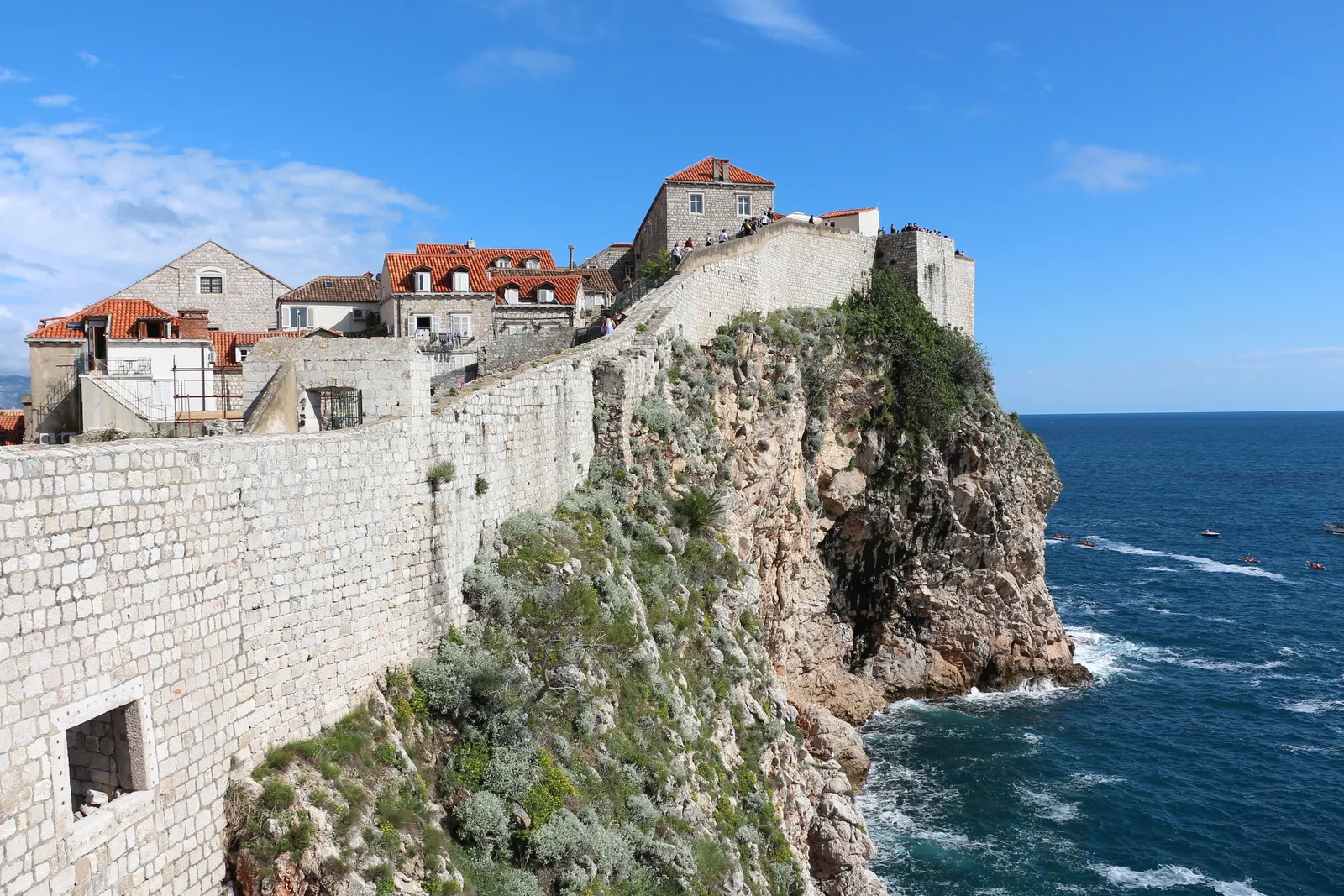
An adult ticket is 40 euros from March to October and 15 from November to February, and it also covers Fort Lovrijenac on its rock outside the western wall and the western outer wall itself, which stay valid for three days from the moment you first step onto the ramparts. Three entrances feed the circuit: the busy one just inside the Pile gate, a quieter one at Ploče, and the Maritime Museum stair inside St John’s fortress by the harbour. Allow an hour and a half at a normal pace, longer if you keep stopping, and note that there is essentially no shade up there. A city pass covering the wall circuit alongside the local buses can be booked in advance if you would rather not queue at the Pile stair.
Dubrovnik asks visitors to carry wheeled suitcases across the Old Town rather than roll them, a Respect the City request rather than a fine, and every side street off Stradun is a staircase in both directions anyway.
The cable car up Mount Srđ was destroyed in 1991 and rebuilt in 2010
Two cabins run from the lower station on Petra Krešimira IV, just outside the walls on the northern side, to the ridge at 412 metres, and the ride takes under four minutes. The first line opened in 1969 and was knocked out in the siege of Dubrovnik in 1991, along with the television mast and the stone cross at the top; the replacement cost around five million euros and carried its first passengers again in 2010.
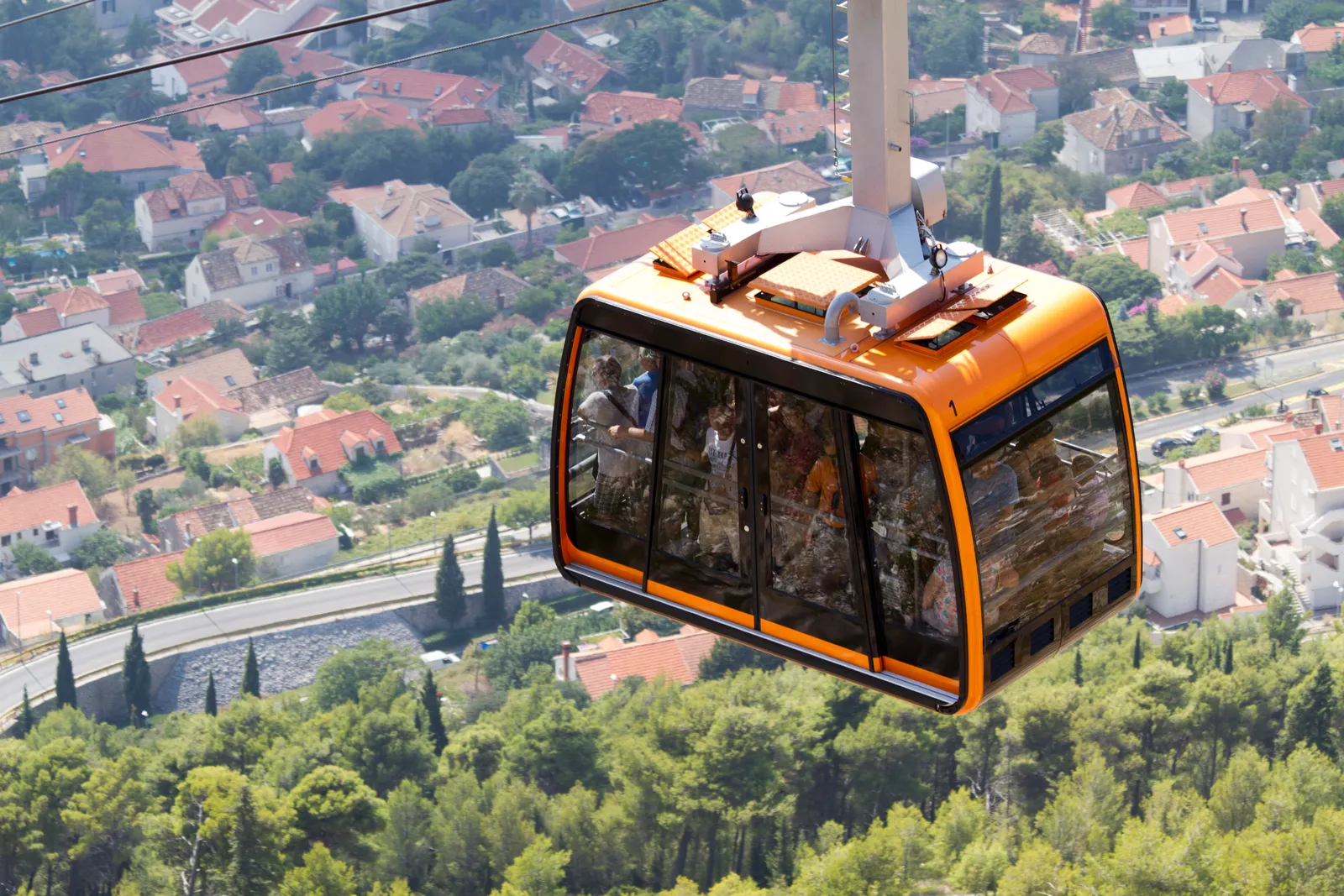
What is up there is more than a viewing platform. Fort Imperial, squat and grey, was built by the French in 1810 during the Napoleonic occupation, held out through the 1991 siege, and now houses the museum of the 1991-95 war, told from the hill the shelling came over. The cross has been rebuilt. On a clear day the view runs down the coast about 60 kilometres.
A return ticket is 30 euros for an adult, 17 one way, 8 for a child between four and twelve. The catch for a flight day is the calendar rather than the price: the cable car does not run at all in January, February, March or December, closes in high wind or storms whenever it does run, and its last departure from the bottom is half an hour before closing. In midsummer that closing time is midnight; in November it is 5pm.
The Franciscan monastery pharmacy has been dispensing since 1317
The Franciscan friars ran the dispensary for their own community at first and opened it to the citizens of Ragusa later, and it has not closed in the seven centuries since, which is what earns it the billing as the oldest working pharmacy in Europe. The monastery door is near the Pile end of Stradun. Behind it there is still a counter filling prescriptions for anyone who walks up to it, and a museum room off the cloister where the old apparatus lives.
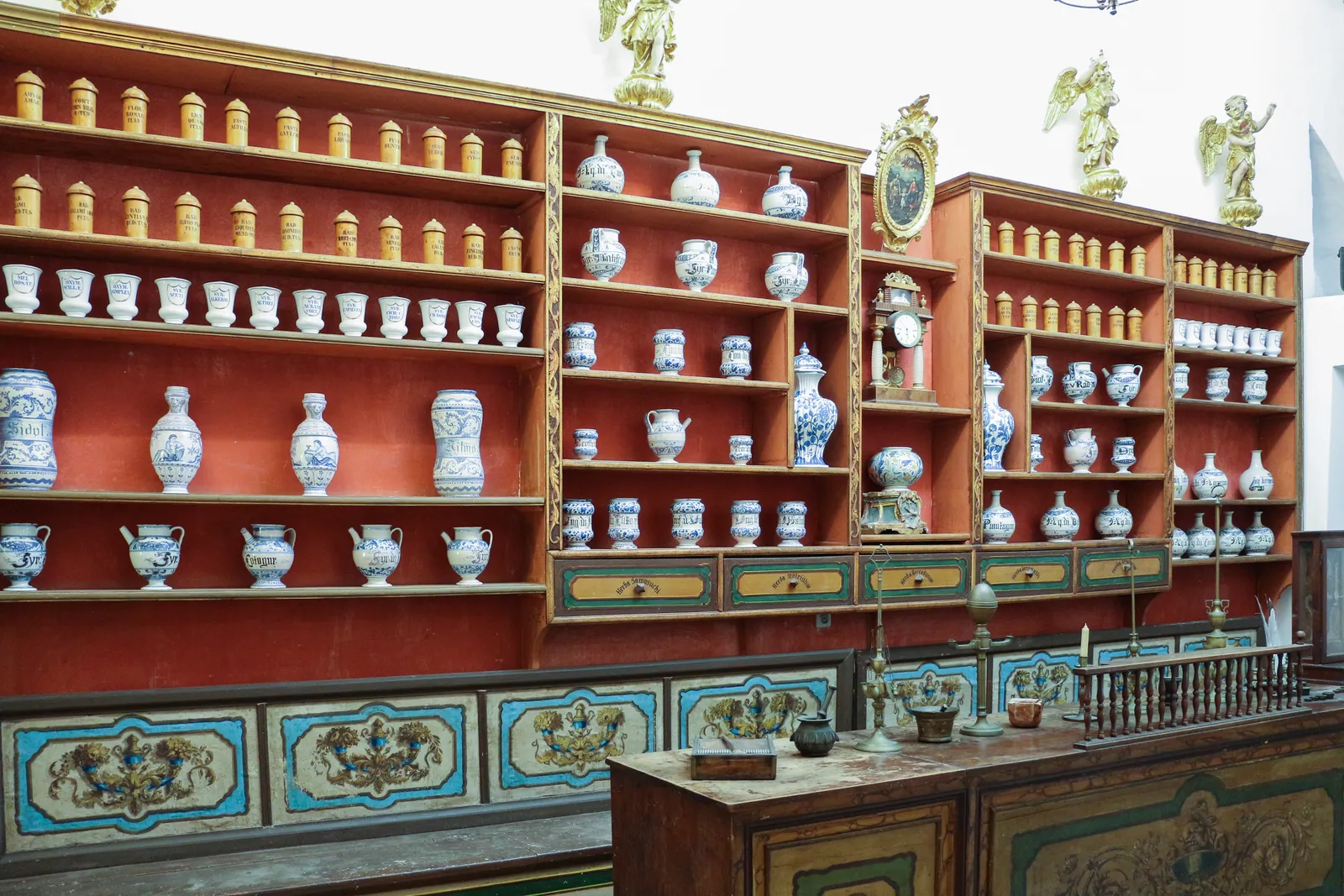
The jars are the thing: rows of blue-and-white ceramic albarelli on red shelves, alongside mortars, brass scales, glass distilling gear and handwritten formularies. Getting through to it costs 10 euros and takes you past the 14th-century cloister, a double row of slim paired columns around a garden, which is the quietest square metre inside the walls at almost any hour. The church that fronts onto Stradun is free to walk into on its own. Summer hours run 9am to 6pm.
Lokrum, the wooded island 600 metres offshore
Boats leave from the Old Port inside the walls and take about fifteen minutes to cross to Lokrum, 0.8 square kilometres of holm oak, pine and bare rock with no cars and no hotels on it. Thirty euros buys an adult the return crossing and entry to the nature reserve together; it is 5 euros for anyone between 7 and 18 and nothing below that. In high summer boats go every fifteen to thirty minutes from 9am, with the last one back around 7pm, dropping to roughly hourly in April and October.
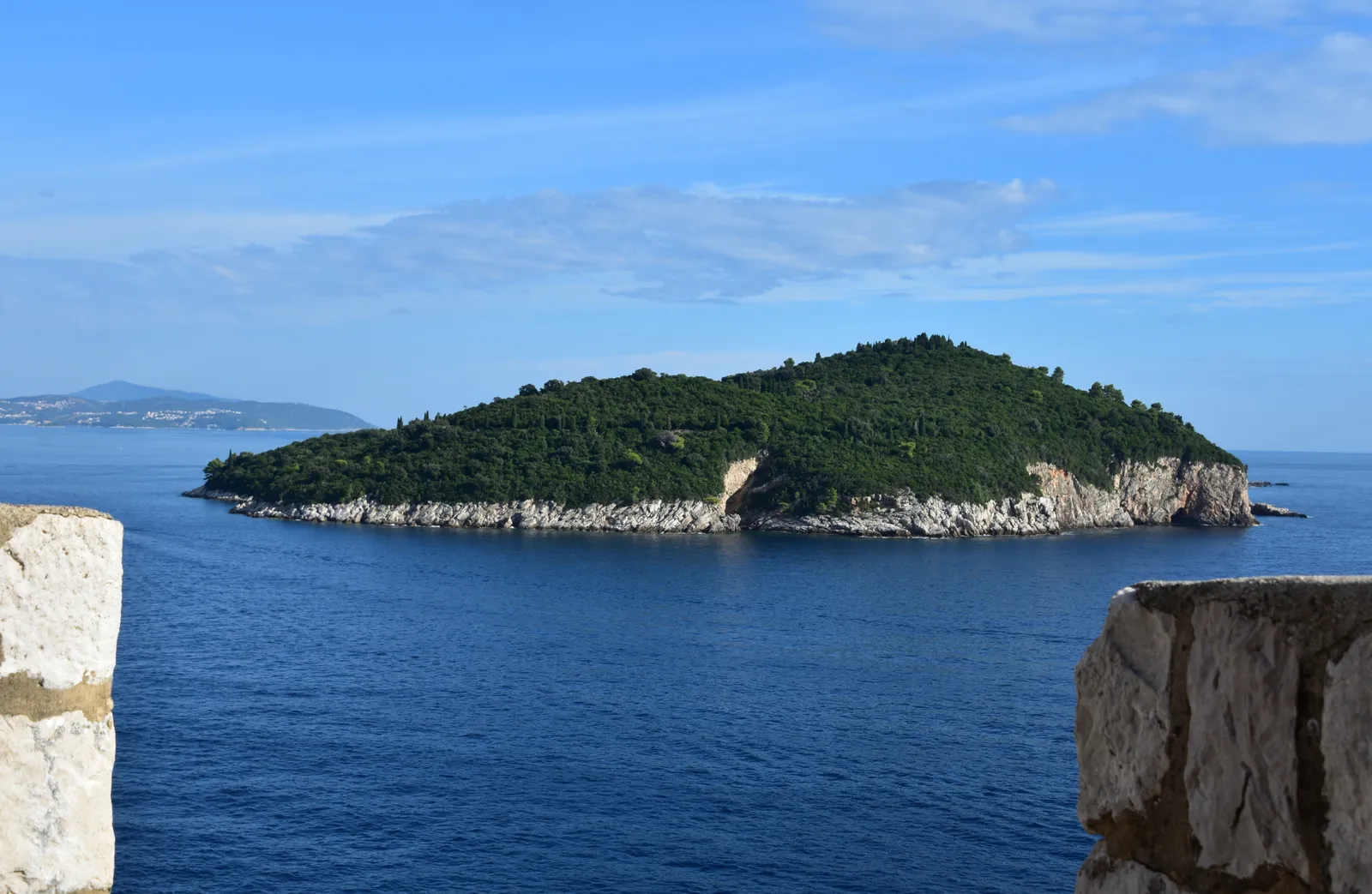
A Benedictine monastery was already on the island when it was first written about in 1023, and the monks stayed until 1808. Half a century later Archduke Maximilian of Habsburg, later briefly Emperor of Mexico, built a mansion there and planted a botanical garden around the ruins, which is why there are agaves and eucalyptus growing out of a medieval cloister. Peacocks, descended from birds he brought from the Canaries, have the run of the place. Budget the boat both ways plus an hour ashore, so this needs five hours or more in hand before it is worth starting.
If the sea is out, the other thing worth an hour sits in Gruž, the port district about three kilometres northwest of the walls, where the airport bus terminates anyway. The Red History Museum occupies the ground floor of the old TUP carbon-graphite works, a factory built in 1953, and covers everyday life in socialist Croatia between 1945 and 1991: the furniture, the packaging, the cars, the holidays. Entry is 10 euros and an hour covers it.
The airport bus leaves when the flights do
Coming in from Dubrovnik Ruđer Bošković Airport (DBV), a shuttle pulls out roughly 30 minutes after each arrival, so there is rarely much of a wait on the way into town. Going the other way, services are timed against the day’s departures rather than a fixed clock, which makes the published timetable something to check rather than guess at. The airport itself is at Čilipi, about 15.5 kilometres southeast of the city, and it is the only one within reach.
Ten euros gets you one way, 15 an open return valid for a fortnight, and under-sixes travel free. Heading out, the bus starts at the main bus station in Gruž, calls at Grawe about five minutes later and at the cable car stop above the Old Town about ten minutes in, then runs to the terminal: roughly 35 minutes end to end from Gruž, about 25 from the cable car stop. That last one is the useful detail, because it means the Old Town has its own pick-up and you do not have to backtrack to the port to catch it. Seats can be reserved before you land.
There is no train and no metro here, so the bus time is the whole journey time, with no interchange hidden inside it. Working back from a flight, allow about two hours from inside the walls: collecting the bag, the climb up to the cable car stop, the wait, the ride and check-in. That climb is the argument for not having the bag with you all afternoon in the first place, since the walls, the side streets and the monastery cloister are all stairs, and the stop you finish at is uphill from every one of them.
Frequently asked questions
What should I do during a layover in Dubrovnik?
Walk Stradun first. It runs about 300 metres of polished limestone between the Pile and Ploče gates, costs nothing, and puts you within a couple of minutes of everything else inside the walls. The wall circuit above it is the one thing worth the 40 euros: 1,940 metres, one lap, anticlockwise only, roughly an hour and a half. If you would rather go up than around, the cable car climbs to the ridge at 412 metres in under four minutes for 30 euros return. The Franciscan monastery on Stradun holds a pharmacy that opened in 1317 and still trades, at 10 euros to get in. Check the cable car's calendar before you count on it, because it shuts for four months of the year; Stradun and the harbour never close.
When is the best time to walk Dubrovnik's city walls in summer?
At opening, or in the last two hours before it. There is almost no shade anywhere on the circuit, the limestone holds the heat, and Dubrovnik regularly clears 35°C in July and August, so the middle of the day is the worst of it in both temperature and crowds. The walls open at 8am at the height of summer and take last entries half an hour before closing, around 7pm. Because the route is one-way and anticlockwise with no re-entry, you cannot duck out and come back later once you have started, which is what makes the timing decision worth making before you buy.
Is Dubrovnik's Old Town step-free?
Stradun is, and almost nothing else is. The main street is flat, wide limestone from the Pile gate to the Ploče gate, and the Old Port, the cathedral square and the Franciscan monastery all open straight off it. Every side street running north off Stradun is a staircase climbing towards the walls, and the wall walk itself is stairs from end to end, with no lift and no wheelchair access. The cable car's lower station is also uphill: the direct route from Stradun climbs through the Buža gate on the north side, though the road outside the walls along Iza Grada gets there on a gentler gradient.
Can you roll a suitcase through Dubrovnik's Old Town?
Yes, though the city would rather you did not. In 2023 Dubrovnik asked visitors to carry wheeled bags across the historic centre instead of dragging them, after residents complained about the noise hard wheels make on limestone in streets narrow enough to echo. It is part of the Respect the City programme. Reports at the time described a ban with a fine attached; the Croatian National Tourist Board publicly corrected that, and no penalty exists. So it is a request rather than a rule, and it is easier to honour if the bag is not with you in the first place.
Is anything in Dubrovnik shut in winter?
The cable car is the big one: it does not run in January, February, March or December, and it stops for bad weather in the months when it does run, so a windy day can close it without notice. The walls stay open all year and get cheaper, dropping from 40 euros to 15 for an adult from November through February, but the hours shorten to roughly 9am to 3pm, which is a real constraint on an afternoon arrival. Boats to Lokrum thin out to about one an hour in April and October and stop running for most of the winter, so treat the island as a warm-season option only. Stradun, the Old Port and the Franciscan monastery are unaffected.