Dubrovnik Layover: Gruž Port and Market
Part of the full Dubrovnik Layover: Inside the Walls From DBV
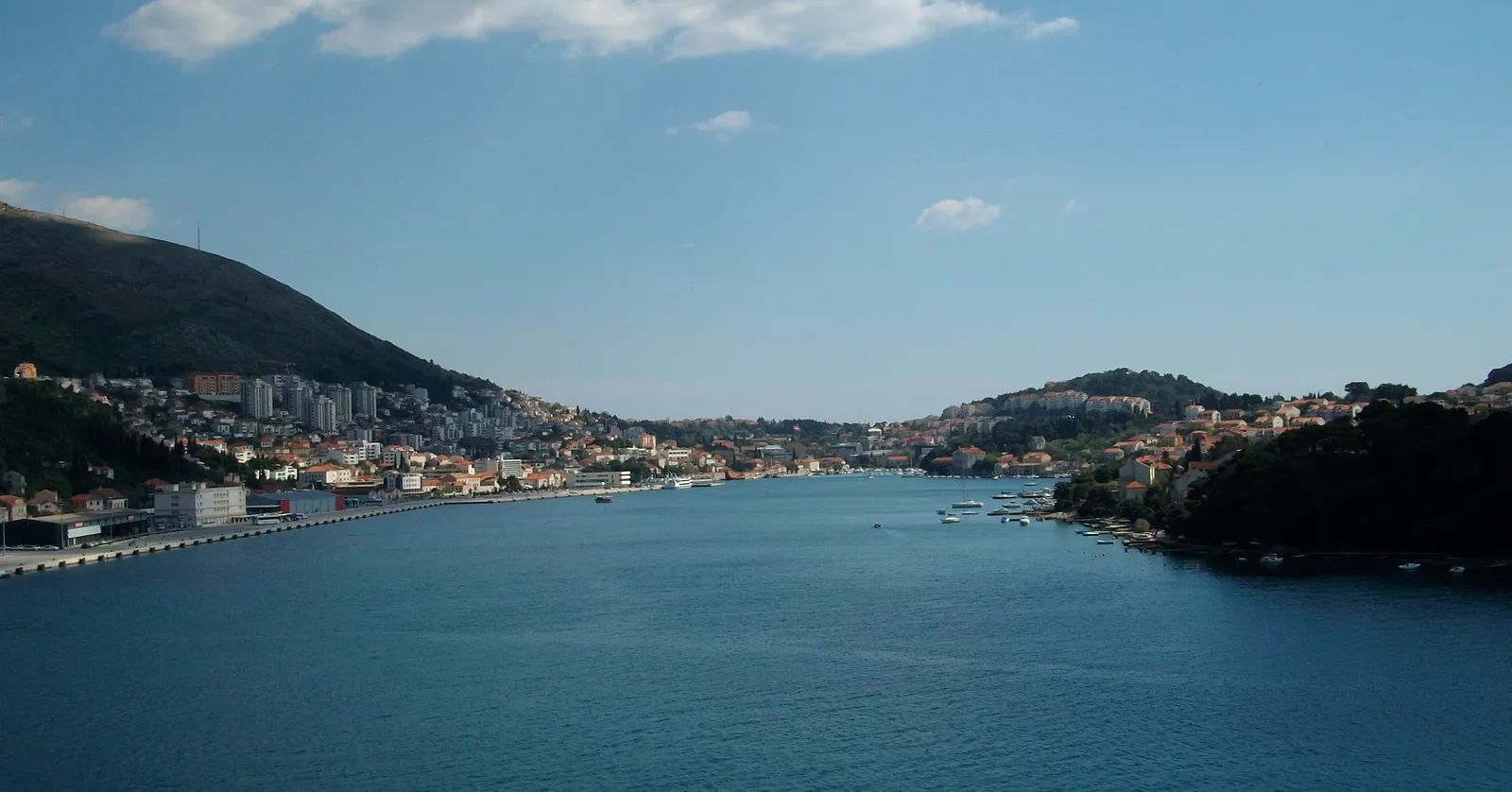
Gruž is Dubrovnik’s working port, about three kilometres northwest of the walled Old Town, with a morning fish and produce market strung along the harbour road, public boats out to the Elafiti islands, and a museum of Yugoslav-era life in a disused graphite factory.
The Gruž market sells what the boats landed that morning
Stalls go up on the harbour road at Obala Stjepana Radića from about 6:30am, and by eight the neighbourhood is doing its shopping: crates of peppers and tomatoes and figs under red parasols on one side, a fish counter working through whatever came in overnight on the other. It trades Monday to Saturday, with much less of it on a Sunday, and thins out to almost nothing by mid-afternoon, which makes it the one thing here that an early arrival gets and a late one does not.
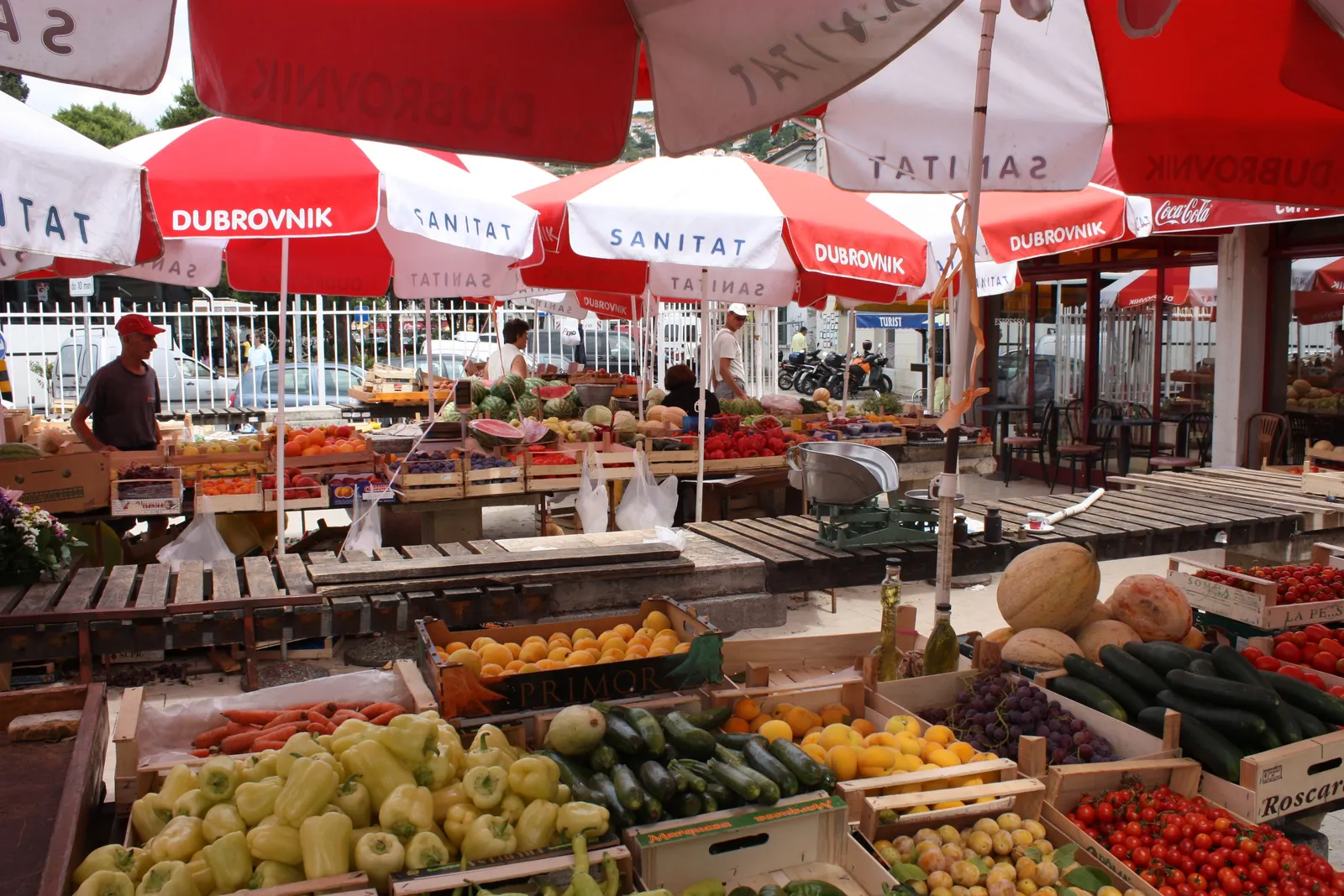
Prices are what locals pay rather than what the Old Town charges, and nothing about it is staged for visitors. It is also the most useful stop on this list if you are trying to eat before a flight without paying restaurant prices inside the walls.
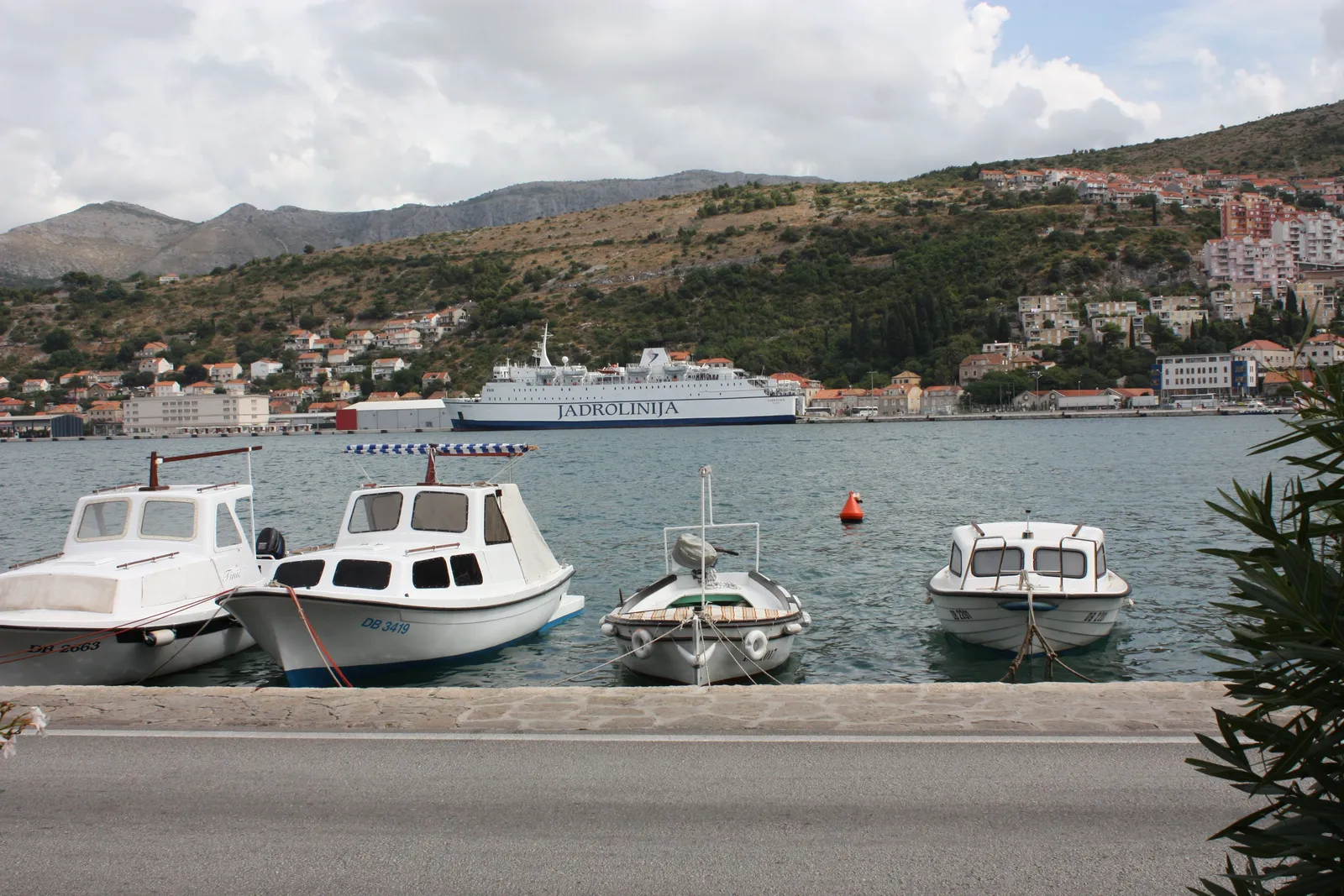
Ferries to the Elafiti islands leave from the top of the Gruž pier
Koločep, Lopud and Šipan sit in a line northwest of the harbour, and the public boat reaches the nearest of them in about 55 minutes and Lopud in about an hour. Fares are around 5 euros one way in high season and closer to 3 outside it, which is the cheapest boat trip anywhere near Dubrovnik. The catch is arithmetic rather than money: two hours of the trip is the crossing, so this only works if you have six free hours or more.
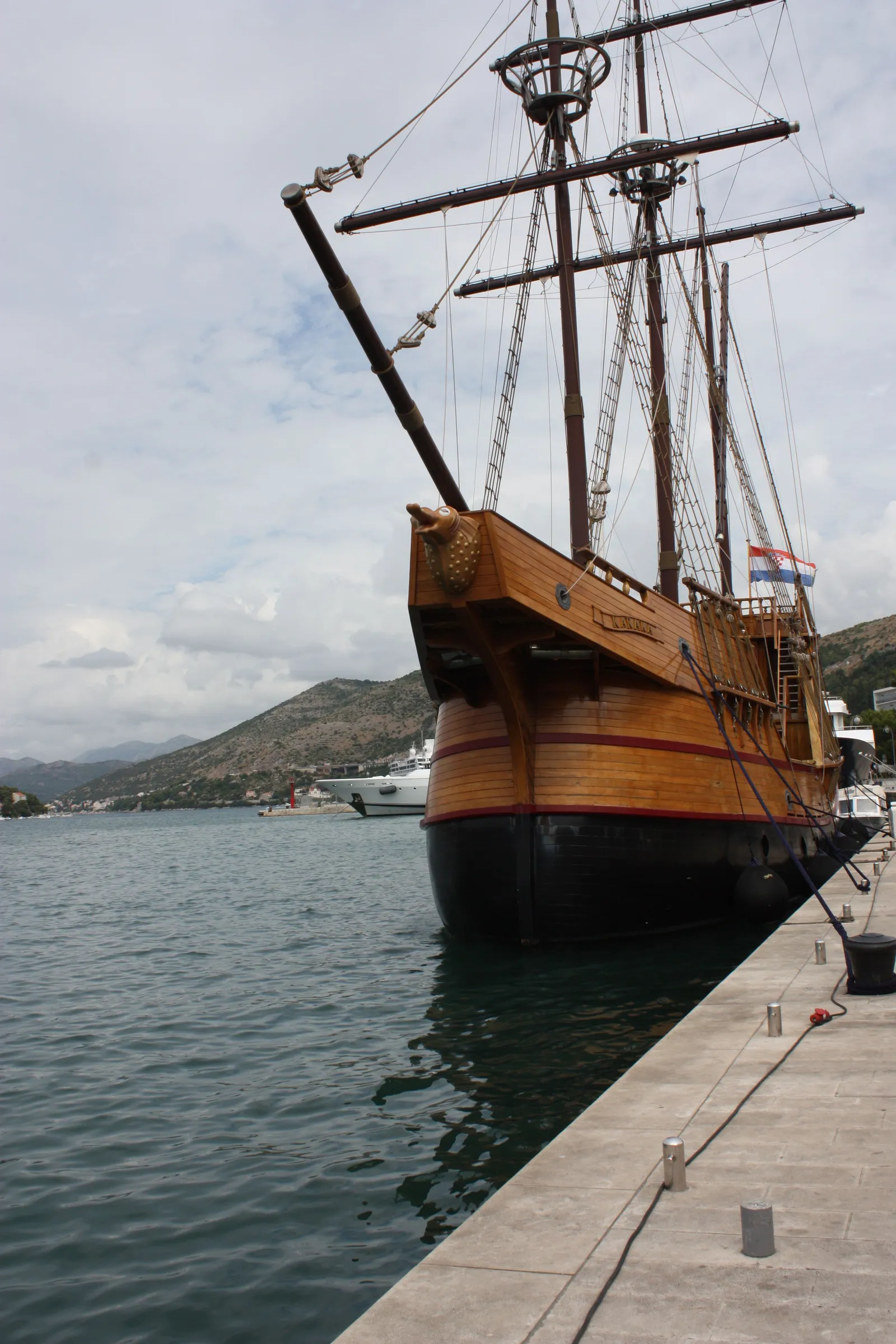
Moored along the same quay is the Karaka, a full-size wooden replica of the kind of merchant ship the Republic of Ragusa sent around the Mediterranean in the 16th century: three masts, a carved stern castle, and a hull you can walk the deck of. It runs cruises rather than sitting as an exhibit, and a day of island hopping aboard it stops at all three Elafiti islands, which is the version of this trip that does not require reading a ferry timetable.
Gruž is strung out along roughly a kilometre of quay between the bus station at one end and the ferry berths at the other, so anything you carry down to look at the boats gets carried the whole way back.
The Red History Museum in the old TUP graphite works
Croatia spent 1945 to 1991 inside Yugoslavia, and this is the only museum in the country built around what that was actually like to live in: the furniture, the packaging, the Yugo in the corner, the package holidays, the design of a decade’s worth of ordinary objects. It opened in 2019 on the ground floor of the TUP carbon-graphite factory, a plant put up in Gruž in 1953 and about as fitting a building for the subject as exists.
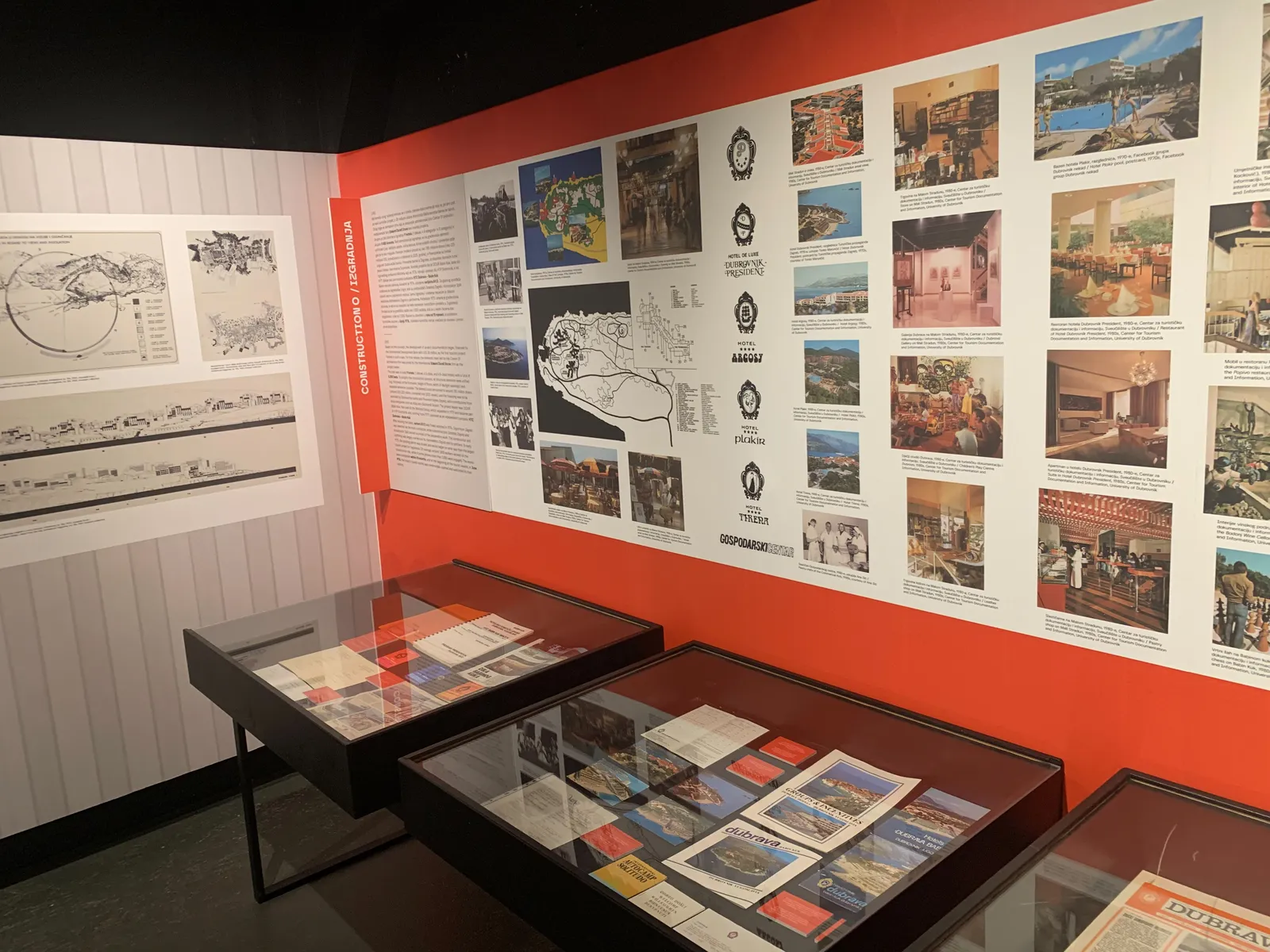
Entry is 10 euros for an adult, 8 for students and over-65s, and it takes an hour to ninety minutes to get round. Hours are 10am to 8pm daily from April through October with last entry at 7:15, and 11am to 5pm Monday to Saturday the rest of the year. It also holds bags for nothing while you are inside, which is a small thing that matters more here than it would in a city centre. The address is Svetog Križa 3, a few minutes from the bus station.
Velika and Mala Petka, the pine hills above Gruž
Two wooded hills sit on the Lapad ridge on the western side of the harbour, protected as a 43-hectare forest park: Aleppo pine, holm oak, wild olive, and a flat contour path with benches looking out over the water. The bigger of the two tops out at 192 metres. There is no gate, no ticket and no closing time, and the walk up from the harbour takes ten to fifteen minutes before the path levels off.
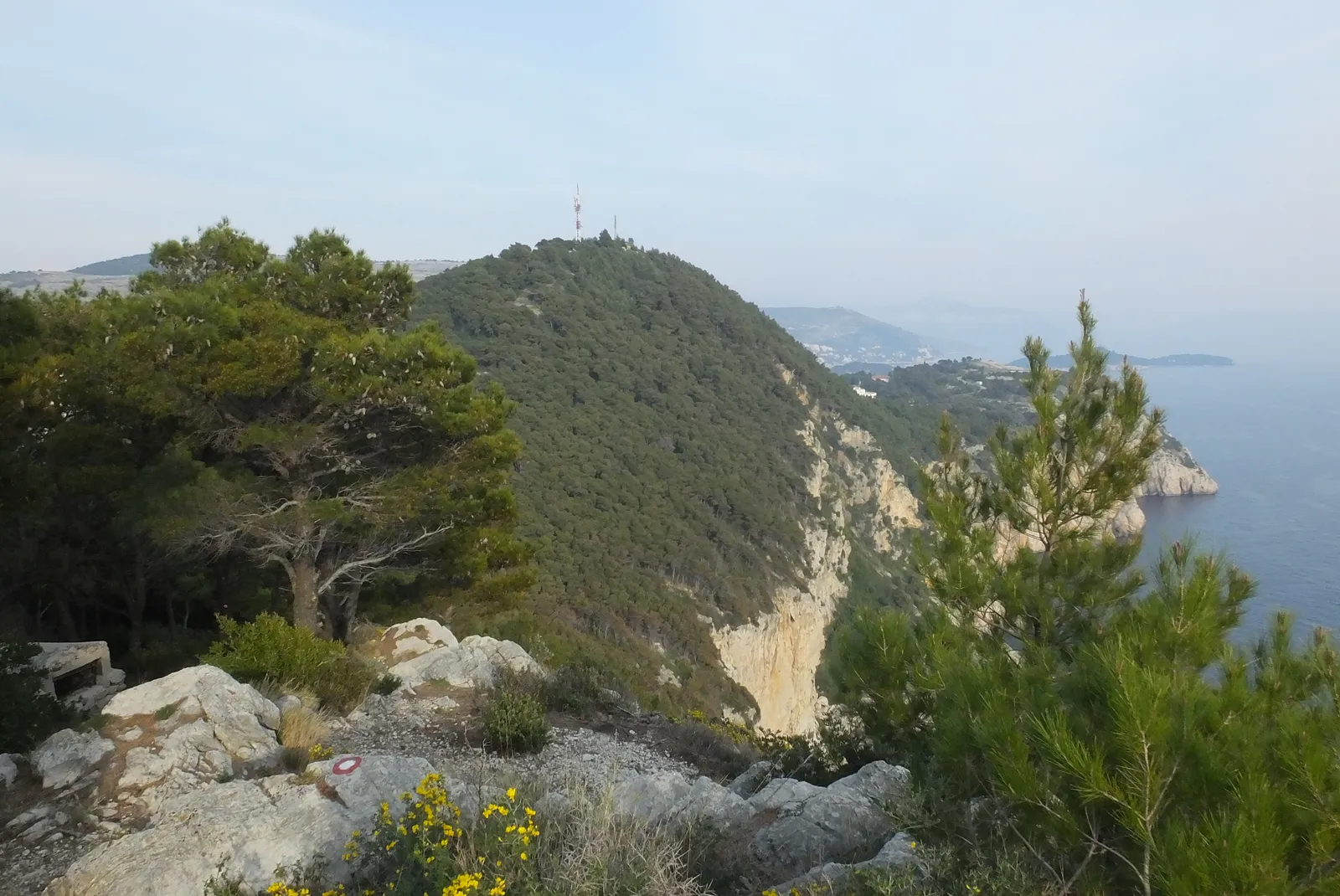
What you get is the opposite of the wall circuit: shade the whole way, no queue, and mostly local dog-walkers. An hour covers the easy path and the viewpoints over Lapad bay; two or three would get you the side trails and the summit.
On the southern shore of the harbour, look for the Sorkočević summer villa, built in 1521 by Petar Sorkočević, four times rector of the Republic, on money the family made from Balkan silver. It is one of a cluster of Renaissance summer houses that Dubrovnik’s patricians built around Gruž when this was countryside rather than port, and it now holds the Croatian Academy’s institute for historical sciences. None of them take walk-in visitors, so this is a look from the road rather than a stop, but it explains why there are 16th-century loggias wedged between apartment blocks along a working waterfront.
Every airport bus starts at the Gruž bus station
The terminal sits at Obala pape Ivana Pavla II 44A, right beside the ferry berths, and the shuttle to Dubrovnik Ruđer Bošković Airport (DBV) begins its run here before calling at Grawe about five minutes later and the cable car stop above the Old Town about ten minutes in. From Gruž the ride is roughly 35 minutes, and there is no hourly pattern to learn: the buses go when the flights do, so read the posted times before you settle in anywhere. A one-way ticket is 10 euros, an open return 15.
Starting from Gruž is the version of this trip with the least that can go wrong: you are already at the first stop, so there is no bus ride into town and back out again, and no risk of the shuttle filling up before it reaches you. Working back from a flight, about 90 minutes from the quay is comfortable, against the two hours the Old Town itinerary needs.
The market, the quay and the climb up to the pines are all separated by real distance along that kilometre of waterfront, so the day goes better if the suitcase is waiting for you at the station end rather than coming along for all of it.
Frequently asked questions
Is Gruž worth staying in instead of going to the Old Town?
It depends how long you have and what you want. Gruž is where the buses, the ferries and the market actually are, it is quieter, and nothing here charges 40 euros to walk on it. But it has no ramparts, no Stradun and no medieval core, so if this is your only look at Dubrovnik and you have four hours or more, take the bus in and follow the walled-city route instead. Gruž earns its keep on a shorter window, an early arrival before the Old Town wakes up, or a second visit.
What time does the Gruž market wind down?
Early. The first stalls set up around 6:30am and the rest are trading by 8, when the neighbourhood does its shopping, and by early afternoon most of it is packed away. It runs Monday to Saturday with a much thinner showing on Sunday. The fish side is the part that empties first, since it is selling what the boats landed that morning and there is no restocking it. If your free hours start after lunch, the market is the one thing on this list you will have missed.
Can you get out to the Elafiti islands and back on a layover?
Only on a long one. The public boat takes about 55 minutes to Koločep and an hour to Lopud, so a return crossing alone eats two hours before you have set foot on anything. Fares are modest, roughly 5 euros each way in high season and less outside it, but the schedule is thin enough that a missed sailing is a two-hour problem rather than a twenty-minute one. Under about six free hours, watching the boats leave from the quay is the honest recommendation.
Is the walk from Gruž to the Old Town worth doing on foot?
It is about three kilometres and takes 35 to 45 minutes, mostly uphill out of the harbour and then downhill again, on pavements beside a busy road with very little shade. The bus covers it in ten to fifteen minutes for a couple of euros and runs frequently. Walk it if the weather is mild and you want to see the Boninovo cliffs on the way; take the bus in July and August, when the climb out of Gruž is the hottest part of the day.