Mount Srđ Layover: Fort Imperial, Dubrovnik
Part of the full Dubrovnik Layover: Inside the Walls From DBV
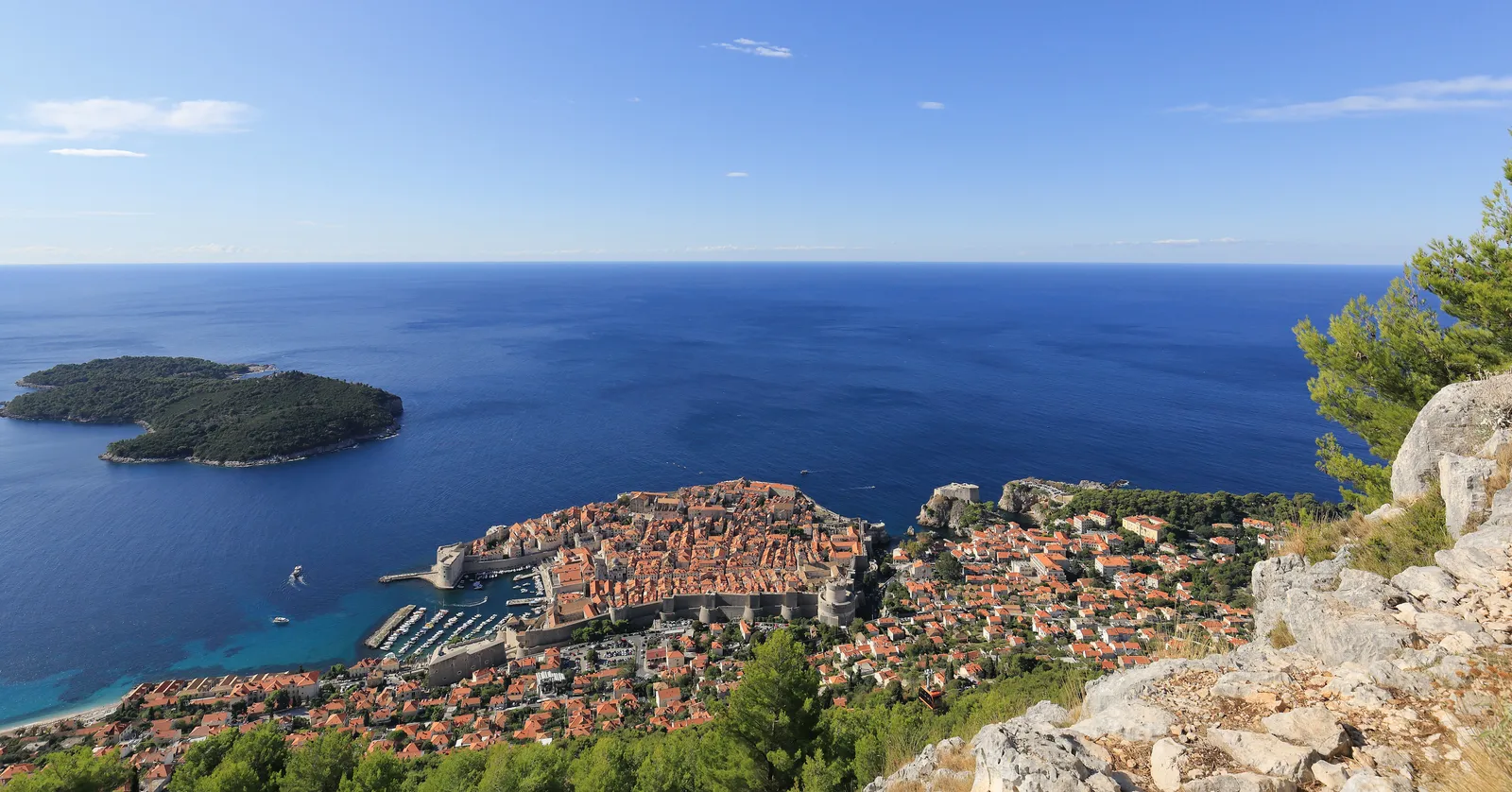
Mount Srđ is the bare ridge directly behind Dubrovnik’s Old Town, 412 metres up, with a Napoleonic fortress and the city’s war museum on the summit, a 1935 stone cross beside it, and a zigzag walking path up the slope marked by fourteen carved stations.
Fort Imperial was raised for Napoleon and held through 1991
French forces took Dubrovnik in 1806, ended the Republic two years later, and built this on the ridge over the following decade, naming it for the emperor. It is a long low barracks block with a crenellated parapet and a communications mast beside it, and it looks from below exactly like what it is: a gun position covering everything the city could be attacked from.
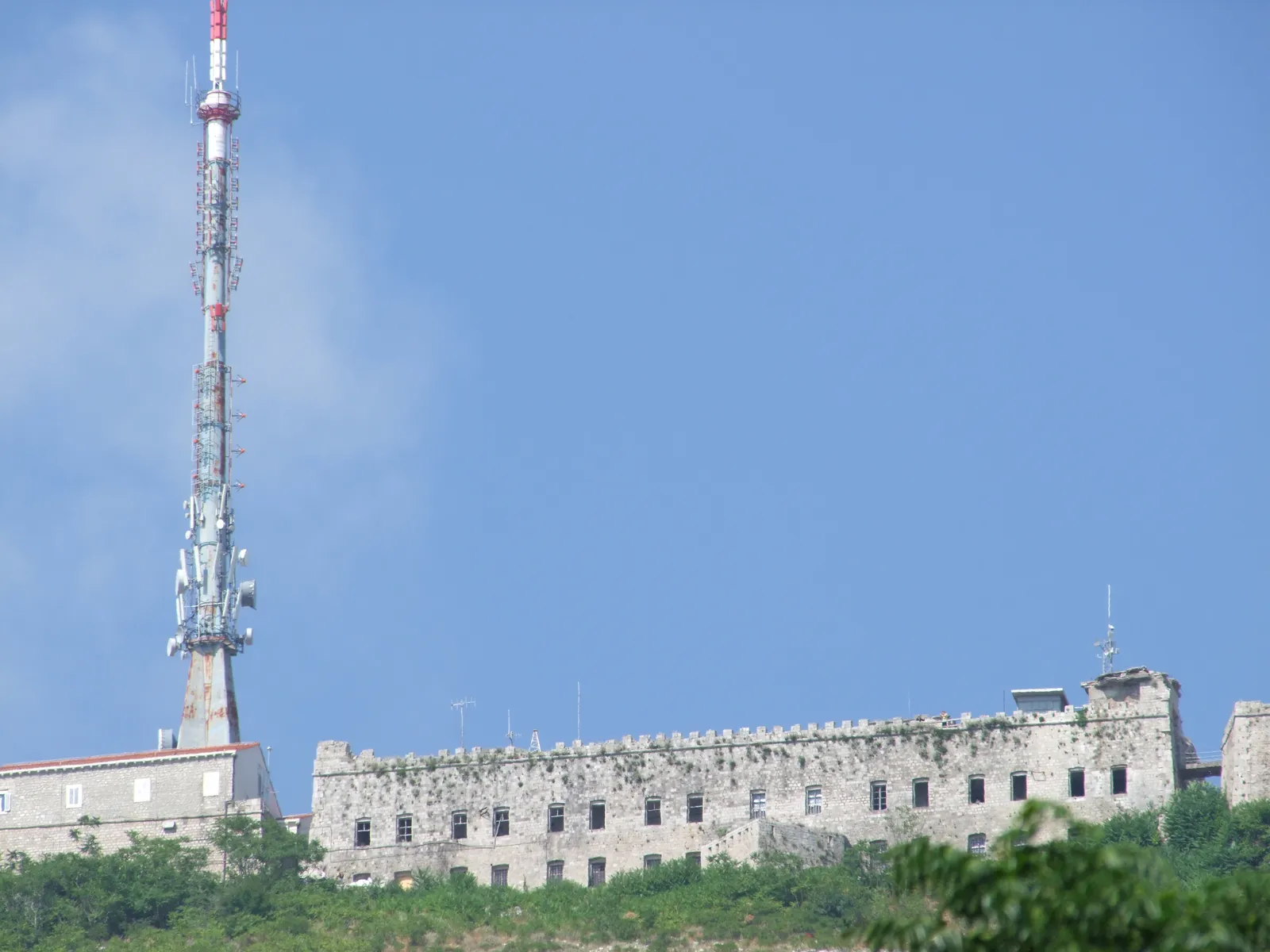
Its second life is the reason most people go in. Through the siege of 1991 and 1992 the fort was the frontline position and the Croatian army’s command post on this hill, held while the shelling went into the Old Town below, and the Museum of the Croatian War of Independence now occupies it: some 900 documents, photographs, weapons, unit flags, maps and video, for 5 euros. Very few war museums stand on the ground they are about.
The stone cross on the ridge was brought down on 6 December 1991
Dubrovnik put the first cross up here in 1935, cut from white island limestone and paid for by public subscription. On 6 December 1991, the heaviest day of the shelling, it was destroyed. The defenders holding the ridge put a wooden one up in its place almost immediately, which is the version that appears in the photographs from that winter, and the stone cross standing there now is the later rebuild.
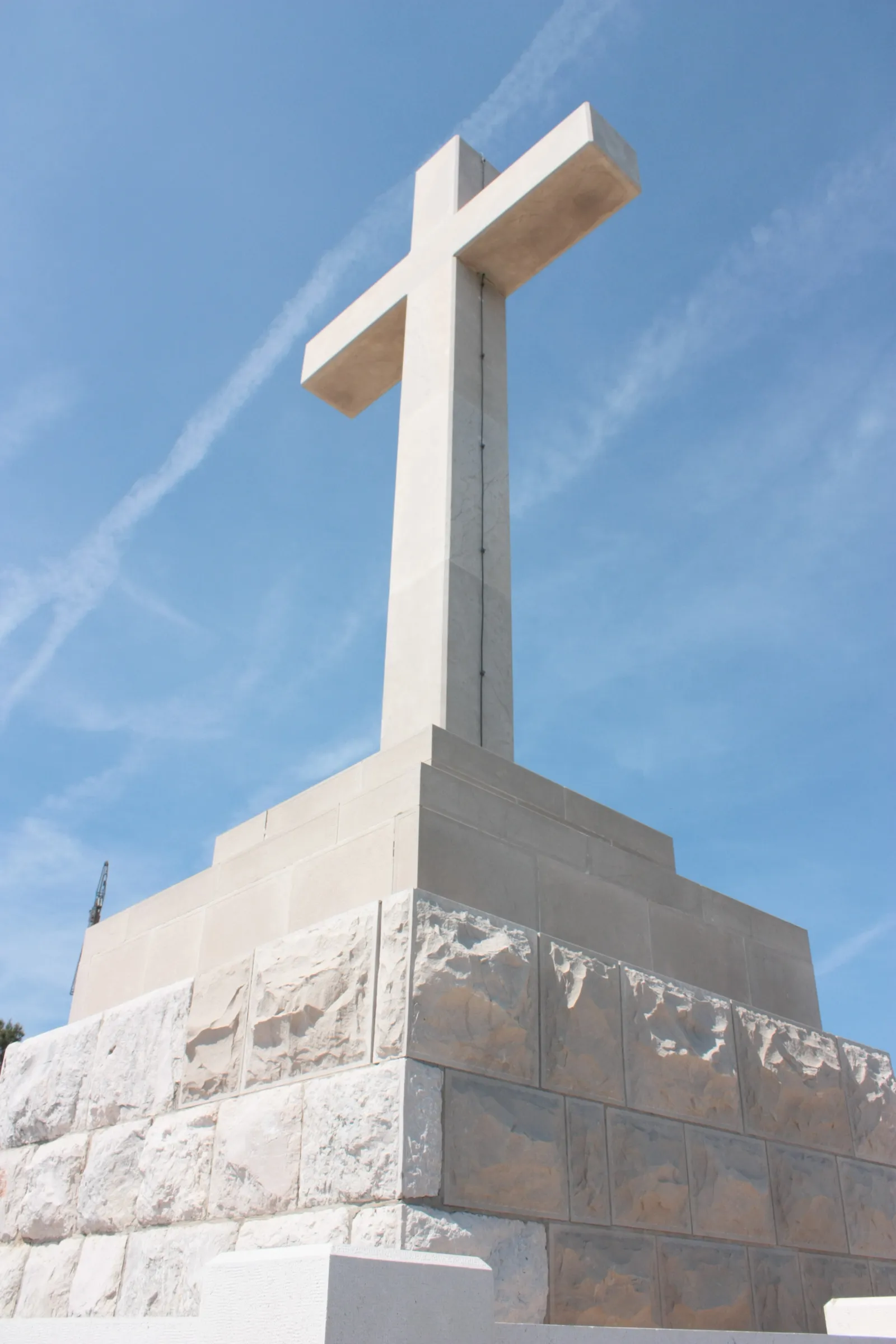
It sits just beyond the upper cable car station, so nobody has to go looking for it. Plain squared arms on a stepped block base, no ornament, and visible from most of the city below, which is why knocking it down was worth a shell in the first place.
From 412 metres you can see the Elafiti islands
The Old Town reads as a single object from up here in a way it never does from inside it: the oval of the walls, the Old Port cut into the eastern end, Fort Lovrijenac on its rock at the other, and Lokrum sitting in the water offshore. Beyond that the Elafiti chain runs northwest, and on a clear day the view carries about 60 kilometres down the coast.
Late afternoon into sunset is the hour worth aiming for, when the light comes across the water rather than into your eyes and the roofs go properly orange. If you would rather have the climb handled for you, a panoramic tour that takes in this ridge covers it and leaves you free time in the city afterwards.
The zigzag path up has fourteen stations on its turns
There is a walking route, and it is genuinely good: about 2.1 kilometres from the road above the walls with roughly 255 metres of climb, switching back and forth up the face of the ridge. Each turn carries one of fourteen Stations of the Cross, carved monuments that double as a way of counting your progress, which is the most useful thing anyone has ever done for a hill path.
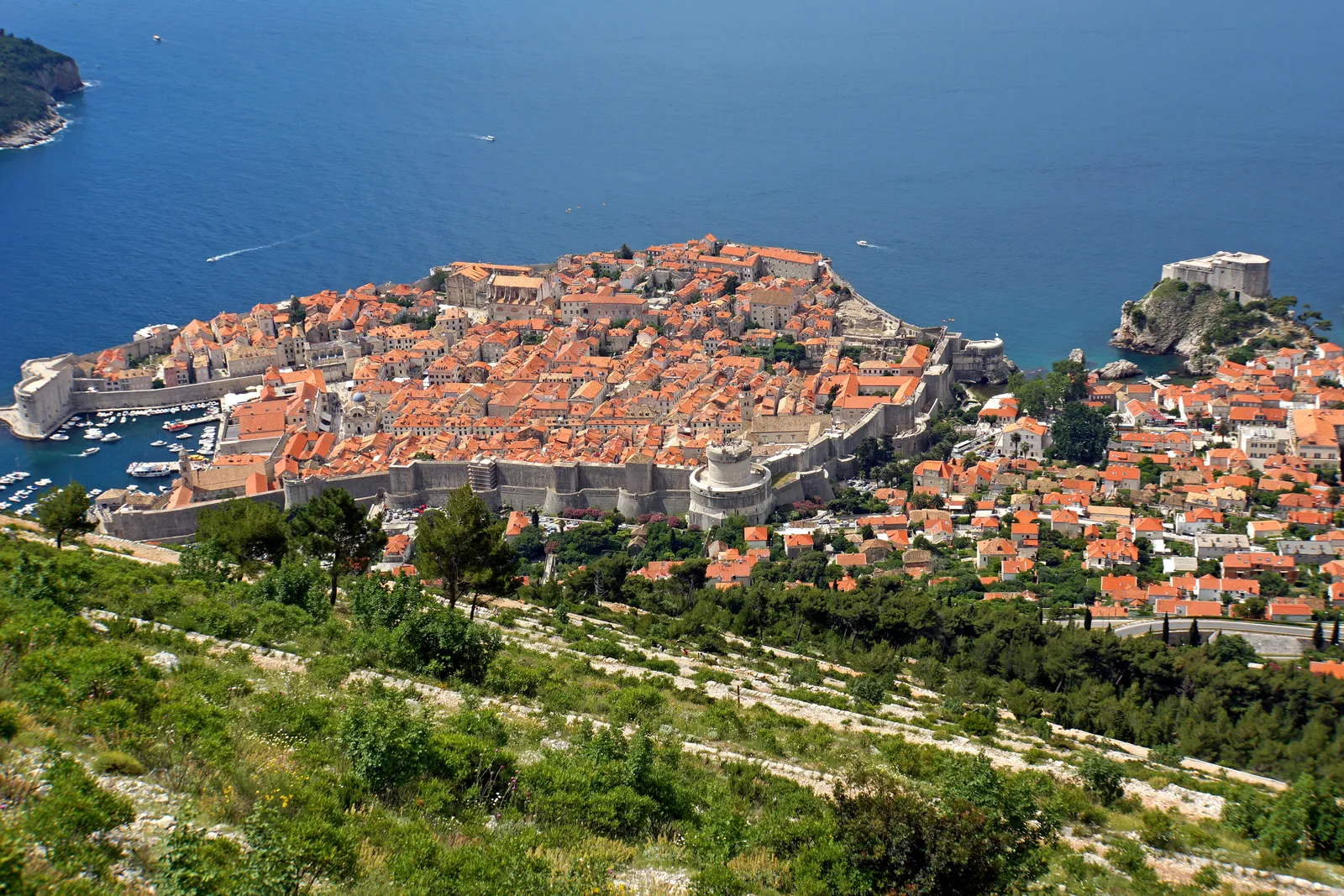
Reckon on 40 minutes to an hour going up and 30 to 40 coming down. What the photographs do not convey is the surface and the exposure: loose pale rock underfoot, low scrub, and no shade at any point on it, which in high summer turns a pleasant hour into something else entirely. Take water. Whatever is on your back goes up all 255 metres of it with you, and comes back down the same way.
The cable car’s lower station is also the airport bus stop
The lower station stands on Petra Krešimira IV, just outside the walls on the northern side, and the shuttle out to Dubrovnik Ruđer Bošković Airport (DBV) calls there roughly ten minutes after leaving the bus station at Gruž. The run from that stop to the terminal is about 25 minutes, and a one-way ticket is 10 euros. Its running times follow the departures board, not the hour.
That coincidence is what makes this ridge easy to fit around a flight: you come down the cable car and you are already standing at the stop, with no transfer across town. A return cable car ticket is 30 euros for an adult, 17 one way, and it runs from 9am to a closing time that swings between 5pm in November and midnight at the height of summer, with nothing at all in January, February, March or December.
If the hill turns out to be shut, or the wind is up, the walled quarter below is the fallback and the main Dubrovnik route starts a few minutes downhill from the same station. For a ground-level version of the same view, the eastern beach outside Ploče gate looks straight back at the walls from sea level instead of from above them.
Frequently asked questions
Should you walk up Mount Srđ or take the cable car?
Walk it only if you have the hours and the weather is not against you. The path is about 2.1 kilometres one way with around 255 metres of climb from the road above the walls, which is 40 minutes to an hour up and 30 to 40 down for most people, on loose rock with essentially no shade anywhere on it. The cable car covers the same ground in under four minutes for 30 euros return. On a flight day with a bag to collect afterwards, the walk up and the cable car down is the compromise that usually works.
How often is the cable car shut?
More than people expect. It does not run at all in January, February, March or December, and it stops for high wind or storms at any time of year, sometimes at short notice. Its closing time swings from 5pm in November to midnight from June through mid-September, and the last cabin up leaves the lower station half an hour before that. If you are counting on it to get back down before a flight, check the day's hours at the bottom rather than at the top.
What is in the Homeland War Museum at the top?
Around 900 objects from the Croatian war of independence between 1991 and 1995: documents, photographs, weapons, ordnance, unit flags, military maps and video from the siege of Dubrovnik. The building is not incidental to it. Fort Imperial was the frontline position and the Croatian army's command post on this ridge while the city was being shelled below, so the exhibition sits in the place it describes. Entry is 5 euros.
Is Mount Srđ a good trip with kids?
The cable car is, the rest needs thought. A child return between four and twelve is 8 euros and under-fours ride free, the cabins are enclosed, and the ride is under four minutes. The summit itself is open unfenced rock with a long drop on the city side, which is worth knowing before letting anyone run. The museum has real weapons and deactivated ordnance on display alongside siege photography, which suits older children and not small ones. The walking path is too long and too exposed for young legs in summer.