Dubrovnik Layover: Pile Gate and Lovrijenac
Part of the full Dubrovnik Layover: Inside the Walls From DBV
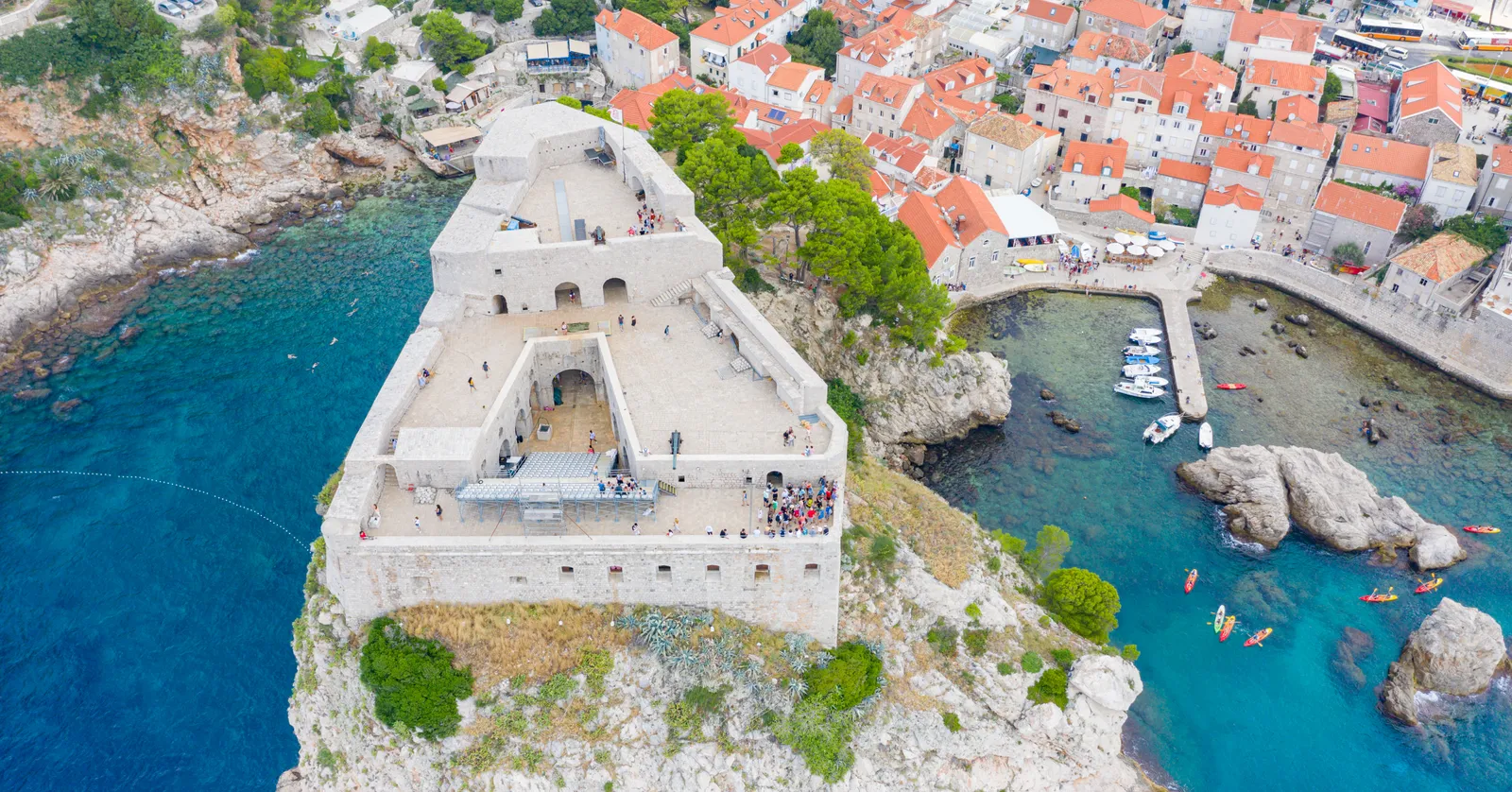
Pile is the western entrance to Dubrovnik’s Old Town, and the half-hour either side of walking through it is worth more than most people give it: a gate arch of 1537, Fort Lovrijenac out on its own rock, and a pebble cove below the cliffs where the swimming is free.
The Pile gate’s outer arch went up in 1537
Two separate gates stand here, not one. The inner arch dates from 1460 and the outer, rounded bastion from 1537, and the stone bridge linking them replaced a wooden drawbridge that was hauled up every night while the Republic of Ragusa governed itself, with the keys handed to the rector in a nightly ceremony. A figure of St Blaise, the city’s patron, sits in a niche above the arch.
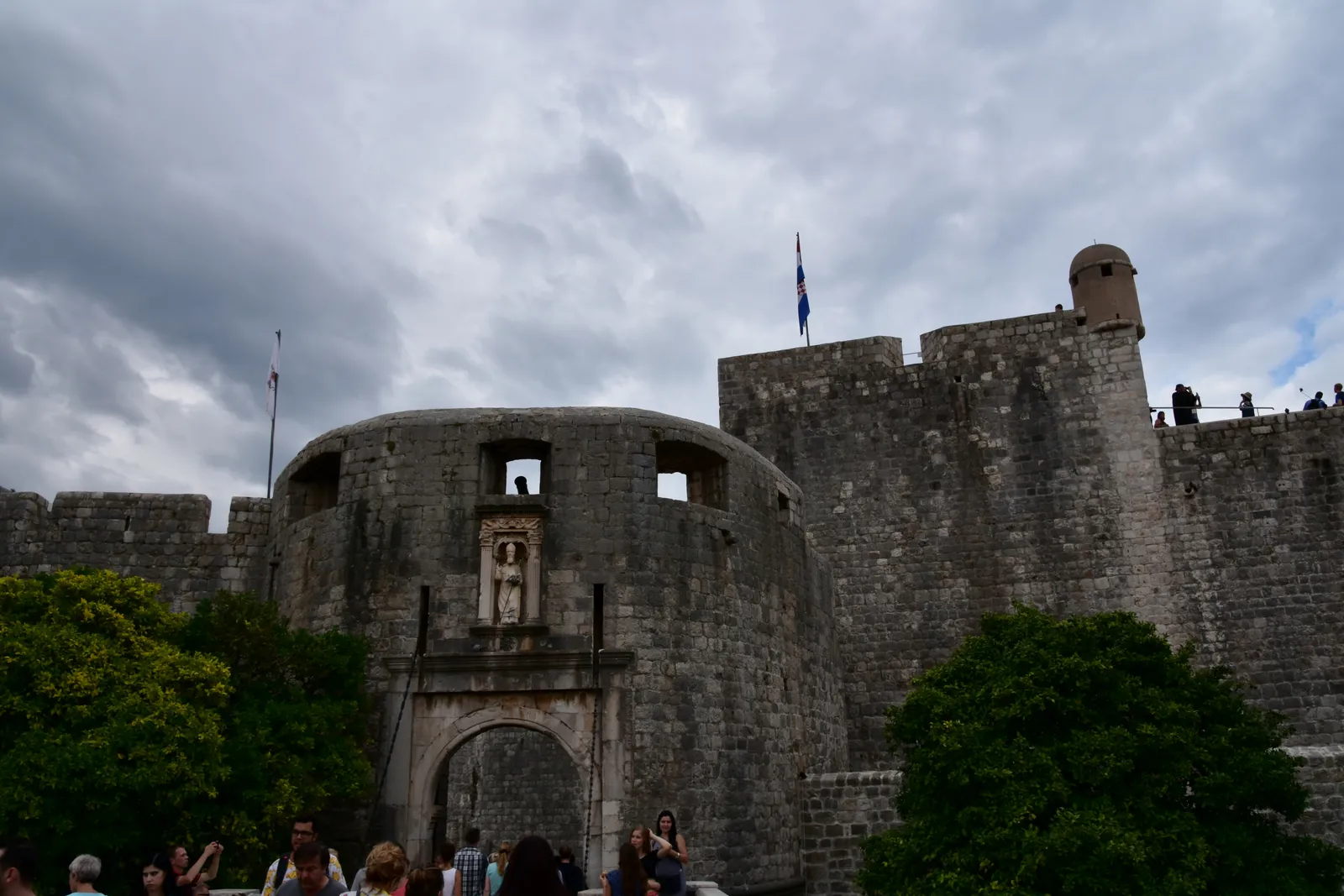
The square outside it, Brsalje, is the busiest square metre in Dubrovnik. Every city bus terminates here, every taxi drops here, and every tour group forms up here before going in, which is why the bridge is a slow shuffle from mid-morning until late afternoon in season. Come at eight or after seven and it is a different place, with the plane trees on the terrace and a clear view along the wall to Bokar fortress on the corner.
Fort Lovrijenac stands on a rock 37 metres above the sea
The seaward walls are up to 12 metres thick; the walls facing back at the city are 60 centimetres. That asymmetry was deliberate: a fortress held outside the walls by its own commander was a standing risk to the Republic, so the side facing home was built thin enough to be knocked down from the ramparts if it ever came to that. Local tradition has the whole thing thrown up in three months in the 11th century to keep Venice from building there first, though the first documentary record of it is 1301.
Over the entrance is the line the city put its whole political argument into: Non bene pro toto libertas venditur auro, liberty is not well sold for all the gold. Inside is a bare courtyard on three levels with gun terraces looking straight back at the walls, and every July and August it becomes the open-air stage for the Dubrovnik Summer Festival’s Hamlet, which has been the festival’s signature production for decades. The fort is included in the city walls ticket, and a city pass covering that ticket can be sorted before you arrive.
The climb up is stone steps the whole way, and the Pile bridge in front of it is where every arriving bus, taxi and tour group converges into one arch.
Šulić beach, a pebble cove between two cliffs
A narrow inlet cuts into the coast just west of the fortress rock, and at the head of it is a short pebble shore with a public shower, two bars on the slope above and water clear enough to see the bottom several metres out. Locals call it Kolorina, the calm harbour, and it is the closest swim to the Old Town that does not involve a boat.
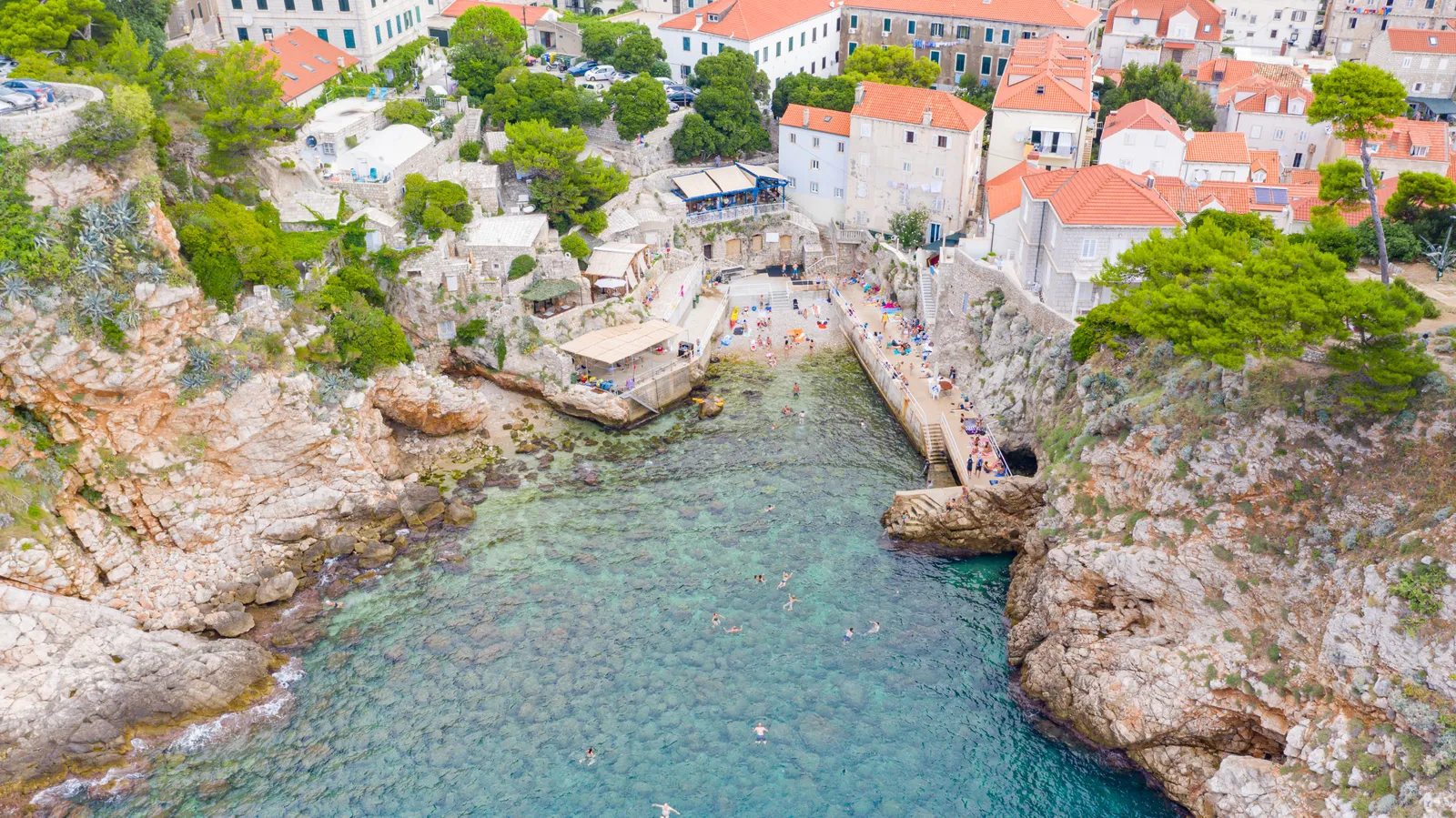
The useful thing about it on a hot flight day is the geometry. Cliffs on both sides mean one shore or the other is in shadow through most of the day, the eastern side in the morning and the western side in the afternoon, so there is somewhere to sit out of the sun at an hour when the open beaches have none. It is pebbles and rock rather than sand, so it rewards something on your feet, and the rocks along the sides are where people jump in from.
No airport bus stops at Pile
The shuttle out to Dubrovnik Ruđer Bošković Airport (DBV) runs from the main bus station in Gruž, calls at Grawe and then at the cable car stop on the northern side of the Old Town, and that last one is the closest it gets to here. From the Pile bridge, the cable car stop is about ten minutes on foot, uphill, or a couple of stops on a city bus from the terminus on the square. The ride from there to the terminal is about 25 minutes and a one-way ticket is 10 euros.
Because there is no regular interval to fall back on, the transfer from Pile to the cable car stop is the part worth over-budgeting: missing a flight-timed bus is not a ten-minute problem. Allow two hours from the gate to be comfortable.
If you have four hours or more, the honest answer is that this stretch is a good hour rather than a whole afternoon, and the rest belongs inside the walls with the main Dubrovnik route, or out at the port district if you would rather see the city working than the city being looked at. The advantage of Pile is that it is the one place where you can see what everyone else is queueing to get into, from outside, for nothing.
Frequently asked questions
Is Fort Lovrijenac worth it if you are not walking the city walls?
It is included in the walls ticket, and that half of the ticket stays valid for three days from your first entry onto the ramparts, so the cheapest way in is on a walls ticket you were buying anyway. If you only want the fort, it is sold on its own at the gate for less. Either way it is a stiff climb of stone steps up the rock and there is nothing inside but the courtyard, the gun terraces and the view back at the walls, which is precisely the point: this is the only place you can photograph Dubrovnik's western defences from outside them.
What can you do around Pile without paying for anything?
More than most corners of Dubrovnik. Walking through the gate and down the main street costs nothing, and neither does the sixteen-sided fountain just inside it, or the terrace at Brsalje with its plane trees looking out at the fortress. Šulić beach is free to swim from and has a public shower. What you cannot do for free is go up onto the ramparts or into Lovrijenac, both of which need the same ticket. A morning or evening here is a genuinely cheap few hours by Dubrovnik standards.
Does the airport bus stop at Pile Gate?
No. The shuttle to Dubrovnik Ruđer Bošković Airport (DBV) uses the main bus station at Gruž, a stop at Grawe, and the cable car stop on the northern side of the Old Town. Pile is not on the route in either direction. From the gate, the cable car stop is a walk of roughly ten minutes uphill, or a short ride on a city bus from the Pile terminus, which is where every line in Dubrovnik turns around. Build that transfer into your timings rather than assuming you can board at Pile.
Is there any shade at Šulić beach?
Yes, and which side has it depends on the hour. The cove is narrow and walled by cliffs on both sides, so the eastern shore is shaded in the morning and the western shore in the afternoon, which is unusual on this coast and makes it usable in the middle of a hot day when the open beaches are not. It is pebbles and rock rather than sand, the water is deep and clear a few metres out, and locals jump off the rocks at the sides.