Cavtat Layover Near Dubrovnik Airport (DBV)
Part of the full Dubrovnik Layover: Inside the Walls From DBV
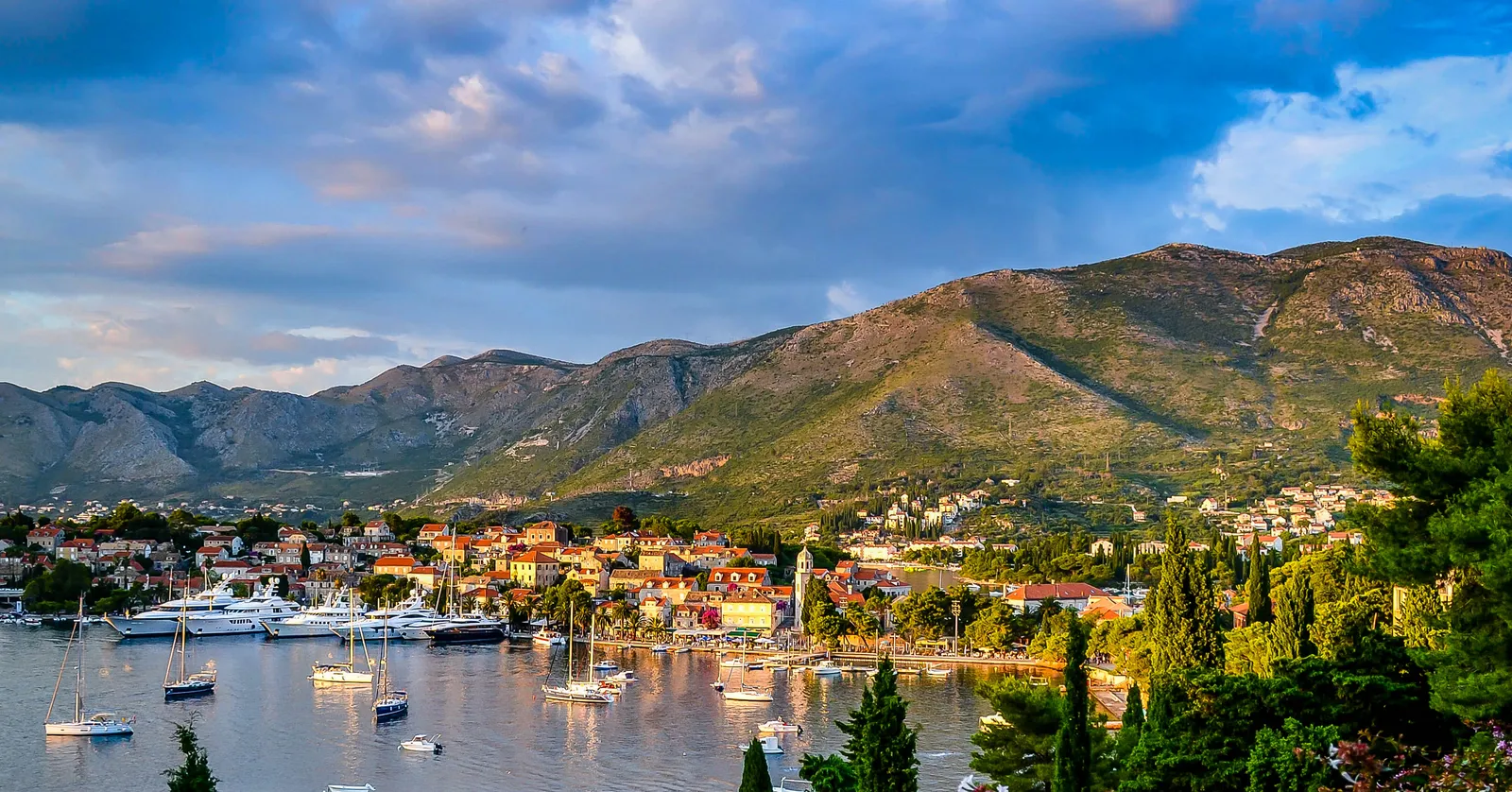
Cavtat is a harbour town six kilometres from Dubrovnik’s airport, built on the Roman colony of Epidaurum, with a flat promenade round its bay, a painter’s house kept as a museum, and a shaded coastal path looping the headland behind it.
Cavtat’s harbour sits on the Roman colony of Epidaurum
Greeks settled the bay first and Rome turned it into Epidaurum, a colony that lasted until the 7th century, when the people who fled it are traditionally credited with founding Dubrovnik up the coast. What is left of all that is mostly underwater and under the modern town, but the shape of the place, a deep sheltered bay between two wooded headlands, is exactly why anyone built here in the first place.
The promenade round the water is flat, paved and lined with cafés, and the passenger boats to Dubrovnik’s Old Port tie up along it. That crossing takes about 45 minutes, runs from around April to early November, and puts you inside the walls rather than at a bus stop outside them, which is a better arrival than anything on wheels manages.
Vlaho Bukovac’s house on the seafront is now his museum
Croatia’s best-known painter of the late 19th century was born here on 4 July 1855, went to Paris in 1877, made his name at the Salon, and came home. The house is kept as a museum of his work, and the thing worth walking in for is on the walls rather than hung on them: at seventeen he painted decorative frescoes across the walls and ceilings, they were covered over, and they were not uncovered again until the late 1990s.
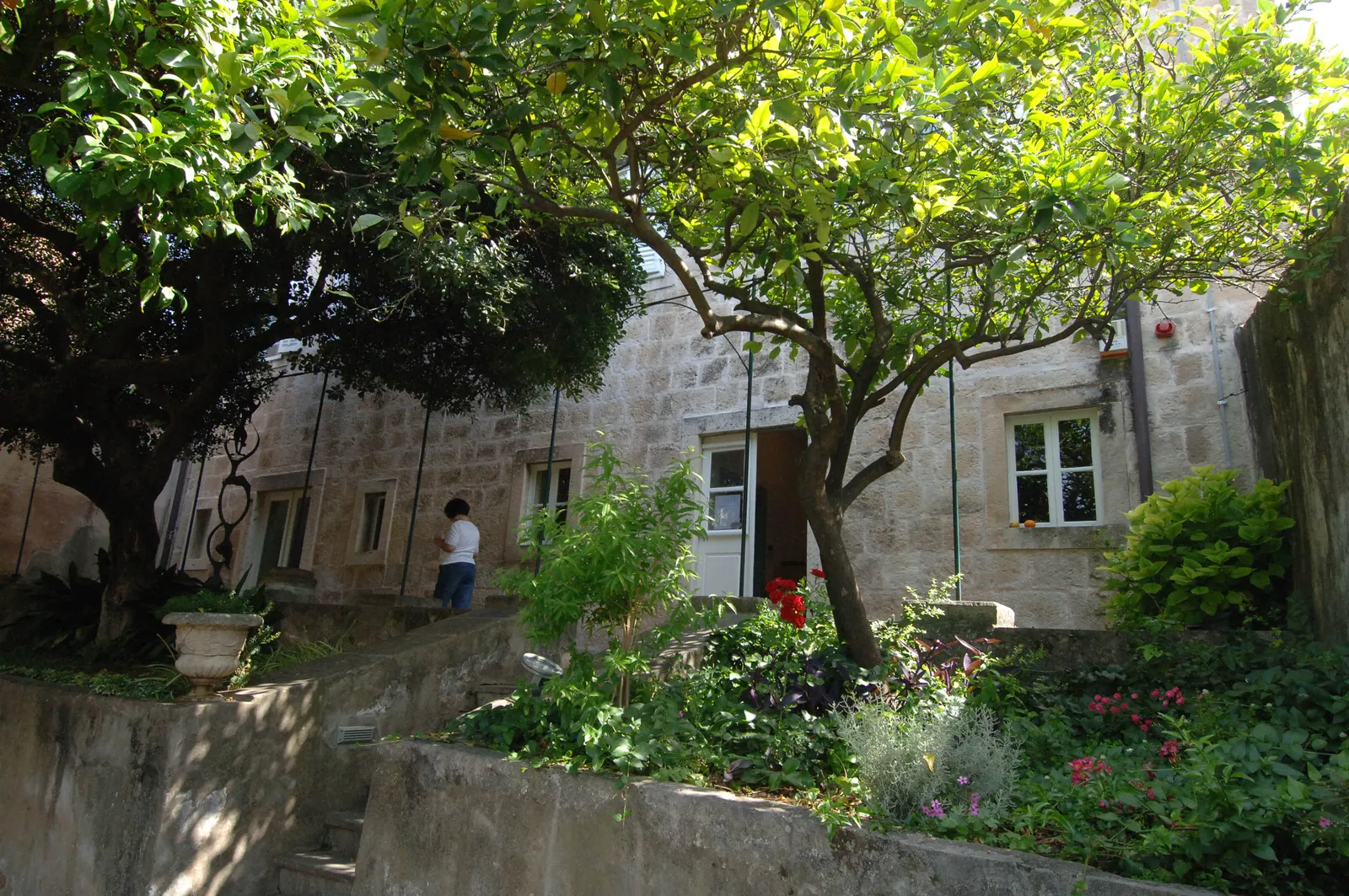
Admission is 7 euros. It opens Tuesday to Sunday and closes on Mondays, with a split summer schedule of late morning and then early evening, and a single shorter run through the middle of the day in winter, so the hours are worth checking against your flight rather than assuming. Half an hour to forty minutes covers it comfortably.
The Rat peninsula path loops the headland at sea level
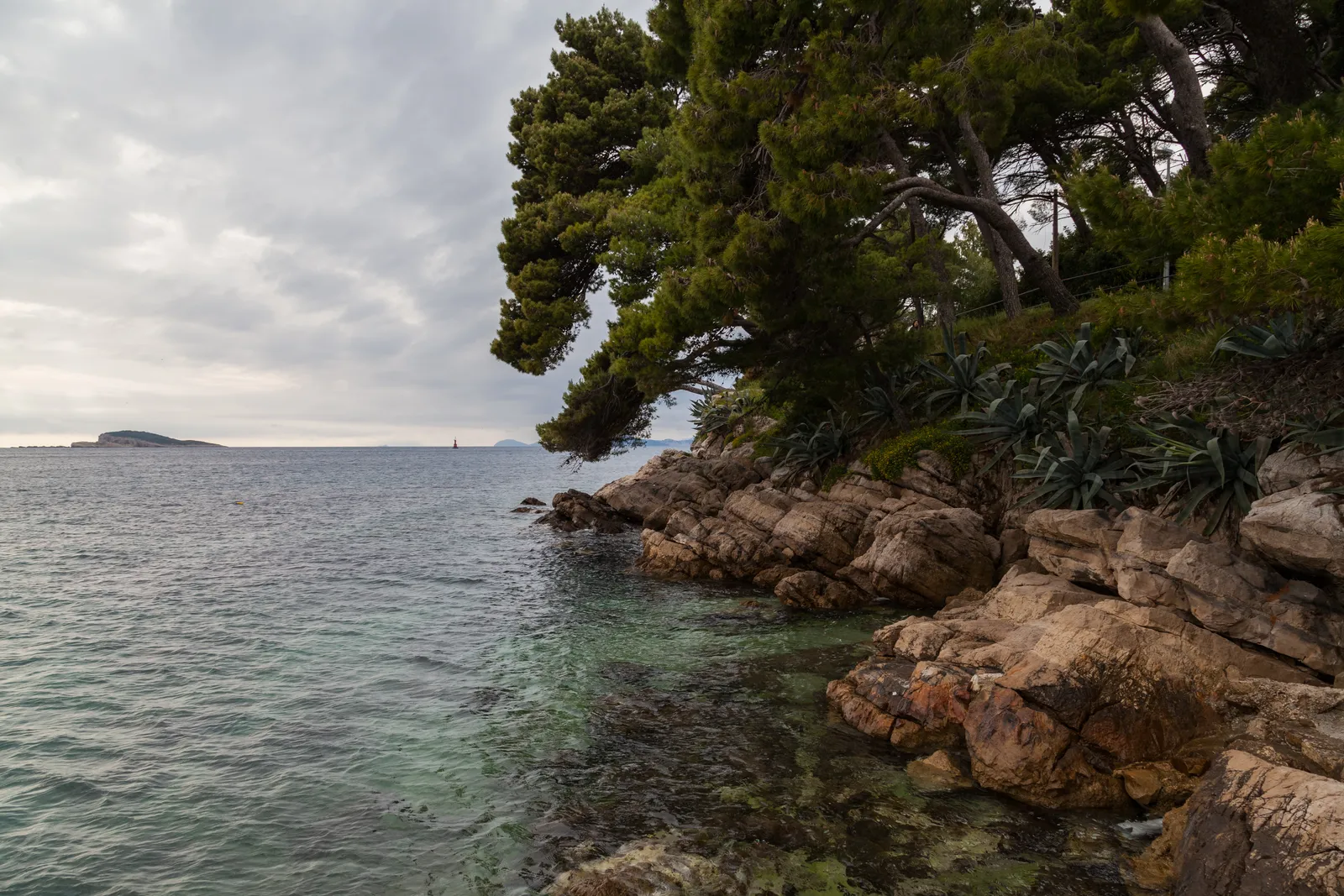
East of the harbour the land runs out into a wooded spit, and a path goes right round it: pine needles, bare limestone, agaves leaning over water clear enough to count the stones through. It stays close to sea level the whole way, there is no gate and nothing to pay, and the full loop takes about 45 minutes at a stroll with places to swim off the rocks on the way.
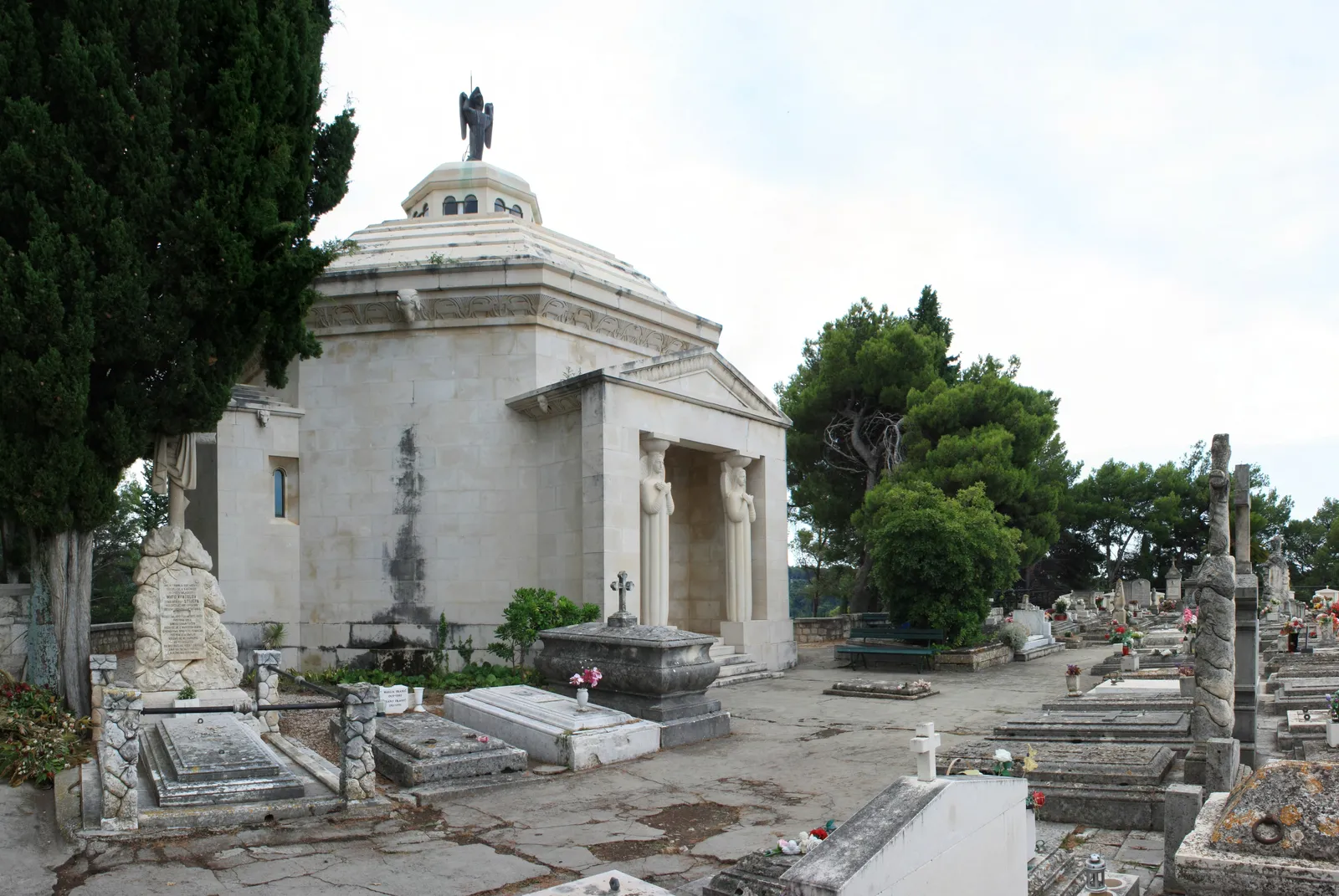
At the top of the same peninsula, up a genuine climb rather than a stroll, the St Roch cemetery holds the Račić family mausoleum. The shipowner Ivo Račić and both his children died of Spanish flu in 1919; his widow Marija commissioned Ivan Meštrović, and the octagonal white stone chapel he built between 1920 and 1922 was the first piece of architecture he ever designed. It won a Grand Prix at the Paris decorative arts exhibition in 1925. Inside is a Greek-cross plan under the dome, carved throughout, and outside is the view down over both of Cavtat’s bays.
Cavtat has no station and no locker bank, so anything you bring stays on your shoulder for the whole loop and the climb.
The terminal is ten minutes down the road, not thirty-five
Dubrovnik Ruđer Bošković Airport (DBV) is six kilometres from the Cavtat waterfront, which is the entire argument for this page. Suburban bus lines 11, 27 and 38 link the two for about 4 euros, running to the working day rather than to arrivals and departures, and a taxi does it in ten minutes when the timetable will not cooperate. The flight-timed shuttle that serves the city does not call here.
That short hop is what makes Cavtat work on a gap that could never absorb the city. Ninety minutes from the promenade to the gate is comfortable, which is half of what the walled Old Town needs, and shorter still if you have already checked in. If the wait is long enough that you would rather be at the terminal than in town, the village next to the runway has its own Sunday morning worth knowing about.
Frequently asked questions
Is Cavtat a better use of a short layover than Dubrovnik?
Under about four free hours, yes, because the arithmetic is different. Cavtat is six kilometres from the terminal, roughly ten minutes by road, against 30 to 35 minutes each way into the city. That is an hour of travel saved, which on a three-hour gap is most of what you have. Over four hours the answer flips: the walls, Stradun and the cable car are what people come to this coast for, and the Dubrovnik itinerary is worth the longer ride. Cavtat is the answer to a specific problem, not a substitute for the city.
Does the boat from Cavtat to Dubrovnik run all year?
No. The passenger boats work from around the start of April to the start of November, with roughly a dozen crossings a day in season, the first out about 09:30 and the last back in the late afternoon. The crossing takes about 45 minutes and lands at the Old Port inside Dubrovnik's walls, which is a far better arrival than any bus stop. Fares vary by operator, generally somewhere between 10 and 20 euros one way. They also do not sail in choppy weather, so it is not something to build a flight day around without a bus fallback.
How do you get between Cavtat and the airport?
The suburban bus lines that serve Dubrovnik Ruđer Bošković Airport (DBV), numbers 11, 27 and 38, also run to Cavtat, at about 4 euros a ride and roughly ten minutes between the two. The catch is that they follow a commuter timetable rather than the flight schedule, so gaps get long outside the morning and late-afternoon peaks. A taxi covers the same six kilometres in ten minutes if the timetable does not suit, and the flight-timed shuttle from the city does not come here at all.
Is Cavtat manageable if walking is hard work?
The waterfront and the headland path are, the cemetery is not. The promenade along the harbour is flat, paved and lined with benches, and the coastal path round the Rat peninsula stays close to sea level under pine shade for its whole loop, which makes it one of the easier walks anywhere near Dubrovnik. The Račić mausoleum is the exception: it sits at the top of the peninsula in the St Roch cemetery, up a real climb, and there is no way around that.