Dubrovnik Layover: Ploče Gate and Banje Beach
Part of the full Dubrovnik Layover: Inside the Walls From DBV
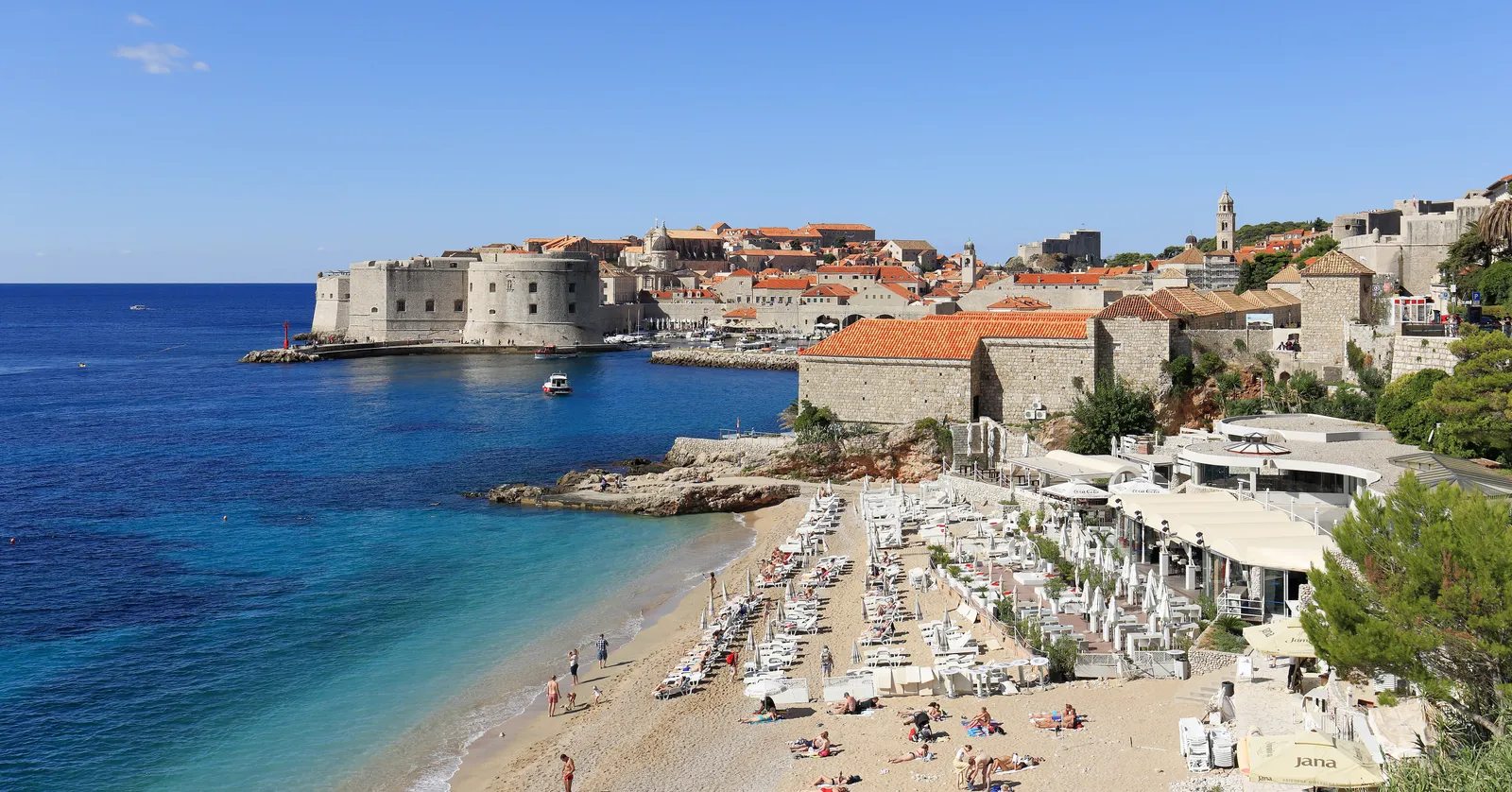
Ploče is the eastern entrance to Dubrovnik’s Old Town, and the ground just outside it holds three things the walled quarter does not: Revelin fortress, the Republic’s old quarantine yards at Lazareti, and Banje beach, whose public end is free and looks straight back at the ramparts.
The Ploče gate crosses two bridges and a dry pit
Dubrovnik’s eastern entrance is two gates rather than one: a 15th-century inner arch, an outer gate standing beyond it, and stone bridges linking them across a pit that also separates the whole assembly from Revelin alongside. It is the quieter of the Old Town’s two main entrances by a wide margin, which is why people who know the city use it.
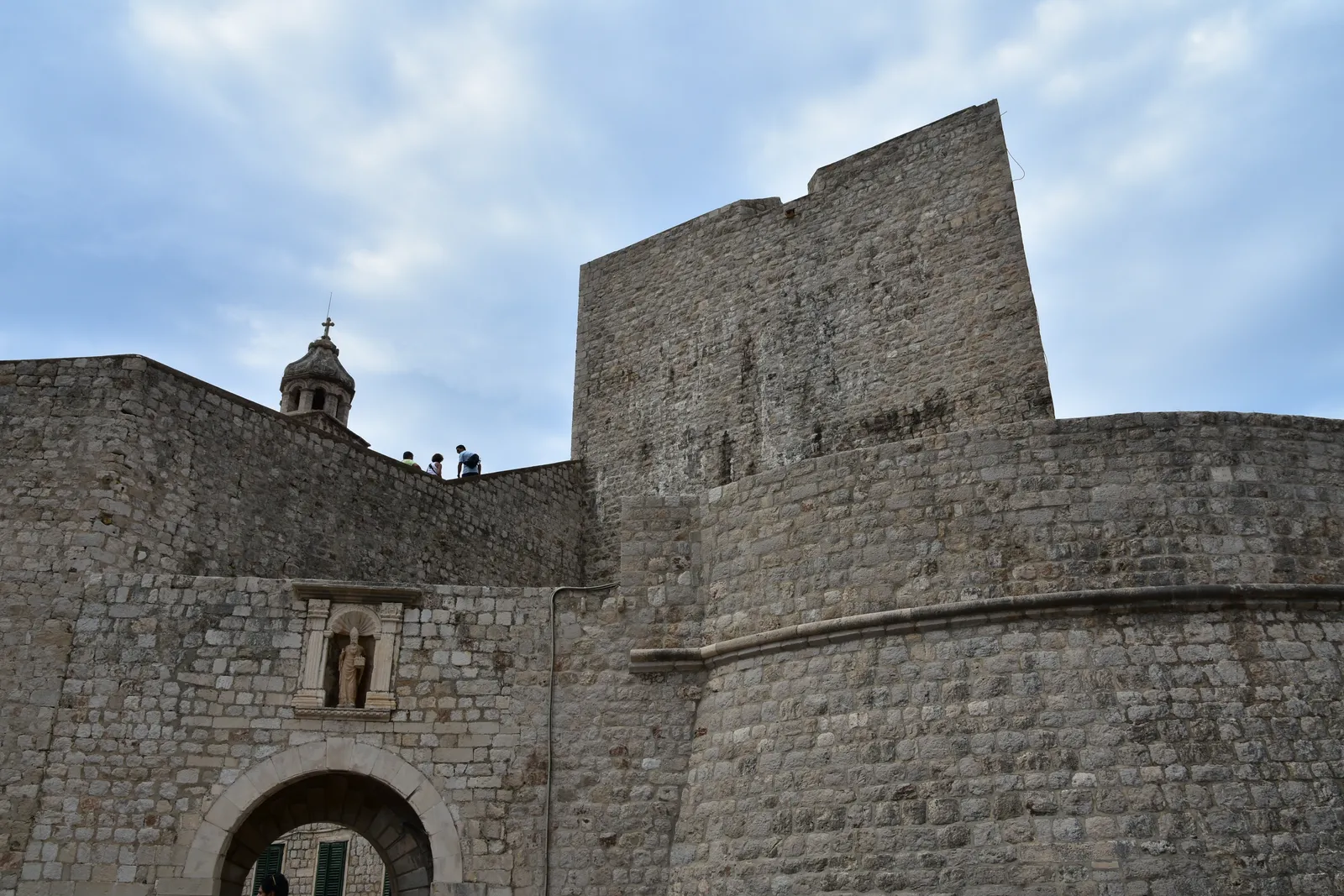
Immediately inside is the Old Port, the small harbour the Republic’s ships used, still full of boats and still the departure point for anything crossing to Lokrum. Immediately outside, the road climbs east past Lazareti towards Banje. That geography is the whole argument for this end of town: two very different things within 400 metres of the same arch.
Revelin was approved by the Senate in 1538 and took eleven years
Antonio Ferramolino drew the design, the Senate signed it off, and the fort was not finished until 1549, by which point it was the strongest single structure in the city’s defences. It sits detached on the eastern approach with the pit in front of it, which is exactly where an army coming overland from the east would have arrived.
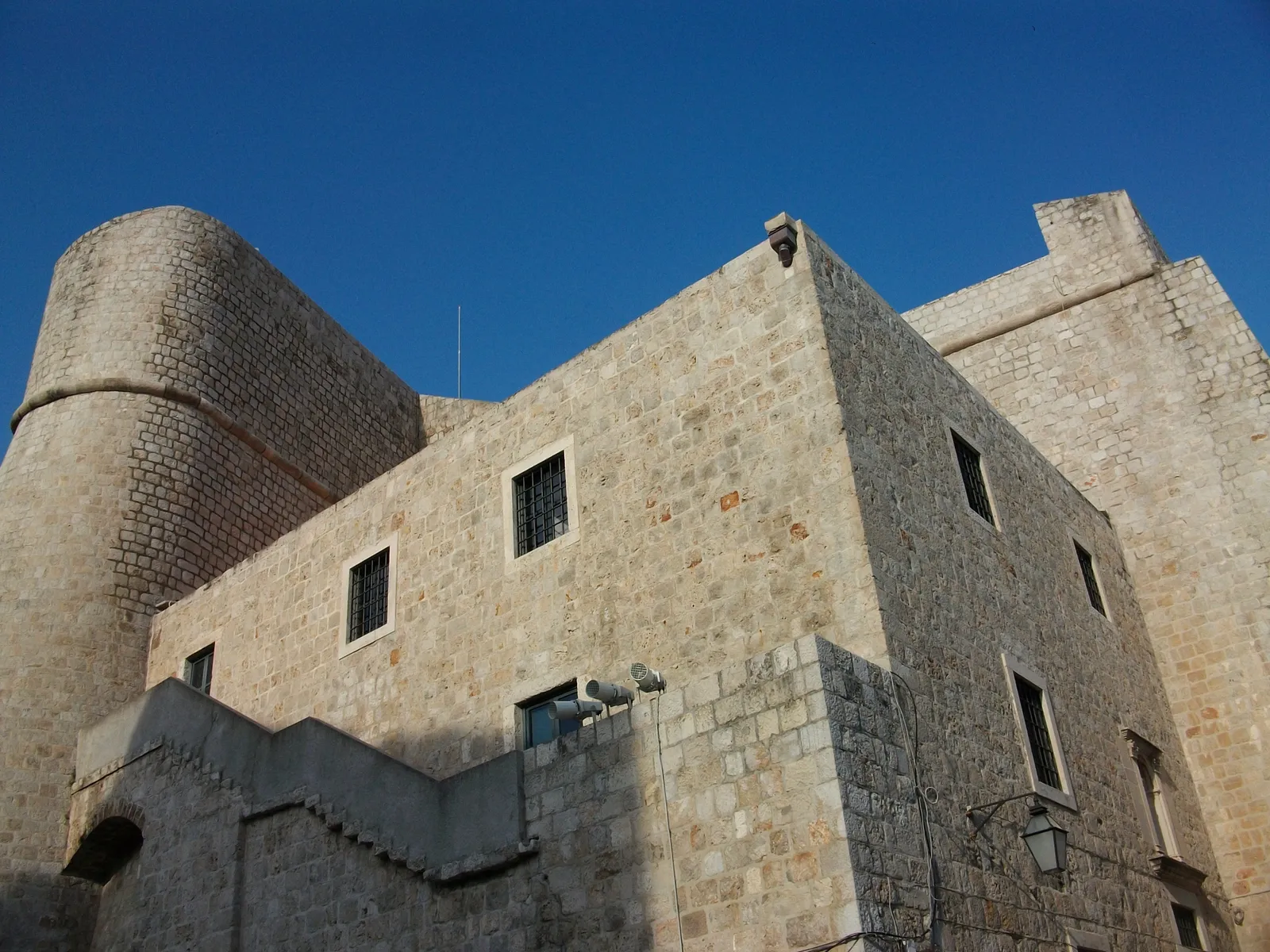
The interior has two lives. By day the Archaeological Museum keeps permanent displays on the ground floor, including early medieval stone carving from the 8th to 12th centuries, open every day except Wednesday. After dark it is Culture Club Revelin, and the stone terrace on the roof doubles as a concert stage during the summer festival every July and August.
Lazareti, where arrivals sat out forty days
The Republic of Ragusa worked out early that plague arrived with trade, and its answer was a purpose-built compound of walled yards and stone halls on the shore just east of the gate, put up between 1627 and 1647. Merchants, sailors and their goods were held there for forty days before anyone was allowed through the arch into the city. The word quarantine is that forty, and this is one of the oldest surviving sets of buildings anywhere designed to enforce it.
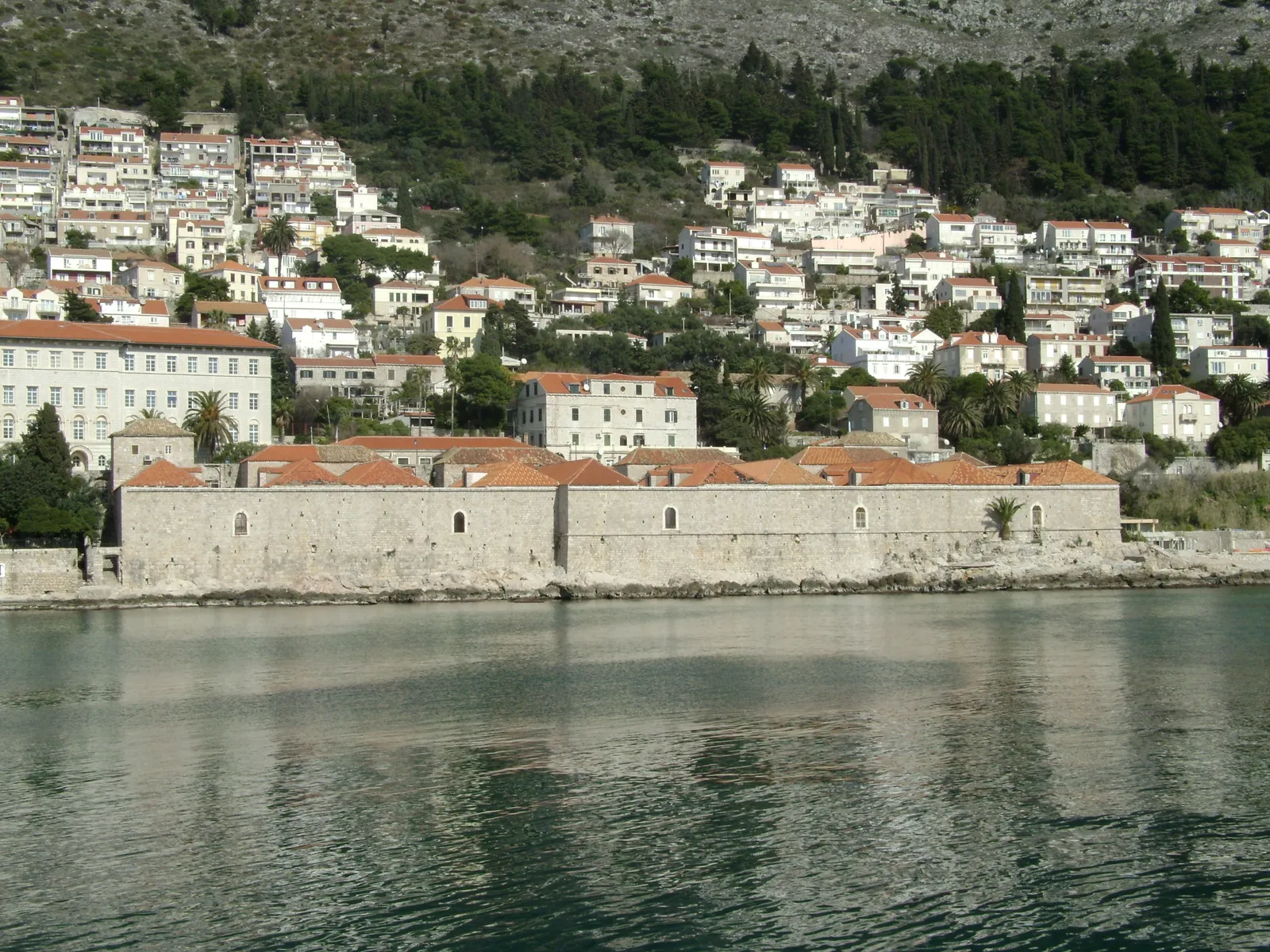
The yards are open ground now, used as an arts and cultural centre, and walking into them costs nothing. Standing in a bare stone courtyard that was built to hold people apart for six weeks is a stranger experience than most ticketed museums manage, and it takes ten minutes.
Banje beach faces the city walls head on
Pebbles rather than sand, about 400 metres east of the gate, and the reason to swim here rather than anywhere else on this coast is what you are looking at while you do it: Fort St John, the Old Port entrance and the full run of the seaward ramparts, from water level. The eastern end is public and free; the western end is a beach club where a pair of loungers and an umbrella costs somewhere around 40 to 50 euros for the day. There is a bar, changing rooms and a coin shower.
A guided history walk paired with a boat lap of Lokrum covers the same water in about two and a half hours if you would rather see the walls from a deck than from the pebbles.
The way down to the beach is a stepped ramp and the shore itself is loose stone with nowhere to leave anything while you are in the water.
The airport bus arrives at Ploče but leaves from Gruž
Coming in from Dubrovnik Ruđer Bošković Airport (DBV), the shuttle reaches the Ploče stop in about 30 minutes and then continues to the main bus station at Gruž. Going the other way it does the opposite: it starts at Gruž, calls at Grawe and then at the cable car stop above the northern wall, and never comes back to Ploče at all. A one-way ticket is 10 euros, an open return 15, and the schedule follows the departures board rather than the hour.
In practice that means the walk from Banje to the cable car stop, ten to fifteen minutes and uphill for the last of it, is the leg to plan around. Two hours from the beach to the terminal is comfortable; ninety minutes is tight if the stop is busy.
If you have longer than an afternoon, the walled quarter is where the rest of it belongs, and the main Dubrovnik route starts about two minutes inside this gate. The western end of the walls is the mirror image of this page: same city, far more people, and a fortress on a rock instead of a beach.
Frequently asked questions
Why does the airport bus drop you at Ploče but not pick you up there?
Because the two directions run different routes. Arriving at Dubrovnik Ruđer Bošković Airport (DBV), the shuttle comes into the city and stops at Ploče first, about 30 minutes from the terminal, before carrying on to the bus station at Gruž. Leaving, it starts at Gruž and calls at Grawe and the cable car stop on the northern side of the Old Town, none of which is Ploče. So the gate you walked in through is not the one you leave from: allow ten to fifteen minutes to reach the cable car stop, or take a city bus round to Gruž.
Is Banje beach free?
The eastern end is. The western end is run as a beach club with rows of loungers, and a pair of those with an umbrella runs somewhere around 40 to 50 euros for a day, which is what most complaints about the beach are actually about. Walk past them and the public pebbles cost nothing. There is a bar, toilets, changing rooms and a coin-operated shower on site. It is roughly 400 metres east of the Ploče gate, about five minutes on foot.
Can you go inside Revelin fortress?
Yes, and what you find depends on the hour. The Archaeological Museum keeps two permanent displays on the fort's ground floor, including early medieval stone church furniture from the 8th to 12th centuries, open daily except Wednesday. After dark the same building becomes Culture Club Revelin, one of the busiest nightspots in the city, and during the summer festival the wide stone terrace on top is used for concerts. Very few buildings anywhere hold a museum, a club and a concert stage in the same walls.
Is the eastern side of Dubrovnik worth it after dark?
It is the part of the city that stays awake. The walls are floodlit and the view of them from Banje is better at night than in daylight, the beach bars run late in season, and Revelin does not open as a club until the museum has closed. Since the airport shuttle is timed to flights rather than a clock, a late departure is a genuinely usable evening here rather than a dead wait. What you lose is the museum inside Revelin and any chance of a swim you can see the bottom of.