Santiago Layover: San Cristóbal Hill From SCL
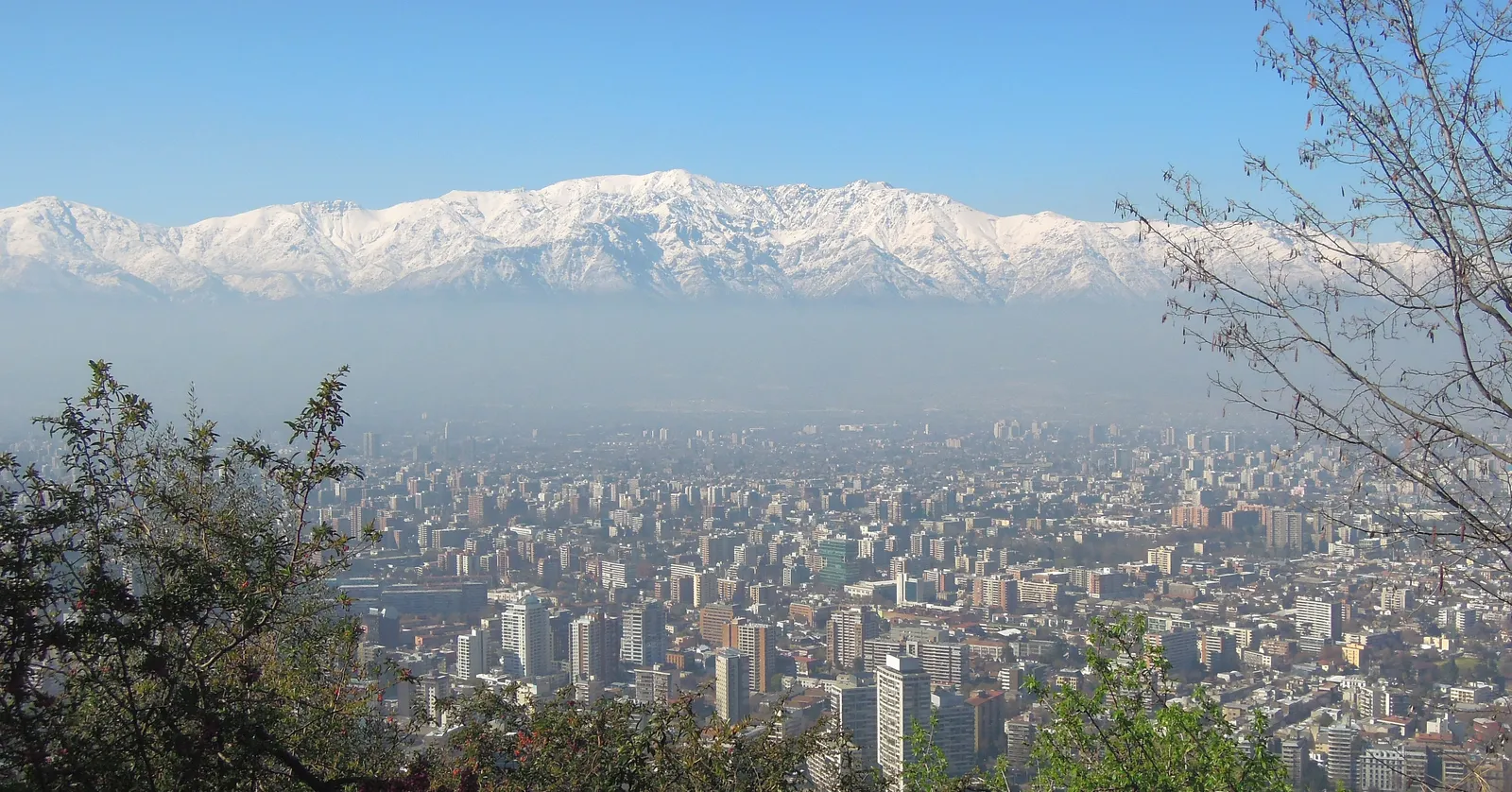
A funicular climbs Cerro San Cristóbal to the white Virgin looking down on Santiago, and below it the Plaza de Armas, a cast-iron market hall and the terraced park on Cerro Santa Lucía sit within about a kilometre of each other, none of them charging admission.
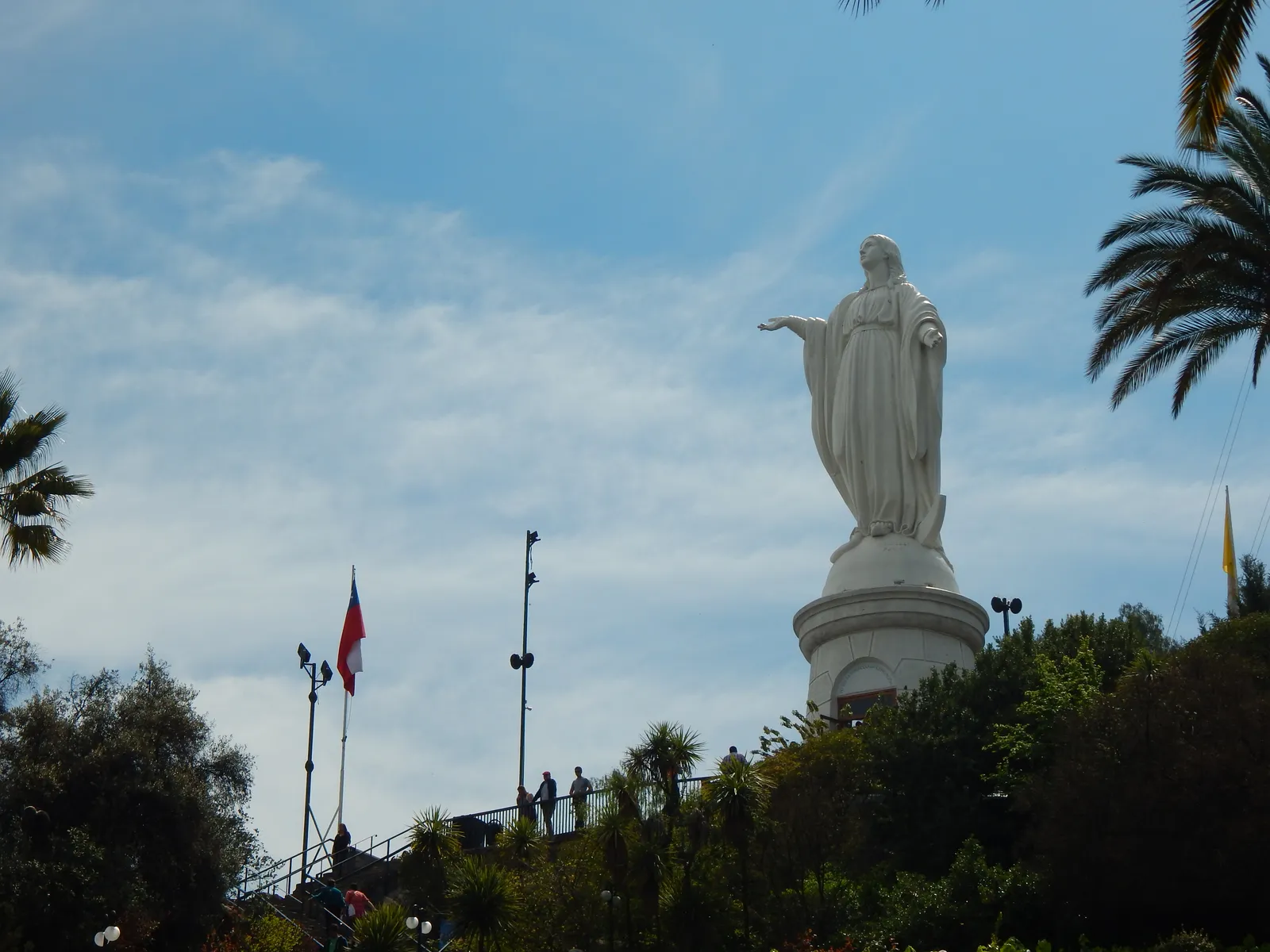
The white Virgin on the summit of San Cristóbal hill
San Cristóbal is an 880-metre hill on the north bank of the Mapocho river, standing roughly 300 metres over the streets, and the statue on top is 14 metres of white stone on an 8.3-metre pedestal. It is a sanctuary rather than a viewpoint with a monument stuck on it: there is an open-air amphitheatre for mass below the figure, and a chapel hollowed into the pedestal that John Paul II prayed in when he came in 1987.
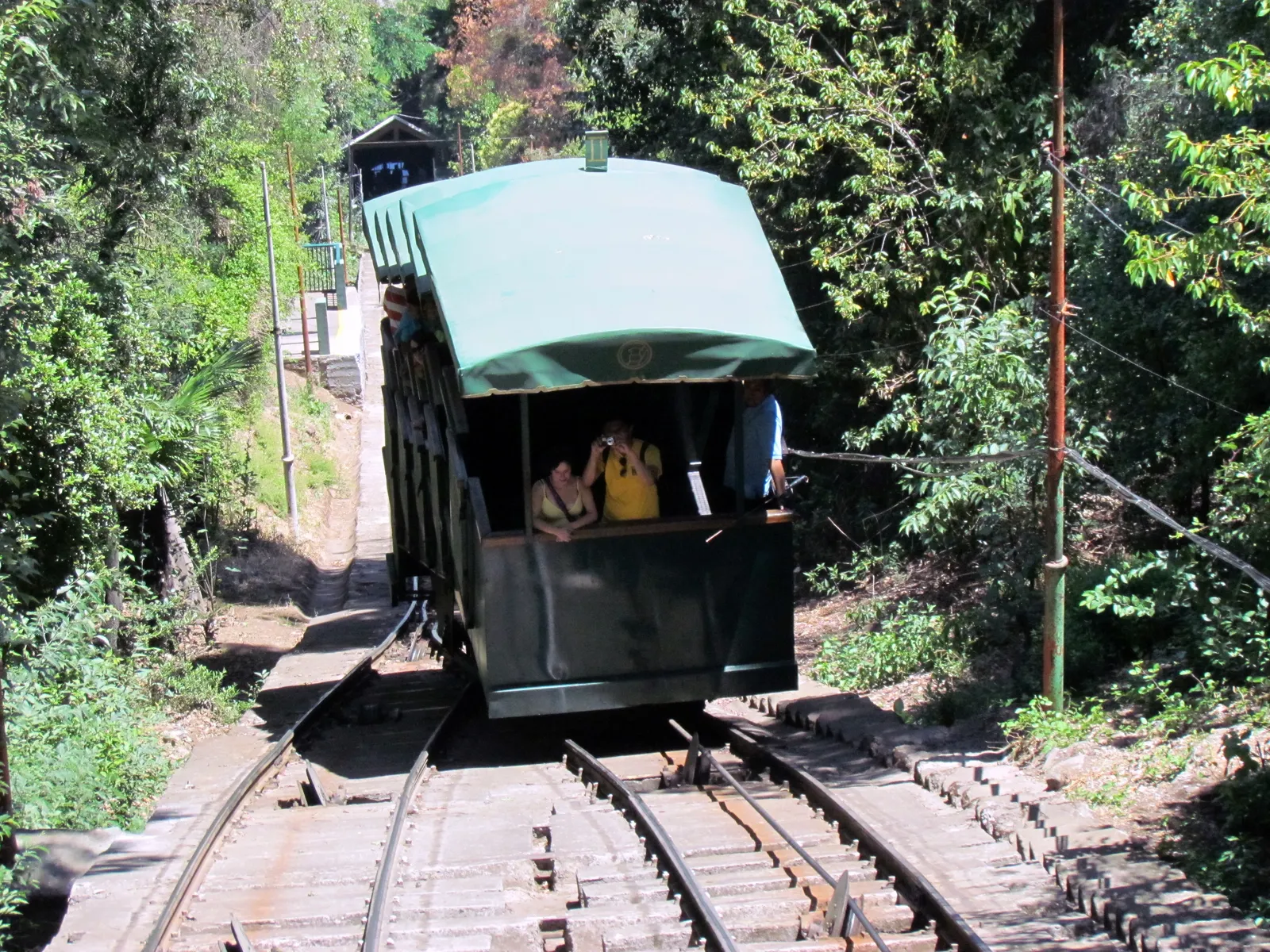
The funicular from Pío Nono 450 in Bellavista opened in April 1925 and was made a national monument in its own right in 2000: 485 metres of track, five to seven minutes, one intermediate stop at the zoo. A single is 1,580 pesos and a return 2,250 on weekdays, 2,060 at weekends. It starts at 10am Tuesday to Sunday and 1pm on Mondays, and stops at 6.45pm in winter or 7.45pm in summer. The one date to check against your own is the first Monday of the month, when it closes for maintenance. A cable car runs down the far side into Providencia, and there are combined funicular and cable car tickets if you want the hill both ways rather than one.
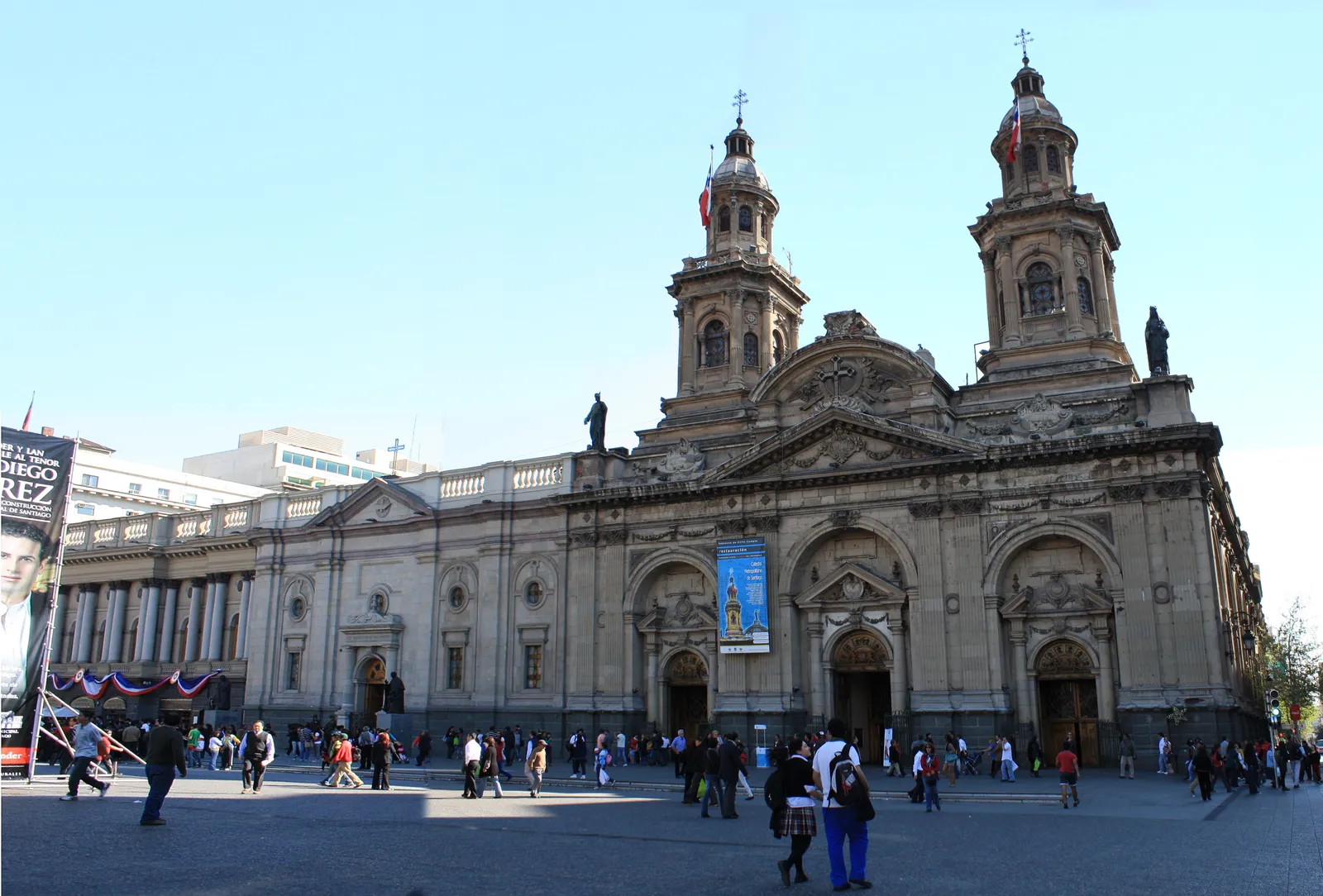
The Plaza de Armas has been Santiago’s square since 1541
The Metropolitan Cathedral fills the west side of the square and took 52 years to build: the first stone went down on 1 July 1748, Joaquín Toesca was brought in to redraw it in neoclassical form in 1780, he died in 1799, and it was finished in 1800 without him. Chess players take the benches under the palms most afternoons, and portrait photographers with tripods work the north side near the old post office.
One block west, at Bandera 361, the Museo Chileno de Arte Precolombino occupies the Palacio de la Real Aduana, the royal customs house built between 1805 and 1807 and later burned out as a courthouse in 1968. The collection inside runs from Mesoamerica to Patagonia and is the reason to spend the 12,000 pesos foreign visitors pay, though Chilean residents pay 3,000 and everyone gets in free on the first Sunday of the month. It opens Tuesday to Sunday, 10am to 6pm, with last entry at 5.15pm, and closes on Mondays, which is worth knowing before you build a Monday around it.
The central market hall’s ironwork came from Glasgow
The Mercado Central stands on the south bank of the Mapocho river where Puente street runs into San Pablo, on ground cleared by a fire that took out the old produce market in 1864. What went up in its place, and opened in 1872, was a Chilean building with an imported skeleton: R. Laidlaw & Sons prefabricated the iron frame in Glasgow, and it came across the Atlantic and around the Horn in pieces to be bolted together here. The hall has been a national historic monument since 1984.
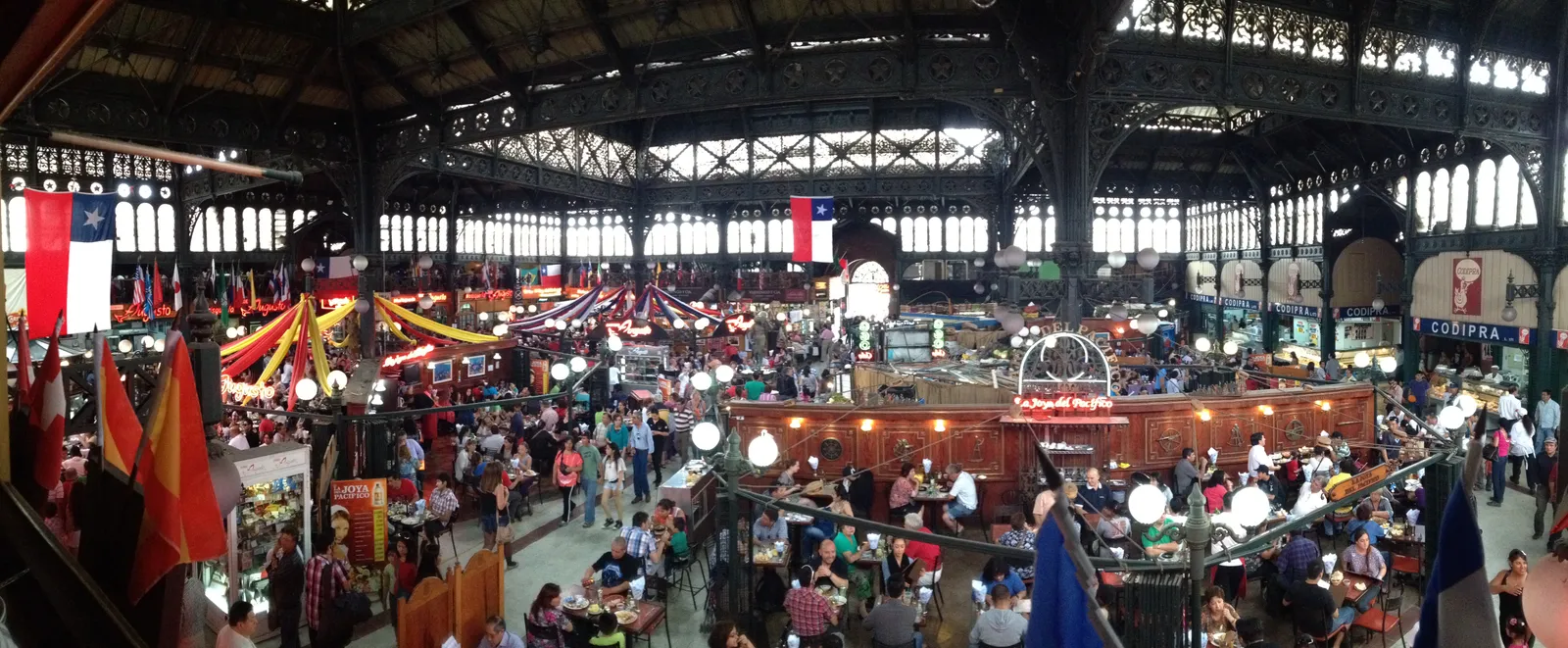
Under the central pyramid and its domed tower, the middle of the floor is now restaurant tables and the edges are still fishmongers: congrio, reineta, machas, piles of shaved ice. Lunch in the middle is priced for visitors and the stalls around the rim are not, which is the whole argument for eating at the edge. The building trades in daylight rather than evenings and shuts in the late afternoon most days, so this is a stop for the front half of a layover, not the back half.
Santa Lucía hill park closes when it rains
Cerro Santa Lucía is a rocky outcrop sitting in the middle of the old street grid, and Pedro de Valdivia ran the ceremony founding Santiago from the top of it in 1541. The Mapuche called it Huelén long before he renamed it. It is small, 69 metres above the streets around it, and for most of the colonial period it was a quarry and a pair of gun batteries. Benjamín Vicuña Mackenna, elected mayor in April 1872, stopped the quarrying and spent two years turning it into what is there now: fountains, grottoes, a neo-gothic chapel and pale yellow stone arcades stacked up the slope, finished in September 1874.
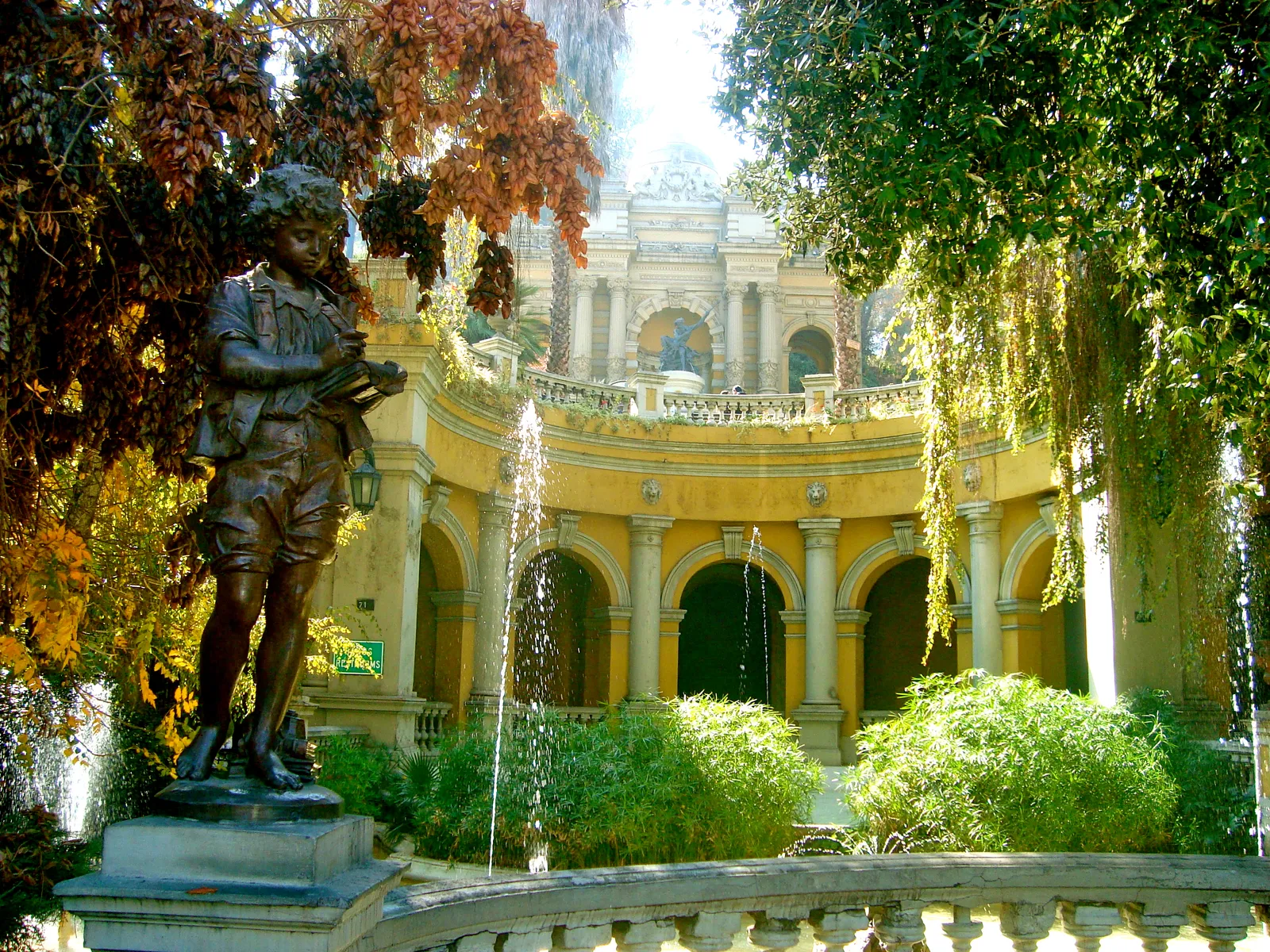
Entry costs nothing and the gates open at 7am Tuesday to Sunday in summer, 8am in winter, and not until noon on Mondays. The city closes the park on wet days, which is a real constraint from June to August rather than a technicality. A cannon on the upper terrace has marked midday here since the 1820s and by most accounts still does, so a visit that lands near noon is louder than expected. Everything above the entrance is stone staircases cut into the rock, with no lift and nowhere to leave anything at the bottom, so a suitcase makes the climb considerably slower.
A cultural centre built in 275 days for a UN summit
The Gabriela Mistral centre is the rust-brown steel building on the south side of the Alameda, Santiago’s main avenue. Its construction schedule is the thing people quote about it: 275 days, start to finish, in 1972, with thousands of volunteers drafted in so Chile could host the third United Nations trade and development conference on time. After the 1973 coup the military took it over and renamed it. A fire gutted much of it in early 2006, and it reopened as a cultural centre in 2010 with the burnt structure left visible in places.
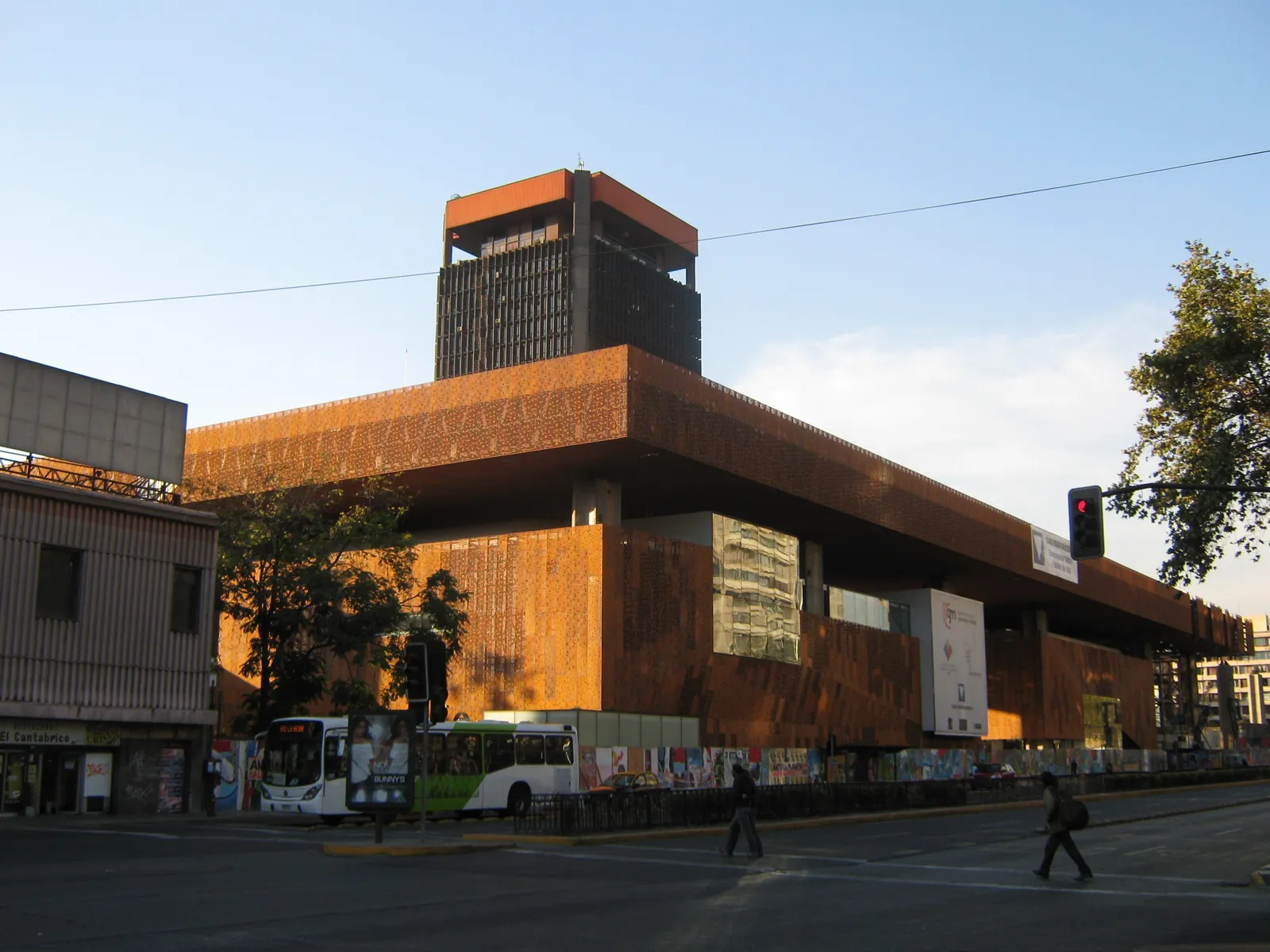
It costs nothing to walk in, runs 9am to 10pm every day, and the ground floor usually has an exhibition on plus a performing-arts library with open shelves. This is the part of the day that only exists if you have more than five hours: the streets immediately north of it, Lastarria and the lanes off it, are the bookshop-and-cafe end of central Santiago and the easiest place to lose forty minutes without planning to.
For something smaller and much quieter, Barrio París-Londres is two intersecting cobbled streets behind the church of San Francisco on the Alameda, built between 1923 and 1929 on what had been the convent’s vegetable gardens, and declared a national monument in 1982. The whole thing is about four blocks of 1920s townhouses and takes ten minutes to walk end to end. Londres 38, one of the houses on it, was a detention centre under the dictatorship and is open as a memorial site.
No train to the airport, just two bus companies
Centropuerto charges 2,400 pesos one way and 4,100 return out to Arturo Merino Benítez International Airport, and leaves the centre from the north side of Avenida España at Echaurren, by the República metro station, rather than the Los Héroes stop it used for years; roadworks on the Alameda moved it and it has stayed moved. Check that, because most directions written before 2025 still send people to Los Héroes. Departures run every 10 to 15 minutes on weekdays and every 15 to 25 at weekends, from 05:55 until about 23:10, and the same buses call at the Pajaritos interchange and Terminal Sur on the way out. Turbus does the same job for 1,900 pesos from platforms 22 and 23 at Terminal Alameda, next to Estación Central, and from Pajaritos.
Reckon on about forty minutes for the ride itself and closer to an hour if you are travelling through the evening peak, then add whatever your airline wants for check-in. Neither fare goes on the bip! travel card the metro and city buses run on, so keep cash or a bank card back for it. If Santiago is the middle leg rather than the end of one, the hop across the Andes to Buenos Aires takes a little over two hours and lands somewhere with the same kind of compact, walkable centre at the other end.
Picking the bag up at the end is the part that decides whether this works. The hill, the square, the market and the park all sit within a kilometre or so of each other and every one of them involves stairs, crowds or both, so the version of this day that goes well is the one where the suitcase spent it somewhere else.
Frequently asked questions
What should I do during a layover in Santiago?
The funicular up San Cristóbal hill is the one thing here that rewards going first, because it stops running in the early evening and shuts for maintenance on the first Monday of every month. After that the old centre does the rest of the work on foot: the Plaza de Armas and its cathedral, the iron market hall four blocks north of the square, and the terraced park on Cerro Santa Lucía. Five hours is enough for the hill plus two of the three; seven covers all of it with time for the Pre-Columbian art museum on Bandera. Nothing except the funicular and the museum charges anything, so a short visit can drop either without losing the shape of the day.
Does Santiago's summer heat change what's worth doing on a layover?
January and February afternoons average close to 30°C and the sun is hard, which matters because the two things people climb here, Cerro Santa Lucía and San Cristóbal, are both open rock and thin shade. In those months the sensible order is the hill early or late and the indoor stops in the middle of the day: the market hall, the cathedral, and the Pre-Columbian art museum, which sits behind thick colonial walls and stays cool. Winter has the opposite problem. Rain closes Cerro Santa Lucía outright, and the valley traps its own smog for days at a time between June and August, which flattens the view from any high point.
How do you pay for the metro in Santiago?
The bip! card covers the metro, city buses and the suburban train on one balance, and since February 2026 a contactless bank card or phone works at the gates too, so a short visit no longer has to buy a card at all. The fare changes by time of day rather than by distance: 895 pesos at peak, which runs 7 to 9 in the morning and 6 to 8 in the evening on weekdays, 815 pesos through the middle of the day, and 735 pesos in the first hour and the last two. Weekends are a flat 815. Trains run from 6am on weekdays, later on Saturdays and Sundays, and stop at 11pm every night.
Is the walk around Santiago's old centre step-free?
The flat part genuinely is. The Plaza de Armas is level paving, the pedestrianised shopping streets running south from it have no steps, and the market hall is a single ground floor with wide aisles between the restaurant tables. Cerro Santa Lucía is the opposite: the whole park is stone staircases cut into the rock, with no lift and no step-free route to the upper terraces. San Cristóbal is a mixed case, since the cable car cabins take wheelchairs and strollers while the funicular's summit station still leaves steps at the top.
Which bus goes back to Santiago's airport, and how late does it run?
Two companies run it and they leave from different places. Centropuerto now starts from Avenida España by the República metro station rather than Los Héroes, after roadworks on the Alameda moved it: 2,400 pesos one way, every 10 to 15 minutes on weekdays, with the last departure toward Arturo Merino Benítez International Airport at about 23:10. Turbus leaves from platforms 22 and 23 at Terminal Alameda, next to Estación Central, and also from the Pajaritos interchange, for 1,900 pesos. Neither takes the bip! card, so keep cash or a bank card for the fare, and allow closer to an hour than forty minutes in the evening rush.