Santiago Layover Near República Station
Part of the full Santiago Layover: San Cristóbal Hill From SCL
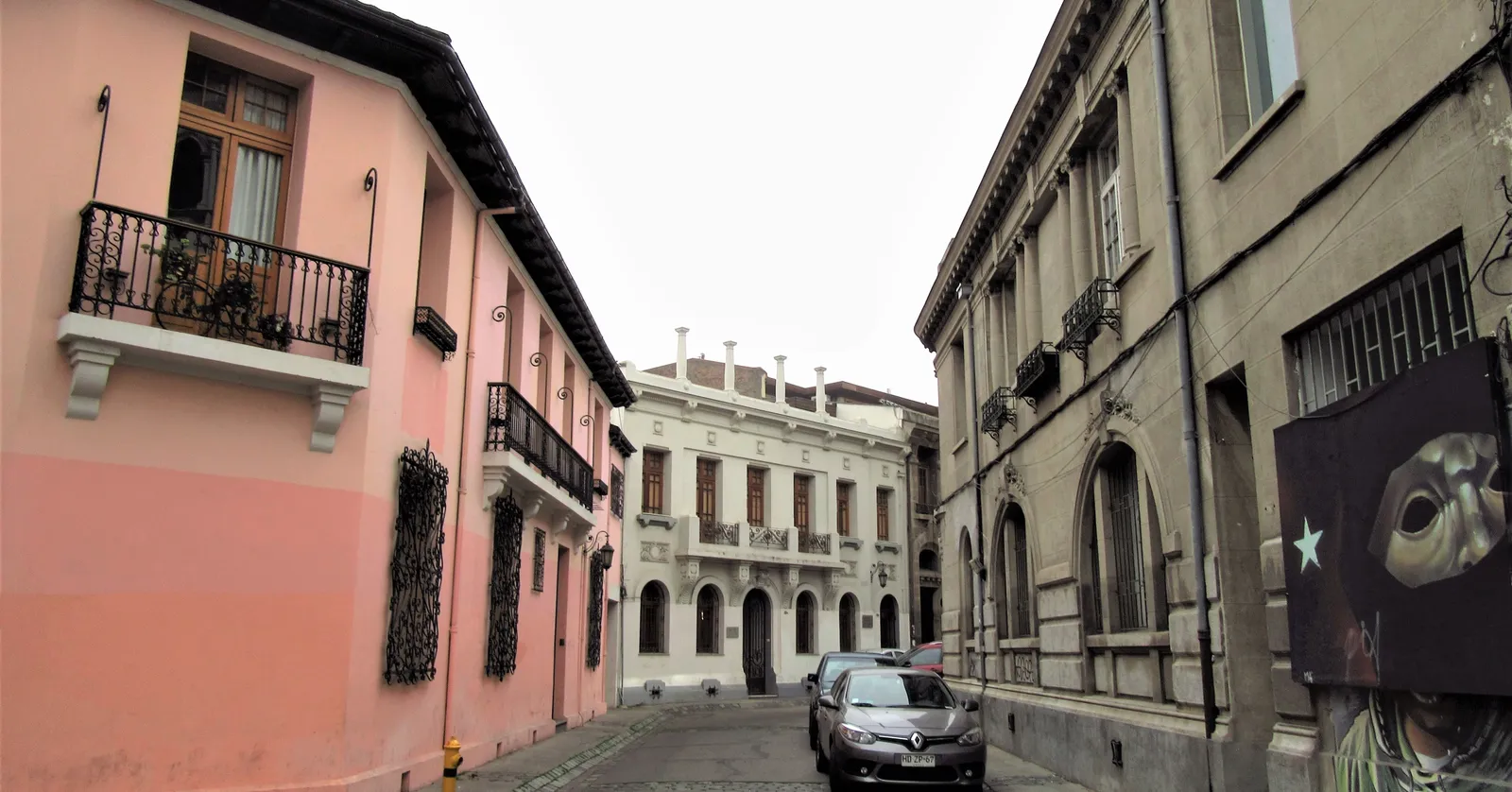
Barrio Concha y Toro’s curved cobbled streets and 1920s mansions start a few minutes east of Santiago’s República station along the Alameda, and the whole quarter, plus the Basílica del Salvador and Plaza Brasil north of it, costs nothing to walk through.
Barrio Concha y Toro was laid out on a silver fortune
Enrique Concha y Toro built a palace here on money from the northern silver mines between 1870 and 1876. When he died his widow had it subdivided, and from 1922 the estate came onto the market as building lots. The palace itself was pulled down; what replaced it was four blocks of streets that deliberately refuse Santiago’s grid, curving and narrowing in the manner Camillo Sitte was arguing for at the time, and lined with neoclassical, gothic, art deco and beaux arts fronts built more or less side by side.
The whole area was declared a protected zone in 1989. Some of the houses are now hotels, small restaurants and offices; a French-style mansion of 1920 still stands at the entrance to the streets and is used for events. Half an hour covers it at a slow pace, which is really all it asks for: it is a residential quarter that happens to be beautiful, not a site with a gate and a ticket desk.
The Basílica del Salvador has been shut since 2004
Huérfanos meets Almirante Barroso at a neo-gothic church with a nave built to hold five thousand people, and you cannot go in. Structural problems started early and every subsequent earthquake made them worse, until the building was closed to the public for good in 2004.
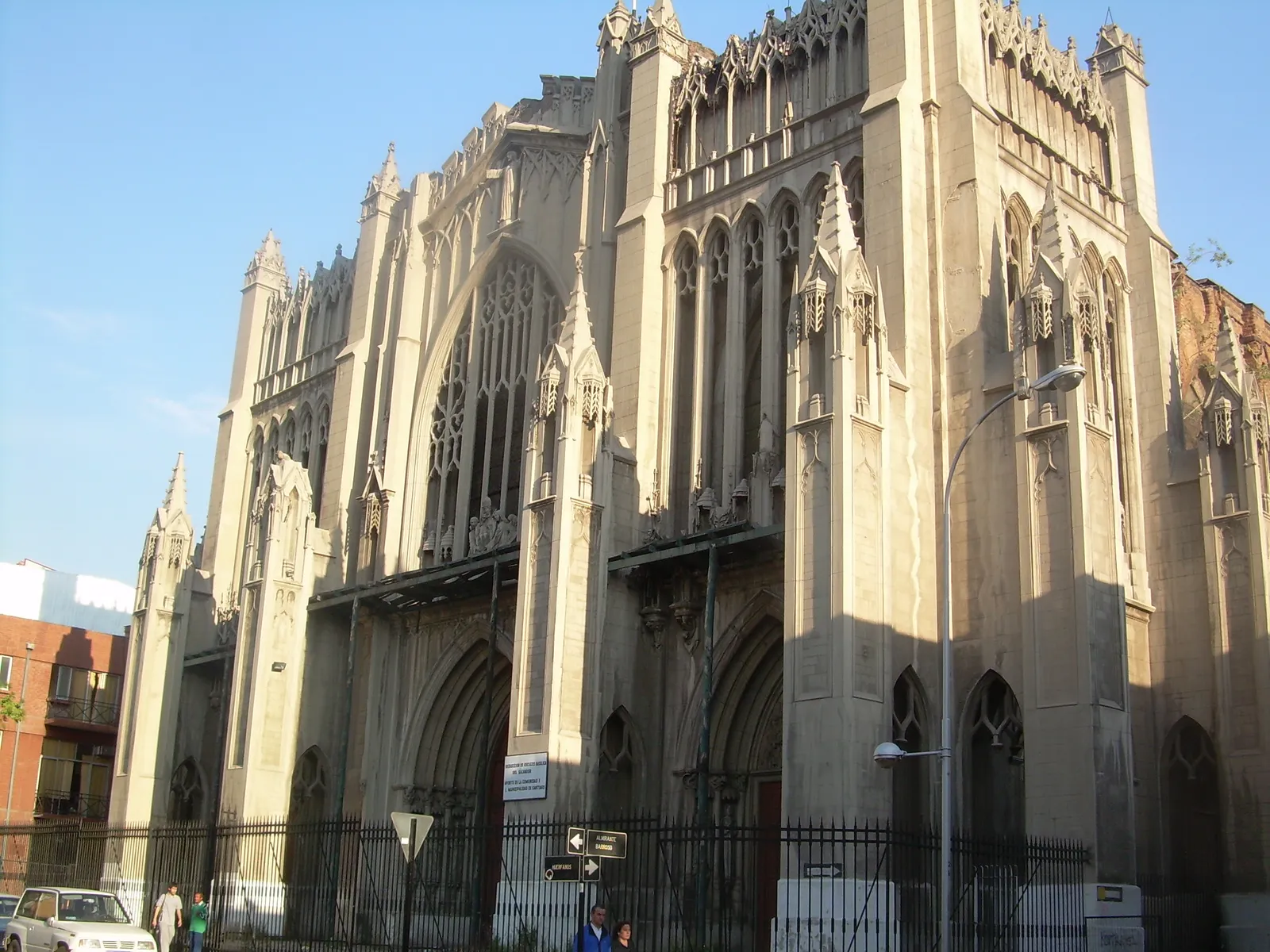
The west front is still worth the detour, and it reads differently from the outside than an intact church would: pinnacles, pointed arches and a rose window on a building fenced off from its own pavement. Restoration has been moving through tender and municipal agreement since late 2025, with the organ, the stained glass and the floor named in the scope, so this will eventually be an interior again. Until it is, ten minutes at the railings is the visit.
Plaza Brasil is ringed by the houses the rich left behind
Barrio Brasil was where Santiago’s upper class lived from the middle of the 18th century, and the square at its centre still has the evidence around it: Haussmann-style blocks, big neoclassical casonas, and ordinary Chilean housing filling the gaps between them. The quarter went out of fashion when money moved east, which is exactly why so much of it survived unredeveloped.
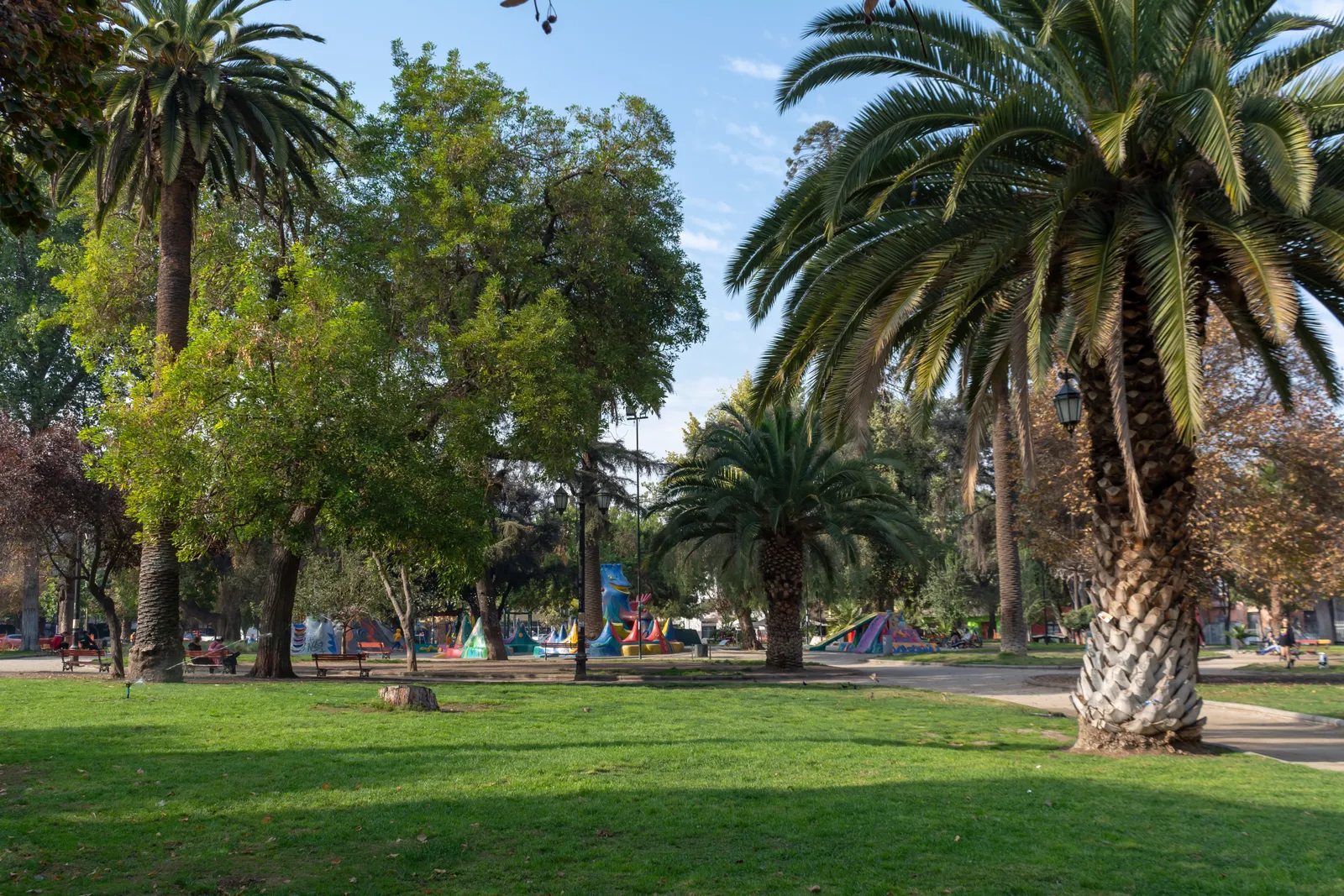
The square itself is lawn, mature palms and a large painted playground, and it is one of the few genuinely shaded flat places to sit on this side of the centre. The bars and cultural venues around it are an evening scene rather than an afternoon one, so on a daytime visit this is a bench, not a stop.
The airport bus leaves from Avenida España, not Los Héroes
Roadworks on the Alameda pushed Centropuerto off its old city terminus, and the departure point is now the north side of Avenida España at Echaurren, beside República station, rather than the Los Héroes stop most older directions still name. Fares are 2,400 pesos one way to Arturo Merino Benítez International Airport, departures run every 10 to 15 minutes on weekdays and every 15 to 25 at weekends, from 05:55 to about 23:10, and the ride is roughly forty minutes outside the evening peak. Turbus covers the same trip for 1,900 pesos from Terminal Alameda at Estación Central, one metro stop west on Line 1.
What you are waiting at is a kerb rather than a building: no shelter, no seating and nowhere to set a bag down between departures, which is the strongest practical reason to walk this quarter with both hands free.
Starting here rather than in the colonial core is the trade this itinerary makes: quieter streets, no queues, nothing ticketed, and a bus stop you can reach on foot at the end. If you would rather spend the time on the Plaza de Armas, the market hall and the hill above the river instead, that is the main Santiago layover route, and it needs a couple of hours more than this one does.
Frequently asked questions
What should I do during a layover near República Metro Station in Santiago?
Walk into Barrio Concha y Toro first. It is four blocks of curved cobbled streets and 1920s mansions laid out on a demolished silver baron's estate, protected since 1989, and it takes about half an hour to cover properly. From there the Basílica del Salvador and Plaza Brasil are both a short walk north into Barrio Brasil, and neither costs anything either. Three hours is comfortable for all three. The basilica is the one to drop if you are short, since it has been shut to the public since 2004 and only the exterior is visitable.
Can you go inside the Basílica del Salvador?
No. Earthquake damage accumulated from its earliest years and the building was closed for good in 2004, so what is visitable is the neo-gothic west front from the pavement on Huérfanos and the flank along Almirante Barroso. A restoration project has been moving through public tender and municipal agreements since late 2025, covering the organ, the stained glass and the floor, so this will eventually change, but no reopening date has been set and nothing about the current visit depends on one.
Is the walk around Barrio Concha y Toro step-free?
The streets themselves are flat, but the surface is the problem rather than the gradient: this is a protected historic zone and much of it is still original cobble and stone setts, with narrow, uneven, frequently interrupted pavements. A wheelchair or a pushchair gets around, but slowly and mostly on the roadway itself, which is quiet enough to make that workable. Plaza Brasil in comparison is level asphalt paths and lawn throughout.
What time of day is Barrio Concha y Toro best?
Mid-morning to mid-afternoon on a weekday. This is a working residential and university quarter rather than a visitor attraction, so the streets are quiet and open early, the handful of cafes and restaurants in the old houses fill at lunchtime, and the light reaches into the narrow streets when the sun is high. After dark it empties out, which is the usual advice for this part of central Santiago generally.