Santiago Layover Near Tobalaba Station
Part of the full Santiago Layover: San Cristóbal Hill From SCL
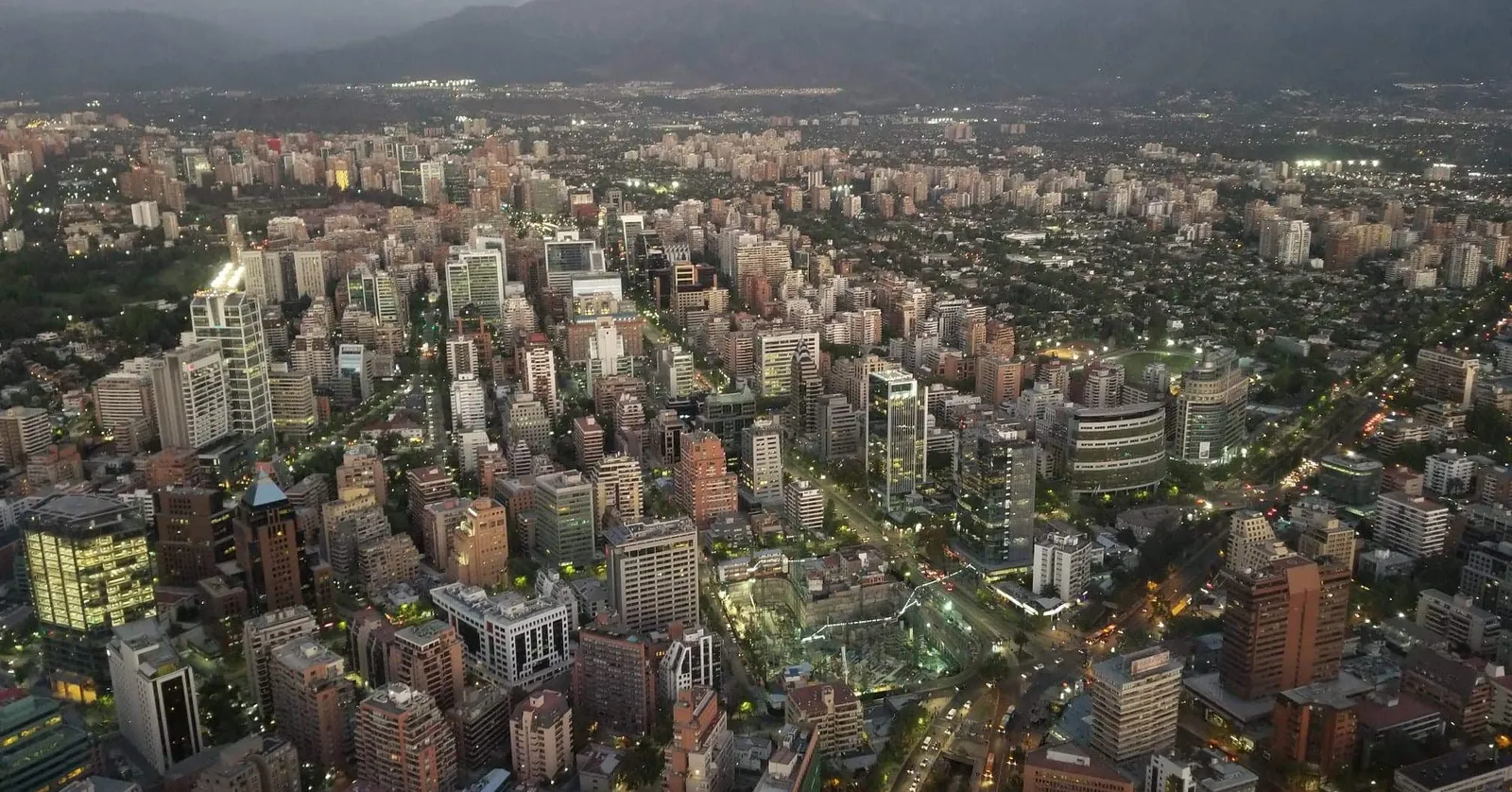
Santiago’s Tobalaba station sits directly under the Gran Torre Costanera, whose 61st and 62nd floors are an observation deck 300 metres up, with six retail levels at the tower’s base and a free riverside park from 1930 a few minutes north.
Sky Costanera looks out from the 61st and 62nd floors
César Pelli’s tower topped out at 300 metres in February 2012 and was finished the year after, which put it more than a hundred metres clear of anything else in Chile and made it the tallest building in South America. The deck opened to the public on 11 August 2015 and occupies two levels: a glazed 61st floor and an open terrace above it on the 62nd, both running the full way round.
What the height buys you is the one view of Santiago that shows the shape of the place: a flat grid filling a bowl, San Cristóbal sticking up out of the middle of it, and the Andes closing the eastern side. It opens 10am to 10pm daily, the last lift up goes at nine, and pricing moves with the date rather than sitting at one figure, so check the rate for your day rather than a number you read somewhere.
Costanera Center stacks six retail floors under the tower
The complex is four towers and a shopping centre on one site, and the mall part runs six levels of escalators around a full-height atrium directly above the metro interchange.
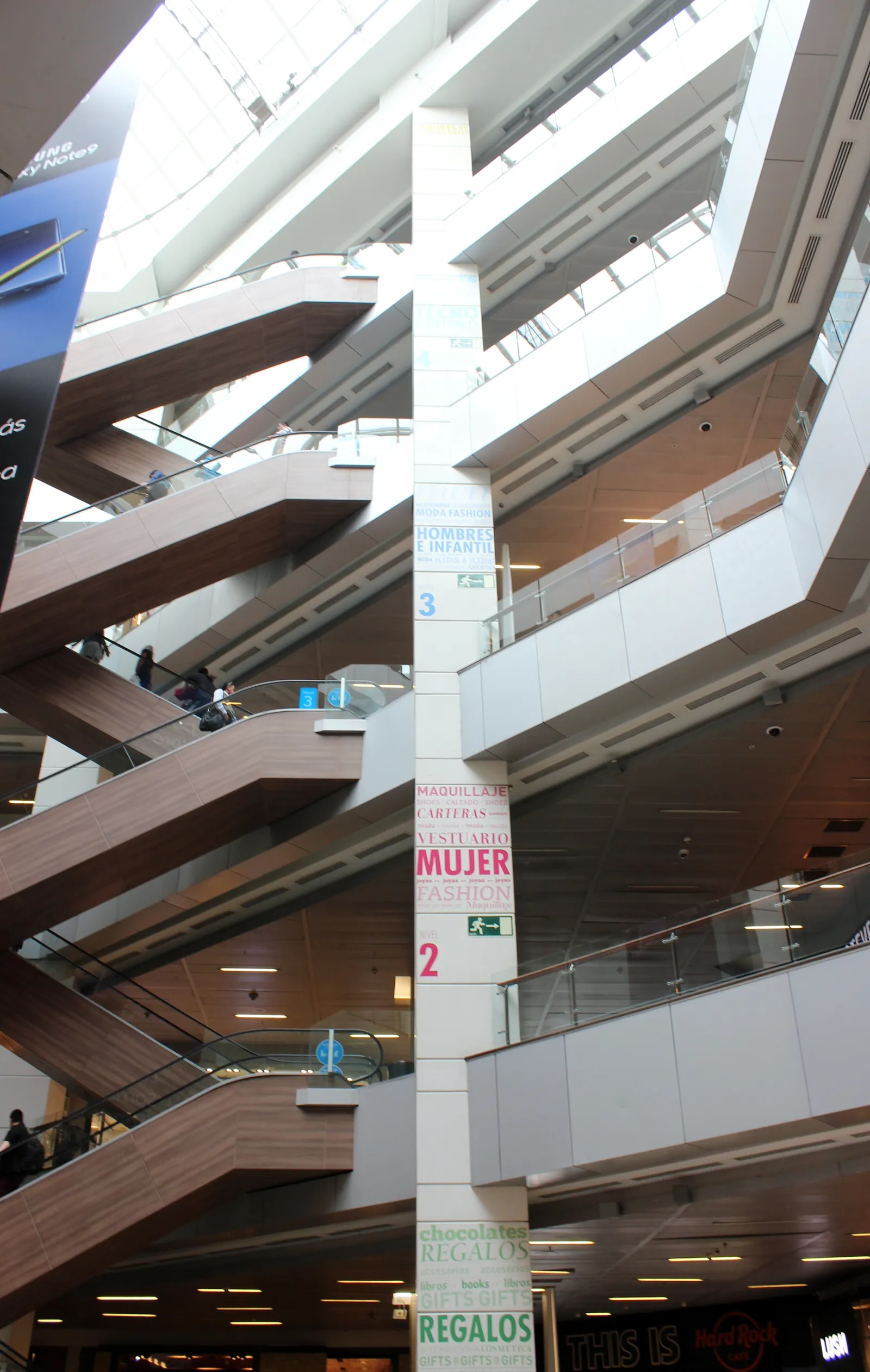
It is a shopping centre and makes no claim to be anything else, but for a layover it does two useful things: it is the fastest reliable lunch within a block of the tower, and it is indoors, which matters on a 33°C afternoon or during the winter rain that shuts Santiago’s hill parks. The food floor is at the top rather than the bottom, which is worth knowing before you start walking up.
Nothing on this part of the itinerary is reached on foot at street level: the deck is a lift, the mall is six floors of escalators, and the interchange between the two metro lines below is stairs. None of the three has anywhere to set a bag down while you queue.
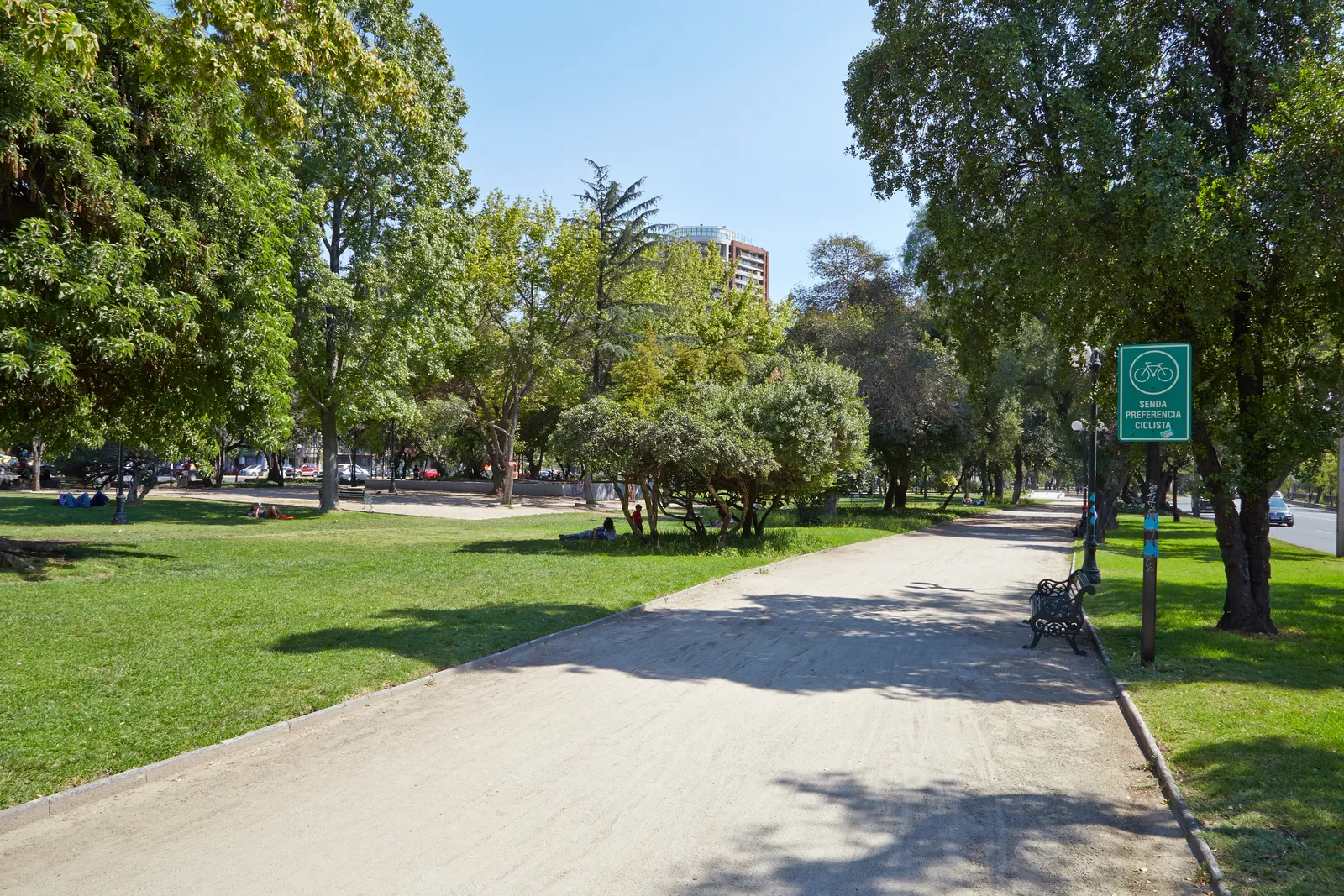
Parque Balmaceda has been public ground since 1930
Providencia laid this strip out along the Mapocho as Parque Providencia in 1930, and renamed it Parque Gran Bretaña in 1943 when Chile came into the war on the Allied side. Five point nine hectares of lawn, mature trees and gravel paths run along the river, with the Bicentennial Fountain at one end.
Set into the middle of it is the Café Literario, a low concrete-and-glass pavilion the borough runs as a free public reading room with a café attached, open shelves and tables and no obligation to buy anything.
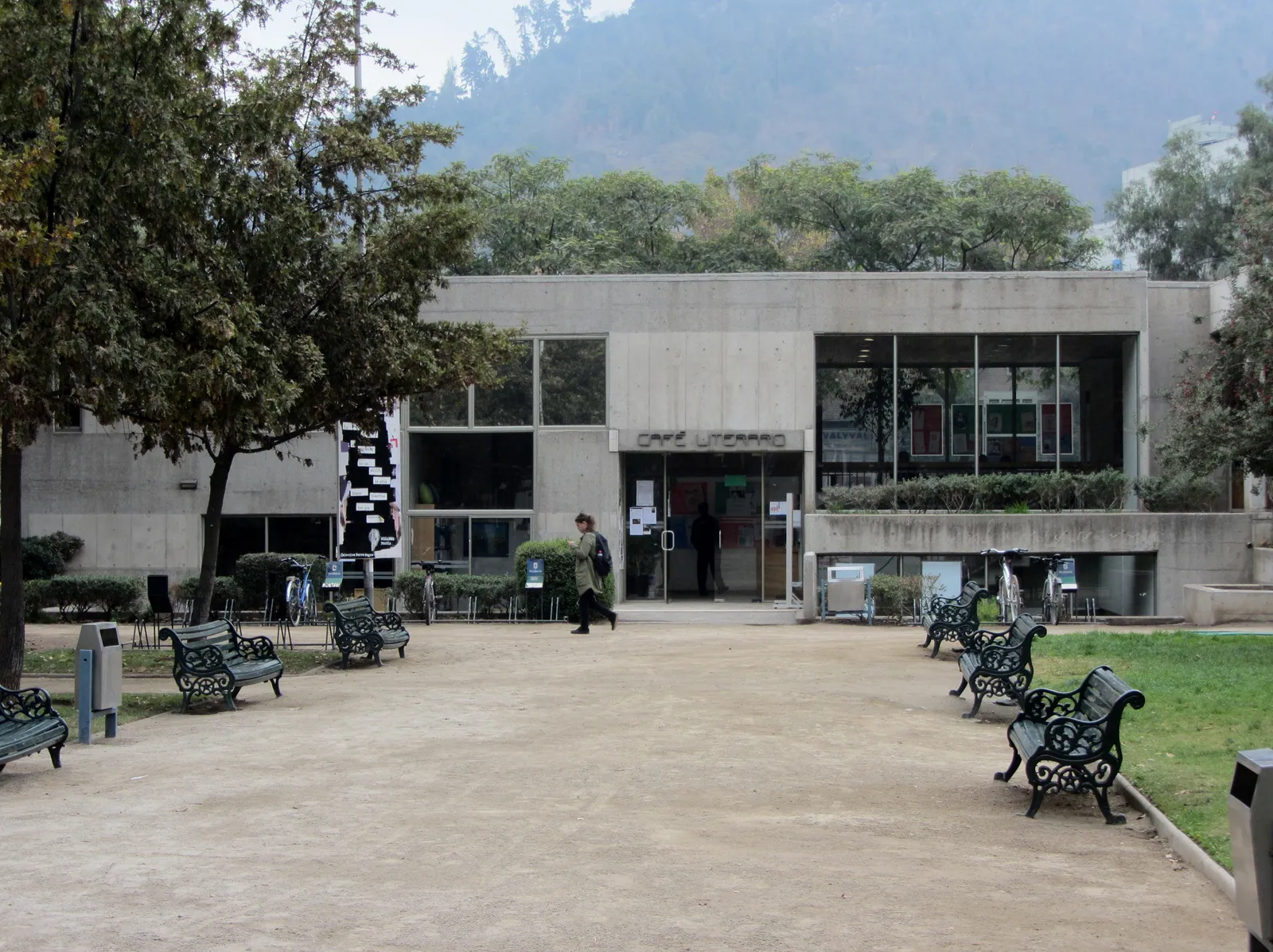
That combination, a park bench, a roof, a chair and no ticket, is what makes this the right end of the itinerary rather than the start, and it is the only stretch here that happens at street level.
Two metro lines cross under Tobalaba, but no airport bus does
Centropuerto leaves from Avenida España by República station for 2,400 pesos and Turbus from Terminal Alameda at Estación Central for 1,900, both of them a straight run west on Line 1 from here, about twenty minutes plus waiting at a metro fare of 735 to 895 pesos depending on the hour. Add roughly forty minutes for the bus out to Arturo Merino Benítez International Airport, and more if you are travelling through the six-to-eight evening peak, when the platforms here fill.
Providencia is a different city from the one the main Santiago layover guide walks through: no colonial squares, no iron market hall, nothing older than the 1930s. Take this route if you would rather look at Santiago from above than walk around inside it, or if the weather has made the old centre a bad idea.
Frequently asked questions
What should I do during a layover near Tobalaba Metro Station in Santiago?
Go up Sky Costanera first, on the 61st and 62nd floors of the Gran Torre Costanera directly above the station. It runs 10am to 10pm every day, the last lift up leaves at nine, and on a clear day it shows you the whole grid and the Andes behind it in one look. Costanera Center's six retail floors are underneath if you want lunch out of the weather. Parque Balmaceda, a few minutes north along the river, is the free half of this and has a public reading room in it. Three hours covers all three without hurrying.
What are Sky Costanera's hours and prices?
It opens every day of the year from 10am to 10pm, with the last lift going up at nine and the last one down at ten. Prices are not fixed: the operator varies them by date, so the rate you see for a Tuesday in June will not match a Saturday in January, and the current figure is worth checking on the day rather than assuming. The deck occupies two levels, an enclosed 61st floor and an open-air 62nd, and the whole visit runs about 45 minutes to an hour and a half.
Can you take a suitcase on the Santiago metro?
Yes. Suitcases, backpacks, travel bags and small shopping trolleys are all permitted; what is banned is bulky cargo equipment, the large commercial handcarts and supermarket-style trolleys that block doorways and damage the barriers. The practical limit at the gate is whether the thing passes under the turnstile with you, so a checked-size case is fine and an oversized box is not. Rush hour is the real constraint rather than the rule, since Tobalaba is where two lines meet and the platforms fill from six in the evening.
Is Sky Costanera better in daylight or after dark?
Daylight if you came for the mountains, after dark if you came for the city. The Andes wall east of Santiago is the thing that makes this view different from any other observation deck, and it disappears entirely once the sun goes, and it can also be hidden by haze on a still summer day or by the winter smog that sits in this valley between June and August. The last lift up at nine means an evening visit is possible year-round; a clear morning after rain is the best version of it.