Santiago Layover Near Baquedano Station
Part of the full Santiago Layover: San Cristóbal Hill From SCL
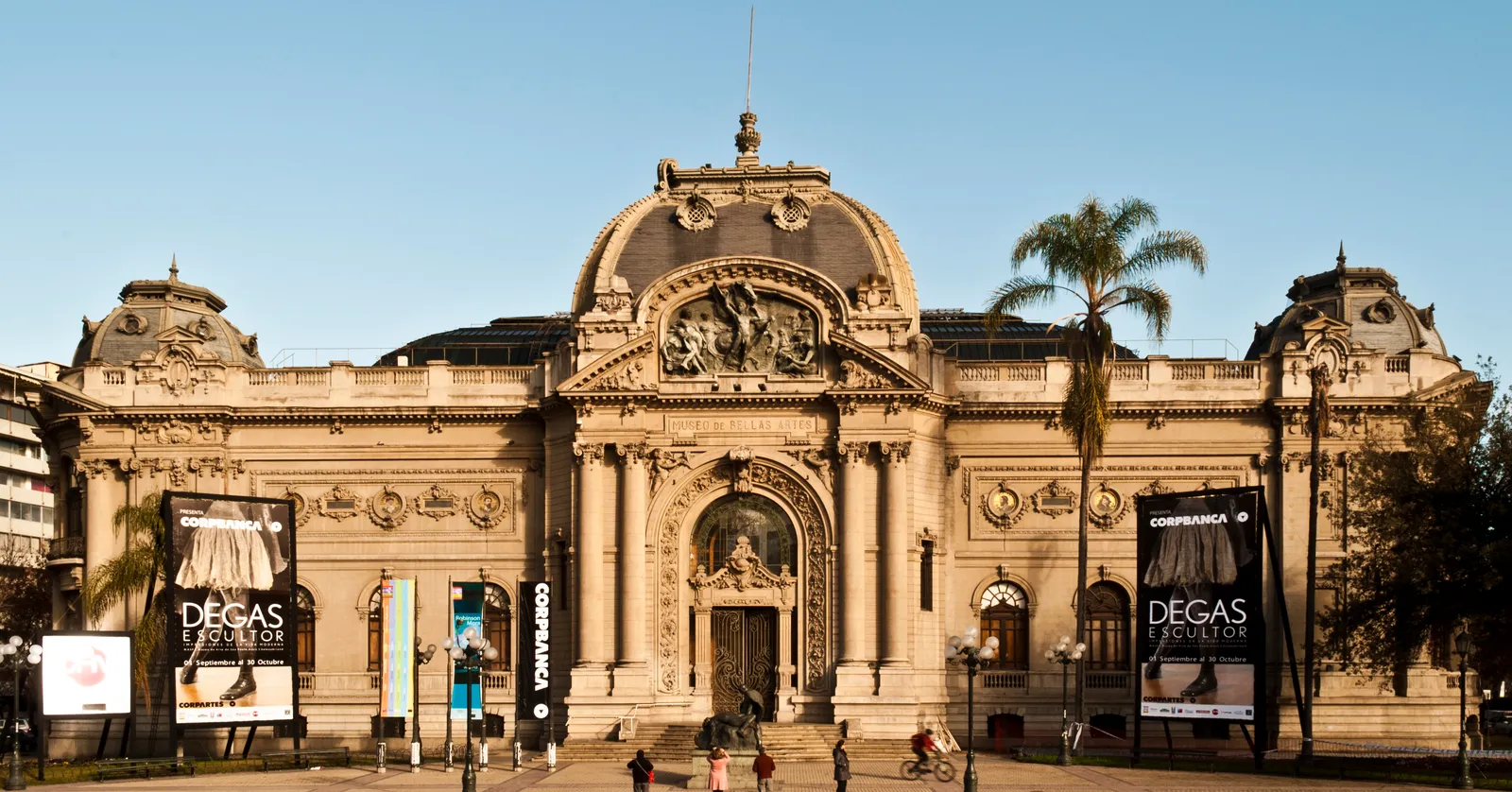
Chile’s national fine arts museum is free to walk into, and it, the tree cover of Parque Forestal and Lastarria’s cobbled blocks all sit within ten minutes of Santiago’s Baquedano station, which makes this the flattest and shadiest few hours in the centre.
Chile’s national fine arts museum lets everyone in free
Émile Jéquier designed the Palacio de Bellas Artes for the country’s independence centenary and it opened in 1910, its front lifted fairly openly from the Petit Palais in Paris and its central hall roofed in a glass dome that does most of the lighting. General admission has no charge and no booking, Tuesday to Sunday, 10am to 6.30pm with last entry ten minutes before the end, and it closes on Mondays like most of the city’s museums.
Chilean painting from the colonial period forward is the backbone of the collection, and the temporary shows in the side galleries change often enough that two visits a year apart are different visits. If the exhibitions do not appeal, the staircase and the domed hall are still worth the ten minutes.
Parque Forestal sits on ground reclaimed from the Mapocho
Canalising the Mapocho in 1891 left a strip of usable land along its south bank, and from 1900 the landscape architect Jorge Dubois turned it into a park, a job that took until 1920 to finish. Seventeen hectares run between the river and Merced, and the planting is a deliberate mix: plane trees, silk floss and magnolias brought in, peumo, palms and monkey puzzles native, about 6,500 trees in total.
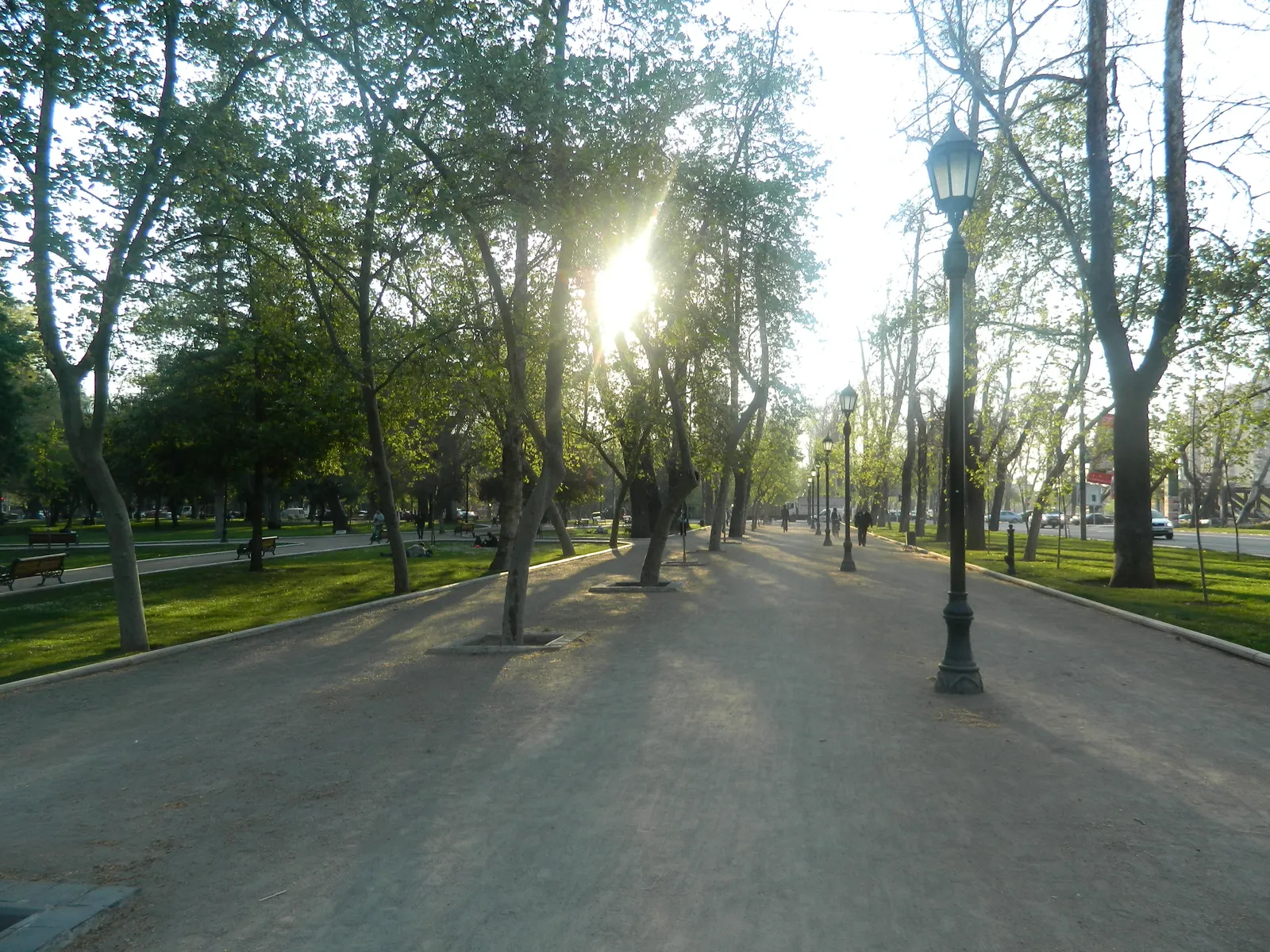
The result is the one stretch of central Santiago where you can walk twenty minutes in continuous shade, which matters more than it sounds in a city that spends January and February near 30°C. Benches, dog walkers, a run of cast-iron lamp posts, no ticket at either end.
The art museum on Lastarria’s small plaza opens free on Sundays
MAVI UC sits at José Victorino Lastarria 307, off a brick courtyard called Plaza Mulato Gil de Castro that you would walk past without noticing. Entry runs to a few dollars Tuesday to Saturday and costs nothing on Sundays; opening is 10am to 6pm on weekdays, 11am to 7pm at weekends, closed Mondays.
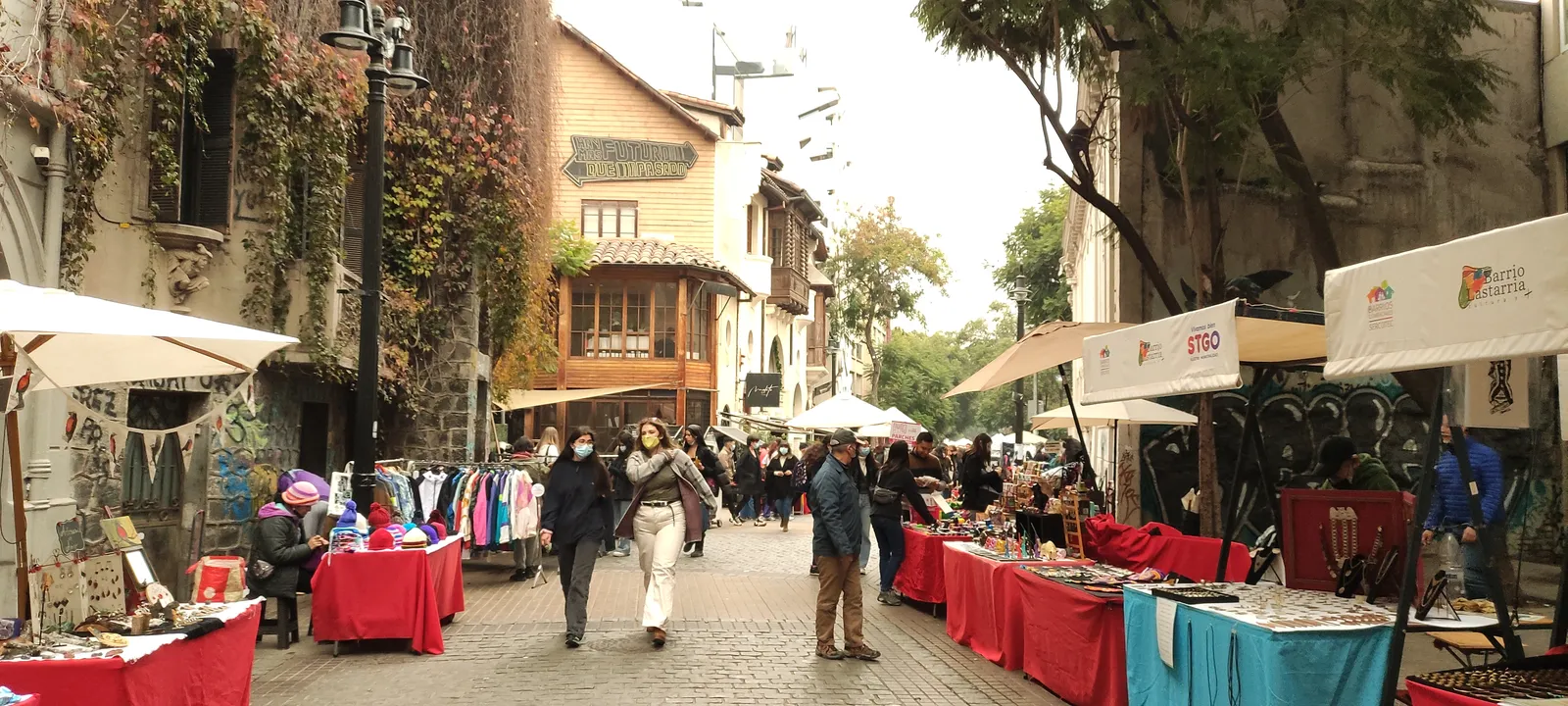
The street outside is the reason most people are here: cobbles, ivy on stone, bookshops, a cinema, restaurants with tables out, and craft stalls set up along the pavement on the busier days. It is a small area, four or five blocks, and it rewards an unhurried hour rather than a checklist.
General Baquedano’s statue went back up in March 2026
The square that gives this station its name is where Chile’s demonstrations happen, and for five years the most photographed thing on it was an empty pedestal. The army lifted the three-tonne bronze of General Manuel Baquedano off it on 12 March 2021, after months of fires and paint, and sent it to the military history museum to be repaired.
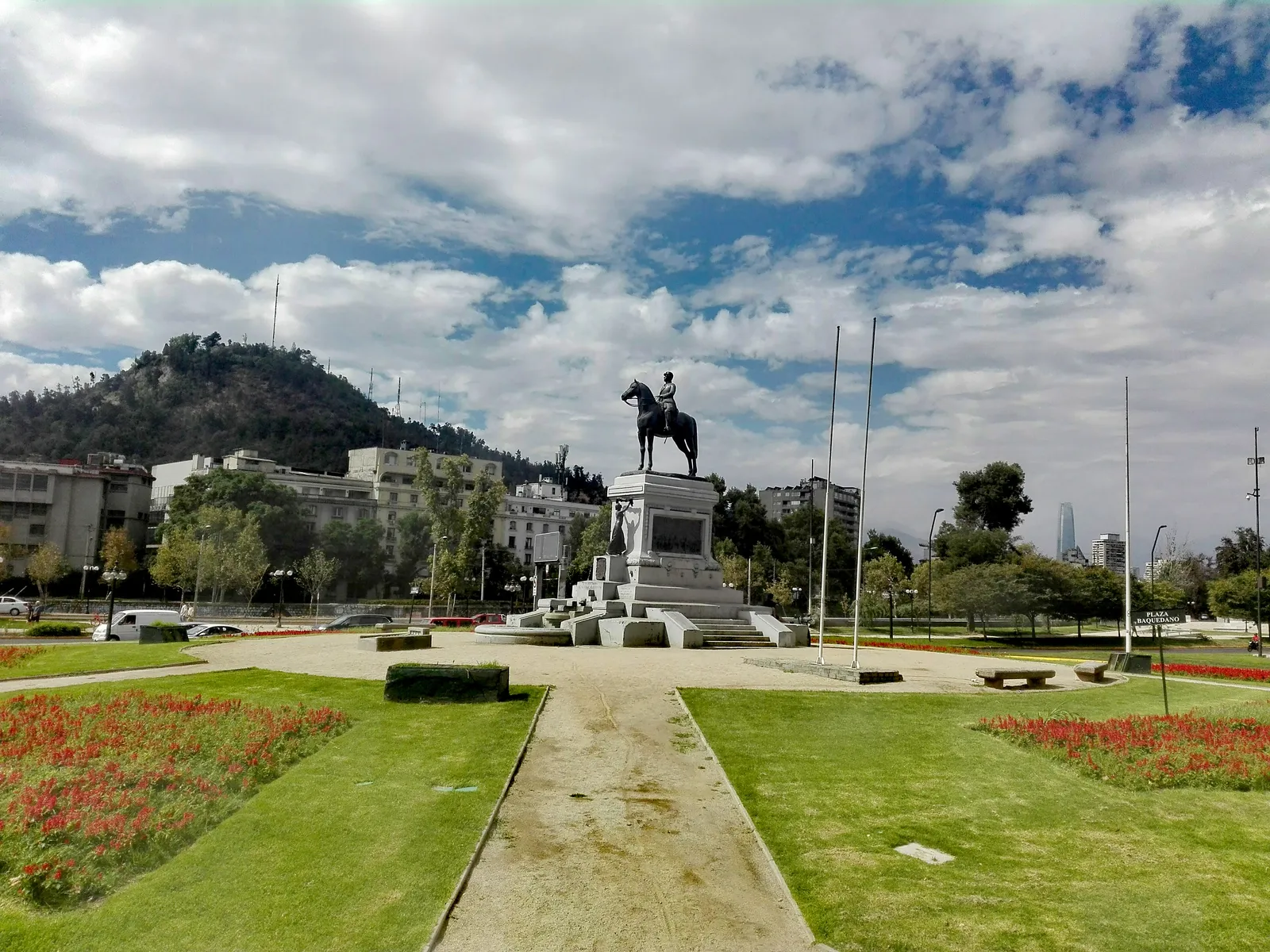
It came back in March 2026, craned into position overnight, as part of a remodelling of the square under the Alameda-Providencia renewal works. Anything written before that date describes a plaza that no longer exists. The plaza is open ground with next to no shade over it, and afternoons here in high summer sit near 30°C, so the crossing is one to make with your hands empty rather than a bag on your shoulder.
No airport bus stops at Plaza Baquedano
Centropuerto runs from Avenida España by República station for 2,400 pesos and Turbus from Terminal Alameda at Estación Central for 1,900, both of them six or seven stops west on Line 1 from Baquedano, which is about fifteen minutes plus the wait, at a metro fare between 735 and 895 pesos depending on the hour. Allow forty minutes for the bus ride itself outside the evening peak.
Everything on this walk is flat, shaded and mostly free, which is a different proposition from the main Santiago layover route and its two hills. Take that one if you want the view over the city; take this one if the weather is difficult, the time is tight, or you would rather not climb anything before a long flight.
Frequently asked questions
What should I do during a layover near Baquedano Metro Station in Santiago?
Start at the Museo Nacional de Bellas Artes, five minutes west through Parque Forestal, because it is free, it is open Tuesday to Sunday until half past six, and the 1910 building is worth the walk on its own. The park it stands in is the other half of the same visit: seventeen hectares of planting on ground the river gave up when it was canalised, and the shadiest walking anywhere near the centre. Lastarria's cobbled blocks south of the park fill an hour with bookshops, cafes and a small art museum that opens free on Sundays. Three hours is plenty; the museum is the piece to drop on a Monday, when it is shut.
Is the Museo Nacional de Bellas Artes free?
Yes, general admission costs nothing, and there is no timed ticket or reservation to arrange in advance. It opens Tuesday to Sunday from 10am to 6.30pm, with the last visitors admitted at 6.20, and closes on Mondays. The building itself was designed by Émile Jéquier for Chile's independence centenary and inaugurated in 1910, its front modelled on the Petit Palais in Paris and its central hall roofed in glass, so even a twenty-minute walk-through gets you something.
Is the Baquedano statue back on its plinth?
It is. The three-tonne equestrian bronze of General Manuel Baquedano was lifted off the pedestal by the army on 12 March 2021 after repeated damage during the protests centred on this square, and spent nearly five years being restored at the military history museum. It was craned back into place overnight in March 2026, as part of a wider remodelling of the plaza under the Alameda-Providencia renewal scheme. The pedestal that stood empty in every photograph taken between those two dates is occupied again.
Where is the shadiest walk near Baquedano when it is hot?
Parque Forestal. Jorge Dubois's planting from 1900 onward left about 6,500 trees along the strip between the Mapocho and Merced, mixing imported plane trees, silk floss and magnolias with native peumo, palm and monkey puzzle, and the main avenues run under continuous canopy. Santiago's January and February afternoons sit around 30°C with hard sun, and this is the one route here that does not spend most of its length on open pavement.