Geneva Layover: Jet d'Eau and Old Town, GVA
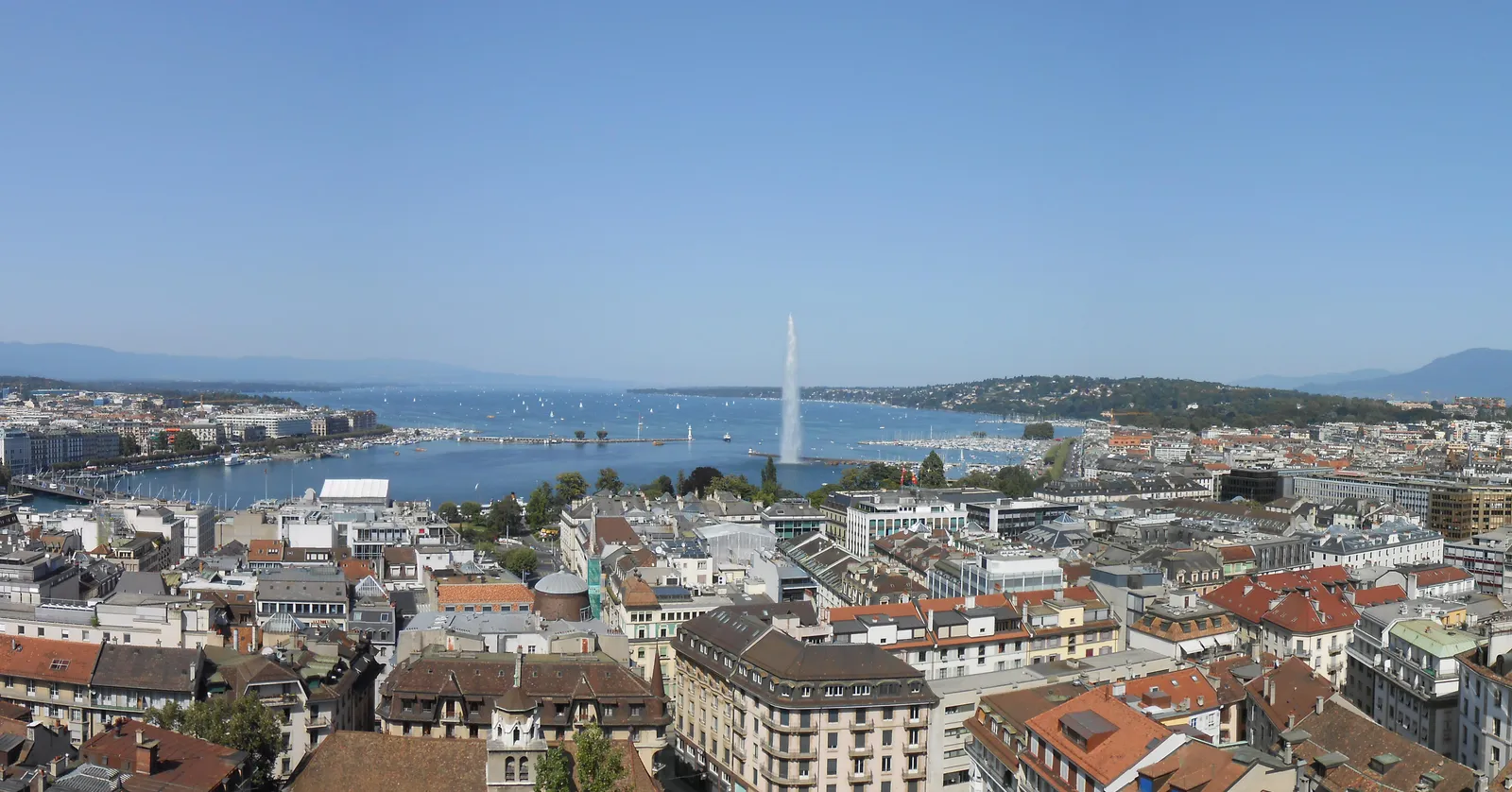
Geneva’s lakefront and its Old Town sit about fifteen minutes apart on foot, close enough to cover the Jet d’Eau, St-Pierre Cathedral and the Reformation Wall in a single afternoon without needing transit between them.
The Jet d’Eau, a 140-metre fountain out in the harbour
The Jet d’Eau stands on a stone jetty in the middle of Geneva’s harbour, off the Eaux-Vives quay, and two pumps drive five hundred litres of water a second through a ten-centimetre nozzle at 200 km/h. Around seven tonnes of it hang in the air at any moment, which is why the plume drifts sideways and soaks the end of the jetty whenever the wind turns. Walking out along the jetty is free and takes a couple of minutes from the Quai Gustave-Ador.
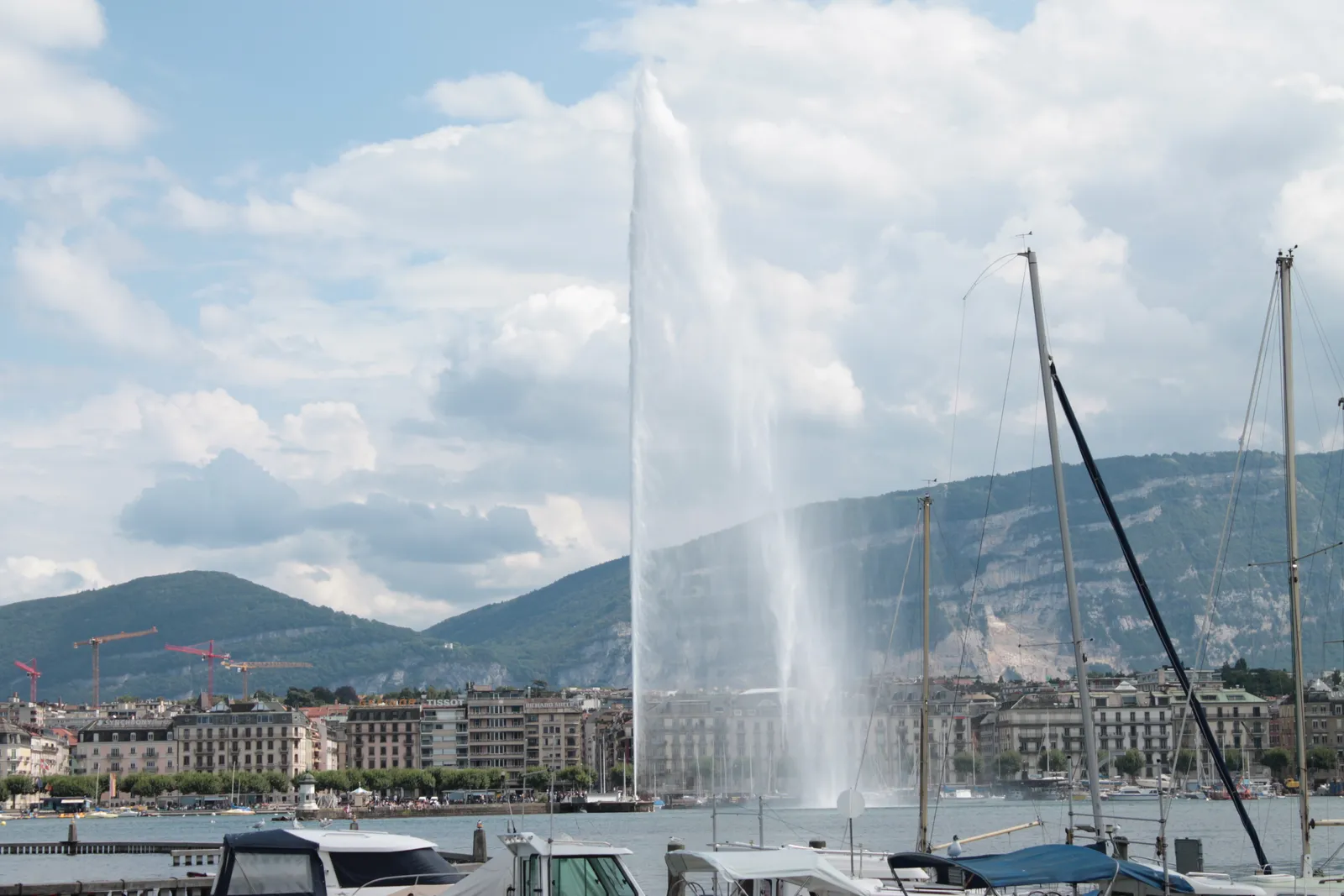
It has run through the day all year since 2003, though it is switched off in frost or particularly strong wind, so a cold, still morning is a better bet than a blustery one. The boats working the harbour give you the other view of it, from the water looking back at the city, and a short lake circuit is the one thing here worth holding a seat on in advance: a fifty-minute round trip leaves from the quays and can be booked through a tours and activities platform before you land. The jetty is a narrow strip of stone with a permanently wet far end and nowhere to set anything down along it.
St-Pierre Cathedral, stripped to bare stone at the Reformation
Geneva’s cathedral sits at the highest point of the Old Town, behind a six-columned portico that was bolted onto a Gothic building in the 1750s and looks like it belongs on a different church entirely. The inside explains the mismatch: the images, altars and decoration were stripped out in 1535 when the city went over to the Reformation, and nothing was put back, so the nave is vast, grey and almost empty. Calvin preached here, and the wooden chair shown as his is one of the few objects in the building.
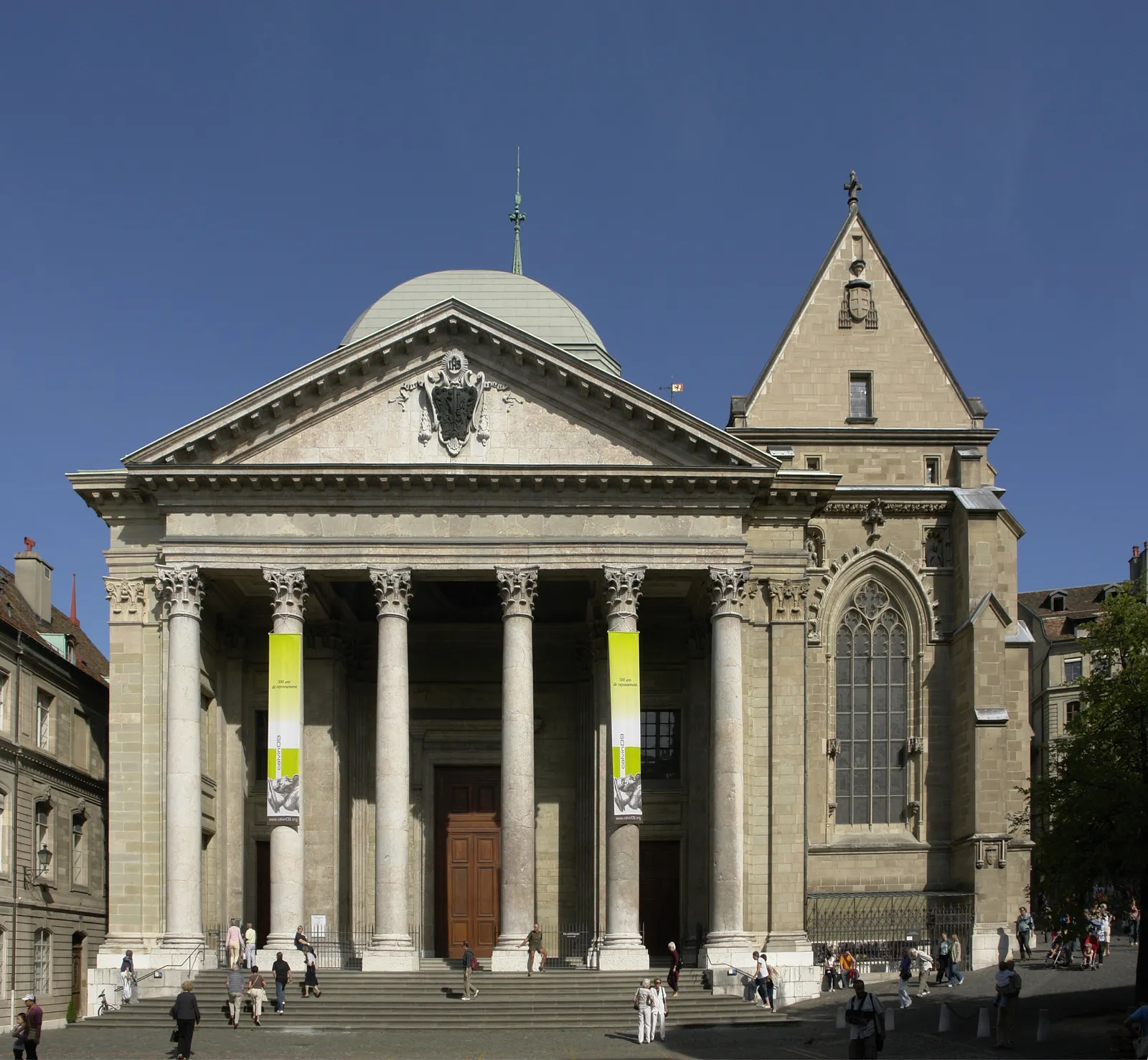
The nave is free. Two things beside it are not: the north tower, CHF 5 for 157 steps of spiral stair up to a view over the rooftops to the lake and the Alps, and the excavation under the floor, CHF 8, which runs back through a Roman sanctuary and a fourth-century baptistery. Both shut in the late afternoon, at 5pm from October to the end of May and 6pm through the summer, which is the constraint that decides the order of an afternoon here.
The bench on the Promenade de la Treille, built in 1767
A terrace runs along the old rampart wall just below Geneva’s town hall, and the wooden bench built into it is 120 metres long, made up of 180 boards, and has been there since 1767. Chestnut trees shade the whole length of it, the Jura ridge fills the view west on a clear day, and the city bills it as the longest wooden bench in the world. It is a two-minute walk from the cathedral and costs nothing.
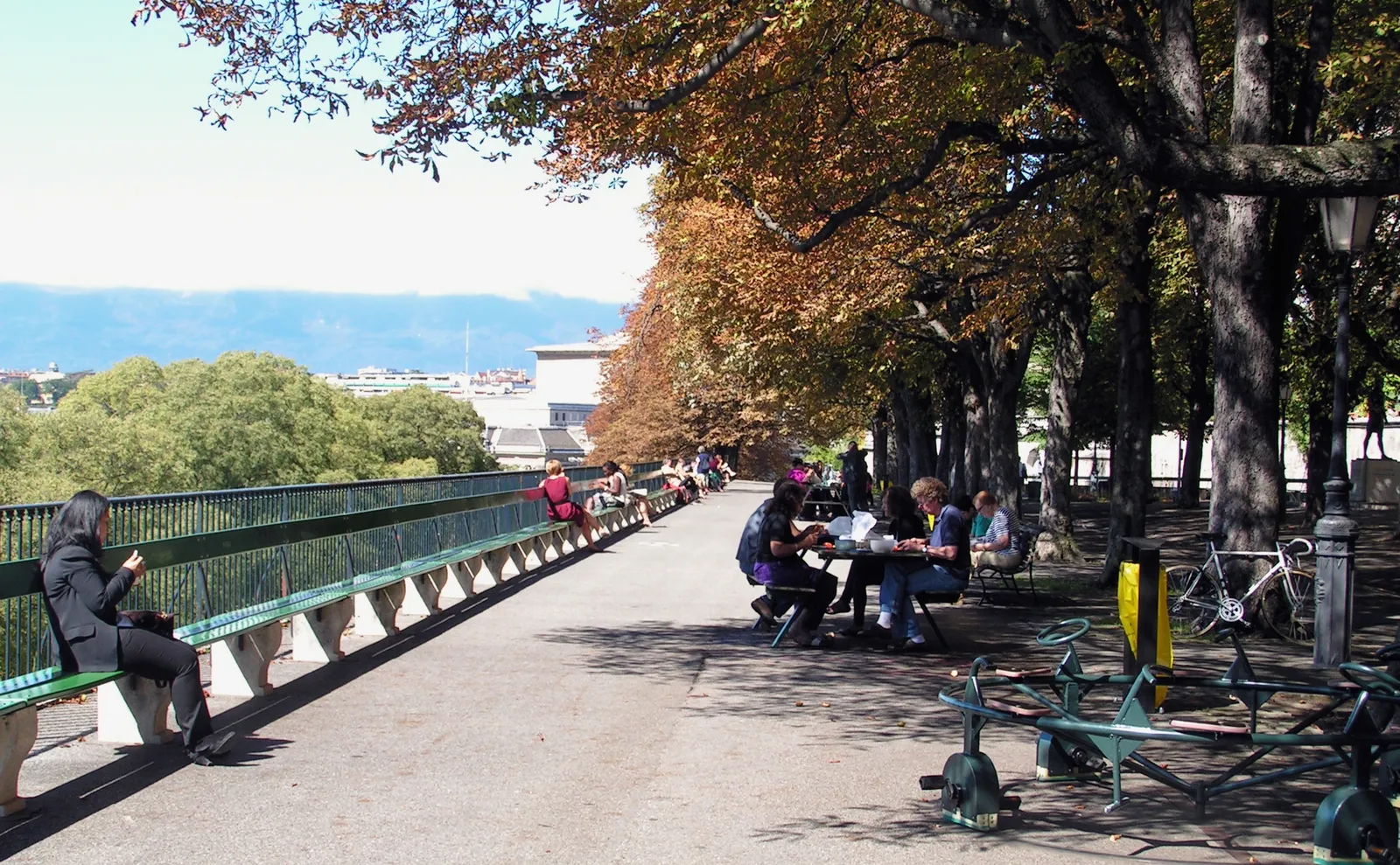
One of the chestnuts on this terrace is the official one. Since 1818 a cantonal official called the sautier has watched a designated tree here and recorded the date its first leaf unfolds, writing each year onto the same parchment, and that date is the canton’s formal declaration that spring has arrived. The run of observations is the oldest continuous record of its kind in Switzerland. There is no plaque event to catch and nothing to pay for; it is simply the tree that decides when the season turns, standing in a row of others that do not.
Calvin, Farel, Bèze and Knox on the Reformation Wall
Parc des Bastions lies immediately below the Treille terrace, and the far side of it is taken up by a hundred-metre limestone wall carved between 1909 and 1917. Four reformers stand five metres tall at the centre of it, Guillaume Farel, Jean Calvin, Théodore de Bèze and John Knox, with reliefs and inscriptions from the Reformation running out to either side. The park has no gate and no ticket, and the wall is lit at night.
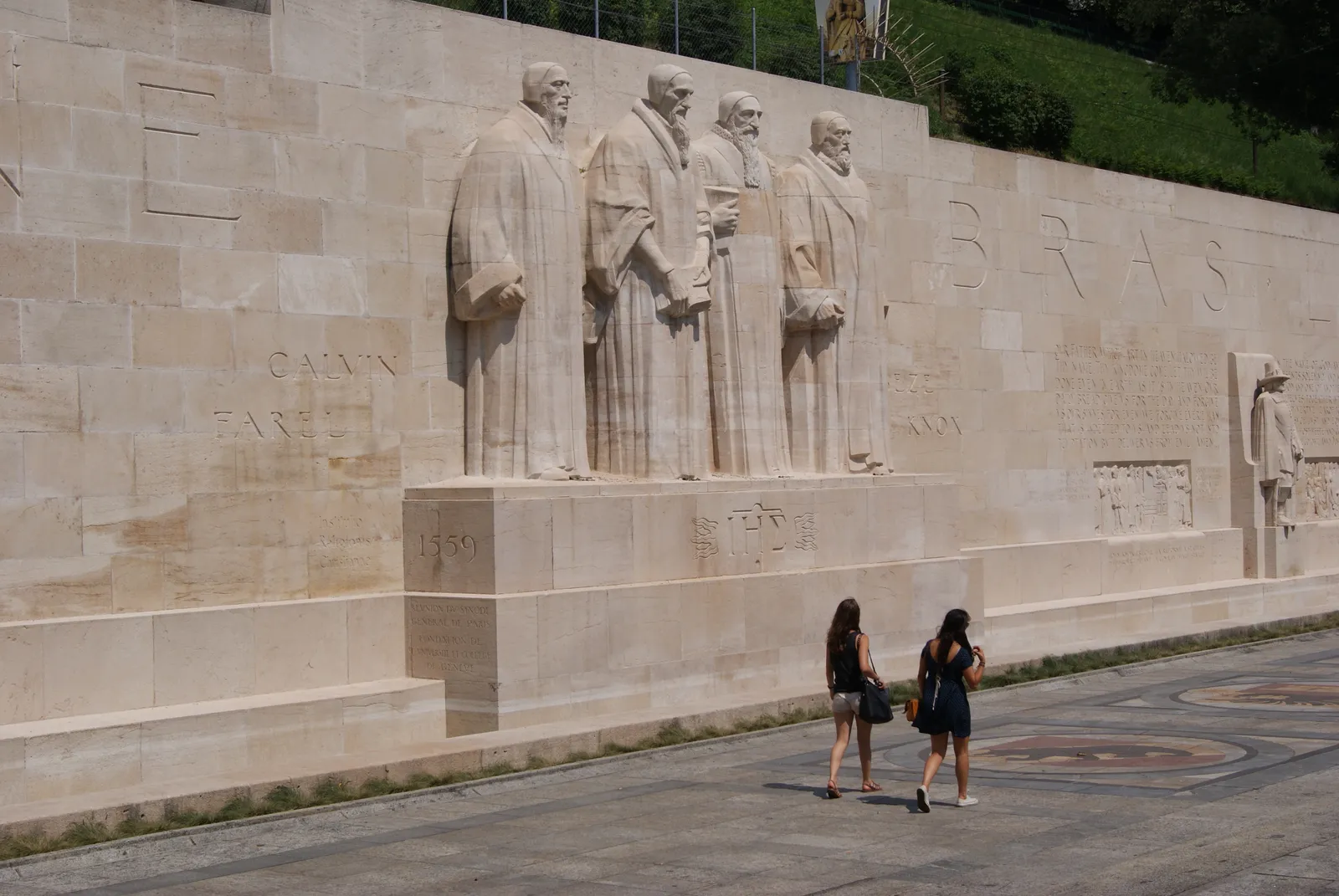
The rest of the park is where Geneva actually spends its afternoons. Oversized chess boards are painted into the ground near the Place Neuve entrance with waist-high pieces beside them, generally in use, and the university’s main building runs along one flank. It is flat, gravelled and shaded, and it is the easiest place on this route to sit down for twenty minutes.
Bains des Pâquis, where Geneva swims off a concrete pier
A concrete jetty reaches out into the lake from the Pâquis quay on the right bank, with a small stone lighthouse at the far end and water access down both sides. Entry is CHF 2 for adults and CHF 1 for children under sixteen, which buys the pier, the swimming and the view straight back down the lake at the Jet d’Eau. It is a working city amenity rather than a resort: people come here before work, and it stays open in winter.
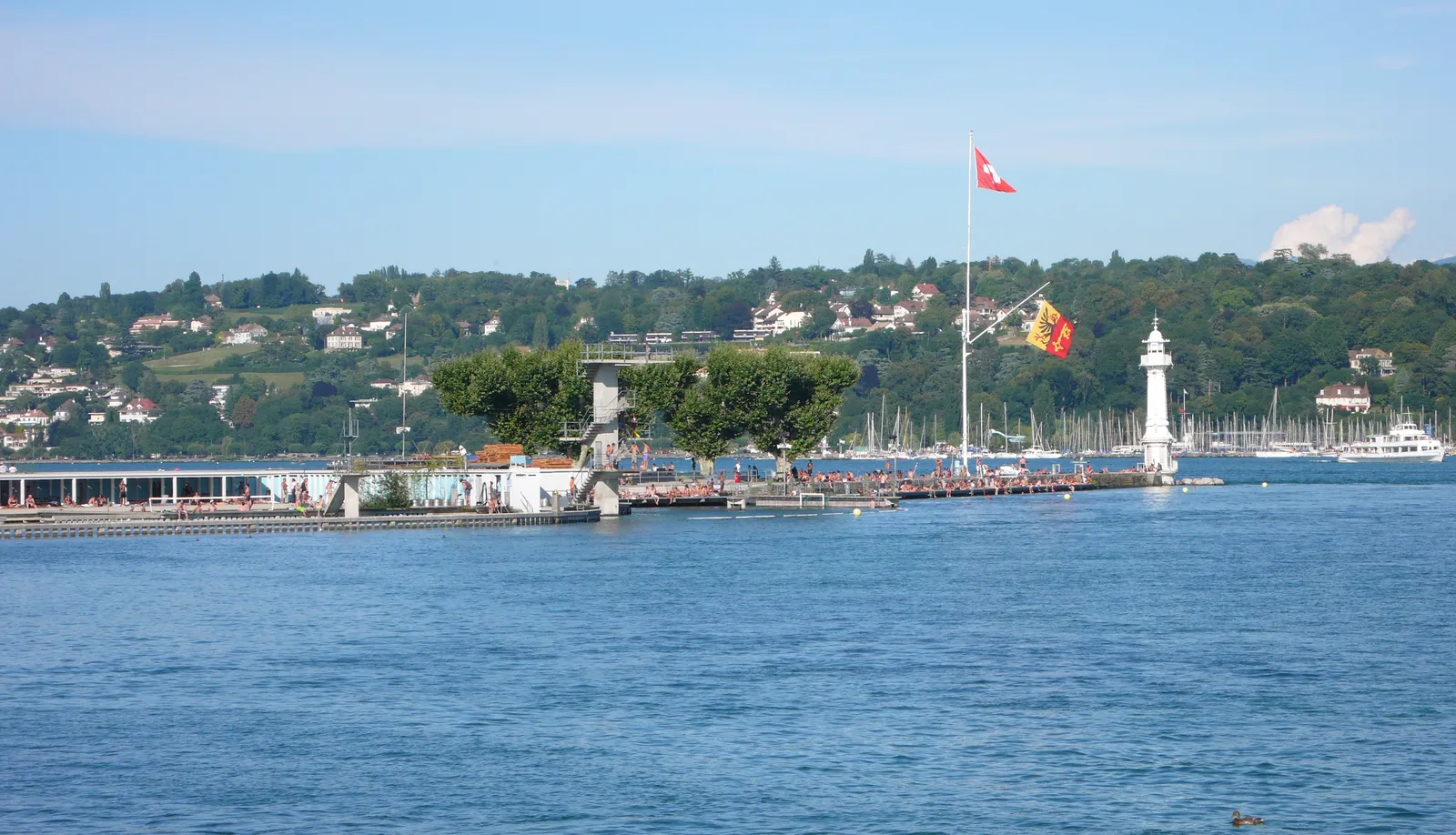
The building behind the pier holds a sauna and a hammam on a separate ticket, and that side runs a September to May season, so it is open precisely when swimming outdoors is least appealing. In high summer the hammam keeps mornings only. If your gap runs past five hours this is the addition worth making, because it is eight or nine minutes’ walk from the main station and needs no planning beyond turning up.
Trains to the airport leave up to seven times an hour
Genève-Aéroport station is built under the terminal, and SBB services run from it through to Genève-Cornavin, the city’s main station, in seven minutes with no change. Departures reach seven an hour at the busiest times and thin out early and late. A unireso zone 10 single covers the trip for CHF 3, and machines sell it at the station and at the airport bus stops. Door to door is closer to twenty minutes once the walk down from arrivals and the wait for the next train are counted in, which is the figure worth budgeting rather than the seven.
Working back from a departure, ninety minutes from the Old Town is comfortable: fifteen to twenty minutes downhill to Cornavin, time to collect your bag, the ride out, and check-in at the far end. Cornavin is also a through station rather than a terminus, so if you are continuing by rail instead of flying, direct trains run the length of the country to Zurich in under three hours.
Geneva is a small enough city that the harbour, the cathedral and Parc des Bastions can be done in one loop and still leave the afternoon intact. What the loop does not have is anywhere to put a suitcase down: the jetty, the cathedral nave, the terrace bench and the swimming pier are all places you pass through rather than sit with luggage, which is the argument for arriving at the first of them already empty-handed.
Frequently asked questions
What should I do during a layover in Geneva?
Start at the harbour, where the Jet d'Eau throws water 140 metres up off a stone jetty and costs nothing to watch, then walk up into the Old Town for St-Pierre Cathedral, free to enter and stripped to bare stone at the Reformation. The Promenade de la Treille and its 120-metre wooden bench sit a few minutes further on, and the Reformation Wall stands in the open park below them. Four or five hours covers all of it on foot without using transit in between. The cathedral tower and the excavations underneath both charge and both close in the late afternoon, so drop them first if the gap is tighter than that.
How long does it take to get from Geneva Airport into the city?
Seven minutes on the train. Genève-Aéroport station sits under the terminal and SBB services run through to Genève-Cornavin, the city's main station, up to seven times an hour at peak with no change on the way. A unireso zone 10 single is CHF 3. Allow closer to twenty minutes door to door once you add the walk down from arrivals and the wait for the next departure, and about ninety minutes in total working back from a flight if you are starting in the Old Town.
Is a Geneva layover worth doing in winter?
The walking half of it is unaffected, but two things shrink. The Jet d'Eau is shut off whenever there is frost or strong wind, so on a cold, clear morning it may simply not be running, and its winter hours are shorter than the summer ones. The cathedral tower closes at 5pm from October through May against 6pm in summer, which matters on a short afternoon. The Bains des Pâquis works the other way round: its sauna and hammam season runs from late September to late May, so winter is when that side of it is actually open.
Is the walk up to Geneva's Old Town step-free?
There is a step-free way up, but it is not the direct one. The lanes climbing straight from the lake to the cathedral include stepped passages and steep cobbled ramps, while the longer approach around by Rue de la Corraterie and Place Neuve into Parc des Bastions rises more gently on pavement. Inside the Old Town the streets are cobbled throughout. The cathedral nave is at street level, but the north tower is 157 steps of narrow spiral stair with no lift, and the excavations below are reached by stairs as well.