Zurich Layover: Old Town and Lake From ZRH
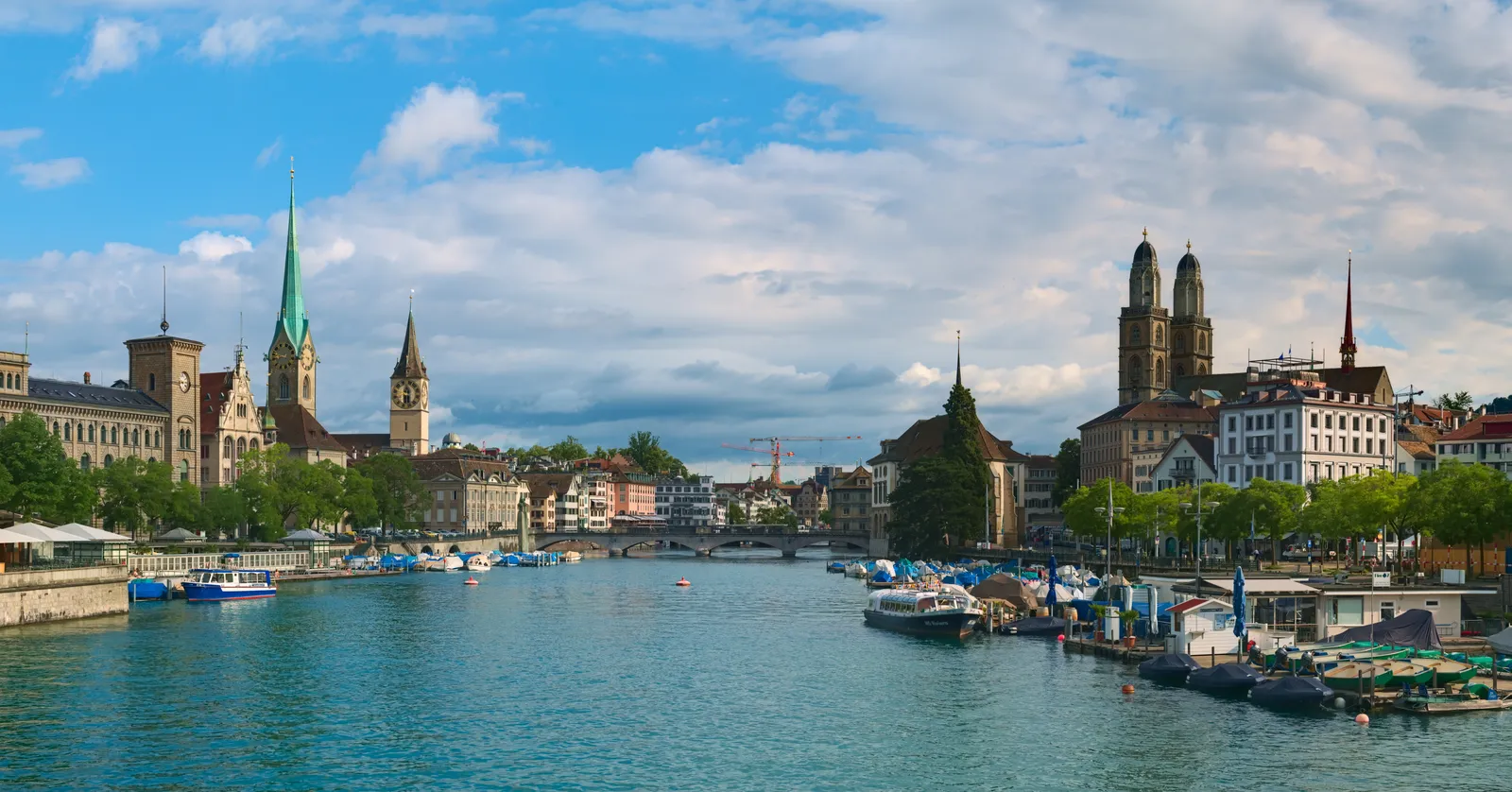
Zurich’s old town sits on both banks of the Limmat, ten minutes’ walk from the main train station: the Grossmünster’s twin towers on one side, the Fraumünster’s green spire and the Lindenhof terrace on the other, and the lake at the bottom of Bahnhofstrasse.
The Grossmünster, where the Swiss Reformation started
Huldrych Zwingli took the pulpit here in 1520, and by 1524 the congregation had pulled out the organ and the statuary and stopped the church music. The interior has been plain ever since, which is the point of walking in: a wide Romanesque nave, Augusto Giacometti’s 1932 stained glass at the east end, and Otto Münch’s bronze doors on the north and south portals.
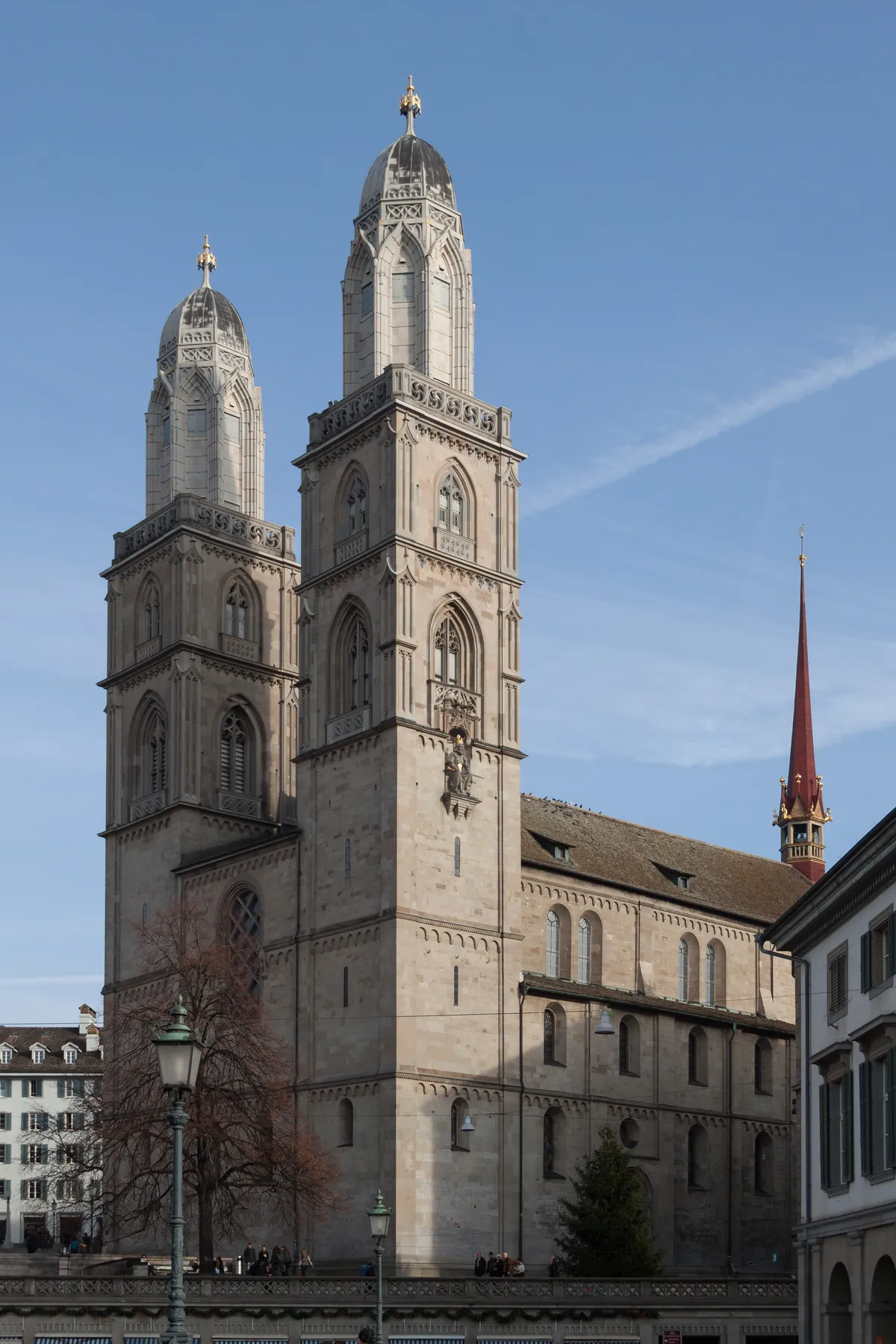
The church stands on the right bank of the Limmat, about ten minutes on foot from Zürich Hauptbahnhof, the city’s main train station. Entry costs nothing, including the crypt underneath, which is the oldest part of the building and holds 14th and 15th century frescoes. Hours are 10am to 6pm from 1 March to 31 October and 10am to 5pm from 1 November to the end of February. It closes on Tuesdays: the Zurich University of the Arts uses the organ for teaching that day, and the building shuts for it.
The Karlsturm, the south tower, is the paid part: CHF 5 for adults, CHF 2 for students, pensioners and children aged 6 to 16, and 187 steps up to six windows looking over the old town and down the lake. Since 3 August 2026 the tower has been open Friday to Sunday only and closed Monday to Thursday, so on a midweek layover the view is off the table even when the church below is open.
Lake boats leave from Bürkliplatz at the foot of Bahnhofstrasse
Bahnhofstrasse runs 1.4 kilometres from the station forecourt down to the water, largely pedestrianised, with trams down the middle and the flagship stores of the big watch and fashion houses on either side. Looking costs nothing, and the walk end to end takes about twenty minutes at a normal pace.
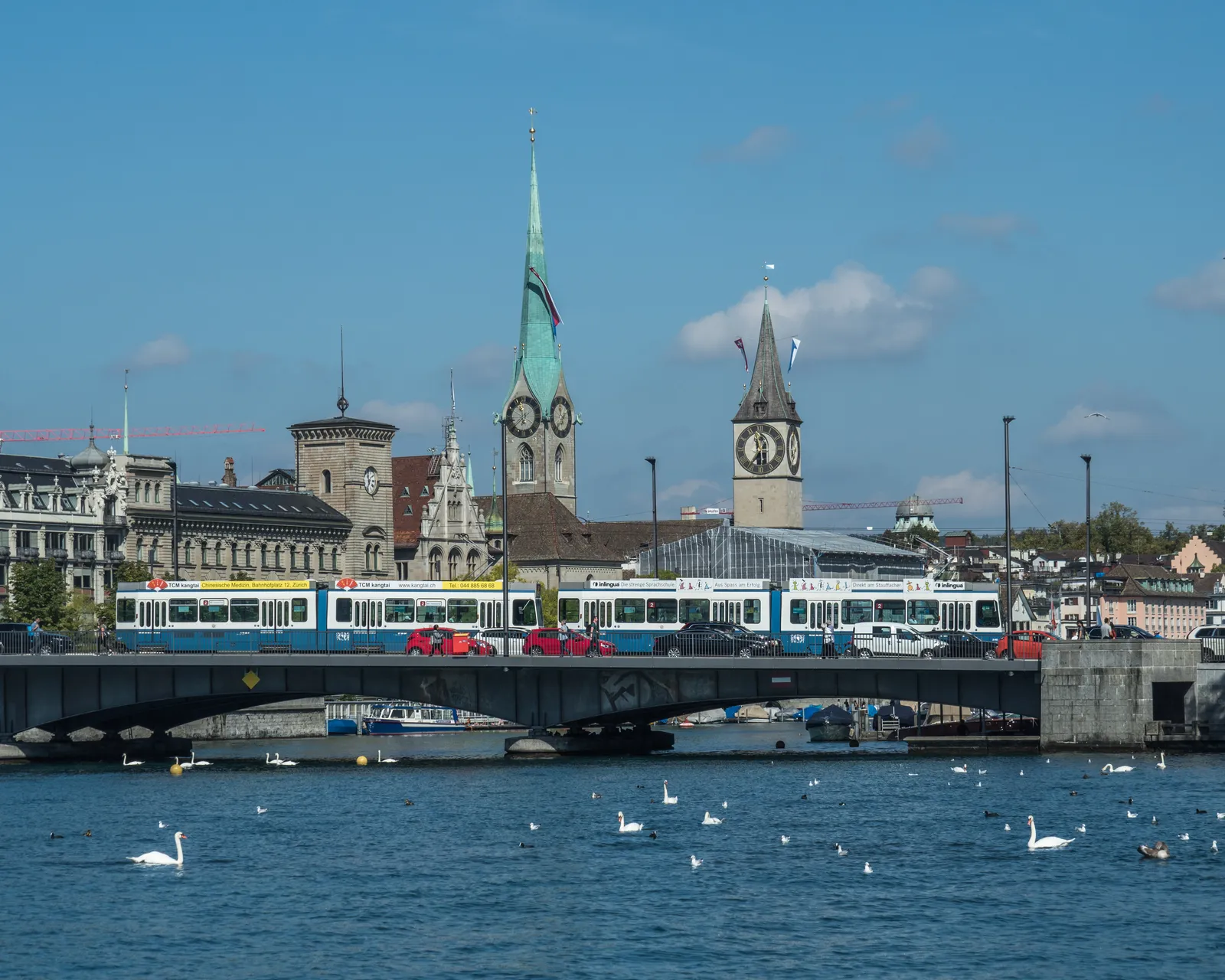
Bürkliplatz at the far end is where the lake steamers tie up. The short round trip is 90 minutes out to Thalwil and Erlenbach and back, CHF 9.40 for an adult in second class and CHF 4.70 for children aged 6 to 16 and half-fare holders; there is also a 60-minute mini circuit if that is too long a commitment before a flight. Service thins out considerably between autumn and spring, so a winter layover is worth checking against the timetable rather than turning up. Guided walks of the old town that finish with an hour on the water can be booked ahead if you would rather have the timing decided for you. On a clear day the Alps show up along the far end of the lake from the bridge here.
Both of the climbs on this route, the stepped lanes up to the Lindenhof from the river and the 187 steps inside the Grossmünster’s tower, are the kind a wheeled suitcase has to be carried up rather than rolled.
Marc Chagall’s five chancel windows in the Fraumünster
Chagall was in his eighties when he designed these, and they went into the Fraumünster’s chancel in the 1970s: five tall lancets plus a rosette, each one a single dominant colour, filling the east end of an otherwise sober stone church on the left bank of the Limmat. Photography inside is not allowed, which in practice means the room stays quiet.
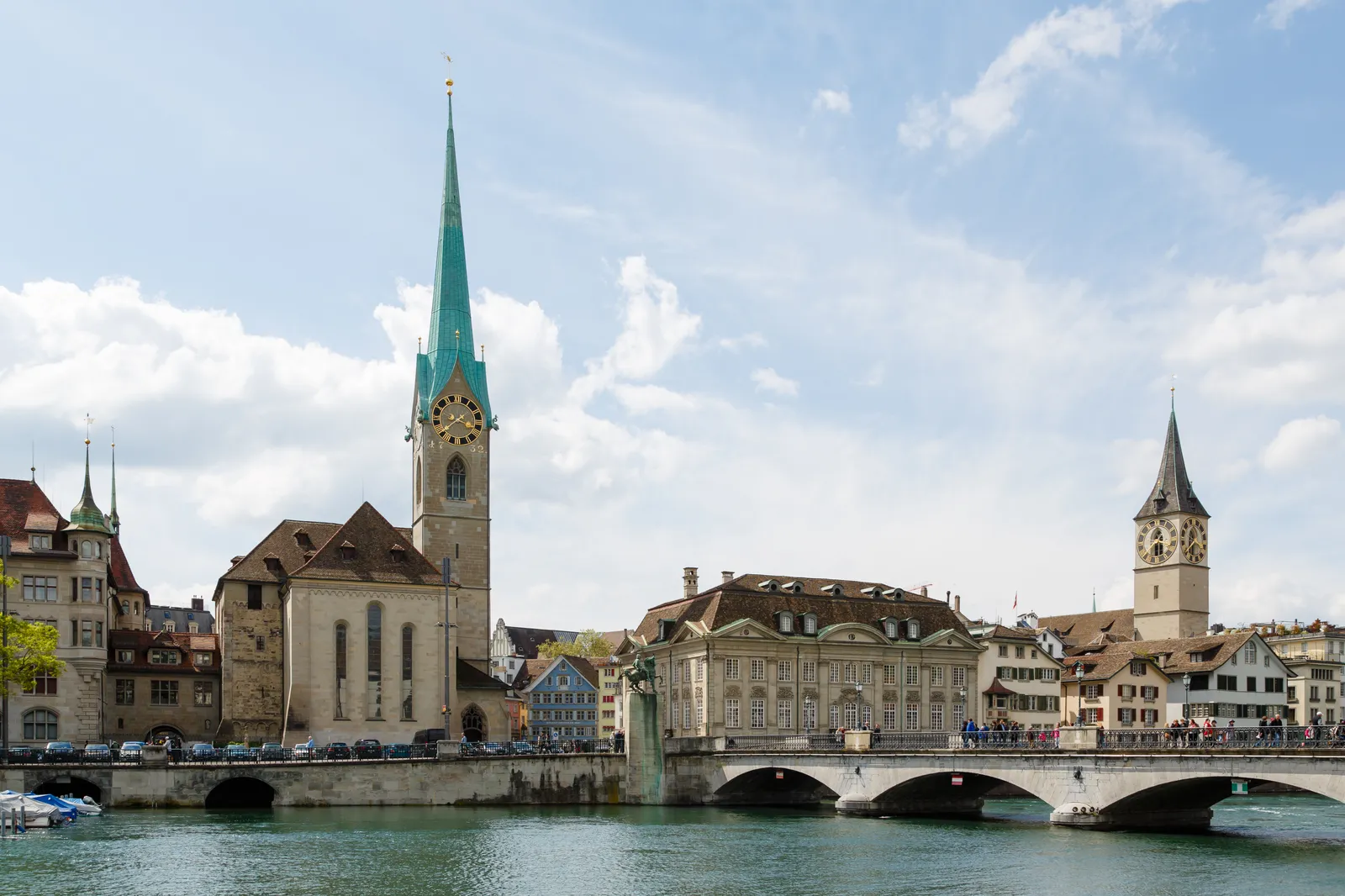
Adults pay CHF 5 and under-16s and students go free. The ticket covers the crypt museum and an audio guide, and it is sold at the door only, so there is nothing to book and nothing to print. Opening is 10am to 6pm Monday to Saturday from March to October, 10am to 5pm from November to February, and on Sundays after the service. Twenty minutes is enough unless you sit down with the audio guide.
The Lindenhof, a gravel terrace above the Limmat
A Roman customs station called Turicum stood on this hill above the left bank of the Limmat in the last decades of the 1st century BC, collecting duty on goods moving through. The fort that replaced it was rebuilt under the Carolingians and then quarried for stone by the 13th century, when Zurich’s richer citizens wanted houses that were not made of wood. What is left is flat open gravel under lime trees, with benches, giant chess boards that older residents play on year round, and a low wall along the edge.
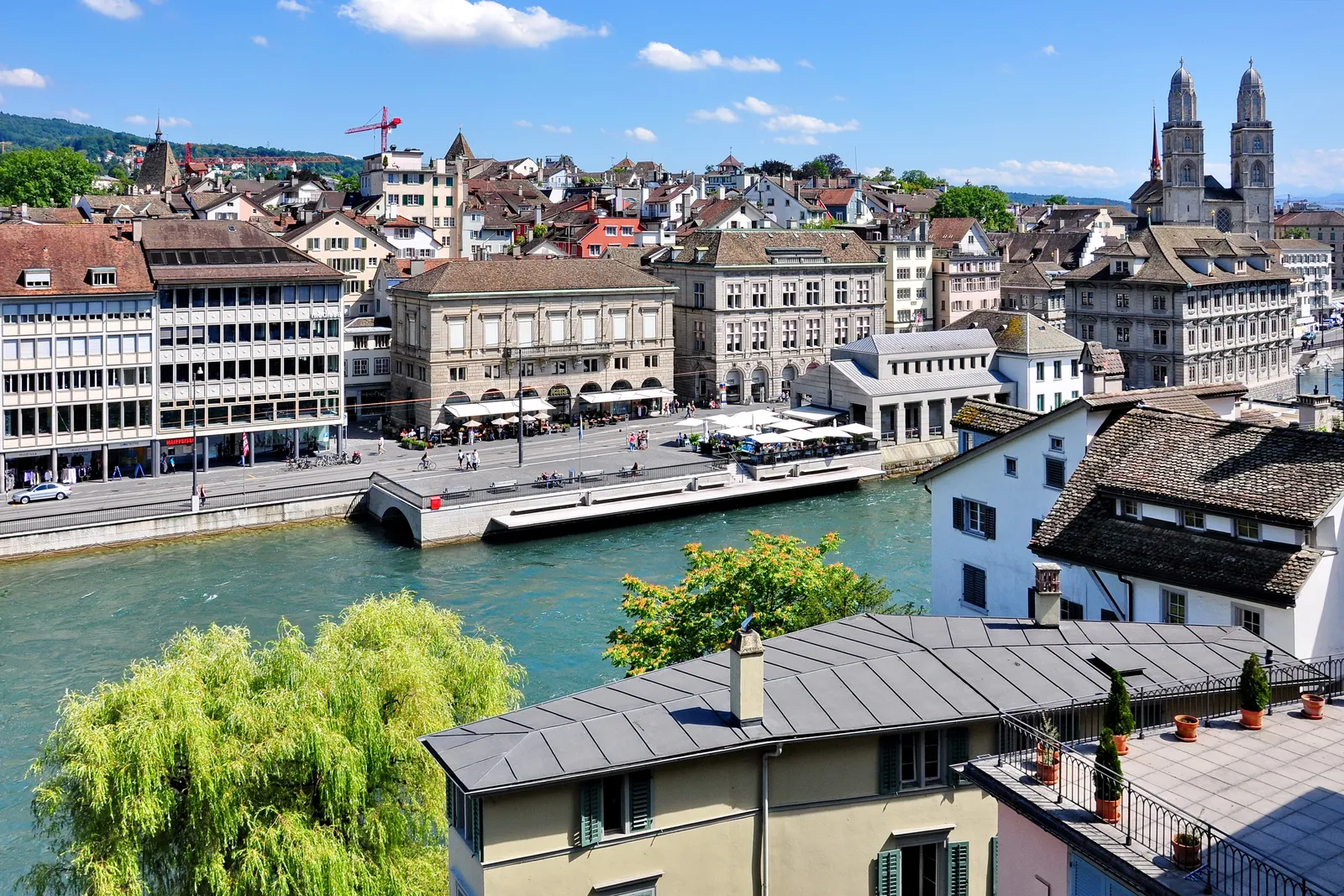
It costs nothing, has no gate and no hours, and the view takes in the Rathaus on the opposite quay, the roofs behind it and the Grossmünster’s towers on the skyline. St. Peter’s church is a two-minute walk from the terrace and worth a look up: its four clock faces are 8.64 metres across, the largest on any church in Europe.
Uetliberg’s summit view, 871 metres above the city
The Uetliberg ridge on Zurich’s southwestern edge is the one stop on this list that needs a real chunk of time rather than a spare half hour, and the payoff is the whole city, the lake narrowing away south and the Alps behind it on a clear day. The station sits at 813 metres, 650 metres from the summit and 56 metres below it, at the top of the steepest standard-gauge adhesion railway in Europe, which climbs at up to 7.9 per cent. The viewpoints below the summit tower are free; the tower itself charges.
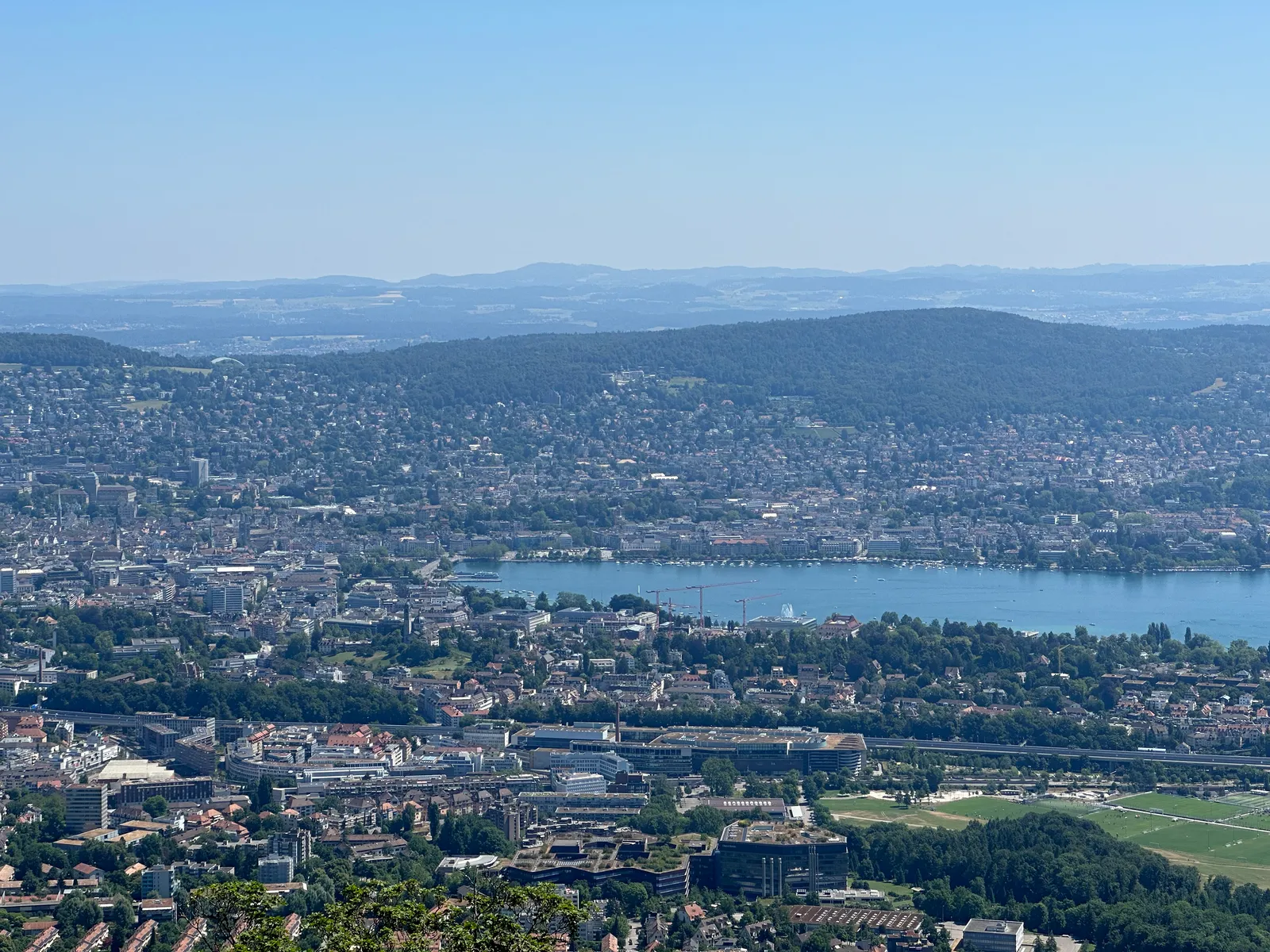
Getting there is more awkward than usual at the moment. The underground platforms at the main station that these trains normally use are closed for rebuilding from 29 April to 18 October 2026, so until that date the mountain train starts one stop out at Zürich Selnau: a signposted walkway covers the gap in about 12 minutes, or trams reach Stauffacher, six minutes from Selnau on foot. Add the climb at the far end and the round trip is comfortably over two hours, which makes this a stop for five free hours rather than three. After 18 October the trains run from the main station again and the ride is about 20 minutes.
If that is more than you have, there is a much smaller version of the same idea in the middle of town. A funicular called the Polybahn climbs from Central, at the north end of the Limmatquai, up to the Polyterrasse in front of the federal technology institute in 100 seconds, for CHF 1.20 or nothing extra if you already hold a transit ticket. The terrace at the top is a public one with a view straight across the old town’s roofs, and it costs nothing to stand on. It runs Monday to Friday from 6.45am to 7.15pm and Saturday mornings until 2pm, and it does not run on Sundays or public holidays.
The airport station sits directly under the terminal
SBB trains connect Zürich Hauptbahnhof with Zurich Airport in 10 to 15 minutes, the faster end on a through InterCity and the slower on an S-Bahn making the intermediate stops. Departures run roughly every 10 minutes through the day and thin out early in the morning and late at night, and the leg from platform to check-in desk at the far end is a lift ride rather than a walk across a forecourt.
One ticket covers it: CHF 7.20 for an adult single in second class, spanning the three ZVV zones between the city and the airport, valid for an hour and good on any mode inside those zones. That last part matters if you miss a train, because tram 10 runs the same journey via Oerlikon in about 35 minutes on the same ticket rather than a new one. Working back from a flight, allow about two hours from the Grossmünster: the walk to the station, collecting your bag, the ride out and check-in at ZRH.
The main station is worth knowing in its own right if you are stringing rail legs together rather than flying on. Direct trains reach Basel from its long-distance platforms in under an hour, and Munich in three and a half hours on eight services a day.
Everything on this route sits between the Grossmünster and Bürkliplatz, and the station you walk out of is the station you come back to. Leaving the bag there rather than carrying it up the Lindenhof steps pays off twice: once on the climb, and again at the end, when it is already waiting a hundred metres from the platform you need.
Frequently asked questions
What should I do during a layover in Zurich?
With three to five hours, the whole old town is walkable from Zürich Hauptbahnhof, the city's main train station. The Grossmünster, where Huldrych Zwingli launched the Swiss Reformation in 1520, is about ten minutes away on the right bank of the Limmat and free to walk into, and the Lindenhof terrace on the opposite bank is free at any hour. Marc Chagall's five chancel windows in the Fraumünster cost CHF 5 and take about twenty minutes. Uetliberg's summit view is the one stop to drop if you are tight on time, because the mountain railway and the walk up add well over an hour to the round trip.
Can I still get the train up Uetliberg from the main station?
Not until 18 October 2026. The underground platforms at Zürich Hauptbahnhof used by the mountain trains are shut for rebuilding from 29 April to 18 October 2026, and during that period those trains start and finish at Zürich Selnau instead. A signposted walkway covers the gap in about 12 minutes on foot, or trams run to Stauffacher, six minutes from Selnau. After 18 October the trains go back to leaving from the main station.
Is anything on this route closed midweek?
The Grossmünster is. It shuts on Tuesdays so the Zurich University of the Arts can use the organ for teaching, and the crypt underneath, normally free and open on the same hours, goes with it. The Fraumünster and the Lindenhof are unaffected. The Grossmünster's own hours are 10am to 6pm from 1 March to 31 October and 10am to 5pm from 1 November to the end of February.
How little can a few free hours in Zurich actually cost?
Less than the city's reputation suggests, if you stay outside. The Grossmünster's nave and crypt, the Lindenhof terrace, the Limmat quays and the whole 1.4-kilometre length of Bahnhofstrasse are all free. Zurich has more than 1,200 public fountains and the water in almost all of them is drinkable, so a refillable bottle removes the one cost that adds up fastest on a hot walk; the handful marked Kein Trinkwasser are the exceptions. The paid stops are small and optional: CHF 5 for the Fraumünster's Chagall windows, CHF 5 for the Grossmünster's tower, CHF 9.40 for a 90-minute lake round trip.
Is the train or the tram better from the main station to Zurich Airport?
The train, unless you have hours to spare. SBB trains cover Zürich Hauptbahnhof to the station under the airport terminal in 10 to 15 minutes depending on the service, leaving about every 10 minutes. Tram 10 runs the same journey via Oerlikon in about 35 minutes. Both are covered by the same ZVV ticket, CHF 7.20 for an adult single across the three zones involved, valid for an hour.