Zurich Hauptbahnhof Layover: Museum and Park
Part of the full Zurich Layover: Old Town and Lake From ZRH
The Swiss National Museum and the Platzspitz park sit within five minutes of the back of Zürich Hauptbahnhof, Zurich’s main train station, and the station’s own three floors of shops trade every day of the year.
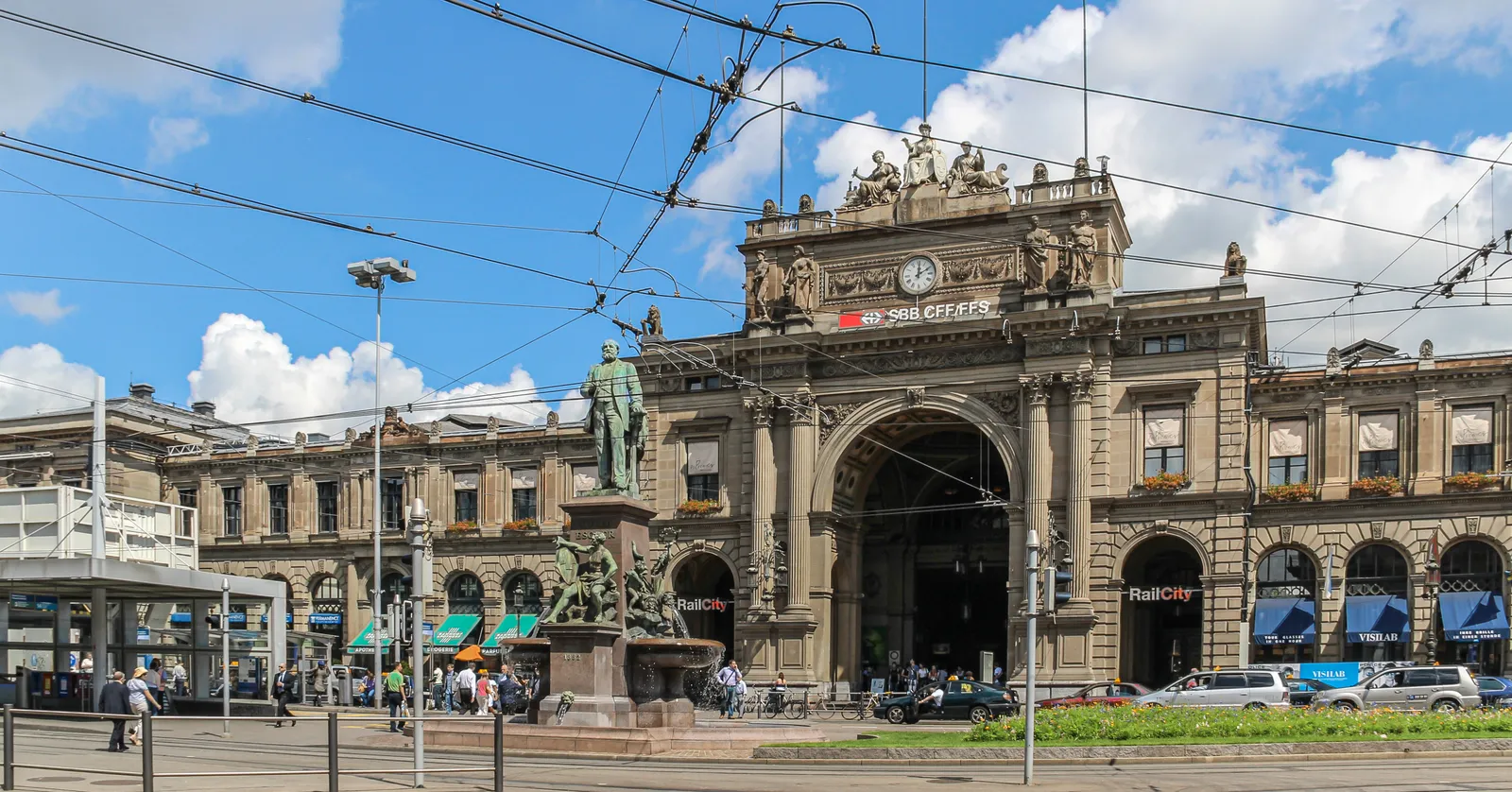
The neo-Renaissance station front on Bahnhofplatz
Jakob Friedrich Wanner put this facade up in 1871, twenty-four years after the first trains ran from the site, and built it round a central arch you can still walk straight through, with allegorical figures along the roofline and a clock over the keystone. On the forecourt in front of it stands Alfred Escher, the railway financier who did more than anyone to get Swiss trains through the Alps, on top of a fountain.
Inside, the scale changes. Twenty-six tracks run on three levels, close to 450,000 people pass through on a normal day, and an 11-metre painted figure by Niki de Saint Phalle has hung over the middle of the main hall since November 1997, a gift from a security firm for the railway’s 150th anniversary. On Wednesdays that hall is usually given over to a produce market, roughly 10am to 8pm, with Swiss cheese, cured meat and vegetable stalls set out between the departure boards; it does not run every single week, so treat it as a bonus rather than a plan.
The Swiss National Museum’s turreted courtyard
Gustav Gull built this in the shape of a French Renaissance chateau and opened it in 1898, which is why a museum on a river peninsula comes with towers, stepped gables, an arcade and an inner courtyard. The collection is the national one: prehistoric finds, a heavy medieval section of Gothic altarpieces and armour, Swiss furniture and decorative work, a coin cabinet, and a diorama of the Battle of Murten.
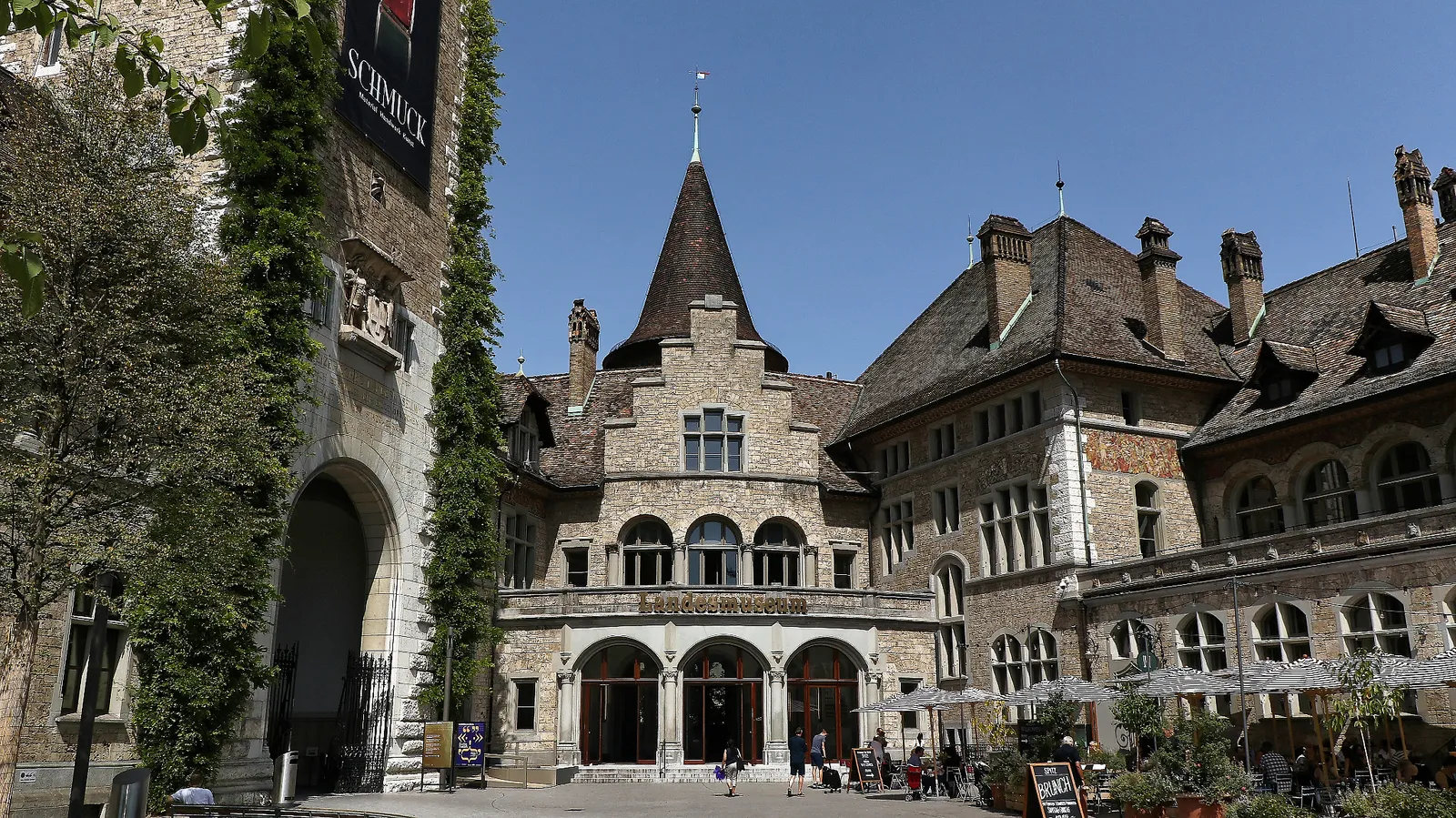
It is a five-minute walk from the station’s north end. Adults pay CHF 13, students and pensioners CHF 10, and under-16s go free. It opens Tuesday to Sunday from 10am, closing at 5pm most days and 7pm on Thursdays, and it is closed on Mondays and public holidays. An hour covers the permanent galleries at a reasonable pace, and booking the entry ticket in advance saves the desk queue if you are arriving on a wet afternoon when everyone else has had the same idea.
The escalators between the station’s main hall and its lower shopping levels are the tightest part of this walk, and they are busiest exactly when arriving trains empty out, so it is worth leaving the bag behind before you go looking for the museum.
Platzspitz, the park on the spit between two rivers
The Sihl runs into the Limmat at the northern tip of this park, and the point where they meet is the whole reason for its shape: a long wedge of lawn and gravel avenues, planted with rows of trees in 1780 and given a wrought-iron music pavilion in the following century. There is no gate, no ticket and no closing time.
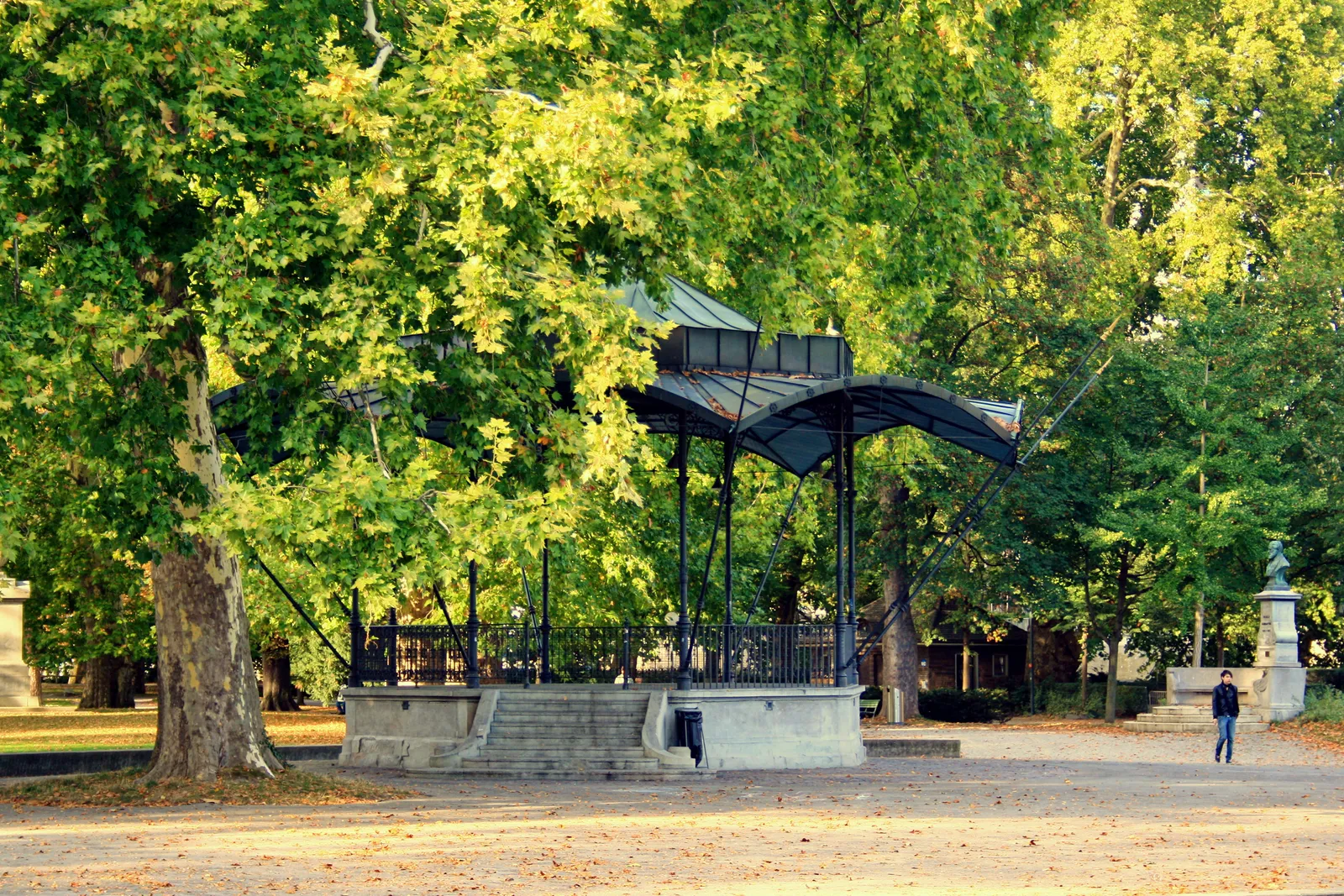
Its recent history is a large part of why locals still react to the name. Through the late 1980s the city tolerated an open drug market here, at times three thousand people a day, and the park became international shorthand for what that policy produced before the police closed it in 1992. It reopened rebuilt, and what is there now is an ordinary quiet city park where people eat lunch on the grass, which is worth knowing while you are standing in it.
Airport trains leave from this same concourse
There is no transfer to make and no second station to find: the trains out to the airport go from the main-level platforms you are already standing on, and the ride is 10 to 15 minutes depending on whether it is a through InterCity or an S-Bahn calling at the stops in between. Departures run roughly every 10 minutes across the day.
One ticket at CHF 7.20 covers an adult single in second class across the three ZVV zones between here and Zurich Airport, valid for an hour and good on any mode inside those zones, so a missed train is not a new fare. The airport’s platforms sit under the terminal, so the last leg from here is a lift ride rather than a shuttle bus, and an hour and three quarters covers the whole thing door to gate.
That proximity is the argument for this stretch of Zurich over any other. Two hours behind the station buys a national museum and a river confluence with the platforms still in sight, and the bag is waiting a hundred metres from the train you need rather than somewhere across the old town.
Frequently asked questions
Is there enough behind Zürich Hauptbahnhof to fill two hours?
Yes, but only just, and it depends on the day. The Swiss National Museum takes an hour to an hour and a half at a normal pace and the Platzspitz park next to it takes twenty minutes, which together with the walk out and back is most of two hours. On a Monday the museum is shut and the park alone will not hold you that long, in which case the walk into the old town is the better use of the time: the Grossmünster and the Lindenhof are both about ten minutes away on foot and both are free.
What is open around the station on a Sunday?
More than in the rest of the city. Swiss shops mostly close on Sundays, but the ones inside major transport hubs are exempt, so the three floors of shops, food counters and a supermarket under Zürich Hauptbahnhof trade every day of the year. The Swiss National Museum is also open on Sundays, 10am to 5pm, and the Platzspitz park has no gate or hours at all.
How busy does the station itself get?
Close to 450,000 people pass through on a normal day, across 26 tracks on three levels. The pinch points are the escalators between the main hall and the shopping levels below it, which handle arriving passengers, shoppers and people changing platforms at the same time. Late morning and mid-afternoon are noticeably easier than either rush hour.
How long before my flight should I leave Zürich Hauptbahnhof?
About an hour and three quarters is comfortable. SBB trains run from here to the station under the airport terminal in 10 to 15 minutes depending on whether you catch a through InterCity or an S-Bahn, leaving roughly every 10 minutes, and a single adult ticket is CHF 7.20 across the three ZVV zones, valid for an hour. That leaves check-in and security at ZRH with the margin they need without you sitting airside for half the afternoon.