Zurich Stadelhofen Layover: Opera and Art
Part of the full Zurich Layover: Old Town and Lake From ZRH
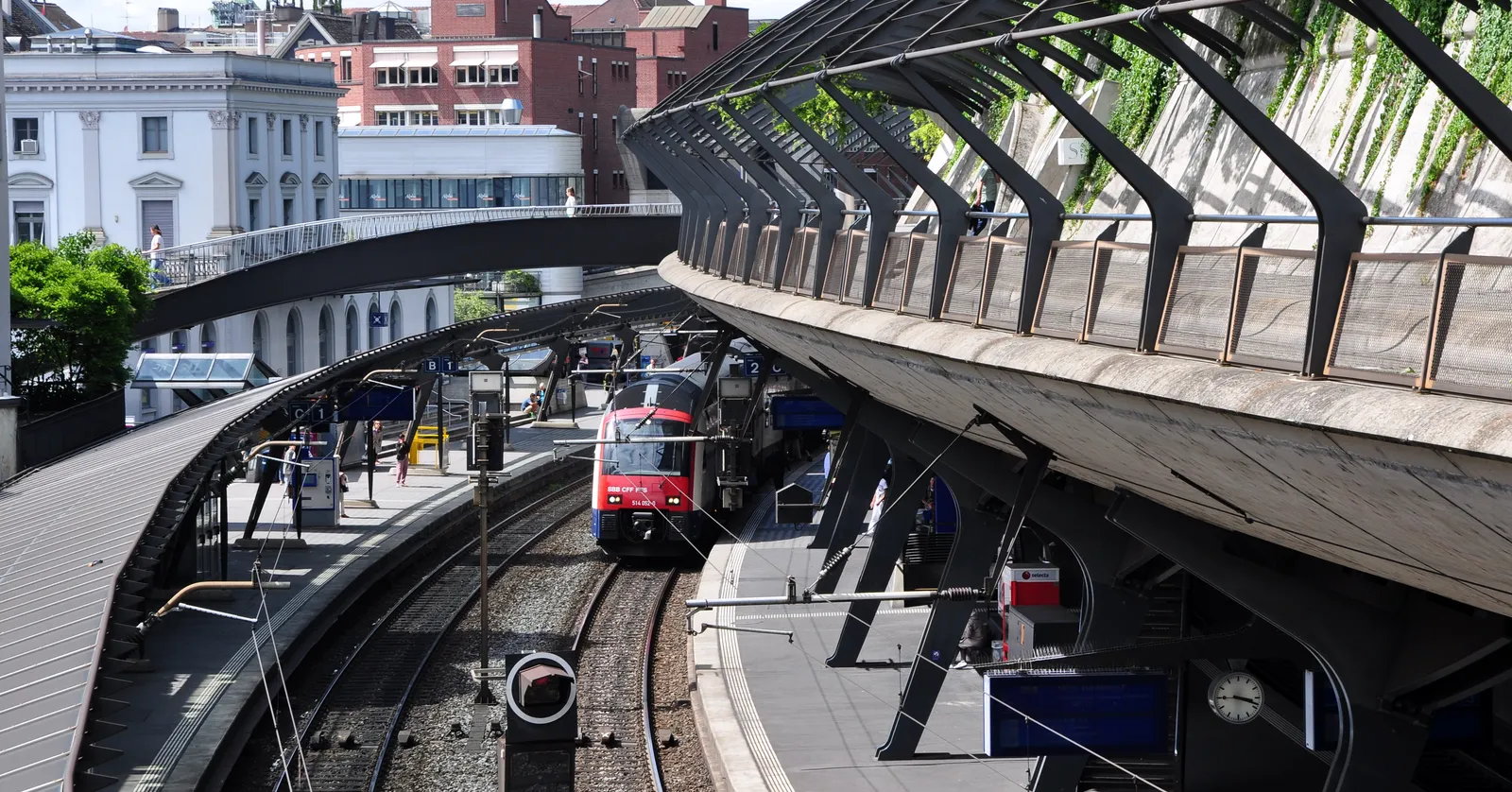
Zürich Stadelhofen, a station on the eastern edge of central Zurich, sits a minute’s walk from Sechseläutenplatz and the opera house, with the Kunsthaus five minutes uphill and the lake five minutes the other way.
Calatrava’s concrete canopy over the Stadelhofen platforms
Santiago Calatrava was still in his thirties when he won this, his first significant commission in the city where he had studied, and he built it between 1983 and 1990 by cutting into the hillside rather than widening outward. What came out of that constraint is the reason to look up on the way through: a ribbed concrete canopy running the length of the curved island platform like a rib cage, a lighter steel and glass one facing it across the tracks, and an arcade of arches underneath the whole thing, lit through glass blocks in the pavement above.
The 1894 neoclassical station building survives on the square side, which is the part most people photograph without noticing the newer half behind it. Around 80,000 people a day pass through, mostly commuters on the ten local lines that call here, making this one of the busiest stations in the country outside the main terminals.
Kunsthaus Zürich, free to everyone on Wednesdays
Switzerland’s largest art collection is a five-minute walk up from the station at Heimplatz, split between Karl Moser’s 1910 building and David Chipperfield’s 2021 extension across the road. Between them they hold Swiss painting from Füssli to Hodler, a heavy Giacometti collection, and enough French and German modernism to justify a proper hour rather than a lap.
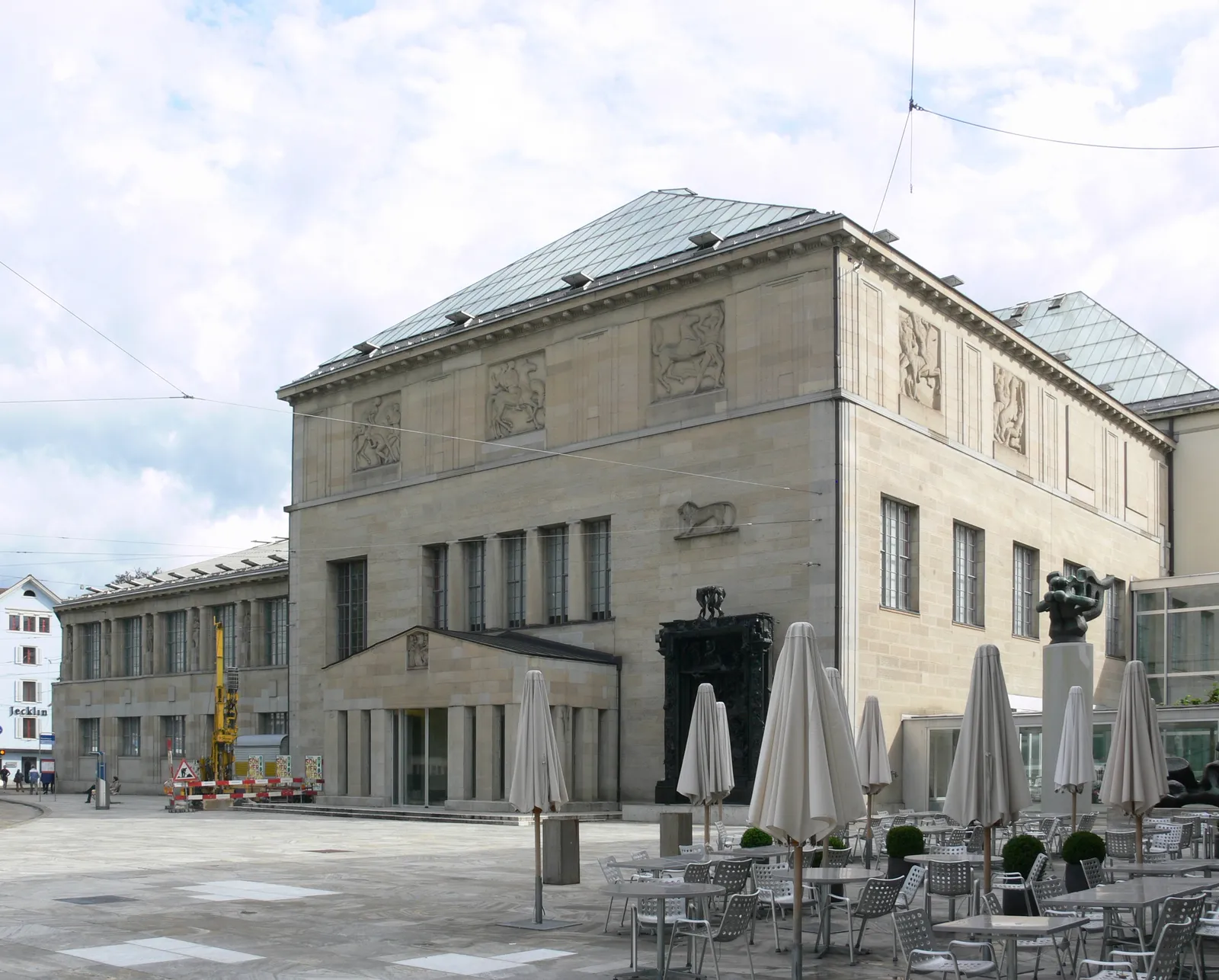
Wednesday is the day worth aiming at: the permanent collection is free to everyone, in both buildings, no ticket needed. Any other open day it is CHF 24 for adults and CHF 17 reduced, under-14s free, and it is closed on Mondays. If you are going to see more than one paid thing in Zurich on the same day, a 24-hour city card covers entry here along with unlimited local transport, which usually beats buying admissions one at a time.
There is a specific catch for anyone arriving straight off a train. The Kunsthaus only lets you carry a handbag no larger than A4, 30 by 21 by 20 centimetres, into the galleries; everything else goes into a locker on the lower ground floor, and the lockers take a coin or a card.
Sechseläutenplatz, the paved square in front of the opera house
Sixteen thousand square metres of silver-grey Vals quartzite, laid in narrow strips of varying width, make this one of the largest public squares in Switzerland, and for most of the year it is deliberately empty: no planting, no monument, just stone running from the tram stops at Bellevue up to the opera house steps. Markets, a circus, festivals and open-air screens all move through it in turn.
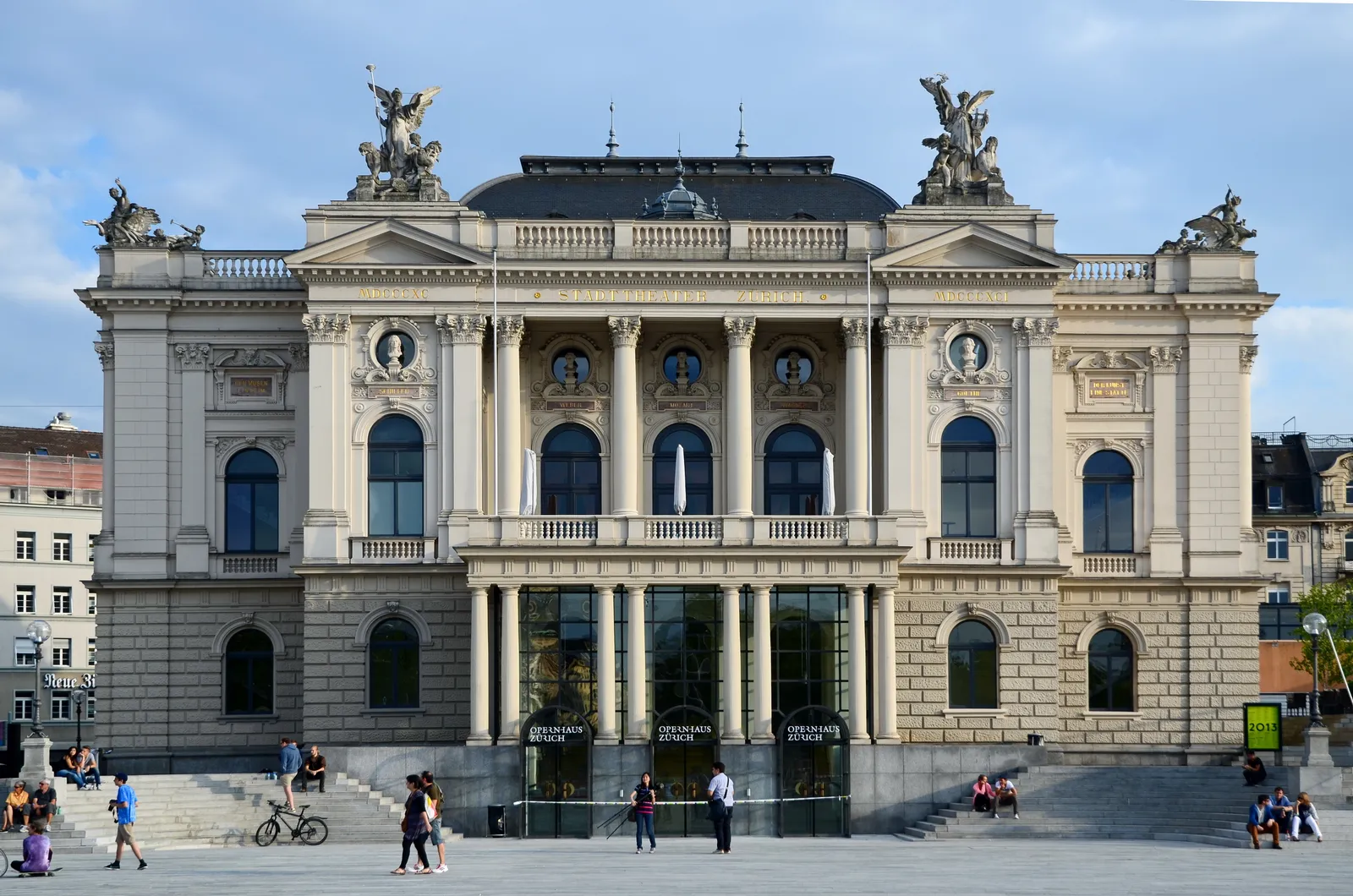
The opera house closing the eastern side opened in 1891, built by Fellner and Helmer, the Viennese partnership responsible for a good share of central Europe’s theatres, and it carries the columned portico and roofline statuary that came with the type.
Once a year the square’s whole point is a fire. On a Monday in April, Zurich’s guilds parade here and burn a snowman stuffed with explosives called the Böögg, and the minutes between lighting the pyre and the head going off are read locally as a forecast for the summer: recorded times run from just over five minutes in 1974 to fifty-seven in 2023. The 2026 burning has already been and gone; the next falls in April 2027.
Two ways out to the airport from this platform
The S16 runs from here straight through to the station under the Zurich Airport terminal, roughly every half hour, with no change at all. That is the easy option and worth checking the board for before doing anything else, because if one is due it removes a connection from the trip.
Otherwise everything here runs into Zürich Hauptbahnhof in a few minutes, and SBB trains cover the rest to ZRH in 10 to 15 depending on whether it is a through InterCity or an S-Bahn, leaving about every 10 minutes. A single adult second-class ticket is CHF 7.20 across the three ZVV zones and is valid on both routes, so the choice is purely about which board says a train sooner.
Stadelhofen’s advantage over the rest of central Zurich is how tightly the day packs: an art museum, an opera house, a square and a lake shore all inside a ten-minute radius of one platform, with a direct airport train from the same platform at the end of it.
Frequently asked questions
Does free Wednesday admission at the Kunsthaus cover the special exhibitions?
No. Wednesdays are free for the permanent collection across both the Moser and Chipperfield buildings, which is the bulk of what there is to see, but the temporary exhibitions are ticketed separately and the free day does not extend to them. On any other open day the collection is CHF 24 for adults and CHF 17 reduced, with under-14s free throughout.
How far is Stadelhofen from Zurich's old town?
About ten minutes on foot. Cross the Limmat at the Quaibrücke and you are on the left bank near the Fraumünster, or follow the right bank north and the Grossmünster is roughly the same distance. If churches and the Lindenhof are what you came for rather than the opera house, the walk through the old town is the better plan and starts from the main station instead.
Can you walk to Lake Zurich from Stadelhofen?
In about five minutes. The square in front of the opera house runs down to Bellevue, and the lake begins there, with the Utoquai promenade heading south along the eastern shore. It is flat the whole way and there is no ticket for any of it.
Is there a direct train from Stadelhofen to Zurich Airport?
Yes. The S16 runs from Stadelhofen through to the station under the airport terminal roughly every half hour, which saves changing at Zürich Hauptbahnhof. Any of the other services into the main station also work, with a 10 to 15 minute onward ride from there and departures about every 10 minutes. The fare is the same either way: CHF 7.20 for an adult single in second class across the three ZVV zones.