Zurich Oerlikon Layover: MFO-Park, Velodrome
Part of the full Zurich Layover: Old Town and Lake From ZRH
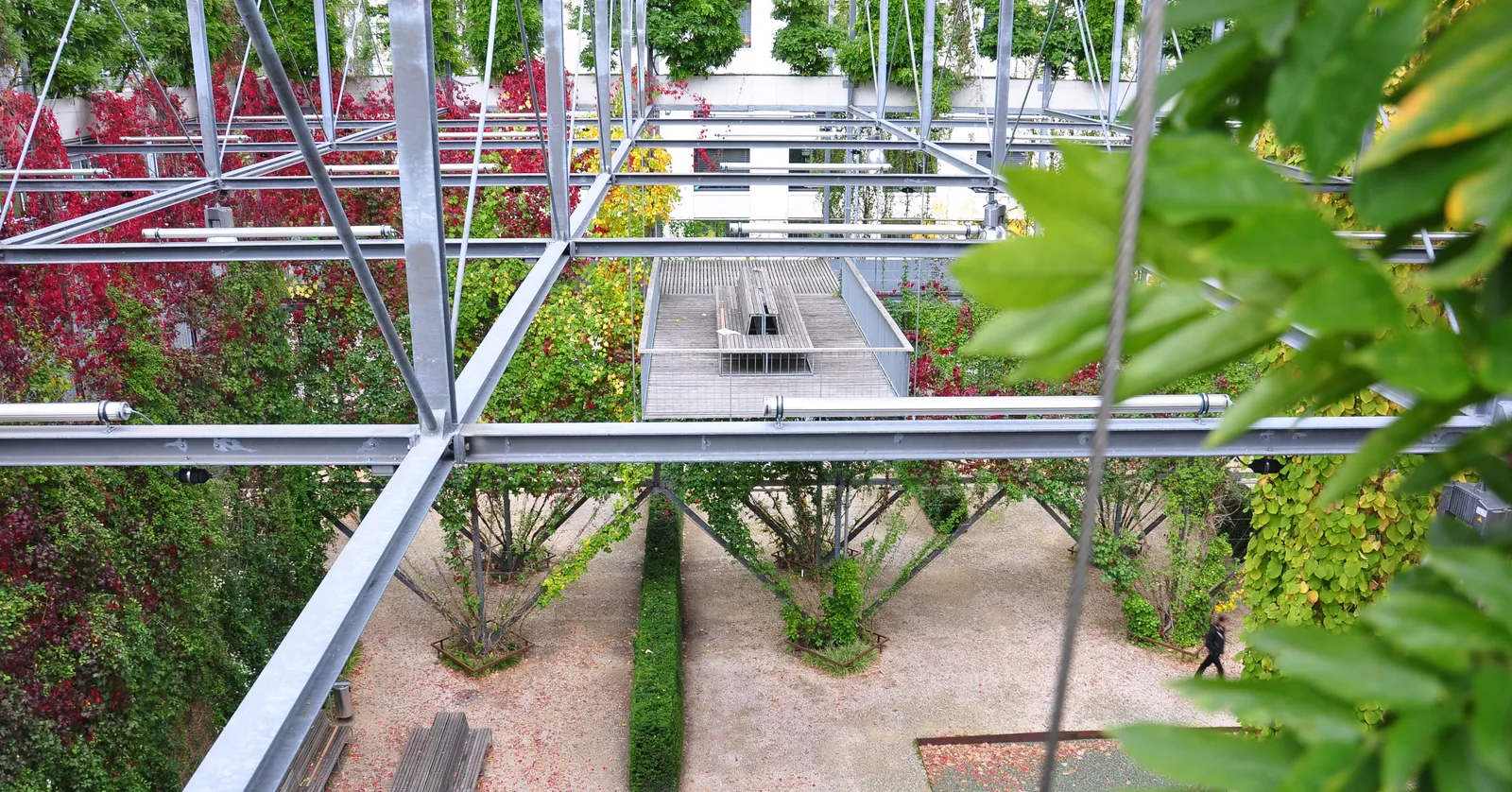
Zürich Oerlikon, the main station in the city’s northern district, has the MFO-Park’s climbing-plant steel frame five minutes away, an open-air velodrome from 1912 a little beyond it, and a 35-metre viewing tower in between, all free.
The MFO-Park’s steel frame, grown over with climbing plants
Maschinenfabrik Oerlikon built heavy electrical machinery on this site for a century, and when the works came down the city kept the footprint of one hall and built its outline back in steel: 100 metres long, 35 wide, 17 high, 330 tonnes of it, opened in 2002 as a public park with no roof and no glass. Around 1,300 climbing plants of different species run up the wires.
The walls are double, and the gap between them holds staircases up to balconies at several levels and a decked terrace on the roof. From up there the view is over the rebuilt northern half of the city rather than anything historic, which is honest to what this district is. Come between late spring and autumn and the frame is genuinely green; in February it is a bare grid, still worth the five minutes but a different building entirely.
The open-air velodrome finished in August 1912
Track cycling drew crowds in Zurich long before football did, and the concrete bowl a few minutes north of the MFO-Park is what survived of that: a 333-metre track banked at 44.5 degrees, completed in August 1912 and still the oldest sports ground in use anywhere in Switzerland. It was the first reinforced concrete structure in the country to leave its own structural system visible rather than dressing it up.
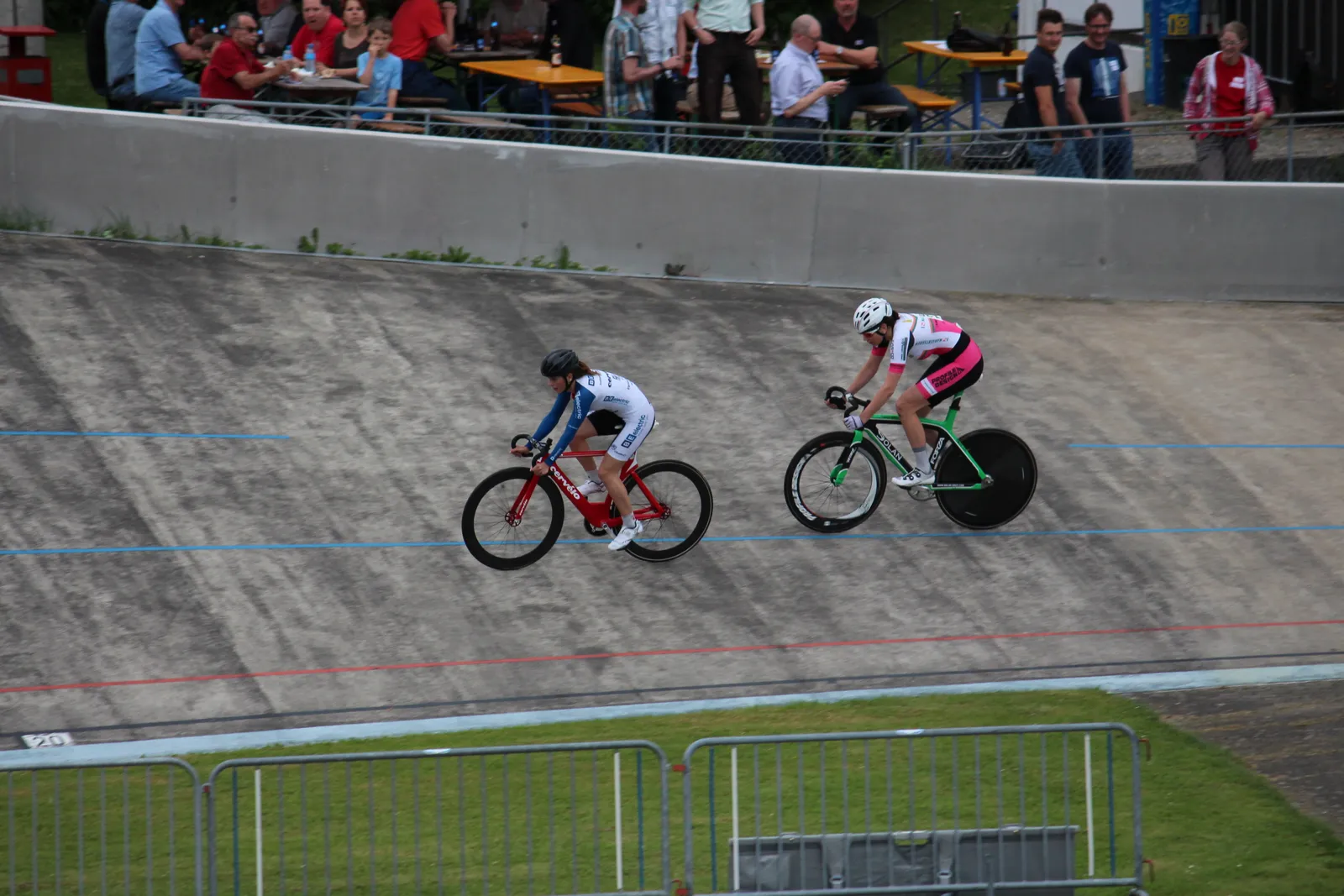
The first track cycling world championships were held here in 1923. Racing still runs on around twenty Tuesday evenings a season when the weather allows, which is the version worth timing a layover around if the dates land; the rest of the time you are looking at an empty banked oval from the perimeter, which is a shorter but still oddly compelling stop.
The blue tower in Oerliker Park and its 216 steps
Oerliker Park sits between the two, a grid of young trees planted in 2001 on more former works land, and the thing that marks it from a distance is a 35.5-metre concrete shaft painted blue and wrapped in fine steel mesh. A spiral staircase of 203 steps climbs the outside to the first platform, with another 13 up to the viewing deck at 33 metres.
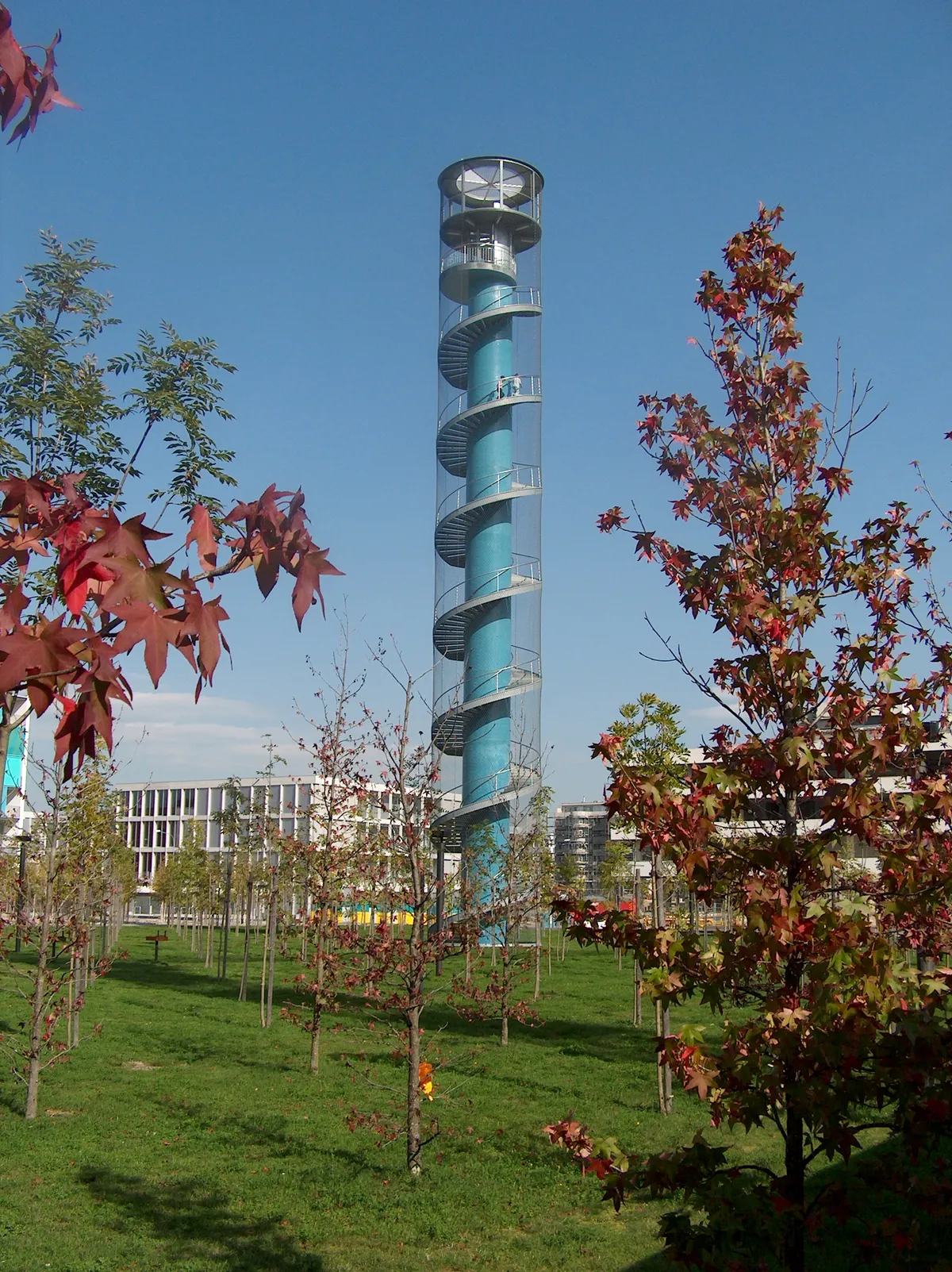
Two hundred and sixteen open-air steps with a suitcase is the part of this that does not work, and Oerlikon sees more of that than most Zurich stations: the exhibition halls and the Hallenstadion arena are both a few minutes away, so a fair share of the people getting off here are moving between a conference and a flight with a wheeled case and a laptop bag rather than travelling light.
No change to make between Oerlikon and the airport
The S2 and the S16 both run from here straight to the station under the Zurich Airport terminal, and between the two lines something leaves every 10 to 15 minutes. The ride is four to five minutes, so the trip out to ZRH from here is shorter than the walk between two of the stops above.
That is what makes this district worth a stop at all rather than a place you pass through. CHF 7.20 buys an adult second-class single across the three ZVV zones, valid for an hour and good in either direction, so the same ticket that brings you out from Zürich Hauptbahnhof takes you on to ZRH afterwards.
An hour here covers the frame, the tower and the track at a walk, and none of it charges admission. The one thing worth deciding before you start is where the bag goes, because two of the three involve stairs and the third has nowhere to leave anything at the rail.
Frequently asked questions
Can you climb the MFO-Park's steel frame?
Yes, and that is the point of it. Staircases run inside the double walls of the frame up to balconies at several levels and a decked sun terrace on the roof, which looks out over the newer half of northern Zurich. It is a public park with no gate, no ticket and no attendant.
When does the Oerlikon velodrome actually race?
Around twenty Tuesday evenings across a season, weather permitting, since the track is open to the sky and racing is called off in rain. Outside those evenings the arena is a piece of 1912 reinforced concrete you can look at from the perimeter rather than an event you can attend, so check what is on before building an itinerary round it.
Is Oerlikon worth stopping at instead of going into central Zurich?
Only on a short window, or if this kind of thing appeals more than churches. Oerlikon is a rebuilt industrial quarter: post-2000 parks, converted works buildings and a lot of new housing, with nothing medieval in it. If you have three hours or more, the old town route is the stronger use of them, and Oerlikon is a few minutes further down the same line.
How long is the train from Oerlikon to Zurich Airport?
Four to five minutes. The S2 and S16 both run direct from Oerlikon to the station under the airport terminal, between them leaving every 10 to 15 minutes, with no change on the way. The fare is CHF 7.20 for an adult single in second class, the same three-zone ZVV ticket that covers the trip in the other direction to Zürich Hauptbahnhof.