Eaux-Vives Station Layover: Geneva Parks
Part of the full Geneva Layover: Jet d'Eau and Old Town, GVA
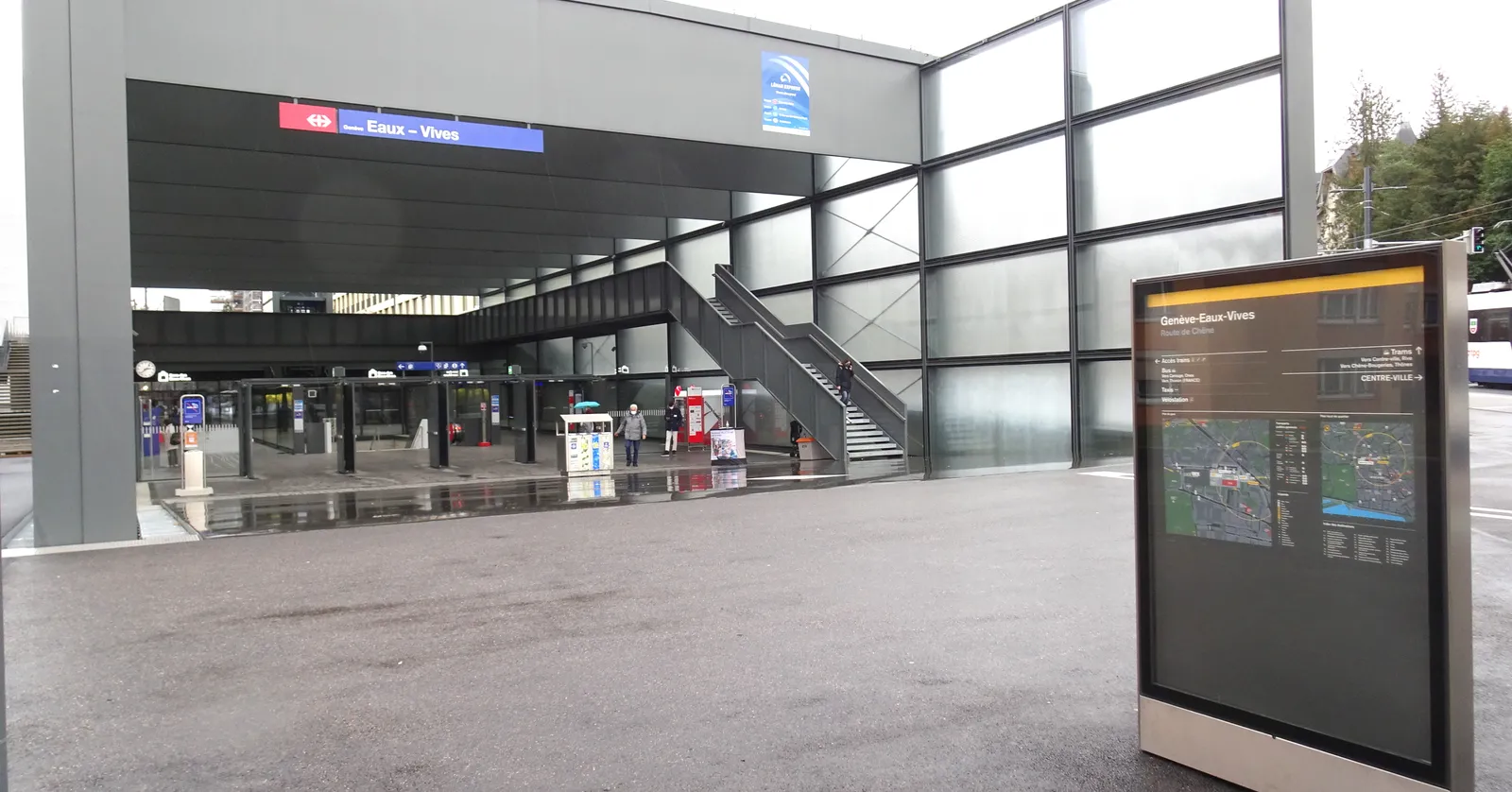
Genève-Eaux-Vives station sits on the left bank about ten minutes’ walk from Parc La Grange, the largest park in Geneva, whose rose garden holds more than 200 varieties across some 12,000 square metres and costs nothing to walk into.
Ten thousand rose bushes in Parc La Grange
The park climbs the slope above the lake in the Eaux-Vives quarter, twenty hectares of lawn and very old trees with an 18th-century villa near the top, orangeries, an alpine garden and open-air concerts through the summer. The rose garden is the reason most people come: an octagonal layout put in during 1945 and 1946, roughly 12,000 square metres, more than 200 varieties, upwards of 10,000 bushes, and the largest of its kind in the city. Nothing is gated and nothing is charged.
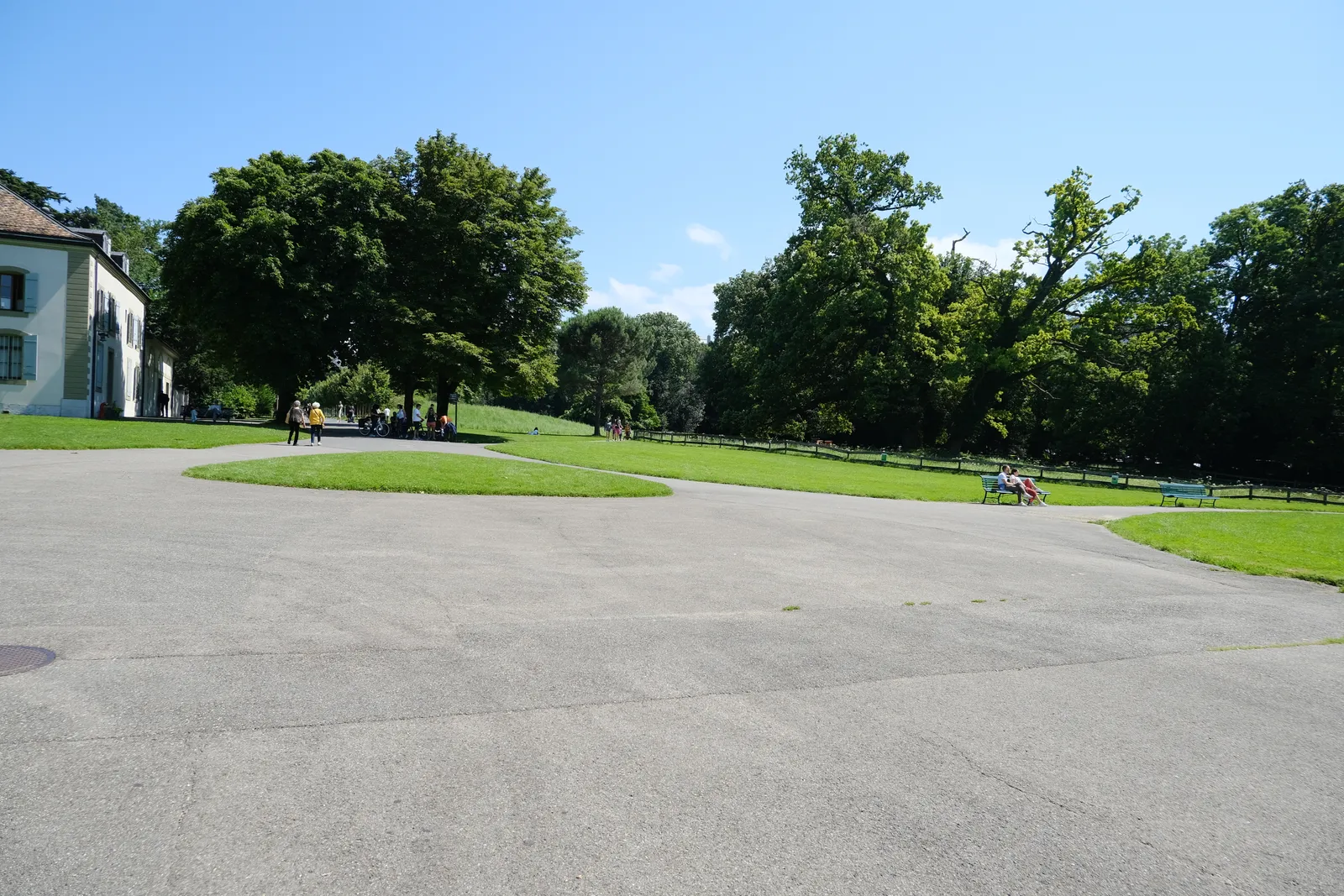
A gate at one end of the park opens straight into Parc des Eaux-Vives next door, so the two work as a single stretch of green running down toward the water, and the walk through both ends at the lake shore with the Jura on the far side. Timing matters more here than at most stops: the roses run from late spring through summer and peak around June, and outside that stretch the beds are pruned stubs, though the trees and the view are unaffected.
A theatre and 400 flats on ground that used to be railway
The streets immediately around the station are new, and the reason is directly underfoot: putting the line below ground released the land the old surface station and its sidings had occupied, and the city built a district on it. The largest thing in it is the new home of the city’s main theatre company, which opened for the 2020 season behind a grey perforated facade with its own name punched through the metal, and around 400 flats went up alongside it with shops and offices at street level.
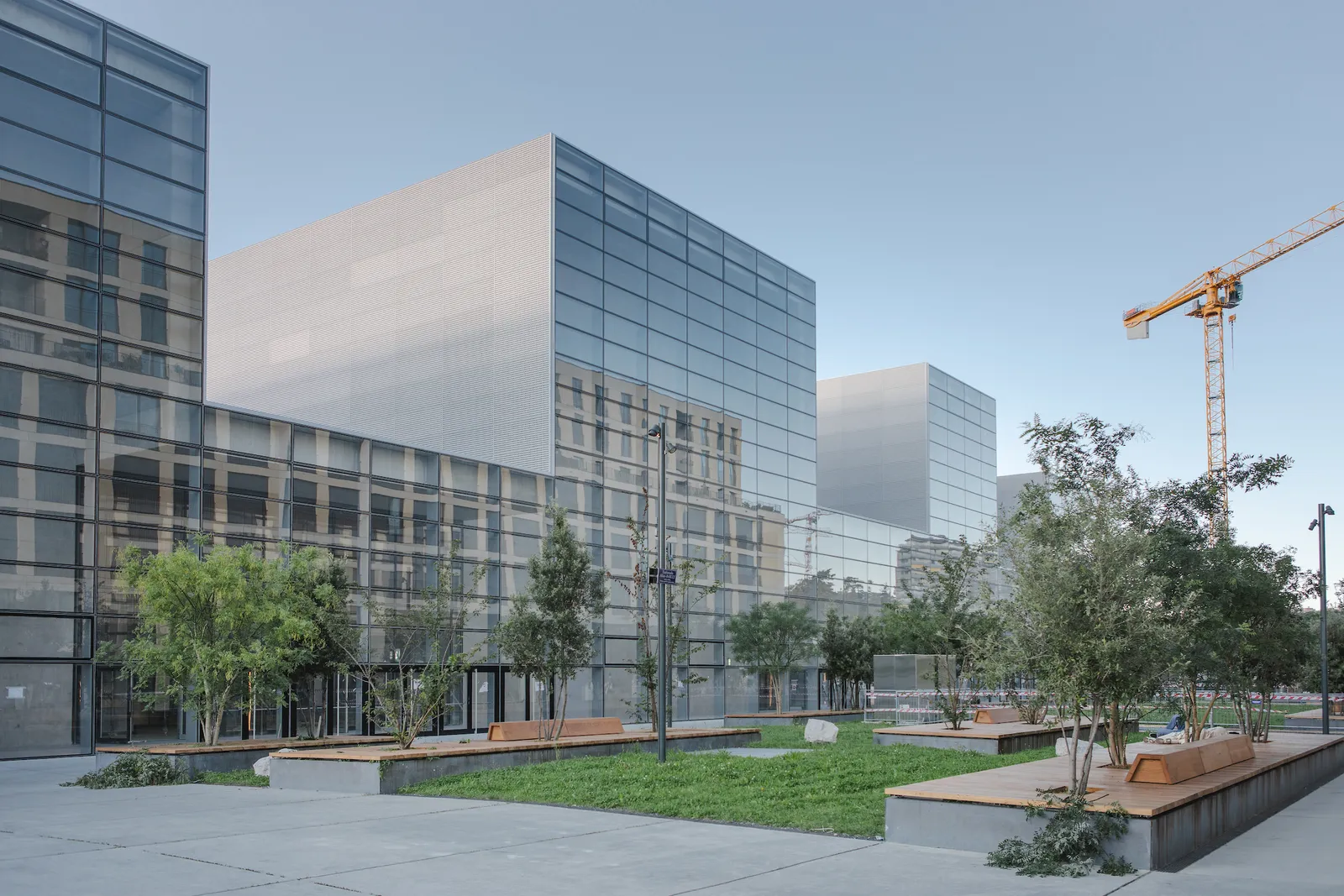
It is worth ten minutes rather than an hour, and it is best understood as the other half of the station rather than a destination in itself: a piece of city that exists because a railway was moved. The station beneath it is entirely below ground, so every arrival and departure here is a lift or an escalator between the platforms and the street, twice over if you are coming back the same way with a suitcase.
Trains back leave from platforms two levels down
Services from Eaux-Vives run west under the city to Genève-Cornavin in about five minutes on the cross-border Léman Express network, which continues the other way into Annemasse and the Haute-Savoie. A unireso zone 10 single covers the trip at CHF 3. From Cornavin the airport train takes a further seven minutes, up to seven an hour at peak, so the whole run from here to Genève-Aéroport is around a quarter of an hour of actual travelling.
Add the waiting and the two sets of escalators and an hour from the park to a departure gate is tight but real; ninety minutes is the comfortable number. This is the shortest airport run of anywhere on the left bank, which is the practical argument for spending a gap here rather than crossing the river to the old city, and the main Geneva guide is the better use of a longer one. What this side has that the other does not is somewhere to sit down outdoors for an hour without paying for the privilege or climbing anything to reach it.
Frequently asked questions
What should I do during a layover near Genève-Eaux-Vives Station in Geneva?
Walk down to Parc La Grange, about ten minutes, which is the largest park in the city and holds a rose garden of more than 200 varieties and some 10,000 bushes, all of it free and ungated. A gate at the far end opens into Parc des Eaux-Vives, so the two run together as one green stretch along the lake shore. Back at the station itself, the district built over the tracks since 2019 is worth ten minutes for the theatre building alone. Two hours is enough for all of it, though the roses only justify the trip from about late May into summer.
Why is Eaux-Vives station underground?
Because it was rebuilt that way. The original surface station closed in 2011 and was demolished so the cross-border rail link could be run below ground, and the replacement opened on 15 December 2019 with its platforms fully underground. Putting the railway under the neighbourhood freed the land it used to occupy, which is why the streets above the platforms are new: a theatre, around 400 flats, shops and offices all went up on ground that was track and sidings until fairly recently.
When is the rose garden at Parc La Grange actually in bloom?
Late spring into summer is the window, with June the reliable month. The garden was laid out in 1945 and 1946 across roughly 12,000 square metres and holds over 200 varieties, so the display builds rather than peaking on one date, but a visit in March or October is a walk through pruned beds rather than the thing people come for. The rest of the park, the old trees, the lawns and the view across to the Jura, holds up in any season.
Is this side of the lake a better base than the city centre?
For green space, yes; for anything else, no. Eaux-Vives has the two big parks and a quiet lake shore, and it is flat, but it has none of the old city and none of the museums. It works best as a deliberate choice when you want an hour outdoors rather than a walk between sights, or when you happen to be arriving here from France rather than at the main station.