Plainpalais Layover: Geneva's Flea Market
Part of the full Geneva Layover: Jet d'Eau and Old Town, GVA
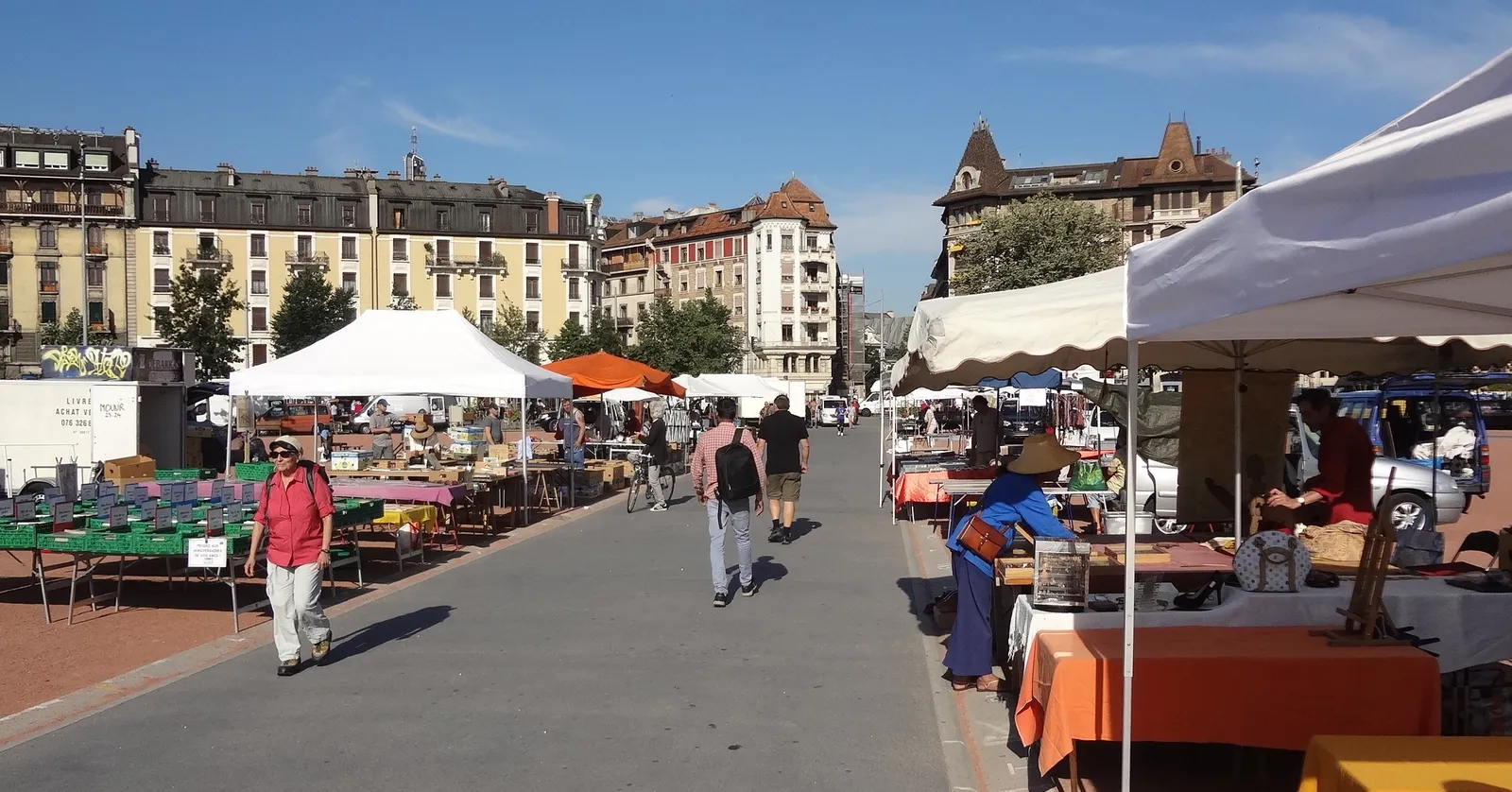
Geneva’s Plaine de Plainpalais is nearly eight hectares of open ground on the left bank, and the flea market that has covered it on Wednesdays, Saturdays and first Sundays since 1970 sits within a few minutes of both the city’s ethnography museum and its contemporary art museum.
The flea market has worked this ground since 1970
Traders take the plaine three days in most weeks, setting up early and thinning out through the afternoon, and what they sell runs from genuine antiques and watch parts through furniture and books to the ordinary contents of cleared apartments. It is a real market rather than a tourist one, which means the prices are negotiable, the quality is uneven, and the interesting things are usually on the tables nobody is standing at.
The plaine has other lives on the days between. It is the largest open space in central Geneva and the city books it for circuses, funfairs and food markets in rotation, with a skatepark at one end and boules pitches under the trees along its edges. On a quiet weekday afternoon there is very little here, which is worth knowing before making the trip for it alone.
The ethnography museum’s permanent collection is free
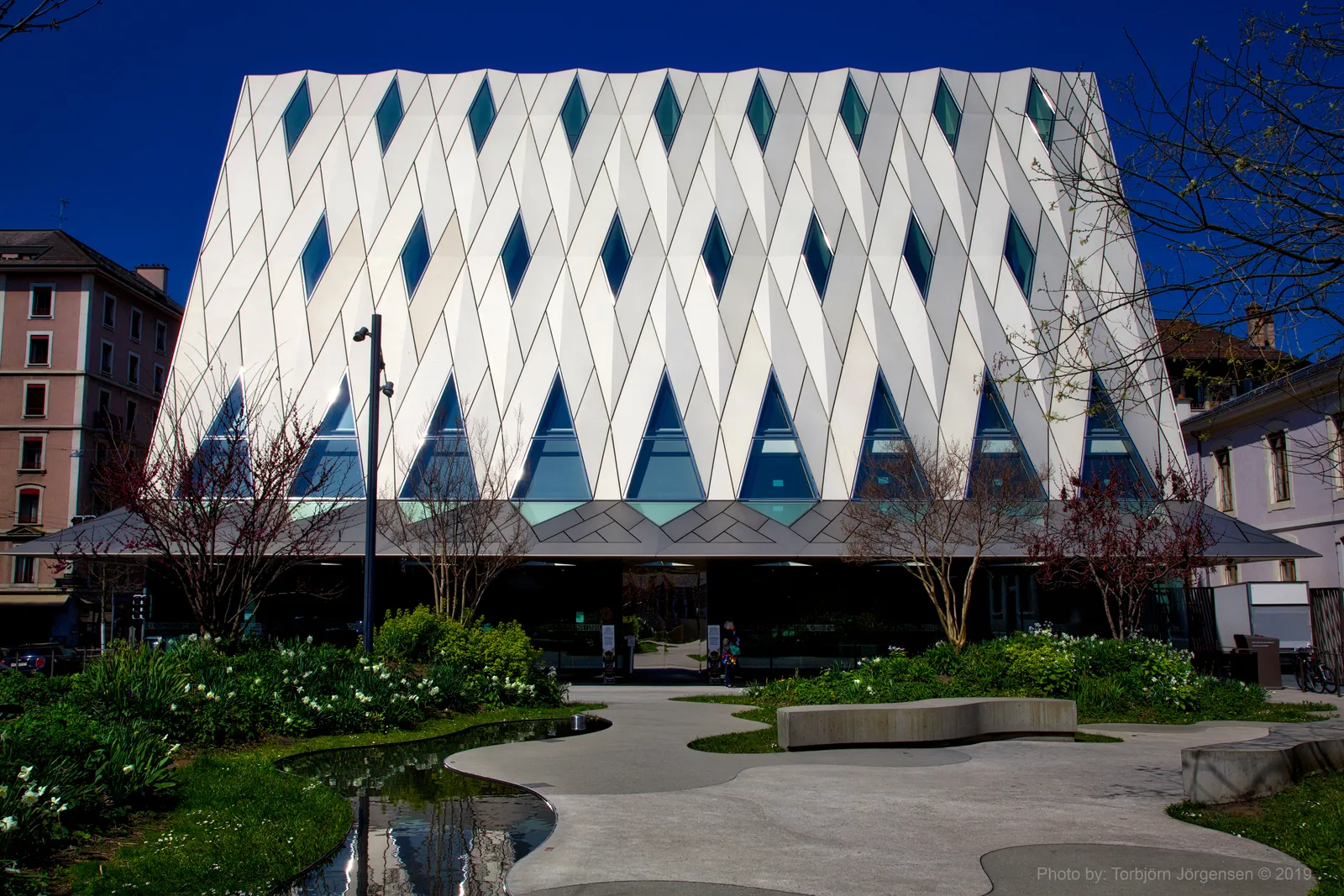
A low white building stands on Boulevard Carl-Vogt a few minutes from the plaine, its facade folded into a grid of diamond panels with dark glazing set between them, finished in 2014 to a design by the Zurich architects Marco Graber and Thomas Pulver. It took the European Museum Prize three years later.
Most of the collection is below ground. The permanent exhibition, called The Archives of Human Diversity, puts around a thousand objects into large colour-coded cases split across five geographical departments: Africa, the Americas, Asia, Europe and Oceania. Entry to it is free, all the time, with temporary shows ticketed separately. For a layover that is the useful part: no booking, no queue, no decision to make about whether it is worth the money.
MAMCO hangs contemporary art in a former factory
Rue des Vieux-Grenadiers runs off the western side of the plaine into a yard of old industrial buildings, and the largest of them holds Geneva’s museum of modern and contemporary art. The building has been left looking like what it was, concrete floors and factory windows, and the museum works in cycles, rehanging large parts of its space between them rather than maintaining a permanent route through the collection, so what is on the walls genuinely differs between visits.
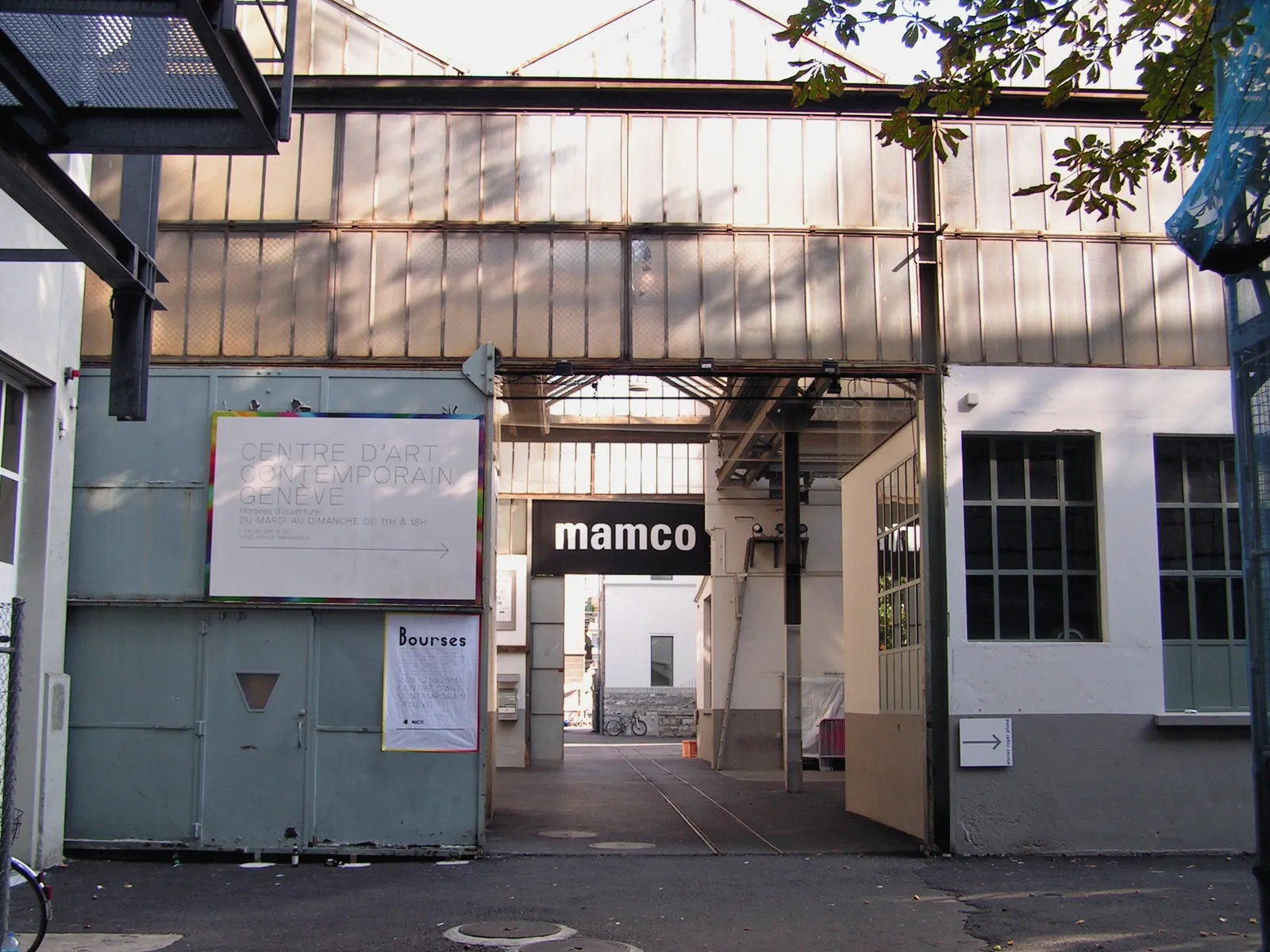
Entry is under CHF 10 and free on the first Sunday of the month, which is also one of the flea-market days, so once a month the two line up. Everything on this page sits on the plaine or a few minutes off it, and the plaine’s surface is crushed granite rather than pavement, which small suitcase wheels dig into instead of rolling across.
Trams from the plaine reach the station in about ten minutes
Stops sit along both long sides of the open ground, and services run north across the Rhône to Genève-Cornavin in roughly ten minutes on a unireso zone 10 single at CHF 3. From Cornavin, the train out to Genève-Aéroport takes seven minutes and runs up to seven times an hour at peak, so an hour and a quarter from here to a departure gate is a comfortable allowance.
This is the left bank’s working half rather than its scenic one, and that is the whole reason to pick it: no queue, no lake, no climb. The main Geneva guide takes the other side of the river and the hill above it, which is the better call on a first visit; this one is for a second, or for a Wednesday morning when the market is out and the alternative is looking at a cathedral you have already seen.
Frequently asked questions
What should I do during a layover near Plainpalais in Geneva?
Time it to the flea market if you can: traders have filled the Plaine de Plainpalais on Wednesdays, Saturdays and the first Sunday of the month since 1970, and it costs nothing to walk. A few minutes off the same ground, the ethnography museum shows around a thousand objects from five continents with free entry to its permanent collection, and MAMCO hangs contemporary art in a converted factory nearby. Three hours covers the market and one museum comfortably. On a non-market weekday the plaine itself is just open ground, so lead with the museums instead.
When is the Plainpalais flea market on?
Wednesdays, Saturdays and the first Sunday of each month, which it has been since 1970. Traders set up early and start packing down through the afternoon, closer to four in winter and later in summer, so a morning arrival sees the market at full spread and a late-afternoon one may find half of it gone. There are separate food and book markets on other days, but the flea market is the one worth planning around.
Which museums near Plainpalais are free?
The ethnography museum's permanent exhibition costs nothing at any time, which makes it the reliable option. MAMCO charges for entry, under CHF 10, and opens free on the first Sunday of the month, which is also a flea-market Sunday, so the two line up once a month. Temporary exhibitions at either are ticketed separately from the permanent displays.
Is Plainpalais a good option in bad weather?
Half of it is. The plaine has almost no shelter, being open ground by design, and a wet market day thins the stalls out considerably. The museums are the reason this area still works in rain: both sit within a few minutes of the plaine's edge, neither needs booking, and the ethnography museum's free permanent collection means a change of plan costs nothing. Trams stop at the edge of the open ground, so the exposed stretch is short.