Geneva Layover: Palais des Nations Area
Part of the full Geneva Layover: Jet d'Eau and Old Town, GVA
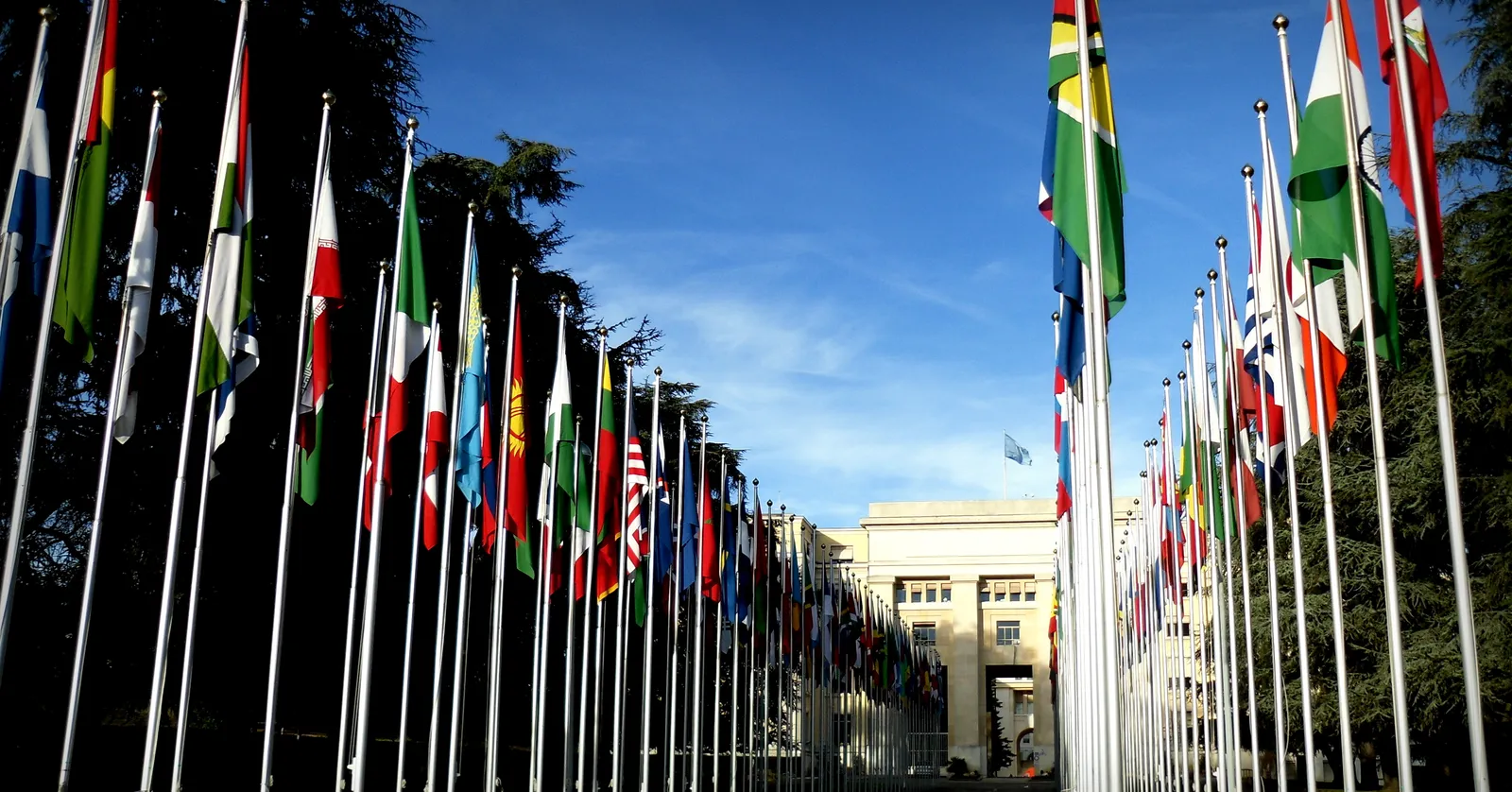
Geneva’s Palais des Nations stands at the head of an avenue of member-state flags in the north of the city, and the two museums within a few minutes of its gates, the Red Cross and Red Crescent Museum and the Musée Ariana, are open to anyone walking up, which the Palais itself is not.
The Red Cross and Red Crescent Museum, CHF 15 opposite the UN gates
Avenue de la Paix runs past the UN complex, and the museum on its far side is built down into the slope so that most of it sits below the road, arranged around a sunken courtyard under white canopies printed with the two emblems. The permanent exhibition is split into three parts, and each was handed to a different architect: Gringo Cardia took defending human dignity, Francis Kéré restoring family links, and Shigeru Ban reducing natural risk, with Atelier Oï tying the common spaces together. Kéré’s section is built around facsimiles of the International Prisoners of War Agency’s archives from 1914 to 1923, laid out in glass cabinets and on consultation tables, and it is the part most people remember afterwards.
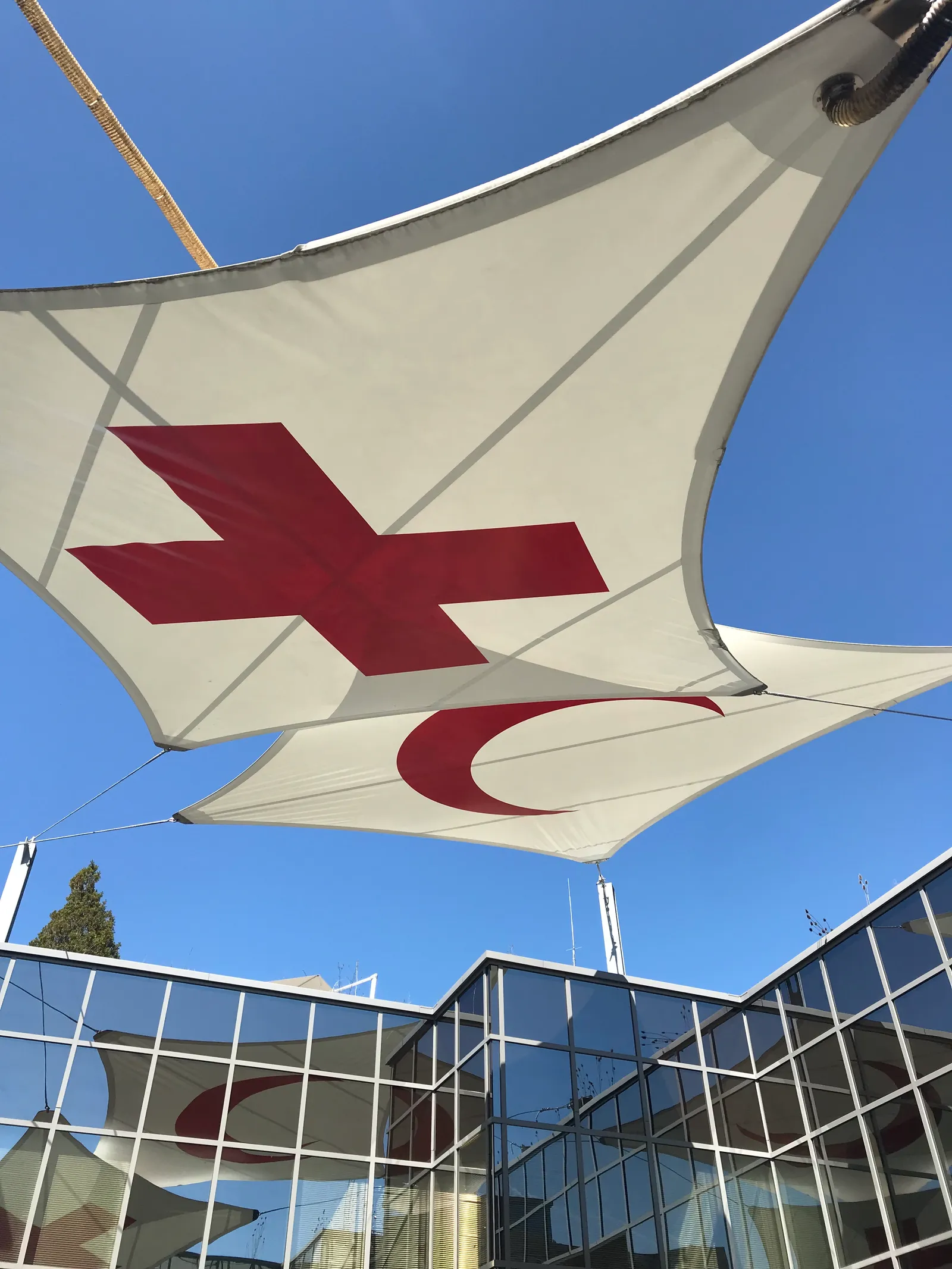
Adult entry is CHF 15, CHF 7 for anyone from twelve to twenty-two or over sixty-five, and free under twelve. It opens Tuesday to Sunday from 10am to 5pm, and stays open until 8pm on Thursdays, which is the one evening in this quarter when anything is still running after the offices empty.
Palais des Nations tours have to be booked before you fly
The United Nations’ European headquarters occupies the old League of Nations building, finished in 1938 in the Ariana park, and guided visits last about an hour through the assembly and council chambers. Getting on one is the hard part: tickets are sold only through the United Nations’ own site, they can go months in advance, and buying one is only the first step, because you then register separately for a digital access badge that has to be approved and issued before the day. Photo ID has to match it at the gate.
Everything past those gates runs through a security screening point with its own rules about what can come in, which makes this the one corner of Geneva where arriving with a suitcase is not merely awkward but a reason you may not get through at all.
Place des Nations, the square in front, needs none of this. It is open ground at the head of the flag avenue with fountains set into the paving, busy with children in them on a hot afternoon, and it is where the quarter’s protests and photographs both happen. The large sculpture standing at one end has been there since 1997 and is hard to miss.
The Musée Ariana’s ceramics are free every day it opens
Down in the park below the UN buildings stands a symmetrical 19th-century palace with a domed centre and a colonnaded front, put up between 1877 and 1884 by the collector Gustave Revilliod, named for his mother Ariane de la Rive, and left to the city when he died. It holds around 20,000 pieces of ceramic and glass covering the last twelve hundred years, Swiss and European faience and porcelain alongside Middle Eastern and East Asian work, and the collection is the only one of its kind in Switzerland.
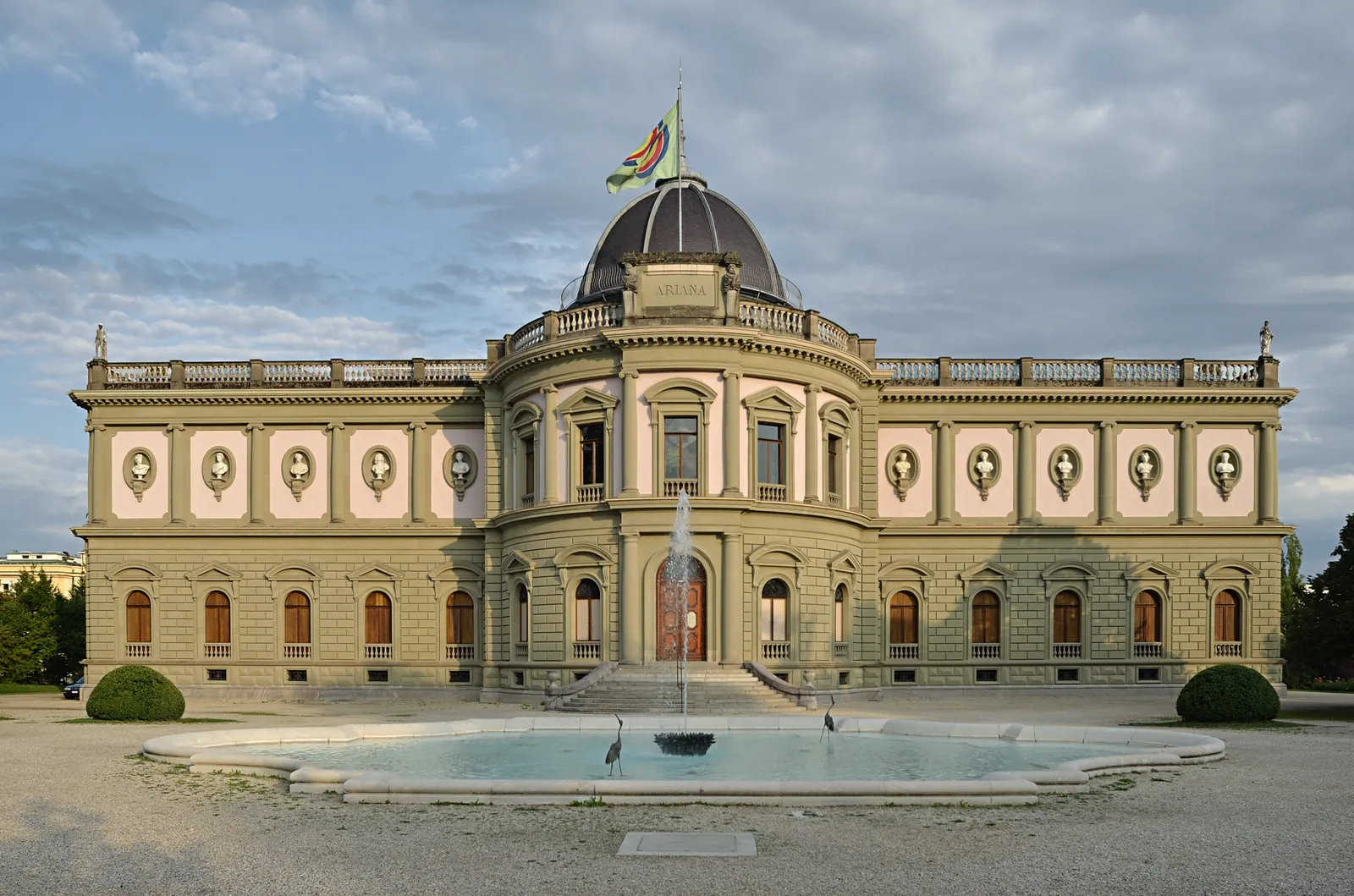
The permanent collection is free, all the time, with temporary exhibitions ticketed separately and free themselves on the first Sunday of each month. It opens Tuesday to Sunday, 10am to 6pm. Between this and the square outside the gates, a layover here can be spent entirely without a booking and almost entirely without paying, as long as it is not a Monday.
Trams from Nations run to the station and on toward the airport
The Nations stop sits at the edge of the square, and the trams and buses through it run down into the centre in about fifteen minutes and out to the airport side on the same network, which puts this quarter roughly midway between the two. A unireso zone 10 single is CHF 3 and covers any of them. From here, allow around an hour and a quarter to be at a departure gate: the ride down or across, collecting your bag, the seven-minute train from Genève-Cornavin out to Genève-Aéroport, and check-in.
This part of Geneva is flat, which the main city guide route emphatically is not, and that is the real reason to choose it on a short gap: no cobbled climb, no stairs, two museums and a square inside a few hundred metres of each other. The trade is that its centrepiece is the one thing here you cannot decide to see on the day.
Frequently asked questions
What should I do during a layover near the Palais des Nations in Geneva?
The realistic plan is the museums rather than the UN itself. The Red Cross and Red Crescent Museum is opposite the gates at CHF 15, and the Musée Ariana in the park below shows twelve hundred years of ceramics and glass with free entry to its permanent collection. Place des Nations, the flag-lined square outside, is open ground at any hour. Three hours covers all three, but a tour inside the Palais des Nations needs booking well before your flight and cannot be added on the day.
Can you get inside the UN in Geneva without booking ahead?
No. Tours are sold only through the United Nations' own website, and they can sell out months ahead, sometimes as much as a year. Booking also involves registering afterwards for a digital access badge that is approved and issued before the tour date, and you need valid photo ID with you on the day to match it. None of that can be compressed into a layover decided at the airport, so treat the inside of the Palais as something to plan for a trip rather than a connection.
Is the Palais des Nations area worth it on a Monday?
Much less so. Both museums close on Mondays, the Red Cross and Red Crescent Museum and the Musée Ariana alike, which removes the two things here you can actually walk into on the day. What is left is Place des Nations and the parks, which is a pleasant half hour rather than an afternoon. On a Monday layover the city centre across the river is the better use of the time.
How do you get to the international quarter from central Geneva?
Trams and buses run up from the centre to the Nations stop in about fifteen minutes, and the same services carry on toward the airport side, so this quarter sits roughly between the two. A unireso zone 10 single covers any of them for CHF 3. Coming from the main station it is a shorter trip than the walk up into the Old Town, and unlike that walk it is flat and step-free the whole way.