Valencia Layover: Malvarrosa and Cabanyal
Part of the full Valencia Layover: Old Town and Turia From VLC
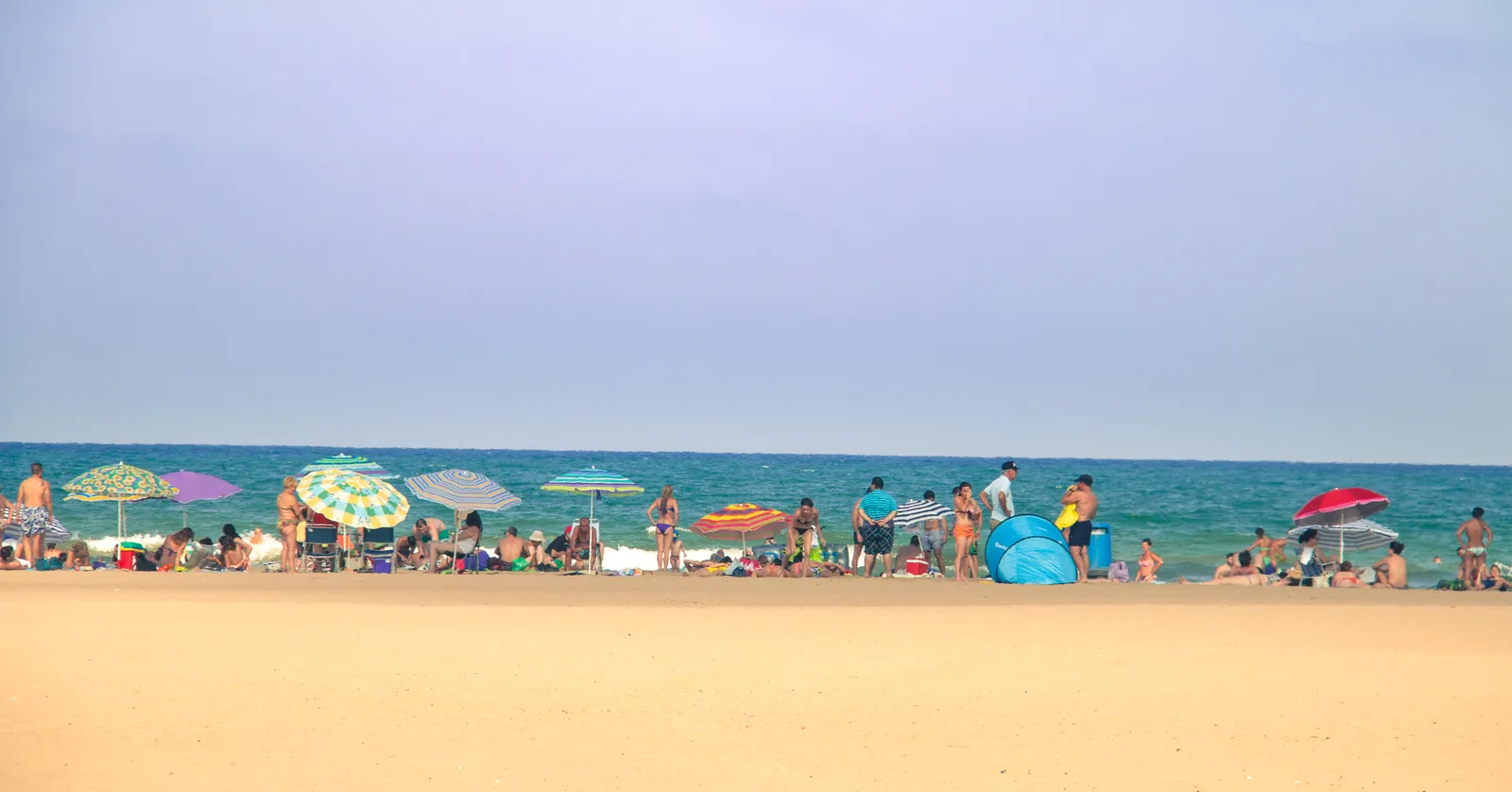
Valencia’s sea end starts at Marítim, a direct metro ride from the centre with no change of trains: a tram stop or two further and you are on Malvarrosa’s sand, with the tiled house fronts of the old fishing quarter and the marina’s America’s Cup buildings on either side of it.
The paella restaurants along Malvarrosa beach
Malvarrosa is a working city beach rather than a resort strip: wide, pale, straight, with a paved promenade running behind it for a couple of kilometres and a row of restaurants facing the water. Lifeguards are on it through the season and the water shelves gently, which is why families use it rather than driving out of town.
The restaurants along the front are the ones that made this stretch famous, because paella is a dish from these fields and this coast rather than a national one, and lunch here is the version served where it was invented. If a whole afternoon is going spare, a cooking class that ends in eating the result is bookable through a tours and activities platform, though it takes several hours and is a decision about the whole gap rather than a stop on the way.
Tiled house fronts in the old fishing quarter
Between the tram and the water sits El Cabanyal, which was a separate fishing village until Valencia grew out to meet it in the late nineteenth century. The houses are two storeys, built end-on to the sea in a grid of narrow streets, and their fronts are faced in coloured ceramic tile: blues, greens and whites in zigzags and checkerboards, a working-class reading of the modernista taste that was going up in the city centre at the same time.
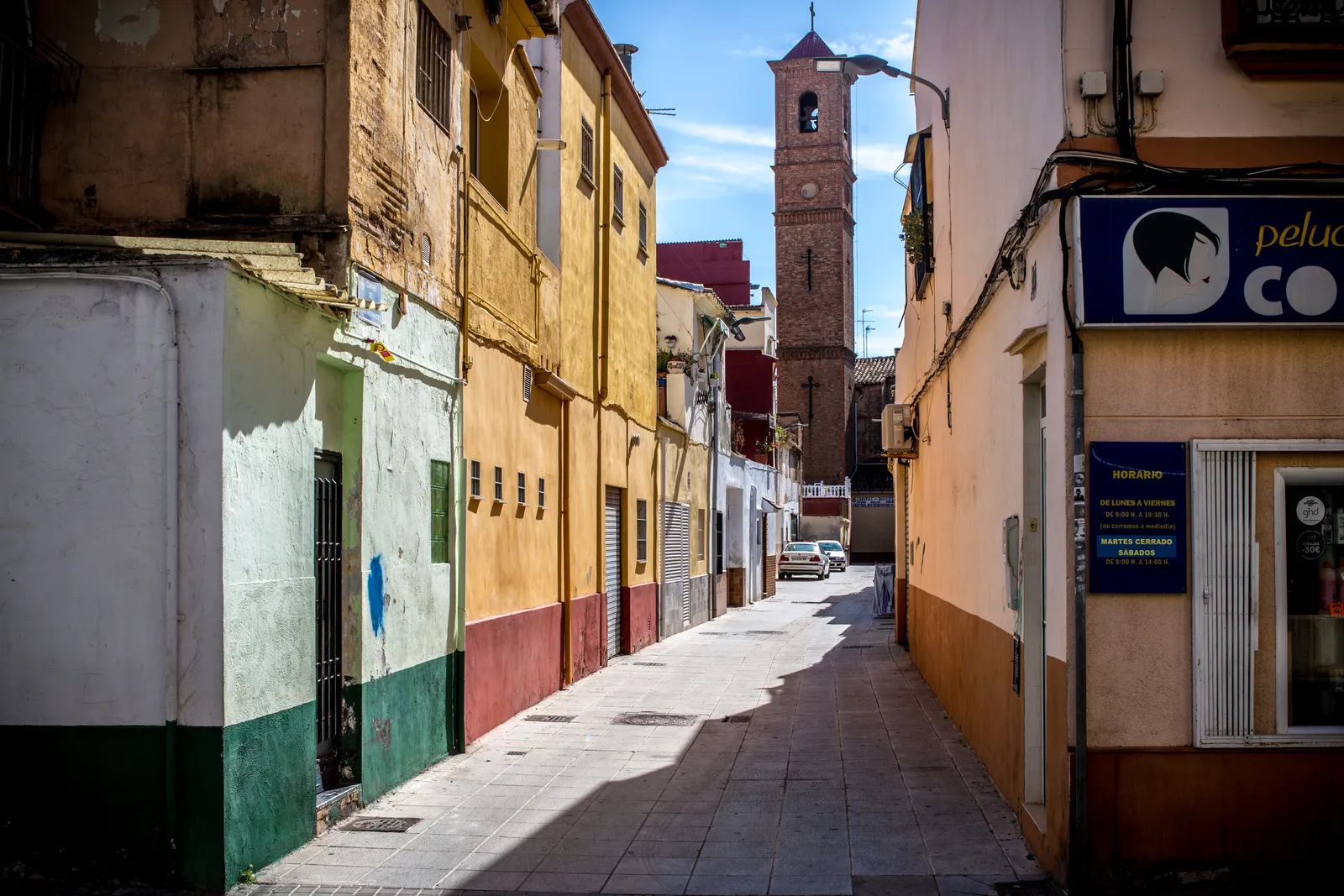
The quarter was catalogued as a protected asset in 1993 and then spent the 2000s fighting a road scheme that would have cut a boulevard straight through it. It survived, half-restored and half not, which is what it looks like now: a repainted facade next to a boarded window next to a new bakery.
Whatever you are carrying comes onto the sand with you, and there is nowhere on the beach to leave a bag while you swim, so this is one itinerary where the suitcase has to be dealt with in the centre first rather than dragged along.
The novelist’s villa on the Malvarrosa seafront
Halfway along the promenade, behind railings and a screen of palms, stands the house Vicente Blasco Ibáñez built for himself on this beach. He was the novelist who wrote about these fishermen and these fields, ran a newspaper, went into exile, and had Hollywood turn two of his books into films.
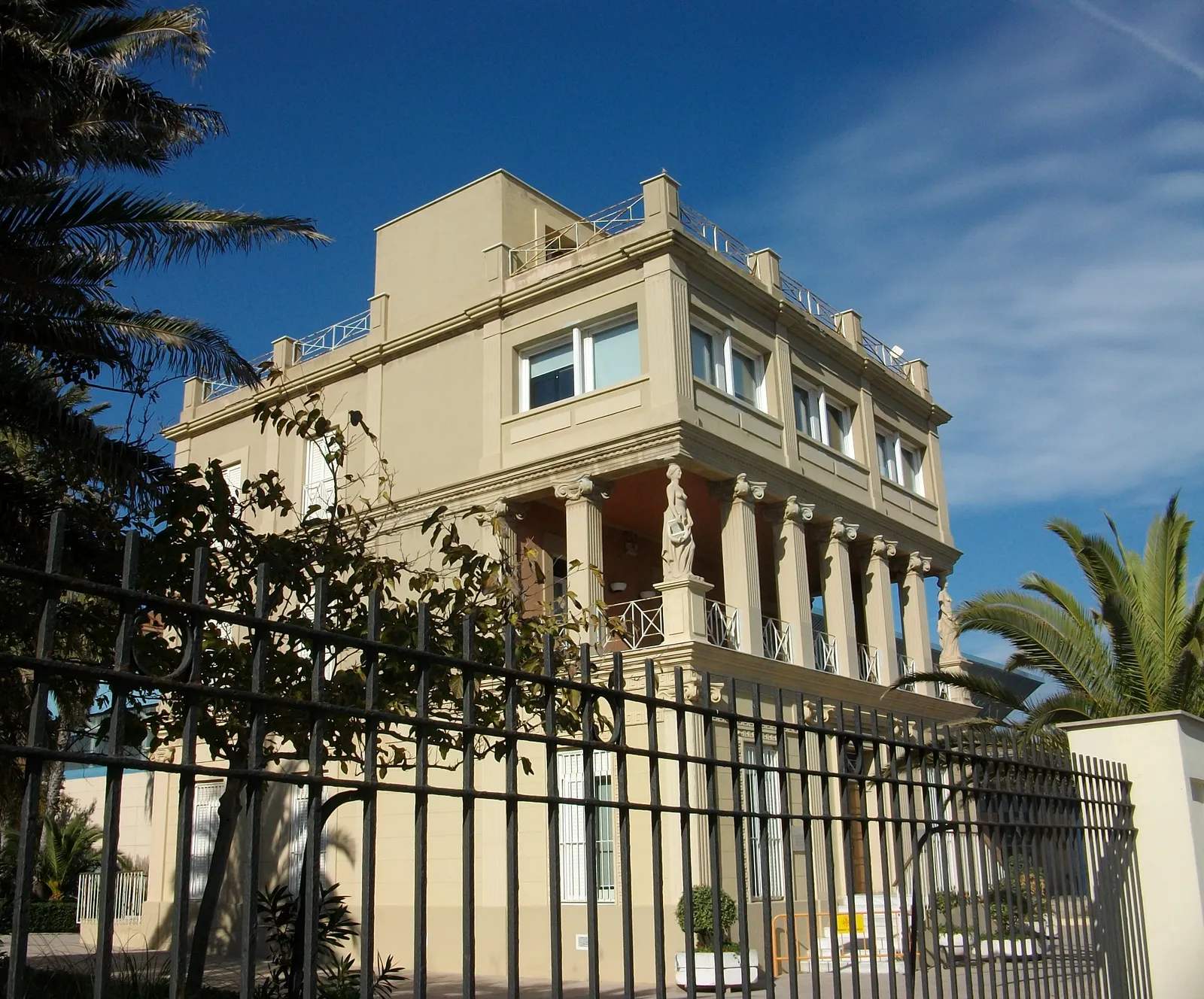
The house is a museum now, over three floors and a garden, with his furniture and the fittings from the offices of El Pueblo, the paper he ran. It is two euros on weekdays, free on Saturdays, Sundays and public holidays, open 10am to 2pm and again from 4.30pm, and closed on Mondays.
Veles e Vents on the America’s Cup quay
South along the water, where the beach ends and the port begins, Valencia hosted the America’s Cup in 2007, the first time it had ever been sailed in Europe. What is left of it is the harbour basin the challengers used and David Chipperfield’s building at the head of it, put up in eleven months for the preliminary regattas of 2006.
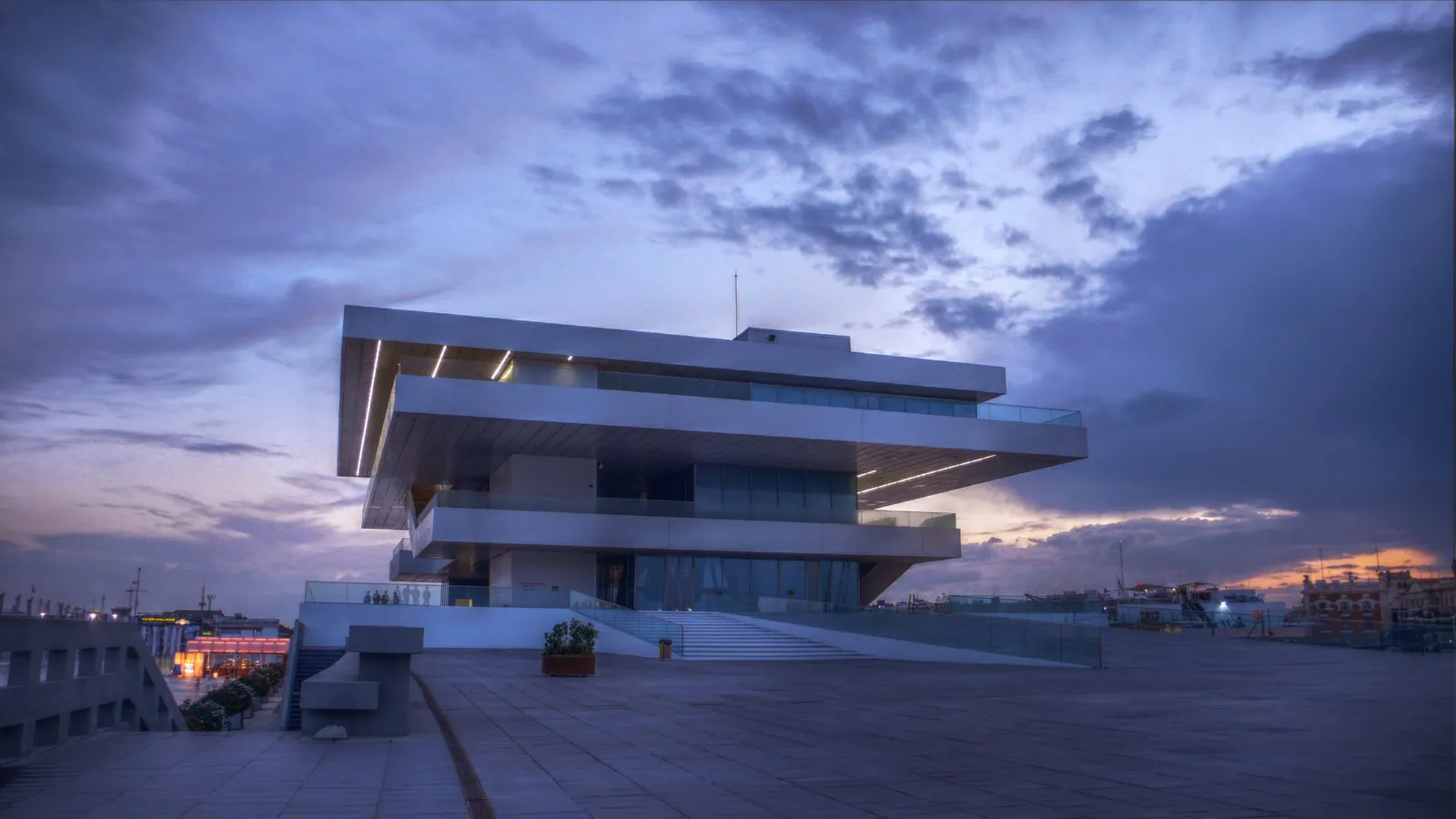
It is four floors of stacked concrete slabs, each one pushed out further than the one below, so the whole thing reads as a set of shelves aimed at the water. The decks were built for spectators and they are still public: you can walk up, sit down and look back across the marina without buying anything, which on a hot afternoon is the shadiest free seat on this side of the city.
The tram runs later than the metro out here
Getting back is the part worth planning. Line 5 goes directly from Marítim to Valencia Airport, but it is the earlier-finishing of the two airport lines, stopping around 10.30pm on weekdays against line 3’s 11.30pm, so a late departure may mean riding line 5 as far as Xàtiva and changing there instead of running the whole way on one train. The fare is 4.80 euros either way.
If the sea is not what you came for, the same lines run back to the middle of the city in fifteen minutes, where the main Valencia walk covers the market, the Silk Exchange and the cathedral in a much tighter radius than anything out here.
Frequently asked questions
Can I get to the beach from Valencia airport without changing lines?
Almost. Metro line 5 runs the whole width of the city, from the airport station at one end to Marítim at the other, so there is no change on the metro itself. From Marítim you cross to the tram: line 6 for Les Arenes or Eugènia Viñes, which are the stops on Malvarrosa, or line 8 for Marina Reial Joan Carles at the marina. Reckon on about 45 minutes from the terminal, most of it sitting down.
Where do I put my things while I swim?
That is the real problem with a beach stop on a flight day, and there is no good answer on the sand itself: the promenade has showers and kiosks but nowhere staffed to leave a bag, and an unattended suitcase on a busy beach is not a plan. Leave the luggage at a storage point in the centre before you come out and bring only what you would take to a pool.
Is the Blasco Ibáñez house worth going into?
If you already know who he was, yes; the novelist's own seafront villa is preserved with his furniture and the fittings from his newspaper's offices. It is two euros on weekdays and free on Saturdays, Sundays and public holidays, open mornings and again from half past four, and shut on Mondays. If the name means nothing to you, the garden and the outside are visible from the promenade and that is enough.
Is the water actually swimmable, and when?
Malvarrosa is a city beach with lifeguards on it through the season, and the Mediterranean here is warm enough for most people from June into October. Outside those months it is a walking beach: the sand is wide, the promenade is flat and paved for a couple of kilometres, and in winter the fishing boats pulled up on the sand and the horses being exercised at the waterline are most of what is happening on it.