Valencia Layover Near Estació del Nord
Part of the full Valencia Layover: Old Town and Turia From VLC
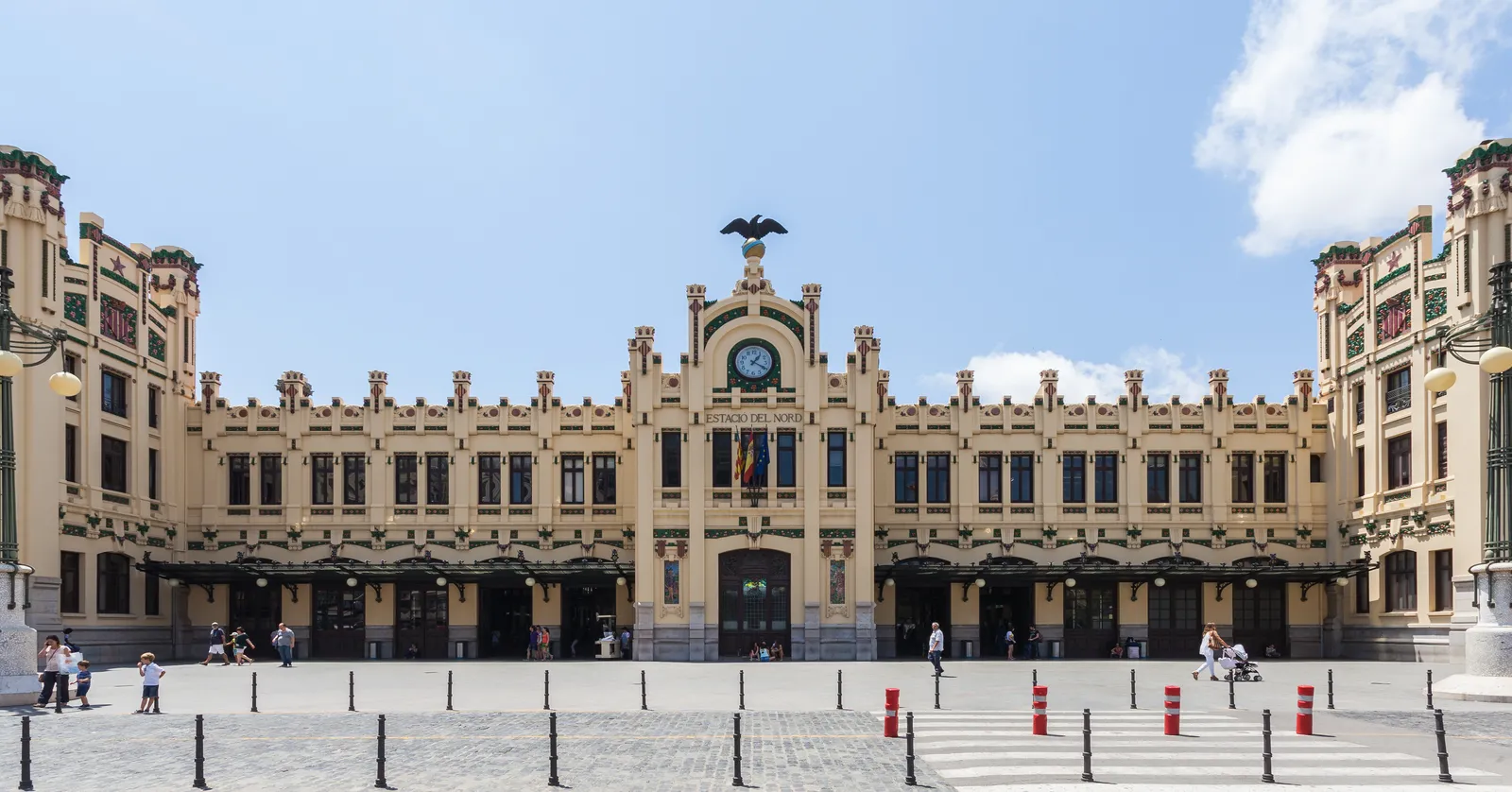
Valencia’s Estació del Nord is a 1917 modernista terminus with the words for a good journey set in mosaic above its doors in several languages, the 1859 brick bullring stands directly alongside it, and the Mercado de Colón is a ten-minute walk north through the city hall square.
The mosaics in Estació del Nord’s ticket hall
Demetrio Ribes designed this station in the Viennese Secession manner and it opened on 8 August 1917, which makes it a working railway terminus and a listed piece of architecture at the same time. The entrance hall is where the money went: trencadís mosaic across the walls, carved wooden ticket windows, and ceramic panels of the Valencian huerta, orange pickers, fruit, farmhouses, worked into the surfaces at eye level.
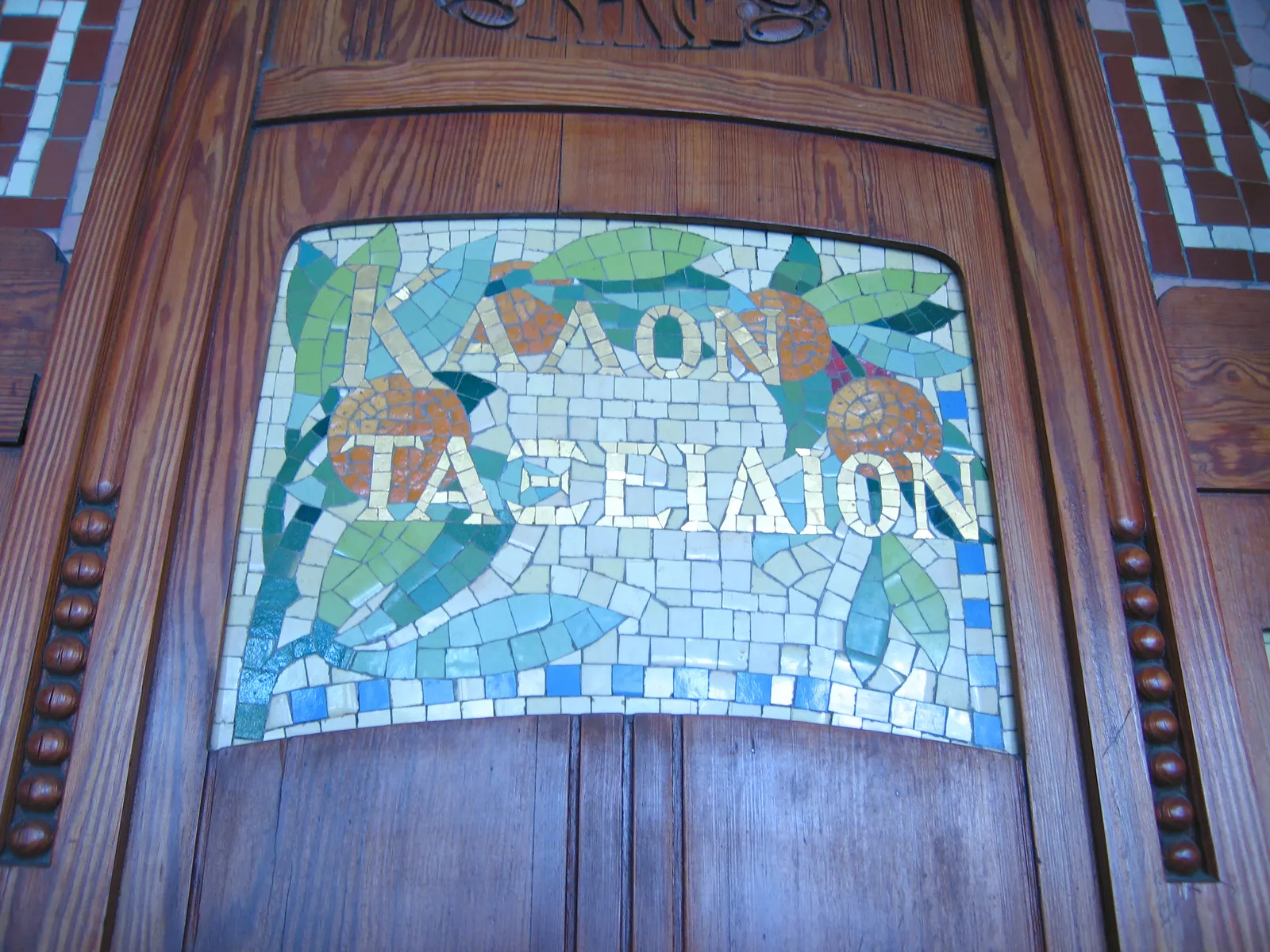
Above the doors and windows of that hall, the woodwork carries “good journey” spelled out in mosaic in a run of different languages, Greek among them, aimed at whoever was boarding. All of it is free to see, on the way through the ticket hall before a train or a metro, with nothing to pay and nowhere else to walk first.
The bullring on Carrer de Xàtiva
On Carrer de Xàtiva, immediately alongside Estació del Nord, an ellipse of bare brick stands with four tiers of open arches around it. Sebastián Monleón finished the Plaza de Toros in 1859, working from Roman amphitheatres, the Colosseum and the arena at Nîmes, which is why it looks less like a Spanish bullring than like something excavated.
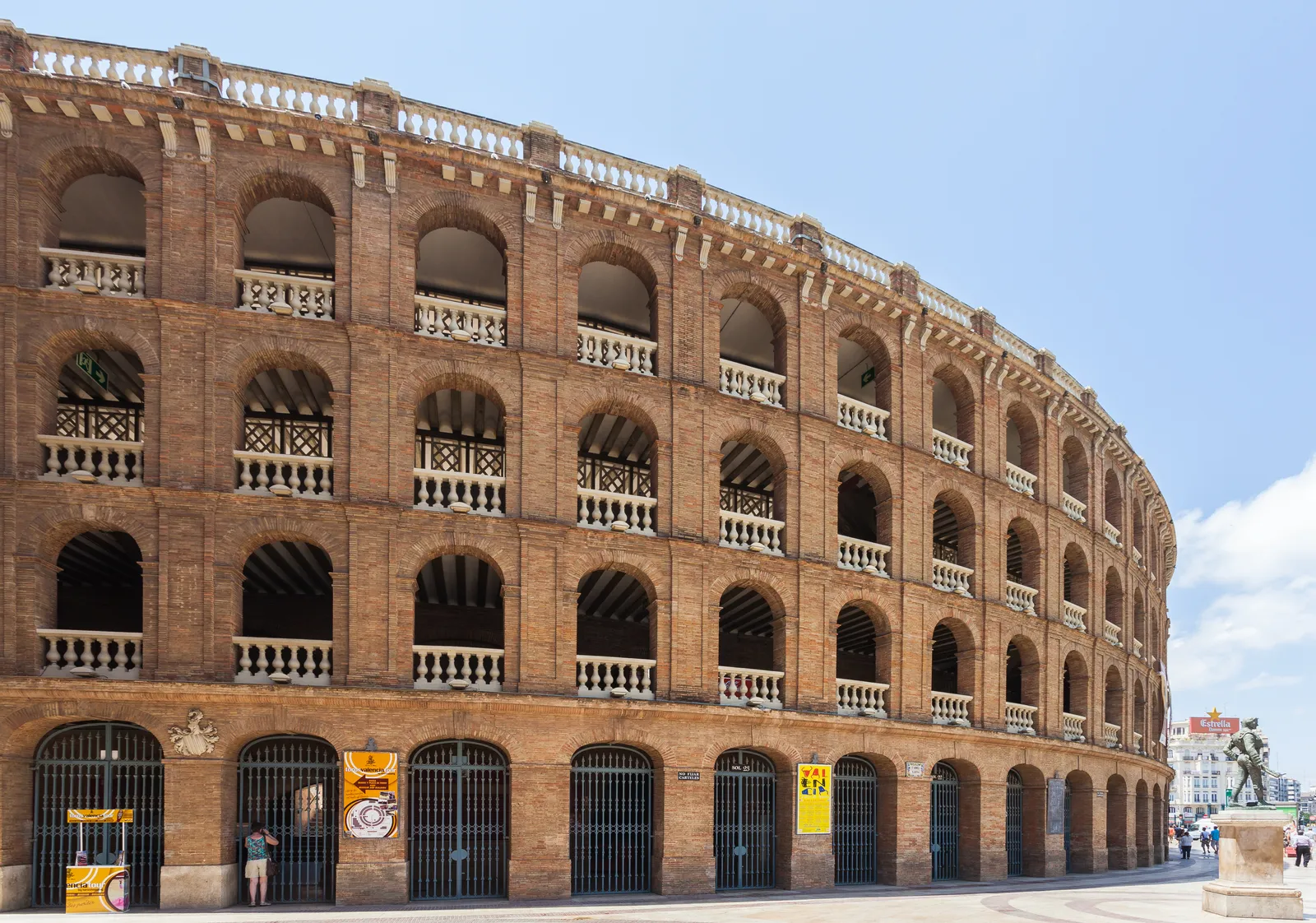
The outside is free to walk around and takes about ten minutes. Inside, the Museo Taurino runs Tuesday to Saturday and Sunday mornings, with the cheap ticket covering the collection and the dearer one taking you out onto the sand of the ring itself.
Arriving by train means the suitcase is with you from the first minute rather than waiting at a hotel, and the metro under this corner is stacked over two platform levels, so getting down to a train can mean two or three separate lifts with a bag in tow. Leave it at a storage point by the station and the whole afternoon opens up.
Horchata under the Mercado de Colón’s brick arch
Ten minutes north-east, on Carrer de Jorge Juan, Francisco Mora built a market between 1914 and 1916 with a brick and stone arch at each end, ceramic mosaic across the gable and an iron and glass hall between them. It stopped being a food market decades ago; what is under the roof now is cafés, wine bars and gourmet counters, and going in costs nothing.
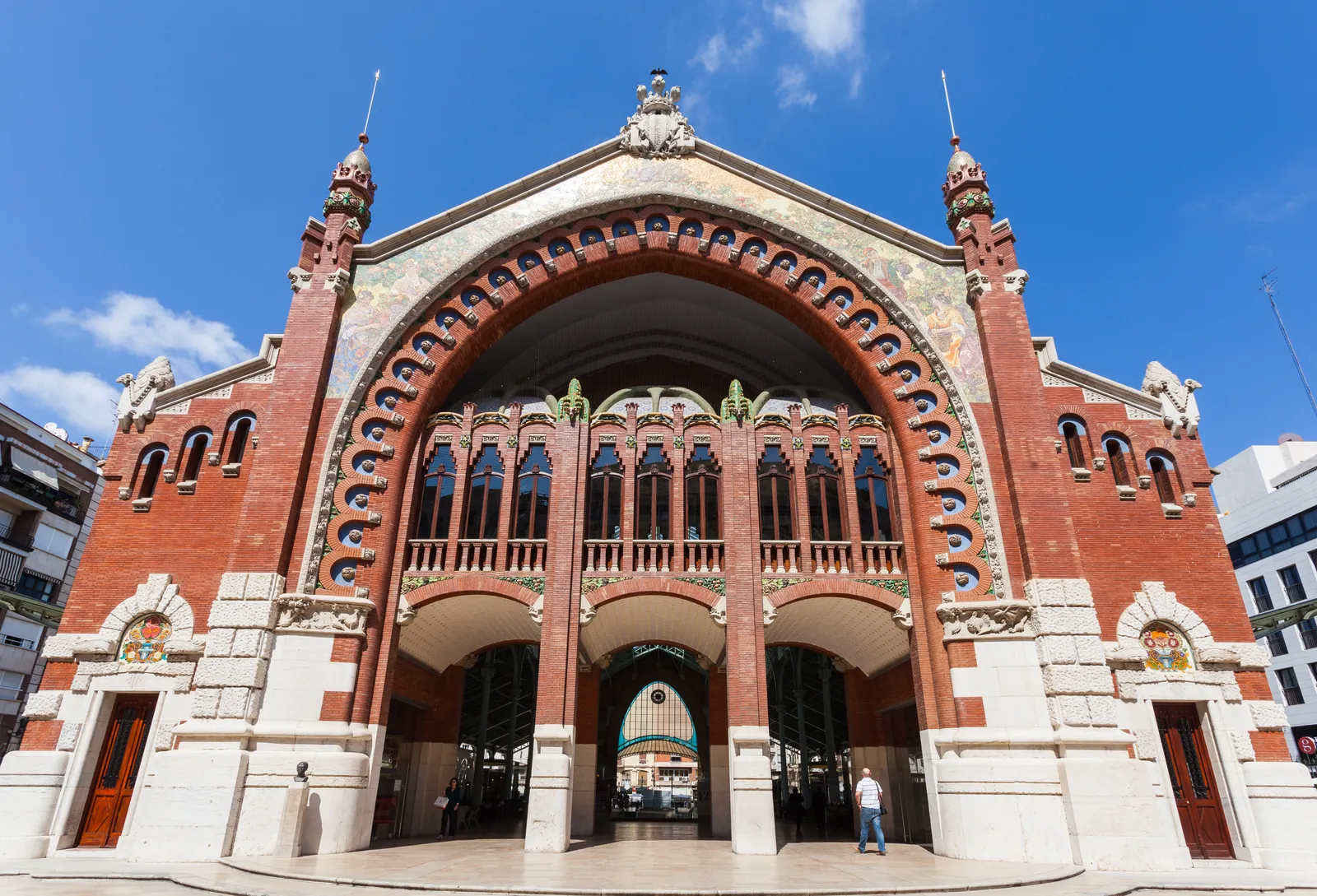
The thing to order downstairs is horchata: a cold, opaque drink pressed from chufas, the tiger nuts grown in the fields north of the city, served with fartons, long sugared buns made specifically for dunking in it. It is not a coffee substitute and it is not almond milk; it is its own thing, and this is one of the easy places to try it without hunting for a horchatería.
A daytime gunpowder display in the city hall square each March
The Plaza del Ayuntamiento sits between the station and the market, five minutes from either, a wide triangular space with a fountain running in the middle, flower stalls along one side and the domed city hall at the top.
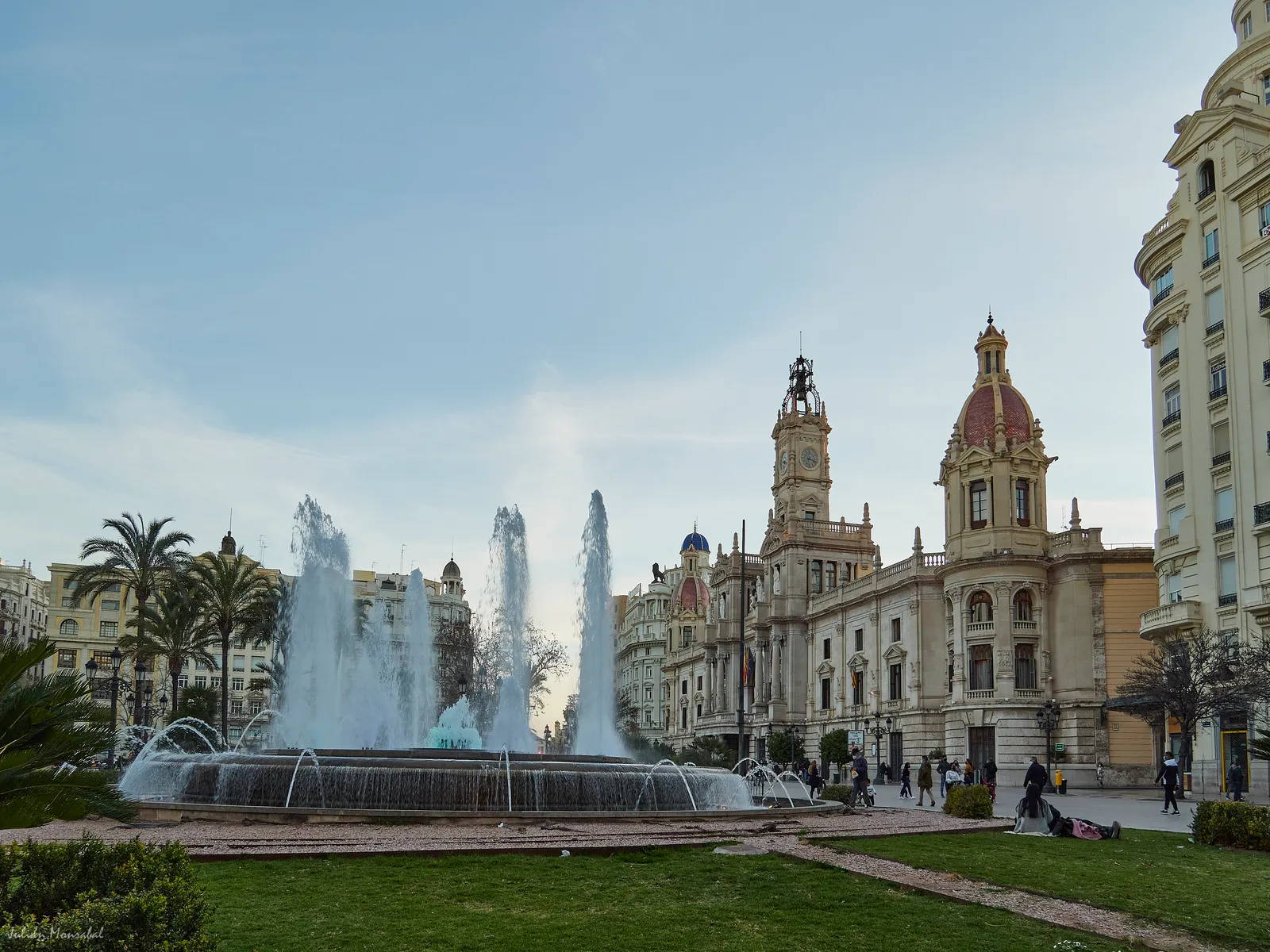
From 1 to 19 March, every day at two o’clock exactly, this square holds a mascletà: a five-minute rhythmic sequence of gunpowder charges fired in daylight, built to be felt in the chest rather than looked at. It is free, nobody checks a ticket, and the crowd starts building by half past one. Outside those nineteen days the square is simply the place the city walks through, and the fountain is a reasonable place to sit with a bag of nothing in particular.
The high-speed trains terminate at a different Valencia station
Trains from Madrid and Barcelona do not come into this building. They terminate at Valencia-Joaquín Sorolla about 600 metres away, and a free shuttle bus, included with a Renfe ticket, runs between the two on its own roadway in roughly two minutes. Walking it takes ten minutes on flat ground.
For the airport, the metro is directly underneath: lines 3 and 5 from Xàtiva reach Valencia Airport in about 25 minutes for 4.80 euros, with trains every 15 minutes on weekdays. If the day is going to involve several of these journeys plus a museum or two, the 24-hour city card sold through a tours and activities platform covers the airport metro in both directions and the municipal monuments as well, which is worth the arithmetic before you buy singles. Pick the bag up on the way to the platform; the storage points around this corner sit between the concourse and the metro entrance anyway.
Frequently asked questions
How do I get from the high-speed station to Estació del Nord?
A free shuttle bus runs between them for anyone holding a Renfe ticket. Valencia-Joaquín Sorolla, where the trains from Madrid and Barcelona terminate, is about 600 metres from Estació del Nord, and the shuttle takes roughly two minutes because it runs on its own road rather than through traffic. Walking it takes ten minutes and is flat the whole way, which is often quicker than waiting for the bus if you have just missed one.
Is the metro under the station step-free?
There are lifts, but not one lift. Xàtiva, the metro station under this corner, is underground on two platform levels, so reaching the platform you want can mean two or three separate lifts: one down to the ticket concourse, then another or two more down to the tracks. Everything works and everything is signed, it just takes longer than the walk suggests, so add ten minutes to whatever you had budgeted for the airport leg.
Can I go inside the bullring?
Yes, through the Museo Taurino on the Xàtiva street side, which is open Tuesday to Saturday and Sunday mornings and closed on Mondays. The museum alone is a couple of euros; the combined ticket that takes you out into the ring itself with an audio guide is closer to ten. On days when something is actually scheduled in the ring the visit does not run, so it is worth checking the board at the gate before you commit to it.
Is two hours between trains enough for any of this?
Enough for the station hall, the outside of the bullring and a walk up to the Mercado de Colón and back, which is a real hour and a half of Valencia without ever going more than a kilometre from the platforms. It is not enough for the old town: the cathedral, the Silk Exchange and the Mercado Central are the other direction and want a longer afternoon, which is what the main Valencia walk is built around.