Valencia Cruise Port Layover Before a Flight
Part of the full Valencia Layover: Old Town and Turia From VLC
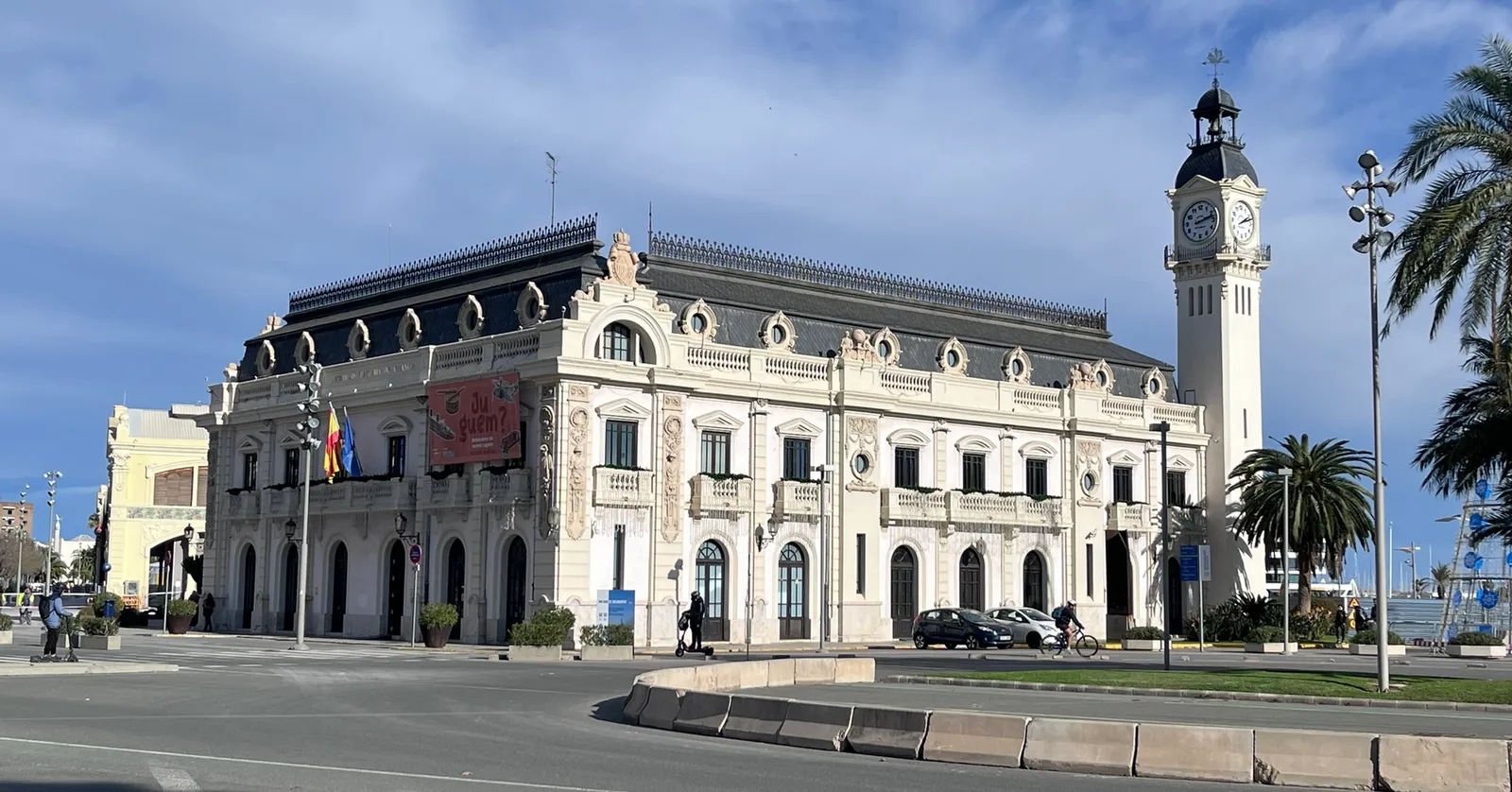
Valencia’s cruise berths sit inside a working commercial port about six kilometres from the cathedral, so the day starts with a shuttle rather than a walk, but the buildings at the passenger dock are worth the ten minutes before you get on it: the Clock Building of 1916 was put up specifically to receive people getting off ships, and the old cargo sheds along the marina quay still carry ceramic friezes of fish across their fronts.
The Clock Building was built to shelter people getting off ships
Federico Gómez de Membrillera, then deputy director of the port, designed this in 1916, and the clock on its tower was the practical part: the port needed one visible from the whole dock to regulate its work. What the building was for is the interesting part. It went up while a new dock was being built, to give travellers coming ashore somewhere out of the weather, and it also housed emigrants waiting for their own ship out so that they would not have to sleep on the quay. The staircase inside, the one they called the royal staircase, was made as wide as the avenue outside because a whole ship’s manifest had to come up it at once.
It is the Port Authority’s headquarters now and the ground floor is used for exhibitions rather than being open all day, so this is a building to look at rather than go into. It still reads as what it was: a piece of civic architecture aimed at people arriving by sea, which is what you are.
Everyone coming off a ship is doing it with a full week’s luggage rather than a cabin bag off a short flight, and the cabins usually have to be cleared by around eight in the morning whatever time the flight leaves, so the suitcase problem starts hours before the airport does. Leave it in the centre at the start of the day, not at the end.
The old cargo sheds on the marina dock
Along the quay north of the passenger terminal stand the tinglados, the port’s original cargo sheds, built between 1911 and 1914 by the same engineer as the Clock Building. From the water they are long iron-framed halls; from the road, each one ends in a stone gable with a wide arched window of red-framed glazing, more like a market hall than a warehouse.
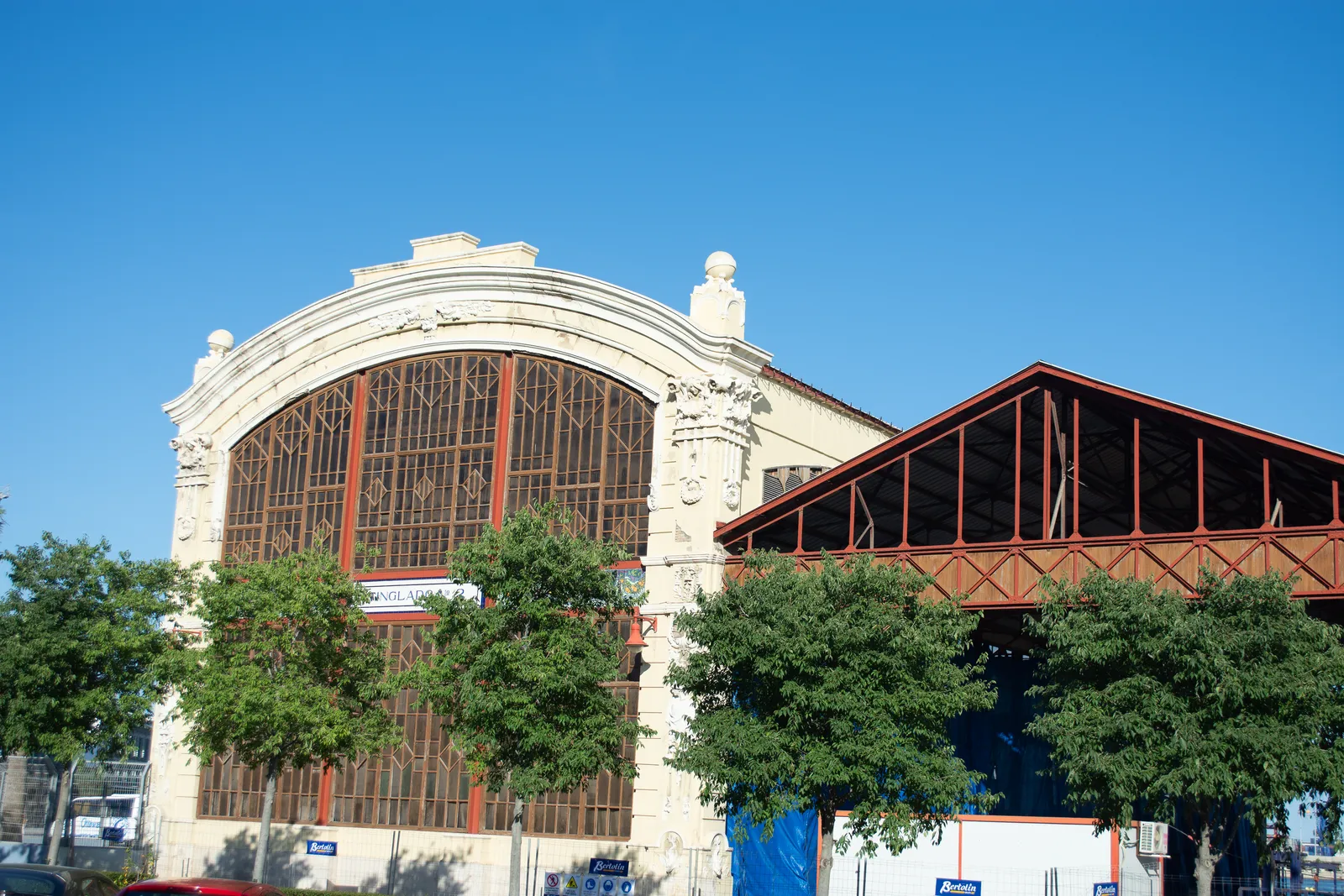
The detail worth walking up to is the frieze. Under the windows, painted ceramic panels run the width of the facade with fish, seaweed and shells on them, a decorated front on a building whose only job was holding crates.
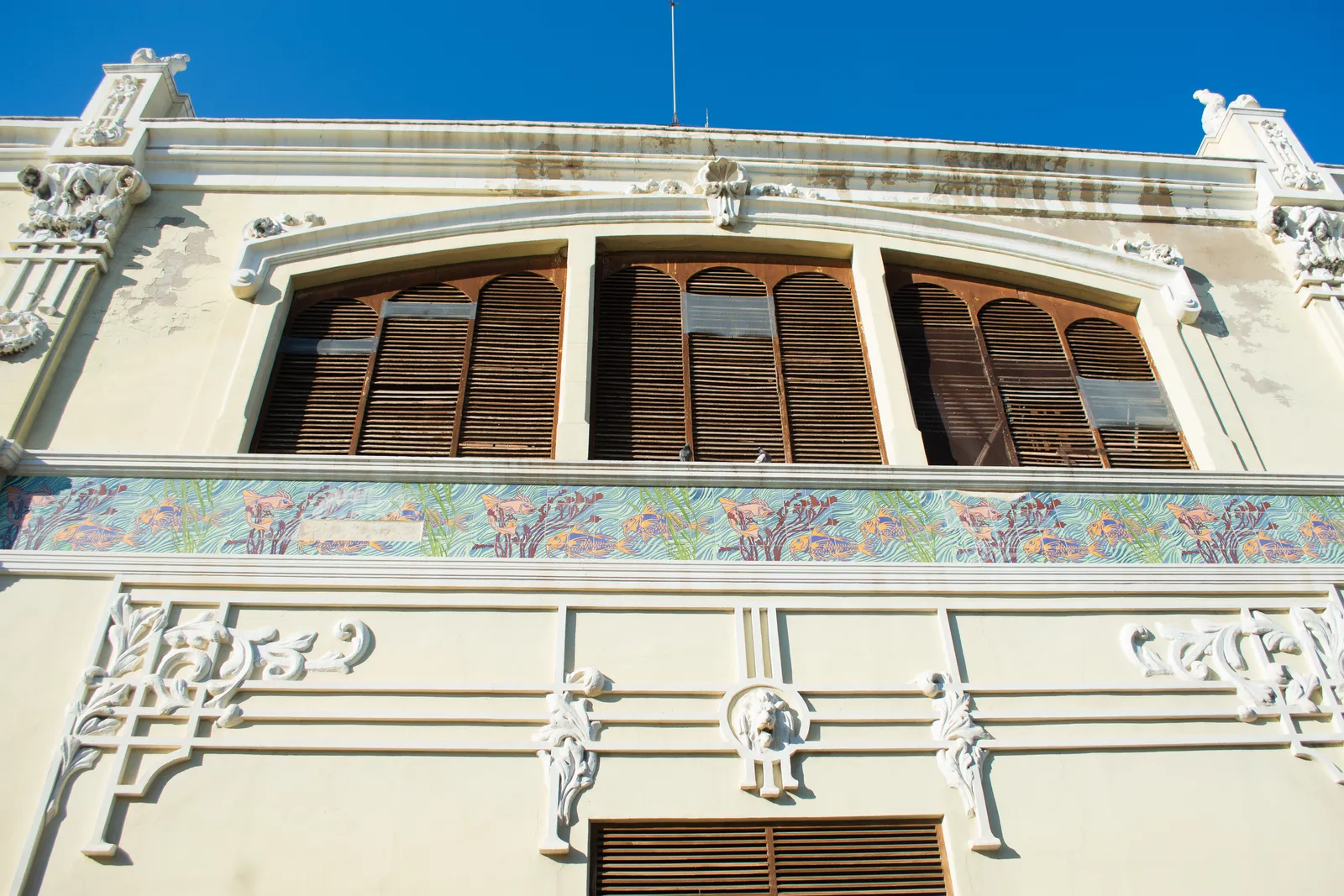
Only some of the sheds survive and they are used for exhibitions and events now rather than cargo. Beyond them the quay opens into the yacht basin, and the beaches and tiled streets north of it have a route of their own if the sea end of the city is where you would rather spend the call.
The port gate is a bus ride from the old town, not a walk
Six kilometres is the figure that decides the shape of the day. Most ships run a shuttle to the Plaza del Ayuntamiento and that is the fastest free option; failing that, a city bus from the stop outside the port entrance takes about 45 minutes into the historic centre, and a taxi does it in roughly fifteen.
Whichever you take, the centre is where the day is: the main Valencia walk covers the Mercado Central, the Silk Exchange and the cathedral inside a ten-minute radius, which is the right density for a call that is shorter than it looks on the itinerary. If you would rather not commit to one quarter, the hop-on hop-off sightseeing bus is bookable in advance through a tours and activities platform and stops at both ends of the city, which suits a port day better than most.
The airport is on the far side of the city from the quay
The port is east, the airport is west, and the metro crosses between them in one line. From the marina, the tram runs to Marítim, and metro line 5 leaves Marítim for Valencia Airport without another change: about 45 minutes of riding once you are on it, 4.80 euros, and a station on the ground floor of the terminal at the far end.
The one thing to check is which line you are on for the last leg of the evening. Line 5 gives up around 10.30pm on weekdays while line 3 runs until about 11.30pm, so a late flight is safer routed via Xàtiva with a change there than counted on running the whole width of the city on one train. Collect the bag on the way through the centre rather than doubling back for it.
Frequently asked questions
Can I walk out of the cruise terminal into Valencia?
Not sensibly. The berths are inside a working container port and the walk to the gate alone can be a couple of kilometres along service roads with lorries on them, which is why ships and the port run shuttles across that stretch. Once you are at the gate you are still about six kilometres from the cathedral. Treat the shuttle as the first leg of the journey rather than an optional extra.
What are the options from the port gate into the city?
Three that are worth considering. Most cruise lines run a shuttle straight to the Plaza del Ayuntamiento, which drops you in the middle of the old town. A city bus from the stop outside the port entrance takes about 45 minutes to the historic centre for the price of an ordinary ticket. A taxi is about fifteen minutes on a clear road. If your ship has no shuttle, the port sells a card that includes the tourist-office bus into town.
How do I get from the port to Valencia airport?
Across the whole city, so allow a good ninety minutes door to door. The straightforward version is a tram from the marina to Marítim, then metro line 5 the full width of the city to the airport station, about 45 minutes of riding plus the connection. Line 5 stops running around 10.30pm on weekdays, earlier than line 3, so on a genuinely late flight it is worth changing at Xàtiva onto line 3 instead.
Is a cruise call long enough for the City of Arts and Sciences as well as the old town?
Rarely. A standard call is eight or nine hours on paper and closer to six once boarding times are subtracted, and the two ends of the city are forty minutes apart on public transport. Pick one. The old town packs the market, the Silk Exchange and the cathedral into a ten-minute radius, which is the better use of a short call; the science complex wants an afternoon of its own.