Table Mountain and the Bo-Kaap: CPT Layover
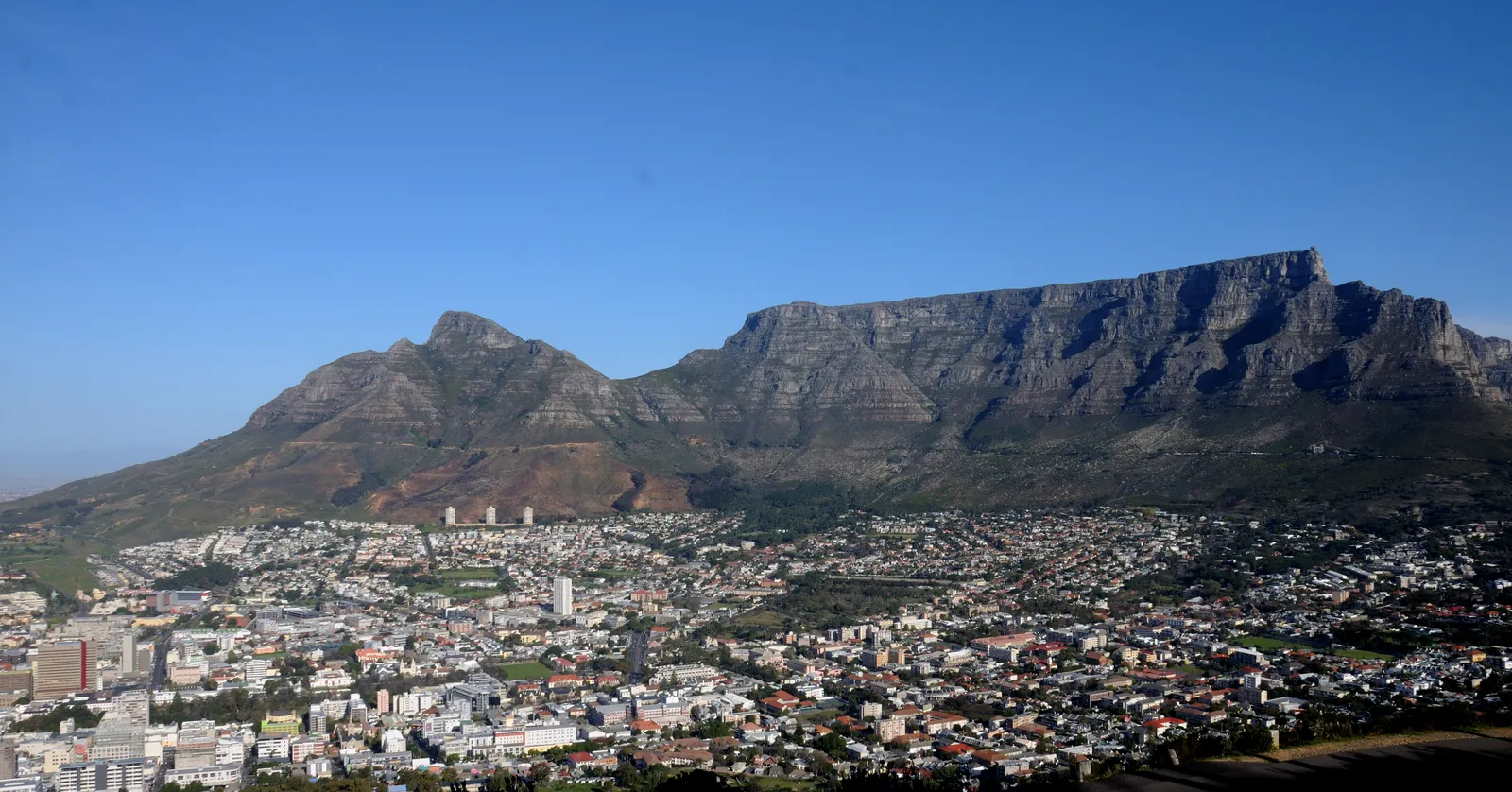
Cape Town’s day splits between Table Mountain, reached by a cable car whose floor turns a full circle on the way up, and the city centre at its foot, where a museum built inside a 1920s grain silo, the painted houses of the Bo-Kaap and the Company’s Garden sit within a short ride or walk of each other.
Table Mountain’s cable car turns a full circle on the way up
The Table Mountain Aerial Cableway leaves from a lower station on Tafelberg Road, a short car ride above the city centre, and climbs 765 metres to the upper station at 1,067 metres in four to five minutes. Each car holds 65 people, and its floor rotates through 360 degrees during the ride, so wherever you stand you get the city, Lion’s Head and Table Bay in turn rather than a view of one window. The cableway first opened in 1929; the rotating cars have run since 1997.
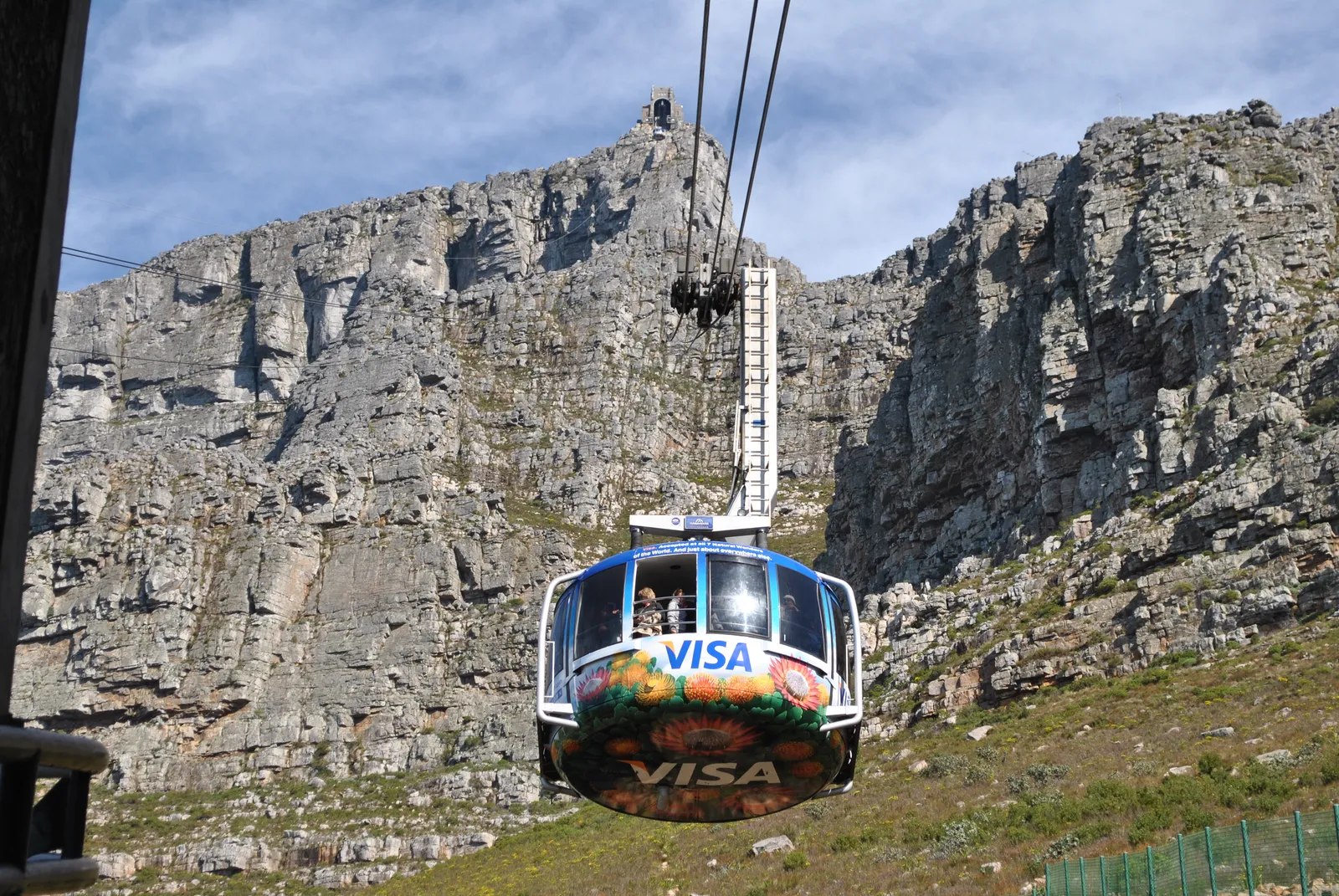
At the top, short paved paths loop out from the upper station across the plateau to lookouts over the Atlantic side and back over the City Bowl. The mountain’s weather is the catch: the cableway stops when the wind gets up, and a layer of cloud known locally as the tablecloth can sit on the summit on a day that is clear in town. The operator posts the day’s status online, and it’s worth checking before committing to the trip. If you’d rather not deal with the ticket desk and the ride up separately, a combined ticket pairs a return cableway ride with a day on the hop-on hop-off bus, which stops at the lower station.
Zeitz MOCAA, a contemporary art museum inside a 1920s grain silo
The grain silo at the V&A Waterfront went up between 1921 and 1924 and stood 57 metres tall over the harbour for most of a century before Thomas Heatherwick’s studio converted it. Zeitz MOCAA opened inside it on 22 September 2017 as a museum of contemporary art from Africa and its diaspora. The upper floors of the tower now carry faceted glass windows that bulge out of the old concrete, which is how you pick the building out from across the Silo District.
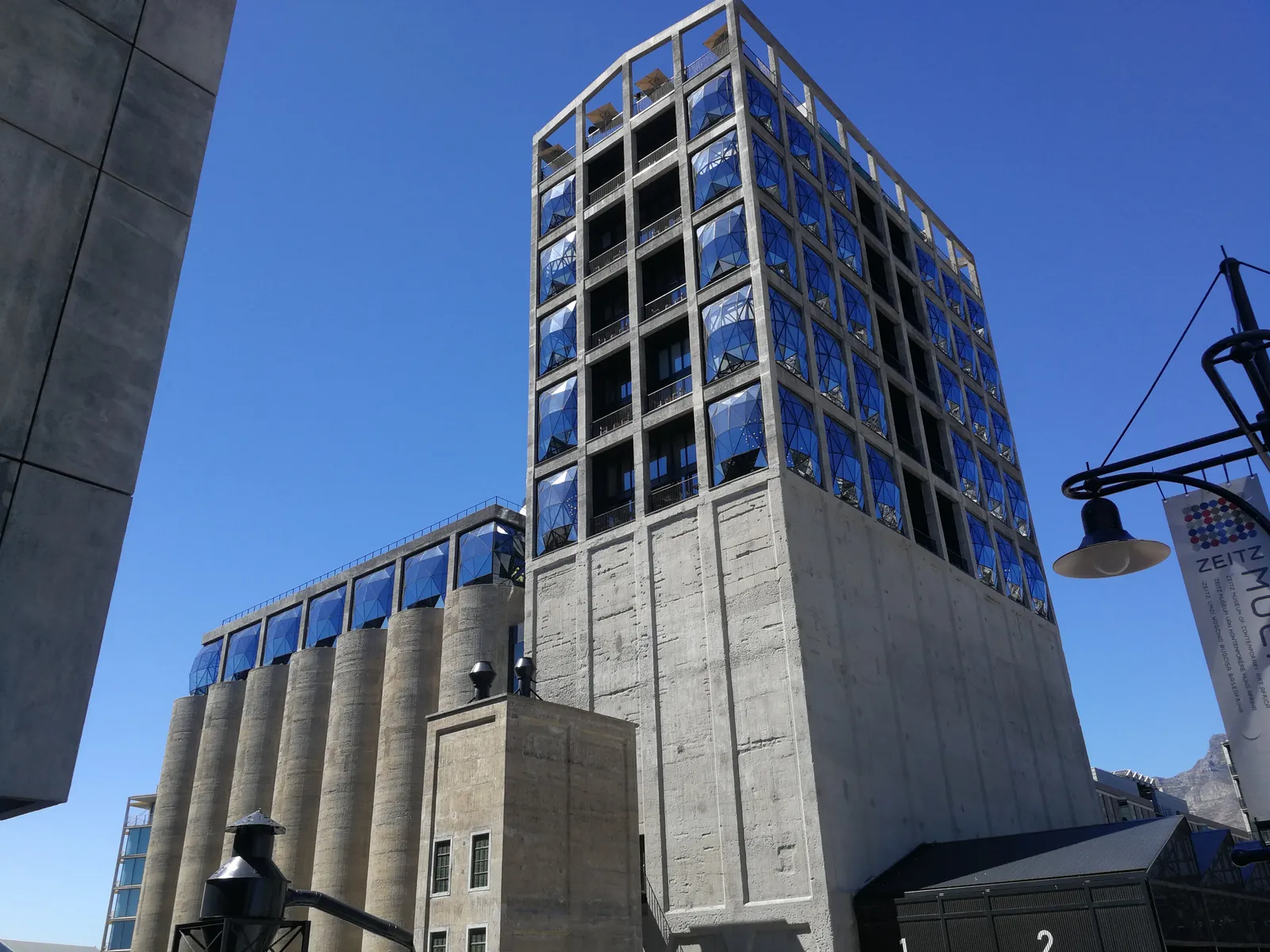
The reason to go inside is the atrium. The architects cut a full-height space out of the 42 tightly packed concrete tubes at the building’s core and capped the shafts with strengthened glass, so daylight drops down through the old cylinders into the lobby. The building runs to nine floors, most of them given over to galleries. The museum opens from 10:00 to 18:00, an adult ticket costs roughly R250 to R265, and skip-the-line admission can be booked ahead. Robben Island’s ferries leave from the Nelson Mandela Gateway at the same Waterfront, but the round trip runs to about three and a half hours, which only a long stopover can absorb.
The painted houses of the Bo-Kaap on Signal Hill
The Bo-Kaap climbs the lower slope of Signal Hill directly above the city centre, a grid of flat-roofed houses painted pink, lime green, sky blue and yellow, and the largest concentration of pre-1850 architecture in South Africa. Its first rental houses went up after 1760, and it grew as the home of the Cape’s Muslim community, many of them descended from people brought from Southeast Asia. The Auwal Mosque on Dorp Street, built in 1794, is the oldest mosque in the country. People live in every one of those painted houses, so photograph the street, not the front doors. Wale Street climbs straight up the slope, Rose and Chiappini streets cross it carrying most of the colour, and several of the side streets are still cobbled, which a wheeled suitcase takes slowly.
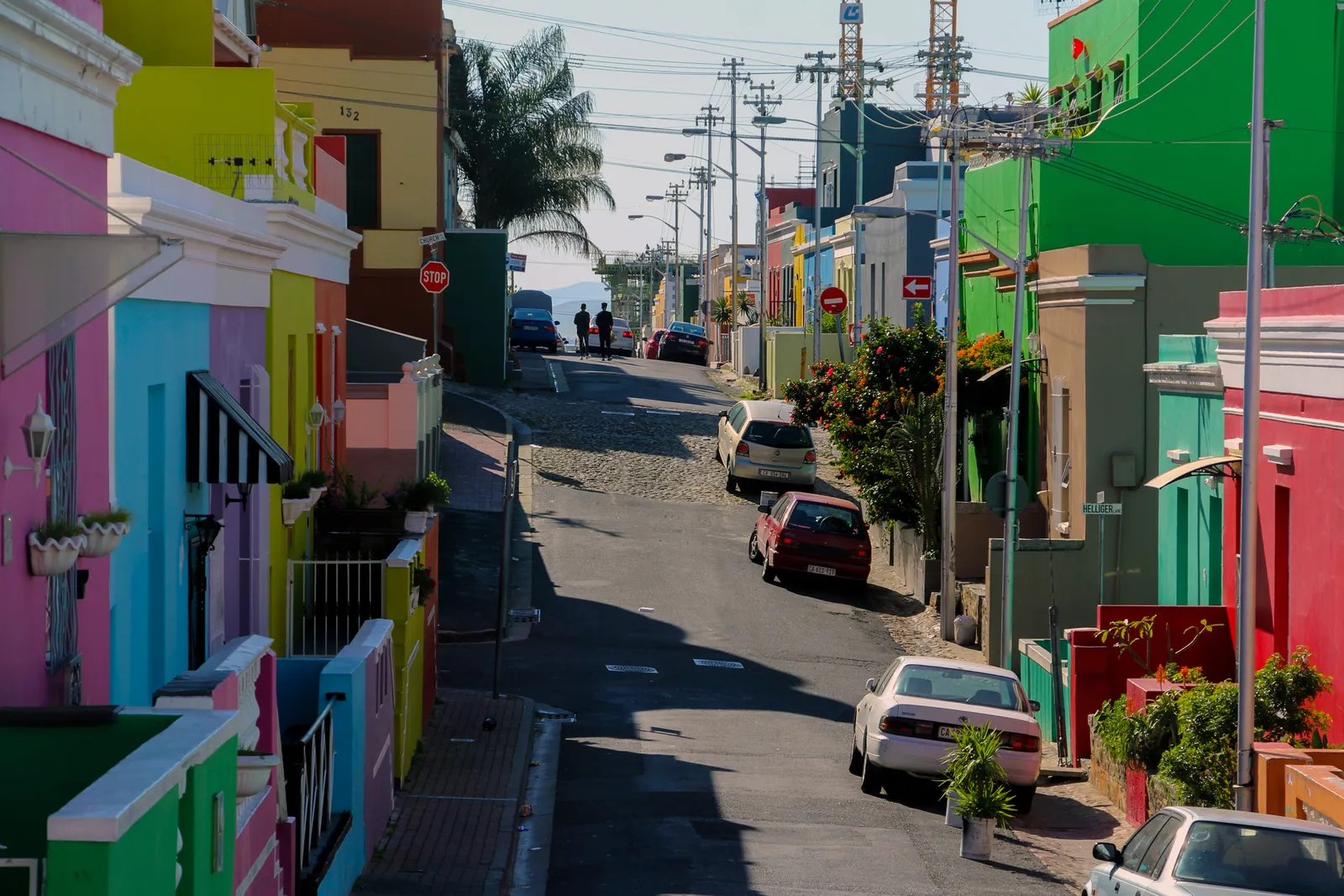
The Bo-Kaap Museum at 71 Wale Street fills one of the neighbourhood’s oldest surviving houses, from the 1760s, furnished as a 19th-century Cape Muslim home, for a small entry fee. Be in the Bo-Kaap at noon on any day but Sunday or a public holiday and you will hear the Noon Gun, fired from the Lion Battery on Signal Hill above the neighbourhood as a time signal, a tradition that goes back to 1806. The two smoothbore muzzle-loaders still in use were cast in 1794. The battery itself has been closed to visitors in recent years, but the firing can still be watched from the car park outside its gate.
The Company’s Garden, planted in 1652 to feed passing ships
The Dutch East India Company laid out the Company’s Garden in 1652 to grow vegetables for the ships stopping at the Cape on the way to Asia, which makes it the oldest garden in South Africa. It is a public park now, 3.2 hectares of lawns, flowerbeds and old trees either side of Government Avenue, the oak-lined walk that starts beside St George’s Cathedral on Wale Street. A pear tree from around 1652 still stands in it, thought to be the oldest cultivated tree in the country. Entry is free, and the gates open from 07:00 to 19:00 between September and March, closing an hour earlier from April to August.
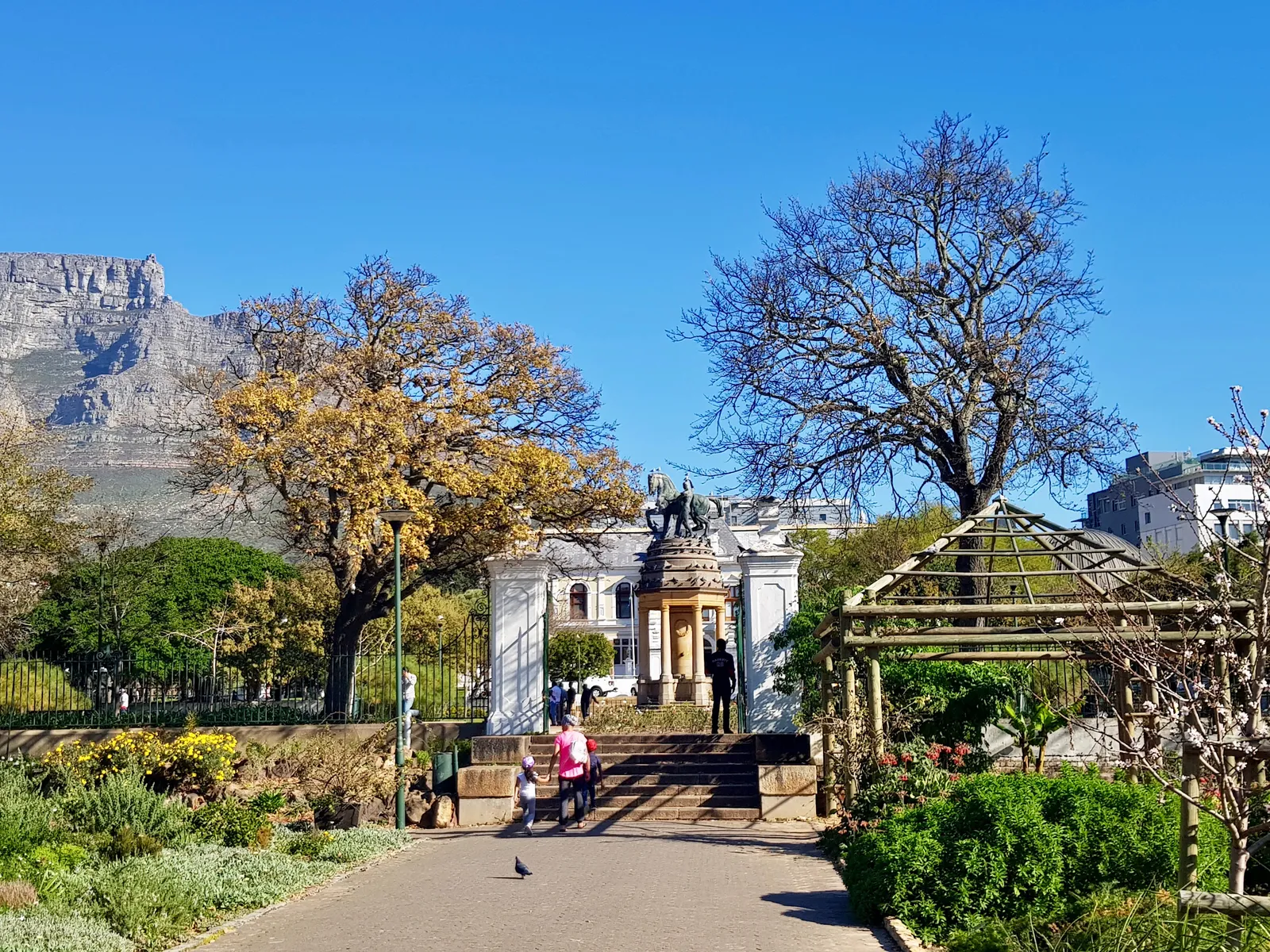
The garden is ringed by institutions worth knowing about when time runs short: the Houses of Parliament and Tuynhuys, the president’s Cape Town office, along one side, the Iziko South African Museum and the National Gallery at the top end, and the National Library on the avenue itself. Wale Street connects it to the Bo-Kaap in a walk of about ten minutes downhill, so the two pair naturally as the free half of the day.
No train to Cape Town International, just a bus or a car
Cape Town International Airport (CPT) sits about 20 kilometres east of the city centre, the second-busiest airport in South Africa and the end of a busy domestic route from Johannesburg. No rail line reaches it. The MyCiTi airport bus, route A01, runs from Civic Centre station on Hertzog Boulevard in the Foreshore, roughly a fifteen-minute walk from the bottom of the Company’s Garden, and the ride takes about half an hour. The operator quotes a bus every twenty minutes, though some recent guides report gaps of up to an hour in the middle of the day, so check the live timetable before you set off. You pay with a myconnect card loaded with enough credit for the airport surcharge on top of the normal distance fare; fares across the network went up by roughly a third or more on 1 July 2026.
Uber and Bolt both work across the city and are the simpler option for most layovers: 20 to 30 minutes on the N2 in normal traffic, closer to an hour in the weekday rush, collected from wherever the day ends. Leave the city centre at least two and a half hours before an international departure, which covers a slow drive and still leaves an hour and a half or more at the airport.
The whole day runs easier without a suitcase. The mountain, the silo and the garden are each a separate stop, and a luggage storage point in the city centre means the bag waits in one place while you move between them, collected on the way out.
Frequently asked questions
What should I do during a layover in Cape Town?
Start with Table Mountain: the cable car climbs 765 metres in about five minutes while its floor turns a full circle, so everyone on board gets the whole view of the city and Table Bay. Back at sea level, Zeitz MOCAA fills a 1920s grain silo at the V&A Waterfront with contemporary African art, and the city centre holds the two free stops, the painted houses of the Bo-Kaap and the Company's Garden, joined by Wale Street. Six hours covers all four once the ride in and out is allowed for. The cableway is the one piece the weather can take away, since it stops in high wind, so check its status on the day before building the plan around it.
What happens if the wind closes the Table Mountain cableway?
Cape Town's summer south-easter is strong enough to stop the cableway on some days, and low cloud over the summit, the tablecloth, can make the ride up pointless even when the cars are running. The operator posts a live status on its website and app, so check on the morning of your layover rather than at the ticket office. On a closed day, swap the mountain for the indoor half of the itinerary: Zeitz MOCAA's nine floors and the Iziko South African Museum at the top of the Company's Garden are both out of the wind. The cableway also shuts for about two weeks every winter for maintenance; in 2026 that ran from 27 July to 9 August, and the next one is expected at around the same time of year in 2027.
Can I fit Robben Island into a Cape Town layover?
Only on a long one. Ferries leave from the Nelson Mandela Gateway at the V&A Waterfront at fixed times, usually through the morning and early afternoon, and the whole visit takes about three and a half hours including the half-hour crossing each way, a bus tour of the island and a walk through the maximum-security prison where Nelson Mandela was held. Add the time to reach the Waterfront and get back out to your flight, and it needs a stopover of eight hours or more. Ferries are cancelled when the sea is rough, so it is a poor thing to build a tight day around.
What can I see in Cape Town without buying a ticket?
The Company's Garden costs nothing to walk into, and neither does its oak-lined central path, Government Avenue, where the pear tree thought to be the oldest cultivated tree in South Africa has stood since around 1652. The Bo-Kaap's streets are free as well: Wale, Chiappini and Rose streets carry most of the painted houses, and the Auwal Mosque on Dorp Street, built in 1794, is the oldest in the country. At noon on any day but Sunday or a public holiday, the Noon Gun fires from Signal Hill above the Bo-Kaap, and hearing it costs nothing either.
Is the bus or a car better for getting back to Cape Town International Airport?
There is no train to Cape Town International, so it is one or the other. The MyCiTi airport bus, route A01, runs between Civic Centre station on the Foreshore and the airport in about half an hour, and the operator quotes a bus every twenty minutes, though some recent guides report hour-long gaps in the middle of the day. You need a myconnect card loaded with enough for the airport surcharge, and fares went up by roughly a third or more on 1 July 2026. Uber and Bolt both cover the city and take 20 to 30 minutes on the N2 in normal traffic, closer to an hour in the weekday rush, and they pick you up wherever the itinerary ends. For an evening flight, a car is the more predictable choice.