Cape Town Airport: Langa and Stellenbosch
Part of the full Table Mountain and the Bo-Kaap: CPT Layover
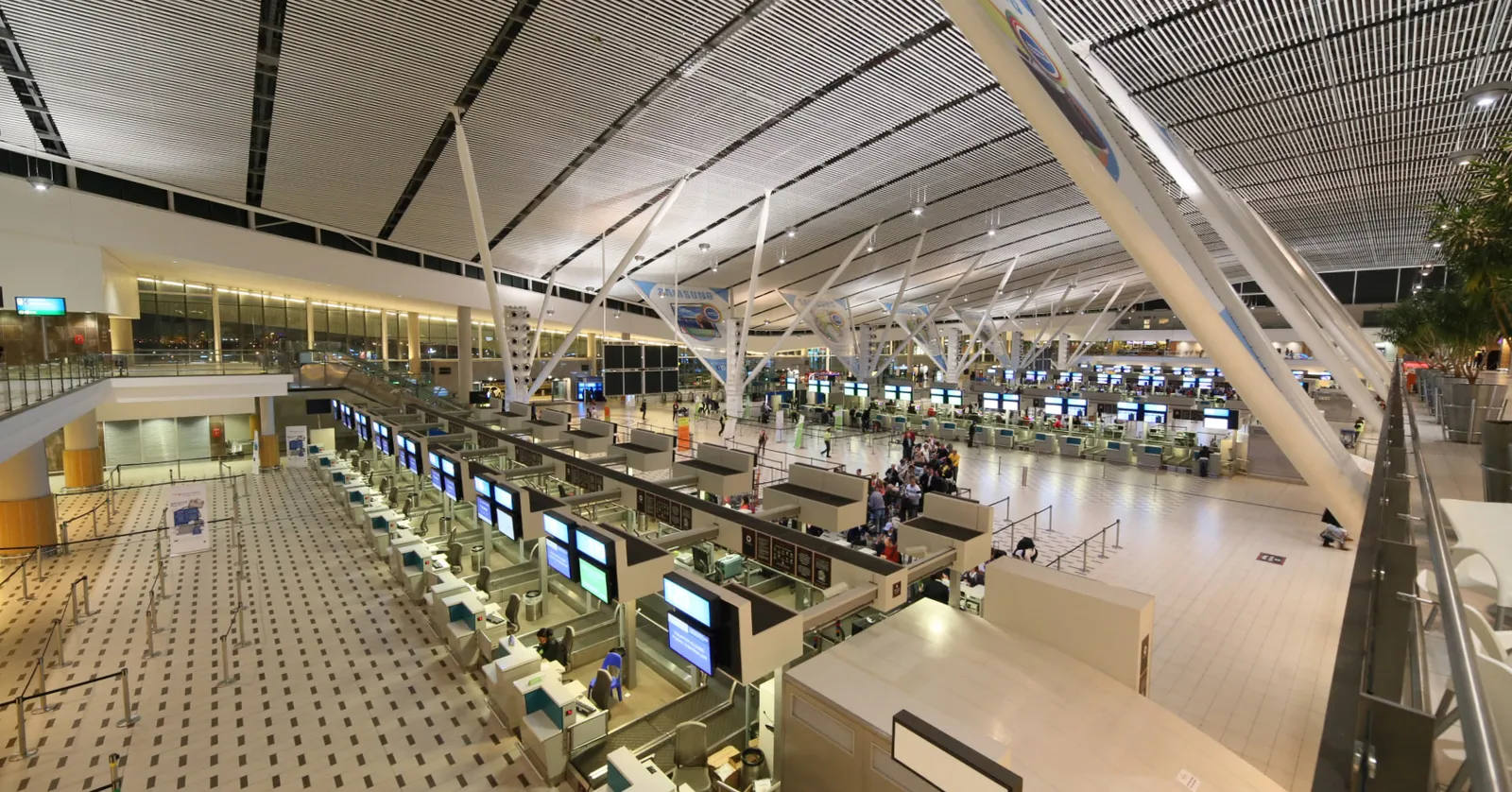
Cape Town International Airport (CPT) checks in every domestic and international flight in one hall, and a wait too short for the city centre still fits a ten-minute drive to Langa’s Guga S’thebe arts centre, or, with six hours, Stellenbosch’s oak-lined Dorp Street, about 35 minutes east by car.
Check-in deadlines at Cape Town International: domestic versus long-haul
The central terminal at Cape Town International Airport opened in April 2010, built for the football World Cup at a cost of R1.6 billion, and it joined the old domestic and international terminals with a single check-in hall on the second floor under one curved roof. Everyone starts in the same room; the deadlines differ. FlySafair closes its domestic counters and bag drop 40 minutes before departure and its gates 15 minutes before, and some other domestic airlines close as late as 30 minutes out. Long-haul airlines close check-in an hour or more before departure, and many don’t open their counters until about three hours ahead. The airport itself advises arriving two hours before a domestic flight and three before an international one.
So the same few hours look different depending on the ticket. A passenger connecting to a domestic flight back to Johannesburg can cut it fine and mostly wants a coffee and a seat. A passenger waiting on an evening long-haul to Europe or the Gulf has an afternoon to fill before the counters even open, and that afternoon can go further than the terminal.
Dorp Street in Stellenbosch, a town founded in 1679
Stellenbosch is about 35 kilometres east of the airport, roughly 35 minutes by car in normal traffic: further than the city centre, but in the opposite direction from it. Simon van der Stel, the Cape’s governor, founded it in 1679, which makes it the second-oldest town in South Africa, and he had oaks planted along its streets, the reason it is still called Eikestad, the city of oaks.
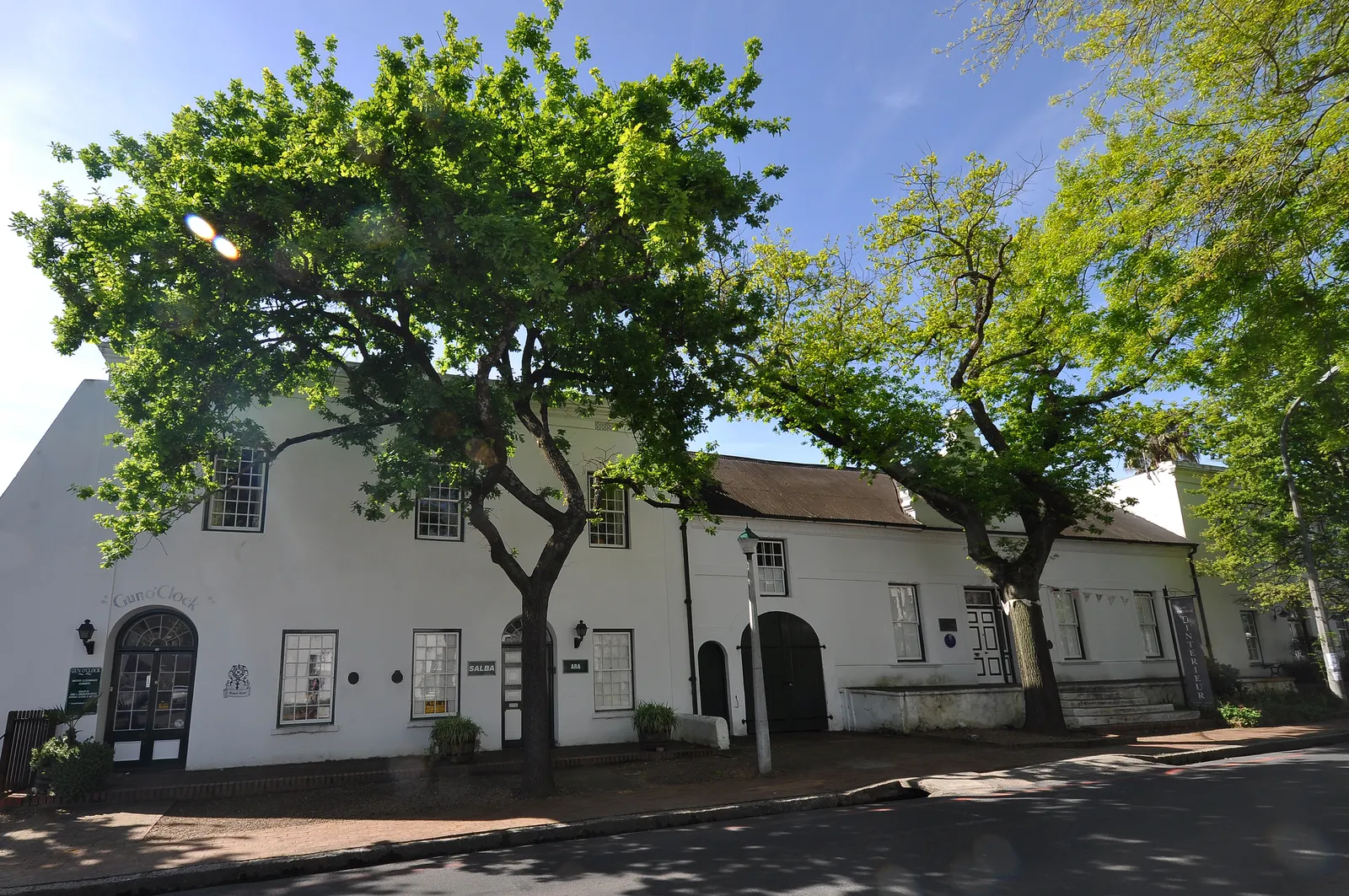
Dorp Street shows that best: a long run of whitewashed, gabled houses under old oaks, many of them marked with plaques as historic buildings. Oom Samie se Winkel at number 84 opened as a general dealer in 1904 and still stocks what it always did, rooibos, honey, sour fig jam and bokkoms, the salted, dried mullet of the Cape’s west coast. The wine farms are on the edge of town, and a half-day Stellenbosch wine-tasting tour can be booked ahead; check where it collects from, since one that starts in the city centre adds the ride in and back. Treat six hours between landing and check-in closing as the minimum for this.
A passenger arriving from Johannesburg on a separate ticket collects the suitcase in domestic arrivals, and for an evening long-haul the counters that would take it back often don’t open until about three hours before departure.
Guga S’thebe arts centre in Langa, Cape Town’s oldest township
Langa, about ten minutes from the airport by car, was formally opened in 1927 and is the oldest of Cape Town’s townships. On 30 March 1960, between 30,000 and 50,000 people marched from here to Caledon Square in the city centre in protest against the pass laws. The Guga S’thebe Arts and Cultural Centre on Washington Street, opened in 2005, is where potters, beadworkers and mosaic makers work in studios you can walk into, with what they make on sale. Entry is free, and the City lists it as open on weekdays from 09:00 to 18:00.
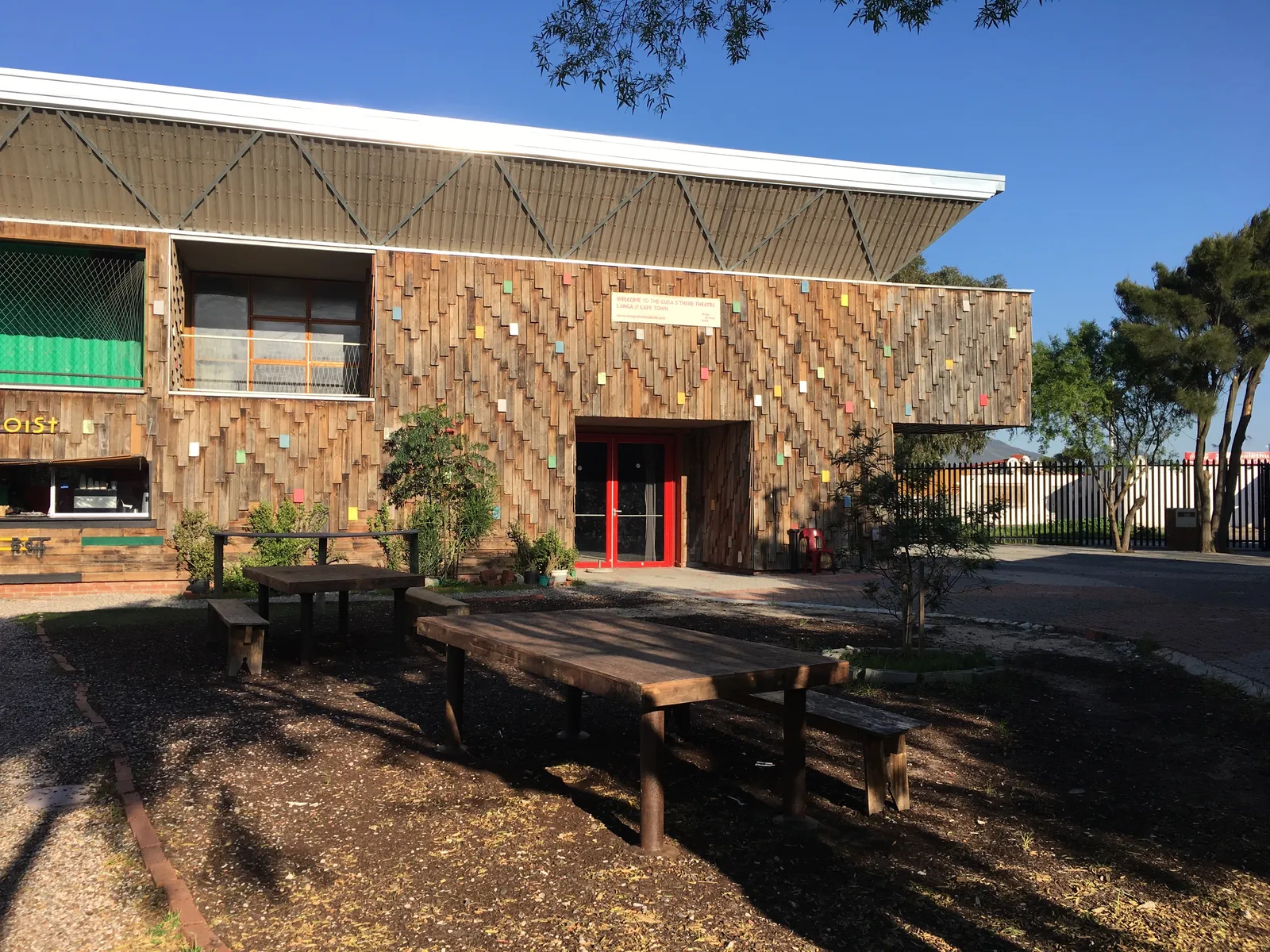
The theatre beside the centre is the building worth the stop on its own: a 200-seat hall made from 11 shipping containers stacked around a central space, clad outside in timber from old fruit crates and inside with local clay and straw. Architecture students from Aachen, Düsseldorf and Atlanta built it with volunteers from Langa, starting in 2013, and it was handed to the City in September 2015. Langa’s Dompas Museum, in the old pass office where Black residents had their passbooks processed under apartheid, was declared a provincial heritage site in 2021; check its opening times before going. Three hours on the ground covers the centre and the theatre with room to spare.
The shops and cafés on the level above the check-in hall
Under three hours, the terminal is the realistic answer, and the level above the check-in hall is where to spend it. It sits before security, so it is open to anyone, including a long-haul passenger who can’t check in yet, and it holds most of the terminal’s shops and cafés, with glass along the airfield side looking out over the aprons.
Past security, the domestic and international sides each have lounges. The Bidvest Premier Lounge sells walk-in entry on both sides, cheaper on the domestic side than the international one, and has showers. For an international passenger, though, the lounge is only reachable after check-in and passport control, so on an evening departure it opens up no earlier than the counters do. With six hours or more and no interest in the winelands, the main Cape Town guide builds the day around Table Mountain, the Bo-Kaap and the Company’s Garden, about 20 kilometres west of the runways.
Frequently asked questions
What should I do during a layover near Cape Town International Airport in Cape Town?
Under three hours, stay in the terminal: the level above the central check-in hall has the shops and cafés and is open to anyone before security. With three hours or more, Langa, Cape Town's oldest township, is about ten minutes away by car, and its Guga S'thebe Arts and Cultural Centre, with pottery and beadwork studios and a theatre built from shipping containers, is free to walk into on weekdays. With six hours or more, Stellenbosch, founded in 1679, is about 35 minutes east, with Dorp Street's oaks and old houses to walk and wine farms around the town, where a tasting tour is worth booking ahead.
When does check-in close for domestic and international flights at Cape Town International?
It depends on the airline, not the airport. FlySafair closes its domestic counters and bag drop 40 minutes before departure and its boarding gates 15 minutes before, and some other domestic airlines close as late as 30 minutes out. Long-haul airlines close earlier, usually an hour or more before departure, and many only open their counters about three hours ahead. The airport's own advice is to arrive two hours before a domestic flight and three before an international one.
Can I do a winelands tour straight from Cape Town airport?
Yes, if the timing works. Stellenbosch is about 35 kilometres east of the airport, roughly 35 minutes by car, and it is in the opposite direction from the city centre. The catch is where a tour starts: one that collects from hotels in the city centre adds the ride in and back, so check the meeting point before booking anything, a half-day e-bike tour of the Stellenbosch wine farms included, and prefer one that starts in Stellenbosch itself. Treat six hours between landing and check-in closing as the minimum.
How do I get from Cape Town International Airport into the city centre?
There is no train. The MyCiTi airport bus, route A01, runs to Civic Centre station on the Foreshore in about half an hour and is paid with a myconnect card loaded with enough for the airport surcharge. Uber and Bolt pick up from signposted bays in the airport parkades and take 20 to 30 minutes on the N2 in normal traffic, closer to an hour in the weekday rush. With six hours or more, the main Cape Town guide covers Table Mountain, the Bo-Kaap and the Company's Garden, and the V&A Waterfront is about 25 minutes by car.
What is free to do near Cape Town airport?
The terminal's upper level, open to anyone before security, costs nothing to sit in and look out over the aprons. In Langa, the Guga S'thebe Arts and Cultural Centre is free to enter, and the timber-clad theatre beside it can be seen from the street. In Stellenbosch, Dorp Street and its oaks are free to walk, and Oom Samie se Winkel at number 84 costs nothing to browse. The only real cost is the car there and back.