Cape Town's V&A Waterfront and Clock Tower
Part of the full Table Mountain and the Bo-Kaap: CPT Layover
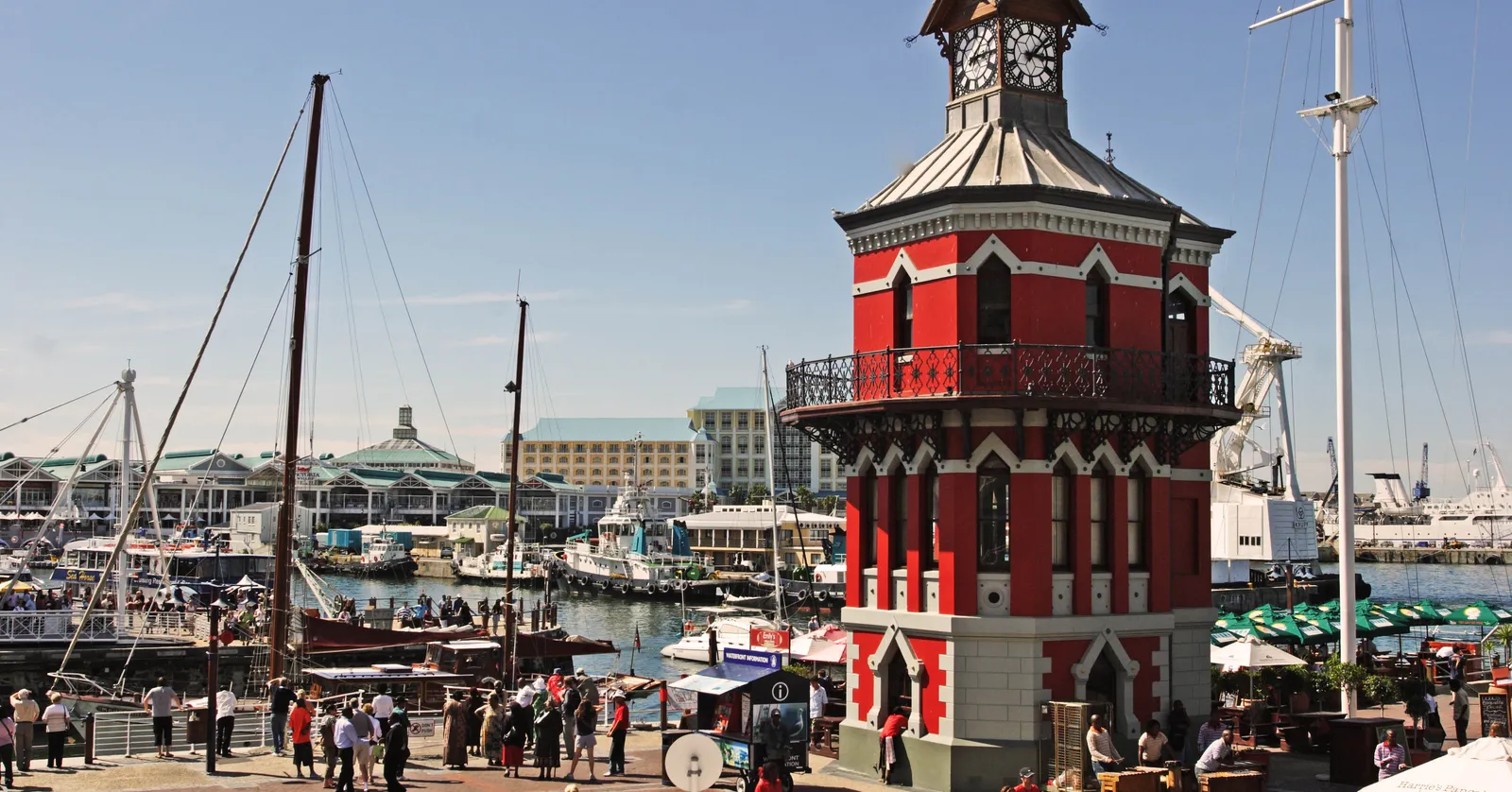
Cape Town’s V&A Waterfront gathers a day around one working harbour: the Two Oceans Aquarium on Dock Road, the Nelson Mandela Gateway where ferries leave for Robben Island, the red Clock Tower of 1882, and a dry dock of the same year that still repairs ships.
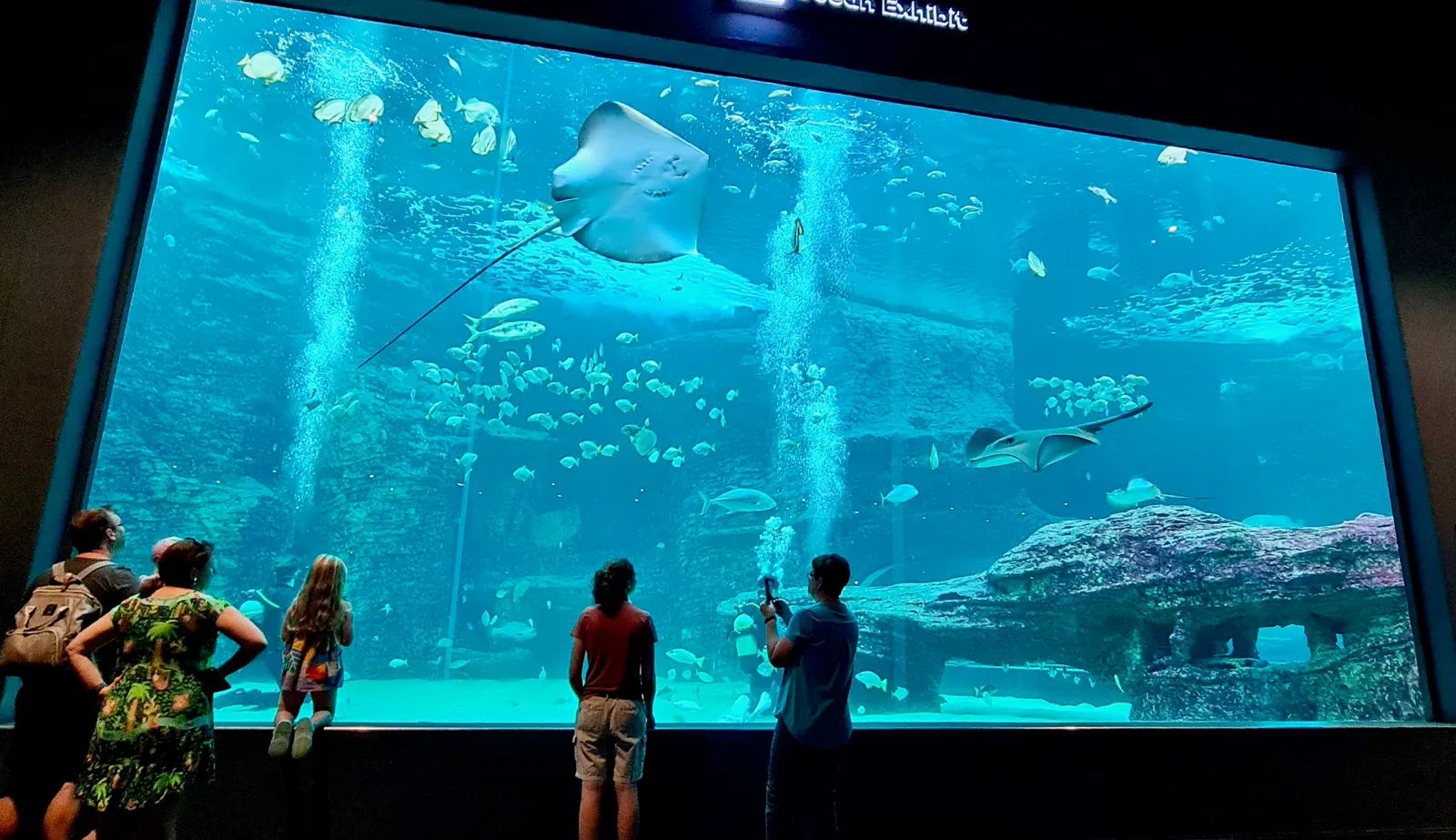
Rays and turtles in the Two Oceans Aquarium’s ocean tank
The Two Oceans Aquarium sits on Dock Road at the V&A Waterfront, a few minutes’ walk from the Clock Tower, and it keeps to the sea life of the Cape’s own coast, where the Atlantic and the Indian Ocean meet. The centrepiece is the I&J Ocean Exhibit, 1.6 million litres behind one wide glass front, where rays glide over musselcrackers and turtles that were rescued and rehabilitated before coming here.
The Kelp Forest Exhibit is the other big tank, 800,000 litres of swaying giant kelp and fish found only in South African waters, and the penguins are fed at 11:30 and 14:30 every day. The aquarium opens from 09:30 to 18:00, an adult ticket costs about R265, and admission can be booked ahead rather than bought at the desk.
Robben Island ferries from the Nelson Mandela Gateway
Nelson Mandela opened the Gateway himself on 1 December 2001, a three-storey terminal in the Clock Tower precinct that doubles as the start of the Robben Island visit. Inside, an exhibition follows his life from a childhood in the Eastern Cape through 27 years in prison to the presidency, and it’s worth a look even without a ferry ticket.
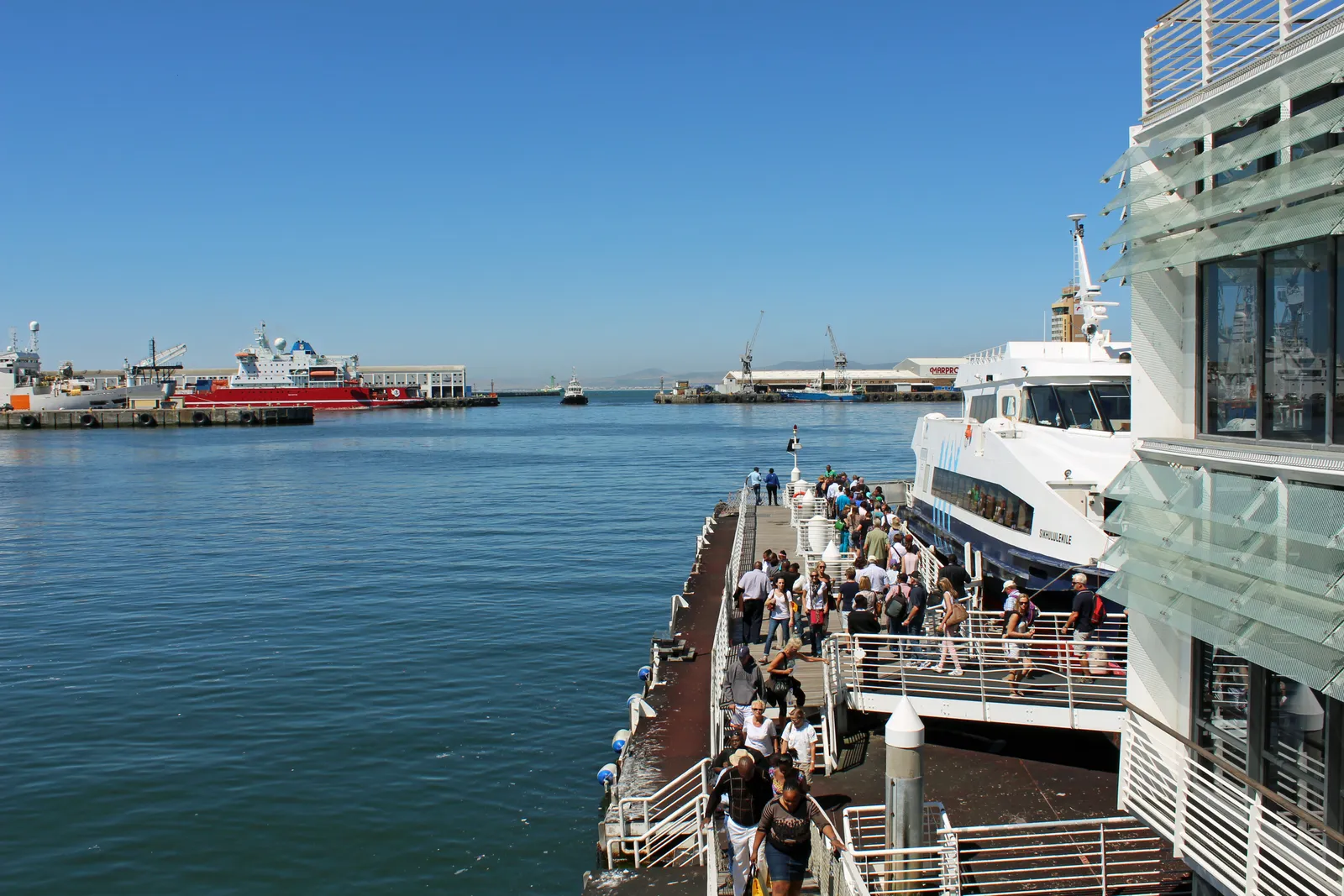
Robben Island, where Mandela spent 18 of those years, is a half-hour crossing out into Table Bay. Tours leave at 09:00, 11:00, 13:00 and 15:00, weather and demand permitting, and take about three and a half hours in all: the two crossings, a bus tour of the island and a walk through the maximum-security prison. The museum asks passengers to be at the Gateway 30 minutes before departure, and in the December to February peak the tours regularly sell out weeks ahead, so book on the museum’s own site as soon as the flight is fixed. Sailings are cancelled when the swell is too high, most often in winter, and the museum refunds those tickets.
The whole day turns on one boarding slot, and anything you carry comes along for all three and a half hours, on the bus and through the prison.
The Clock Tower of 1882 at the mouth of the Alfred Basin
The red tower at the entrance to the Alfred Basin was the harbour’s first Port Captain’s office, built in 1882 in Victorian Gothic with pointed windows and a clock imported from Edinburgh. Two details inside explain what it was for: a mirror room on the second floor gave the port captain a view of the whole harbour at once, and a tidal gauge on the ground floor measured the water level for ships coming in and out. The tower has settled about 50 millimetres out of true, a lean that has since been halted, and it has been a national monument since 1978. The red paint was matched to scrapings of the original colour when it was restored in the 1990s.
A pedestrian swing bridge beside the tower opens to let boats through the basin entrance. Cape fur seals haul out on the low platform next to Bertie’s Landing and on the old tyres hung along the quays, and the benches by the Clock Tower are the place to watch them.
Robinson Dry Dock, opened in 1882 and still repairing ships
The Robinson Dry Dock on the Alfred Basin opened in 1882, named after the Cape governor Sir Hercules Robinson who opened it, and it has never stopped working: more than 300 ships were repaired here during the Second World War, and it is still used for ship repairs today. When it is drained, the stepped stone walls and the line of wooden keel blocks on the floor are in plain view from the quayside, with Signal Hill rising behind the cranes.
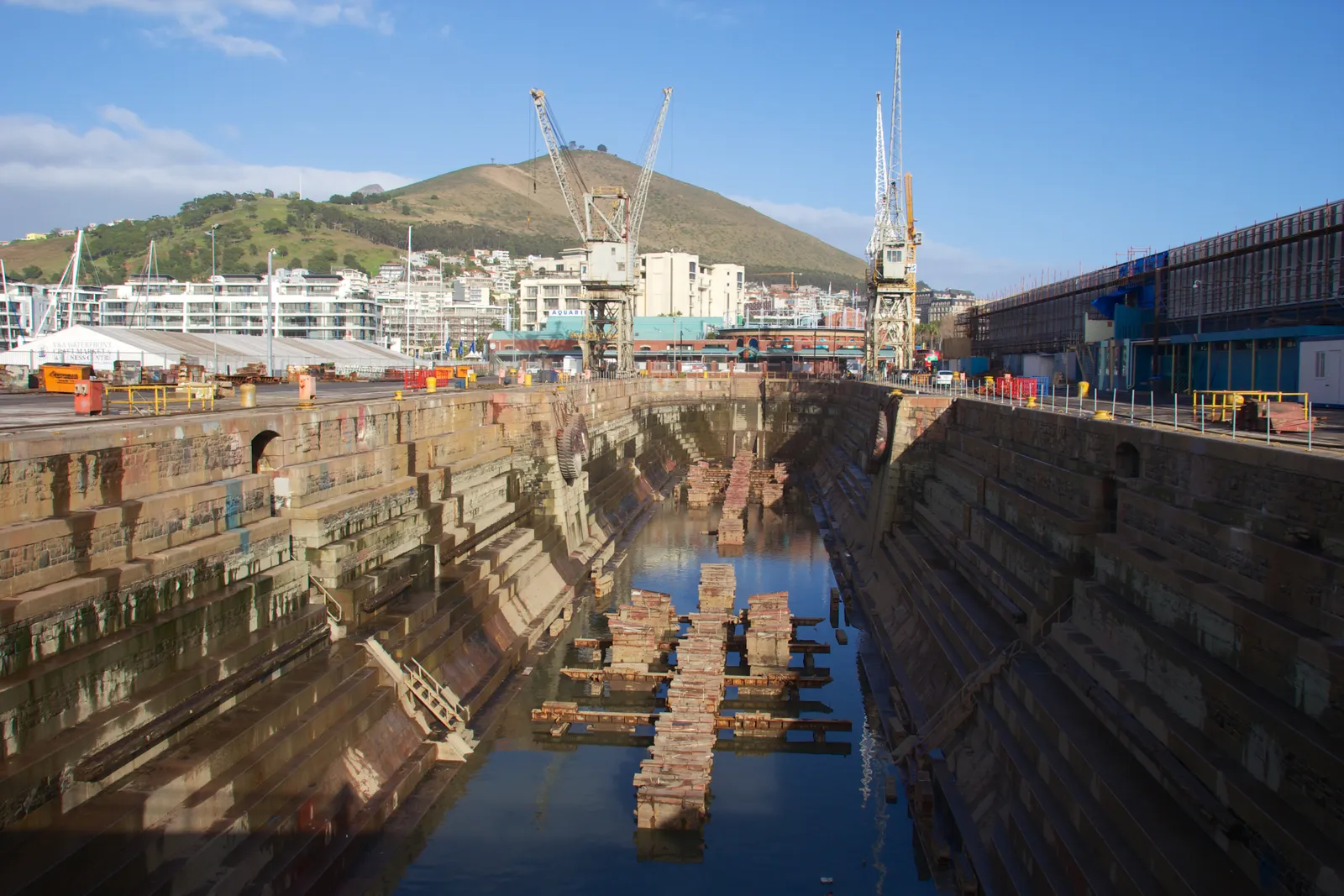
This is the Waterfront at its least polished, repair yards and cranes a short walk from the shopping arcades, and it’s free to look at. For Table Mountain, the Bo-Kaap and Zeitz MOCAA, the art museum in the old grain silo in the Waterfront’s Silo District, the main Cape Town guide builds the day from the city centre instead.
Cape Town International is about 25 minutes by car
The V&A Waterfront is about 23 kilometres from Cape Town International Airport (CPT), roughly 25 minutes on the N2 in normal traffic and 45 minutes or more in the weekday rush. Uber and Bolt both collect from the Waterfront, which makes a car the simplest option for most layovers.
There is no train, and the bus takes a change. A MyCiTi bus from the Waterfront’s stops, route 104 among them, runs to Civic Centre station on the Foreshore, and the A01 airport bus leaves from there for a ride of about half an hour. Both are paid with a myconnect card loaded with enough for the airport surcharge. Leave the Waterfront at least two and a half hours before an international departure.
Frequently asked questions
What should I do during a layover near the V&A Waterfront in Cape Town?
Start with the Two Oceans Aquarium on Dock Road, open 09:30 to 18:00, where rays and rescued turtles fill a 1.6-million-litre ocean tank and the penguins are fed at 11:30 and 14:30. Then walk the Alfred Basin: the red Clock Tower of 1882, the seals that haul out on the quays around it, and the Robinson Dry Dock, opened the same year and still used for ship repairs, all free to look at. Four hours covers that comfortably. Robben Island is the add-on that needs planning: ferries leave the Nelson Mandela Gateway at fixed times, the trip takes about three and a half hours, and it only fits a stopover of eight hours or more.
What happens if the Robben Island ferry is cancelled?
Sailings are called off when the swell in Table Bay is too high or the wind too strong, most often in the winter months but possible at any time of year. The Robben Island Museum refunds tickets for weather cancellations, against the ticket and proof of identity. On a layover there is rarely time to wait for a later boat, so have a fallback: the Nelson Mandela Gateway itself holds an exhibition on Mandela's life, and the aquarium and the Alfred Basin are a short walk away along the same waterfront.
When are feeding times at the Two Oceans Aquarium?
The penguins are fed at 11:30 and 14:30 every day. The two big tanks alternate: the I&J Ocean Exhibit feed is at 12:00 on Mondays, Wednesdays and Fridays, and the Kelp Forest feed is at 12:00 on Tuesdays, Thursdays and Sundays. Arriving at about 11:00 lets one visit take in the penguins and a tank feed back to back, which works well with children. A dated admission ticket booked ahead saves joining the ticket queue at the door just before a feed.
Is the V&A Waterfront free to walk around?
Yes. There is no charge to enter the Waterfront, and the Clock Tower, the swing bridge beside it, the seals on the quays and the Robinson Dry Dock can all be seen from the public quayside for nothing. The paid stops are the Two Oceans Aquarium and the Robben Island ferry, and Zeitz MOCAA, the art museum in the old grain silo in the Waterfront's Silo District.
How long does it take to get from the V&A Waterfront to Cape Town International Airport?
About 25 minutes by car over the 23 kilometres to Cape Town International in normal traffic, and 45 minutes or more when the N2 is congested in the weekday rush. Uber and Bolt both pick up at the Waterfront. By bus it takes a change: a MyCiTi bus from the Waterfront's own stops, route 104 among them, reaches Civic Centre station, where the A01 airport bus leaves for a ride of about half an hour, paid with a myconnect card.