Cape Town Station, the Castle and City Hall
Part of the full Table Mountain and the Bo-Kaap: CPT Layover
Cape Town railway station, on Adderley Street in the city centre, is a flat walk of ten minutes or less from the Castle of Good Hope, a stone fort finished in 1679, from City Hall on the Grand Parade, where Nelson Mandela spoke in 1990, and from the District Six Museum on Buitenkant Street.
The Castle of Good Hope, a five-bastion fort from 1679
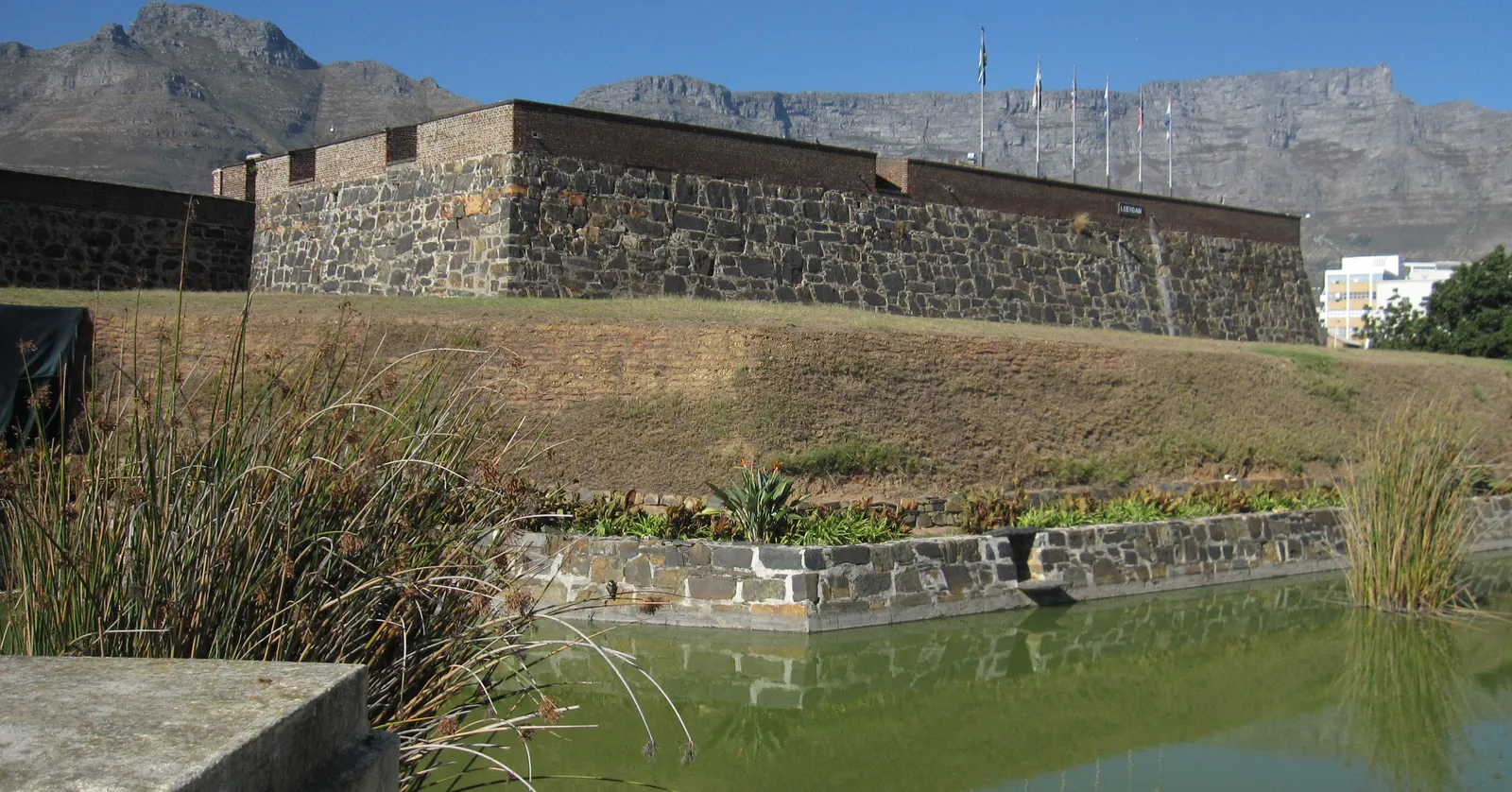
The Castle of Good Hope stands on the eastern edge of Cape Town’s city centre beside the Grand Parade, about ten minutes on foot from the railway station. The Dutch East India Company built it between 1666 and 1679 to replace a clay-and-timber fort from 1652, and it is generally counted as the oldest surviving building in South Africa. It was put up on the shore of Table Bay; land reclaimed since has left it well inland. Its five bastions were named in 1679 after the titles of William III, Prince of Orange, and the name Leerdam is still lettered on the wall of one of them above the moat.
A guided half-day city tour that starts at the Castle can be booked ahead, but the fort is just as easy to see alone: it opens daily from 09:00 to 16:00, an adult ticket costs about R50, and guided walks of the ramparts and the dungeons, included in the ticket, leave at 11:00, 12:00 and 14:00. Miss one of those by the few extra minutes a suitcase adds to the ten-minute walk from the station, and the wait for the next is up to an hour.
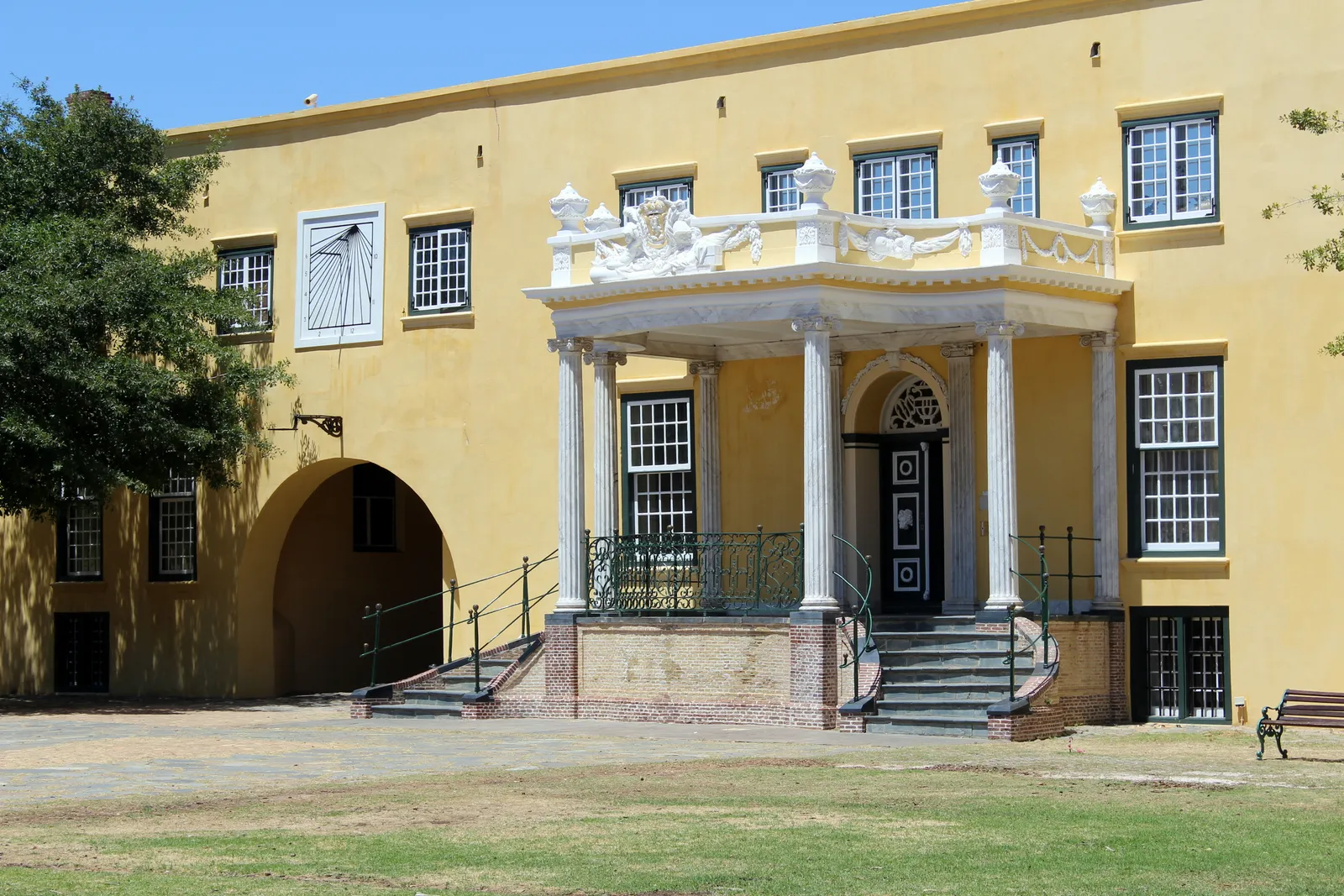
The Kat Balcony divides the inner courtyard in two. Proclamations and court sentences were read to soldiers, enslaved people and townspeople from it, and the present version, rebuilt between 1786 and 1790, was designed by Louis Michel Thibault with carving by Anton Anreith. The rooms behind it hold the William Fehr Collection of Cape paintings and furniture, and the Castle Military Museum fills another wing.
The District Six Museum in a former Methodist church
On 11 February 1966 the apartheid government declared District Six, the mixed inner-city neighbourhood on the lower slopes of Devil’s Peak just beyond the Castle, a whites-only area. Removals began in 1968, and by 1982 more than 60,000 people had been moved out to the Cape Flats and their houses bulldozed; only the churches and mosques were left standing. The District Six Museum opened in 1994 in one of them, the old Methodist mission church at 25A Buitenkant Street, a ten-minute walk from the railway station.
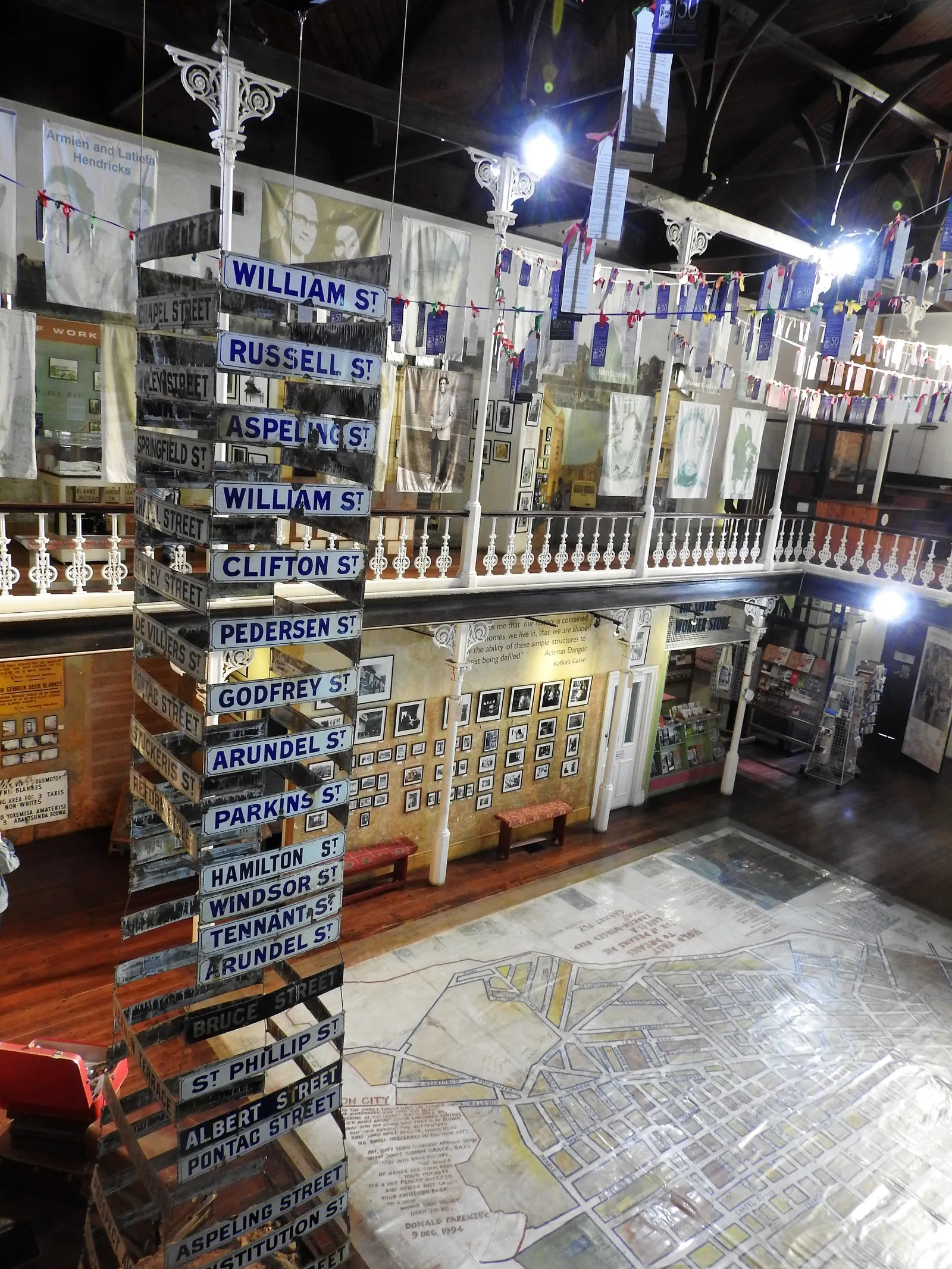
A map of the old district covers most of the floor of the main hall, and former residents have written on it in pen where their homes stood. Beside it rises a column of the district’s original street signs, and the gallery upstairs holds family photographs and documents from the removals. It is a small museum, an hour is enough, and it opens Monday to Saturday, roughly 09:00 to 16:00, for a modest entry fee. A guided tour built around the museum can be booked ahead for anyone who wants the context explained on the way round.
City Hall’s balcony over the Grand Parade
Cape Town’s City Hall faces the Grand Parade from Darling Street, five minutes’ walk from the railway station: an Edwardian building of honey-coloured limestone shipped from Bath, opened in 1905, with a clock tower that chimes the Westminster quarters. Nelson Mandela made his first public speech after his release from prison from its balcony on 11 February 1990, to a crowd that filled the square below, and a life-size statue of him has stood on that balcony since 2018. The hall is still a working venue, home to the Cape Town Philharmonic Orchestra’s symphony concerts and an organ of 3,165 pipes.
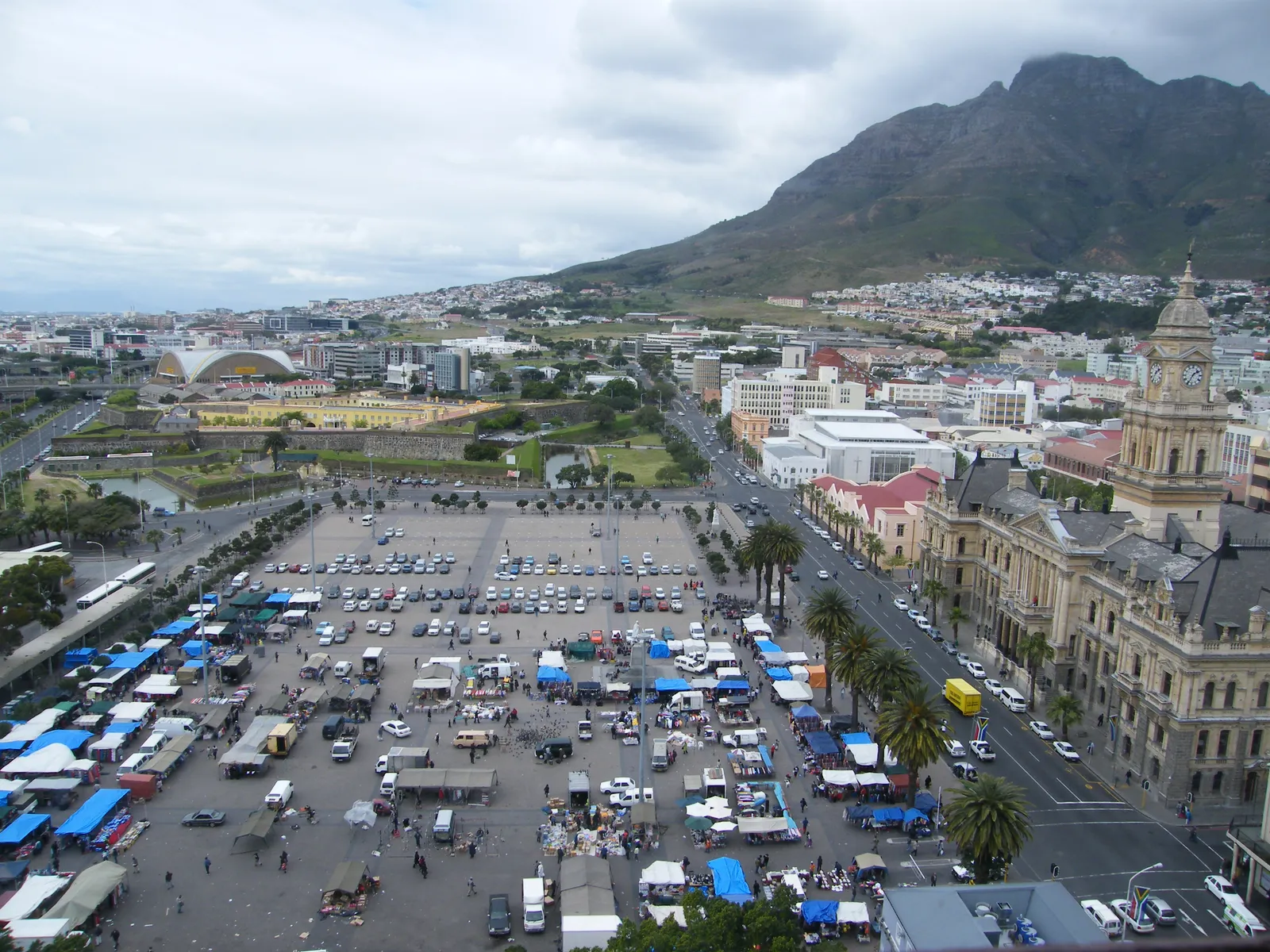
The Grand Parade is the ground where the Dutch put up their first fort in 1652, and it has been a parade ground, a marketplace and the site of political rallies since. On most days it is a car park; on Wednesdays and Saturdays market stalls selling sweets, sunglasses and fish and chips set up across much of it.
No train to the airport from Cape Town station
None of the suburban train lines out of Cape Town station reach Cape Town International Airport (CPT). The MyCiTi airport bus, route A01, leaves from Civic Centre station on Hertzog Boulevard, about 400 metres and five minutes’ walk from the railway station, and takes about half an hour. The operator quotes a bus every twenty minutes, though some recent guides report gaps of up to an hour in the middle of the day, so check the live timetable first. Pay with a myconnect card loaded with enough for the airport surcharge; fares across the network went up by roughly a third or more on 1 July 2026.
Uber and Bolt take 20 to 30 minutes on the N2 in normal traffic and closer to an hour in the weekday rush, collecting from wherever the walk ends. Leave the city centre at least two and a half hours before an international departure.
The Slave Lodge on Adderley Street, built in 1679
The Slave Lodge fills the block where Adderley Street meets Wale Street, about ten minutes’ walk from the railway station. The Dutch East India Company built it in 1679, the same year the Castle was finished, to hold the people it had enslaved, brought from East Africa, Madagascar, India and Southeast Asia, up to 500 of them at a time. It later served as government offices and then as the Supreme Court, and it has been the Iziko Slave Lodge, a museum of slavery at the Cape, since 1998. It opens Monday to Saturday and closes on Sundays and public holidays.
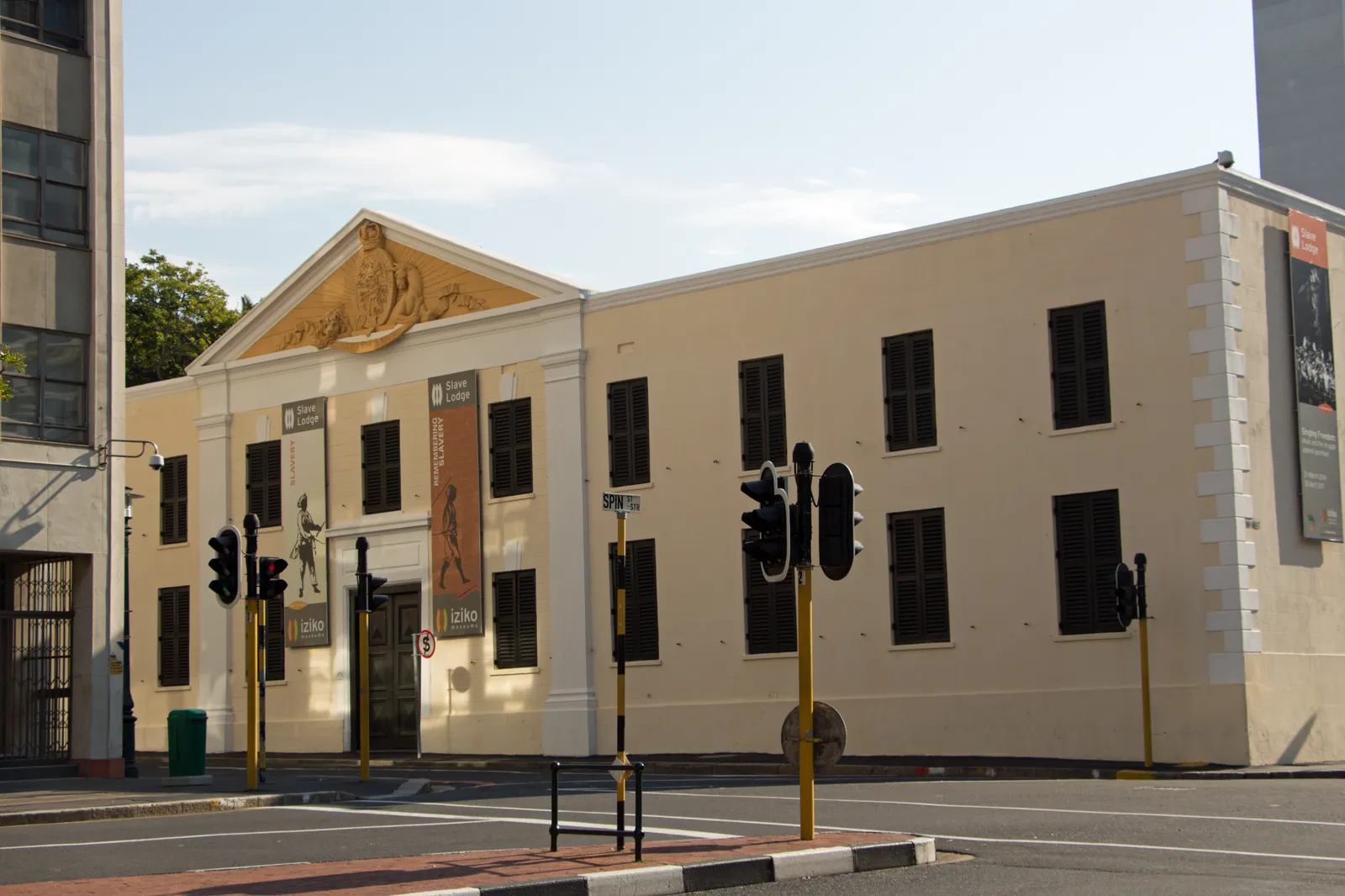
St George’s Cathedral stands across Wale Street, and Government Avenue, the oak-lined walk through the Company’s Garden, starts beside it. That garden, the painted houses of the Bo-Kaap and the Table Mountain cableway make up the main Cape Town guide, a day spent on the hillside above the flat ground this walk covers.
Frequently asked questions
What should I do during a layover near Cape Town railway station in Cape Town?
Start at the Castle of Good Hope, the five-bastion fort the Dutch East India Company finished in 1679, about ten minutes' walk from the station, with guided tours at 11:00, 12:00 and 14:00. The District Six Museum on Buitenkant Street, in a former Methodist church, tells the story of the more than 60,000 people forced out of the neighbourhood under apartheid, and City Hall looks over the Grand Parade, where Nelson Mandela spoke on the day of his release in 1990. Three hours covers all three, all on flat ground. The District Six Museum is closed on Sundays, so on that day spend the extra time at the Castle instead.
When is the Castle of Good Hope open, and when do the tours start?
The Castle opens every day from 09:00 to 16:00, and an adult ticket costs about R50. Guided tours are included in the ticket and leave at 11:00, 12:00 and 14:00, taking in the ramparts, the dungeons and the armoury. On weekday mornings there is also a Key Ceremony at the gate, weather permitting, which is included too.
What is open near Cape Town station on a Sunday?
The Castle of Good Hope, which opens daily. The District Six Museum and the Iziko Slave Lodge both close on Sundays, and the Grand Parade's market only runs on Wednesdays and Saturdays, so the square is mostly parked cars. City Hall's facade, the Mandela statue on its balcony and the outside of the Castle's walls and moat can be seen at any time for nothing.
Is there a train from Cape Town station to Cape Town International Airport?
No. None of the suburban lines that leave Cape Town station reach the airport. The nearest public transport is the MyCiTi airport bus, route A01, from Civic Centre station on Hertzog Boulevard, about 400 metres and five minutes' walk from the railway station. The ride takes about half an hour and is paid with a myconnect card loaded with enough for the airport surcharge. Uber and Bolt take 20 to 30 minutes on the N2 in normal traffic, closer to an hour in the weekday rush.