Cape Town's Kirstenbosch Botanical Garden
Part of the full Table Mountain and the Bo-Kaap: CPT Layover
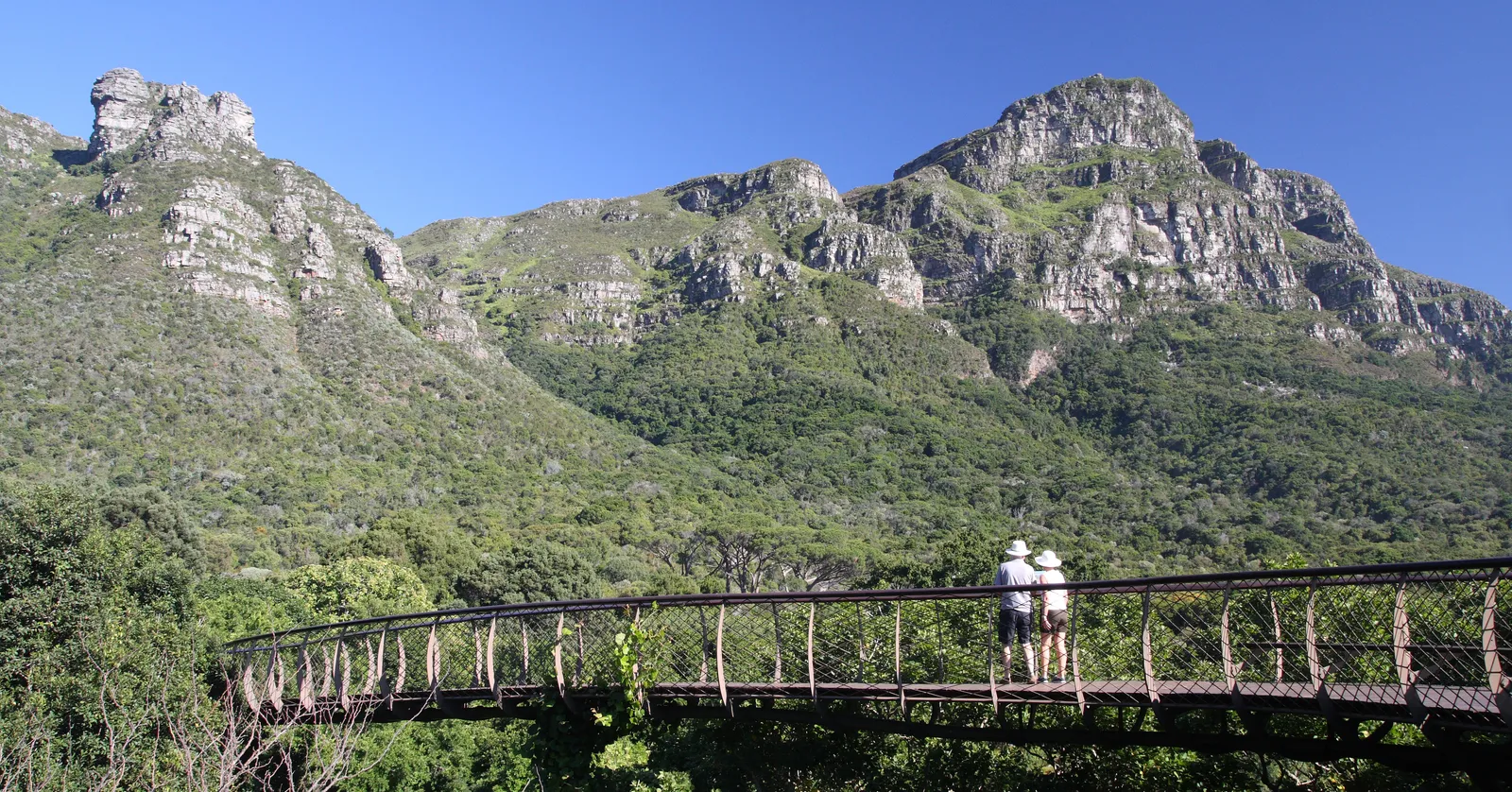
Kirstenbosch National Botanical Garden, on the eastern slope of Table Mountain about 13 kilometres south of Cape Town’s city centre, fills a half day with the Boomslang, a 130-metre walkway through the treetops, the protea and erica beds of its fynbos gardens, and a hedge of wild almonds planted in 1660, a slower way onto the mountain than the cable car on its city side.
The Boomslang canopy walkway through Kirstenbosch’s treetops
Kirstenbosch National Botanical Garden covers 528 hectares of Table Mountain’s eastern foot in the suburb of Newlands, most of it the mountain’s own forest and fynbos, with the cultivated garden spread across the lower slope. Cecil Rhodes bought the land in 1895 and left it to the nation; the botanist Harold Pearson founded the garden on it in 1913, and he is buried here under the epitaph “If ye seek his monument, look around.”
The Boomslang, officially the Centenary Tree Canopy Walkway, opened on 17 May 2014 to mark the garden’s hundred years. It is a slender, curving bridge of steel and timber, 130 metres long, that touches the forest floor in two places and rises to 12 metres over the arboretum in between, named after the boomslang, a green tree snake. From its highest point the view runs up to the cliffs of Castle Rock and the back of Table Mountain in one direction and out over the Cape Flats in the other. The walkway is included in the garden ticket, and Rycroft Gate, the upper entrance, is the closest to it.
The garden opens from 08:00 to 19:00 between September and March and closes an hour earlier from April to August. An international adult ticket costs R270 and South African residents pay R110; payment is by card or online only, with no cash taken at the gates. No train stops here and the MyCiTi city buses don’t either, but the hop-on hop-off sightseeing bus calls at the garden on its loop out of the city, and a bus pass can be booked ahead as the one way here that isn’t a car.
Skeleton Gorge, Kirstenbosch’s footpath up Table Mountain
Skeleton Gorge starts from the upper paths of Kirstenbosch and climbs the mountain’s eastern face to its summit plateau, roughly 3.5 kilometres of forest, streambed and rock. Partway up, a series of wooden ladders takes the path over the steepest rock steps, and they need care when the gorge is wet.
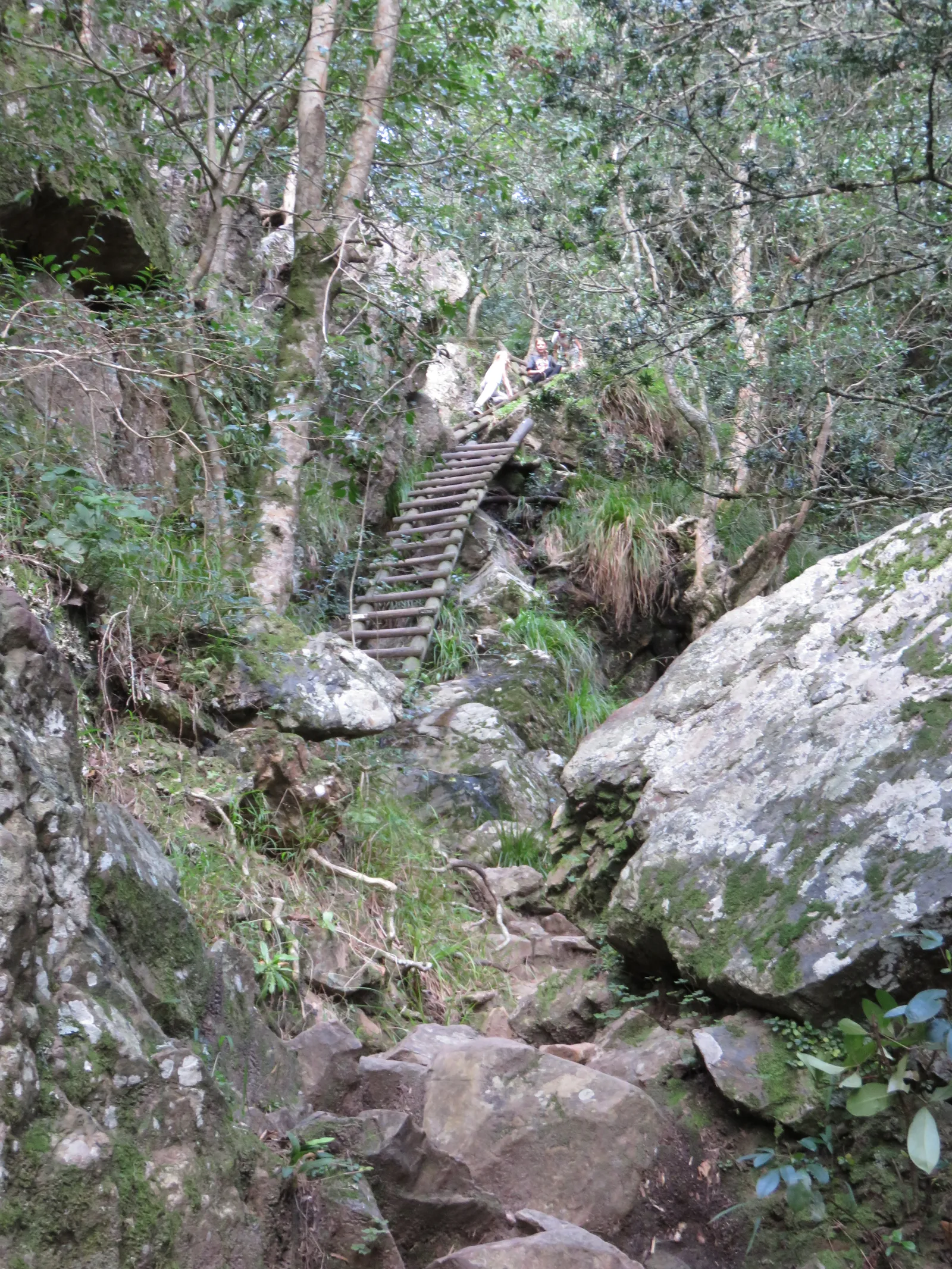
At the top, the Smuts Track continues to Maclear’s Beacon, the highest point on Table Mountain, and a mostly level walk across the tabletop ends at the upper cable station. That is about 8.5 kilometres and roughly 1,000 metres of ascent in all, around four hours, and the cable car down lands you at the station the main Cape Town guide rides up from the city. It only fits a stopover of eight hours or more, and only on a calm day, since the cableway stops in high wind. A guided Table Mountain hike from Kirstenbosch can be booked for anyone who would rather not find the route alone.
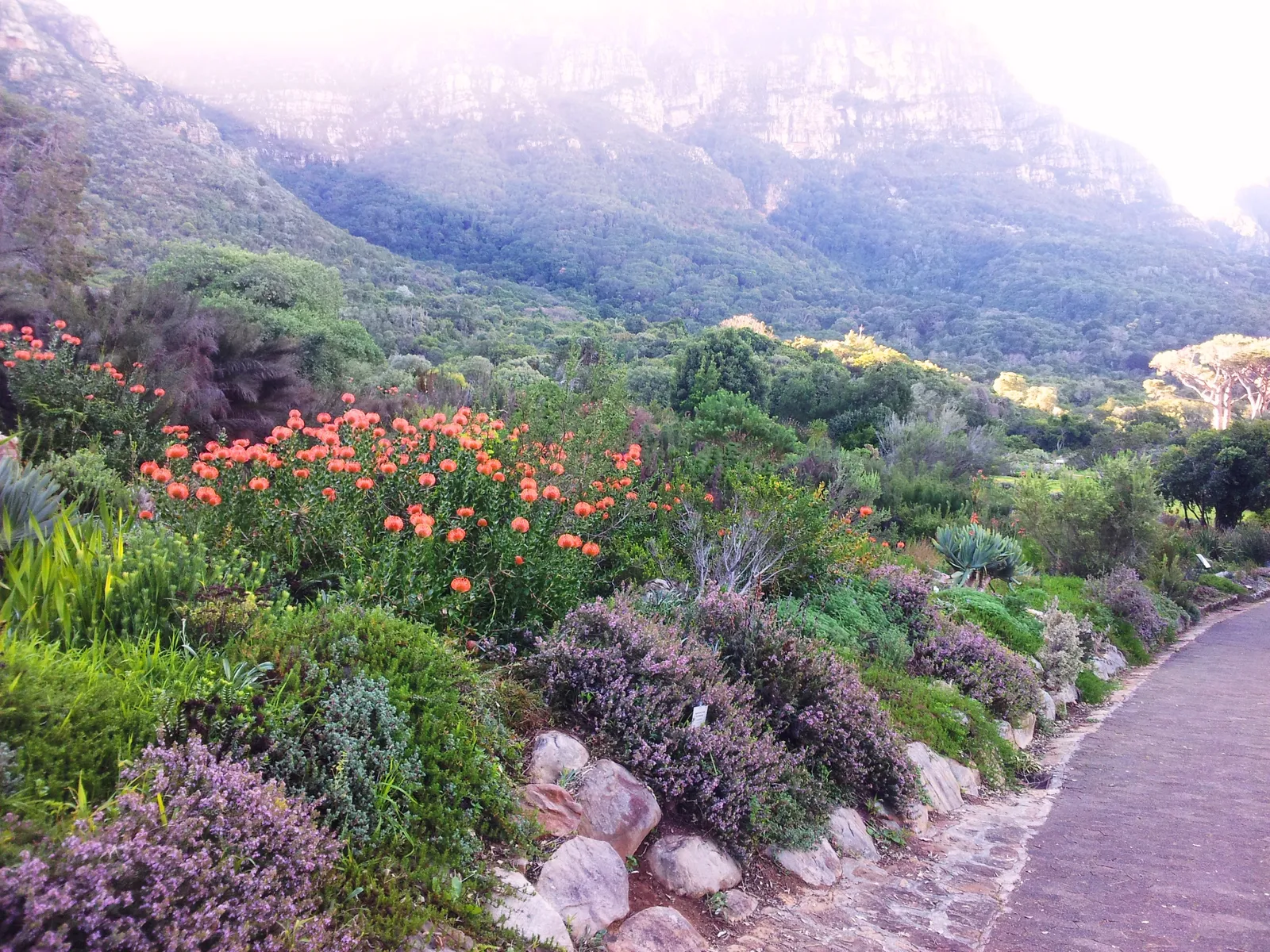
Proteas and ericas in Kirstenbosch’s fynbos beds
Fynbos is the fine-leaved shrubland of the Cape Floral Kingdom, and the Fynbos Walk at Kirstenbosch runs through it bed by bed, from the viewing deck near Rycroft Gate through the Restio, Protea, Fynbos, Buchu and Erica gardens. The Protea Garden flowers from May to October, the king protea, South Africa’s national flower, mainly from June; the orange pincushions follow from August to November, and the ericas turn pink early in the year.
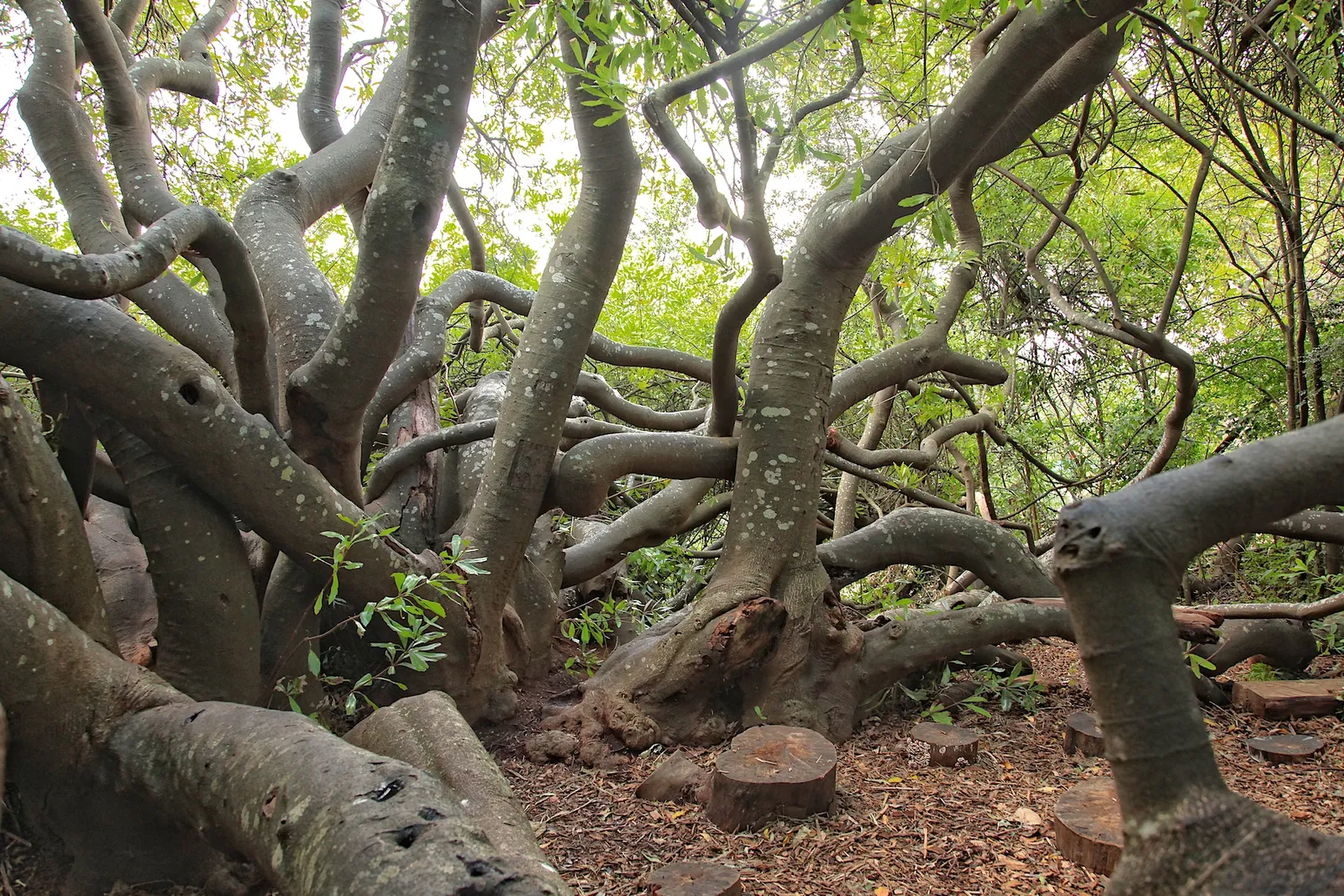
Van Riebeeck’s Hedge, a line of wild almond trees with pale, knotted trunks, is older than the garden by more than 250 years. Jan van Riebeeck, commander of the Dutch East India Company’s station at the Cape, had it planted in 1660, after fighting broke out with the Khoikhoi whose grazing routes the settlement lay across: wild almond and thorny shrubs along the colony’s eastern boundary, meant to keep livestock from being driven off. Stretches of it survive in Kirstenbosch and in neighbouring Bishopscourt, and it is a national monument.
No train or city bus to Kirstenbosch’s gates
Kirstenbosch sits on Rhodes Drive, a road along the mountain’s lower slope, and no railway station or MyCiTi stop serves it. The visit runs on a car in both directions, so a suitcase would otherwise ride out in one, come round the garden’s sloping paths with you, and ride back in another.
Cape Town International Airport (CPT) is about 20 kilometres from the garden, roughly 20 to 30 minutes by car in normal traffic on the N2 and closer to an hour in the weekday rush. Uber and Bolt both cover Newlands, and the MyCiTi airport bus, route A01, only runs from Civic Centre station in the city centre, too far round to be worth it from here. The hop-on hop-off bus heads back into town rather than out to the airport. Leave Kirstenbosch at least two and a half hours before an international departure.
Frequently asked questions
What should I do during a layover near Kirstenbosch National Botanical Garden in Cape Town?
Start on the Boomslang, the 130-metre steel-and-timber walkway that lifts you up to 12 metres into the garden's trees, then follow the Fynbos Walk down through the protea and erica beds to the stretch of Van Riebeeck's Hedge, wild almonds planted in 1660 as the edge of the Dutch settlement. Four hours in the garden covers all of it at an easy pace, plus the car ride out and back. Skeleton Gorge, the footpath from the garden to the top of Table Mountain, is the optional extra: it takes about four hours to the upper cable station and only suits a long stopover and a clear, calm day.
When are the proteas in flower at Kirstenbosch?
The Protea Garden is at its best from May to October, when the proteas, leucadendrons and serrurias are in bloom, and the king protea, South Africa's national flower, flowers mainly from June to October. The orange and yellow pincushions follow from August to November, and the erica beds turn pink in the first months of the year. Spring, August to October, is when most of the fynbos beds are flowering at once; outside it, the Boomslang and the forest are the same in any month.
Can I walk up Table Mountain from Kirstenbosch on a layover?
Only with eight hours or more, fit legs and good weather. The climb up Skeleton Gorge from the garden to the upper cable station is about 8.5 kilometres with around 1,000 metres of ascent and takes roughly four hours, including wooden ladders partway up the gorge that need care when wet. The easy way down is the cable car, which stops in high wind, so a windy afternoon can mean walking back down as well. A guided Table Mountain hike starting in Kirstenbosch takes the route-finding off your hands, and with less time the main Cape Town guide rides the cable car up from the city side instead.
How do I get from Kirstenbosch to Cape Town International Airport?
By car. No train or MyCiTi bus serves the garden, so Uber, Bolt or a pre-booked driver is the practical way to Cape Town International Airport (CPT), about 20 kilometres away, roughly 20 to 30 minutes in normal traffic and closer to an hour in the weekday rush on the N2. The hop-on hop-off sightseeing bus that stops at the garden runs back into the city, not to the airport. Leave Kirstenbosch at least two and a half hours before an international departure.