Kalk Bay, Cape Town's Fishing Harbour by Train
Part of the full Table Mountain and the Bo-Kaap: CPT Layover
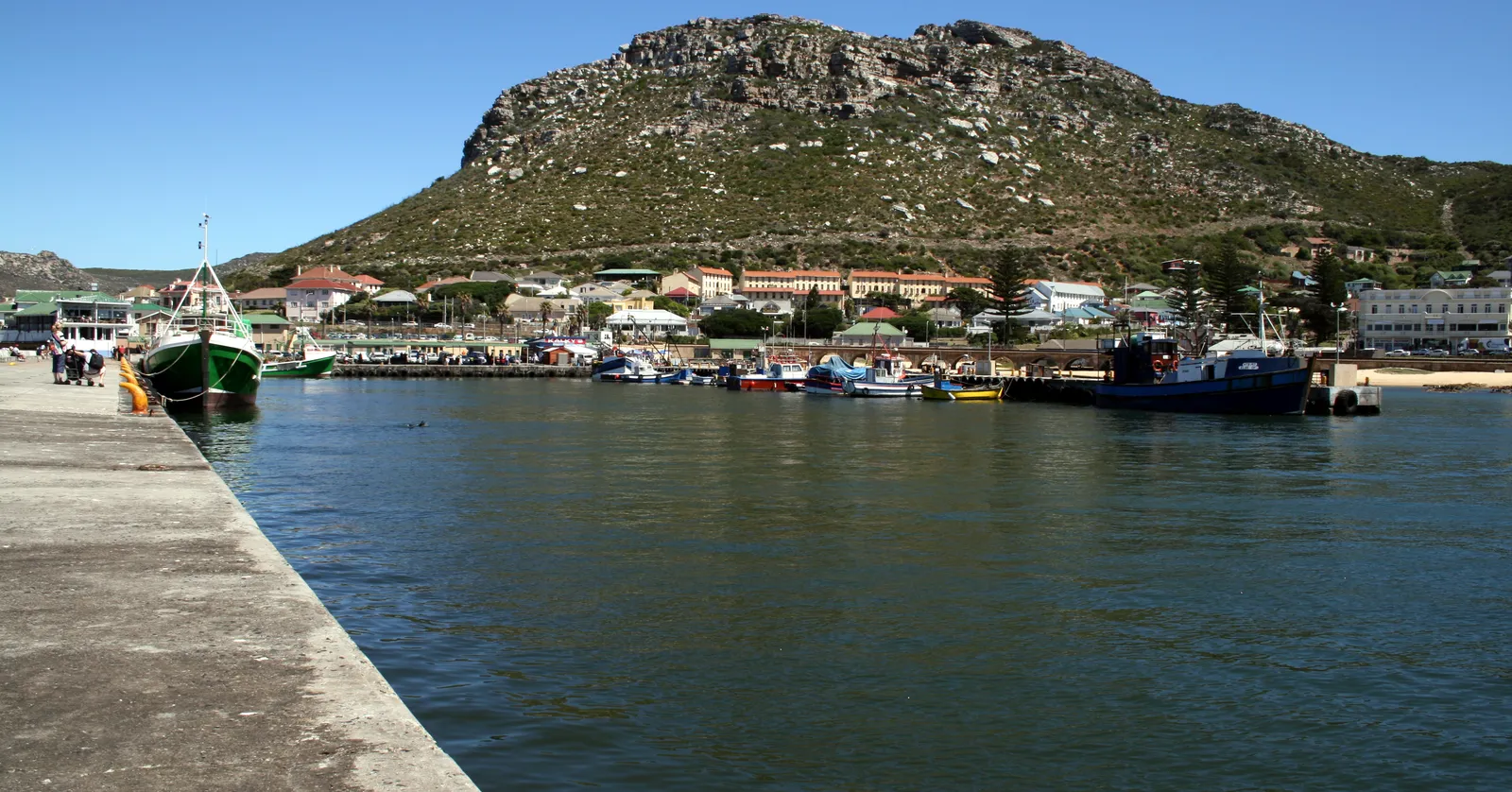
Kalk Bay, a fishing village on Cape Town’s False Bay coast about an hour from the city centre by suburban train, has a working harbour where the boats sell their catch on the quay at midday, rare book and antique shops along Main Road, and the painted bathing boxes of St James one stop along the line.
Kalk Bay harbour, where the catch is sold on the quay
Kalk Bay railway station stands on the seafront at the edge of the village, and the harbour starts a few steps from the platform. The railway reached Kalk Bay in 1883, which is what turned a fishing cove into Cape Town’s main supplier of fish: the catch could be on a train to the city the same day. The harbour itself came later, built between 1913 and 1918, an eight-acre basin with a breakwater, a fish-landing quay and a slipway, and the village’s name is older than both, from the Dutch word for lime, which early settlers burned out of the mussel shells on this shore.
The boats go out at dawn and come back at about midday, and the quay fills up as they land. Cape fur seals cruise the basin and haul out on the steps below the fishermen, waiting for whatever goes over the side. Walk out along the harbour wall for the view back over the moored boats to the village and the mountain behind it. The harbour is a whole day away from the Table Mountain and Bo-Kaap route in the main Cape Town guide, and on a Sunday, with no trains, it is a car trip instead.
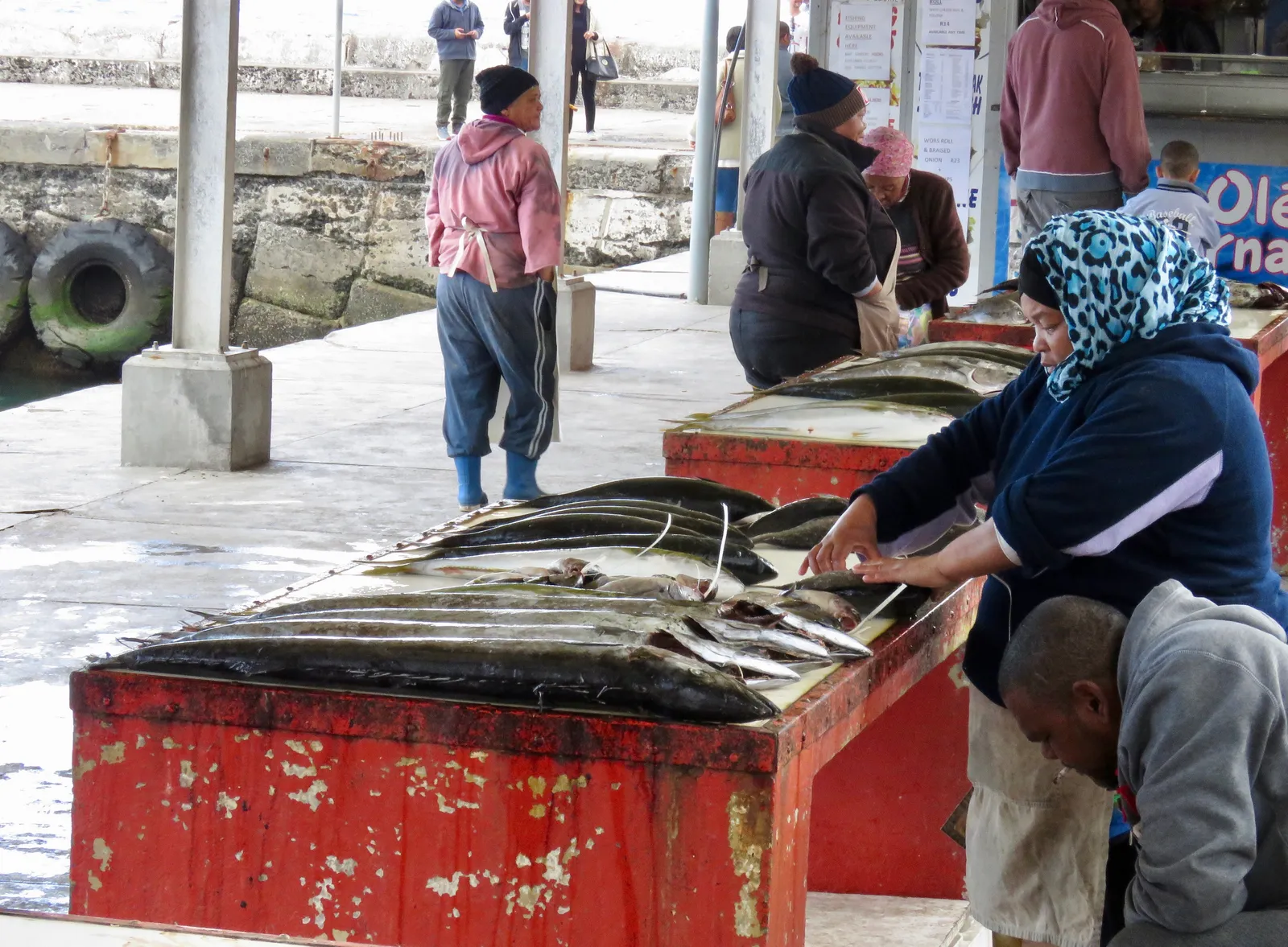
The fish is sold straight off the boats and from tables on the quay, and the sellers will clean and gut it for you. Yellowtail and kob are the usual catch; snoek, the long, bony fish Kalk Bay’s fleet was built around, has become unreliable, and at least one recent summer had none. The fish and chip shops at the harbour’s edge cook what comes in.
The African penguins of Boulders Beach in Simon’s Town
Simon’s Town is the end of the railway line, four stops beyond Kalk Bay, and Boulders Beach is roughly a 20-minute walk from its station along the main road. Two breeding pairs of African penguins settled on the beach in 1982; the colony now numbers about 3,000 birds. Boardwalks run out to Foxy Beach, where the penguins stand on the sand a few metres below you, and the beach is part of Table Mountain National Park, so entry is by conservation fee, upwards of R200 for an international adult. Since February 2026 weekday trains have run through to Simon’s Town; on Saturdays the last stretch beyond Fish Hoek is a separate shuttle, so the trip takes a change.
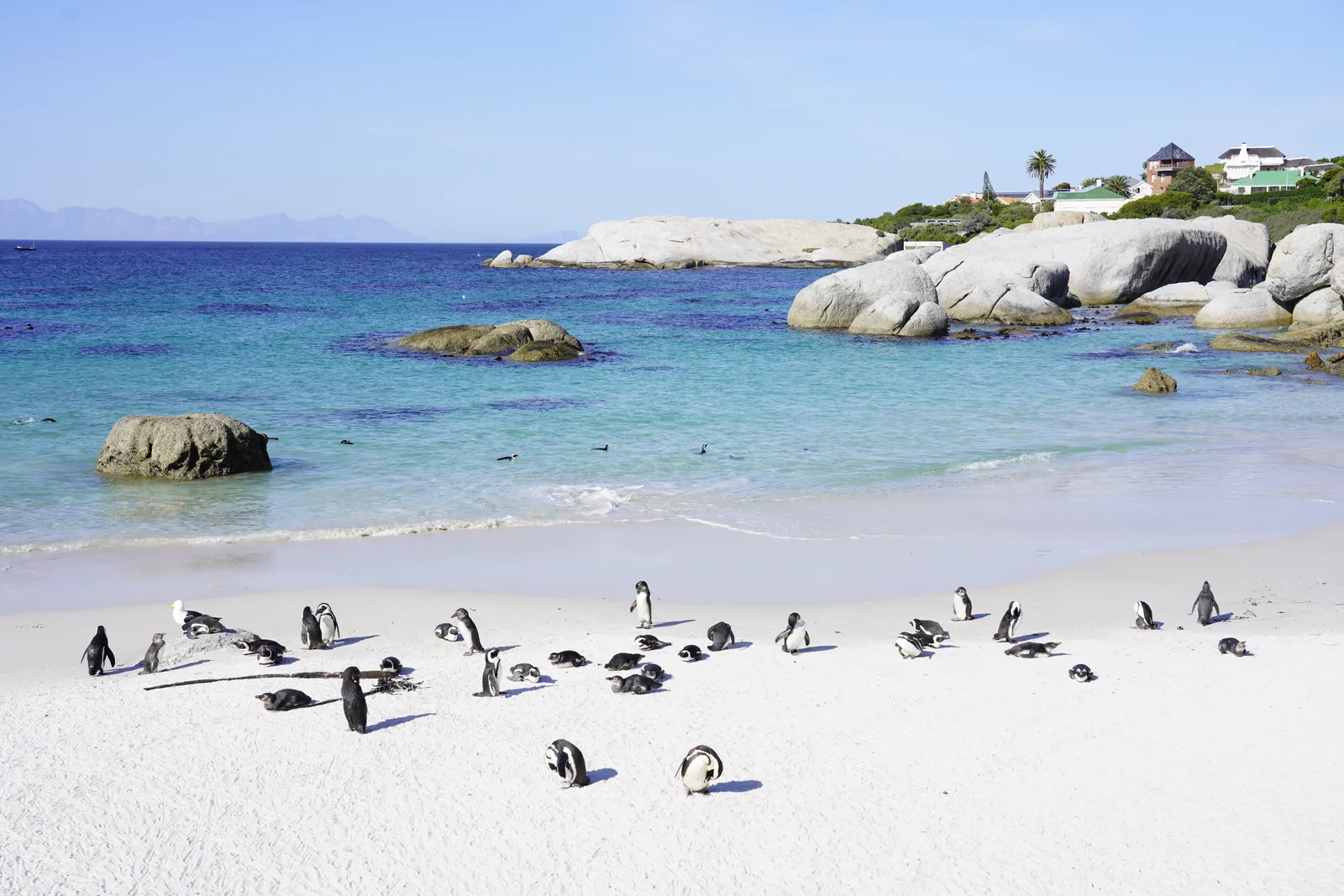
The colony opens daily from 08:00 and closes between 17:00 and the early evening depending on the season. For anyone who would rather see it by road, a guided Cape Point and penguins day tour from the city centre can be booked ahead, taking in Boulders and the cliffs at Cape Point in one trip, though it gives up the train and most of the time in Kalk Bay itself.
Rare books and a theatre in an 1876 church on Main Road
Main Road runs through Kalk Bay between the railway line and the mountain, and most of the village’s shops line it: antique and junk dealers, galleries, cafés and bookshops. Quagga Rare Books and Art, open for more than 25 years, specialises in Africana, local history, old maps and art prints, the kind of shop where a quick look turns into an hour.
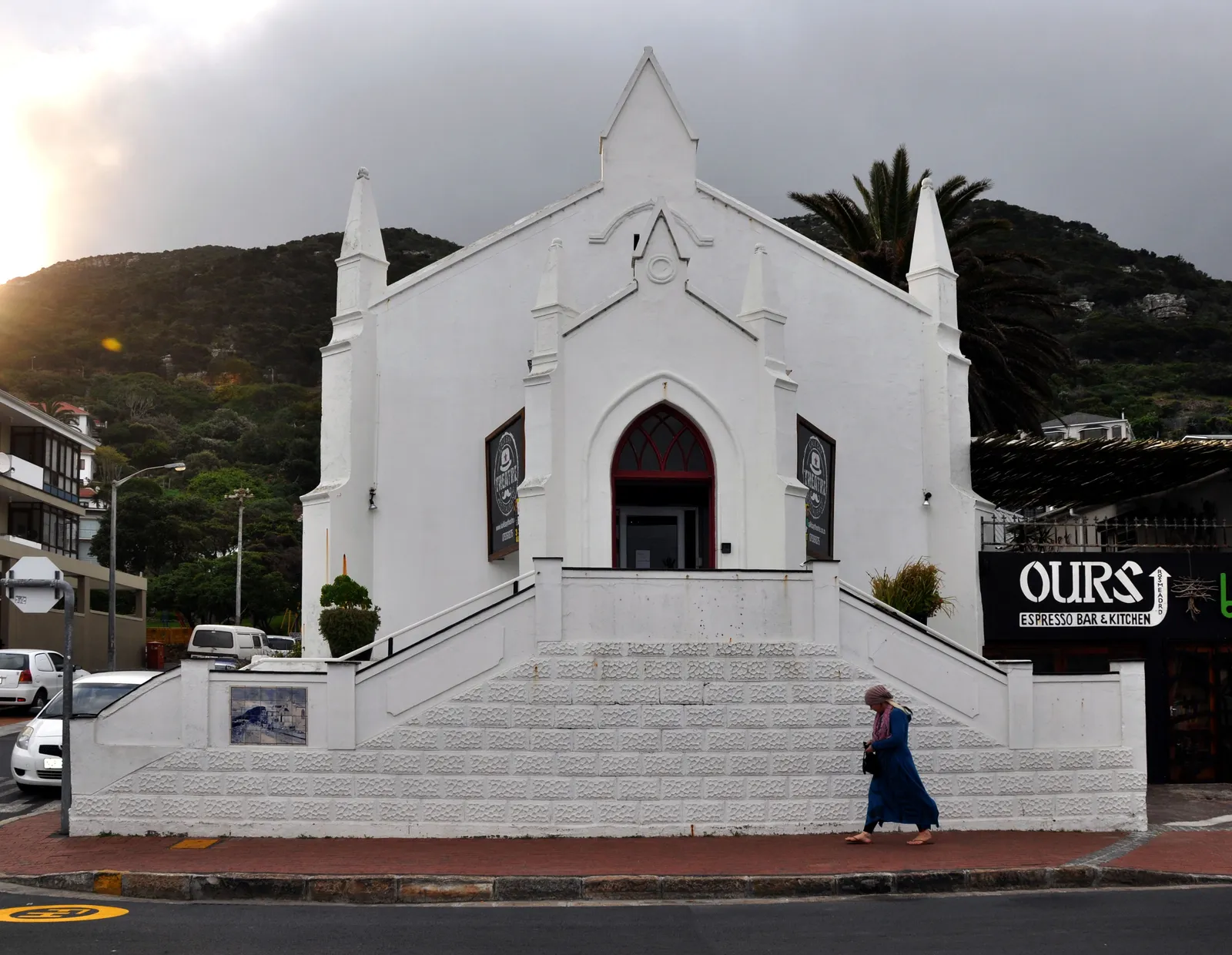
The Kalk Bay Theatre fills the old Dutch Reformed church at 52 Main Road, on the corner of Rouxville Road, a neo-Gothic building of 1876 that stopped holding services in the 1950s. The theatre moved in during 2005 and turned it into a 78-seat auditorium with a restaurant upstairs. Across Main Road from number 24, a narrow subway ducks under the railway line to Dalebrook tidal pool, a rock-edged seawater pool from the early 1900s with a large boulder in the middle.
Main Road’s pavements are narrow, and at Saturday lunchtime they and the harbour quay are at their fullest, with queues for fish and chips spreading across the quay.
Kalk Bay has trains six days a week, but none to the airport
Kalk Bay is on Metrorail’s Southern Line, which starts at Cape Town station in the city centre and runs through the southern suburbs and along False Bay to Simon’s Town. The ride from Cape Town station to Kalk Bay takes roughly an hour, and trains run Monday to Saturday only, with none on Sundays or public holidays.
No train reaches Cape Town International Airport (CPT), about 30 kilometres from Kalk Bay. By car it takes around 35 to 40 minutes in normal traffic, and weekday rush-hour traffic can stretch that to an hour or more. Uber and Bolt both cover Kalk Bay, and for most layovers a car straight from the village is the sensible way back. The public-transport alternative means the train back to Cape Town station, a five-minute walk to Civic Centre station, and the MyCiTi A01 airport bus, about half an hour, paid with a myconnect card: two hours or more in all. By car, leave Kalk Bay at least three hours before an international departure.
The painted bathing boxes at St James
St James, the next station north of Kalk Bay towards Muizenberg, keeps a row of Victorian bathing boxes on its beach, painted in bright stripes of red, yellow, blue and green. They stand above the St James tidal pool, with the railway line running right behind them and False Bay in front.
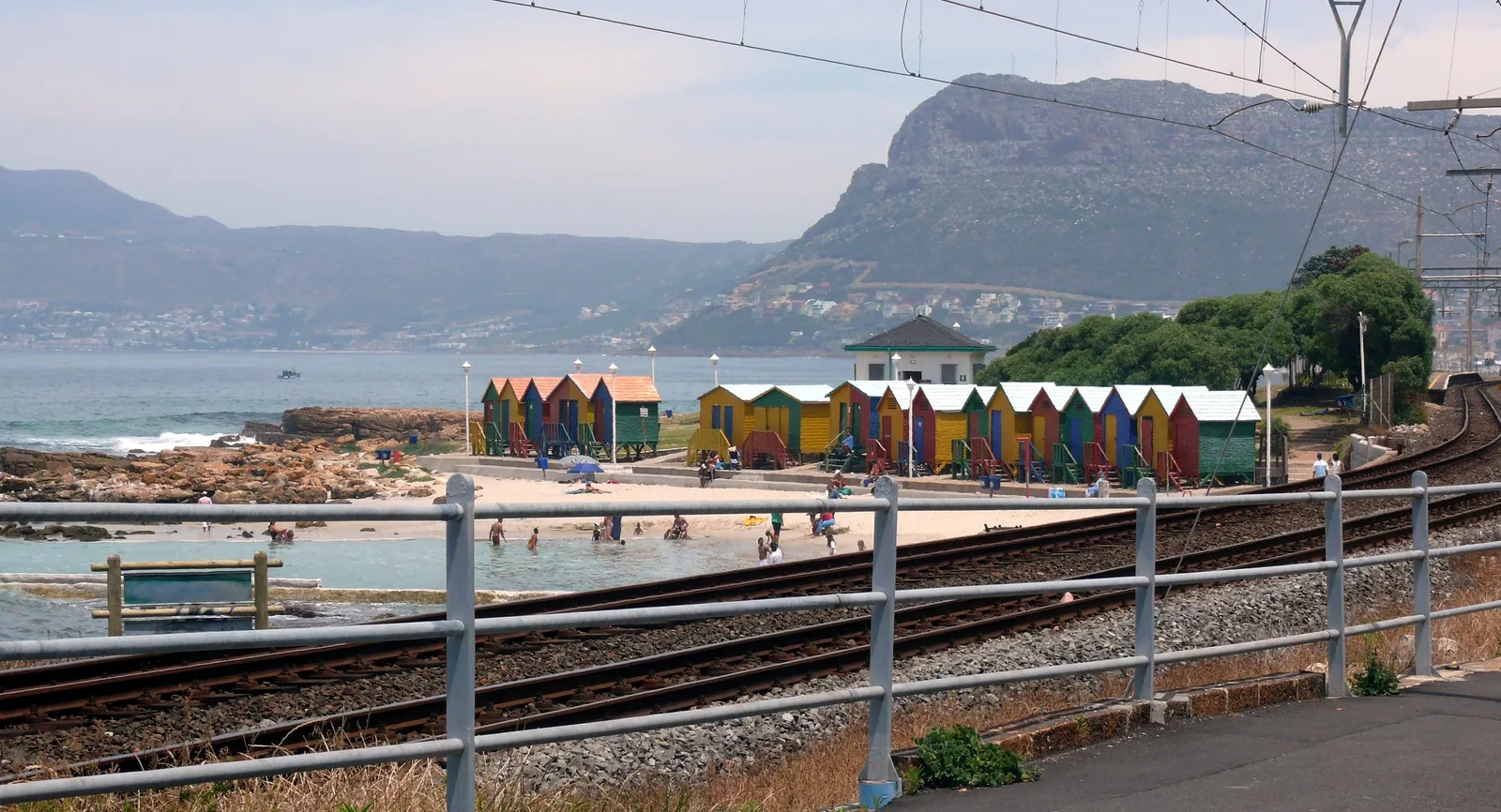
The catwalk, a flat coastal path along the sea side of the railway, links Kalk Bay, St James and Muizenberg on foot, so the bathing boxes can be reached without waiting for a train, and the train back to the city can be caught from either end. The seawater pools on the city’s Atlantic side are a different kind of swim: the Sea Point Promenade has a 50-metre one.
Frequently asked questions
What should I do during a layover near Kalk Bay railway station in Cape Town?
Start at Kalk Bay harbour, beside the station, where the fishing boats land their catch at about midday and sell it off the quay while Cape fur seals wait below for scraps. Then walk Main Road for its rare book and antique shops and the Kalk Bay Theatre in a church of 1876, and finish at the painted bathing boxes of St James, one stop along the line. Six hours covers that with the train out from the city and back. The penguin colony at Boulders Beach in Simon's Town, at the end of the same line, is the add-on for a stopover of eight hours or more, and it can be skipped without changing the rest of the day.
Do trains run to Kalk Bay on Sundays?
No. Suburban trains to Kalk Bay run from Monday to Saturday and not on Sundays or public holidays, so on those days a car is the only practical way to get there. On Saturdays the through trains from Cape Town stop at Kalk Bay as usual, but beyond Fish Hoek the line to Simon's Town runs as a separate shuttle, so reaching Boulders Beach by train takes a change.
When do the fishing boats come in at Kalk Bay harbour?
The boats go out at dawn and usually come back around midday, and the catch is sold straight off them on the quay. What comes in varies with the season and the fishing: yellowtail and kob are common, but the snoek Kalk Bay was built on have become unreliable in recent years, and at least one recent summer had none. A weekday arrival just before midday catches the boats landing without the weekend crowd on the quay.
Can I go shark cage diving from Simon's Town on a layover?
Only with a whole day and some flexibility. Boats leave from Simon's Town, at the end of the same railway line as Kalk Bay, with a meeting time of about 07:30 to 08:30, and the skipper confirms the trip the day before once the weather is known, so it can be called off at short notice. The sharks have changed too: great whites have become hard to predict in False Bay, and operators now mostly look for bronze whalers and sevengill sharks. If the dates line up, a cage-diving trip from Simon's Town can be booked ahead, and Kalk Bay is on the same train line back towards the city.