Cusco's Inca Walls on a CUZ Layover
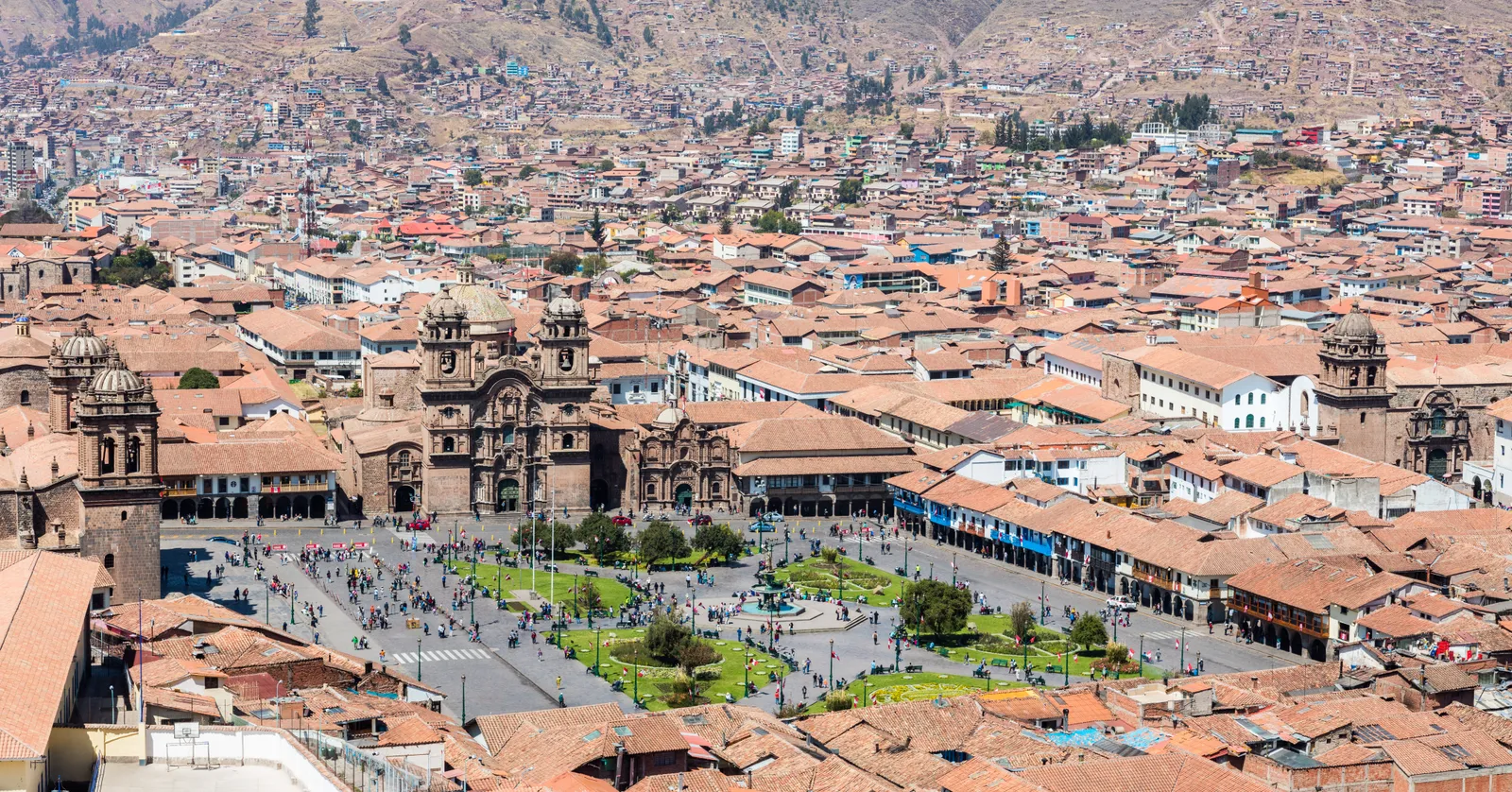
Qorikancha’s curved Inca wall, the twelve-angled stone set into the street wall on Hatunrumiyoc and the covered market at San Pedro all sit within a few minutes’ walk of Cusco’s Plaza de Armas, with Sacsayhuamán’s limestone terraces a climb of half an hour or more above the city.
Qorikancha, an Inca sun temple under a Dominican church
Qorikancha was the principal temple of the Inca empire, dedicated to the sun and, by every Spanish account written of it, lined in sheet gold. It stands on Avenida El Sol in central Cusco, three blocks downhill from the main square, and what fronts the street today is the Dominican church and convent of Santo Domingo, built straight onto Inca foundations the conquest never managed to pull down.
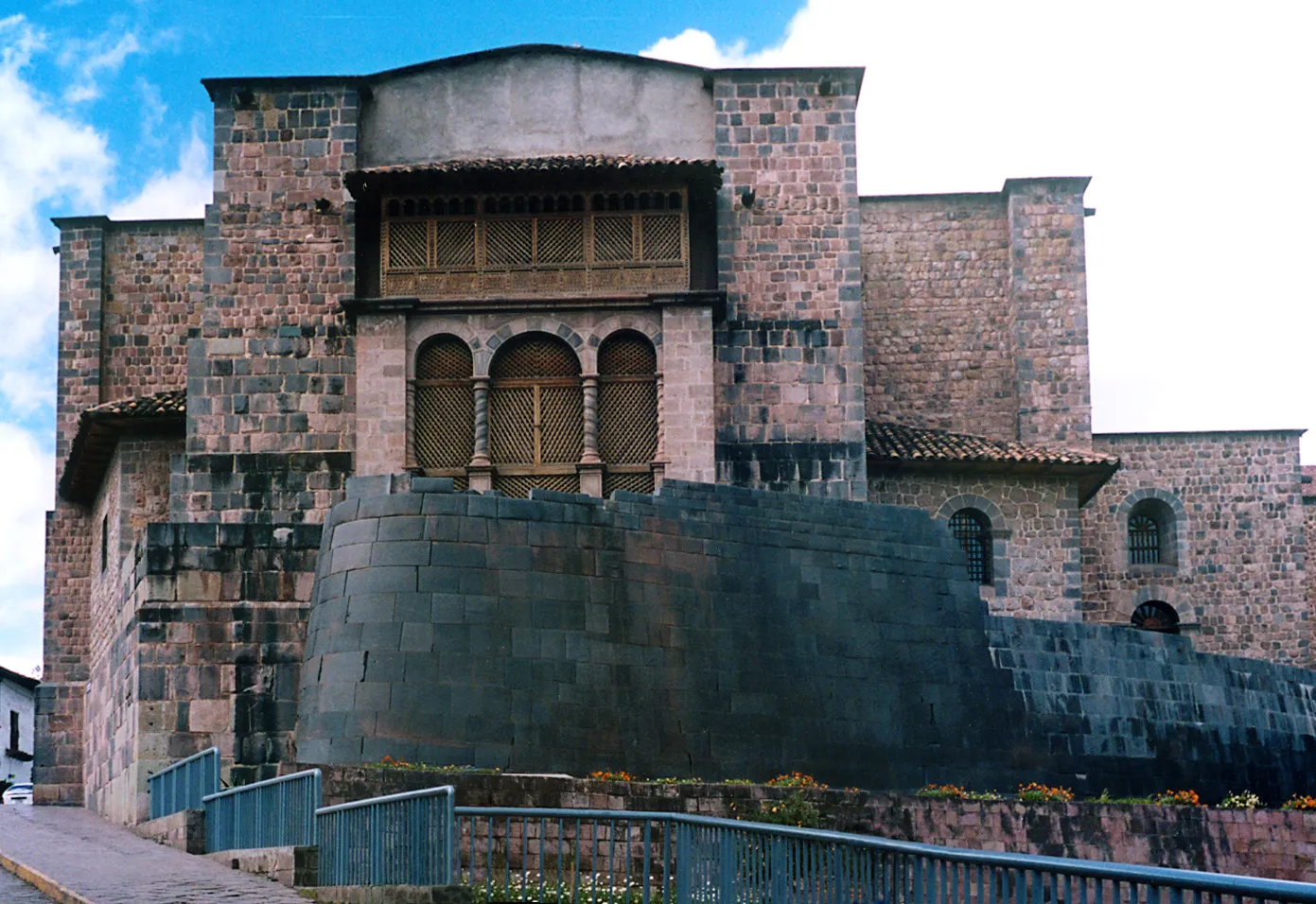
The curved wall on the Avenida El Sol side is the part worth standing in front of, a smooth parabolic sweep of fitted stone with no mortar in any joint of it. An earthquake destroyed the first Dominican convent here in 1650 and the church above had to be rebuilt; the Inca wall underneath it did not move. Inside, four original temple chambers survive around the cloister, with the trapezoidal niches and doorways the Inca used everywhere they built. Admission to the temple complex is its own ticket, paid in cash at the door, and is not covered by the city’s tourist ticket, so a half-day guided circuit that takes in the temple is the simpler option when the day is already tight.
Sacsayhuamán’s limestone terraces on the ridge above Cusco
Sacsayhuamán is a walled Inca complex on the ridge at the northern edge of the city, at 3,701 metres, three hundred metres above the streets below it. Three terrace walls run in a long zigzag across the site, built from limestone blocks whose largest is estimated at anywhere between 128 and almost 200 tonnes, each one cut to meet its neighbours so precisely that the joints hold without mortar and have held through four and a half centuries of earthquakes.
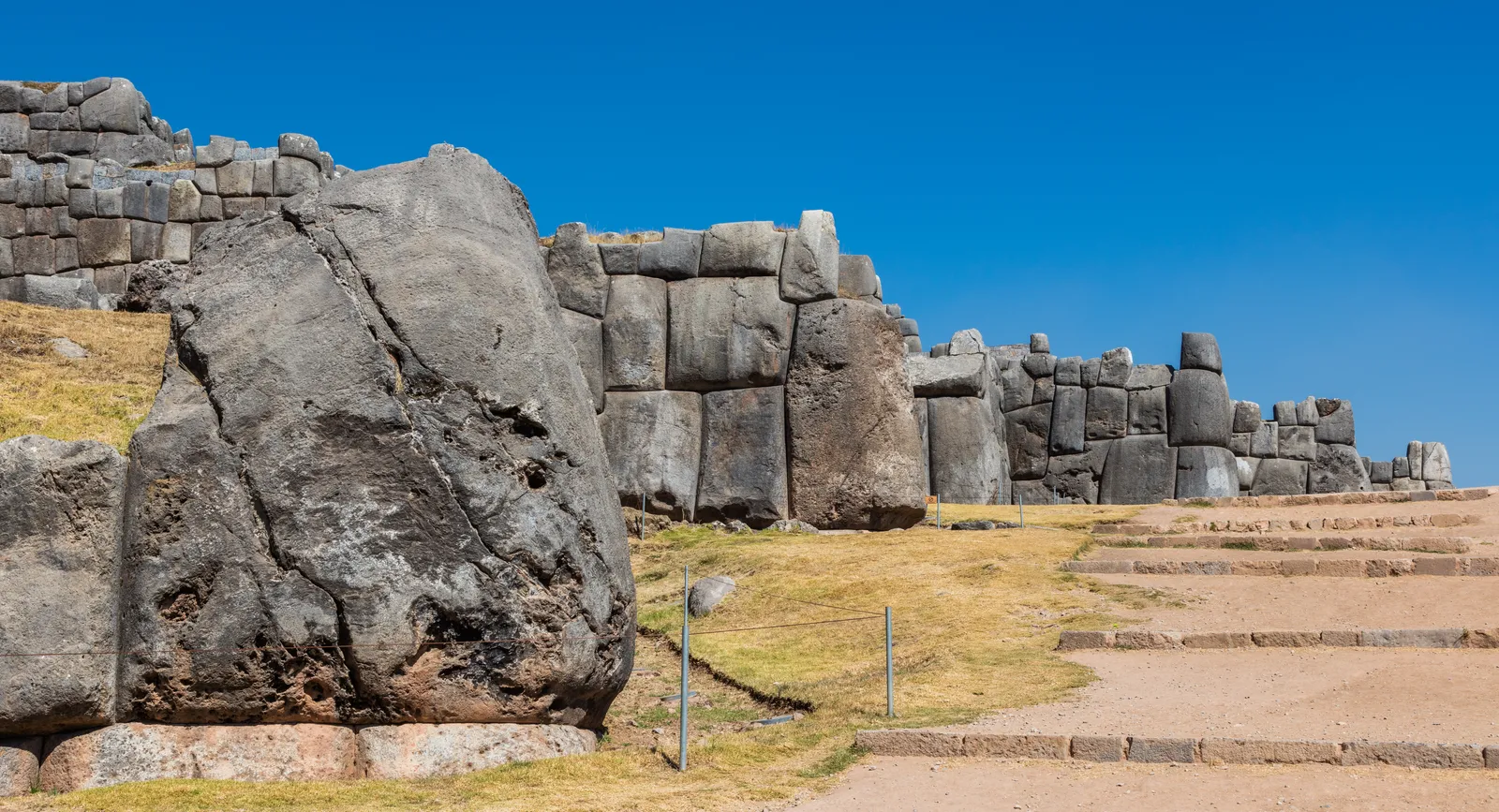
Spanish chroniclers credit the start of the work to Pachacuti in the fifteenth century and put the workforce at around twenty thousand. Getting up there on foot takes thirty to forty-five minutes from the Plaza de Armas on Calle Resbalosa, which climbs the whole way. There is no individual ticket for the site: entry runs on the city’s tourist ticket only, so a tour that includes the entrance saves a queue for it in town first. The climb is stepped in places and starts at 3,399 metres, which is where a suitcase gets carried rather than pulled.
The twelve-angled stone in the wall on Hatunrumiyoc
Hatunrumiyoc is a cobbled pedestrian lane in the old town with Inca walls down both sides. The long one on the eastern flank is the outer wall of what was Inca Roca’s palace and is now the Archbishop’s Palace, which houses the Museum of Religious Art.
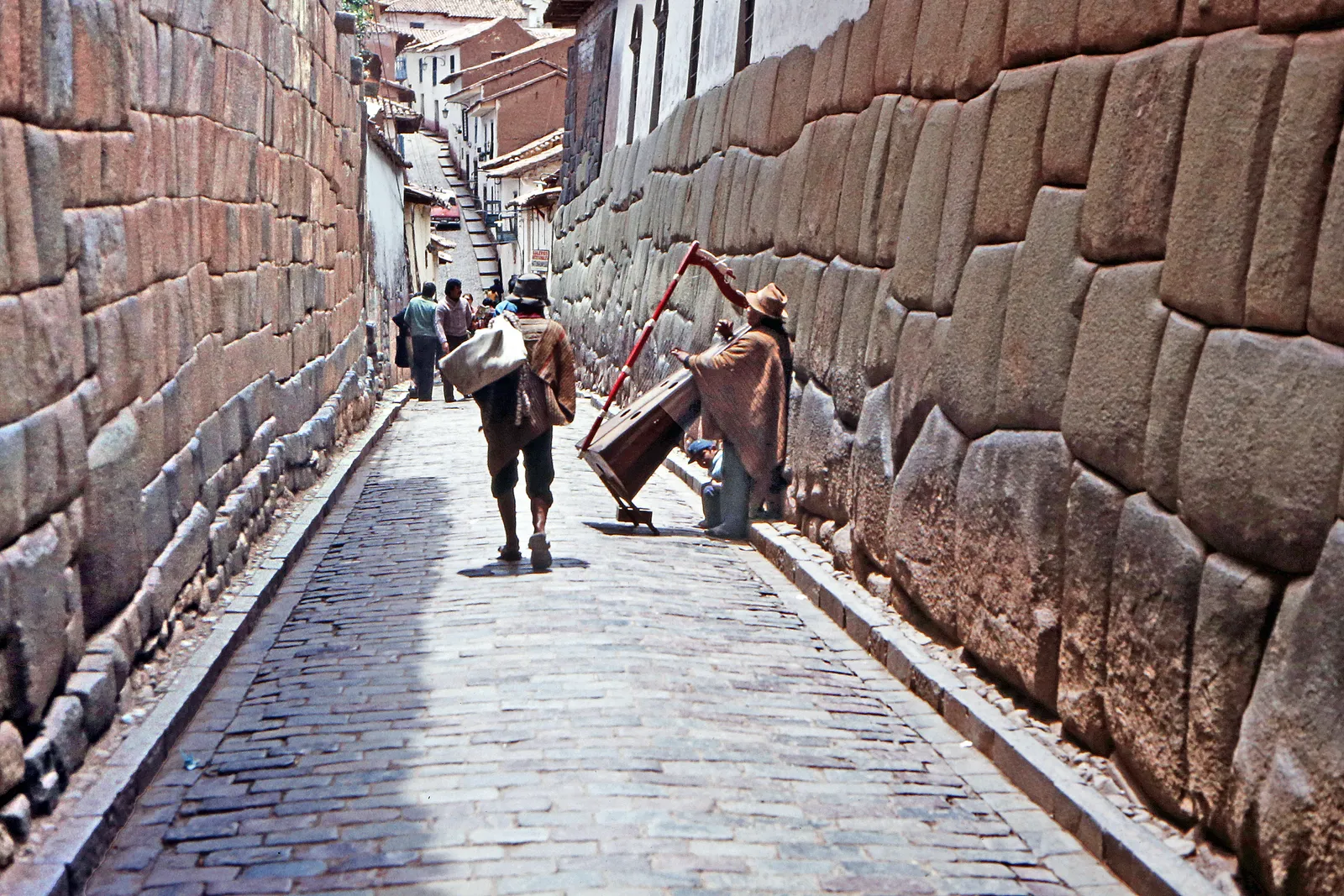
Set into that wall at about chest height is a single block of green diorite cut with twelve separate corners, every one of them matched exactly by the stones packed around it, with nothing holding the joint but the fit. It has been a designated national heritage object of Peru since December 1972 and sits inside the City of Cusco World Heritage Site, inscribed in 1983. In February 2025 a man chipped six visible pieces off it with a hammer overnight and was arrested the same day; Cusco’s regional culture office called the damage irreversible, and the marks are still there to pick out.
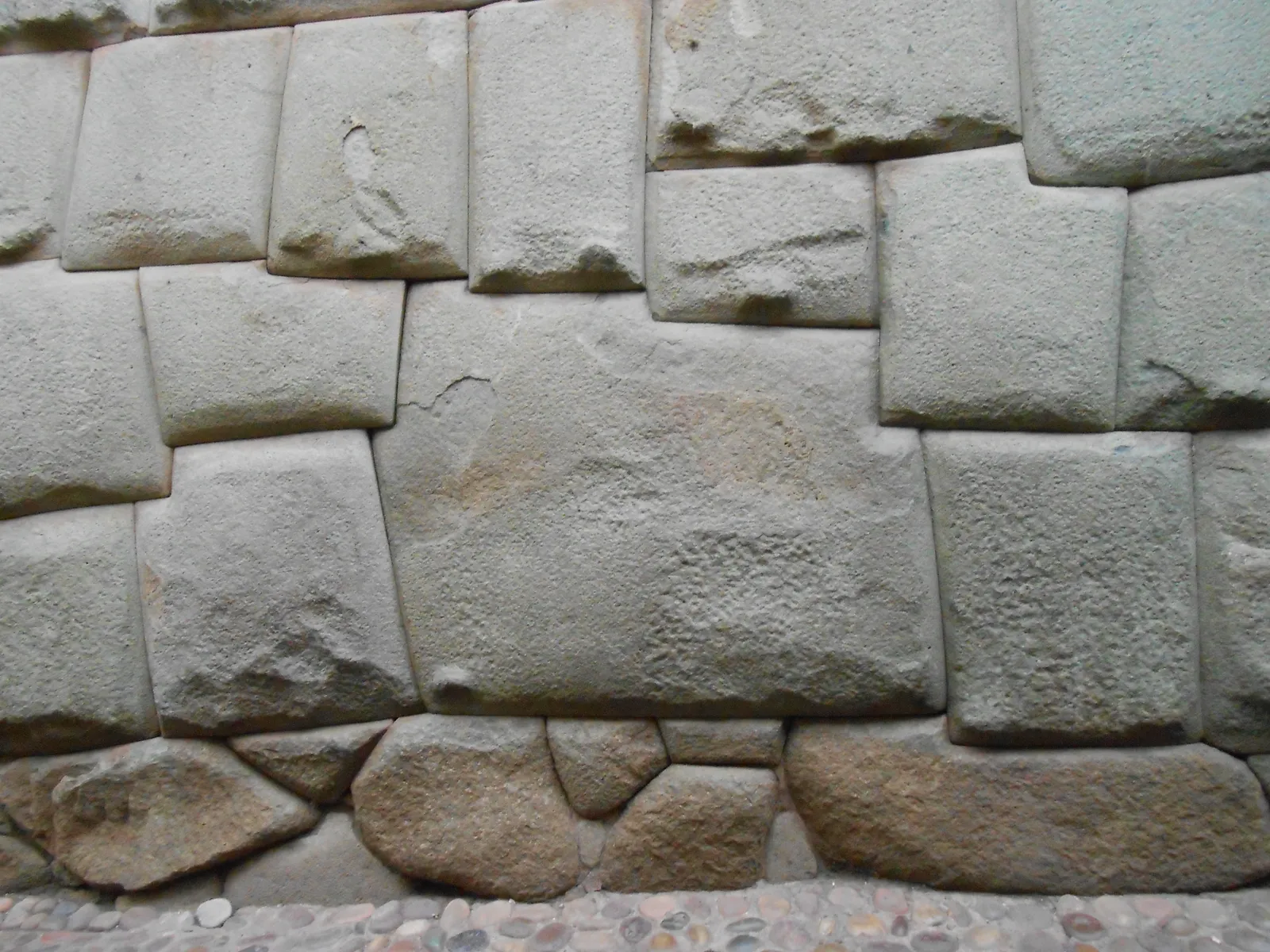
Two streets away, Calle Loreto has original Inca walls on both sides rather than one. The Acllawasi wall runs along one flank, from the compound where the chosen women of the sun were housed and where the convent of Santa Catalina stands now; the Amarucancha wall faces it, part of Huayna Capac’s palace and later the site of the Compañía church on the main square. It costs nothing and takes two minutes.
San Pedro market under its 1925 iron roof
The Mercado Central de San Pedro opened on 7 June 1925, ten minutes’ walk west of the Plaza de Armas, in a hall of squared columns carrying a corrugated iron roof. The ironwork is widely attributed to Gustave Eiffel’s firm, though the attribution is repeated a great deal more often than it is documented, so treat it as local lore rather than settled fact.
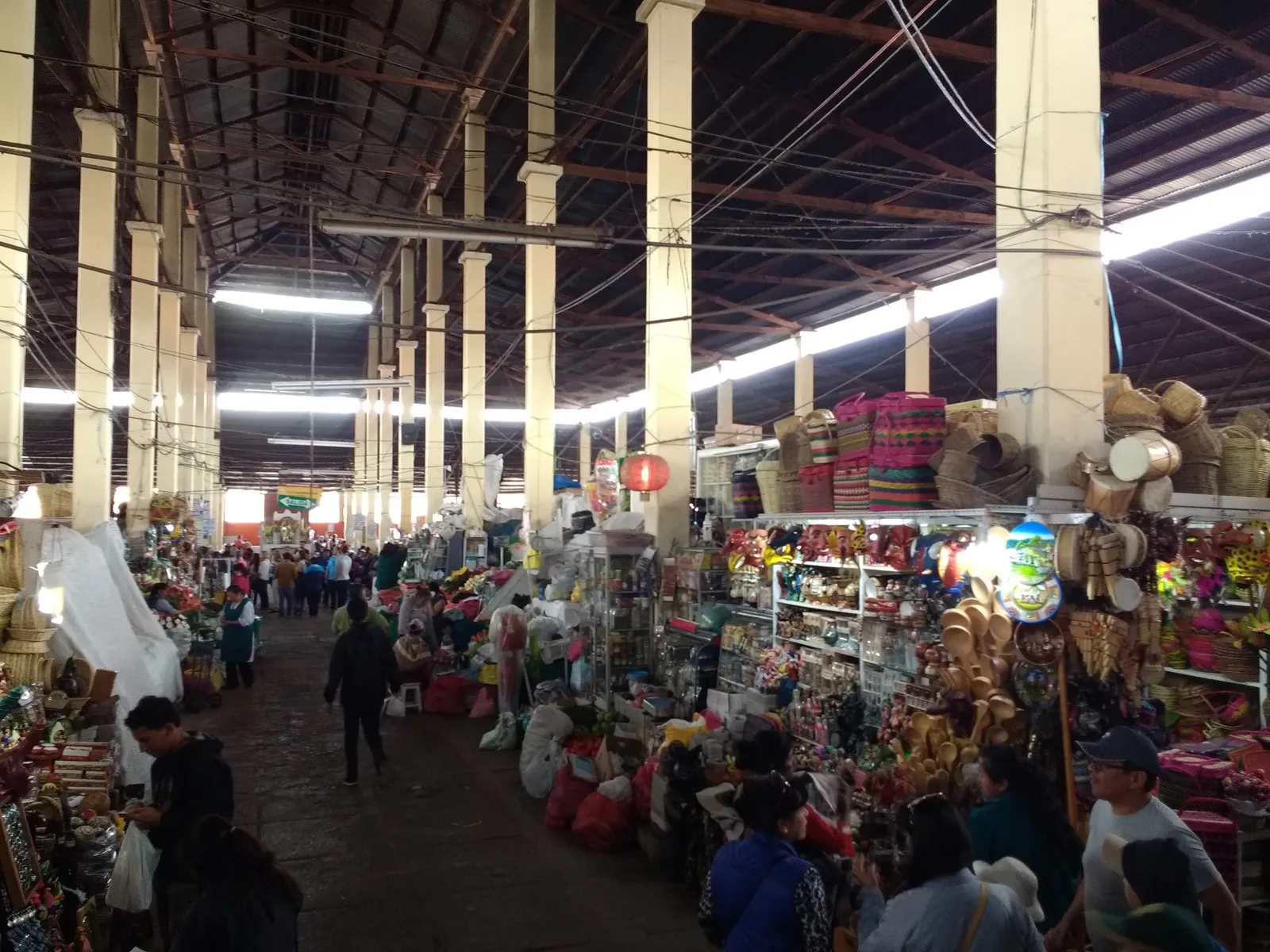
Entry is free and the hall trades from about six in the morning until six in the evening, with the juice and breakfast counters open from half past five. Between seven and ten is when it is working hardest, which is also when it is worth seeing: rows of native potatoes in a dozen colours, corn with kernels the size of a thumbnail, quinoa, and bundles of coca and muña sold by the handful, with alpaca knitwear and ceramics filling the aisles nearer the doors.
The San Blas quarter and its single-trunk pulpit
San Blas is the artisan quarter on the slope northeast of the Plaza de Armas, and the Cuesta de San Blas is how you get into it: a cobbled street steep enough to need stepped pavements up both sides, lined with workshops and small galleries.
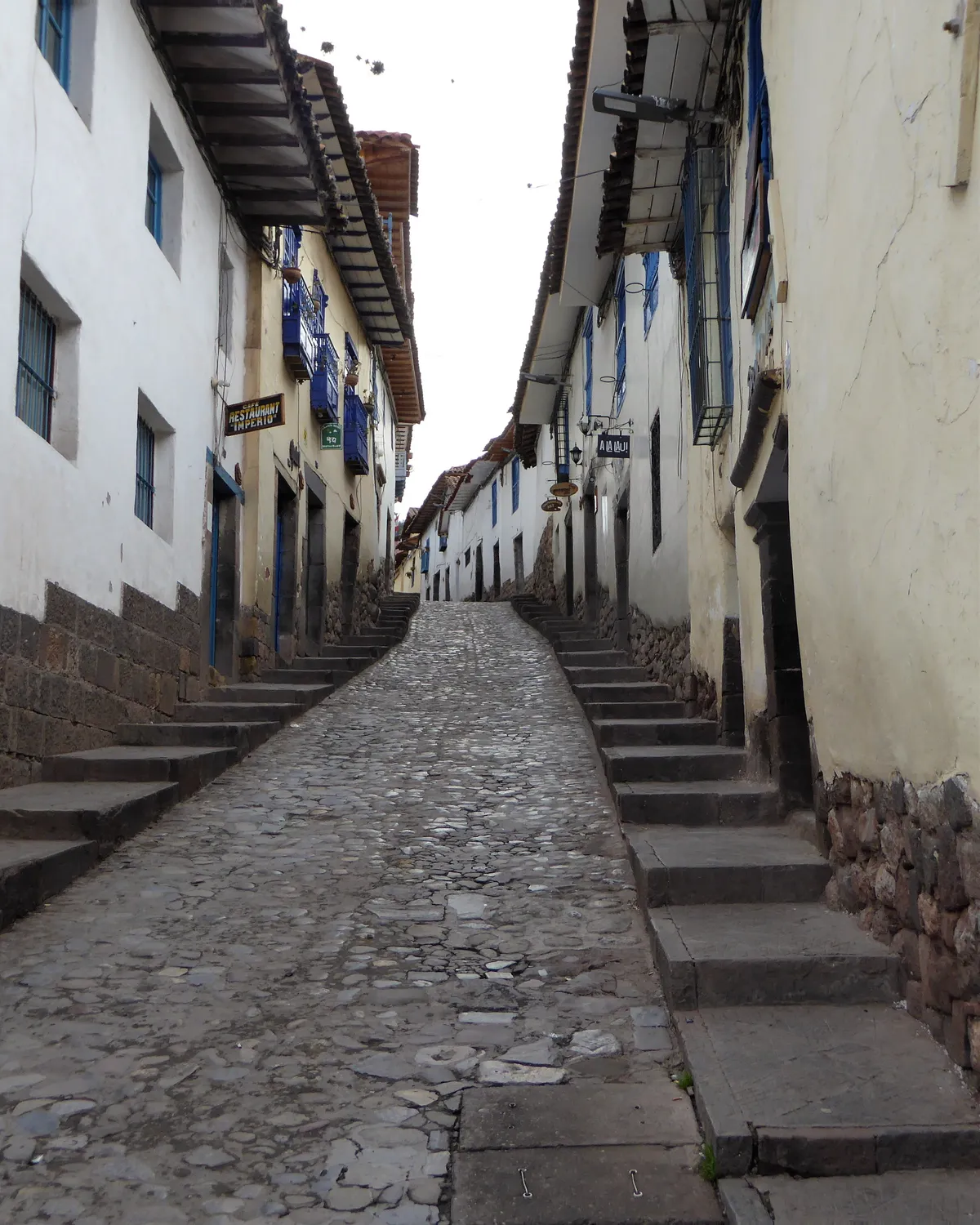
The climb ends at a small cobbled plaza with the Templo de San Blas on it, a plain whitewashed adobe church usually described as the oldest parish church in Cusco.
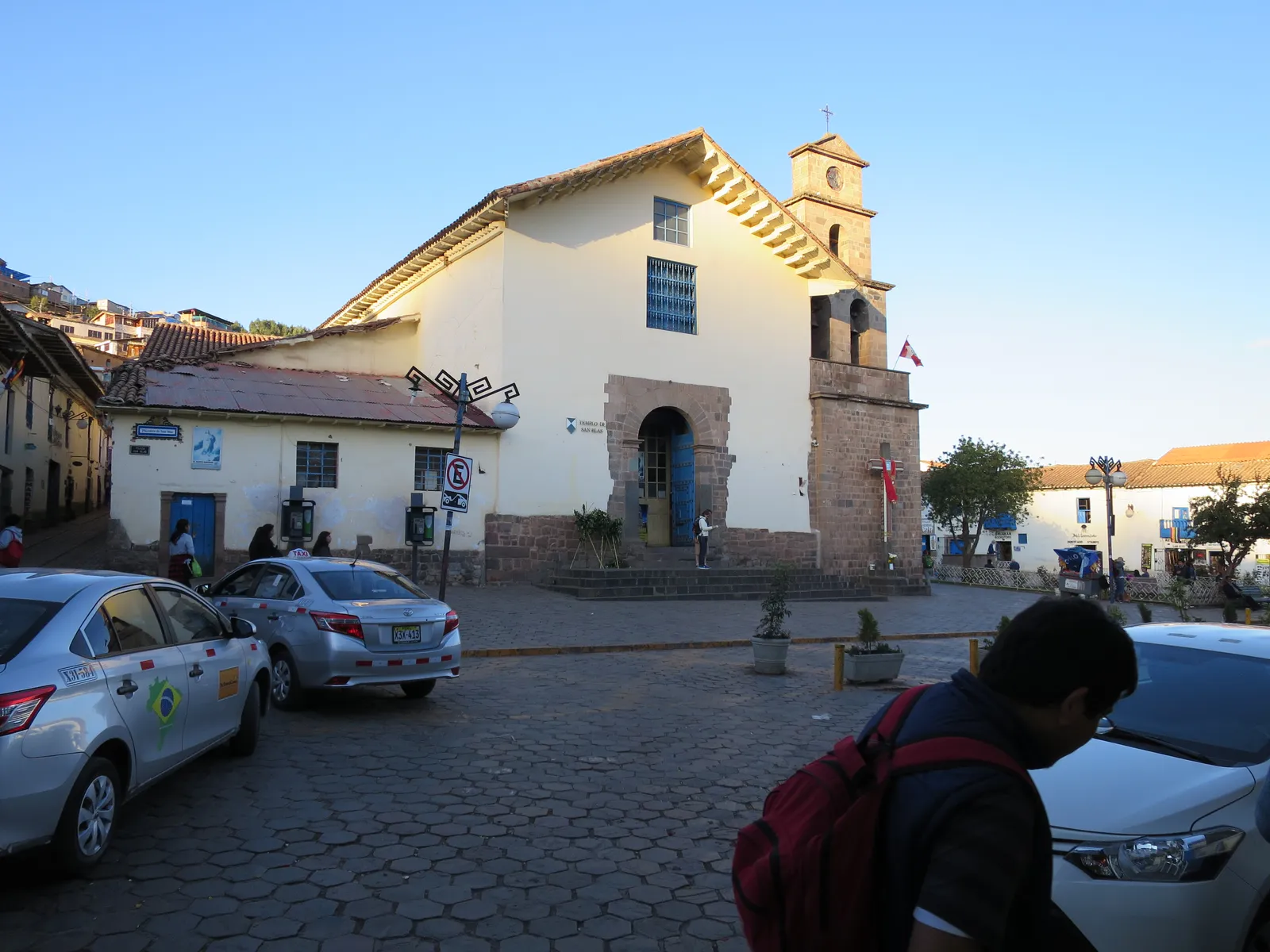
The reason to go in is the pulpit: a late seventeenth-century baroque piece carved out of a single cedar trunk, worked over every surface with figures, foliage, angels and saints, and with no joint anywhere in the wood. It is generally attributed to Juan Tomás Tuyro Túpac. Four to six hours before a flight covers the temple, the walls and the market comfortably; San Blas and Sacsayhuamán are what the upper end of that buys.
No overnight departures from Cusco’s airport
Alejandro Velasco Astete International Airport sits about four kilometres from the Plaza de Armas, on the Wanchaq side of the city, and its scheduled flights run from early morning into the evening with nothing overnight at all. Delays build through the day rather than early in it, because afternoon cloud over the approach is the usual reason a Cusco departure slips, so a morning slot is the dependable one.
A taxi from the old town costs 15 to 30 soles and takes fifteen to twenty-five minutes depending on traffic, with the fare agreed on the pavement rather than metered. The combis running along Avenida Velasco Astete stop immediately outside the airport and cost under two soles, but they are small shared vans with no space for luggage, so they work for a daypack and not much else.
Lima is at the other end of most flights out of here, and its own layover guide covers a historic centre at sea level, where the same few hours go a good deal further on foot. Leaving the suitcase in the old town is what makes any of this fit together, since the climb to Sacsayhuamán, the steps up the Cuesta de San Blas and the aisles inside San Pedro are all places a bag would be carried rather than rolled.
Frequently asked questions
What should I do during a layover in Cusco?
Start at Qorikancha on Avenida El Sol, where the Dominican church of Santo Domingo stands on the Inca sun temple's own walls, then take Hatunrumiyoc for the twelve-angled stone and San Pedro market, which is free and trading from six in the morning. Sacsayhuamán's terrace walls are the one stop that needs real time, half an hour or more uphill from the main square, and they need the city's tourist ticket, paid in cash either in town or at the gate. San Blas and its single-trunk pulpit fit if time is left over. Sacsayhuamán is the one to drop when the clock is tight, since everything else sits within a few blocks of the square.
Does Cusco's altitude change what fits into a few hours?
Cusco sits at 3,399 metres, roughly a thousand metres higher than Machu Picchu, and altitude sickness, soroche locally, commonly starts to show from about 2,400 metres up. Arriving off a flight and immediately walking uphill is the version of it people feel most, which means the climb to Sacsayhuamán and the Cuesta de San Blas are where it bites. Avenida El Sol, Qorikancha and the blocks around the Plaza de Armas involve almost no climbing, so a flat version of this itinerary exists if the first hour feels hard. Symptoms usually settle after two or three days, longer than any layover, so pacing is the only lever you actually have.
Do you need the Cusco tourist ticket just to see Sacsayhuamán?
Yes. There is no individual entrance ticket for Sacsayhuamán. The one-day partial ticket that covers it, together with Qenqo, Puca Pucara and Tambomachay, is 70 soles for foreign visitors; the full ten-day ticket covering sixteen sites is 130 soles. Both are cash only, in soles, and neither one covers the Qorikancha temple complex or the cathedral, which sell their own tickets at the door. A half-day tour covering the same four sites is the alternative if you would rather not arrange the ticket and the ride up separately.
What is Cusco like in the rainy season?
The wet months run from November to March, and the rain tends to come in the afternoon rather than the morning, so an early start buys more here than it does in the dry season from May to September. It matters most at Sacsayhuamán, which is open ground with no shelter anywhere on it; Qorikancha, the cathedral and San Pedro market are all under a roof. Wet-season nights are the milder ones, around 7 to 8°C, while dry-season nights drop below freezing even though the days reach about 20°C.
Is a taxi or a combi better for getting back to Alejandro Velasco Astete?
A taxi, once you are carrying a suitcase. It runs 15 to 30 soles from the old town, takes fifteen to twenty-five minutes depending on traffic, and pulls up at the terminal door; the fare is agreed before you get in rather than metered, so settle it on the pavement. The shared combis along Avenida Velasco Astete cost under two soles and stop immediately outside the airport, but they are small vans with no luggage space, and a large bag is either charged extra or turned away. The airport is only about four kilometres from the Plaza de Armas either way, so the ride is the short part of the trip.