Cusco Layover Near the Terminal Terrestre
Part of the full Cusco's Inca Walls on a CUZ Layover
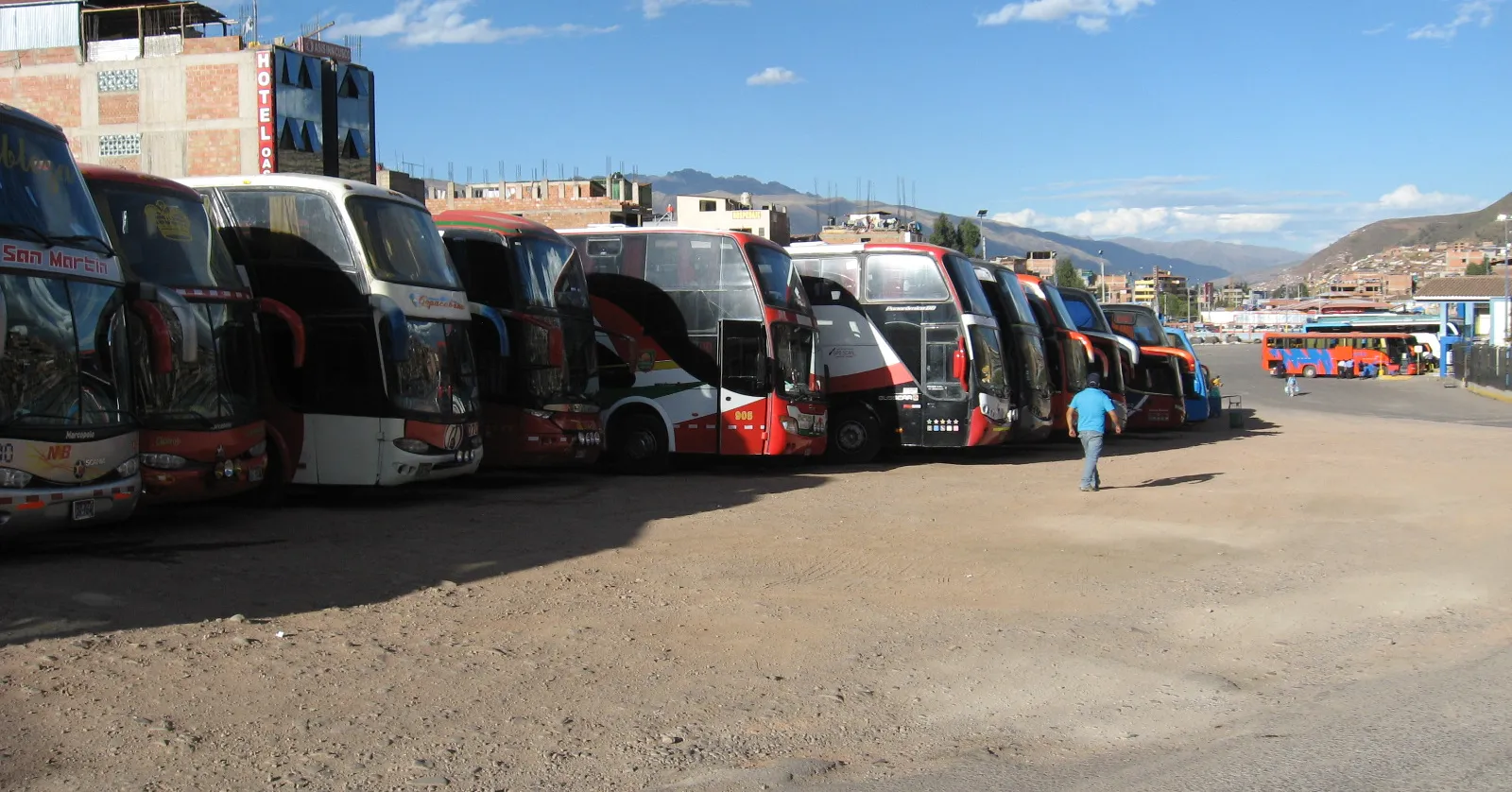
The Terminal Terrestre is Cusco’s long-distance coach station, out on the Vía de Evitamiento in the Santiago district, which puts the shadow-box crypts of the Almudena cemetery and the twin-towered Belén church within a few minutes of the platform gates rather than a trip up into the old town.
The shadow-box crypts at the Almudena cemetery
Cusco’s oldest cemetery was opened in 1850, on the orders of Miguel Medina, in response to the unhealthy conditions the city had been burying its dead in until then. More than twenty thousand people are in it now, most of them not in the ground: the burials are stacked in wall crypts several tiers high, and every crypt front is a glazed box.
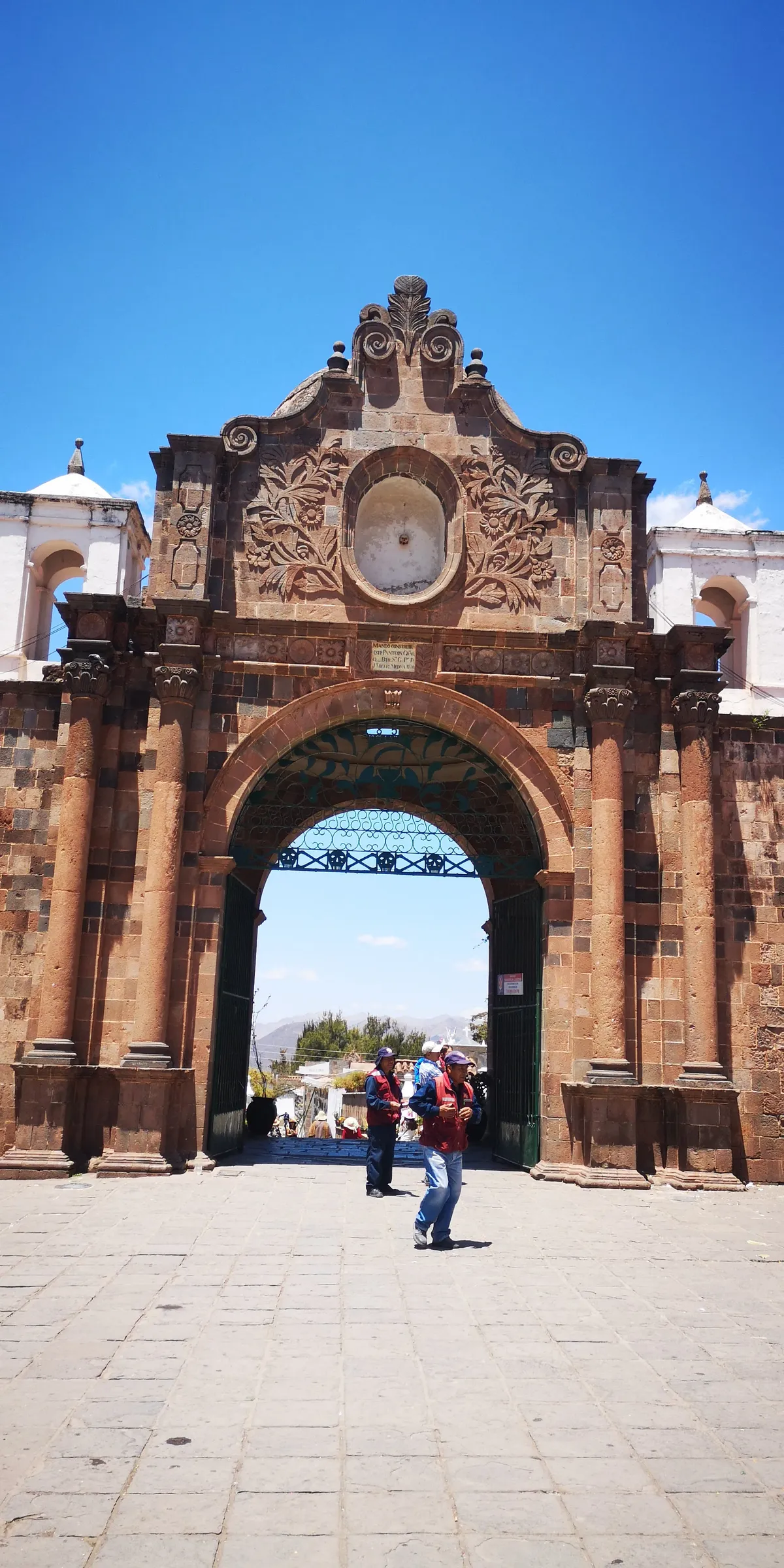
What families put in those boxes is the reason to come. Photographs, plastic flowers, miniature furniture, football shirts, toys, saints’ figurines, a whole small arrangement behind glass for each person, replaced and rearranged over the years, so the walls read as thousands of tiny individual rooms rather than a list of names. The gateway you walk in through was built using stone taken from the temple of San Agustín, wrecked in the independence years, so the cemetery’s front door is salvage from a church that no longer stands.
The Belén church and its plazoleta
Plazoleta Belén is a small planted square in Santiago with a stone-fronted church across one side of it, two bell towers flanking a Baroque doorway carved with columns, niches and cherub heads. The convent behind it was founded in 1550, and the building took its present shape after the 1650 earthquake brought the first one down.
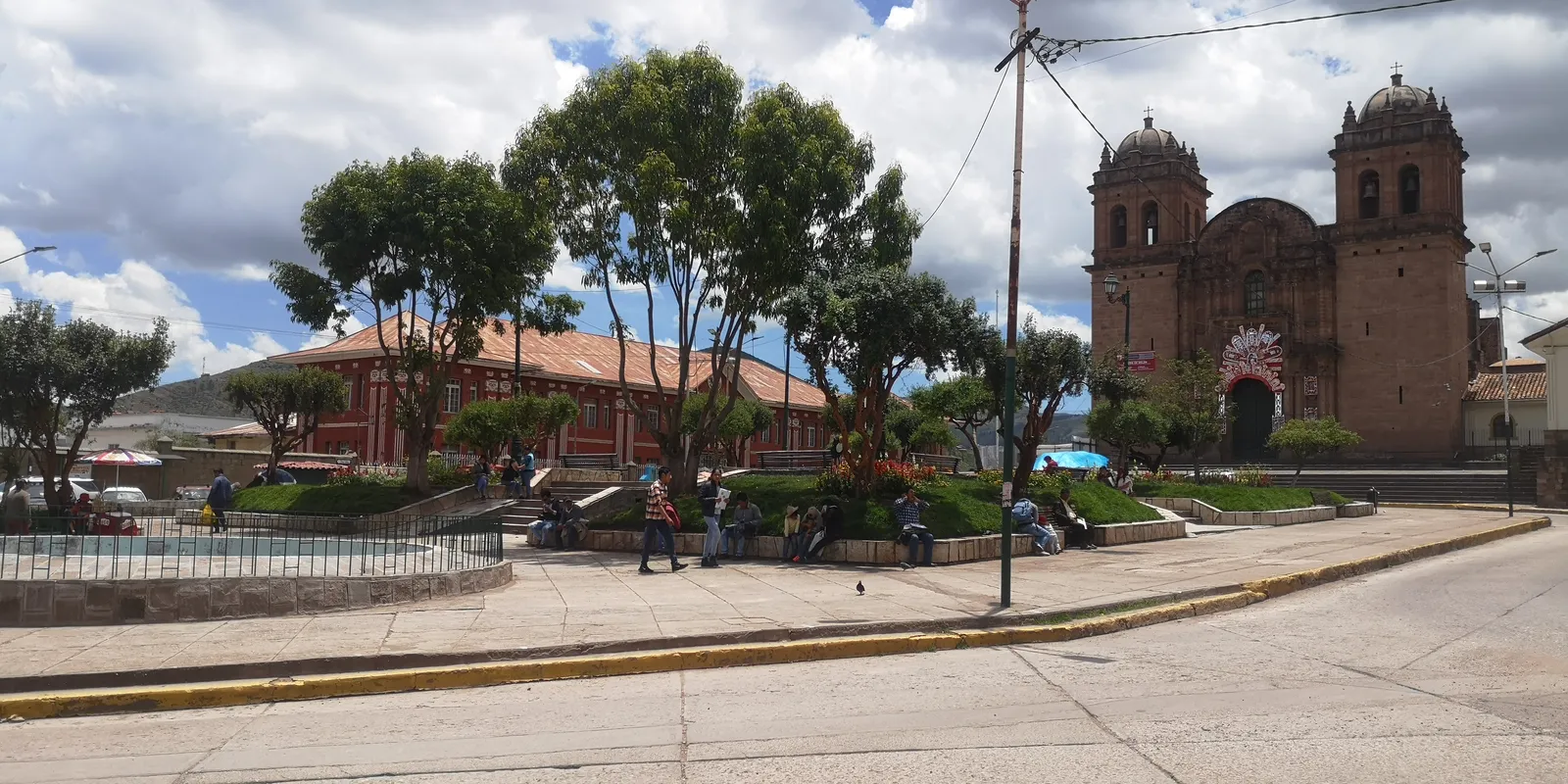
It sits inside the boundary UNESCO drew around Cusco’s historic centre in 1983, and inside the national monumental zone declared in 1972, which is worth knowing because nothing about this square feels like a listed monument: it is a working parish with buses going past it. The interior keeps church hours rather than museum hours, so it is open when there is a service on and shut when there is not, and the exterior is the reliable part of the visit.
The Templo de Santiago Apóstol, built in the 1570s
The parish church that gives this whole district its name went up between 1571 and 1572, put there by Viceroy Francisco Toledo during the reorganisation that carved colonial Cusco into parishes. It is adobe above a stone base, one long nave under a single roof, with the bell tower set off to one side of the plaza and no decoration on it at all.
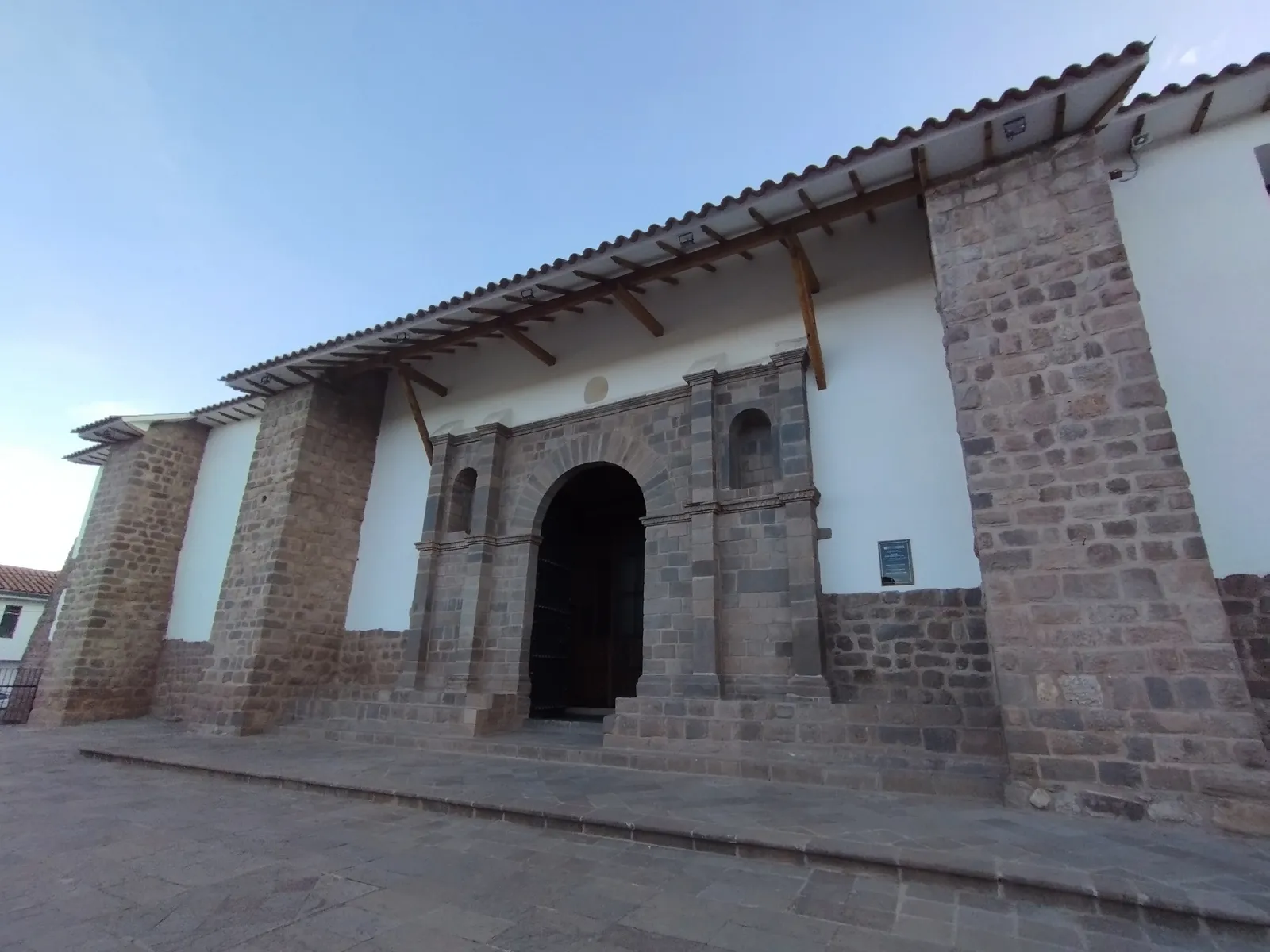
Two earthquakes have taken it apart, in 1650 and again in 1950, and what stands is the second rebuild rather than Toledo’s original. The main altar shows the joins: styles from several periods stacked together, with a painting of the Virgin and Child alongside John the Baptist as the piece worth looking at. Passengers coming off the coaches arrive here with full-size luggage rather than a cabin bag, and none of these three stops, the cemetery, Belén or this square, has anywhere to leave it while you look.
The Terminal Terrestre charges a boarding fee on top of the ticket
Coaches from Arequipa, Puno, Lima and the Bolivian border all come into this one building, and nobody gets onto the departure apron without paying a separate boarding fee, around a sol and a half a head, bought in cash at a window inside. It is small, but it is not included in the ticket, and the queue for it builds at exactly the moment everyone’s coach is called.
The terminal and Cusco’s airport sit on the same side of the city
Alejandro Velasco Astete International Airport is about three kilometres east of the terminal, roughly ten minutes by road when the traffic behaves, and a taxi taken from outside the terminal gates rather than from a booking desk is the usual way to do it at a fare agreed before you get in. There is no rail or metro connection anywhere in this city, so a road vehicle is the only option either way.
Scheduled flights here run from early morning into the evening and there is nothing overnight, which matters more for a coach arrival than a flight one: an overnight service that runs late has no midnight departure to fall back on. If the gap turns out to be long enough to justify crossing the city, the main Cusco guide covers the Inca walls in the centre, a couple of kilometres uphill and a steeper walk than anything out here.
Frequently asked questions
What should I do during a layover near the Terminal Terrestre de Cusco?
Three stops in the Santiago district cover it without a ride into the old town. The Almudena cemetery, opened in 1850 and holding more than twenty thousand burials, is the unusual one: its crypts are fronted with glazed shadow boxes that families fill with photographs, flowers and toys. The Belén church stands on its own plazoleta behind a Baroque front and two bell towers, and the Templo de Santiago Apóstol, the 1570s parish church the district is named after, is plainer and quieter than either. None of them charges, and two hours covers all three; anything beyond that is better spent going up into the centre instead.
Does Cusco's bus terminal charge a boarding fee?
Yes, and it catches people out. A boarding fee of around a sol and a half per person is charged separately from the ticket and has to be bought before you are let onto the departure platform, in cash, at a window inside the building. Budget the coins and the extra few minutes, especially if you are travelling with several people, because the queue for it forms at the same time as everyone's departure.
Can you fit the Sacred Valley in from the Cusco bus terminal?
Not on a layover. Pisac, Ollantaytambo and Chinchero are an hour or more out of the city each way, and the sites on the route run on the city's tourist ticket rather than gate-by-gate entry, so an afternoon is not enough to make the trip worth it. A full-day valley circuit leaving from Cusco is the shape that actually works, and it wants a whole day rather than the gap between a coach and a flight.
What is open if your coach gets into Cusco at dawn?
Very little, which is the trade-off with the overnight services from Arequipa and Puno that land here early. The churches and the cemetery keep daytime hours, so an arrival before eight means waiting rather than sightseeing. What is open is the food counters inside the terminal building itself and the taxis outside it, and the early light over the Santiago rooftops is genuinely the best of the day, which is some compensation for being awake for it.