Cusco Layover Near Wánchaq Station
Part of the full Cusco's Inca Walls on a CUZ Layover
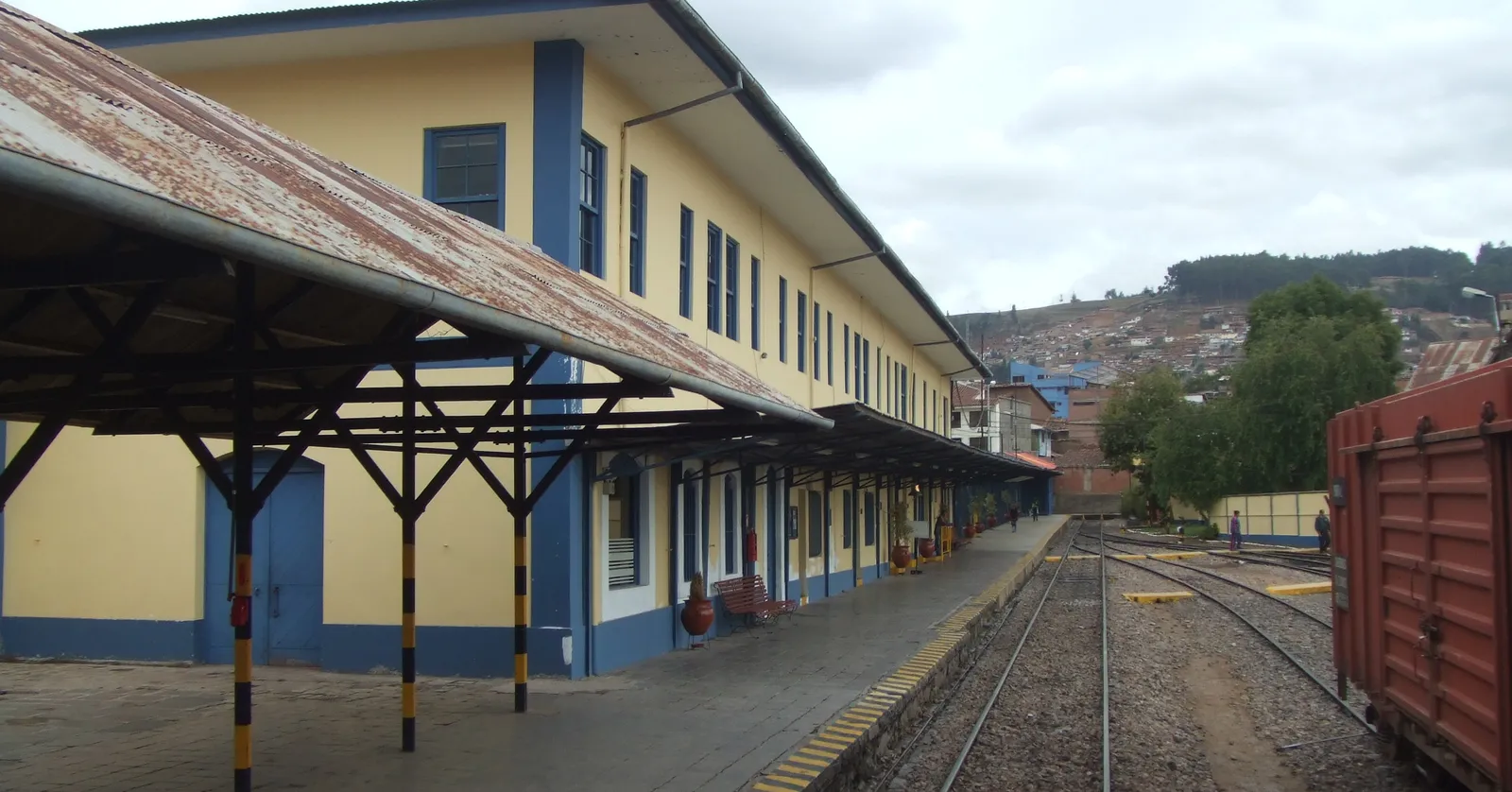
Wánchaq station sits at the foot of Avenida El Sol in Cusco, which puts the Pachacútec monument’s viewing gallery and the park at Pumaqchupan, where the Inca city plan’s puma ended in a tail, within a few minutes’ walk of the platform.
The Pachacútec monument on Óvalo Pachacútec
Óvalo Pachacútec is the roundabout at the bottom of Avenida El Sol, and the thing standing in the middle of it is a bronze Pachacútec, 11.5 metres of him, one arm out and a staff in the other hand, on a round stone tower. The two together stand about thirty-four metres over the roundabout, which is enough to make the monument the landmark you navigate this whole district by.
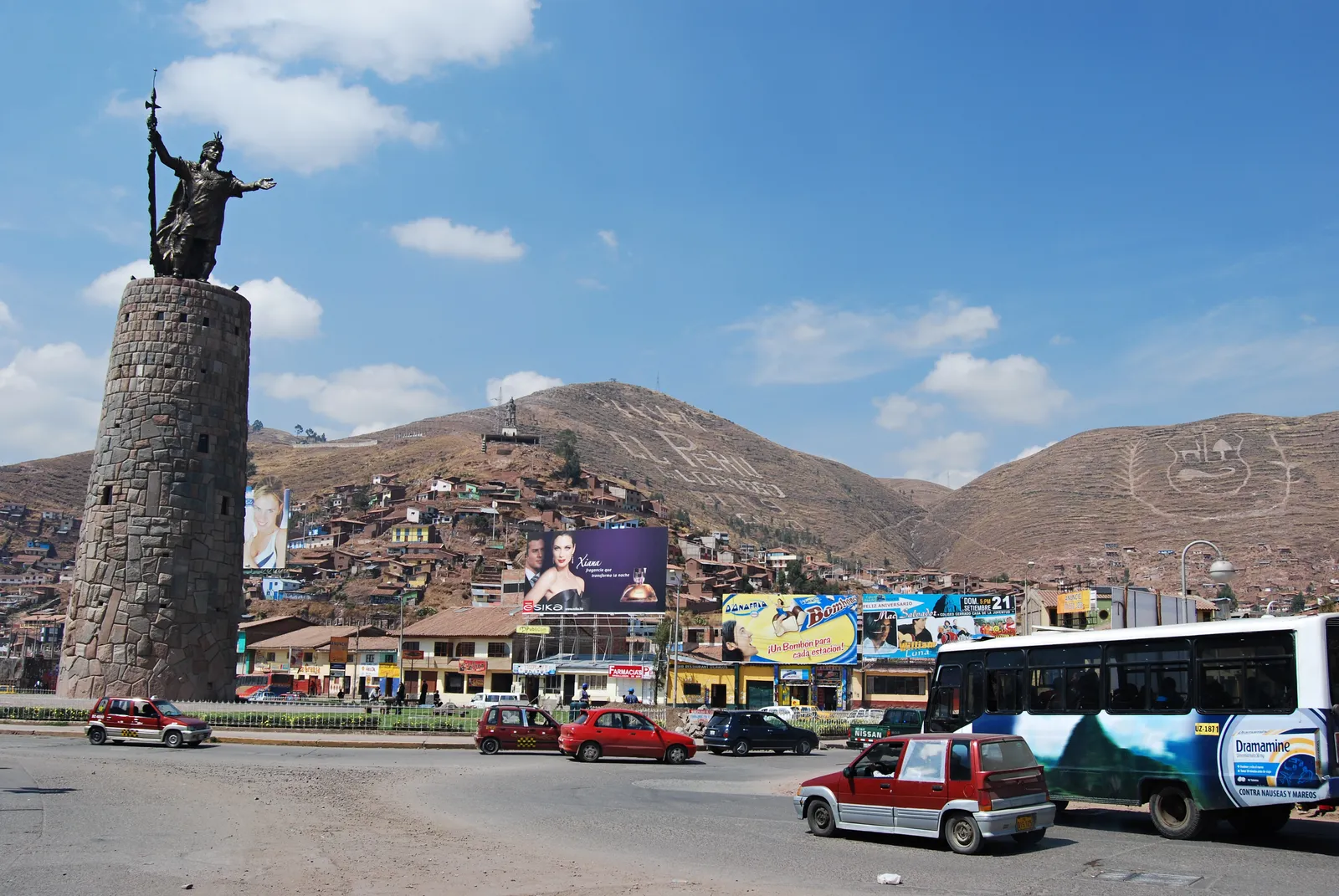
The tower is hollow and has floors in it. A stair spirals up past exhibition levels covering the Inca expansion Pachacútec ran in the fifteenth century, and comes out on a gallery immediately under the statue’s feet with the whole city around you, the old town climbing away on one side and the flat ground east of Wánchaq on the other. Entry runs on the city’s tourist ticket rather than a ticket of its own, which is the one thing to sort out before walking over: if you do not already hold the ticket, this stop costs more than it looks like it should.
Wánchaq station has been the end of the line since 1908
The railway took a long time to arrive here. Work on the line up from the coast stopped and restarted between 1875 and 1894, beaten by money and by terrain, and it was 13 September 1908 before trains finally ran into Cusco at a newly built station in Wánchaq. What that built is still what stands: a single platform, a long canopy on iron posts, a two-storey yellow and blue building, and freight wagons parked on the spare road.
It is still a working terminus rather than a museum piece. The altiplano service to Juliaca, Puno and Arequipa leaves from this platform, a ten-hour run to Lake Titicaca on set days rather than every day, and it is the only passenger train on that route. Arrivals off it land here in the late afternoon with the old town a climb away and, often enough, a flight out the following morning.
Pumaqchupan, where the Inca city’s puma ended in a tail
Two rivers used to meet at the bottom of Avenida El Sol, the Saphy coming down one side of the old town and the Tullumayo the other. Both are culverted now and run under the streets, the Saphy beneath Plateros and the avenue itself, but the junction had a name before it had traffic: Pumaqchupan, the puma’s tail.
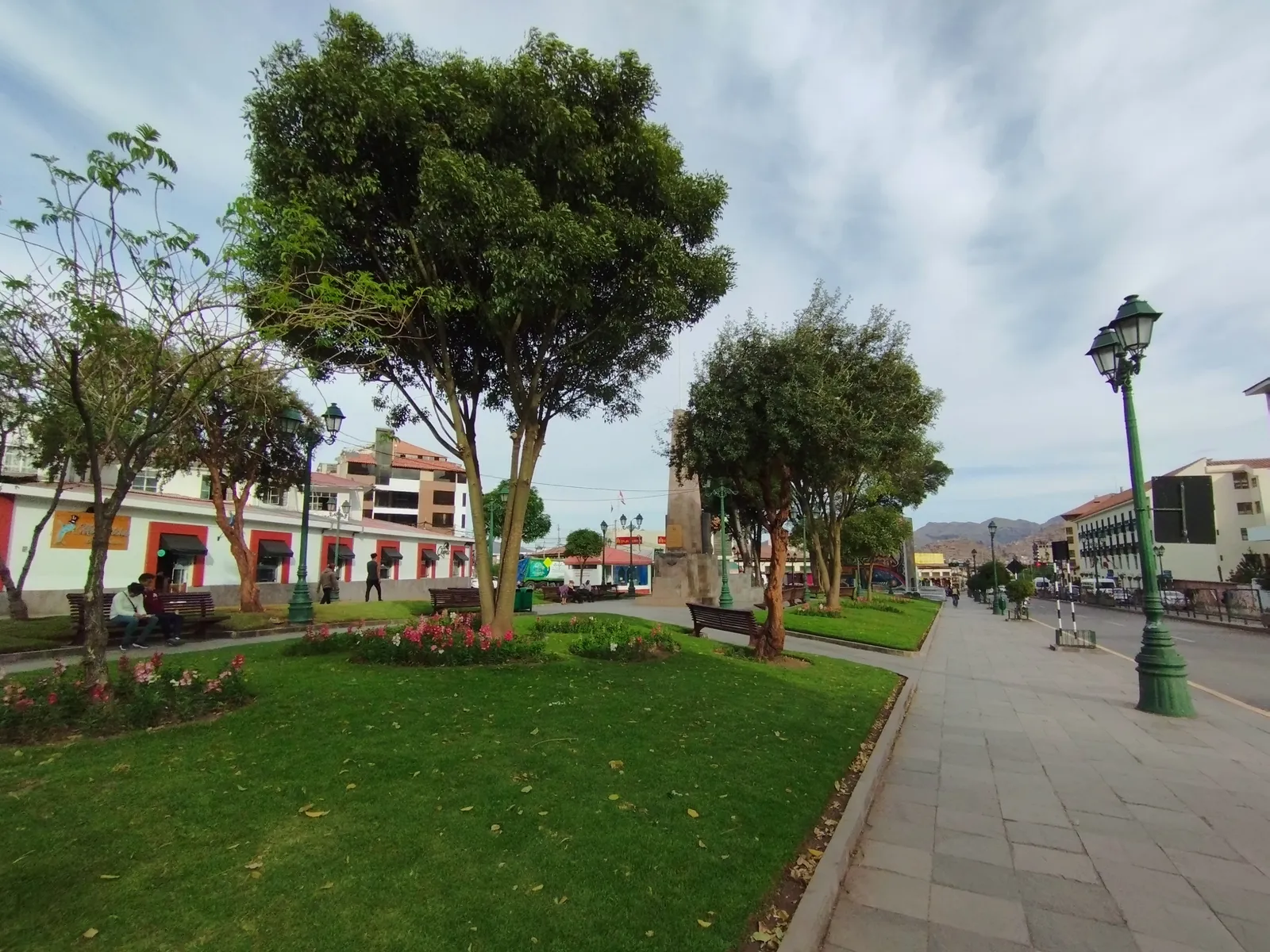
That name is the end of a much bigger idea. Cusco was laid out as a puma lying down, with Sacsayhuamán’s zigzag walls as the head and the ground between the two rivers as the body, so standing on this lawn puts you at the animal’s back end with the rest of it running uphill in front of you. Parque Orellana covers the spot today: grass, benches, young trees and a paved promenade, free, and the flattest place to sit anywhere near the station. The climb from here up Avenida El Sol to the main square gains height the entire way, so a suitcase adds real minutes on a walk that already runs slow at 3,400 metres.
No rail link runs out to Cusco’s airport
Alejandro Velasco Astete International Airport is about three kilometres east of this platform, and no train, tram or metro connects the two: the railway here goes to Puno, not to the runway. A taxi is the sensible answer, ten to twenty minutes depending on how the traffic on Avenida de la Cultura is behaving, at a fare agreed on the pavement before you get in rather than on a meter. Shared vans cover the same ground for a fraction of that but have no luggage space.
Worth knowing before you plan the last hour: there are no overnight departures from Cusco, so the flight you are waiting for leaves somewhere between dawn and mid-evening, and delays tend to build through the afternoon rather than the morning. The main Cusco guide covers the Inca stonework up in the old town if the gap turns out to be longer than it looked. From this platform, though, the monument and the park at the foot of the avenue are both downhill of that walk, which is the argument for staying put.
Frequently asked questions
What should I do during a layover near Wánchaq Station in Cusco?
Everything worth doing from this platform is on the same avenue. The Pachacútec monument stands on the roundabout at the foot of Avenida El Sol with a stairway inside it to a gallery just under the statue, and the park at Pumaqchupan below it marks where the Inca city plan's puma ended in a tail. Both are minutes from the station, and the park costs nothing. The monument needs the city's tourist ticket, so it is the stop to drop if you do not already hold one.
Which trains actually leave from Wánchaq Station?
This is the Puno end of Cusco's railway, not the Machu Picchu end. The long-distance service across the altiplano to Juliaca, Puno and on toward Arequipa runs from here, taking around ten hours to Lake Titicaca on set days of the week rather than daily. The Machu Picchu trains leave from other stations entirely, so arriving here expecting one is a common and expensive mistake. Check the day before you plan around it, because the timetable is seasonal.
Is it worth going up to Cusco's old town from Wánchaq Station?
With four hours or more, yes, and Avenida El Sol runs straight there. It is a steady climb of about a kilometre and a half to the main square, which at 3,400 metres is slower than the distance suggests, and a taxi for a few soles removes the problem entirely. A half-day circuit with the transport built in is the version that fits when the gap is fixed and the climb is not appealing. With less than three hours, the avenue below the station is the honest answer.
Is the walk up from Wánchaq Station manageable with elderly parents?
The avenue itself is fine: wide pavements, a continuous gradient rather than steps, and benches in the park at the bottom. The altitude is what makes it hard, since 3,400 metres turns a gentle slope into a stop-and-start walk for anyone who has just arrived. The monument is the part to think twice about, because the only way up inside it is a narrow spiral stair with no lift. Taxis run the length of the avenue constantly and cost a few soles, which is the simplest fix for either problem.