Cusco Layover Near Velasco Astete Airport
Part of the full Cusco's Inca Walls on a CUZ Layover
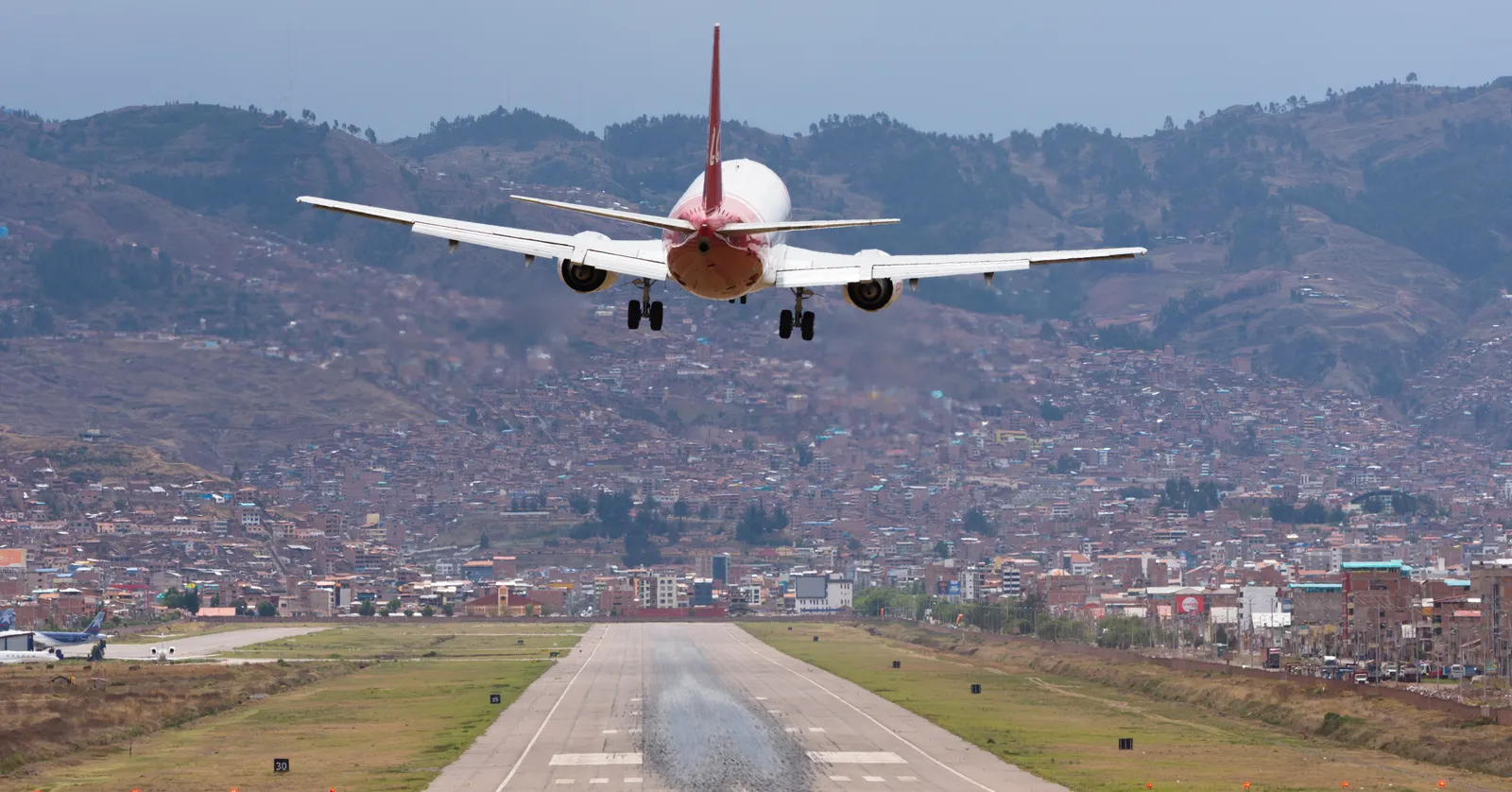
Alejandro Velasco Astete International Airport sits inside Cusco’s Wanchaq district, which puts a 45,000-seat football stadium, the Túpac Amaru monument on Wanchaq’s own square and the full length of Avenida de la Cultura within a few minutes’ ride of the terminal, none of them ticketed.
Three top-division clubs share the Estadio Inca Garcilaso de la Vega
The Estadio Inca Garcilaso de la Vega is a football ground of 45,056 seats standing at 3,362 metres, about three kilometres northwest of the terminal in a grid of two-storey houses that come right up to its outer wall. It opened in 1958 and it is busy: Cienciano, Deportivo Garcilaso and Cusco FC all play their home fixtures in it, which is three clubs from Peru’s top division sharing one bowl.
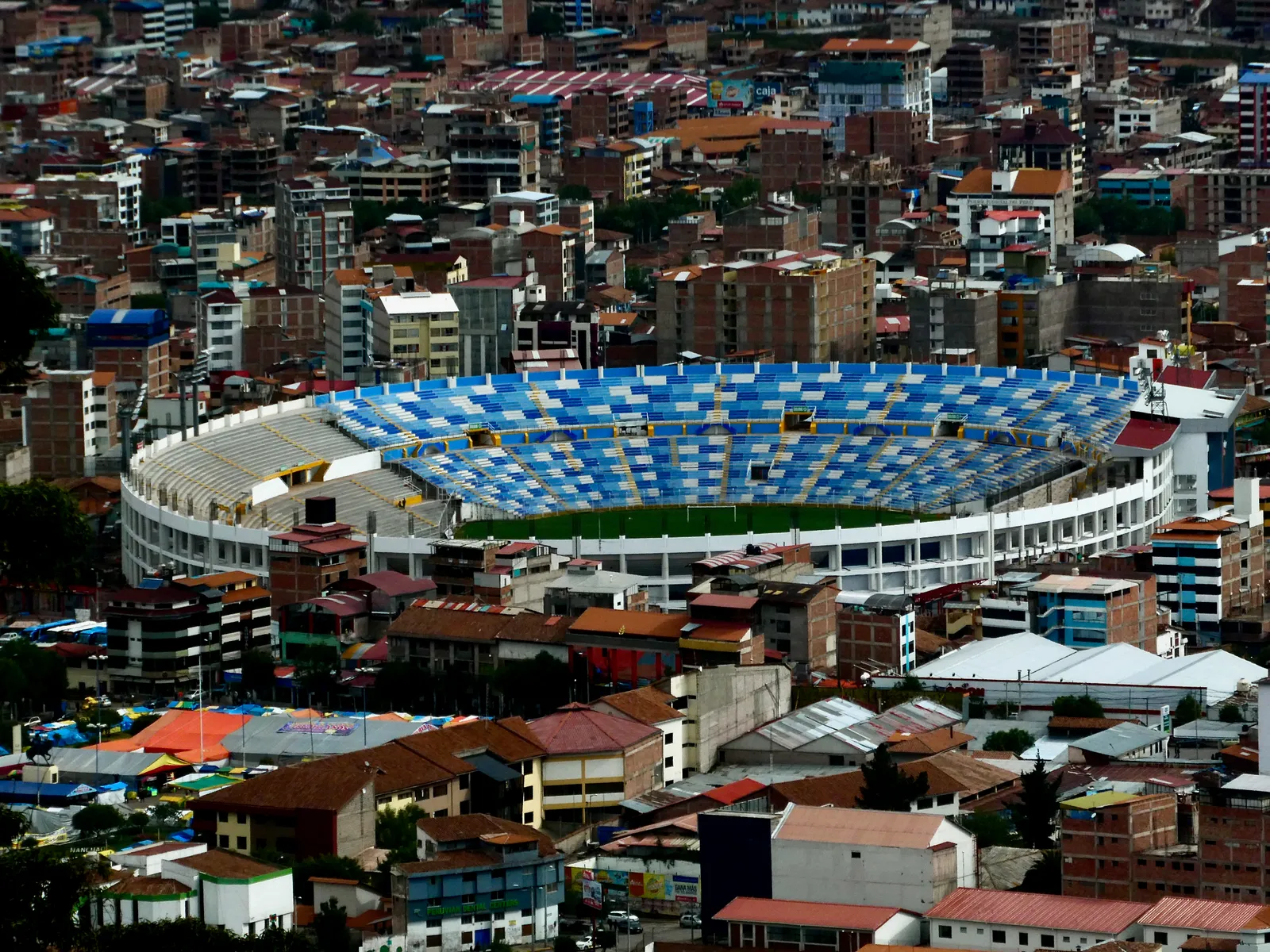
The altitude is not a footnote here, it is the stadium’s reputation. Visiting sides arrive to thin air they have had no time to adjust to, and when the 2004 Copa América came to Peru, Cusco was given a single fixture, the third-place play-off, and nothing else. On a non-match day there is nothing to pay and nothing to queue for, and the walk around the outside of it is the fastest way to see what an ordinary Cusco neighbourhood looks like once you are off the tourist grid.
The Túpac Amaru monument on Wanchaq’s square
Plaza Túpac Amaru is Wanchaq’s own square, and the figure at the centre of it is Túpac Amaru II, whose statue was chosen through a design competition held in 1970. He decreed the abolition of slavery on 16 November 1780, led the rebellion that spread through the southern Andes from that November, and was executed in Cusco’s main square on 18 May 1781, up the hill from where the monument now stands.
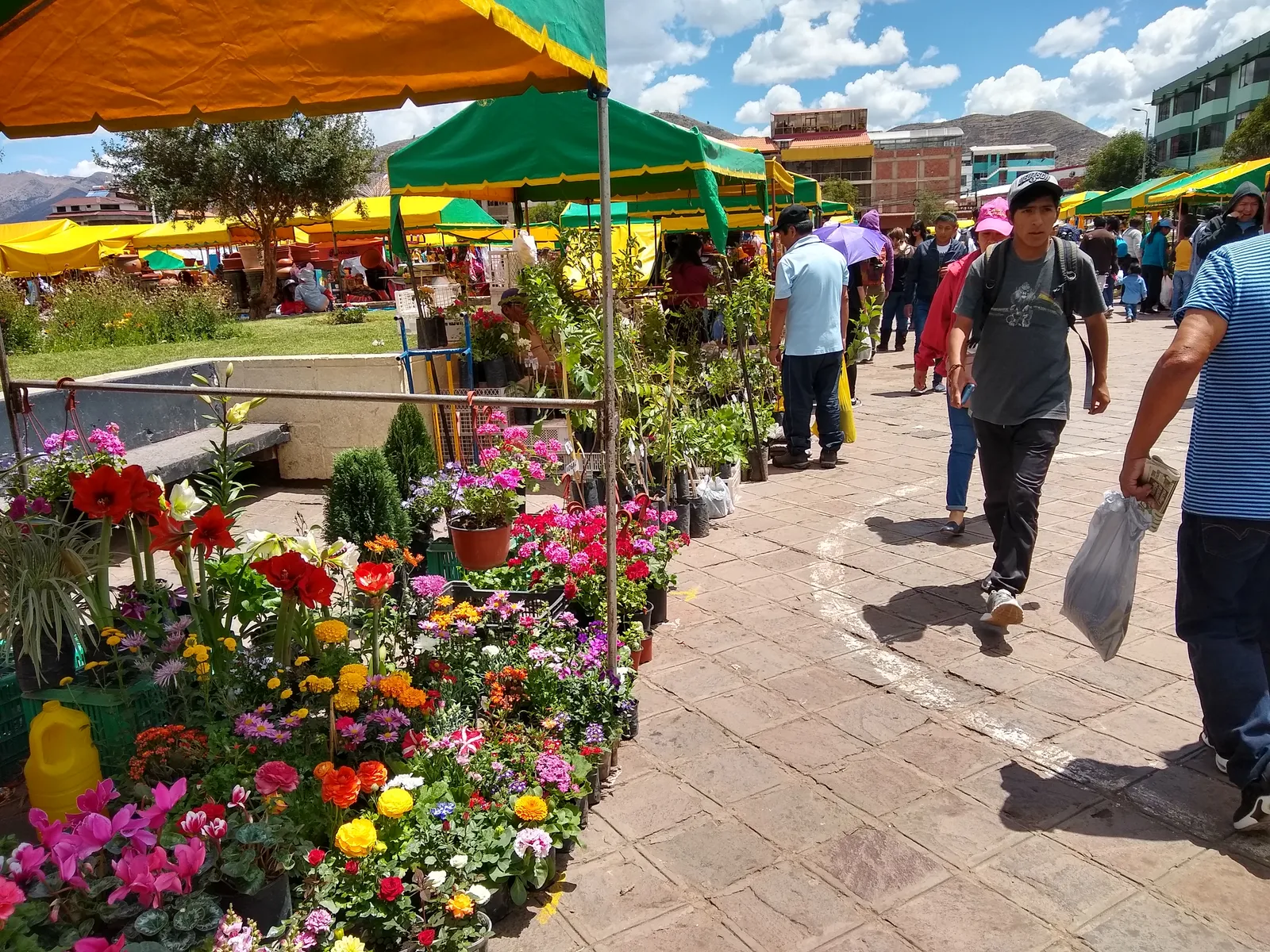
The square works as a public space rather than a monument park. Flower sellers set up under canopies along the paving, craft fairs and civic events take it over for days at a time, and for most of the year it is simply where Wanchaq’s shopping streets meet. It is a different register from the tourist-facing squares up the hill, and it is a short ride from the terminal.
Avenida de la Cultura, Cusco’s longest avenue
Avenida de la Cultura runs close to thirteen kilometres east from the edge of the historic centre through Wanchaq, San Sebastián and San Jerónimo, which makes it the longest avenue in the city. It is where Cusco does its ordinary business: banks, phone shops, chicken restaurants, juice counters, the university, and a bus stop every couple of hundred metres.
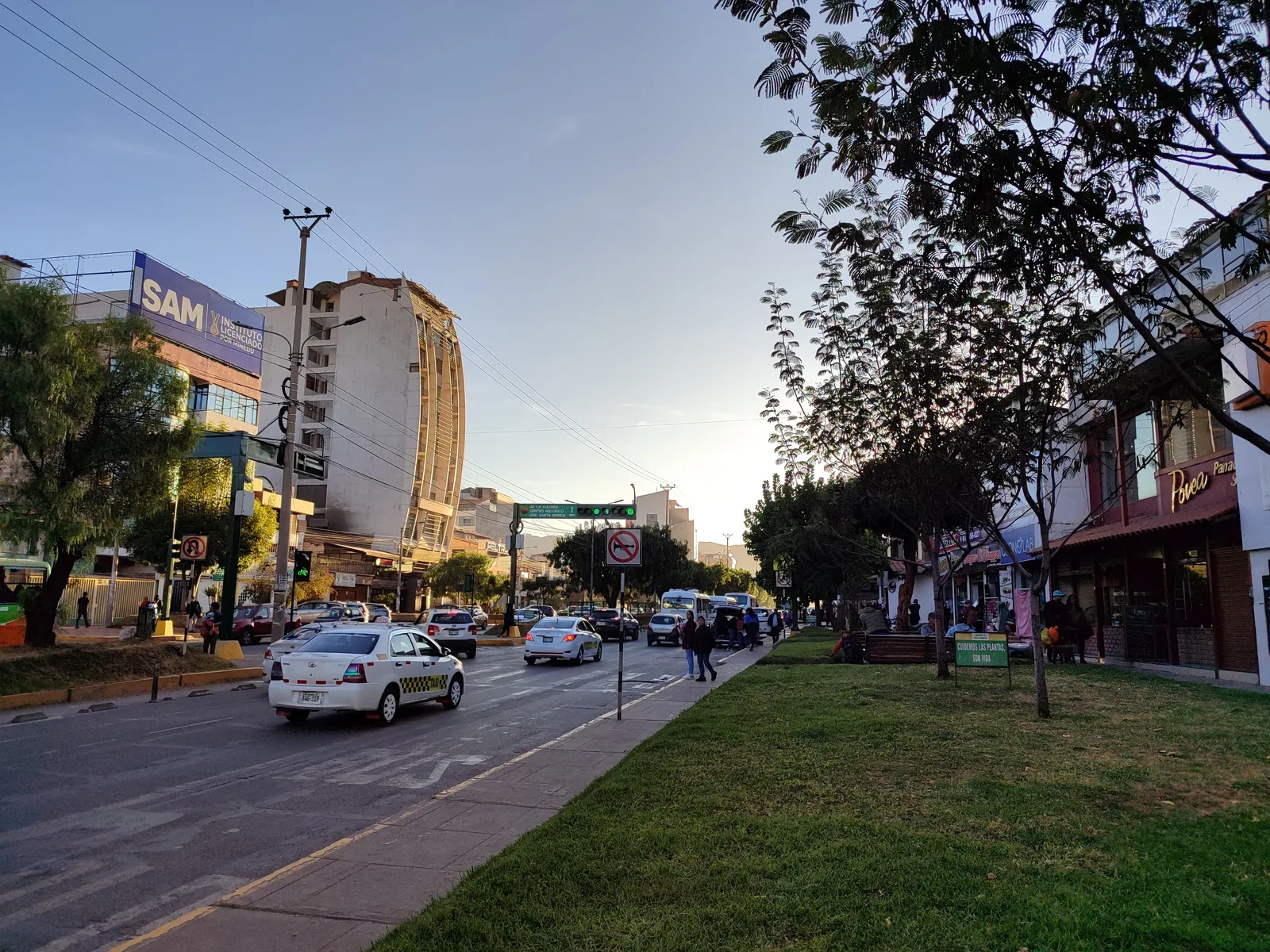
It is also where this side of the city eats: small restaurants and juice counters that fill through the middle of the day and thin out after two. Carry coins for them, because most take cash only and will not run a card. If the gap is long enough to justify crossing the city instead, the main Cusco guide covers the Inca stonework in the old town, which is a different afternoon entirely, and a half-day circuit starting at the Sacsayhuamán fortress is how that fits into four hours with the transport and the entrance already handled. One practical thing to settle before going anywhere: the terminal here has no lockers and no left-luggage desk, so a suitcase either comes with you or gets left somewhere outside the gates.
A shared van on Avenida Velasco Astete costs about a sol
The combis stop on Avenida Velasco Astete immediately outside the airport exit, run every few minutes, and cost about a sol, a little more with a large bag. They take twenty-five to thirty-five minutes into the centre, and they are small vans built for commuters rather than luggage, which is the whole reason the bag question above matters. A taxi covers the same ground in fifteen to twenty-five minutes for 15 to 30 soles, settled on the pavement before you get in rather than on a meter.
Coming back is the part worth over-budgeting. Traffic on Avenida de la Cultura and the approach roads is slow at the ends of the working day, and check-in and security still sit on top of whatever the ride takes. Leave more room than the distance suggests: four kilometres in this city is not four kilometres’ worth of minutes.
Frequently asked questions
What should I do during a layover near Alejandro Velasco Astete airport in Cusco?
Stay on the Wanchaq side rather than committing to the old town. The Estadio Inca Garcilaso de la Vega is a 45,000-seat bowl dropped into a grid of two-storey houses about three kilometres from the terminal; Plaza Túpac Amaru a few minutes further on is where Wanchaq does its flower and craft trading; and Avenida de la Cultura is the shop-and-café artery linking the two. All three cost nothing to walk up to. With less than two hours it is worth staying airside instead, because the return leg has to absorb Cusco's traffic as well as check-in.
Can you leave the airport during a layover in Cusco?
Yes, and it is easier here than at most airports because the terminal is small, entirely landside once you are through arrivals, and about four kilometres from the Plaza de Armas. The catch is luggage: the terminal has no lockers and no left-luggage desk, so anything you are carrying either comes with you or goes to a storage point outside the gates. Taxis wait at the door and shared vans stop on Avenida Velasco Astete immediately outside.
Why are there no night flights out of Cusco?
The runway sits at 3,310 metres in a bowl of mountains, and the approach is flown visually, so the schedule leans hard on daylight: flights run from early morning into the evening and there is nothing overnight. Delays also build through the day rather than early in it, because afternoon cloud over the approach is the usual cause, which is why a morning departure is the dependable one. The airport handled a little over three million passengers in 2023, almost all of them inside that daylight window.
Which side of Cusco is the airport on?
The east side, in the Wanchaq district, about four kilometres from the Plaza de Armas and right beside Avenida de la Cultura, the long avenue that runs out through the newer half of the city. That is the opposite end from the tourist-facing old town on the hill, which is why the stadium, the district square and the avenue itself are the realistic stops from here rather than anything with Inca stonework on it. The runway sits at 3,310 metres, roughly ninety metres below the old town's main square.
Is there anything free to do near Cusco airport?
Most of what is out here is free. The stadium's exterior, Plaza Túpac Amaru and the length of Avenida de la Cultura cost nothing, and the district markets charge nothing to walk into. The only money the afternoon really needs is the ride: a shared van along Avenida Velasco Astete is about a sol, a little more if you are carrying a large bag, while a taxi into the old town runs 15 to 30 soles agreed before you get in.