Cusco Layover at the San Cristóbal Viewpoint
Part of the full Cusco's Inca Walls on a CUZ Layover
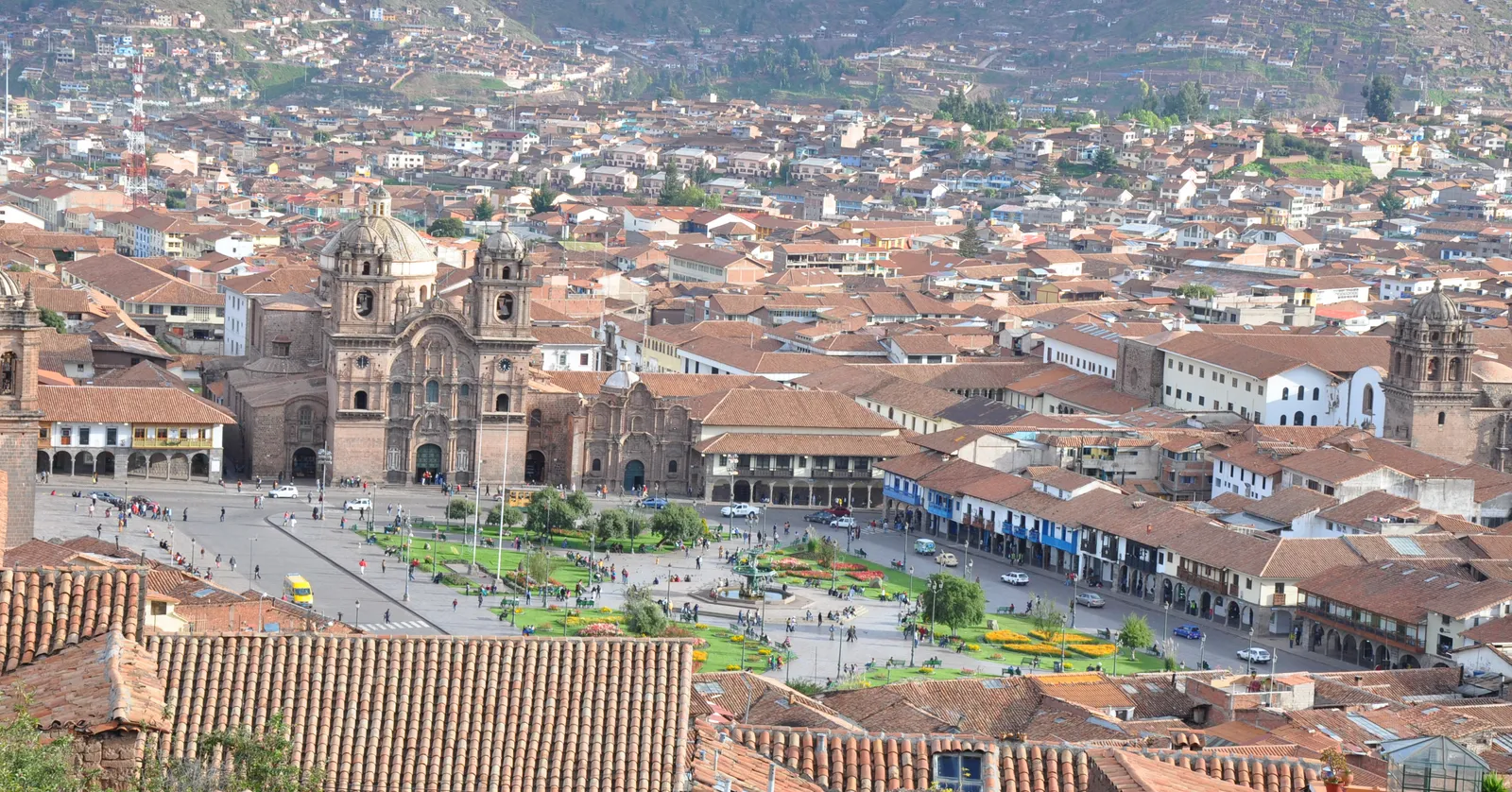
The terrace in front of the church of San Cristóbal in Cusco looks straight down on the Plaza de Armas, and the Inca wall running along the same square keeps eleven trapezoidal niches from the Colcampata palace that stood on this ground before any of it.
San Cristóbal, the church an Inca prince founded above the city
Cristóbal Paullu Inca was a son of Huayna Cápac who came out of the conquest on the Spanish side, converted, and took the first name of his godfather. The church he founded carries that name and stands on the Colcampata terrace, a square bell tower and a long low nave on the hillside with the roofs of the old town dropping away in front of it.
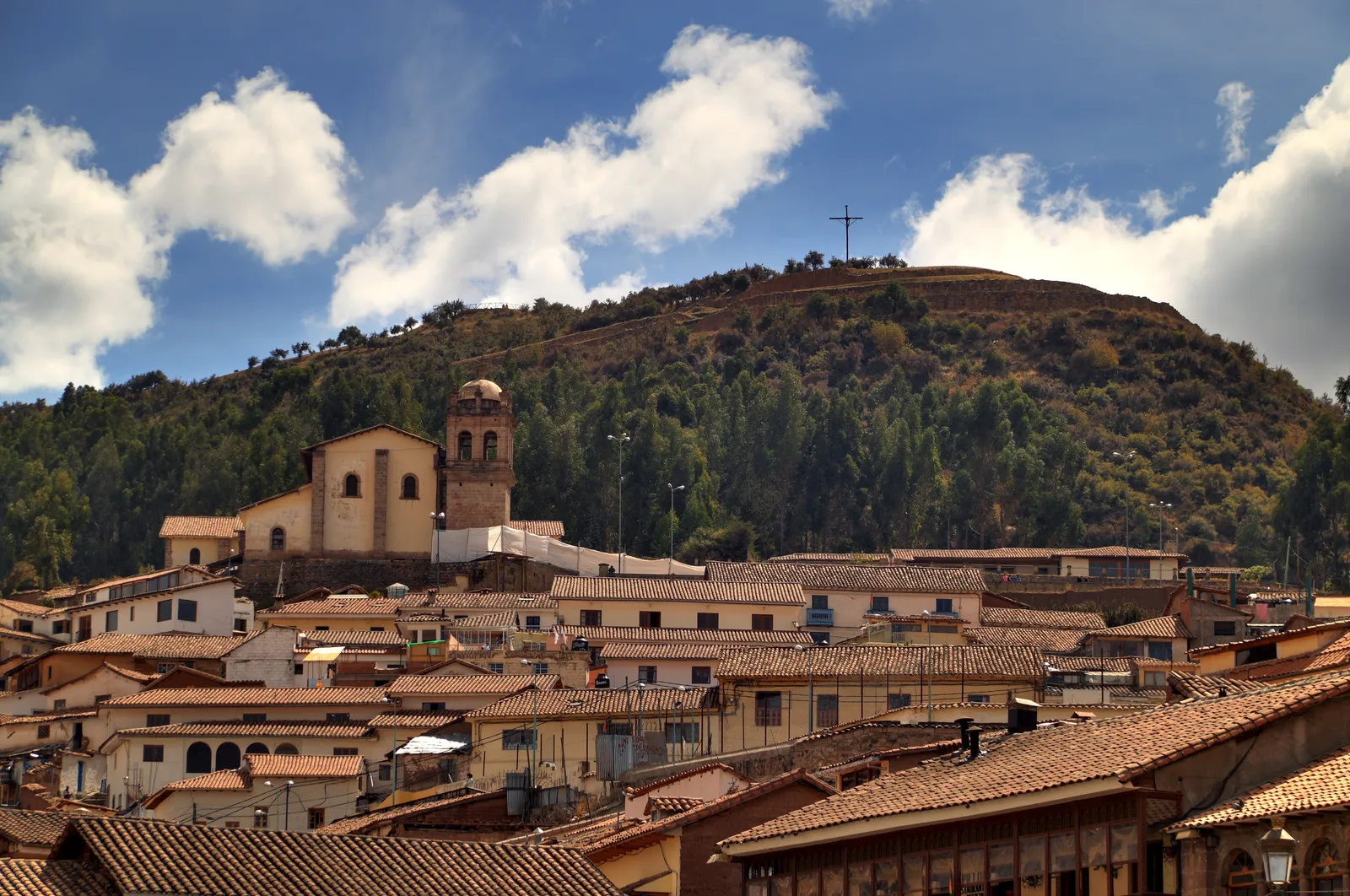
In 2007 his remains were found buried underneath it, which is to say the man who founded the church had been lying inside it the whole time. The interior keeps parish hours rather than museum ones, so whether you get inside is a matter of timing rather than ticketing, and the terrace in front is the part that is reliably there. It is paved, open at any hour, has a stone cross standing on it and costs nothing, and the Plaza de Armas is close enough below to pick out individual arcades.
The eleven niches in the Colcampata wall
Colcampata is the terrace this church was dropped onto, and the palace that gave it the name is traditionally assigned to Manco Cápac, the first Inca; Paullu Inca was living in it when the Spanish arrived. What is left is one long wall of interlocking limestone beside the square, with eleven trapezoidal niches cut into it at intervals.
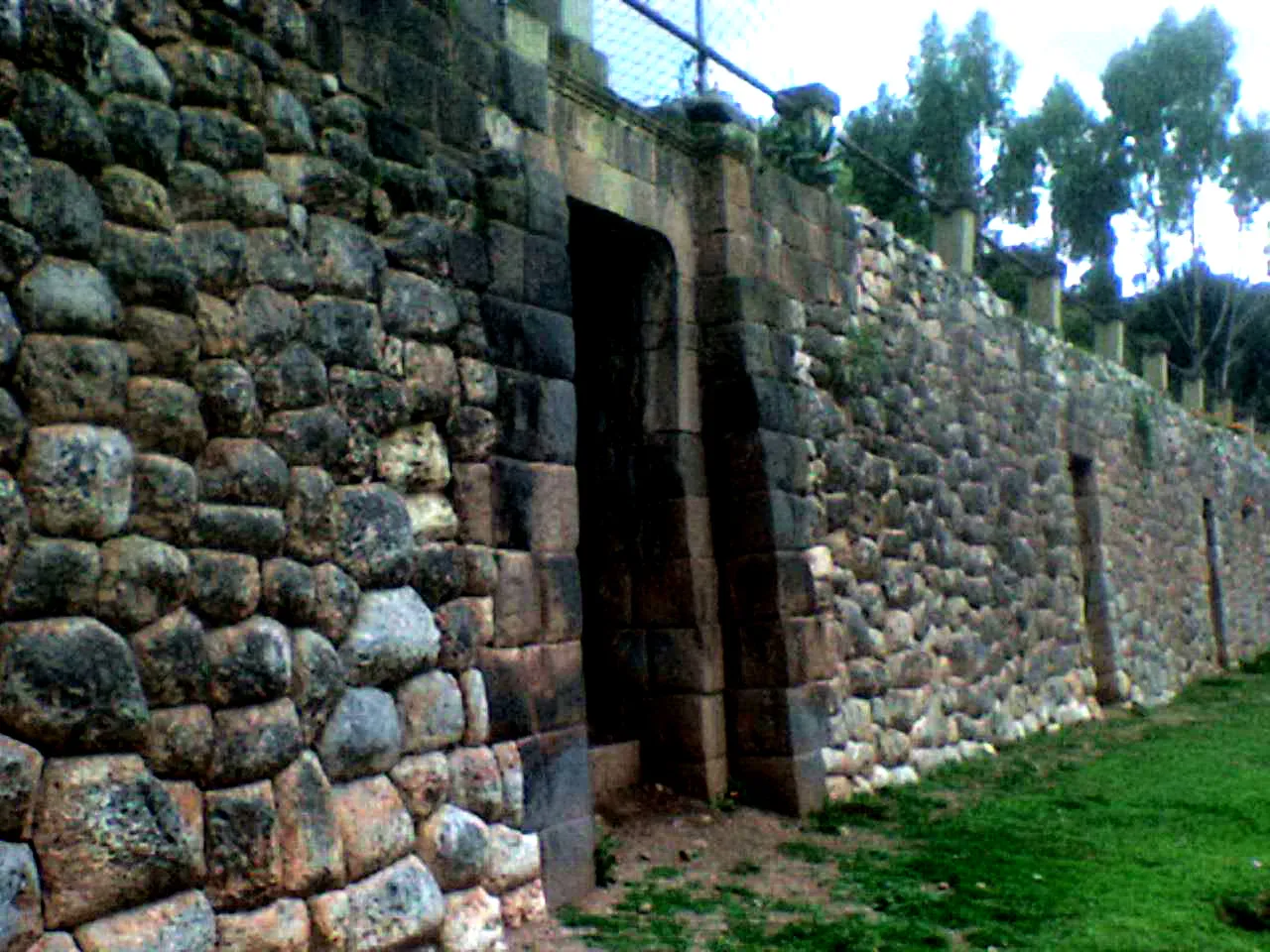
Nobody is certain what the niches held, and the usual guess, that guards stood in them, is a guess rather than a finding. What is not in doubt is the masonry: small polygonal blocks fitted into each other with no mortar, cut so the joints run in irregular lines rather than courses, the same technique that holds up the walls down in the old town.
Everything up here is exposed ground, with no shelter between the church square and the wall, which matters between November and March when Cusco’s rain comes through in the afternoon and a suitcase becomes something to keep dry as well as carry.
Cusco’s airport is a taxi ride from San Cristóbal, not a bus one
Alejandro Velasco Astete International Airport is roughly five kilometres from this terrace, on the far side of the city. Cusco has no train or metro at all, and the shared vans that stop outside the airport run along Avenida Velasco Astete, nowhere near this hill, so a taxi is the realistic way back: twenty minutes or so once you are through the old town’s one-way streets, at 15 to 30 soles agreed before you get in. The one complication is finding one up here, since the road past the church is narrow and drivers are not queuing on it; walking back down to the streets below the square is usually faster than waiting.
Flights out of Cusco run from early morning into the evening with nothing overnight, so a missed departure means a night in the city rather than a later seat. Give the ride more room than five kilometres suggests. If the gap turns out to be bigger than one climb, the main Cusco guide covers the stonework down at street level, which is a flatter afternoon than this one.
Frequently asked questions
What should I do during a layover at the San Cristóbal viewpoint in Cusco?
One climb covers all of it. The terrace in front of the church of San Cristóbal looks straight down on the Plaza de Armas, with the twin towers of the Jesuit church and the cathedral both below you, and the Inca wall along the same square keeps eleven trapezoidal niches from the Colcampata palace that stood here before the church did. Neither costs anything and two hours is plenty for both, including the walk back down. The church interior keeps parish hours rather than museum ones, so treat it as a bonus rather than the reason for coming.
How hard is the climb up to San Cristóbal from Cusco's Plaza de Armas?
It is short and steep: ten to fifteen minutes on foot, part of it stepped. What makes it harder than that sounds is the starting altitude of 3,399 metres, which turns a brisk walk into a stop-and-start one for anyone who arrived in the city the same day. Taxis take the road version for a few soles if the walk is not appealing, and coming back down is quick either way.
Does San Cristóbal give the same view as Sacsayhuamán?
No, and the difference is what decides which one suits a short stop. San Cristóbal sits close enough above the Plaza de Armas to read the square itself, the arcades and the church towers; Sacsayhuamán is higher and further back, so the city becomes a pattern of roofs and the stonework rather than the view is the reason to be there. Sacsayhuamán also has no entrance ticket of its own, only the city tourist ticket, and another twenty to thirty minutes of climbing. A guided circuit with the entrance included removes both of those problems if you want the other view as well.
What can you actually see from the San Cristóbal terrace?
The Plaza de Armas sits almost directly below, close enough to pick out the arcades along two of its sides and the twin bell towers of the Jesuit church at the corner. Beyond that the terracotta roofs of the old town run up the valley, with the hills that ring Cusco closing it off on every side. The dry season from May to September is when that ring is actually visible; between November and March cloud sits on the tops for much of the afternoon.