Cusco Layover Near San Pedro Station
Part of the full Cusco's Inca Walls on a CUZ Layover
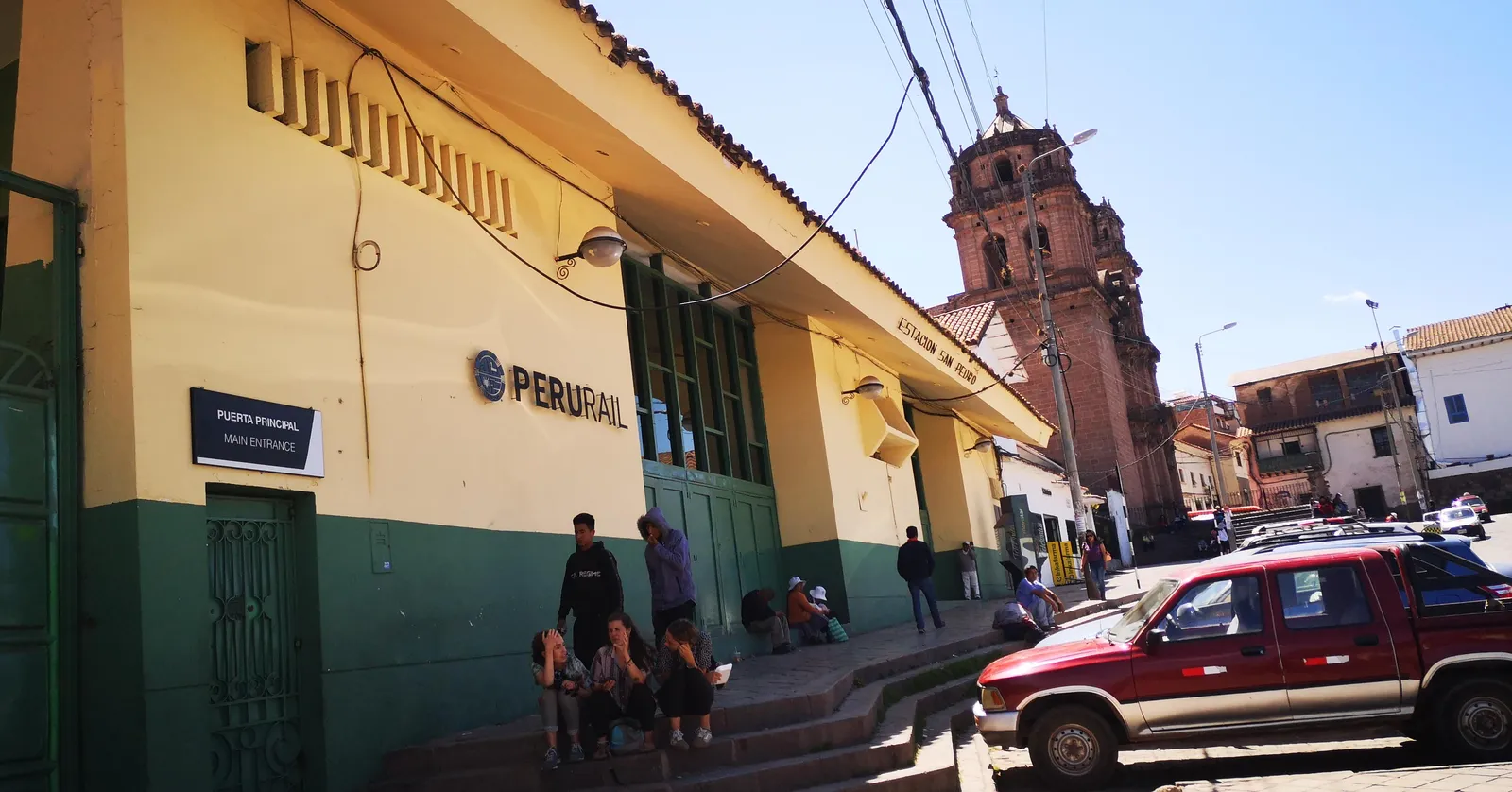
San Pedro station sits opposite the market in central Cusco, and the Santa Clara arch, Plaza San Francisco and the convent’s canvas of the Franciscan family tree are all a couple of blocks uphill from its door.
The Franciscan family tree at San Francisco de Asís
Plaza San Francisco is a stepped square on the western edge of Cusco’s old town, and the long stone church filling one side of it belongs to a seventeenth-century Franciscan convent that now works as a museum as well as a working church. The facade is plainer than most of Cusco’s churches, which is part of the order’s point, and the interior is where the money went.
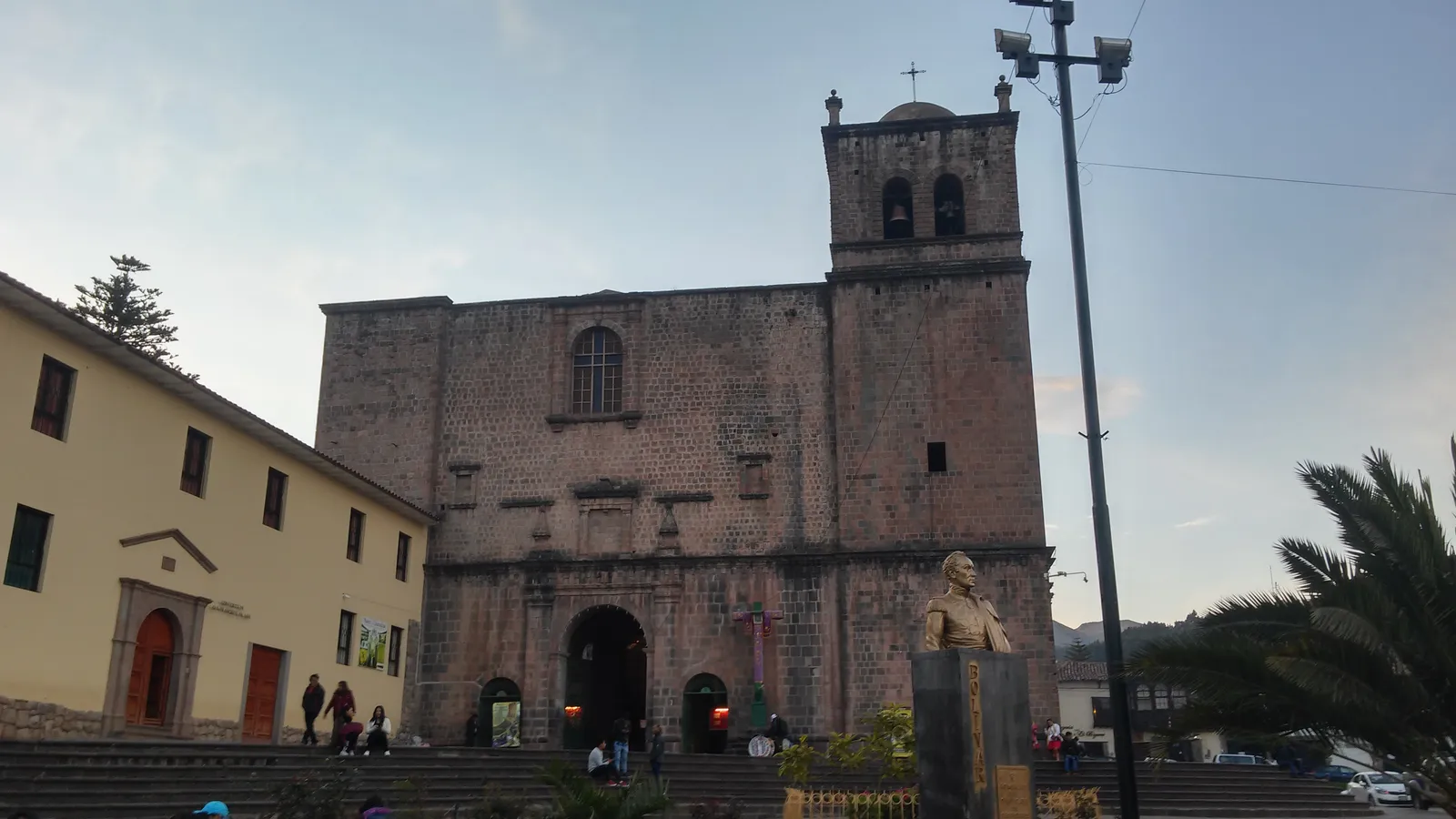
The thing to see is a painting roughly nine metres by twelve, the genealogy of the Franciscan order by Juan Espinoza de los Monteros, with something close to seven hundred individual figures worked into one canvas; it is counted among the largest paintings in South America and it is hung where you can stand back far enough to take it in. The same rooms carry work by Marcos Zapata and Diego Quispe Tito, and the library keeps a Bible printed in five languages side by side. Then there are the crypts below the floor, bones still in them, on the same route through the building. The convent charges its own admission at the door and is not covered by the city’s tourist ticket.
The Santa Clara arch, a confederation monument of 1835
Where Plaza San Francisco narrows into Calle Santa Clara, a three-opening stone arch crosses the road, columns either side of the central span, condors carved on it and a figure of liberty in a Phrygian cap standing on top.
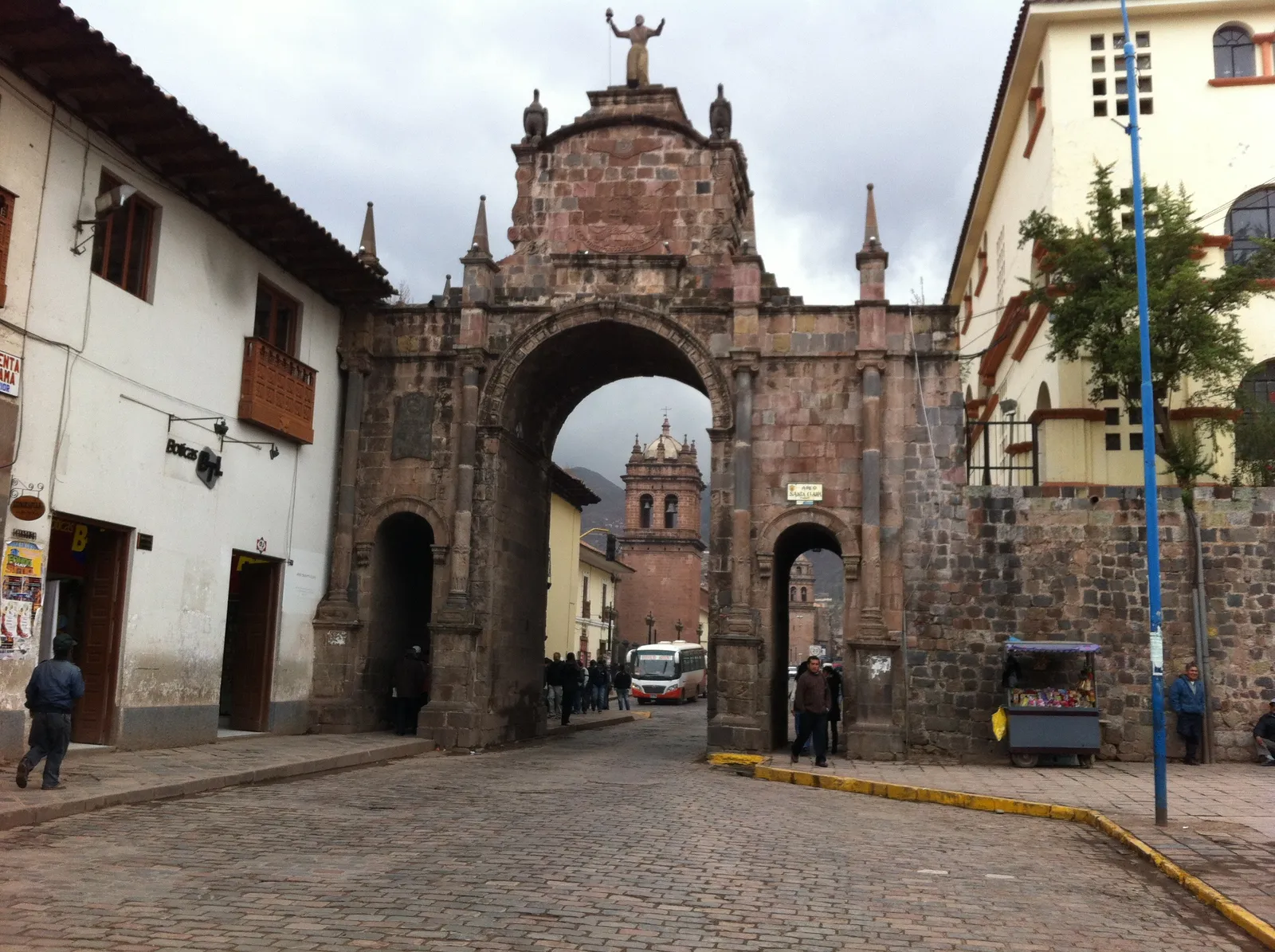
It went up in 1835 on the orders of Andrés de Santa Cruz, to mark the founding of the Peru-Bolivian Confederation, a state that lasted three years. The arch outlasted the country it was built for by nearly two centuries and is now mostly a gateway: traffic squeezes through the middle opening, pedestrians take the side ones, and the view back through it frames a church tower and the street dropping away toward the station. It costs nothing, it is never closed, and it takes two minutes.
Machu Picchu trains leave the city centre from San Pedro station
San Pedro station opens straight onto the pavement with no forecourt at all: a yellow and green frontage on a working street, arched green doors, a ticket hall behind them, and the platforms beyond that. It sits inside the historic centre UNESCO inscribed in 1983, with the San Pedro church tower directly behind it and the market directly across the road.
Departures from here run down the Urubamba valley toward Machu Picchu Town. Tourist tickets are sold online and at the counters; the local passenger train, the cheaper service Peruvian residents use, is sold in person at the station only and its window keeps short hours, generally closing early in the afternoon. Between the station doors and the market entrance opposite, this stretch of pavement carries most of the foot traffic in this part of town at once, which is where a wheeled suitcase costs you minutes rather than effort.
The ride to Cusco’s airport does not involve a train
Alejandro Velasco Astete International Airport is about four kilometres east of San Pedro station, and nothing on rails goes there: the line out of this building heads the other way, down the valley. A taxi takes fifteen to twenty-five minutes depending on traffic and costs 15 to 30 soles, agreed before you get in. Shared vans run the same direction for under two soles but are not built to carry luggage.
Leave more time than four kilometres suggests, because the streets around the market are among the slowest in Cusco for a car, and there are no overnight departures to fall back on if you miss the flight. If the gap turns out to be longer than planned, the main Cusco guide picks up the Inca stonework further uphill, a steeper walk than anything on this side of the old town.
Frequently asked questions
What should I do during a layover near San Pedro Station in Cusco?
Two blocks uphill from the station door does most of the work. The convent of San Francisco de Asís on Plaza San Francisco holds a canvas roughly nine metres by twelve of the Franciscan family tree, plus crypts under the floor, and charges its own admission at the door. The Santa Clara arch stands at the corner of the same square and costs nothing to walk through. With three hours this is a comfortable loop; the convent is the part to drop if the clock is tighter than that, since it is the only stop here that needs a ticket.
Can you reach Machu Picchu from San Pedro Station on a layover?
No. Trains from here run down the valley to Machu Picchu Town, but the journey is a full day in each direction once the bus up to the site and the time there are counted, and the popular morning departures sell out weeks ahead in the dry season between May and September. A full-day trip with the train and the entrance bundled together is what it realistically takes, and it needs its own day rather than the gap before a flight.
What is actually inside the San Francisco convent in Cusco?
The headline piece is the genealogy of the Franciscan order painted by Juan Espinoza de los Monteros, a single canvas about nine metres by twelve carrying close to seven hundred figures, which is among the largest paintings anywhere in South America. The same rooms hold work by Marcos Zapata and Diego Quispe Tito, two painters of the Cusco School, and a library with a five-language polyglot Bible in it. Underneath are the crypts, with human remains still in them, reached from the same ticket.
Is the area around San Pedro Station worth seeing in the evening?
Not really, because everything here keeps daytime hours. The market across the street trades until about six in the evening, the ticket counters inside the station shut earlier than that, and the convent closes with the rest of the museums. The arch and the square stay lit and people still cross them, but the reasons to come are all daylight ones, which makes this a better fit for a morning or early-afternoon gap than a late one.