Tel Aviv Layover: Jaffa and Bauhaus From TLV
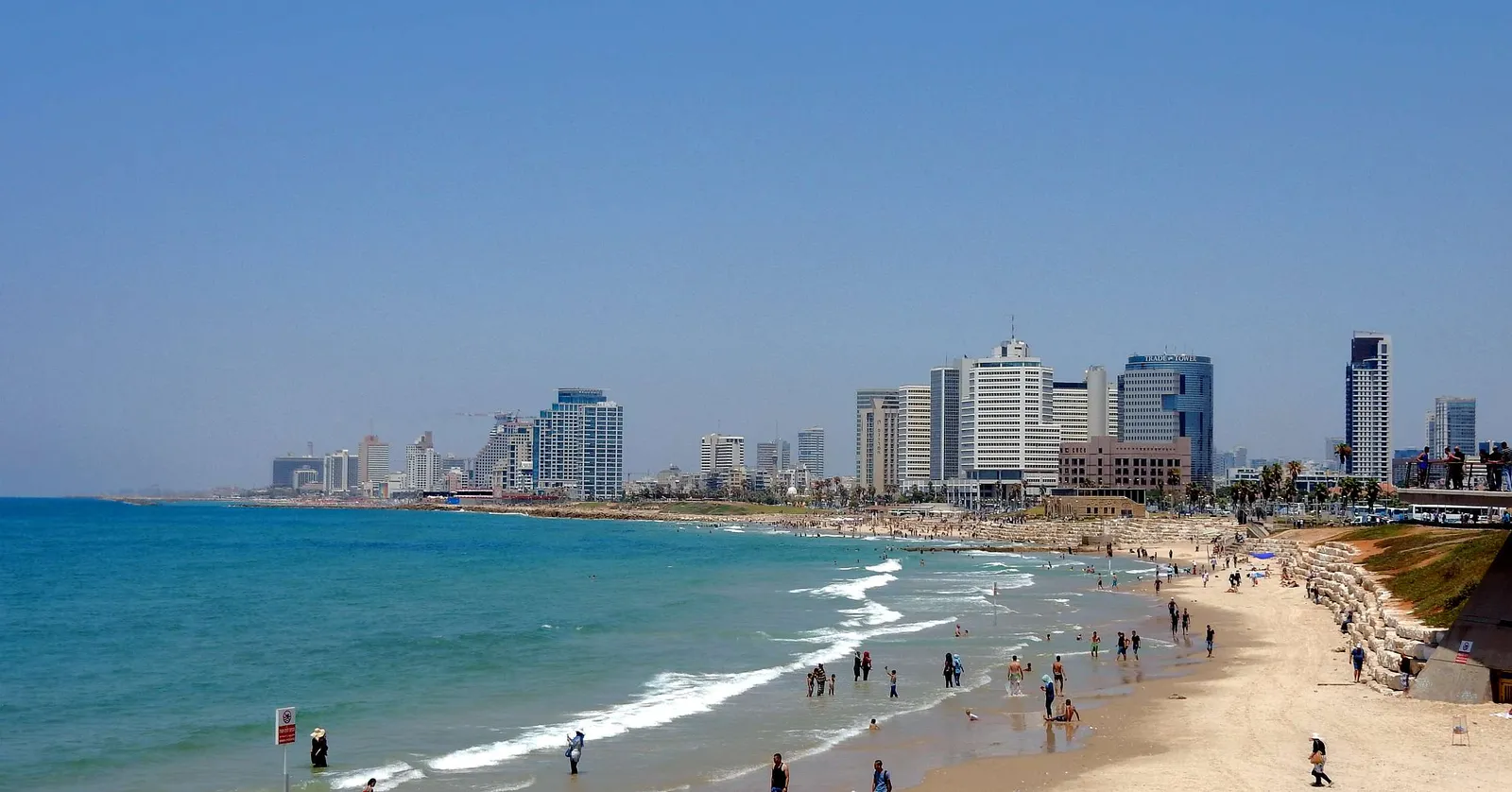
Old Jaffa’s clock tower, Carmel Market and the Bauhaus streets around Rothschild Boulevard all sit within a few kilometres of Tel Aviv’s seafront, and the art museum is the only one of them that charges admission.
Old Jaffa stands on a hill above a working harbour
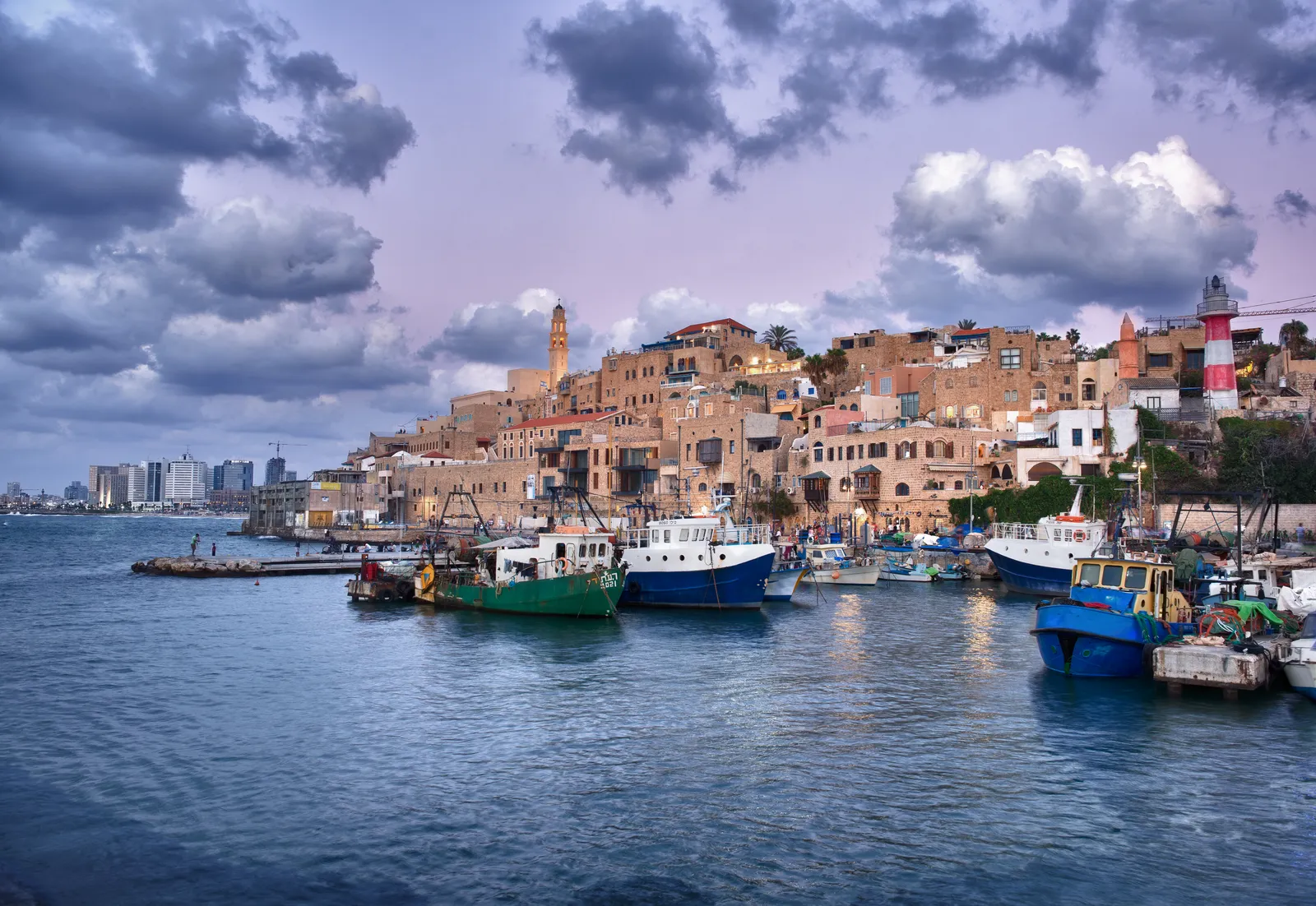
Jaffa is the old port town at the southern end of the Tel Aviv coast, absorbed into the same municipality in 1950 and still the oldest part of it by several thousand years: there was a settlement here in the Early Bronze Age, and the harbour below the hill has been in use on and off ever since. It is a genuinely small port, a horseshoe of moorings with fishing boats tied up in it, and the sandstone houses of the old town rise directly behind in a stack of flat roofs and arched windows.
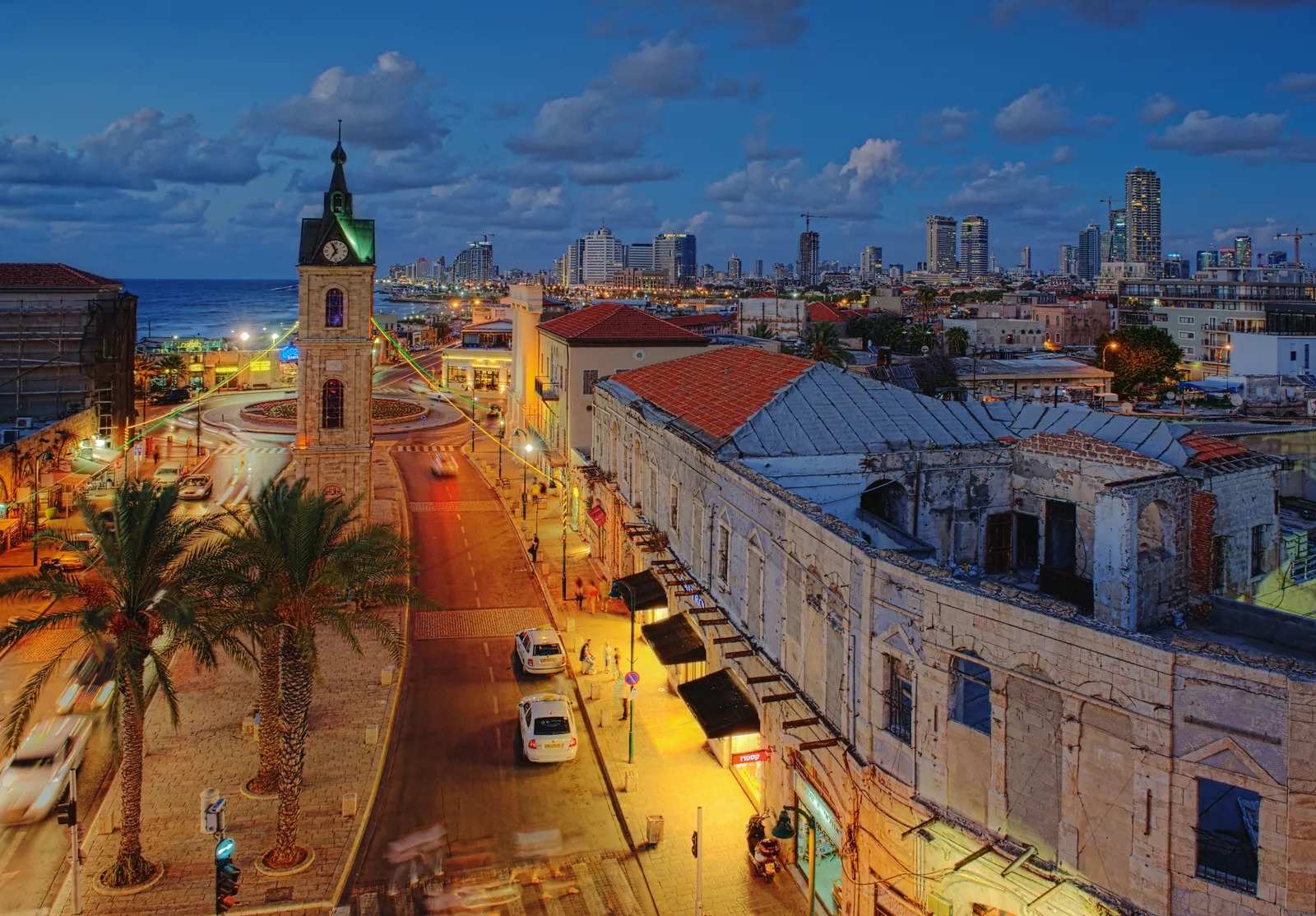
The limestone clock tower stands at the head of Yefet Street, where the old town meets the road north. Construction started in September 1900 and finished in 1903, marking the silver jubilee of the Ottoman sultan Abdul Hamid II, and it was paid for by subscription across every community in the town at once, Arab, Armenian, Maronite and Jewish, with the clock mechanisms built and installed by Moritz Schoenberg, a Jewish clockmaker from Rishon LeZion. Behind it is the flea market, Shuk HaPishpeshim, a few blocks of furniture, second-hand clothes and bric-a-brac trading Sunday to Thursday 10am to 6pm and Friday until 2pm, closed Saturday. If you would rather have the history narrated than guess at it, a guided walk through the old town covers the same ground with the architecture and food explained along the way.
The seafront path runs unbroken from Jaffa to the old port
Tel Aviv’s promenade is one continuous paved strip along the whole city shoreline, from Jaffa’s harbour in the south to the old port at the northern end, with the swimming beaches, Gordon and Frishman and Bograshov among them, hanging off it the whole way. It is flat, it is separated from the cycle lane, and it costs nothing: no closing time, no ticket office, and no difference between a Tuesday and a Saturday.
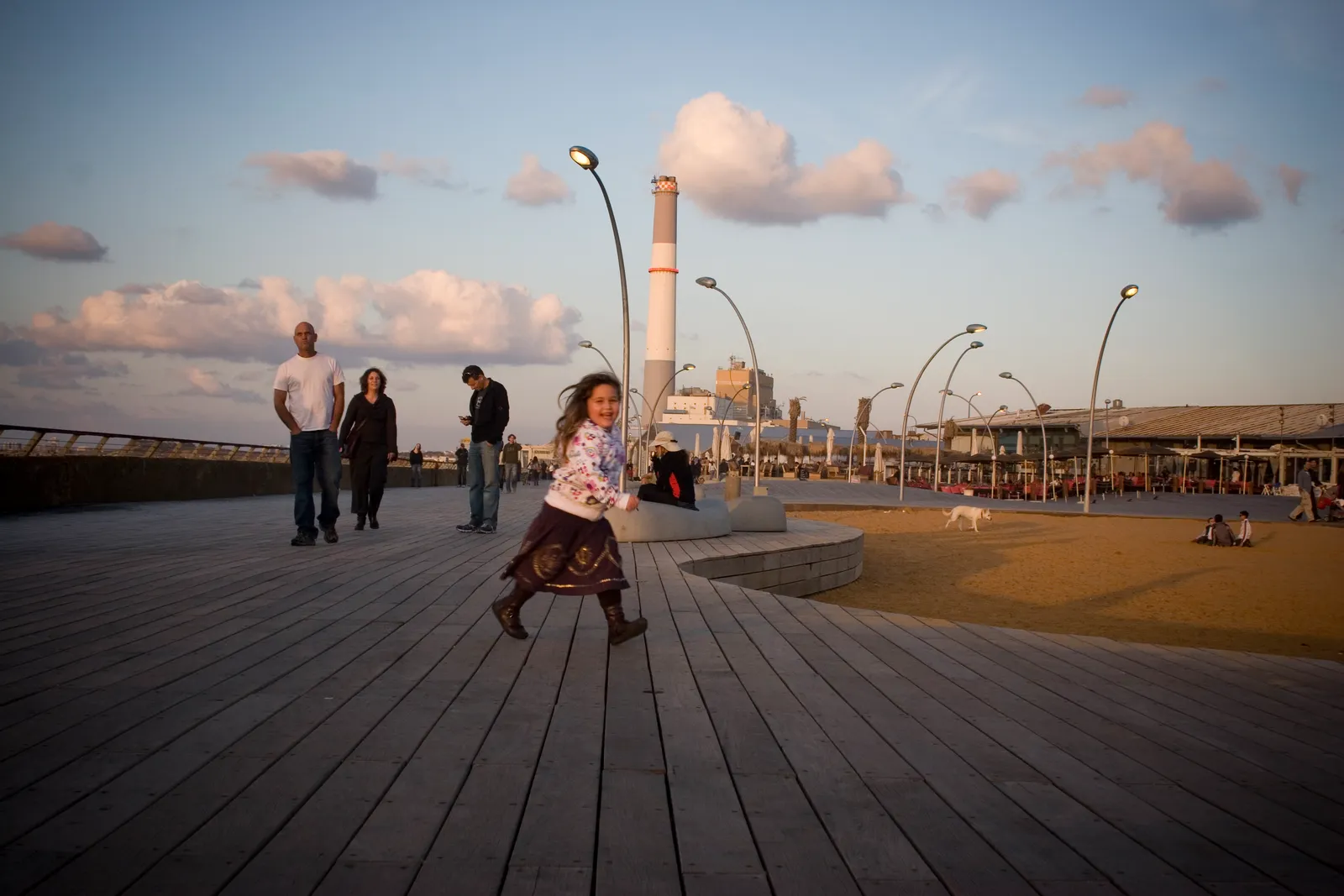
The old port at the top of it is worth the walk on its own. It opened for cargo in 1936, reached full size in February 1938, and shut down for good on 25 October 1965, after which it sat derelict for decades. Mayslits Kassif Architects won a competition to rebuild it as public space in 2003 and the new boardwalk opened by 2008: a wide timber deck laid in long rolling curves meant to echo the dunes that were here before the port was, and big enough that skaters, runners and people sitting with coffee all fit on it at once. It took the Rosa Barba prize, a European award for landscape architecture, in 2010.
Halfway along, at the marina, Gordon Pool is an Olympic-length outdoor pool filled with seawater drawn from springs under the site and topped up daily, and it opens at six in the morning on weekdays, hours before anything with a ticket desk. Adult entry runs around 70 shekels. If you would rather see the coast from the water than from the path, a speedboat run along the shoreline covers the stretch between the two ports in a fraction of the time.
One thing decides how much of this you get through: every railway station in Tel Aviv sits on the Ayalon corridor at the eastern edge of the city, two to three kilometres back from the water, so a suitcase makes that crossing twice.
Carmel Market’s one long aisle of food stalls
Carmel Market, Shuk HaCarmel on the street signs, is the biggest market in the city and has been trading since the 1920s, running off Allenby Street down HaCarmel Street as a single lane with stalls packed along both sides of it. The Allenby end leans towards clothes, homewares and cheap luggage; the further in you go the more it becomes food, produce, olives, spices, bakeries, juice stands, with the smell changing every few metres. It opens Sunday to Friday and shuts on Saturday, and Friday morning, when the whole city shops before Shabbat, is both the best and the worst time to be in it.
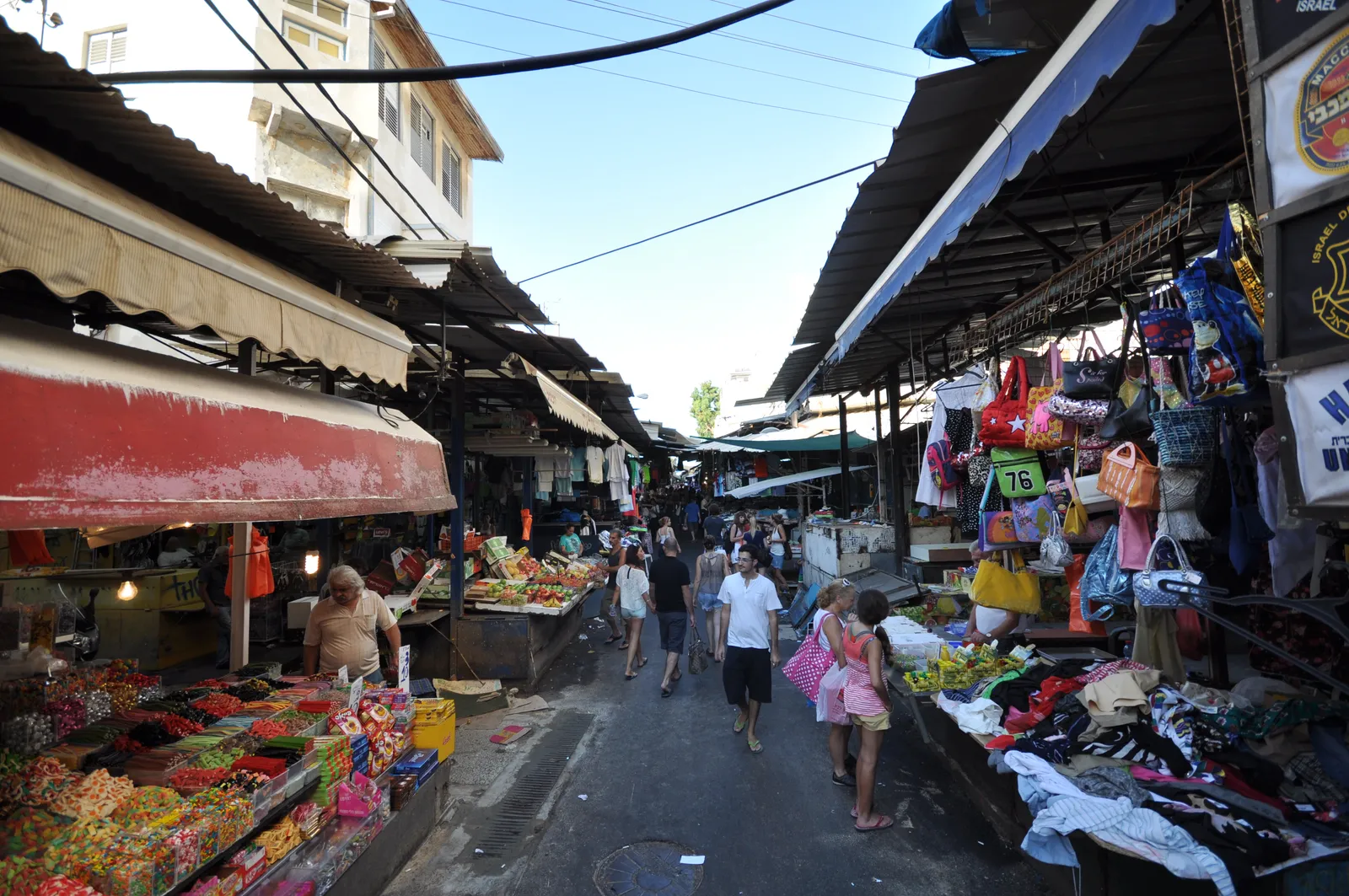
Nahalat Binyamin, the pedestrian street running alongside, holds an arts and crafts fair on Tuesdays and Fridays only, so which day you land on decides whether that half of the block is a market or an ordinary street. A few minutes south, Neve Tzedek was the first Jewish neighbourhood built outside Jaffa, founded in 1883 by about 48 families, left to decay by the 1960s and restored from the late 1980s onward; the Suzanne Dellal Centre, the country’s main dance venue, sits in a restored school complex at its heart and its courtyards are open to walk through.
The White City’s curved balconies along Rothschild Boulevard
More than 4,000 buildings in Tel Aviv were put up in the International Style, the strand of Modern Movement architecture most people know as Bauhaus, largely through the 1930s and largely by architects who had trained in Europe and brought the style with them. UNESCO inscribed the collection in 2003 as the White City, across three separate conservation zones, citing it as an outstanding example of new town planning and architecture in the early 20th century. What you actually look for on the street is a set of repeated moves: balconies wrapped around corners in smooth curves, long horizontal ribbon windows, flat roofs, and narrow vertical strips of glass lighting the stairwells.
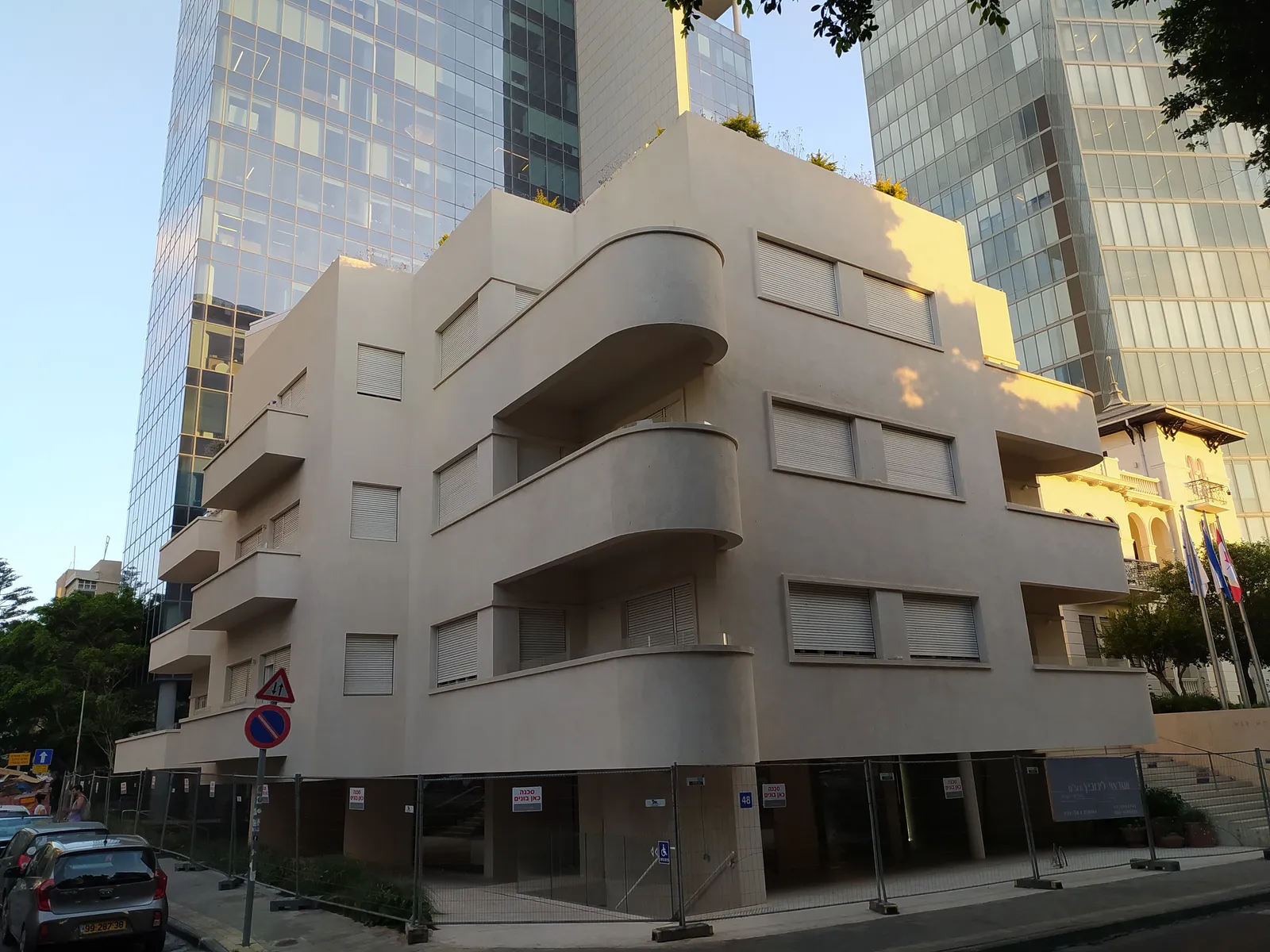
Rothschild Boulevard is the easiest place to see a run of them without a map. It is one of the oldest streets in the city, running from Neve Tzedek up to the Habima Theatre, and it has a wide central strip planted with ficus trees carrying a walking path and a marked cycle lane down its middle, with kiosks along it. Number 16 is the house where Israel’s independence was declared in May 1948; the building has been shut for restoration for several years and its reopening date has moved more than once, so check it before making the detour rather than after.
Tel Aviv Museum of Art opens on Saturday and shuts on Sunday
Israel runs on a Sunday-to-Thursday working week, and the Tel Aviv Museum of Art on Shaul HaMelech Boulevard takes its weekly closing day at the start of that week rather than the end of it. The full week is Monday, Wednesday and Saturday 10am to 6pm, Tuesday and Thursday 10am to 9pm, Friday 10am to 2pm, and nothing at all on Sunday, with last entry an hour before closing. Adult admission is NIS 55, students pay 45, and anyone under 18 goes in free.
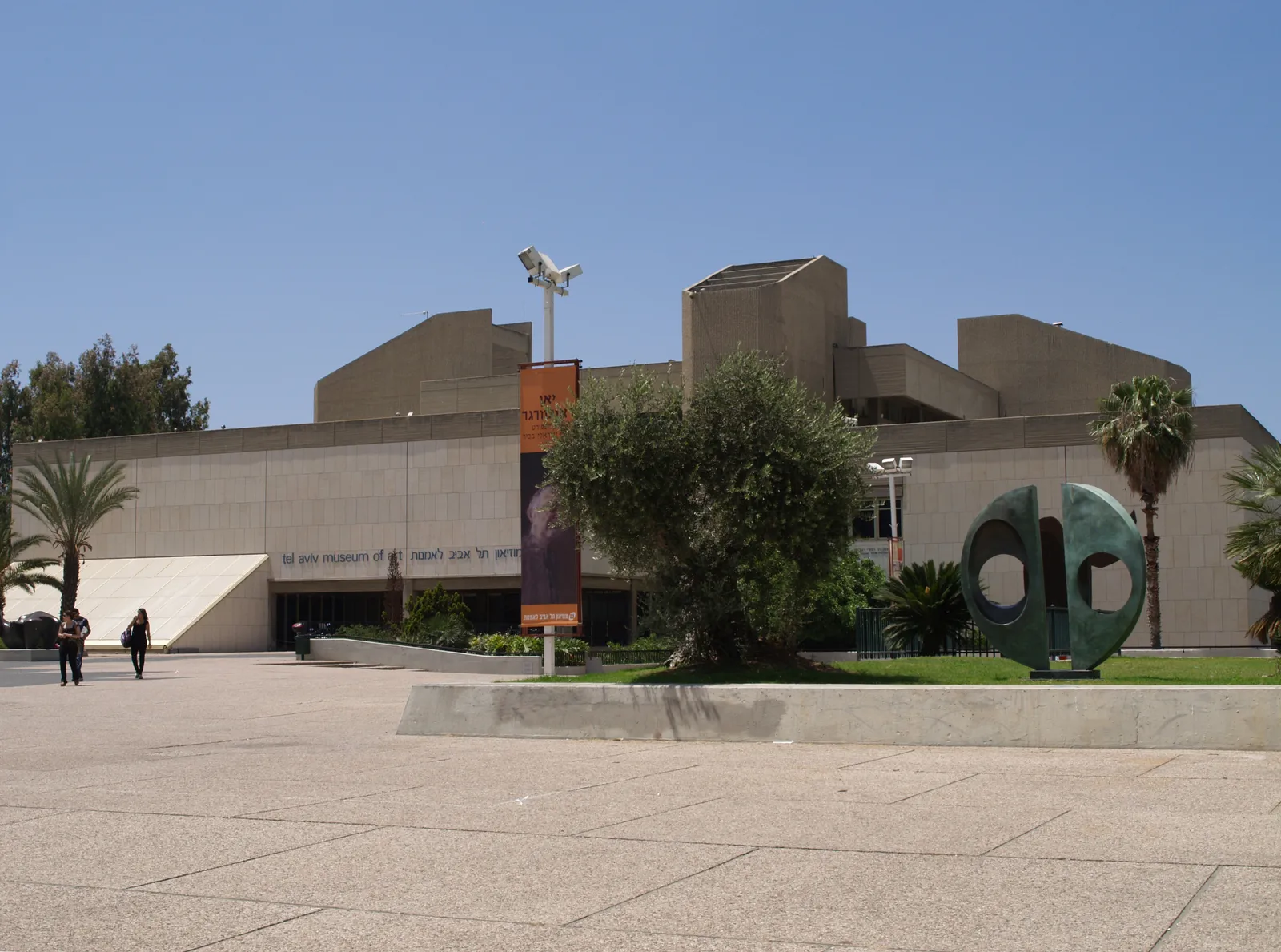
The newer wing, the Herta and Paul Amir Building by Preston Scott Cohen, opened in November 2011 and is worth the ticket on its own: five floors of gallery wrapped in folded concrete planes around a light well that twists as it drops. Six to eight hours on the ground is about what it takes to add this to the seafront and one of the markets rather than choosing between them. One practical detail worth knowing before you arrive at the door: bags bigger than A4 are not allowed into the galleries and go into the museum’s lockers instead, which is fine for a daypack and useless for a suitcase.
No airport train runs between Friday afternoon and Saturday night
Three stations serve central Tel Aviv, Savidor Center, HaShalom and HaHagana, all strung along the Ayalon freeway on the city’s inland side, and all three run direct to the station under the airport. The ride is about 20 minutes from Savidor Center, departures come roughly every 20 to 30 minutes, and the fare to Ben Gurion International Airport (TLV) is NIS 13.50. Door to door from the beach is a different number: add the two to three kilometres east to reach a platform, plus the wait, and an hour is the honest figure to budget from the seafront.
Shabbat is the thing that breaks this. Israel Railways stops running about two hours before Shabbat begins on Friday and starts again roughly an hour after it ends on Saturday night, and the light rail line that connects Allenby and Carlebach to Savidor Center, a single ride on which costs NIS 8, follows the same rule. On those hours a taxi or a shared taxi is the only way back, at roughly 150 to 250 shekels. Pay for the train with a Rav-Kav travel card, five shekels for the anonymous version, or buy a paper ticket from the machines at any station.
At the airport end, the platforms sit on Level S directly beneath Terminal 3, and Terminal 1 is a free shuttle ride away from there. Budget the full three hours the airport asks for: security here begins at the terminal entrance rather than at the check-in desk, and the layered checks that follow can take anywhere from 45 minutes to two hours on their own. That is a longer buffer than most airports want, which is why a Tel Aviv layover needs more total hours than the 20-minute train ride suggests. If the next leg routes through Istanbul, the arithmetic flips: that airport is far enough out that the journey, not the security queue, is what eats the day.
Whichever way you go back, the bag is the part that decides your route rather than the sights. Leave it in the city and Jaffa, the promenade and the market are all walk-in stops with nothing to check and nowhere to park a suitcase; pick it up on the way through and the last stretch stays a single straight run east.
Frequently asked questions
What should I do during a layover in Tel Aviv?
Old Jaffa first, then whatever the clock allows. The old port town at the southern end of the coast has a working fishing harbour, a limestone clock tower finished in 1903 and a flea market trading Sunday to Friday, and a flat paved seafront path runs north from it all the way to the old Tel Aviv port. Carmel Market and the 1930s streets around Rothschild Boulevard sit a few blocks inland from that path, and none of it costs anything to walk through. The Tel Aviv Museum of Art is the one stop with an entry fee, NIS 55, and the one that is shut on Sundays, so it is the piece to drop when the day or the hour does not line up.
Is anything open in Tel Aviv on Saturday?
Plenty, but not the transport. The trains stop about two hours before Shabbat begins on Friday and start again roughly an hour after it ends on Saturday night, and the light rail follows the same pattern, so Saturday daytime means a taxi or a shared taxi, called a sherut. Carmel Market is shut and so are the Jaffa flea market's shops, though Jaffa's cafes and restaurants trade through the weekend. The beaches, the seafront path and Old Jaffa's lanes cost nothing and never close, and the Tel Aviv Museum of Art keeps its normal 10am to 6pm on Saturday.
Is the walk from Old Jaffa into central Tel Aviv step-free?
The seafront half is, the old town half isn't. The promenade from Jaffa's harbour north to Gordon Beach is about four kilometres of flat paved path with ramps at the beach entrances and no stairs to clear, and it is the same surface end to end. Old Jaffa itself is the awkward part: the lanes above Kedumim Square are stone steps and steep slopes worn smooth, which is hard going on wheels of any kind. If steps are the problem, stay on the harbour front and the clock tower square, both of which are level.
Is a summer layover in Tel Aviv worth leaving the airport for?
Yes, with the hours chosen carefully. Daytime highs sit around 30°C in July and August and the humidity coming off the sea is what actually makes it hard work, so the seafront path is an early-morning or after-dark proposition rather than a midday one. Carmel Market is canvas-covered the length of its aisle, which is the difference between shade and none, and the Tel Aviv Museum of Art is air-conditioned throughout. The sea itself stays warm well into October, so a swim is a more realistic use of an afternoon in September than a walk is.
Is the train or a taxi better back to Ben Gurion Airport?
The train, on every day it runs. Israel Railways charges NIS 13.50 from Tel Aviv Savidor Center, HaShalom or HaHagana to the airport station, the ride is about 20 minutes and departures come roughly every 20 to 30 minutes. A taxi covers the same ground in 25 to 40 minutes depending on how the Ayalon is moving and runs roughly 150 to 250 shekels, with night and weekend surcharges on top. The exception is Shabbat and Jewish holidays, when no train runs at all and a taxi or a shared taxi is the only option, which is worth pricing in before you plan a Saturday out of the terminal.