HaHagana Station Layover: Levinsky, Tel Aviv
Part of the full Tel Aviv Layover: Jaffa and Bauhaus From TLV
Tel Aviv’s HaHagana station stands at the southern end of the city’s rail corridor, a quarter of an hour’s walk from Levinsky Market’s spice and dried-fruit shops and the workshops, bars and short palm-lined streets of Florentin behind them.
Levinsky Market deals in spices, not produce
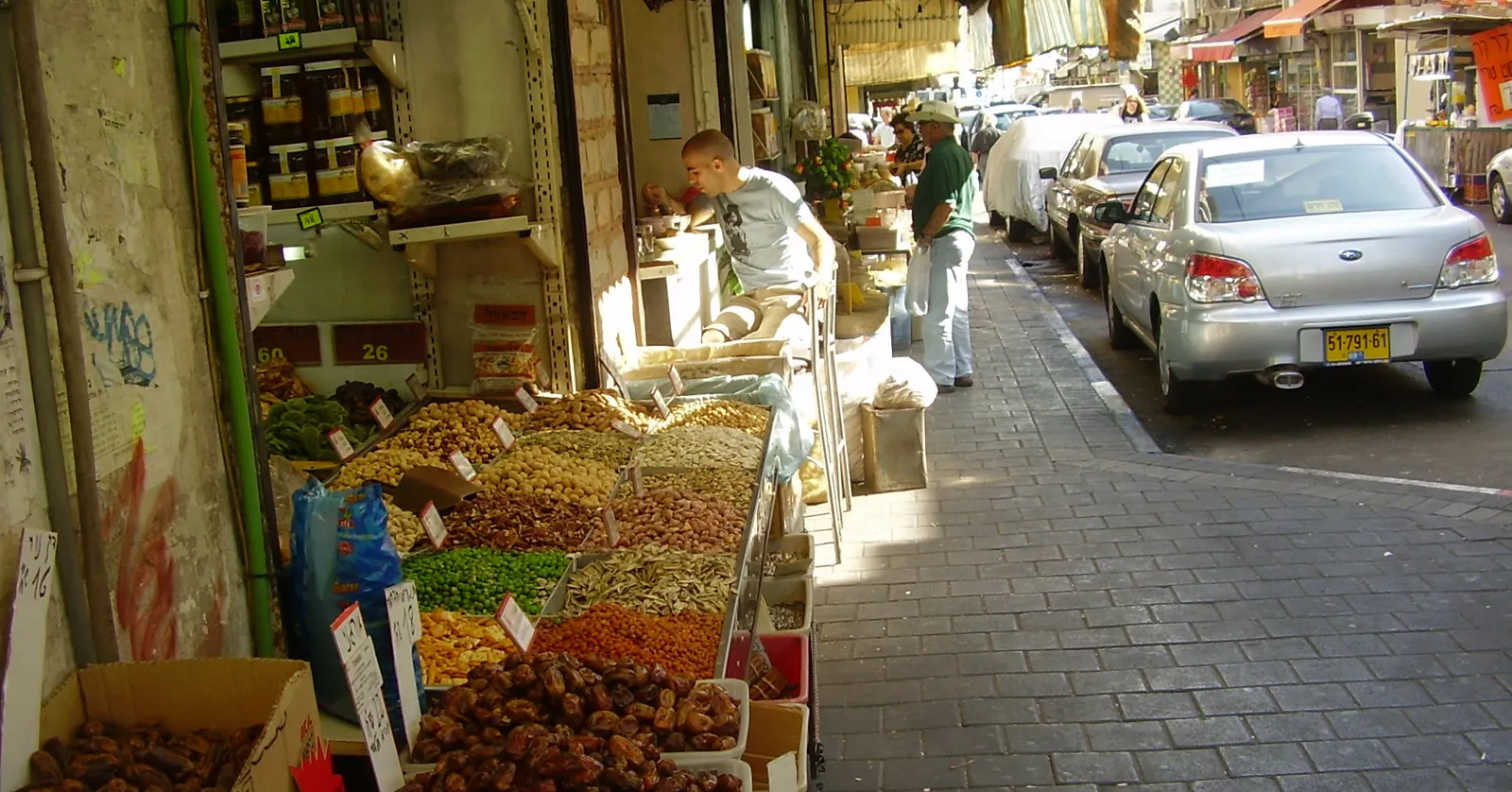
What separates this market from the bigger one further north is what is actually on the tables: sacks of cumin, sumac, za’atar and baharat, trays of dried apricots and dates, pistachios and sunflower seeds by weight, barrels of olives, cured fish, halva cut off the block, and bourekas coming out of ovens all morning. Jewish families arriving from Greece, the Balkans, Persia and Iraq built the trade here over the last century, and a good number of the shops are still run by the same families that opened them.
The other thing Levinsky is known for is gazoz, a soda built to order over ice from fruit syrup, fresh herbs and fizzy water, which a couple of kiosks along the street make while you wait. It costs a few shekels and takes a minute, which makes it a better fit for a short stop than sitting down to eat does.
Washington Boulevard is the shortest street in Tel Aviv
Florentin is the neighbourhood the market sits inside, and it started as a property deal: the Salonika-Palestine Investment Company bought the land in 1924 to build for Jewish families arriving from Salonika, Bulgaria, Turkey, Greece and North Africa, choosing the site for its closeness to the Jaffa to Jerusalem railway. It slid into a slum by the 1960s and came back from the 1990s when cheap rents pulled artists in, which is the version most people describe now.
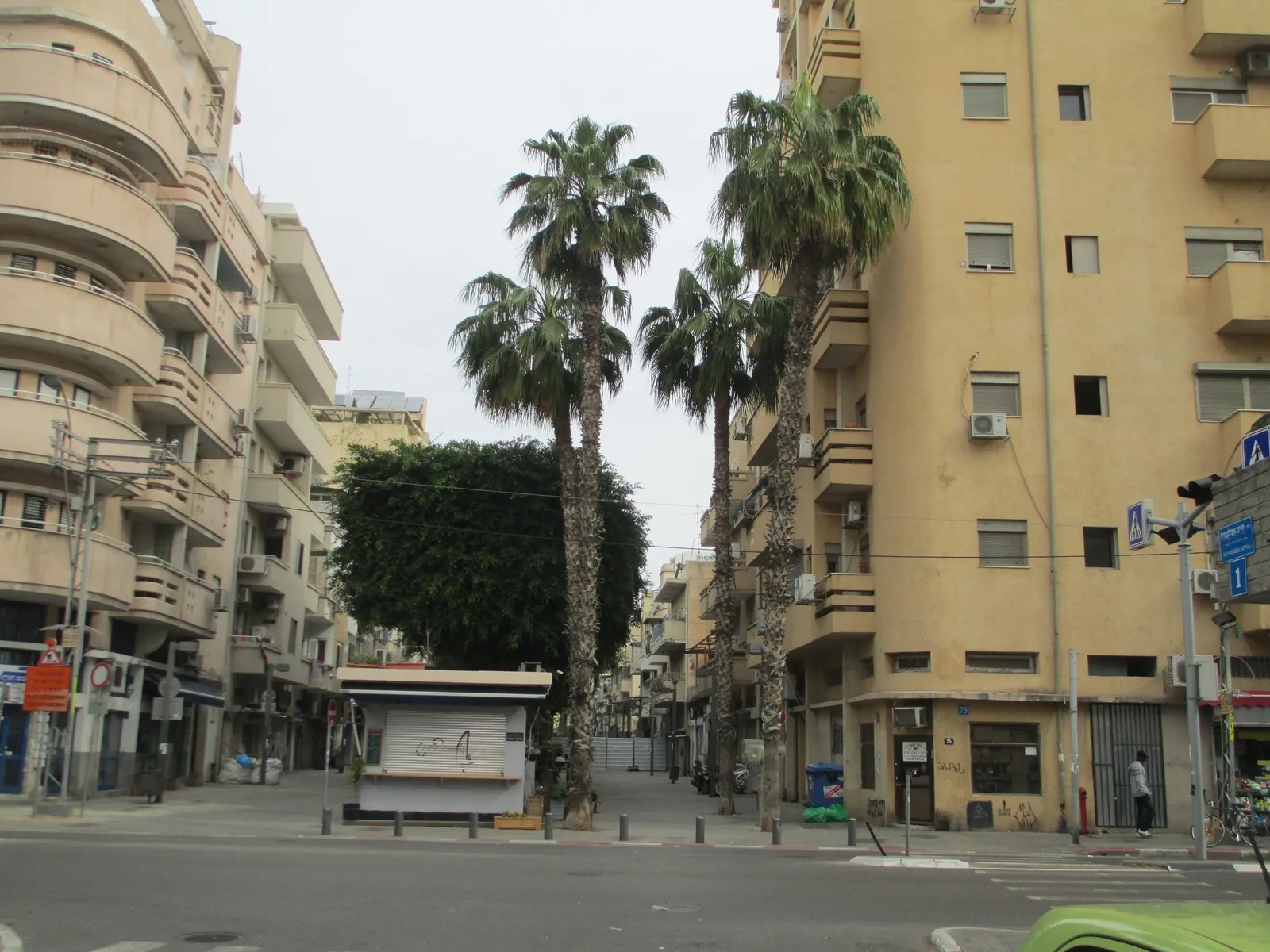
Washington Boulevard, in the middle of all this, is a boulevard in name only: a run of tall palms and a kiosk down the central strip, walled off by apartment blocks at each end, and reckoned the shortest street in the city. The rest of the grid around it is the part worth an hour. Furniture makers, upholsterers and metal shops still work with their doors open onto the pavement, Jewish and Arab wholesalers still trade clothing and furniture out of the same blocks, and the bars sit in between them rather than having replaced them.
HaHagana shares its block with the Central Bus Station
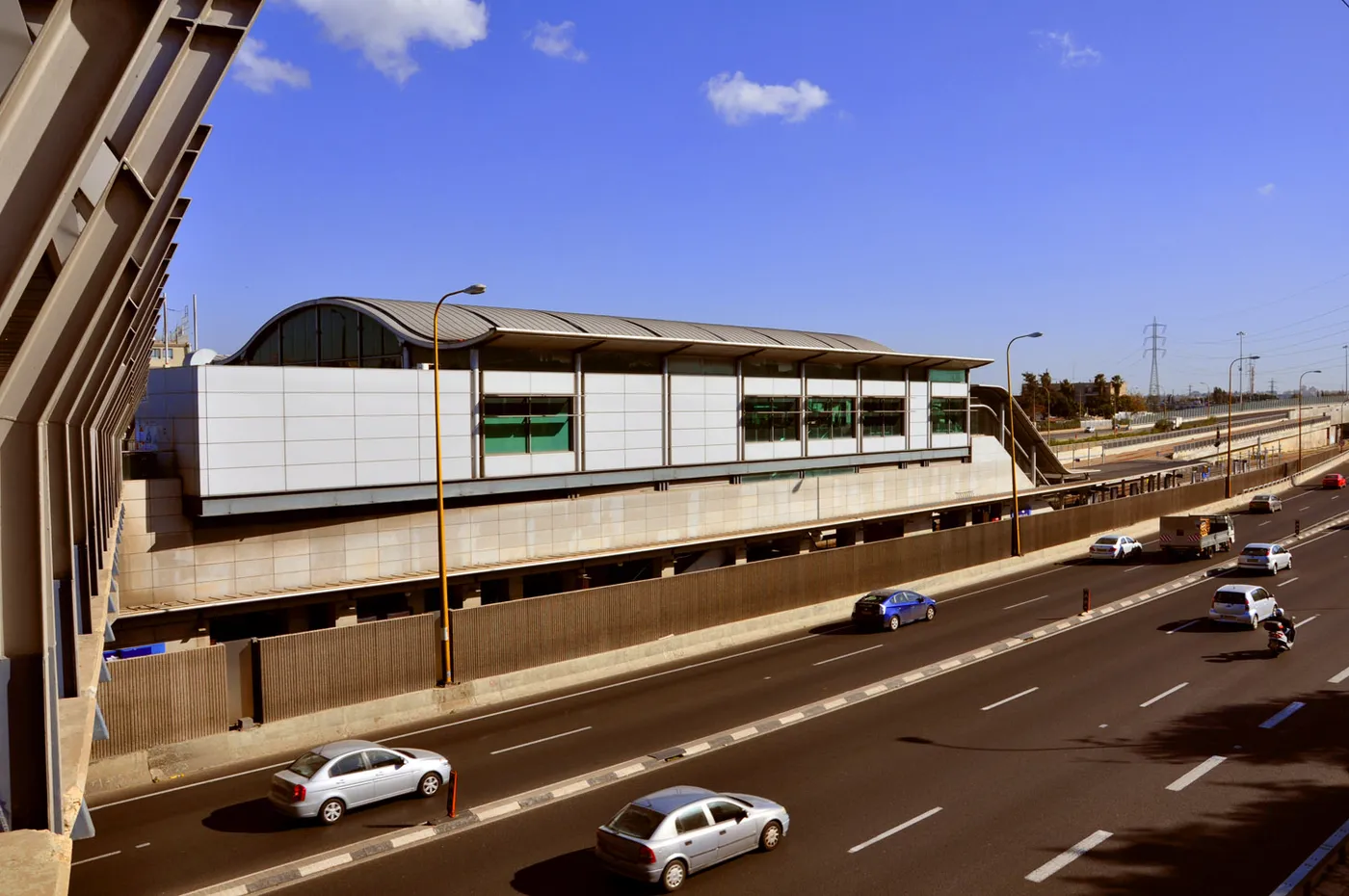
The platform opened on 22 June 2002 at 32 HaHagana Way, laid in the median of the Ayalon motorway north of the Jerusalem road, and it took 6.6 million passengers in 2019, third busiest of the country’s 68 stations. Four hundred metres west of it stands the Central Bus Station, a seven-storey terminal that has been under a closure order for years with the date pushed back more than once, so whether you find it operating depends on when you arrive.
That pairing is what makes this station feel different from the others on the line. Intercity coach passengers arriving from Eilat or Beersheba come through carrying everything they brought, city commuters come through carrying nothing, and the connecting walk between the two is sized for the second group.
Airport services call here directly, about 20 minutes to Ben Gurion International Airport (TLV) for NIS 13.50, with nothing running from Friday afternoon until Saturday after dark. If the gap stretches past five or six hours, the market and the workshops are not the best use of it: the seafront is 25 minutes west by taxi, and Old Jaffa, the promenade and the Bauhaus streets are what that ride buys. Under that, this is the one corner of the city a southern platform can reach on foot and get back from without watching the clock.
Frequently asked questions
What should I do during a layover near HaHagana Station in Tel Aviv?
Levinsky Market, then the streets behind it. The market is a quarter of an hour west of the station along Levinsky Street, and it deals in spices, dried fruit, nuts, cured fish and bourekas rather than the fresh produce a general market sells. Florentin, the neighbourhood it sits inside, was laid out from 1924 and still has furniture and metal workshops opening straight onto the pavement between the bars, with Washington Boulevard, reckoned the shortest street in the city, in the middle of it. Two or three hours covers both comfortably, and neither charges anything.
How long is the walk from HaHagana Station to Levinsky Market?
About 1.4 kilometres, so 15 to 20 minutes on flat pavement with no steps. The station sits in the median of the Ayalon motorway, so the walk starts by getting clear of the road rather than stepping straight into a neighbourhood, and the first few minutes are the least pleasant part of it. Once you are past that, the grid through Florentin is level the whole way. There is no tram or metro covering this stretch, so walking or a short taxi are the two options.
Is Florentin better at night than during the day?
They are two different neighbourhoods. By day the wholesalers and workshops are open and the market is trading, which is when the spice shops and the bourekas are worth coming for; by evening the stalls have shut and the bars and restaurants along Florentin Street and Vital Street take over. A few of the daytime businesses close for the weekend entirely, so a Friday afternoon or Saturday visit gets the quiet version of the streets rather than the working one. If the flight is late enough that you are arriving after dark, come for the eating rather than the shopping.
Can I get from HaHagana Station to Ben Gurion Airport without changing?
Yes. HaHagana is on the main Israel Railways trunk through Tel Aviv and airport services call here directly, about 20 minutes for NIS 13.50, roughly every 20 to 30 minutes. The station handled 6.6 million passengers in 2019, third busiest of the 68 in the country, so this is a well-served platform rather than a branch stop. Shabbat is the exception: no train runs between about two hours before it starts on Friday and roughly an hour after it ends on Saturday night.